History timeline
Jordan’s History, Period by Period
From the first farming villages to the Ottoman Hajj road: Jordan’s past in thirteen periods, with every site we have written about placed in its time. Pick a period to see its castles, temples, forts and towns.
13periods
90sites with a guide or profile
41monuments of Pella and Jerash
Dates are approximate ranges for each period, consistent with the Jordan Museum’s chronology; archaeological boundaries vary between publications. Sites appear in every period in which they have substantial remains.
c. 10,000 – 4500 BC
Stone Age: Neolithic villages
People lived in what is now Jordan for hundreds of thousands of years as hunter-gatherers, through the Palaeolithic and the Epipalaeolithic, when groups such as the Natufians began to stay longer in one place. Jordan’s first farming villages appeared in the Neolithic, when people began to settle, grow crops and keep animals. Beidha near Petra, Ghwayr in Wadi Feinan, the cave of Iraq ed-Dubb near Ajloun and Qasr al-Jilat in the eastern desert are among the sites covered here.
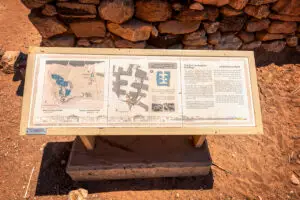
Al BeidhaA Stone Age village near Little Petra, some ten thousand years old, where round houses gave way to rectangular ones — with reconstructed houses…Profile · Petra & the South
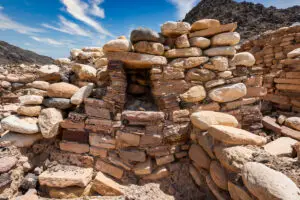
GhwayrA Neolithic village of about 8000–7500 BC in Wadi Ghuwayr, Faynan, whose stone walls still stand over 2 m high.Profile · Petra & the South
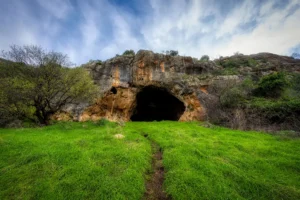
Iraq ed-DubbA cave high above Wadi el-Yabis near Ajloun, home to Late Natufian hunter-gatherers and some of the earliest Neolithic villagers, around 11,000 years ago.Profile · North & Jordan Valley
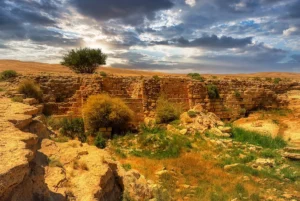
Qasr Al-JilatA seasonal oasis in the eastern desert south of Qasr Kharana, with an ancient stepped dam and prehistoric sites that tell the story of…Profile · Eastern Desert
 Also from this period
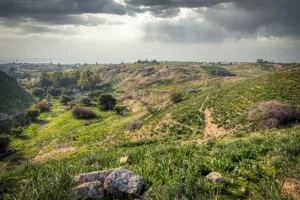
Pella (Tabqet Fahel)An ancient city in the northern Jordan Valley with a long history from the Neolithic to the Mamluks, from Canaanite temple to Decapolis city…Travel guide·History
c. 4500 – 3600 BC
Chalcolithic
The Copper–Stone Age, when copper tools came into use alongside stone ones and villages spread across the Jordan Valley; Teleilat Ghassul gave its name to the Ghassulian culture of this time.
c. 3600 – 1200 BC
Bronze Age
In the Bronze Age, villages in Jordan grew into walled towns and dolmen fields were raised on the hillsides. Here you’ll find Jawa in the basalt desert, the Damiya dolmens, Tell Deir Alla and Tell el-Hammam in the Jordan Valley, and Pella, which was lived in through much of this time.
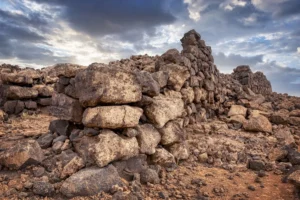
Pella (Tabqet Fahel)An ancient city in the northern Jordan Valley with a long history from the Neolithic to the Mamluks, from Canaanite temple to Decapolis city…Travel guide·History
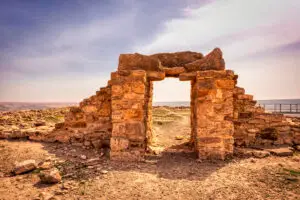
Al LahunA hilltop site on the northern rim of Wadi al-Mujib, settled from the Early Bronze Age to Ottoman times, with an Iron Age fortress…Profile · Amman, Madaba & Dead Sea
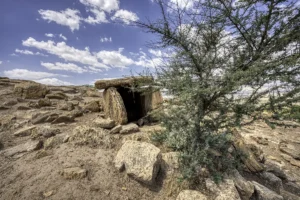
Damiya Dolmen FieldJordan’s largest dolmen field: hundreds of Early Bronze Age stone tombs on the foothills above the Jordan Valley near the Damiya Bridge.Profile · Amman, Madaba & Dead Sea
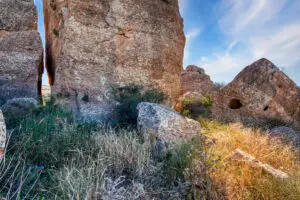
Hesban RocksA hill of Early Bronze Age dolmens and standing stones half a kilometre north-west of Tell Hisban, above Wadi Hisban.Profile · Amman, Madaba & Dead Sea
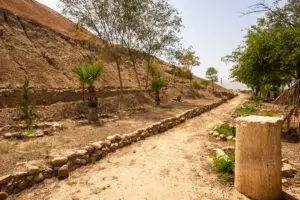
Tell Deir AllaA mound in the central Jordan Valley where a plaster inscription of about 800 BC names the seer Balaam son of Beor.Profile · Amman, Madaba & Dead Sea
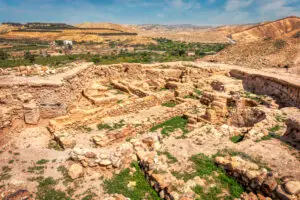
Tell El-HammamA large Bronze Age city mound in the Jordan Valley, with massive Middle Bronze Age walls and a thick destruction layer.Profile · Amman, Madaba & Dead Sea
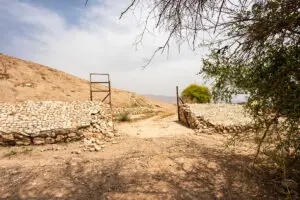
Tell El-MazarAn ancient mound in the central Jordan Valley near Deir Alla, with an Iron Age sanctuary, a burned “palace-fort” and inscriptions in Ammonite and…Profile · North & Jordan Valley
c. 1200 – 539 BC
Iron Age Kingdoms
The Iron Age saw the rise of the kingdoms of Ammon, Moab and Edom. Their remains include Busayra and the rock of Sela in Edom, the fortified Iron Age settlement at Al-Lahun above Wadi Mujib and Tell Deir Alla in the Jordan Valley. In the 6th century BC the region came under Babylonian rule; the relief of King Nabonidus at Sela marks his campaign against Edom.
Pella (Tabqet Fahel)An ancient city in the northern Jordan Valley with a long history from the Neolithic to the Mamluks, from Canaanite temple to Decapolis city…Travel guide·History

Qasr Abu El-KharaqA massive dry-stone tower on a hilltop near Qasr Bshir, set against an older enclosure, with pottery from the Iron Age and Nabataean times.Travel guide·History

Qasr El-AlA hilltop tower and enclosure on the Karak plateau, founded in the Iron Age and used again by the Nabataeans.Travel guide·History

Al LahunA hilltop site on the northern rim of Wadi al-Mujib, settled from the Early Bronze Age to Ottoman times, with an Iron Age fortress…Profile · Amman, Madaba & Dead Sea
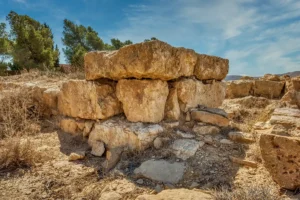
BusayraThe largest Iron Age site in Edom — biblical Bozrah — with a palace and a probable temple built on Assyrian plans, on a…Profile · Petra & the South
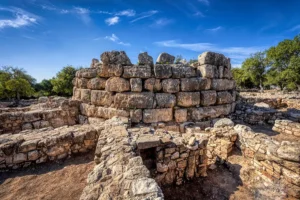
Khirbet Al-DeirA hilltop site near Fuheis around a massive round Iron Age tower, later used as a church — with cisterns, a rock-cut press and…Profile · Amman, Madaba & Dead Sea
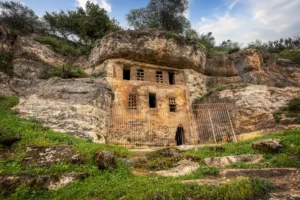
Muallaqat al-DayrA rock-cut dovecote high in the cliffs of Wadi al-Seer, with hundreds of triangular niches for pigeons.Profile · Amman, Madaba & Dead Sea
Tell Deir AllaA mound in the central Jordan Valley where a plaster inscription of about 800 BC names the seer Balaam son of Beor.Profile · Amman, Madaba & Dead Sea
Tell El-MazarAn ancient mound in the central Jordan Valley near Deir Alla, with an Iron Age sanctuary, a burned “palace-fort” and inscriptions in Ammonite and…Profile · North & Jordan Valley
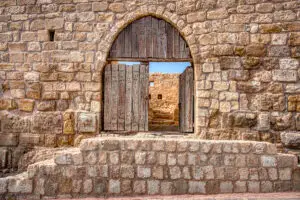 Also from this period
Al-Tafilah CastleA small castle on the north-west hill of Tafila, attributed to the Ayyubid and Mamluk periods, with Ottoman additions and possibly Crusader remains beneath.Profile · Karak & King’s Highway
539 – 63 BC
Persian & Hellenistic
Persian rule (539–332 BC) left few visible monuments in Jordan; the sites covered here belong to the Hellenistic part of the period. After Alexander the Great, Jordan was ruled first by the Ptolemies of Egypt and then by the Seleucids of Syria, and Greek culture spread through its towns. The period’s most striking monument is Qasr al-Abd at Iraq al-Amir, the palace of Hyrcanus the Tobiad, near the caves cut into the cliff above it.

Jerash (Gerasa)One of the best-preserved Roman provincial cities in the world, with gates, a colonnaded main street, theatres, temples and more than a dozen churches,…Travel guide·History
Pella (Tabqet Fahel)An ancient city in the northern Jordan Valley with a long history from the Neolithic to the Mamluks, from Canaanite temple to Decapolis city…Travel guide·History
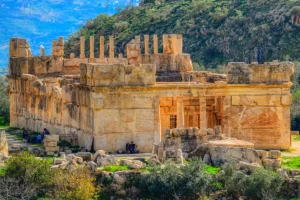
Qasr Al-AbdThe Hellenistic palace of the Tobiad Hyrcanus at Iraq al-Amir, built of giant stone blocks in the early 2nd century BC and decorated with…Travel guide·History
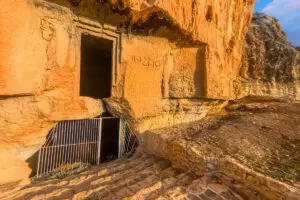
Ancient CavesCaves in two tiers in the cliffs of Wadi al-Seer, two of them carved with the name “Tobiah” in Aramaic — the caves of…Profile · Amman, Madaba & Dead Sea
c. 4th century BC – AD 106
Nabataean
The Nabataeans grew rich on the incense trade and carved their capital, Petra, out of the sandstone cliffs. Beyond Petra, this collection includes Little Petra, the temples of Khirbet et-Tannur and Khirbet edh-Dharih, the Temple of Allat in Wadi Rum and Humayma, a town on their trade routes. Greek writers describe the Nabataeans from the late 4th century BC; their first known king, Aretas I, is recorded in the 2nd century BC, and the kingdom lasted until Rome annexed it in AD 106.

Khirbet edh-DharihA Nabataean village and sanctuary in a spring-fed valley on the King’s Highway, with a temple frieze of zodiac signs and winged Victories.Travel guide·History

Khirbet et-TannurA Nabataean hilltop sanctuary above Wadi al-Hasa, whose sculpted gods and zodiac are now divided between Amman and Cincinnati.Travel guide·History

Qasr Abu El-KharaqA massive dry-stone tower on a hilltop near Qasr Bshir, set against an older enclosure, with pottery from the Iron Age and Nabataean times.Travel guide·History
Qasr El-AlA hilltop tower and enclosure on the Karak plateau, founded in the Iron Age and used again by the Nabataeans.Travel guide·History

Siq al-Barid (Little Petra)A narrow sandstone canyon north of Petra, lined with Nabataean dining halls, houses and cisterns, and a rare painted ceiling.Travel guide·History

Temple of Allat in Wadi RumA Nabataean temple of the goddess Allat at the foot of Jebel Rum, built around the turn of the era beside the springs of…Travel guide·History
Al LahunA hilltop site on the northern rim of Wadi al-Mujib, settled from the Early Bronze Age to Ottoman times, with an Iron Age fortress…Profile · Amman, Madaba & Dead Sea
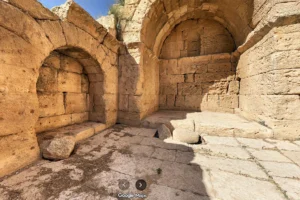
Dhat RasA village on the southern Karak plateau with three Nabataean–Roman temples, among them one of the best-preserved small temples in Jordan.Profile · Karak & King’s Highway
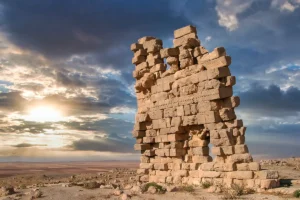
Dhat Ras WallThe tall freestanding wall of a Nabataean sanctuary on the hilltop at Dhat Ras — a landmark for centuries, dismantled in 2025 for rebuilding.Profile · Karak & King’s Highway
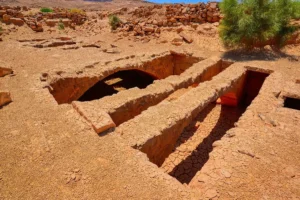
HumaymaThe Nabataean town of Hawara in the Hisma desert, with a 27 km aqueduct, an early Roman fort, Byzantine churches and the home of…Profile · Petra & the South
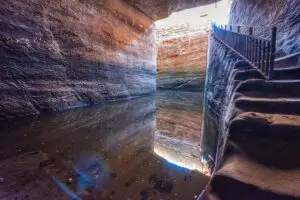
Nabataean Water ReservoirA rock-cut Nabataean cistern near Little Petra, in the al-Bayda area, built to store the rare winter rain for the farms and caravan stop…Profile · Petra & the South
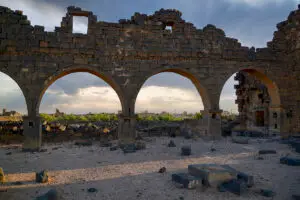
Umm el-JimalThe “black oasis”: a basalt town near the Syrian border with more than 150 houses, churches and reservoirs.Profile · Eastern Desert
63 BC – c. AD 324
Roman
Rome took control of the region in 63 BC, when Pompey brought the Decapolis cities such as Gerasa (Jerash) and Pella under its rule, and in 106 AD it annexed the Nabataean kingdom as the province of Arabia. Here you’ll find those cities, Roman Petra and the chain of forts that guarded the desert frontier, from Qasr Bshir and El-Lejjun to Qasr Azraq.
Jerash (Gerasa)One of the best-preserved Roman provincial cities in the world, with gates, a colonnaded main street, theatres, temples and more than a dozen churches,…Travel guide·History
Khirbet edh-DharihA Nabataean village and sanctuary in a spring-fed valley on the King’s Highway, with a temple frieze of zodiac signs and winged Victories.Travel guide·History
Pella (Tabqet Fahel)An ancient city in the northern Jordan Valley with a long history from the Neolithic to the Mamluks, from Canaanite temple to Decapolis city…Travel guide·History
Qasr Abu El-KharaqA massive dry-stone tower on a hilltop near Qasr Bshir, set against an older enclosure, with pottery from the Iron Age and Nabataean times.Travel guide·History
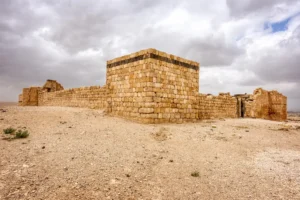
Qasr Al-HallabatA Roman frontier fort that became a monastery and then an Umayyad palace, with a mosque, mosaics and a Byzantine imperial edict reused in…Travel guide·History
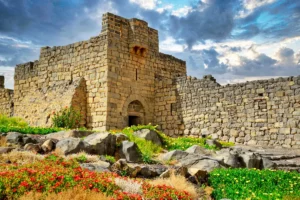
Qasr AzraqA black basalt fortress at the Azraq oasis — Roman in origin, rebuilt in 1236–37 and used by Lawrence of Arabia in the Arab…Travel guide·History

Qasr BshirThe best-preserved Roman fort in Jordan, built under Diocletian in AD 293–305, with its Latin building inscription still over the gate.Travel guide·History
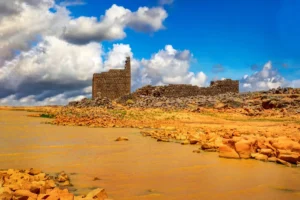
Qasr BurquA basalt tower beside a desert lake in Jordan’s far north-east, enlarged in AD 700 by the Umayyad prince al-Walid.Travel guide·History
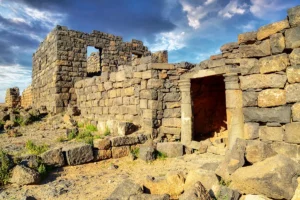
Qasr Deir Al-KahfA large basalt Roman fort in the far north-east, begun around AD 200, enlarged in AD 306 and later turned into a monastery.Travel guide·History
Qasr El-AlA hilltop tower and enclosure on the Karak plateau, founded in the Iron Age and used again by the Nabataeans.Travel guide·History
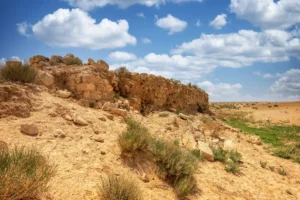
Qasr MshashA scattered Umayyad settlement in the steppe east of Amman, with a small qasr, a bath, reservoirs and dams built to catch the winter…Travel guide·History

Qasr UsaykhimA small Roman fort of black basalt on a volcanic hilltop north-east of Azraq, with a standing arch and views across the lava fields.Travel guide·History
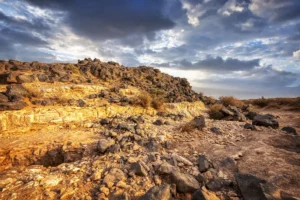
Qasr UweinidA remote basalt fort south-west of Azraq, where Severan inscriptions give the earliest date for Rome’s garrison at the oasis.Travel guide·History
Al LahunA hilltop site on the northern rim of Wadi al-Mujib, settled from the Early Bronze Age to Ottoman times, with an Iron Age fortress…Profile · Amman, Madaba & Dead Sea
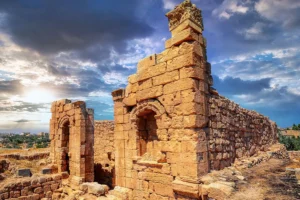
Al-RabbaThe ruins of ancient Rabbathmoba – Areopolis, the “city of Ares”, with the remains of a late Roman temple on the King’s Highway north…Profile · Karak & King’s Highway
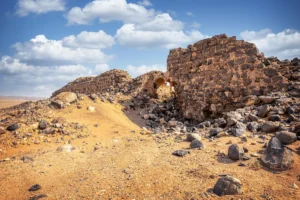
Dajaniya FortOne of the best-preserved Roman forts in southern Jordan, built around AD 300 on a plain north of Ma’an, with fourteen towers and walls…Profile · Petra & the South
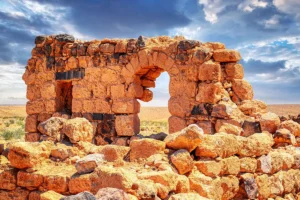
El-LejjunA Roman legionary fortress of about AD 300 on the desert edge north-east of Karak, probably the Betthorus of the late Roman army lists.Profile · Karak & King’s Highway
HumaymaThe Nabataean town of Hawara in the Hisma desert, with a 27 km aqueduct, an early Roman fort, Byzantine churches and the home of…Profile · Petra & the South
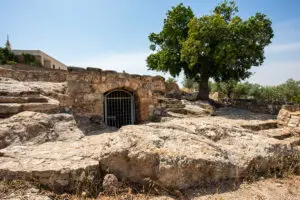
Jesus CaveA natural cave in the hills of al-Kura that local tradition links with Jesus, beside a Roman olive press and facing a Byzantine church.Profile · North & Jordan Valley
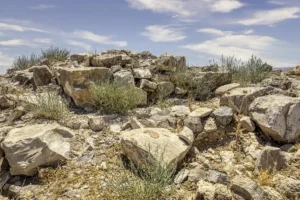
Khirbet el-FityanA small Roman fort of about AD 300 on a ridge north-west of El-Lejjun — the lookout for the legionary fortress below.Profile · Karak & King’s Highway
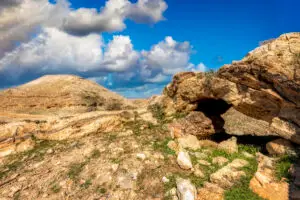
MachaerusHerod’s hilltop fortress above the Dead Sea, where John the Baptist was imprisoned and executed.Profile · Amman, Madaba & Dead Sea
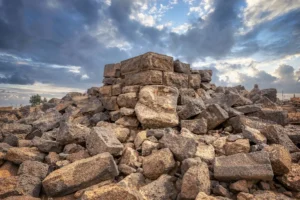
Qasr Deir Al-KinnA Roman fort in the basalt desert near the Syrian border, with a tower inside, a large reservoir outside, and perhaps later a hermit’s…Profile · Eastern Desert
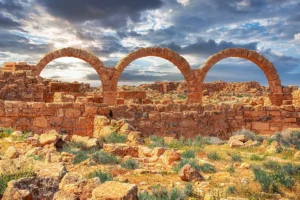
Umm ar-RasasKastron Mefa’a, a Roman camp that grew into a Byzantine town, famous for its mosaic of the cities of the Holy Land.Profile · Amman, Madaba & Dead Sea
Umm el-JimalThe “black oasis”: a basalt town near the Syrian border with more than 150 houses, churches and reservoirs.Profile · Eastern Desert
Jerash · 20 Roman monuments: Hadrian’s Arch · Hippodrome · South Gate & City Wall · West Souk & Military Barracks · East Souk & South Street · Sanctuary of Zeus · South Theatre · Oval Plaza · Cardo Maximus · Macellum · Shops of the South Cardo · South Tetrapylon & Decumanus · Great East Baths & South Bridge · Nymphaeum · Sanctuary of Artemis · North Theatre · Civic Complex · North Tetrapylon & Decumanus · West Baths · North Gate & Upper Cardo · See also the Visitor Centre & Museum
Pella · 2 Roman monuments: Roman Odeon · Tell al-Husn
c. AD 324 – 636
Byzantine
Under Byzantine rule Christianity spread across Jordan, and towns and villages built churches, many of them paved with mosaics. Here you’ll find Umm ar-Rasas, Mount Nebo, the Apostles Church in Madaba, pilgrimage sites such as Tell Mar Elias and Jesus Cave, and the churches of Jerash and Pella.
Jerash (Gerasa)One of the best-preserved Roman provincial cities in the world, with gates, a colonnaded main street, theatres, temples and more than a dozen churches,…Travel guide·History
Pella (Tabqet Fahel)An ancient city in the northern Jordan Valley with a long history from the Neolithic to the Mamluks, from Canaanite temple to Decapolis city…Travel guide·History
Qasr Al-HallabatA Roman frontier fort that became a monastery and then an Umayyad palace, with a mosque, mosaics and a Byzantine imperial edict reused in…Travel guide·History
Qasr BshirThe best-preserved Roman fort in Jordan, built under Diocletian in AD 293–305, with its Latin building inscription still over the gate.Travel guide·History
Qasr BurquA basalt tower beside a desert lake in Jordan’s far north-east, enlarged in AD 700 by the Umayyad prince al-Walid.Travel guide·History
Qasr Deir Al-KahfA large basalt Roman fort in the far north-east, begun around AD 200, enlarged in AD 306 and later turned into a monastery.Travel guide·History
Qasr UsaykhimA small Roman fort of black basalt on a volcanic hilltop north-east of Azraq, with a standing arch and views across the lava fields.Travel guide·History
Al LahunA hilltop site on the northern rim of Wadi al-Mujib, settled from the Early Bronze Age to Ottoman times, with an Iron Age fortress…Profile · Amman, Madaba & Dead Sea
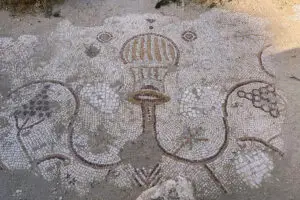
Al-Bassah ChurchA cave church behind a cross-marked façade near Iraq al-Amir, with a small mosaic church in front and a Bronze Age cemetery nearby.Profile · Amman, Madaba & Dead Sea
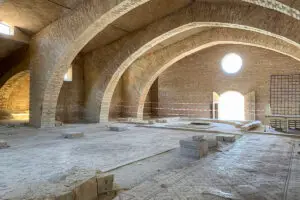
Apostles ChurchA church built in AD 578 in Madaba, its floor signed by the mosaicist Salaman — with the Sea personified among fish and sea…Profile · Amman, Madaba & Dead Sea
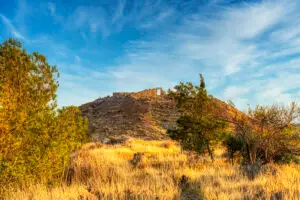
Church of Saint GeorgeA church on the summit of ancient Nebo, paved in AD 535/536 with a mosaic of farming scenes, animals and one of the earliest…Profile · Amman, Madaba & Dead Sea
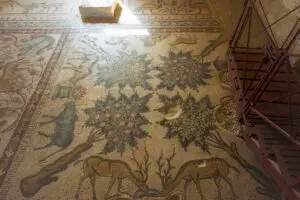
Church of St. Lot and St. ProcopiusA Byzantine church at Khirbet al-Mukhayyat with a mosaic floor of vines, animals and village life.Profile · Amman, Madaba & Dead Sea
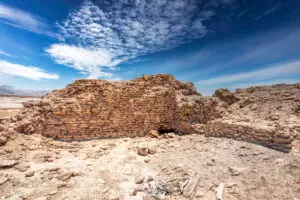
Deir El-Kattar El-ByzantiThe remains of a Byzantine monastery on the white marl plateau of the Lisan peninsula, with a church, a mosaic-floored chapel and hermit cells…Profile · Karak & King’s Highway
HumaymaThe Nabataean town of Hawara in the Hisma desert, with a 27 km aqueduct, an early Roman fort, Byzantine churches and the home of…Profile · Petra & the South
Jesus CaveA natural cave in the hills of al-Kura that local tradition links with Jesus, beside a Roman olive press and facing a Byzantine church.Profile · North & Jordan Valley
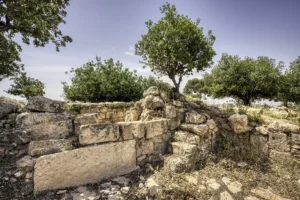
Jesus ChurchA Byzantine basilica near Bayt Idis, known to archaeologists as Khallit ‘Isa, whose mosaic floors carry seven Greek inscriptions naming its priests, deacons and…Profile · North & Jordan Valley
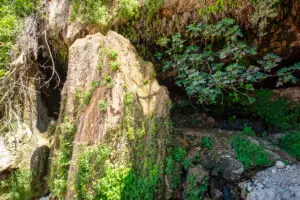
Moses SpringA perennial spring in the valley below Mount Nebo, linked by tradition with the water Moses brought from the rock — with two Byzantine…Profile · Amman, Madaba & Dead Sea
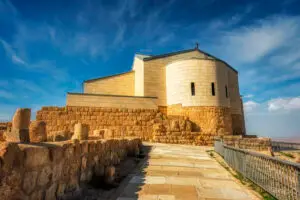
Mount NeboThe mountain where Moses is said to have seen the Promised Land, with a Byzantine church of famous mosaics.Profile · Amman, Madaba & Dead Sea
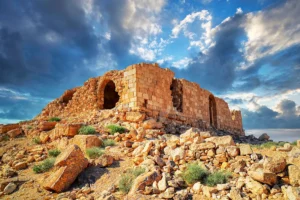
Qasr MhayThe historic qasr of Mhay, a village on the Karak plateau built over an ancient settlement, with Byzantine cemeteries of Greek tombstones.Profile · Karak & King’s Highway
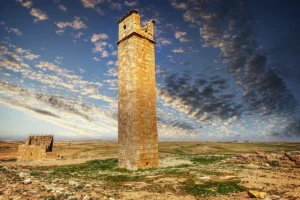
Stylite TowerThe only known stylite tower in Jordan — a 6th-century stone tower near Umm ar-Rasas where a hermit lived in a room at the…Profile · Amman, Madaba & Dead Sea
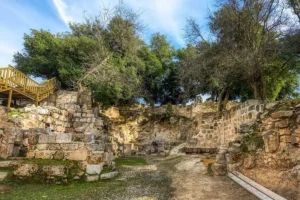
Tell Mar EliasThe hilltop of the Prophet Elijah near Ajloun, crowned by a great Byzantine church with three apses, mosaic floors and a dedication dated AD…Profile · North & Jordan Valley
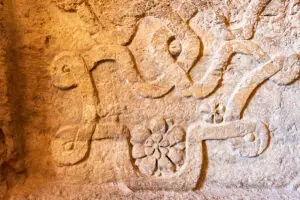
The Seven Sleepers CaveA rock-cut tomb in south-east Amman linked to the Qur’anic story of the Sleepers of the Cave, with seven sarcophagi and a mosque above.Profile · Amman, Madaba & Dead Sea
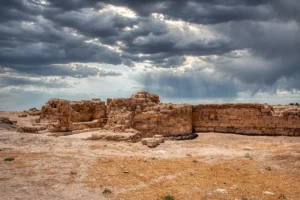
Umayyad Palace of ShuqayraAn Umayyad fortified residence of the 8th century on a spur above Wadi al-Hasa near Dhat Ras, with the first mosaic floor excavated on…Profile · Karak & King’s Highway
Umm ar-RasasKastron Mefa’a, a Roman camp that grew into a Byzantine town, famous for its mosaic of the cities of the Holy Land.Profile · Amman, Madaba & Dead Sea
Umm el-JimalThe “black oasis”: a basalt town near the Syrian border with more than 150 houses, churches and reservoirs.Profile · Eastern Desert
Pella · 5 Byzantine monuments: East Church · Umayyad Residential Quarter · Civic Complex Church · Tell al-Husn · West Church
Jerash · 12 Byzantine monuments: Church of Marianos · Church of Saints Peter and Paul · Mortuary Church (Funeral Chapel) · The Cathedral · Church of St Theodore · Baths of Placcus · Church of the Propylaea · Hydraulic Stone Saw Machine · The Three Churches Complex · Church of Bishop Genesius · Synagogue-Church · Church of Bishop Isaiah · See also the Visitor Centre & Museum
c. AD 636 – 1100
Early Islamic & Later Caliphates
Following the Muslim conquest in the 630s, Jordan came under Rashidun, Umayyad and Abbasid rule. Later control varied across the region before the Crusader expansion in the early 12th century. The Umayyad desert castles are its best-known monuments; here you’ll also find the early Islamic town of Ayla at Aqaba and churches such as Umm ar-Rasas, still in use under Islamic rule.
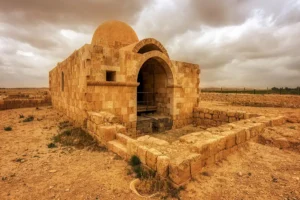
Hammam As-SarahThe Umayyad bathhouse of the Hallabat estate, with a reception hall, a domed hot room and the well and tank that fed it.Travel guide·History
Jerash (Gerasa)One of the best-preserved Roman provincial cities in the world, with gates, a colonnaded main street, theatres, temples and more than a dozen churches,…Travel guide·History
Pella (Tabqet Fahel)An ancient city in the northern Jordan Valley with a long history from the Neolithic to the Mamluks, from Canaanite temple to Decapolis city…Travel guide·History
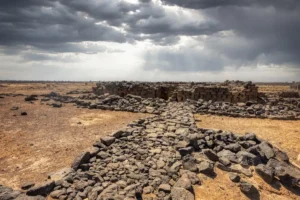
Qasr Ain Es-SilA small Umayyad farmhouse of black basalt in Azraq, with two olive presses and its own bath.Travel guide·History
Qasr Al-HallabatA Roman frontier fort that became a monastery and then an Umayyad palace, with a mosque, mosaics and a Byzantine imperial edict reused in…Travel guide·History
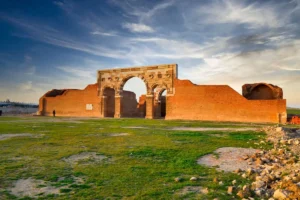
Qasr Al-MushattaThe largest Umayyad palace in Jordan, begun around AD 743 and never finished — most of its carved façade is now in Berlin.Travel guide·History
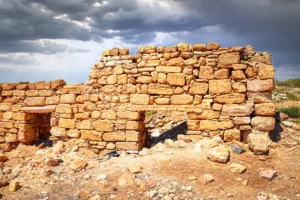
Qasr Al-MuwaqqarThe ruined palace of Caliph Yazid II south-east of Amman, beside a great reservoir whose inscribed water gauge is dated AH 104 (AD 722–23).Travel guide·History
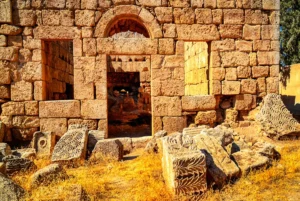
Qasr Al-QastalOne of the earliest Umayyad palaces, with a mosque and round minaret, a cemetery, a dam and some 70 cisterns beside Queen Alia Airport.Travel guide·History
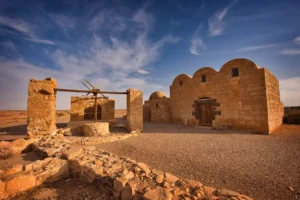
Qasr BshirThe best-preserved Roman fort in Jordan, built under Diocletian in AD 293–305, with its Latin building inscription still over the gate.Travel guide·History
Qasr BurquA basalt tower beside a desert lake in Jordan’s far north-east, enlarged in AD 700 by the Umayyad prince al-Walid.Travel guide·History
Qasr Deir Al-KahfA large basalt Roman fort in the far north-east, begun around AD 200, enlarged in AD 306 and later turned into a monastery.Travel guide·History
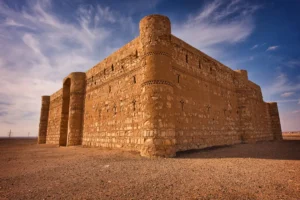
Qasr KharanaA square, fortress-like Umayyad building in the eastern desert, already standing by AD 710 and still one of the best preserved of Jordan’s desert…Travel guide·History
Qasr MshashA scattered Umayyad settlement in the steppe east of Amman, with a small qasr, a bath, reservoirs and dams built to catch the winter…Travel guide·History
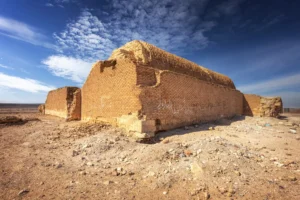
HumaymaThe Nabataean town of Hawara in the Hisma desert, with a 27 km aqueduct, an early Roman fort, Byzantine churches and the home of…Profile · Petra & the South
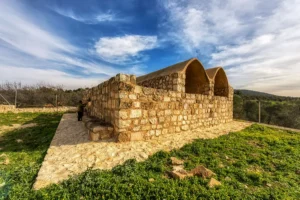
Listeb MosqueA historic mosque on a hilltop north-west of Tell Mar Elias in the Ajloun hills, described by local sources as dating from the Umayyad…Profile · North & Jordan Valley
Umayyad Palace of ShuqayraAn Umayyad fortified residence of the 8th century on a spur above Wadi al-Hasa near Dhat Ras, with the first mosaic floor excavated on…Profile · Karak & King’s Highway
Pella · 1 Umayyad monument: Umayyad Residential Quarter
Jerash · 1 Umayyad monument: Umayyad Mosque & Houses · See also the Visitor Centre & Museum
Across the early Islamic centuries· 5 sites
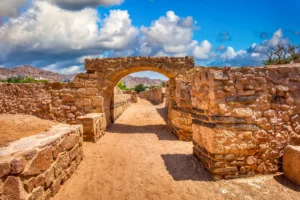
AylaOne of the earliest planned towns of the Islamic world, built beside the sea at Aqaba in the 7th century, with walls, towers and…Profile · Wadi Rum & Aqaba
Umm ar-RasasKastron Mefa’a, a Roman camp that grew into a Byzantine town, famous for its mosaic of the cities of the Holy Land.Profile · Amman, Madaba & Dead Sea
Umm el-JimalThe “black oasis”: a basalt town near the Syrian border with more than 150 houses, churches and reservoirs.Profile · Eastern Desert
Also from this periodAl LahunA hilltop site on the northern rim of Wadi al-Mujib, settled from the Early Bronze Age to Ottoman times, with an Iron Age fortress…Profile · Amman, Madaba & Dead Sea
Also from this periodThe Seven Sleepers CaveA rock-cut tomb in south-east Amman linked to the Qur’anic story of the Sleepers of the Cave, with seven sarcophagi and a mosque above.Profile · Amman, Madaba & Dead Sea
c. AD 1115 – 1260
Crusader & Ayyubid
In the 12th century the Crusaders built castles east of the Jordan – Shobak in 1115 and Karak in 1142 – to control the road between Syria and Egypt, with two smaller forts at Petra. Saladin’s forces took Karak in 1188 and Shobak in 1189. In the north, his commander had already built Ajloun Castle in 1184.

Ajloun CastleAn Ayyubid hilltop castle above Ajloun, begun in 1184–85 by one of Saladin’s emirs and enlarged in 1214–15.Travel guide·History


Karak CastleA massive Crusader castle on Karak’s hilltop, begun around 1142 and rebuilt by the Ayyubids and the Mamluk sultan Baybars.Travel guide·History
Qasr AzraqA black basalt fortress at the Azraq oasis — Roman in origin, rebuilt in 1236–37 and used by Lawrence of Arabia in the Arab…Travel guide·History

Shobak CastleThe Crusader castle of Montréal, founded by King Baldwin I in 1115 on a hill above Shobak and rebuilt by the Ayyubids and Mamluks.Travel guide·History

Vaux Moise CastleThe Crusader castle of al-Wu’ayra, Li Vaux Moïse, on a rocky ridge just north of Petra, reached by a bridge across a gorge.Travel guide·History
Al-Tafilah CastleA small castle on the north-west hill of Tafila, attributed to the Ayyubid and Mamluk periods, with Ottoman additions and possibly Crusader remains beneath.Profile · Karak & King’s Highway
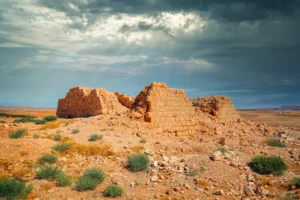
Dusaq PalaceAn Ayyubid leisure residence of 1223 on a hilltop east of Shobak, with a reception iwan, a pool and a heated bathhouse.Profile · Petra & the South
Khirbet Al-DeirA hilltop site near Fuheis around a massive round Iron Age tower, later used as a church — with cisterns, a rock-cut press and…Profile · Amman, Madaba & Dead Sea
c. AD 1250 – 1516
Mamluk
The Mamluk sultans of Egypt repaired the castles they took from the Ayyubids and kept up the roads and postal routes across Jordan, with Karak as the seat of a province. Here you’ll find the castles of Karak, Shobak and Ajloun, the late Mamluk fort at Aqaba, the tower of Qasr Shebib in Zarqa and the Mamluk levels of Pella and Al-Lahun.
Ajloun CastleAn Ayyubid hilltop castle above Ajloun, begun in 1184–85 by one of Saladin’s emirs and enlarged in 1214–15.Travel guide·History
Karak CastleA massive Crusader castle on Karak’s hilltop, begun around 1142 and rebuilt by the Ayyubids and the Mamluk sultan Baybars.Travel guide·History
Pella (Tabqet Fahel)An ancient city in the northern Jordan Valley with a long history from the Neolithic to the Mamluks, from Canaanite temple to Decapolis city…Travel guide·History
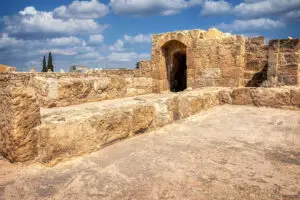
Qasr ShebibA medieval tower-fort on a spur in the centre of Zarqa, a Hajj halt that became the seed of the modern city.Travel guide·History
Shobak CastleThe Crusader castle of Montréal, founded by King Baldwin I in 1115 on a hill above Shobak and rebuilt by the Ayyubids and Mamluks.Travel guide·History
Al LahunA hilltop site on the northern rim of Wadi al-Mujib, settled from the Early Bronze Age to Ottoman times, with an Iron Age fortress…Profile · Amman, Madaba & Dead Sea
Al-Tafilah CastleA small castle on the north-west hill of Tafila, attributed to the Ayyubid and Mamluk periods, with Ottoman additions and possibly Crusader remains beneath.Profile · Karak & King’s Highway
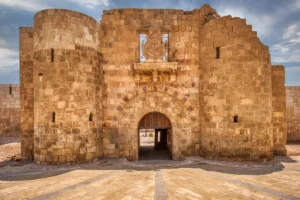
Aqaba FortA Mamluk caravanserai for Hajj pilgrims on the Aqaba seafront, rebuilt by Sultan Qansuh al-Ghuri in the early 16th century and repaired by the…Profile · Wadi Rum & Aqaba
Khirbet Al-DeirA hilltop site near Fuheis around a massive round Iron Age tower, later used as a church — with cisterns, a rock-cut press and…Profile · Amman, Madaba & Dead Sea
AD 1516 – 1918
Ottoman
The Ottomans protected the pilgrim road from Damascus to Mecca with a chain of forts, many of which still stand along the Desert Highway, from Qatrana to Mudawwara. At the end of the period came the Hejaz Railway, whose station at Al-Hasa is covered here, along with stone heritage villages in the south.
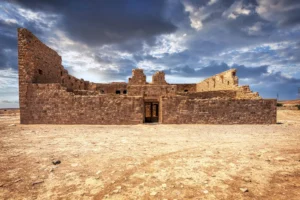
Qal’at Al-HasaAn Ottoman Hajj fort of 1760 beside the bridge over Wadi al-Hasa, where pilgrims crossed the most dangerous flood valley on the route.Travel guide·History
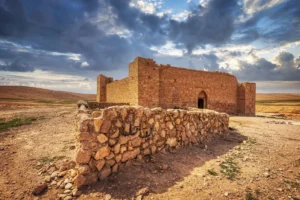
Qal’at Dab’aAn 18th-century Ottoman fort on the pilgrim road south of Amman, with four corner towers and a great reservoir beside it.Travel guide·History
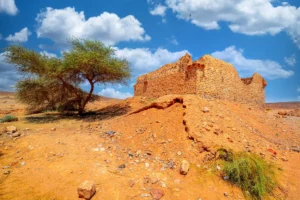
Qal’at Fassu’aA small 18th-century Hajj fort at the head of the Batn al-Ghul pass, the last stop on high ground before the pilgrims entered the…Travel guide·History
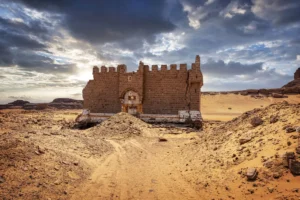
Qal’at MudawwaraAn 18th-century Hajj fort near the Saudi border, beside the railway station captured by the Imperial Camel Corps in 1918.Travel guide·History
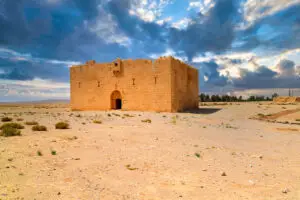
Qal’at QatranaA 16th-century Ottoman fort and great reservoir on the pilgrim road, now restored with a visitor centre beside the Desert Highway.Travel guide·History
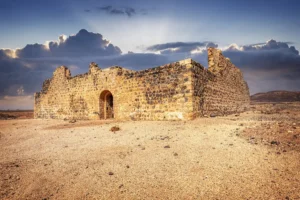
Qal’at ‘UnaizaA 16th-century Ottoman Hajj fort below the black hill of Jabal Unaiza, excavated in 2002 to reveal two centuries of daily life.Travel guide·History
Qasr AzraqA black basalt fortress at the Azraq oasis — Roman in origin, rebuilt in 1236–37 and used by Lawrence of Arabia in the Arab…Travel guide·History
Qasr ShebibA medieval tower-fort on a spur in the centre of Zarqa, a Hajj halt that became the seed of the modern city.Travel guide·History
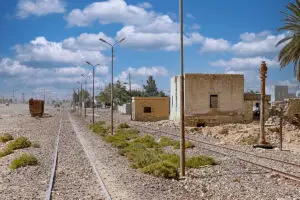
Al-Hasa Train StationA stone station of the Ottoman Hejaz Railway in the Wadi al-Hasa, fought over in the Arab Revolt of 1918.Profile · Karak & King’s Highway
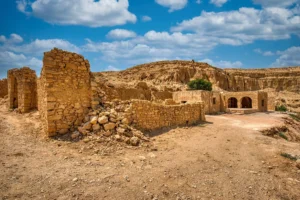
Al-Matan Historic VillageAn abandoned stone village of the late Ottoman era on a cliff top near Tafila, emptied in the 1980s and partly revived as a…Profile · Petra & the South
Al-Tafilah CastleA small castle on the north-west hill of Tafila, attributed to the Ayyubid and Mamluk periods, with Ottoman additions and possibly Crusader remains beneath.Profile · Karak & King’s Highway
Aqaba FortA Mamluk caravanserai for Hajj pilgrims on the Aqaba seafront, rebuilt by Sultan Qansuh al-Ghuri in the early 16th century and repaired by the…Profile · Wadi Rum & Aqaba
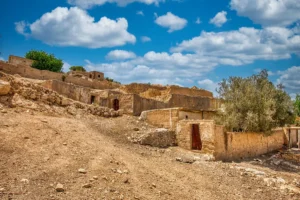
As Sala Heritage VillageA traditional stone village below the rock fortress of Sela, abandoned in the 1990s and now partly restored as a heritage village and guesthouse.Profile · Karak & King’s Highway
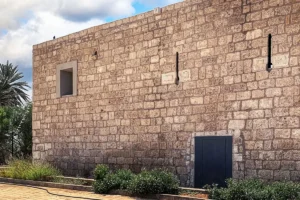
Qal’at Ma’anAn Ottoman Hajj fort of 1559–1563 in Ma’an, built under Sultan Süleyman the Magnificent and now home to the Ma’an Heritage Museum.Profile · Petra & the South
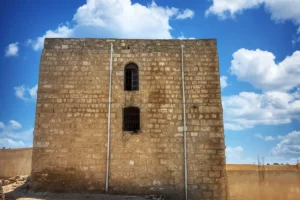
Qal’at ZiziaA Hajj fort and one of the largest ancient reservoirs in Jordan at al-Jiza, beside Queen Alia Airport — a pilgrims’ halt from the…Profile · Eastern Desert
1921 – present
Modern Jordan
Modern Jordan begins with the Emirate of Transjordan in 1921, followed by independence in 1946.
PeriodDatesSites
Stone Age: Neolithic villagesc. 10,000 – 4500 BC 5 sites
People lived in what is now Jordan for hundreds of thousands of years as hunter-gatherers, through the Palaeolithic and the Epipalaeolithic, when groups such as the Natufians began to stay longer in one place. Jordan’s first farming villages appeared in the Neolithic, when people began to settle, grow crops and keep animals. Beidha near Petra, Ghwayr in Wadi Feinan, the cave of Iraq ed-Dubb near Ajloun and Qasr al-Jilat in the eastern desert are among the sites covered here.
Al BeidhaProfile · Petra & the South
GhwayrProfile · Petra & the South
Iraq ed-DubbProfile · North & Jordan Valley
Qasr Al-JilatProfile · Eastern Desert
Also from this periodPella (Tabqet Fahel)Travel guide·History
Chalcolithicc. 4500 – 3600 BCThe Copper–Stone Age, when copper tools came into use alongside stone ones and villages spread across the Jordan Valley; Teleilat Ghassul gave its name to the Ghassulian culture of this time.
Bronze Agec. 3600 – 1200 BC8 sites
8 sitesIn the Bronze Age, villages in Jordan grew into walled towns and dolmen fields were raised on the hillsides. Here you’ll find Jawa in the basalt desert, the Damiya dolmens, Tell Deir Alla and Tell el-Hammam in the Jordan Valley, and Pella, which was lived in through much of this time.
Pella (Tabqet Fahel)Travel guide·History
Al LahunProfile · Amman, Madaba & Dead Sea
Damiya Dolmen FieldProfile · Amman, Madaba & Dead Sea
Hesban RocksProfile · Amman, Madaba & Dead Sea
Tell Deir AllaProfile · Amman, Madaba & Dead Sea
Tell El-HammamProfile · Amman, Madaba & Dead Sea
Tell El-MazarProfile · North & Jordan Valley
Iron Age Kingdomsc. 1200 – 539 BC11 sites
11 sitesThe Iron Age saw the rise of the kingdoms of Ammon, Moab and Edom. Their remains include Busayra and the rock of Sela in Edom, the fortified Iron Age settlement at Al-Lahun above Wadi Mujib and Tell Deir Alla in the Jordan Valley. In the 6th century BC the region came under Babylonian rule; the relief of King Nabonidus at Sela marks his campaign against Edom.
Pella (Tabqet Fahel)Travel guide·History
Qasr Abu El-KharaqTravel guide·History
Qasr El-AlTravel guide·History
Al LahunProfile · Amman, Madaba & Dead Sea
BusayraProfile · Petra & the South
Khirbet Al-DeirProfile · Amman, Madaba & Dead Sea
Muallaqat al-DayrProfile · Amman, Madaba & Dead Sea
Tell Deir AllaProfile · Amman, Madaba & Dead Sea
Tell El-MazarProfile · North & Jordan Valley
Also from this periodAl-Tafilah CastleProfile · Karak & King’s Highway
Persian & Hellenistic539 – 63 BC4 sites
4 sitesPersian rule (539–332 BC) left few visible monuments in Jordan; the sites covered here belong to the Hellenistic part of the period. After Alexander the Great, Jordan was ruled first by the Ptolemies of Egypt and then by the Seleucids of Syria, and Greek culture spread through its towns. The period’s most striking monument is Qasr al-Abd at Iraq al-Amir, the palace of Hyrcanus the Tobiad, near the caves cut into the cliff above it.
Jerash (Gerasa)Travel guide·History
Pella (Tabqet Fahel)Travel guide·History
Qasr Al-AbdTravel guide·History
Ancient CavesProfile · Amman, Madaba & Dead Sea
Nabataeanc. 4th century BC – AD 10614 sites
14 sitesThe Nabataeans grew rich on the incense trade and carved their capital, Petra, out of the sandstone cliffs. Beyond Petra, this collection includes Little Petra, the temples of Khirbet et-Tannur and Khirbet edh-Dharih, the Temple of Allat in Wadi Rum and Humayma, a town on their trade routes. Greek writers describe the Nabataeans from the late 4th century BC; their first known king, Aretas I, is recorded in the 2nd century BC, and the kingdom lasted until Rome annexed it in AD 106.
Khirbet edh-DharihTravel guide·History
Khirbet et-TannurTravel guide·History
Qasr Abu El-KharaqTravel guide·History
Qasr El-AlTravel guide·History
Siq al-Barid (Little Petra)Travel guide·History
Temple of Allat in Wadi RumTravel guide·History
Al LahunProfile · Amman, Madaba & Dead Sea
Dhat RasProfile · Karak & King’s Highway
Dhat Ras WallProfile · Karak & King’s Highway
HumaymaProfile · Petra & the South
Nabataean Water ReservoirProfile · Petra & the South
Umm el-JimalProfile · Eastern Desert
Roman63 BC – c. AD 32447 sites
47 sitesRome took control of the region in 63 BC, when Pompey brought the Decapolis cities such as Gerasa (Jerash) and Pella under its rule, and in 106 AD it annexed the Nabataean kingdom as the province of Arabia. Here you’ll find those cities, Roman Petra and the chain of forts that guarded the desert frontier, from Qasr Bshir and El-Lejjun to Qasr Azraq.
Jerash (Gerasa)Travel guide·History
Khirbet edh-DharihTravel guide·History
Pella (Tabqet Fahel)Travel guide·History
Qasr Abu El-KharaqTravel guide·History
Qasr Al-HallabatTravel guide·History
Qasr AzraqTravel guide·History
Qasr BshirTravel guide·History
Qasr BurquTravel guide·History
Qasr Deir Al-KahfTravel guide·History
Qasr El-AlTravel guide·History
Qasr MshashTravel guide·History
Qasr UsaykhimTravel guide·History
Qasr UweinidTravel guide·History
Al LahunProfile · Amman, Madaba & Dead Sea
Al-RabbaProfile · Karak & King’s Highway
Dajaniya FortProfile · Petra & the South
El-LejjunProfile · Karak & King’s Highway
HumaymaProfile · Petra & the South
Jesus CaveProfile · North & Jordan Valley
Khirbet el-FityanProfile · Karak & King’s Highway
MachaerusProfile · Amman, Madaba & Dead Sea
Qasr Deir Al-KinnProfile · Eastern Desert
Umm ar-RasasProfile · Amman, Madaba & Dead Sea
Umm el-JimalProfile · Eastern Desert
Jerash · 20 Roman monuments: Hadrian’s Arch · Hippodrome · South Gate & City Wall · West Souk & Military Barracks · East Souk & South Street · Sanctuary of Zeus · South Theatre · Oval Plaza · Cardo Maximus · Macellum · Shops of the South Cardo · South Tetrapylon & Decumanus · Great East Baths & South Bridge · Nymphaeum · Sanctuary of Artemis · North Theatre · Civic Complex · North Tetrapylon & Decumanus · West Baths · North Gate & Upper Cardo · See also the Visitor Centre & Museum
Pella · 2 Roman monuments: Roman Odeon · Tell al-Husn
Byzantinec. AD 324 – 63642 sites
42 sitesUnder Byzantine rule Christianity spread across Jordan, and towns and villages built churches, many of them paved with mosaics. Here you’ll find Umm ar-Rasas, Mount Nebo, the Apostles Church in Madaba, pilgrimage sites such as Tell Mar Elias and Jesus Cave, and the churches of Jerash and Pella.
Jerash (Gerasa)Travel guide·History
Pella (Tabqet Fahel)Travel guide·History
Qasr Al-HallabatTravel guide·History
Qasr BshirTravel guide·History
Qasr BurquTravel guide·History
Qasr Deir Al-KahfTravel guide·History
Qasr UsaykhimTravel guide·History
Al LahunProfile · Amman, Madaba & Dead Sea
Al-Bassah ChurchProfile · Amman, Madaba & Dead Sea
Apostles ChurchProfile · Amman, Madaba & Dead Sea
Church of Saint GeorgeProfile · Amman, Madaba & Dead Sea
Church of St. Lot and St. ProcopiusProfile · Amman, Madaba & Dead Sea
Deir El-Kattar El-ByzantiProfile · Karak & King’s Highway
HumaymaProfile · Petra & the South
Jesus CaveProfile · North & Jordan Valley
Jesus ChurchProfile · North & Jordan Valley
Moses SpringProfile · Amman, Madaba & Dead Sea
Mount NeboProfile · Amman, Madaba & Dead Sea
Qasr MhayProfile · Karak & King’s Highway
Stylite TowerProfile · Amman, Madaba & Dead Sea
Tell Mar EliasProfile · North & Jordan Valley
The Seven Sleepers CaveProfile · Amman, Madaba & Dead Sea
Umayyad Palace of ShuqayraProfile · Karak & King’s Highway
Umm ar-RasasProfile · Amman, Madaba & Dead Sea
Umm el-JimalProfile · Eastern Desert
Pella · 5 Byzantine monuments: East Church · Umayyad Residential Quarter · Civic Complex Church · Tell al-Husn · West Church
Jerash · 12 Byzantine monuments: Church of Marianos · Church of Saints Peter and Paul · Mortuary Church (Funeral Chapel) · The Cathedral · Church of St Theodore · Baths of Placcus · Church of the Propylaea · Hydraulic Stone Saw Machine · The Three Churches Complex · Church of Bishop Genesius · Synagogue-Church · Church of Bishop Isaiah · See also the Visitor Centre & Museum
Early Islamic & Later Caliphatesc. AD 636 – 110025 sites
25 sitesFollowing the Muslim conquest in the 630s, Jordan came under Rashidun, Umayyad and Abbasid rule. Later control varied across the region before the Crusader expansion in the early 12th century. The Umayyad desert castles are its best-known monuments; here you’ll also find the early Islamic town of Ayla at Aqaba and churches such as Umm ar-Rasas, still in use under Islamic rule.
Umayyad periodAD 661 – 750Explore the period →
Hammam As-SarahTravel guide·History
Jerash (Gerasa)Travel guide·History
Pella (Tabqet Fahel)Travel guide·History
Qasr Ain Es-SilTravel guide·History
Qasr Al-HallabatTravel guide·History
Qasr Al-MushattaTravel guide·History
Qasr Al-MuwaqqarTravel guide·History
Qasr Al-QastalTravel guide·History
Qasr BshirTravel guide·History
Qasr BurquTravel guide·History
Qasr Deir Al-KahfTravel guide·History
Qasr KharanaTravel guide·History
Qasr MshashTravel guide·History
HumaymaProfile · Petra & the South
Listeb MosqueProfile · North & Jordan Valley
Umayyad Palace of ShuqayraProfile · Karak & King’s Highway
Pella · 1 Umayyad monument: Umayyad Residential Quarter
Jerash · 1 Umayyad monument: Umayyad Mosque & Houses · See also the Visitor Centre & Museum
Across the early Islamic centuries
AylaProfile · Wadi Rum & Aqaba
Umm ar-RasasProfile · Amman, Madaba & Dead Sea
Umm el-JimalProfile · Eastern Desert
Also from this periodAl LahunProfile · Amman, Madaba & Dead Sea
Also from this periodThe Seven Sleepers CaveProfile · Amman, Madaba & Dead Sea
Crusader & Ayyubidc. AD 1115 – 12609 sites
9 sitesIn the 12th century the Crusaders built castles east of the Jordan – Shobak in 1115 and Karak in 1142 – to control the road between Syria and Egypt, with two smaller forts at Petra. Saladin’s forces took Karak in 1188 and Shobak in 1189. In the north, his commander had already built Ajloun Castle in 1184.
Ajloun CastleTravel guide·History
Karak CastleTravel guide·History
Qasr AzraqTravel guide·History
Shobak CastleTravel guide·History
Vaux Moise CastleTravel guide·History
Al-Tafilah CastleProfile · Karak & King’s Highway
Dusaq PalaceProfile · Petra & the South
Khirbet Al-DeirProfile · Amman, Madaba & Dead Sea
Mamlukc. AD 1250 – 15169 sites
9 sitesThe Mamluk sultans of Egypt repaired the castles they took from the Ayyubids and kept up the roads and postal routes across Jordan, with Karak as the seat of a province. Here you’ll find the castles of Karak, Shobak and Ajloun, the late Mamluk fort at Aqaba, the tower of Qasr Shebib in Zarqa and the Mamluk levels of Pella and Al-Lahun.
Ajloun CastleTravel guide·History
Karak CastleTravel guide·History
Pella (Tabqet Fahel)Travel guide·History
Qasr ShebibTravel guide·History
Shobak CastleTravel guide·History
Al LahunProfile · Amman, Madaba & Dead Sea
Al-Tafilah CastleProfile · Karak & King’s Highway
Aqaba FortProfile · Wadi Rum & Aqaba
Khirbet Al-DeirProfile · Amman, Madaba & Dead Sea
OttomanAD 1516 – 191815 sites
15 sitesThe Ottomans protected the pilgrim road from Damascus to Mecca with a chain of forts, many of which still stand along the Desert Highway, from Qatrana to Mudawwara. At the end of the period came the Hejaz Railway, whose station at Al-Hasa is covered here, along with stone heritage villages in the south.
Qal’at Al-HasaTravel guide·History
Qal’at Dab’aTravel guide·History
Qal’at Fassu’aTravel guide·History
Qal’at MudawwaraTravel guide·History
Qal’at QatranaTravel guide·History
Qal’at ‘UnaizaTravel guide·History
Qasr AzraqTravel guide·History
Qasr ShebibTravel guide·History
Al-Hasa Train StationProfile · Karak & King’s Highway
Al-Matan Historic VillageProfile · Petra & the South
Al-Tafilah CastleProfile · Karak & King’s Highway
Aqaba FortProfile · Wadi Rum & Aqaba
As Sala Heritage VillageProfile · Karak & King’s Highway
Qal’at Ma’anProfile · Petra & the South
Qal’at ZiziaProfile · Eastern Desert
Modern Jordan1921 – presentModern Jordan begins with the Emirate of Transjordan in 1921, followed by independence in 1946.
Travel guide (with a link to the site’s history) Profile
From page to place
See these sites with a private guide
Tell us which sites caught your eye and we’ll plan a private day around them, with door-to-door transport from Amman.