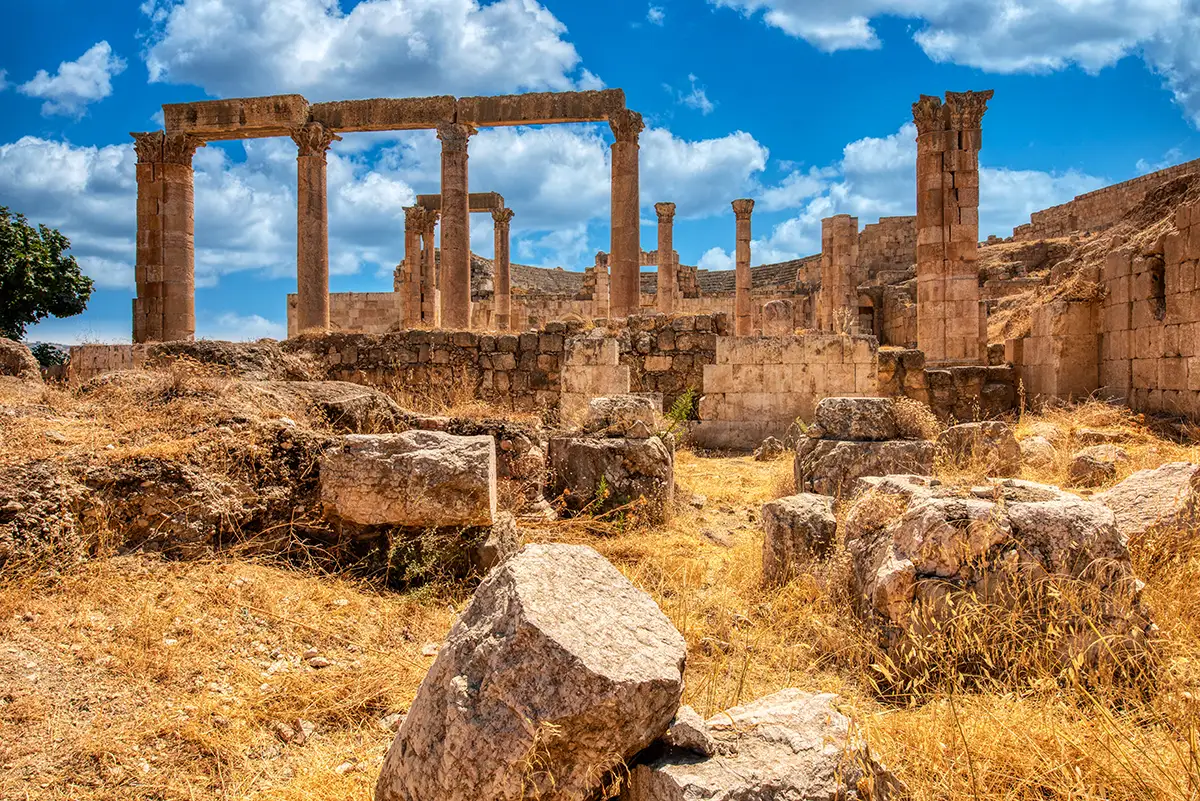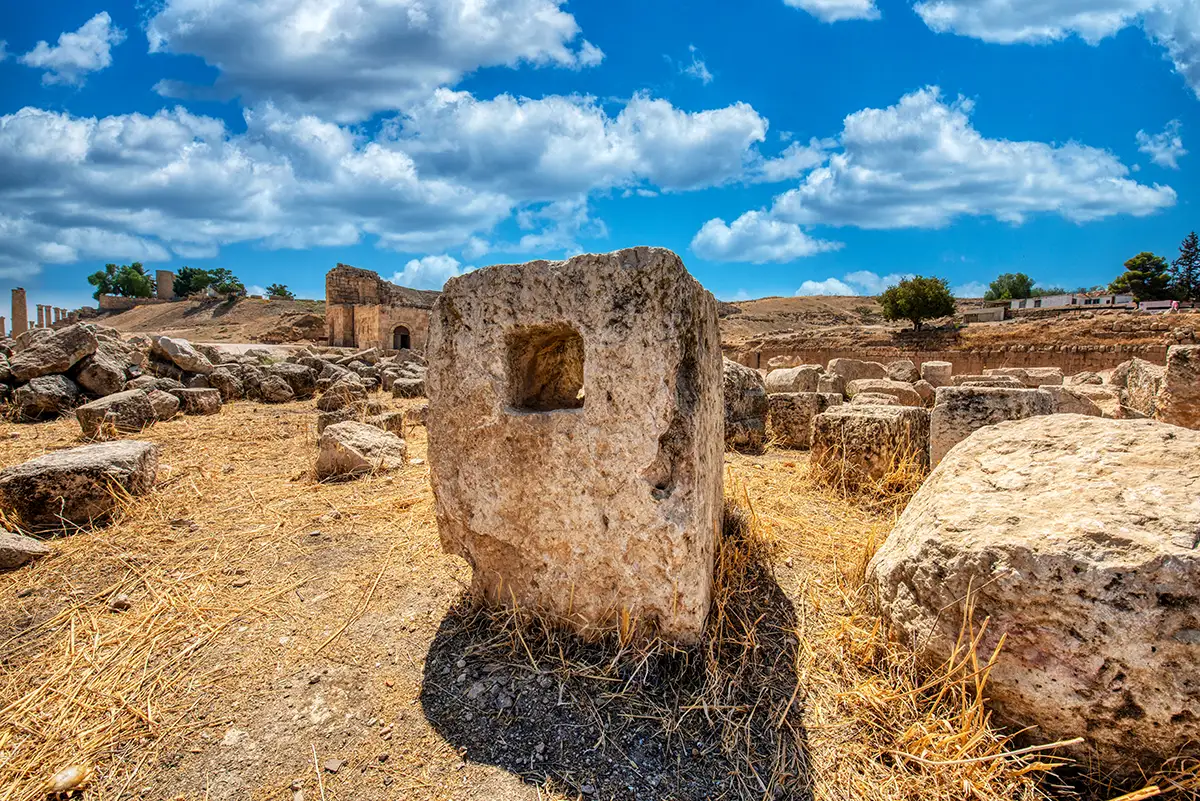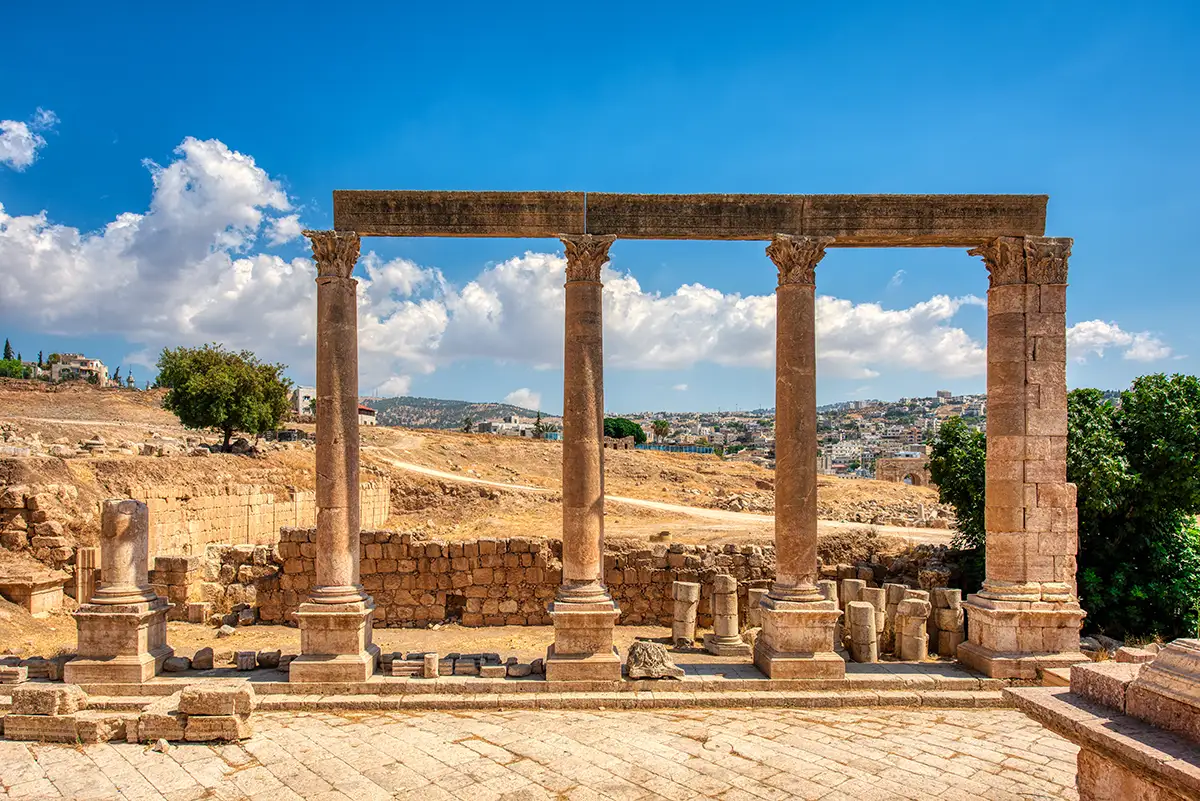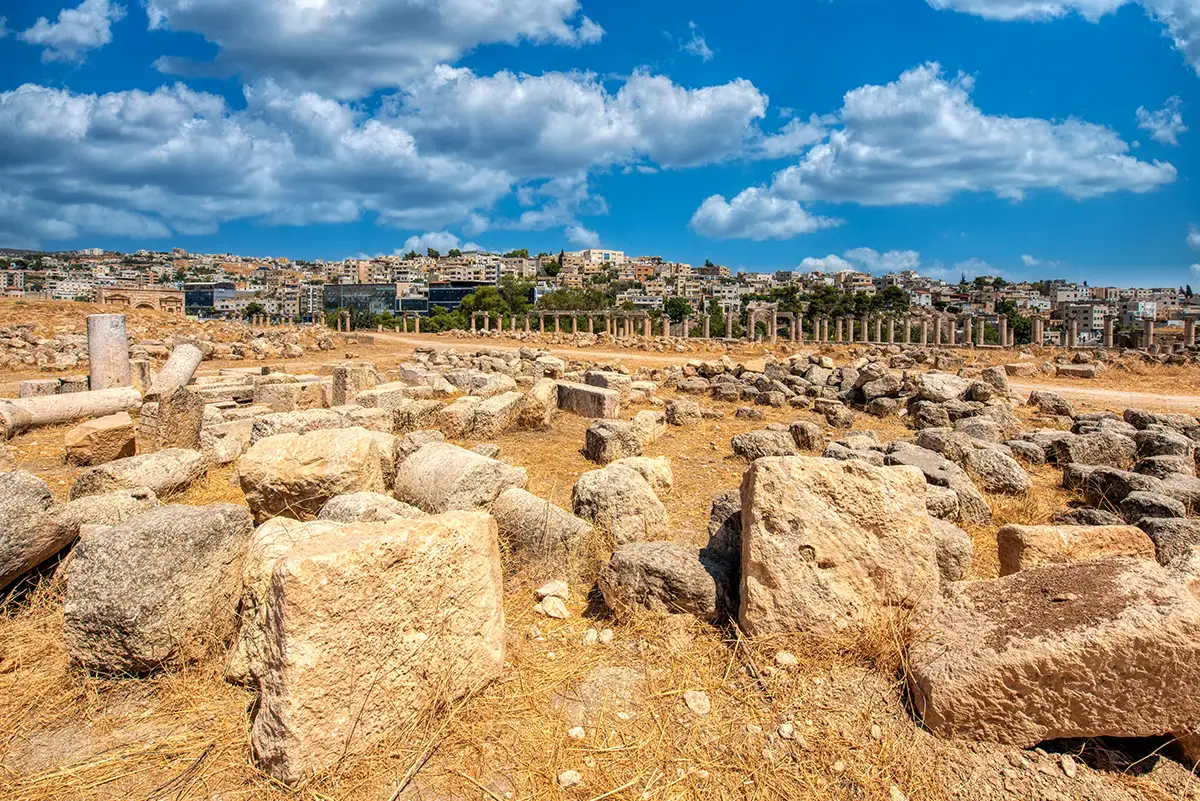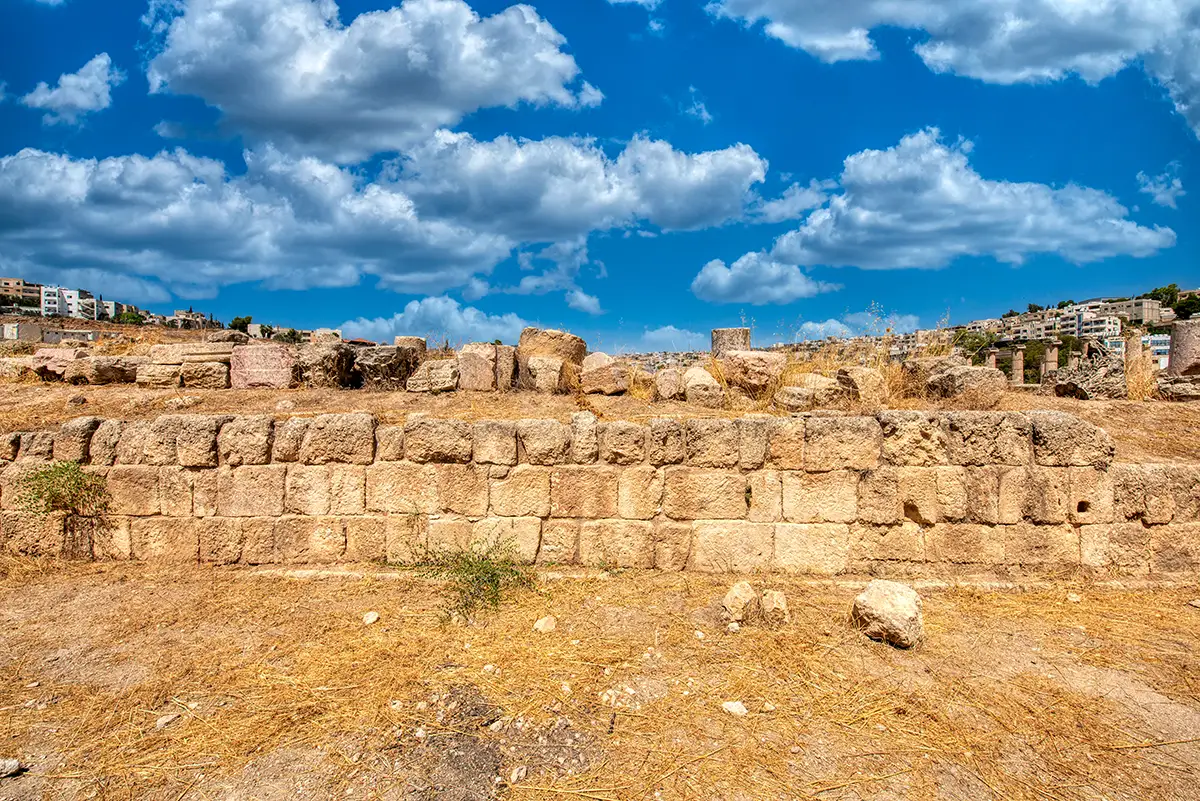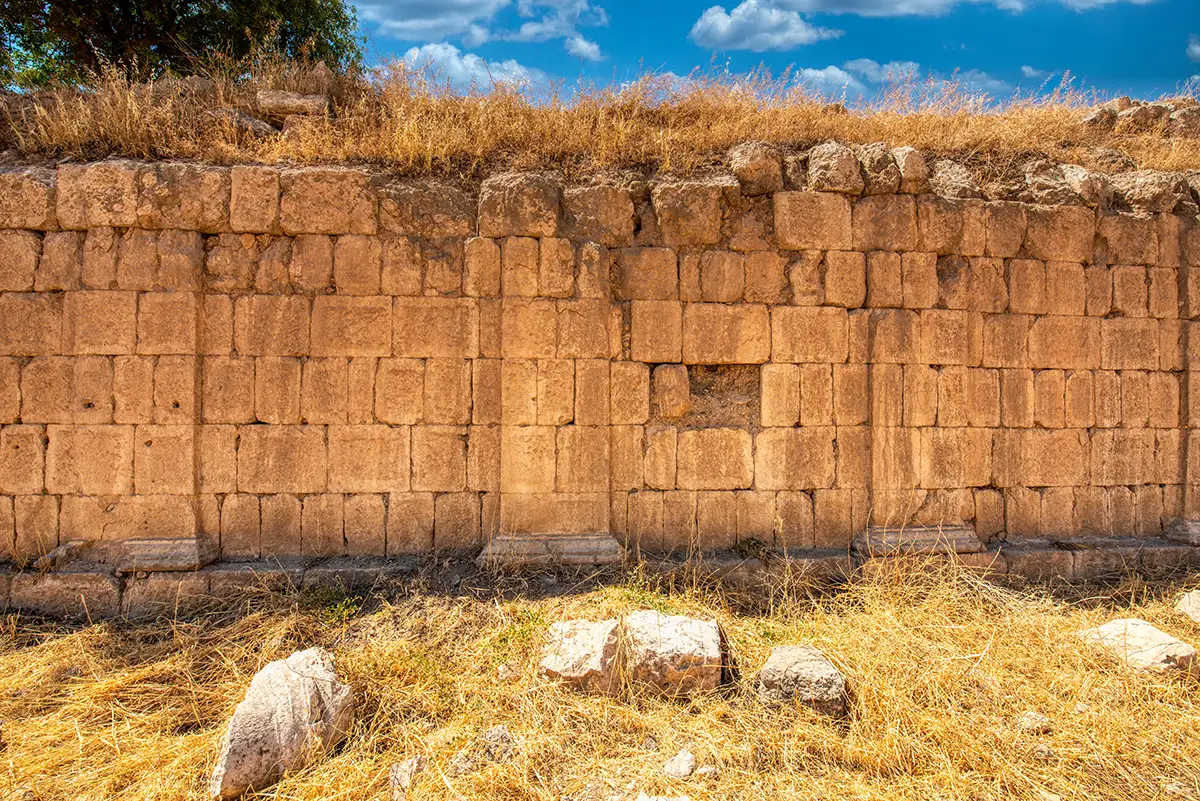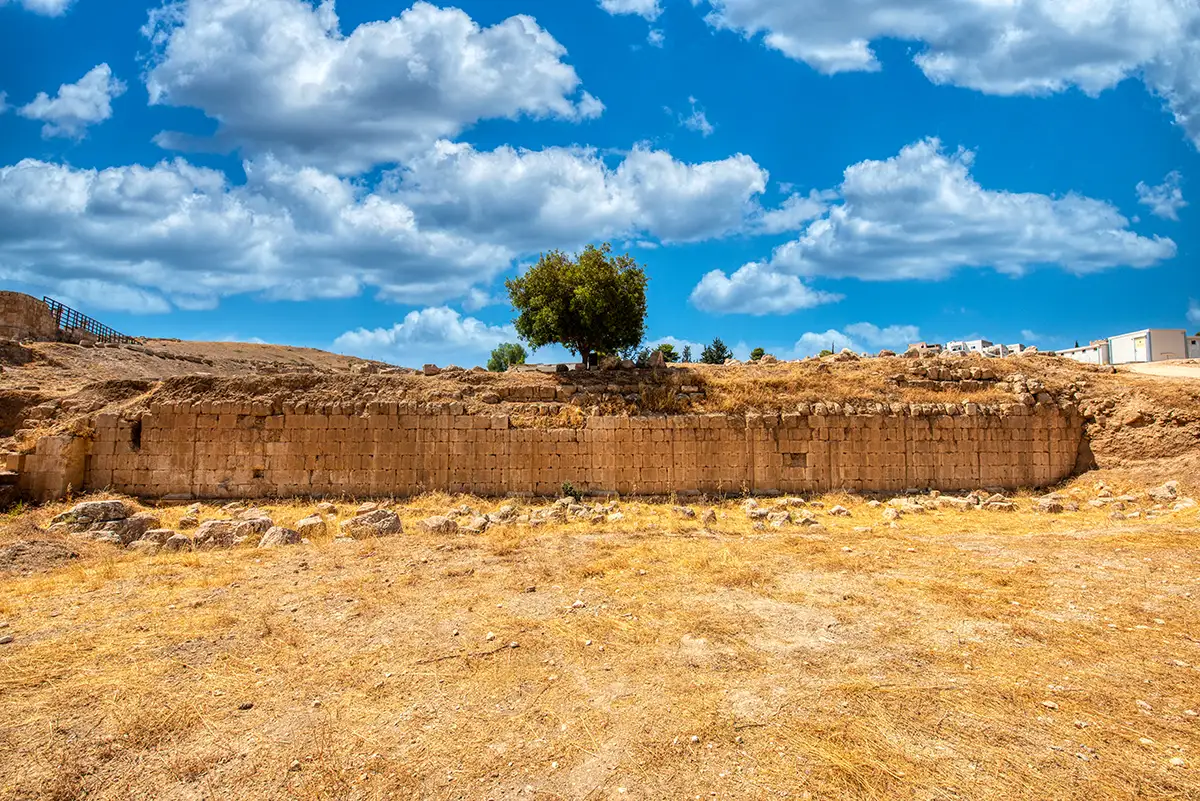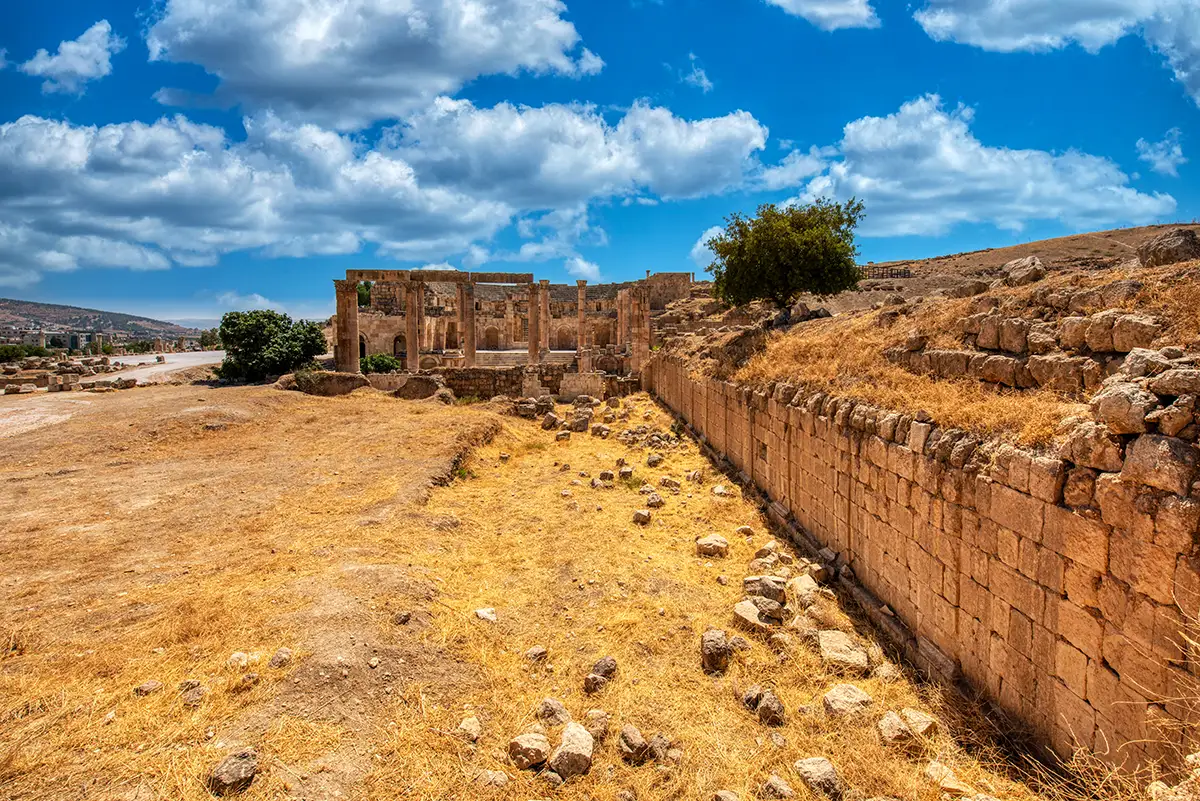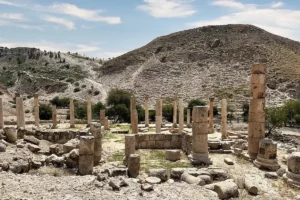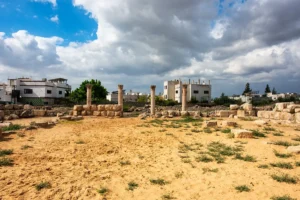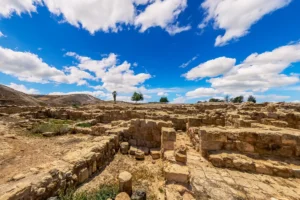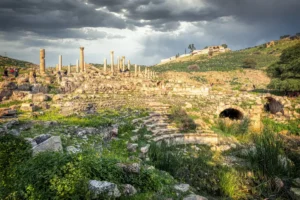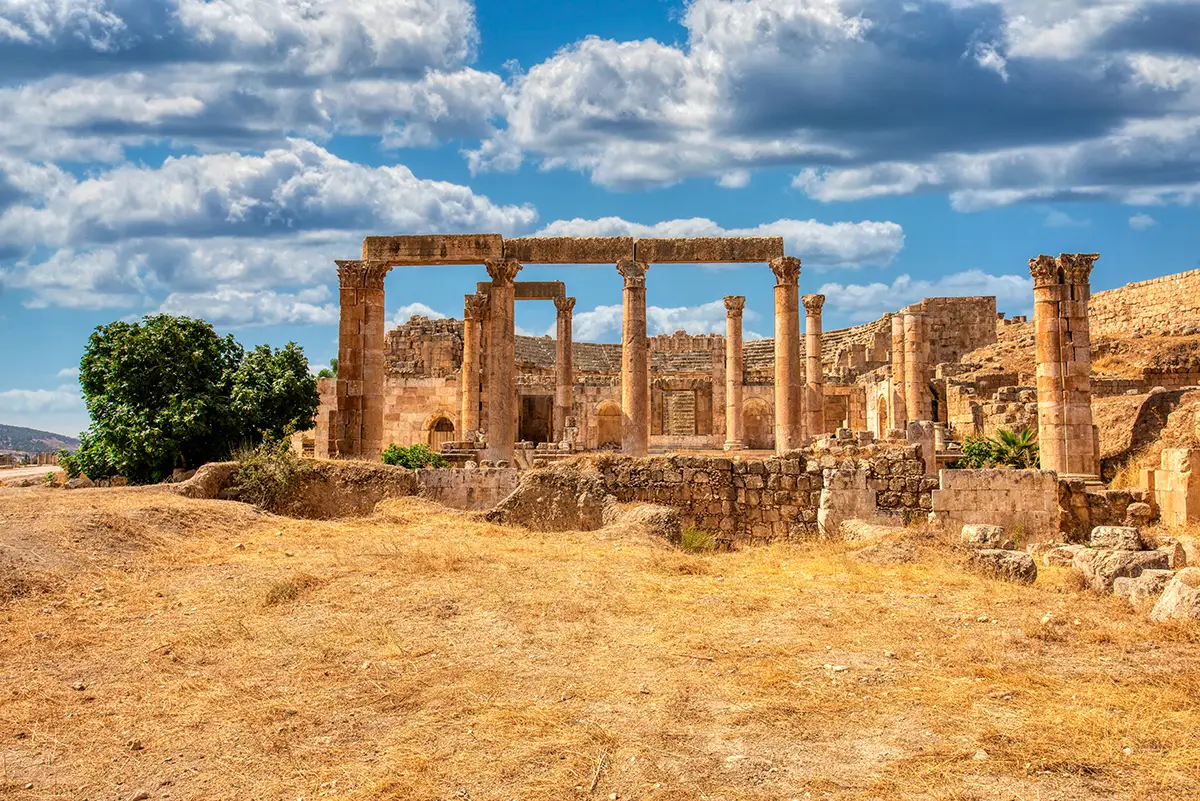
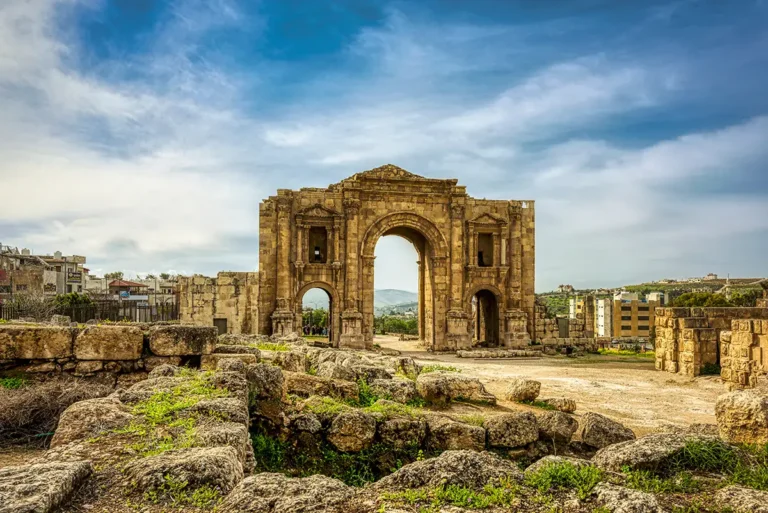
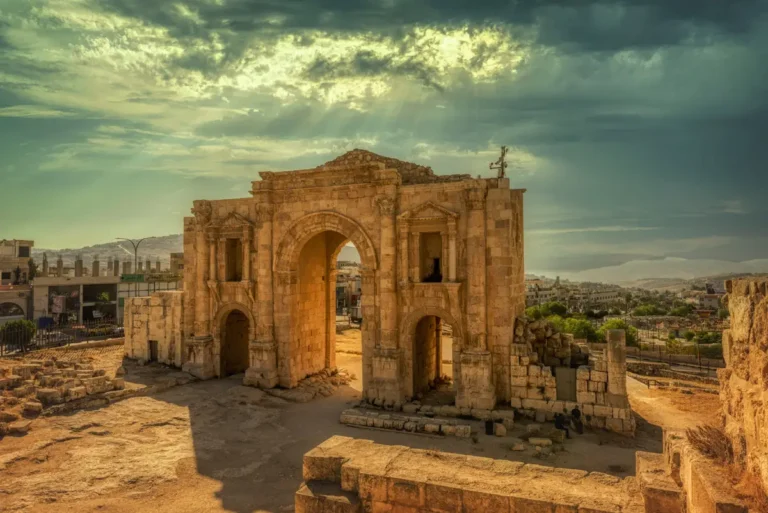

Away from the temples and theatres, the Civic Complex is where Roman Gerasa was run. An open agora and a huge basilica — a public hall more than 100 metres long — stood at the city’s northern crossroads, facing the North Theatre. Here citizens met, officials did business and cases were heard.
Where Is the Civic Complex?
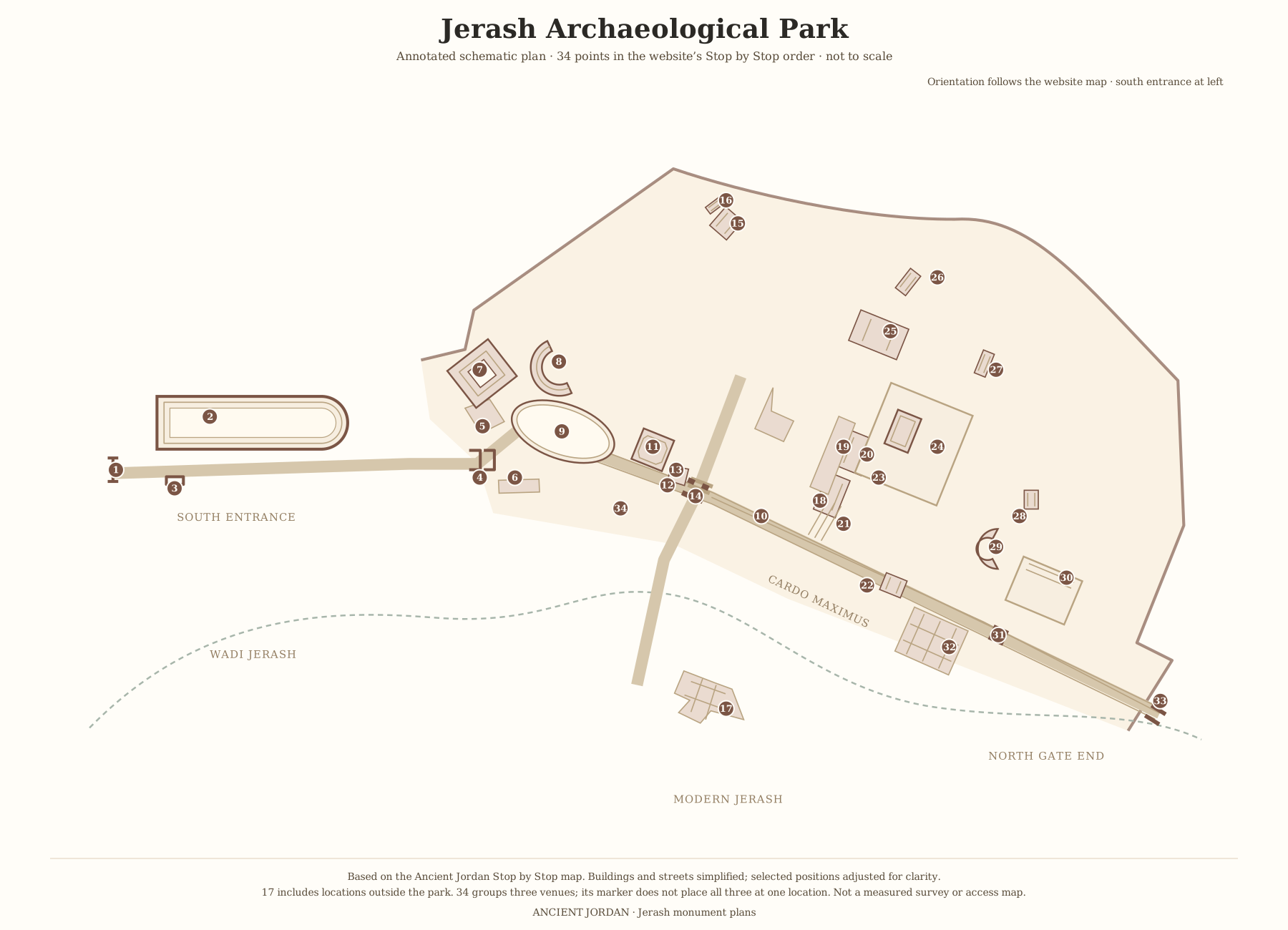
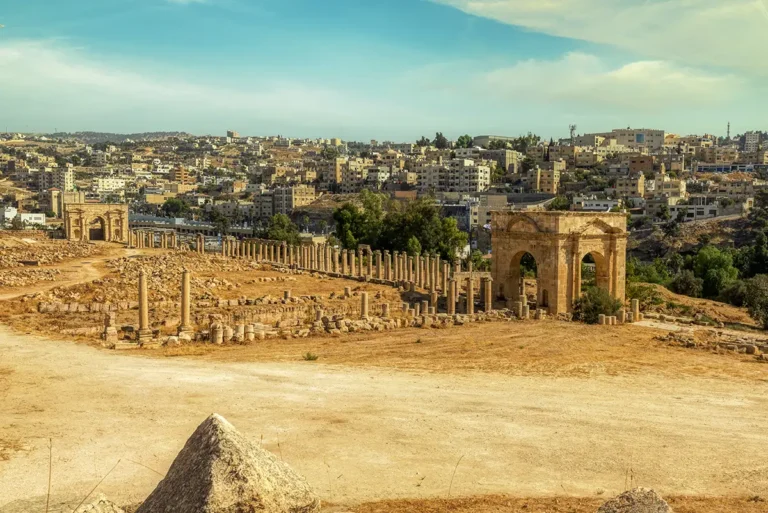
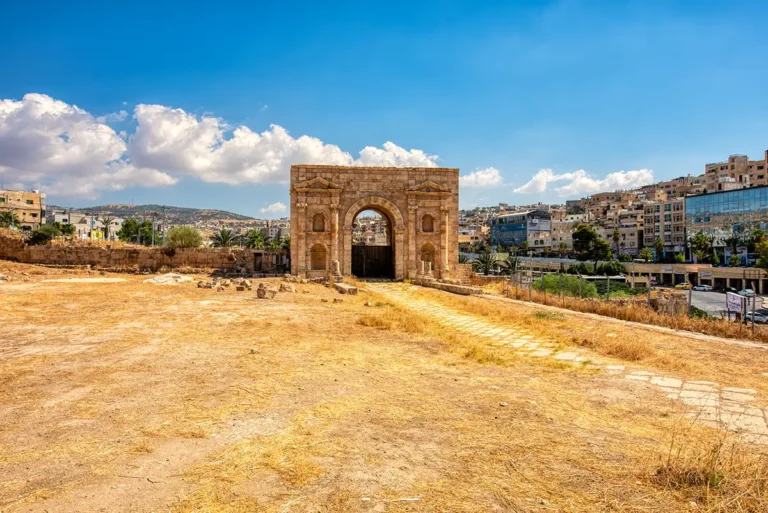
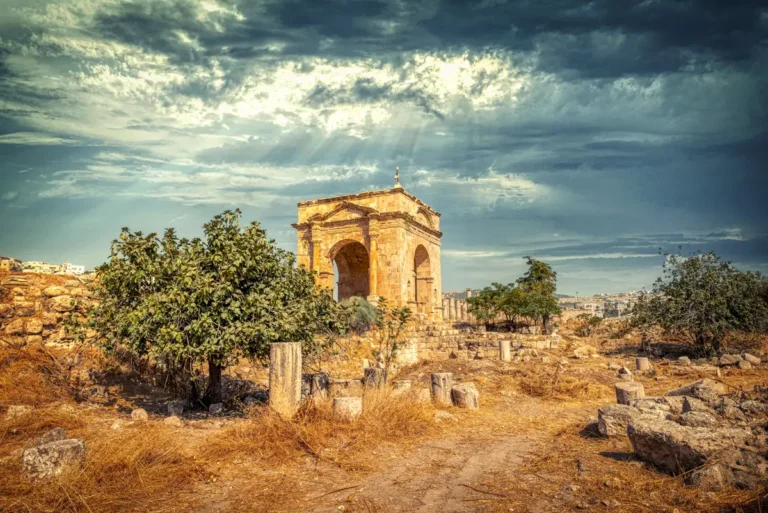
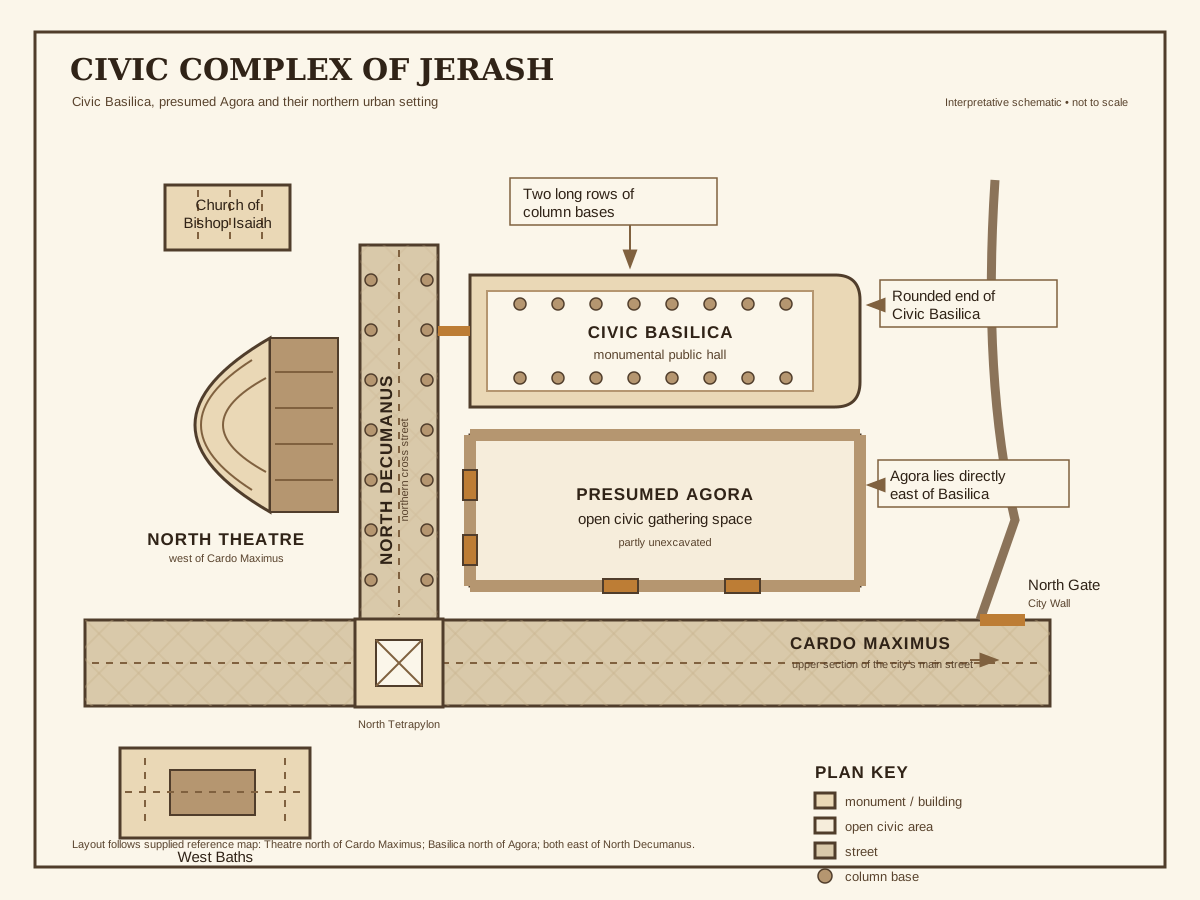
The agora and basilica lie at the junction of the Cardo Maximus and the North Decumanus, near the North Tetrapylon. The North Theatre stands directly opposite the basilica, and the Church of Bishop Isaiah is close by.
It is easy to walk past on the way to the theatre or the North Gate, but it is one of the best places to understand Jerash as a working city.
Historical Context and Origin
After Gerasa joined the new province of Arabia around AD 106, the city invested in streets and public buildings, and in the early 2nd century its northern sector was planned around the main streets. The agora and basilica were probably designed under Trajan and completed under Hadrian, around AD 130.
Through the 2nd century the agora, the basilica and the council hall across the street formed the heart of government. In the late 3rd century signs of burning suggest that the basilica and agora were destroyed, perhaps in raids. From the 4th century city life moved to churches and new neighbourhood centres.
Architectural Design
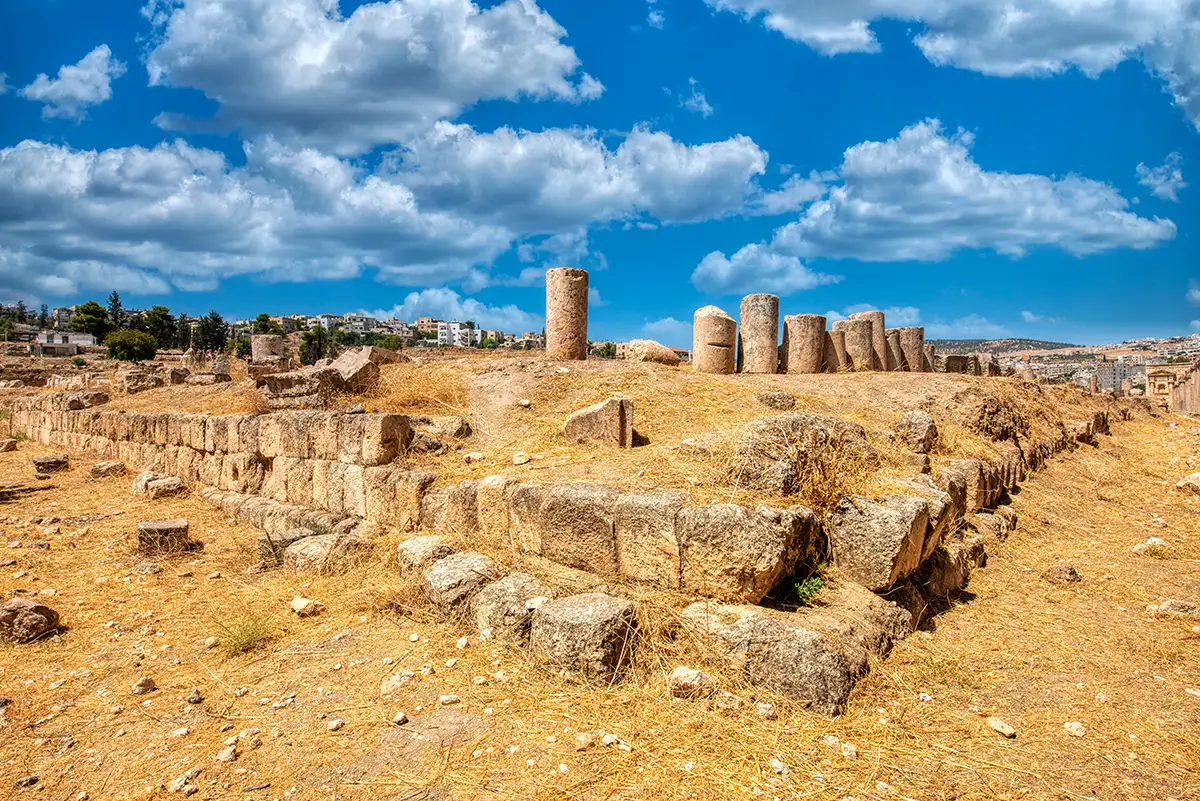
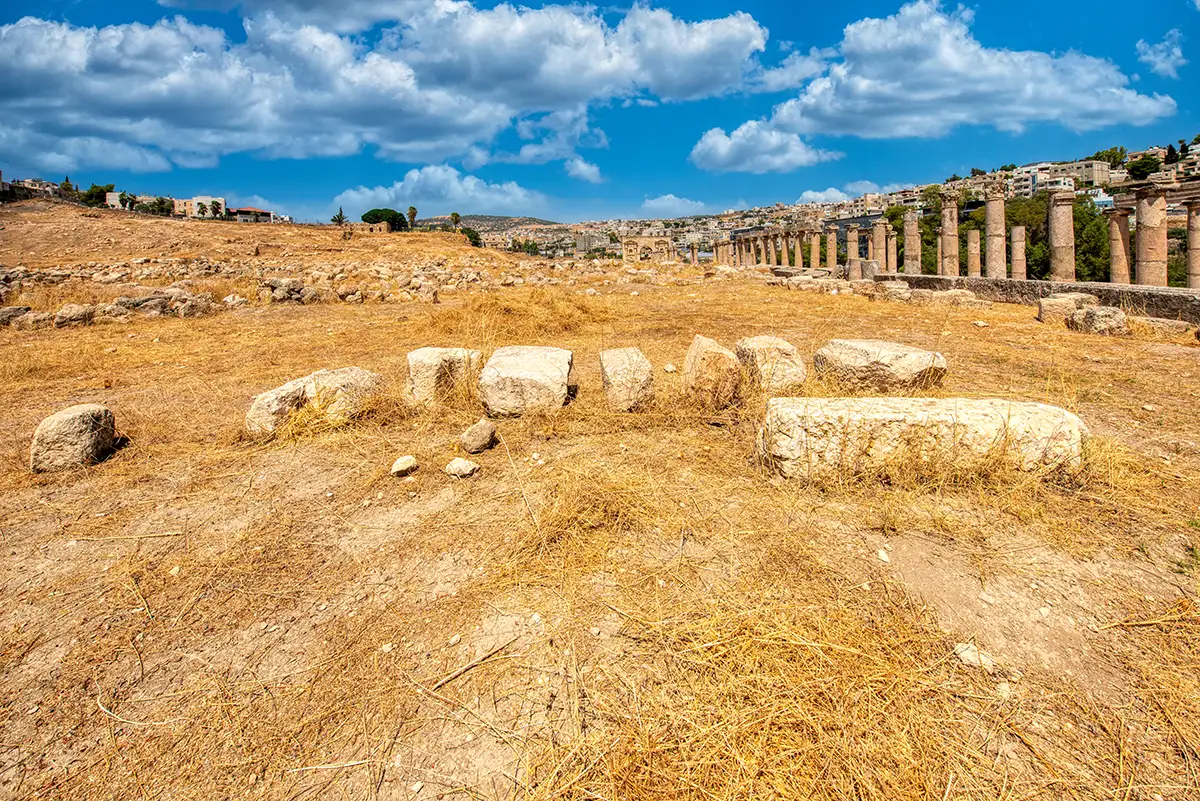
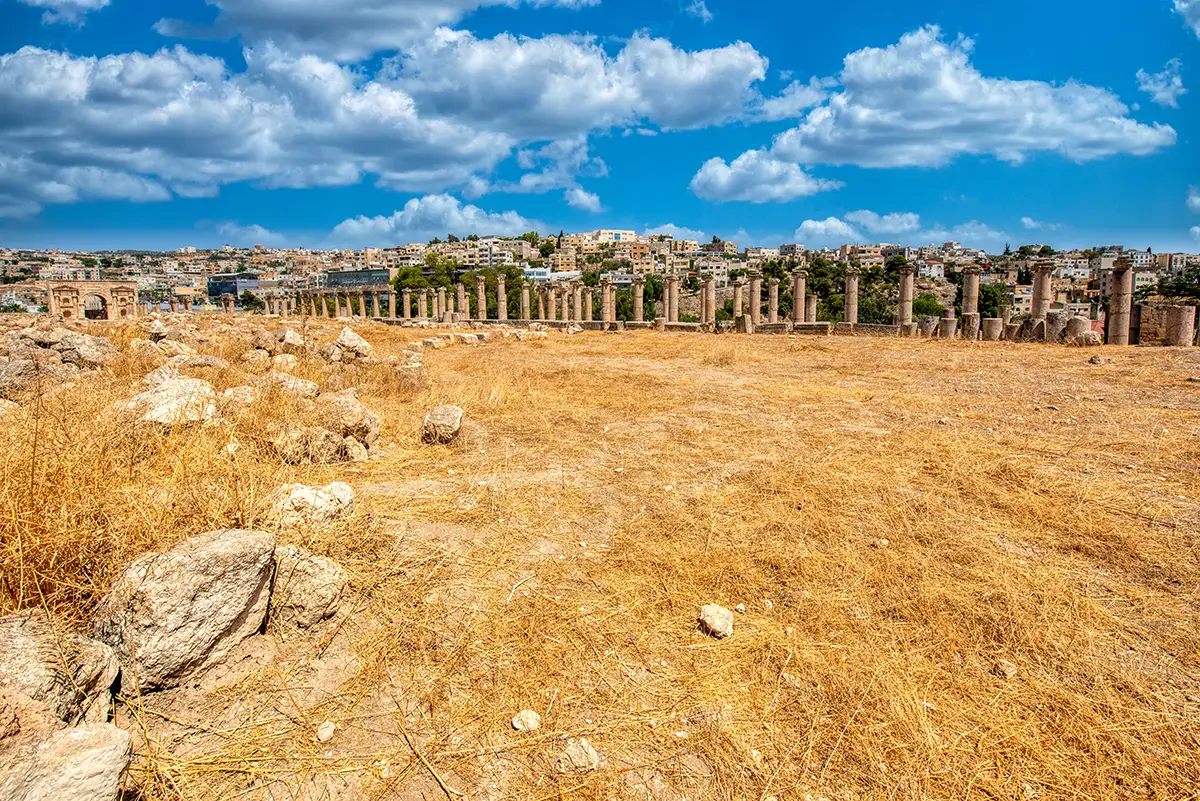
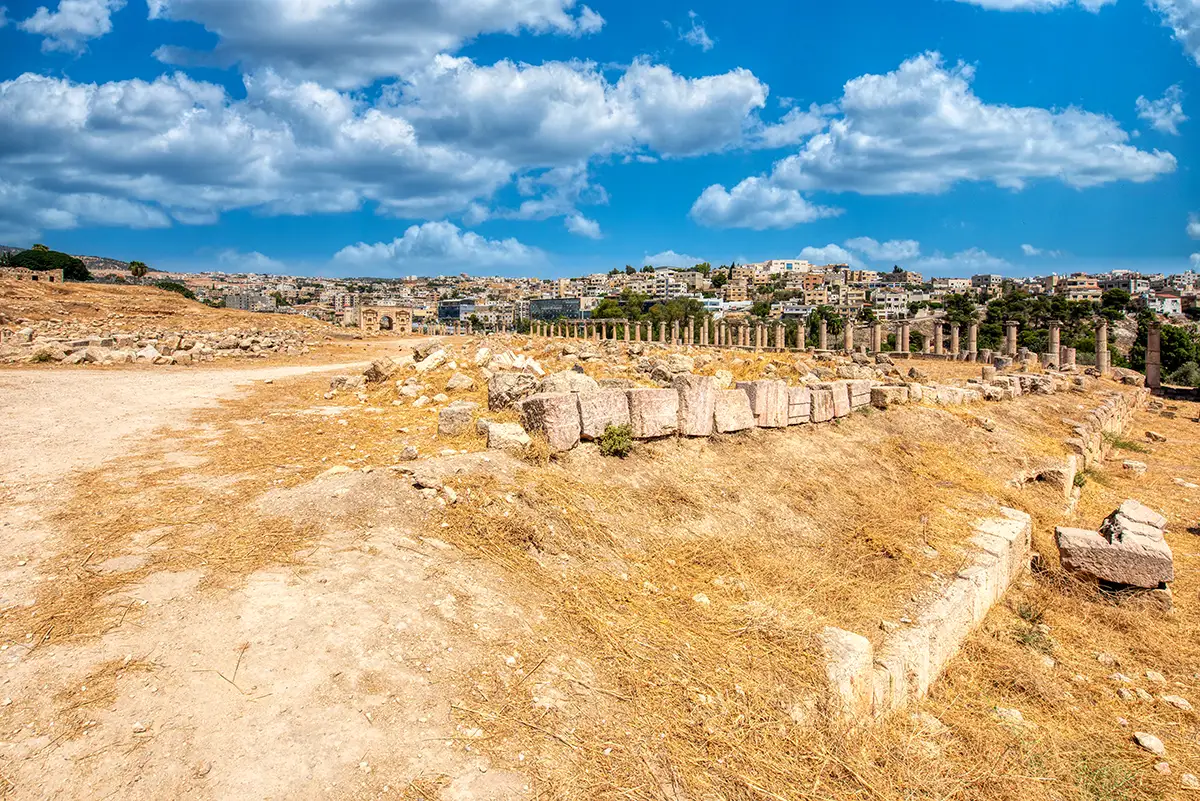
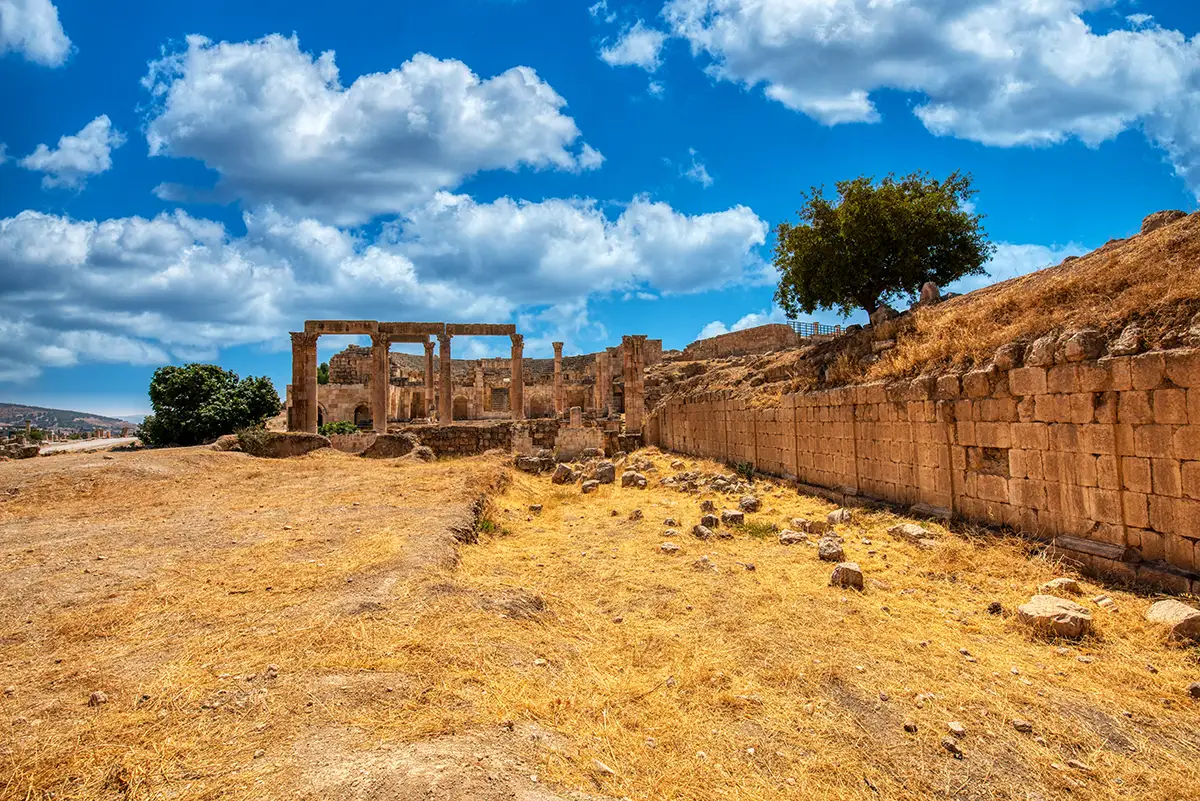
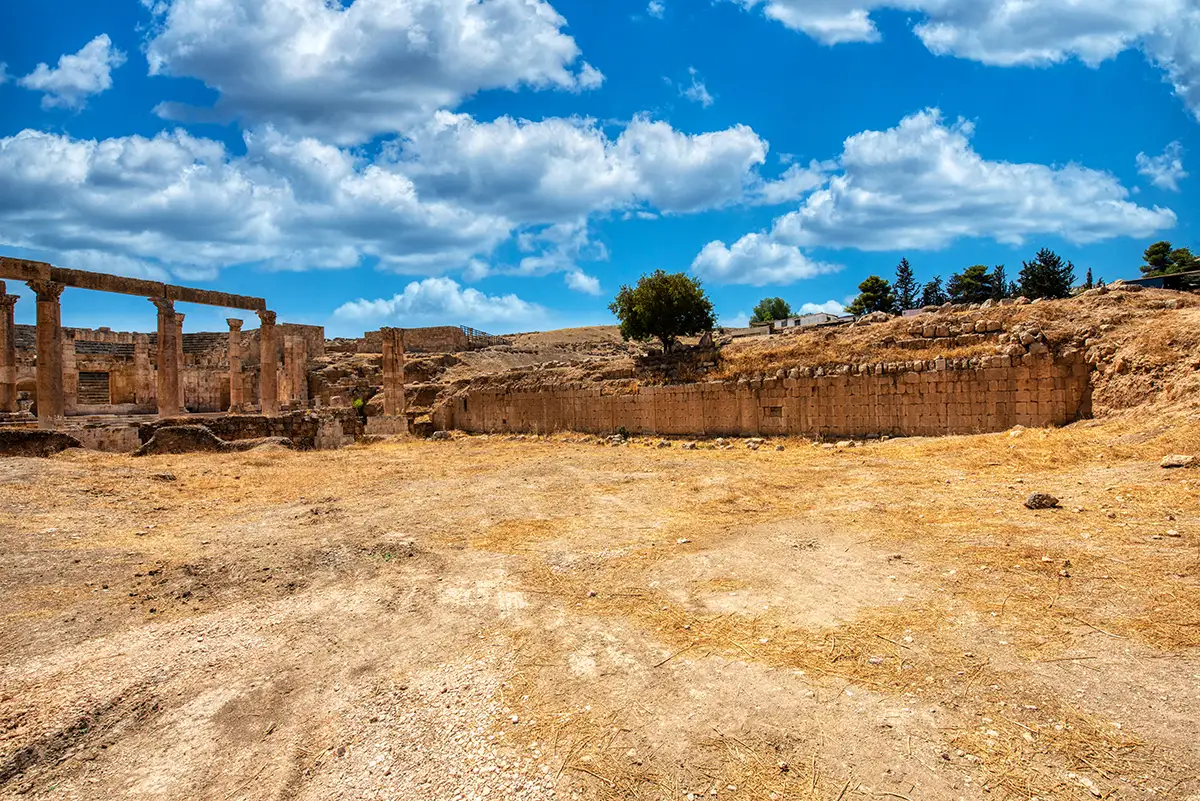
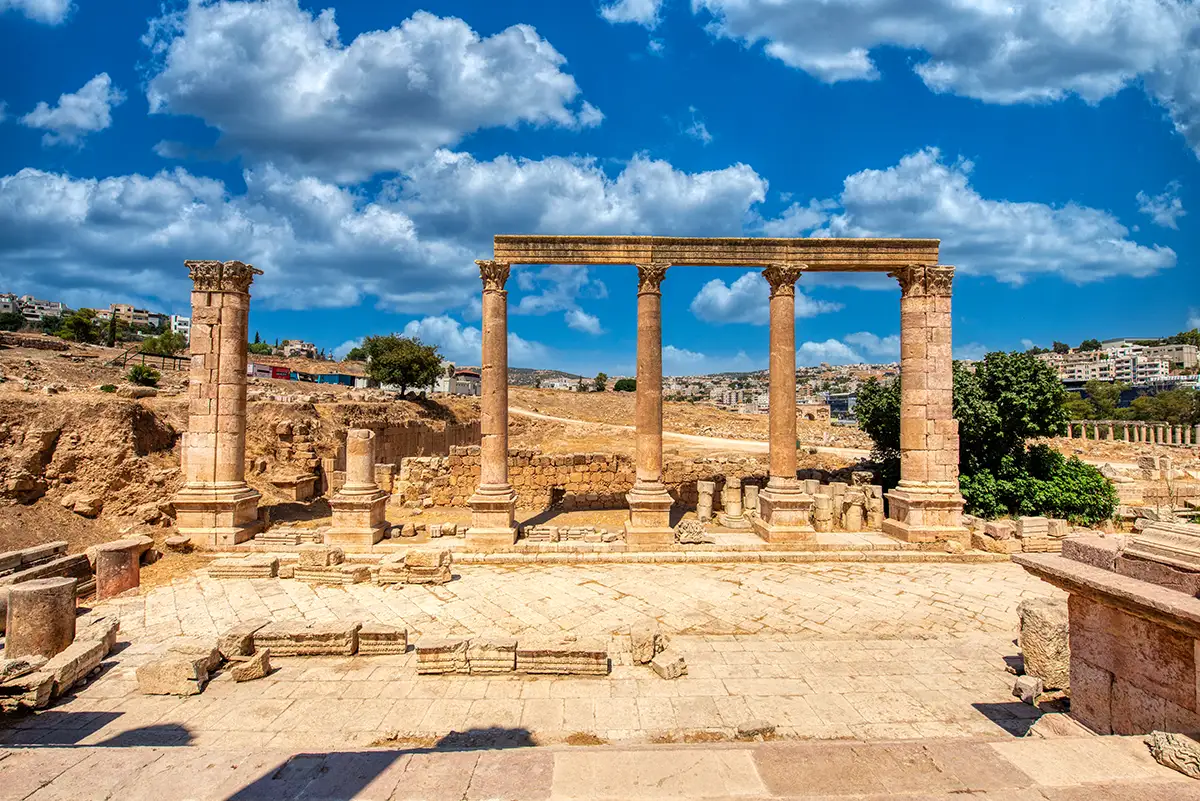
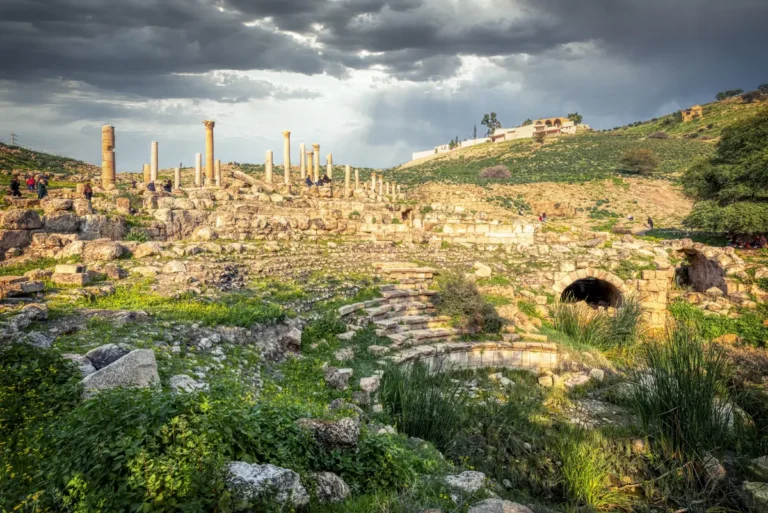
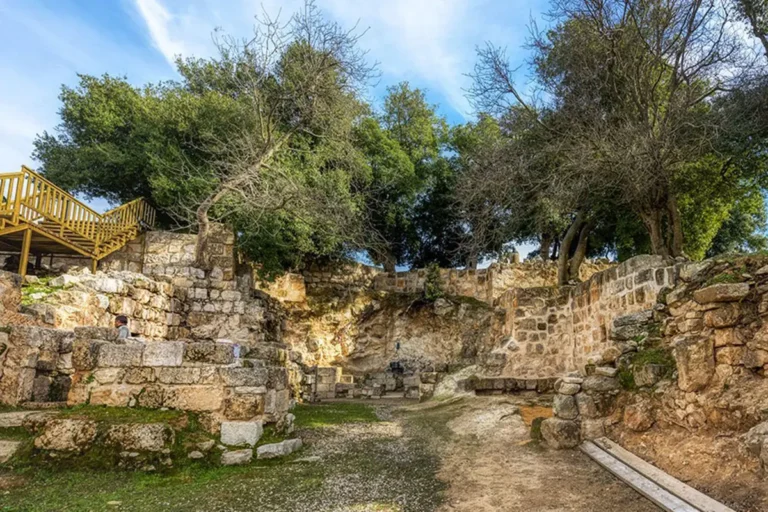
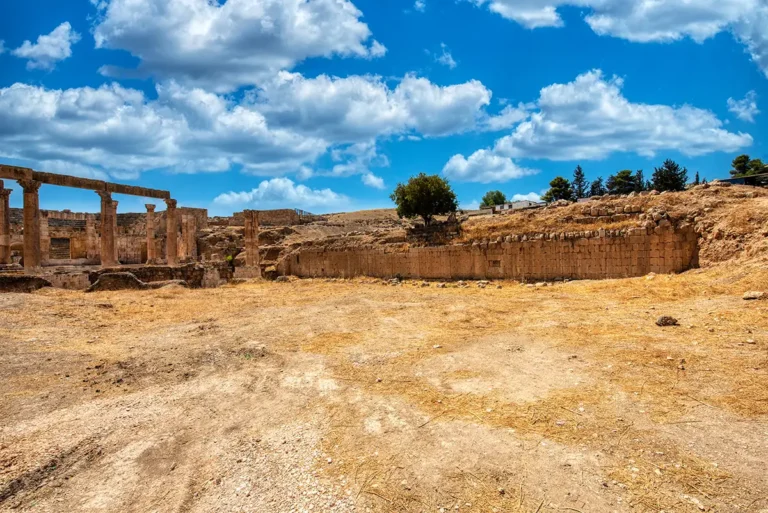
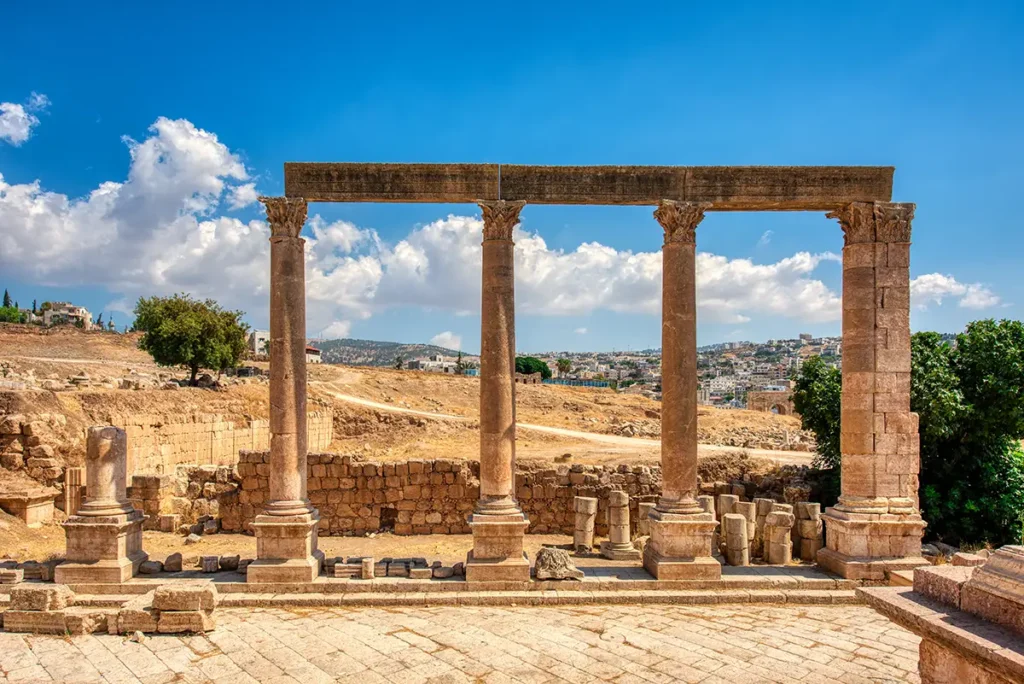
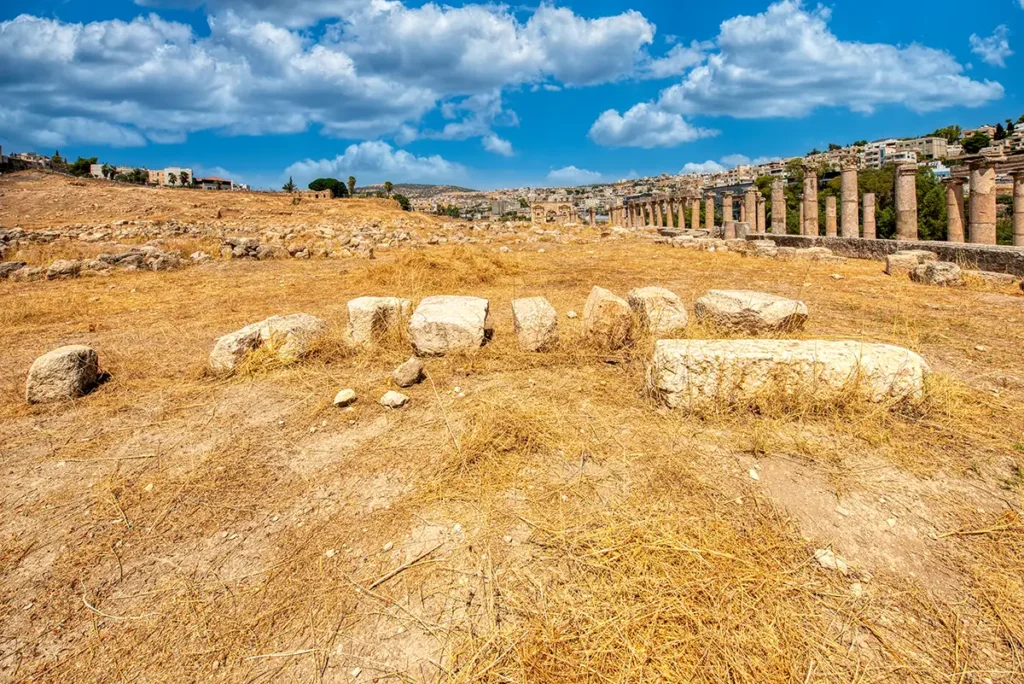
The agora was an open square with three entrances from the Cardo and one from the North Decumanus, tying it into the city’s main streets. Beside it, the basilica — a Roman public hall, not a church — measured more than 100 by 30 metres; two long rows of column bases mark its interior. Together with the theatre opposite, they formed a civic centre like those of other cities of the Roman East.
The Civic Basilica
A covered hall more than 100 m long and 30 m wide, for meetings, law courts and business.
Two Rows of Column Bases
Long lines of bases outline the interior of the hall, probably a nave with side aisles.
The Agora
A broad open square, entered by three doorways from the Cardo and one from the North Decumanus.
Across from the Council
The North Theatre, probably first a council hall, faced the basilica across the street.
Destruction and Rediscovery
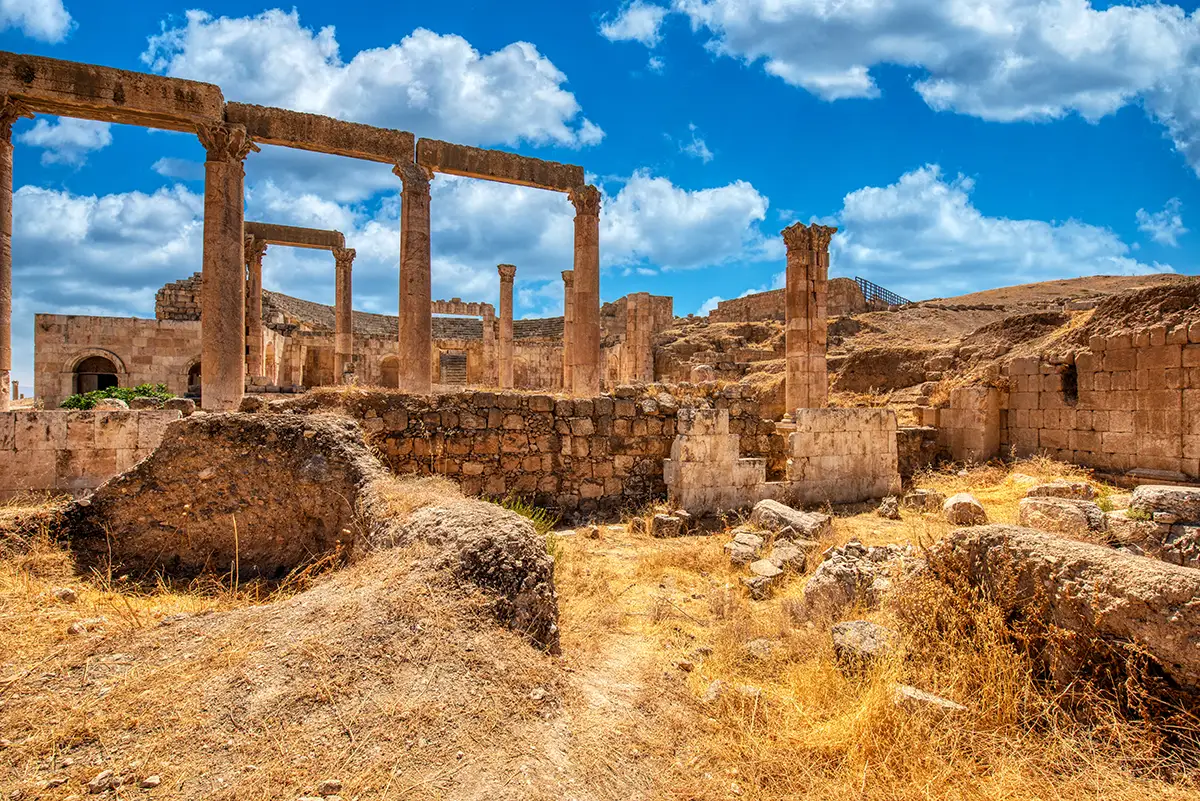
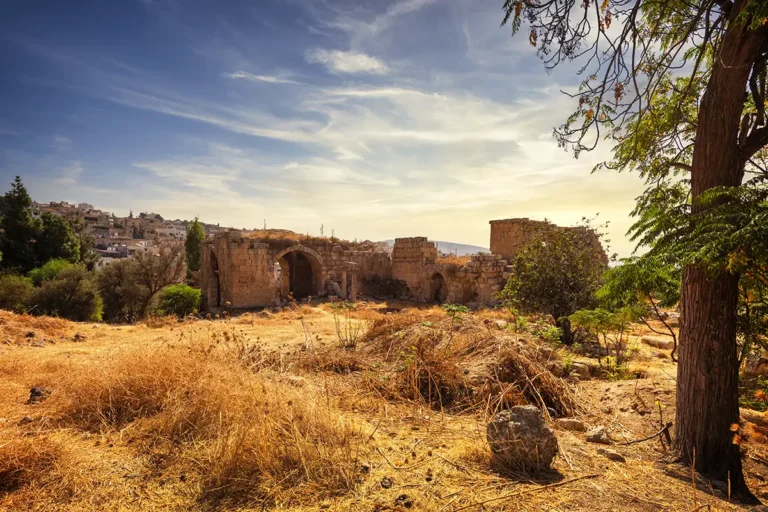
After the late 3rd-century fire the complex was never restored to its old role. In modern times archaeologists identified the agora and the basilica, but much of the area remains unexcavated.
Visiting the Civic Complex Today
Stand near the North Theatre and look across the open ground to take in the scale of the complex. Follow the long basilica wall and the rows of column bases, then picture the square filled with people, the hall busy with officials and the theatre opposite.
Allow about 15 minutes, and combine it with the North Theatre and the North Tetrapylon.