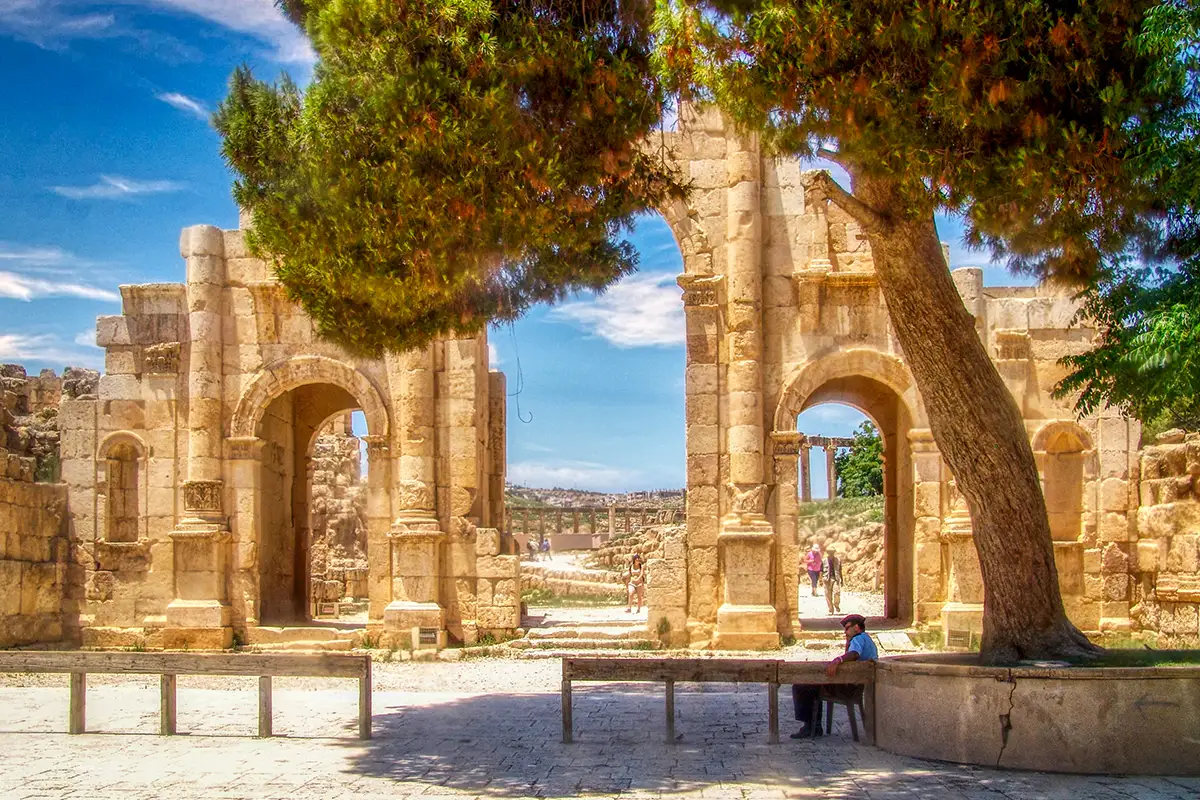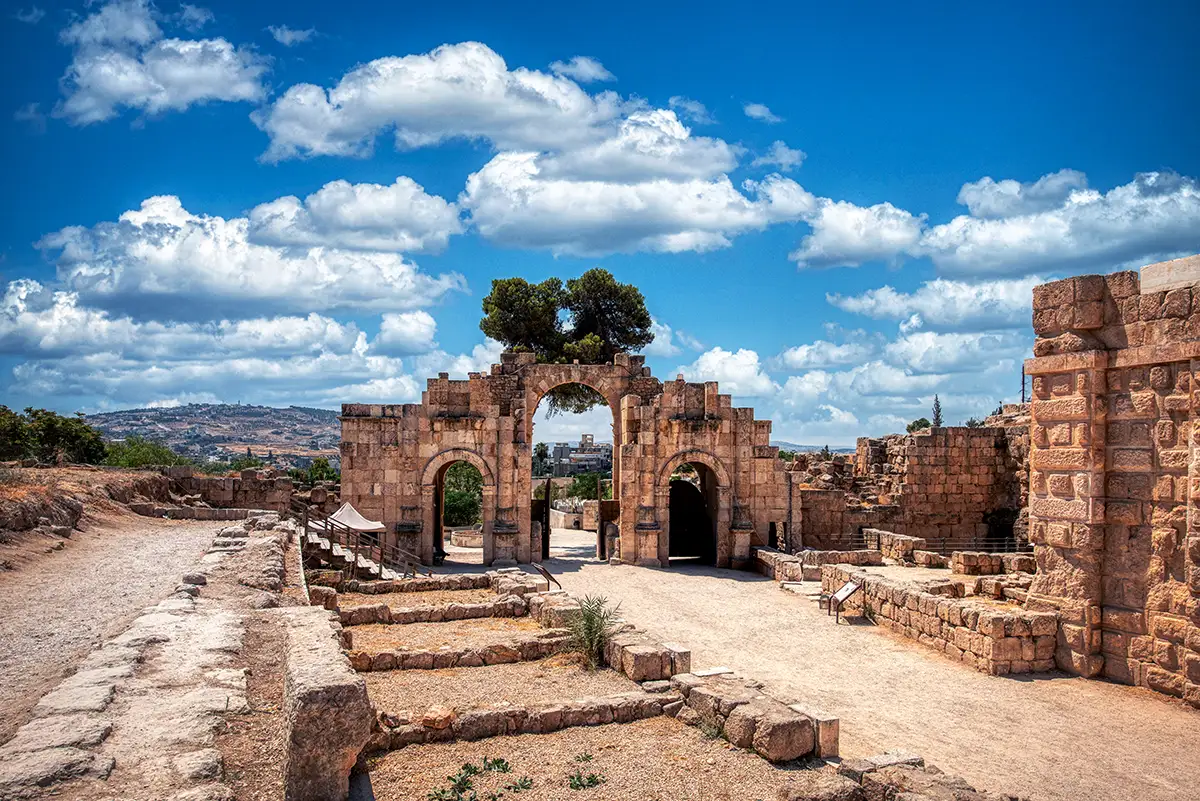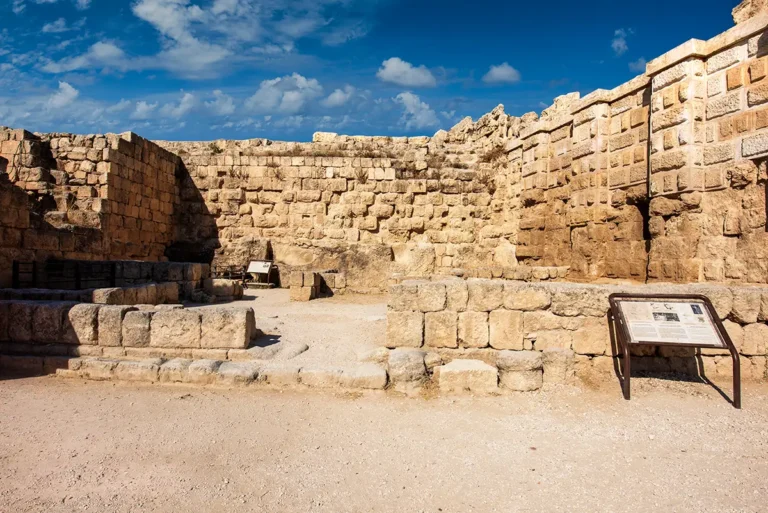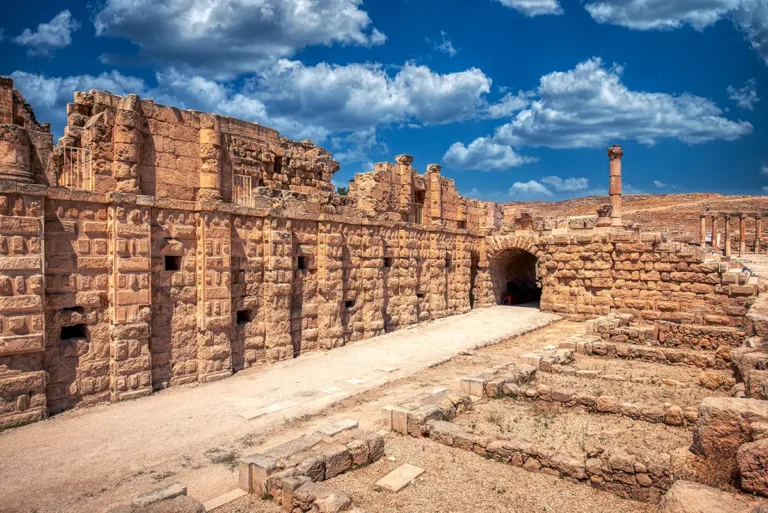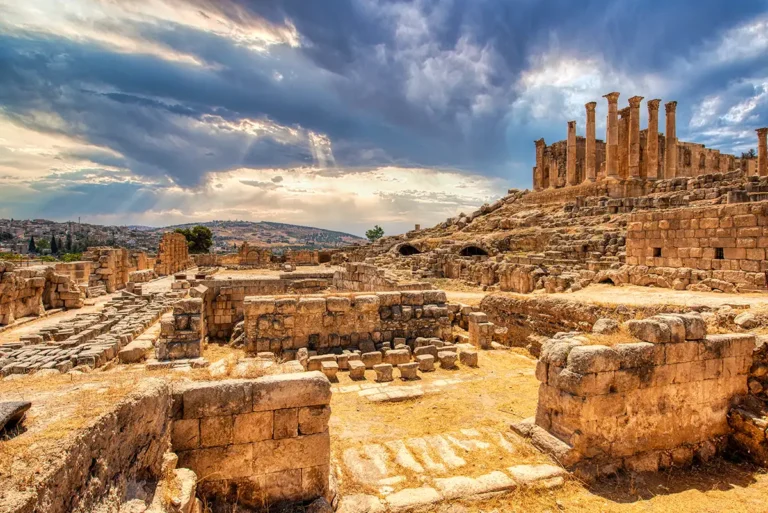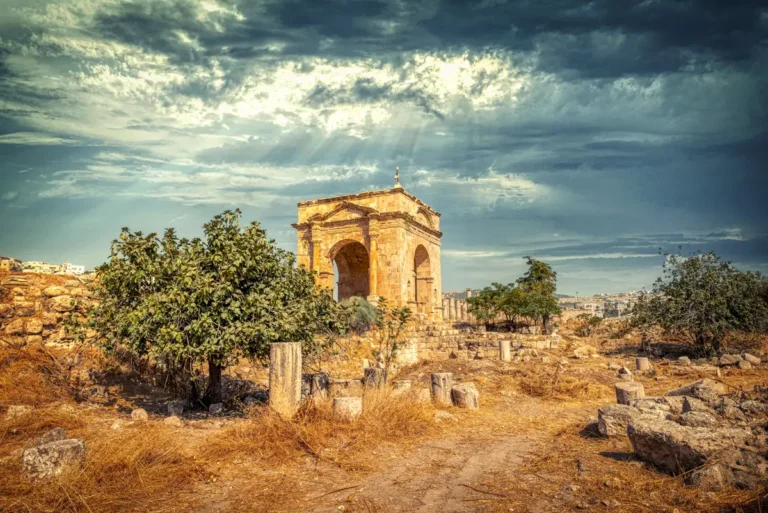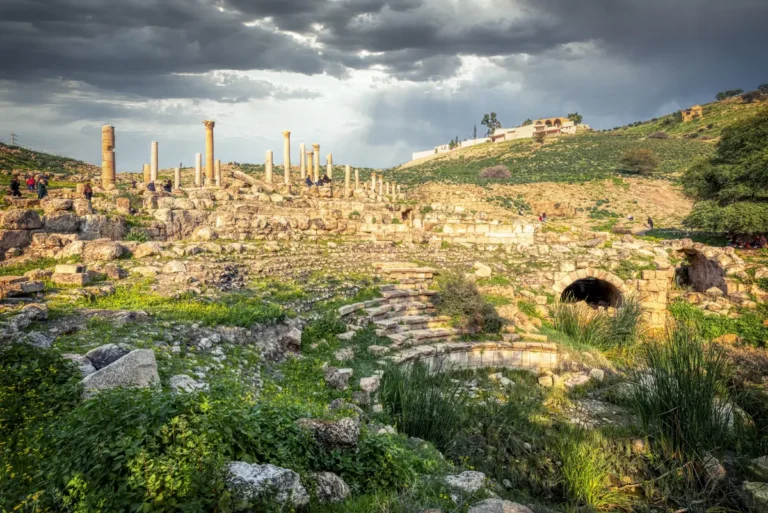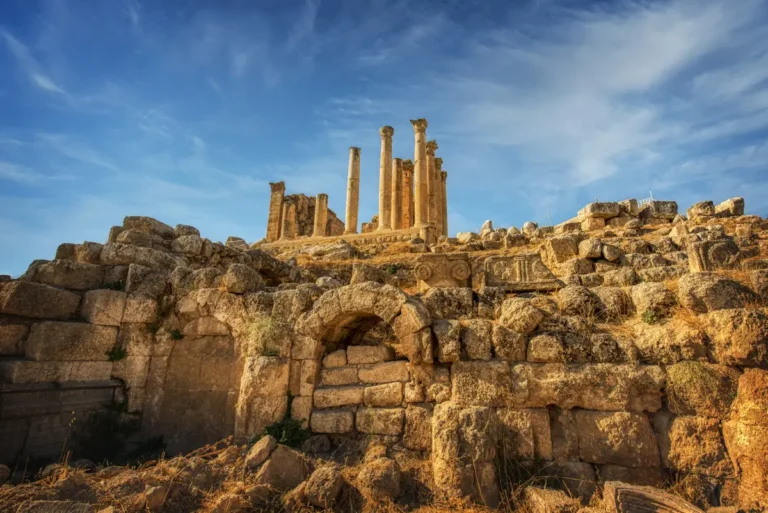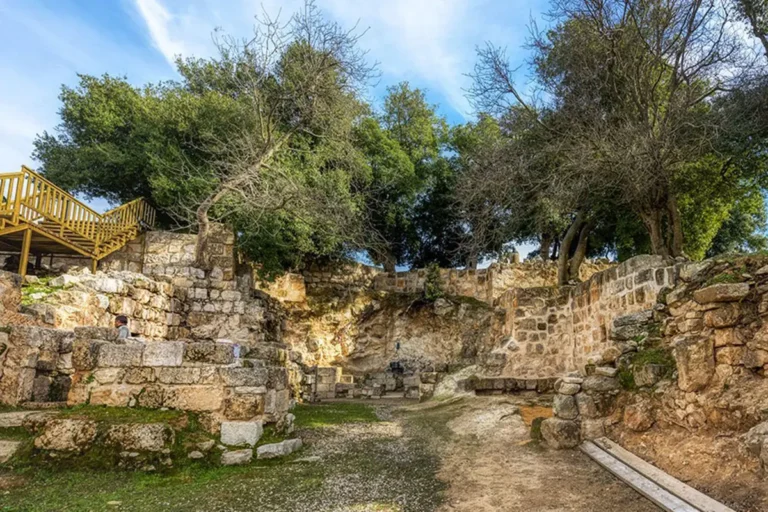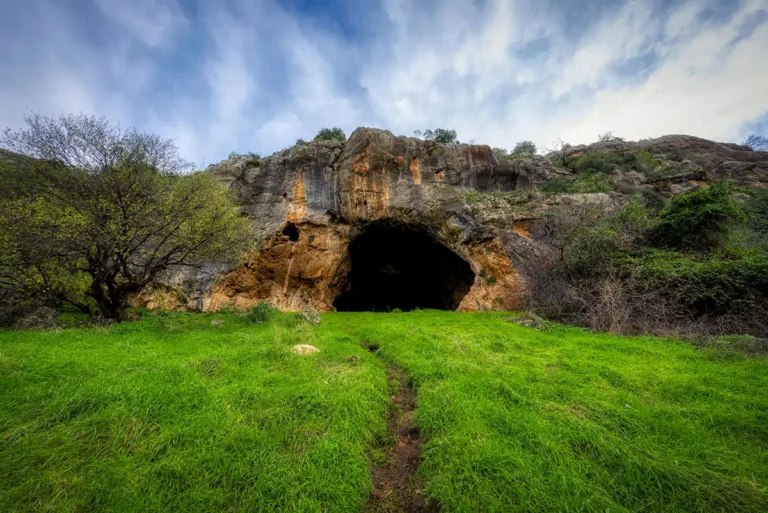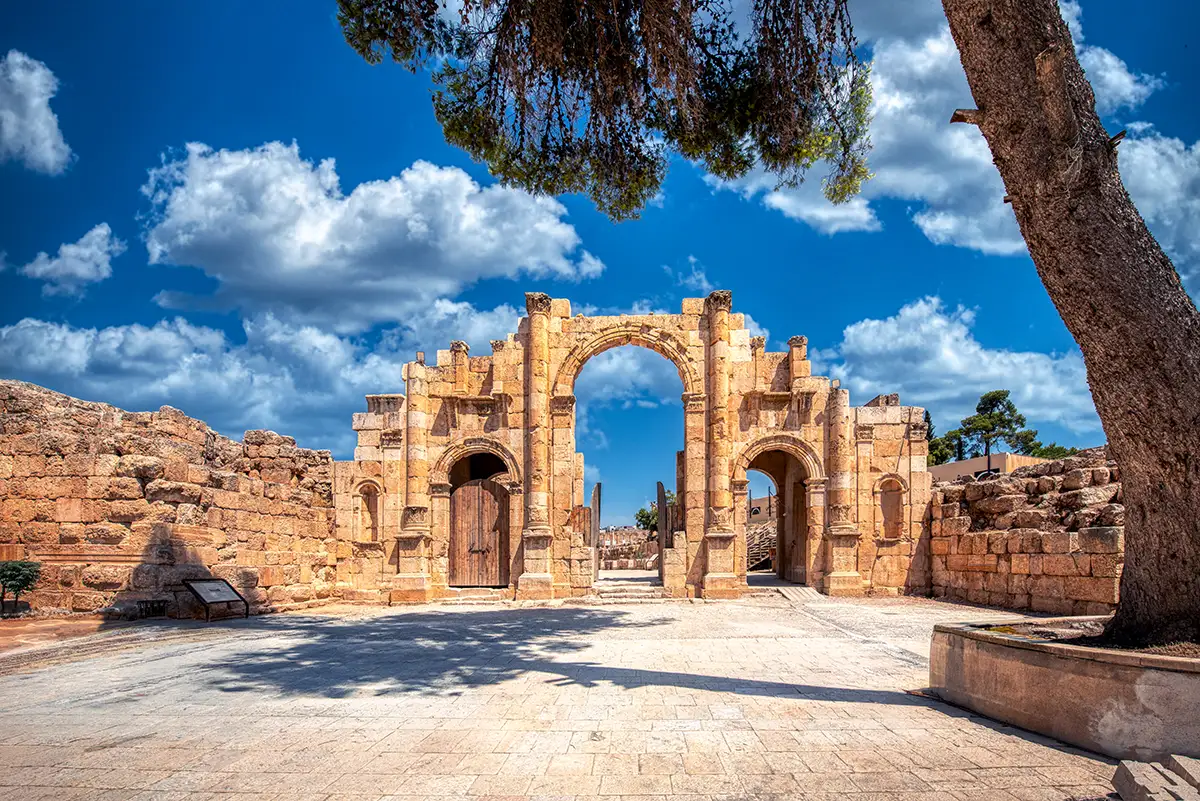
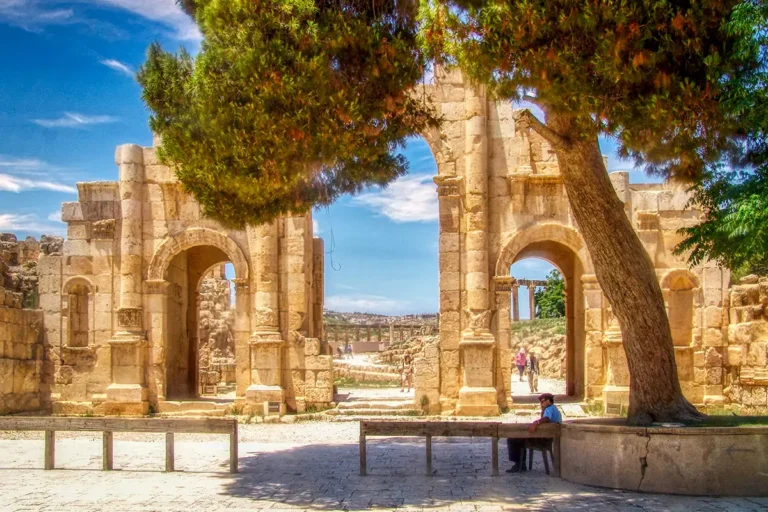

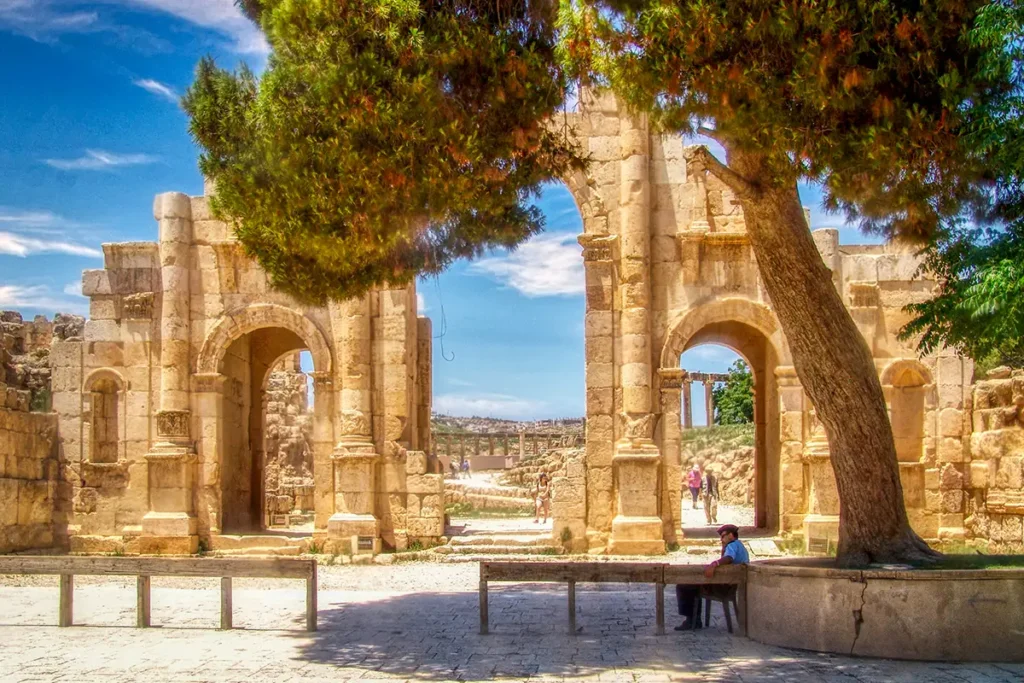
The South Gate is where the road from Philadelphia — modern Amman — entered the Roman city of Gerasa, and it is still the way most visitors enter ancient Jerash today. Built around AD 129–130 with three arches framed by Corinthian half-columns, it began as a proud civic monument on an open approach and only later became a fortified gate in the city wall.
Where Is the South Gate?
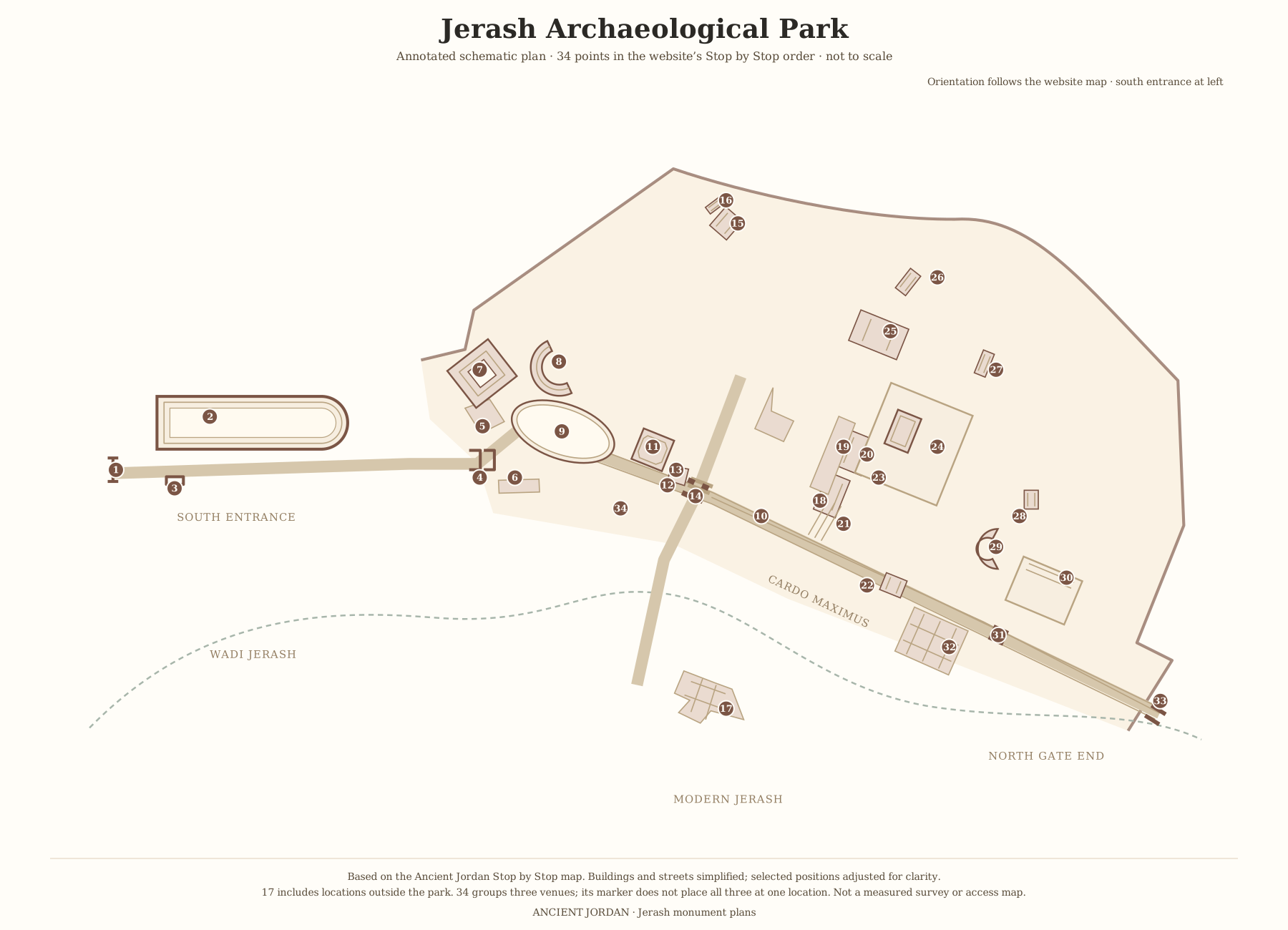
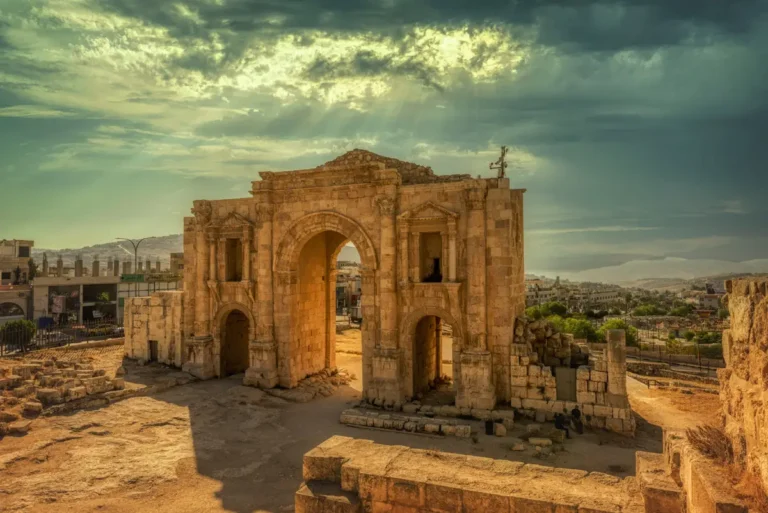
The gate stands at the southern edge of the ancient city, about 400 metres north of Hadrian’s Arch and just beyond the Hippodrome. Walking north from the visitor centre, it is the first passage into Gerasa itself.
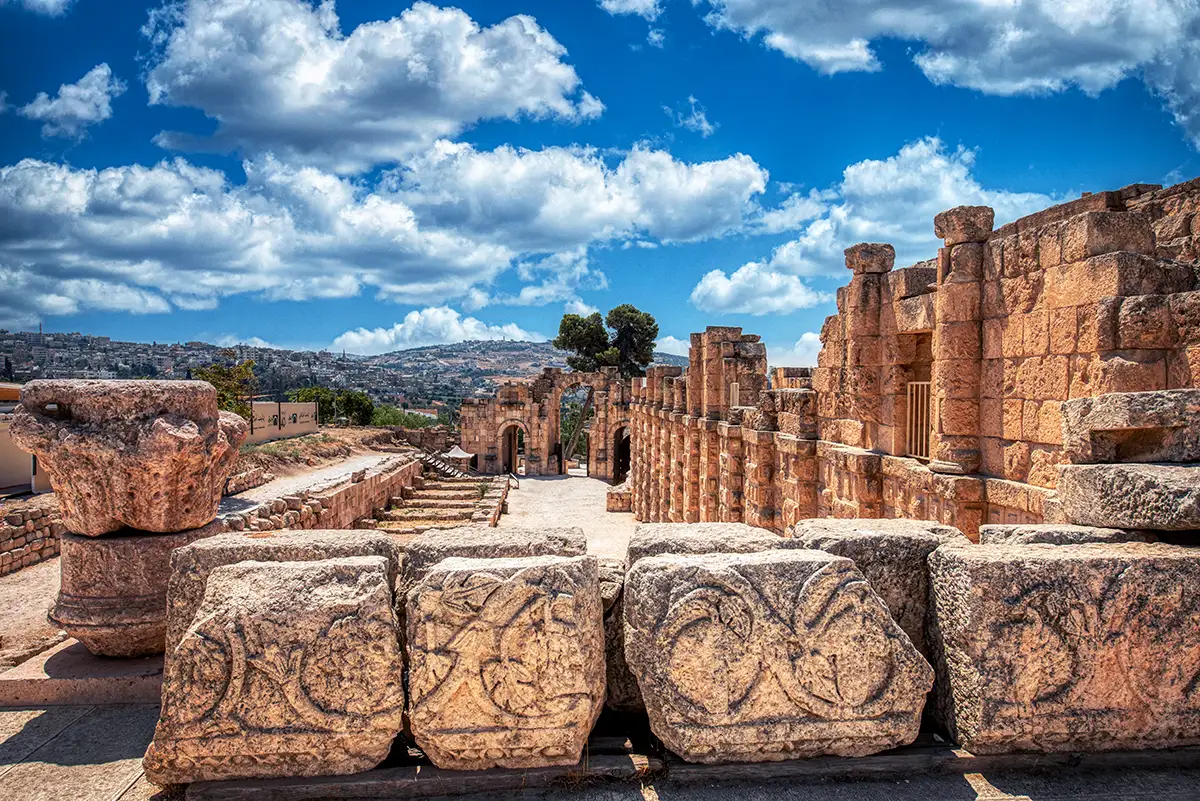
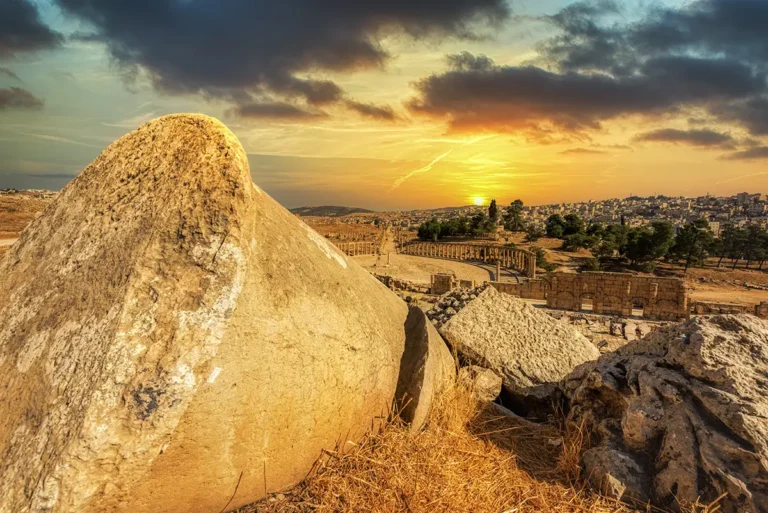
Through the gate lie the South Theatre, the Sanctuary of Zeus and the Oval Plaza. On either side are the West Souk & Military Barracks and the East Souk & South Street, the commercial quarter that grew up around the entrance.
Historical Context and Origin
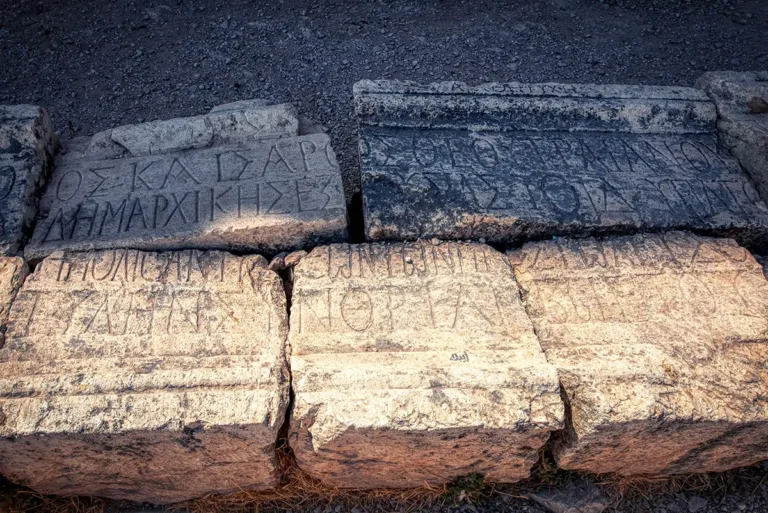
The South Gate was built around AD 129–130, the time of Emperor Hadrian’s visit to Gerasa. Its three arches and Corinthian half-columns closely resemble those of Hadrian’s Arch, and although no dedicatory inscription survives, its date and design suggest it may have been built for the visit.
Before the gate existed, the road entered the city a little further south, through a vaulted passage still visible about 50 metres beyond it. The new gate gave travellers a formal, monumental entrance, lined by shops and workshops that served traders and visitors.
Architectural Design
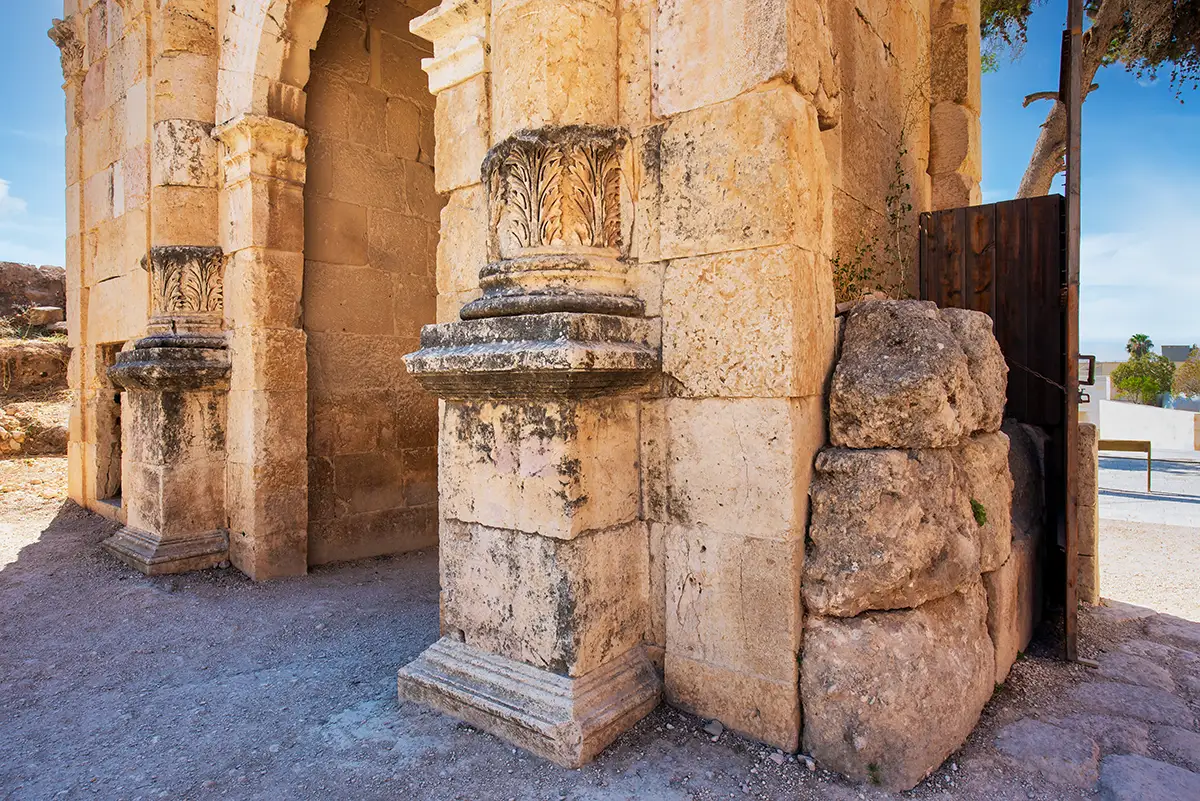
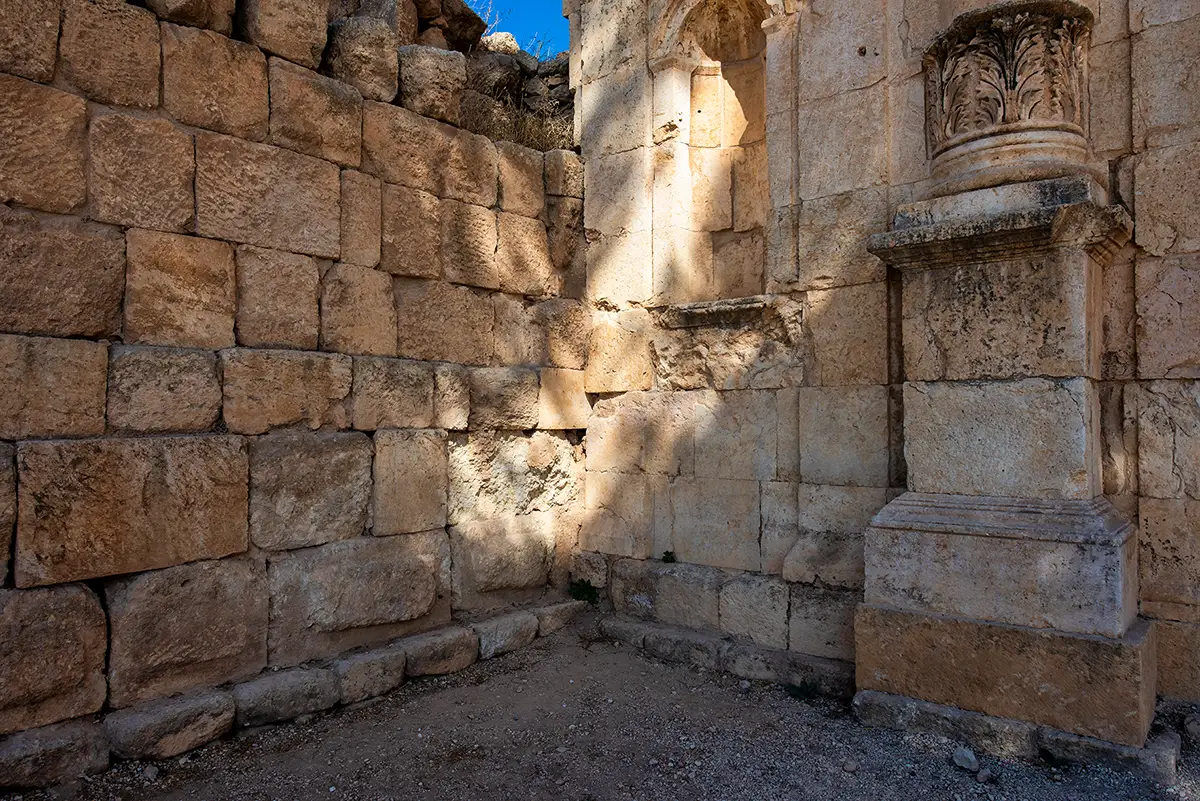
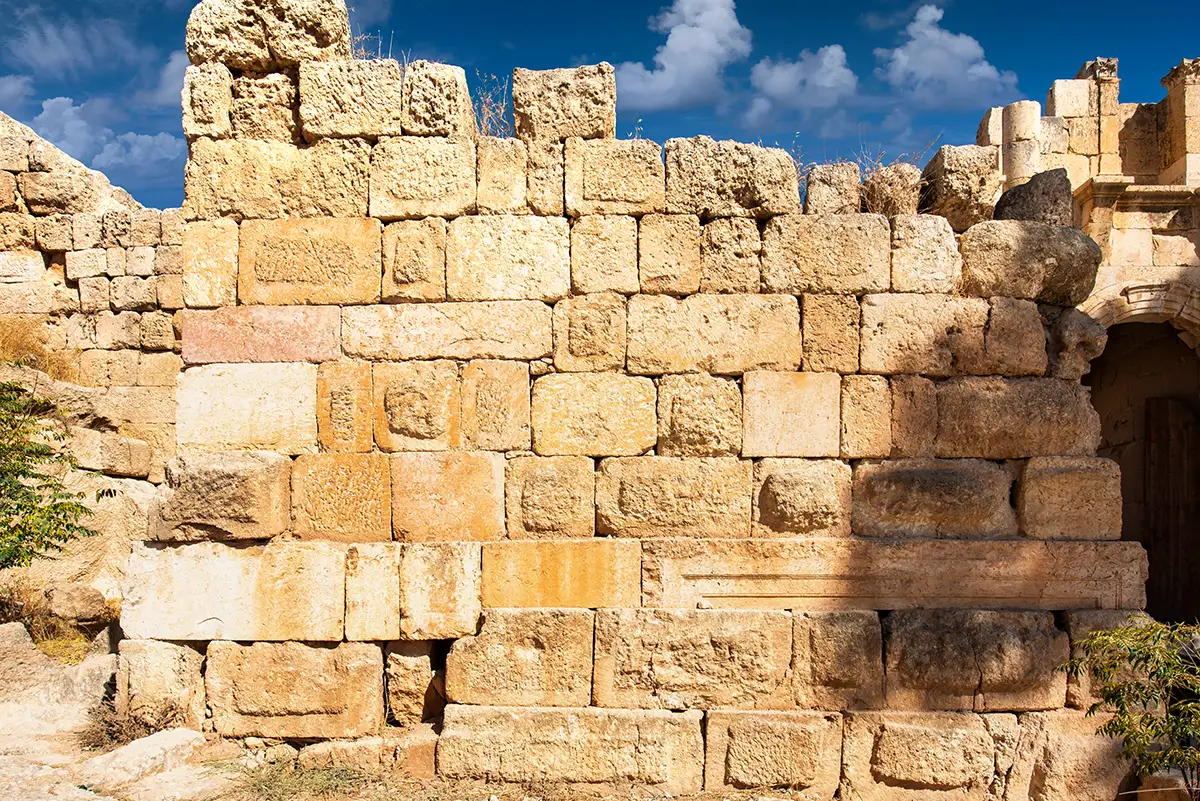
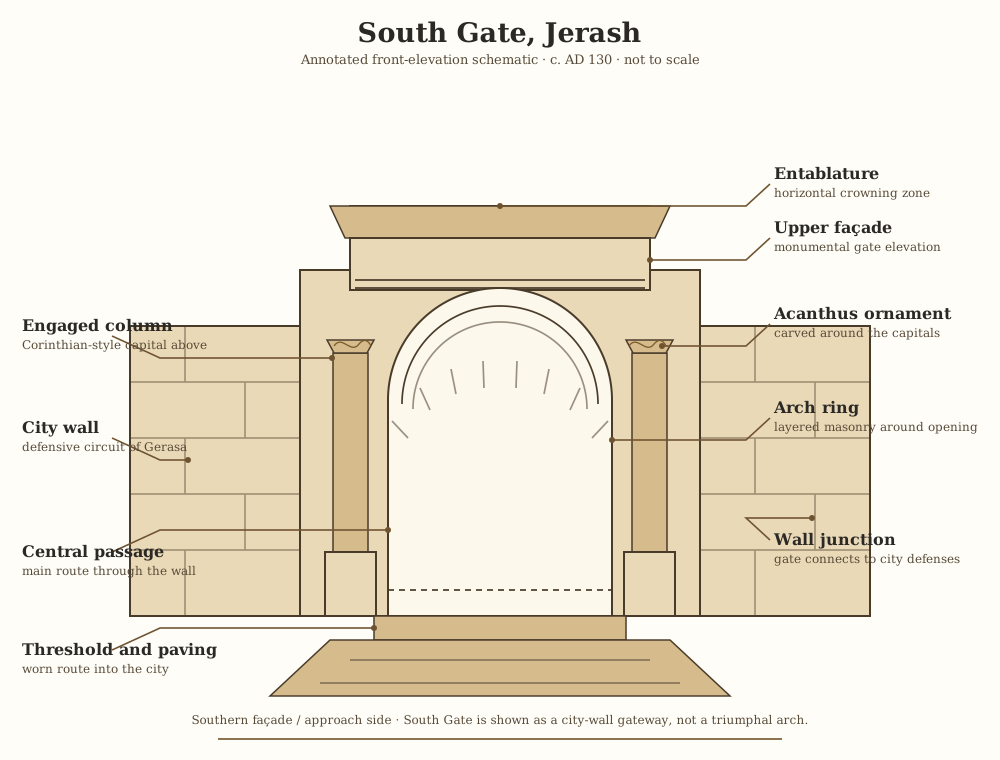
The gate has a broad central passage flanked by two smaller side arches. Engaged Corinthian half-columns, mouldings and recesses give the façade a rich, layered surface designed to impress anyone arriving by the road. At the same time its passages had a practical job: channelling people, pack animals and goods into the city.
Three Archways
A broad central passage, about 4 metres wide, is flanked by two smaller arches for pedestrians and lighter traffic.
Corinthian Half-Columns
Engaged columns with acanthus-leaf capitals give the façade the same rich architectural language as Hadrian’s Arch.
The Older Vaulted Entrance
About 50 metres south of the gate, a vaulted passage marks where the road entered Gerasa before the gate was built.
The City Wall
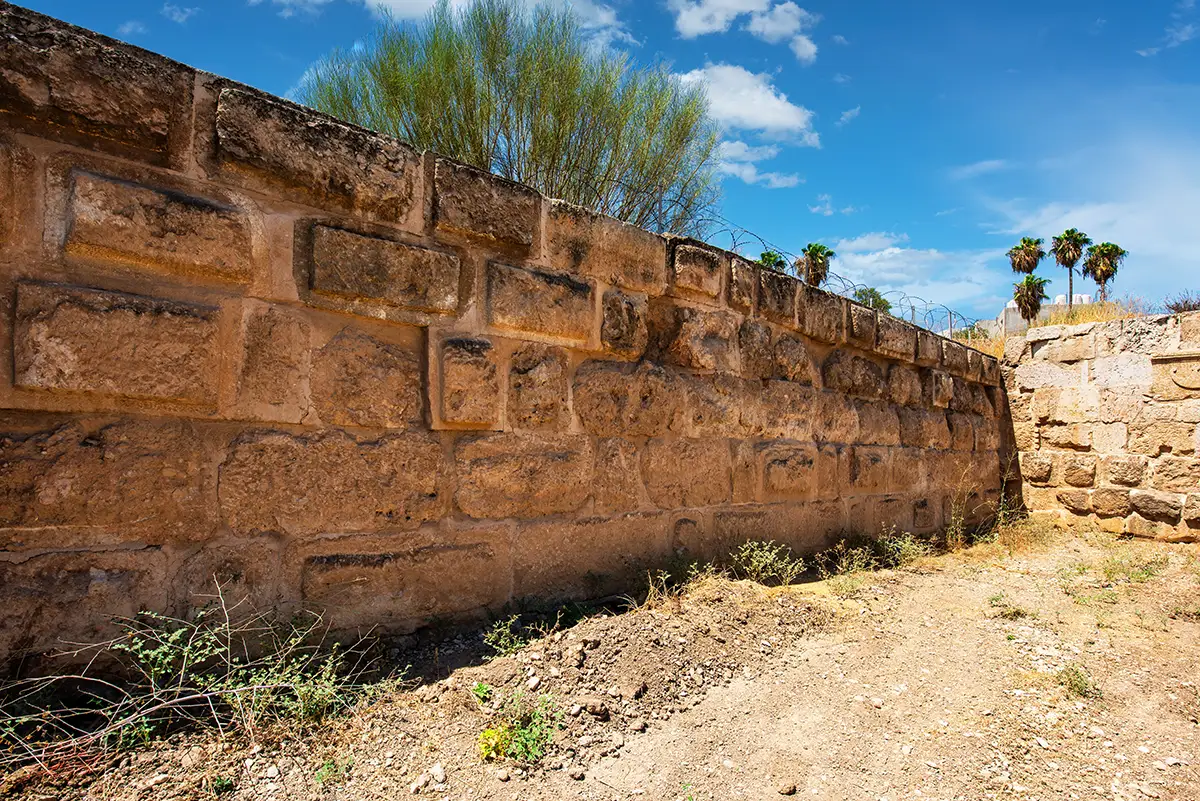
The later wall, about 3.4 km long, joins the gate — trace its line away from the passage where it survives.
The City Wall and Later History
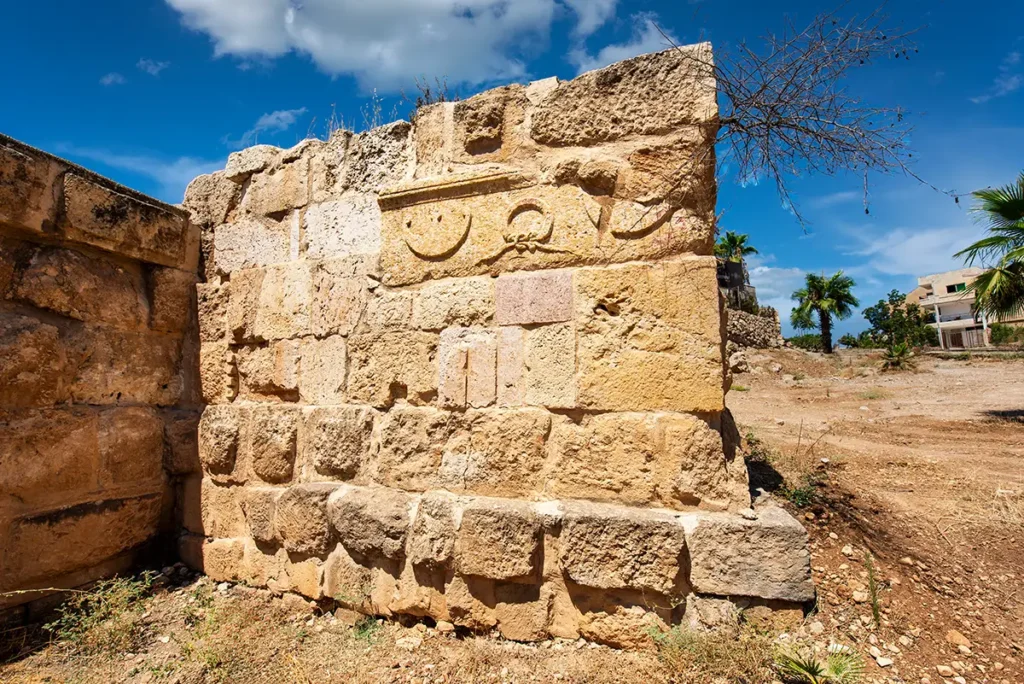
When the gate was built, Gerasa was an open city. According to the official information board at the site, a wall about 3.4 kilometres long was built around Jerash only in the early 4th century AD, probably after a destructive raid, and the South Gate was then made part of it. A ceremonial entrance became a controlled access point, and the shops on its west side were levelled for a small barracks guarding the gate.
Sections of the wall were repaired in the Byzantine period. Modern excavation and conservation uncovered the gate, the wall and the markets and barracks beside it, and the gate has been partly restored.
Visiting the South Gate Today
Walk north from Hadrian’s Arch past the Hippodrome to approach the gate as ancient travellers did. Pause on the southern side and look through the central passage towards the city, then look back south for the older vaulted entrance.
Low morning and late-afternoon light shows the depth of the arches and the carving on the half-columns best. From here the South Theatre, the Sanctuary of Zeus and the Oval Plaza are only a few minutes’ walk away.