
High above the Dead Sea, Machaerus was a royal fortress of the Hasmonean kings and of Herod the Great. According to the historian Josephus, John the Baptist was imprisoned and executed here, and in the 1st century AD the Roman army besieged it after the Jewish revolt — leaving its siege works around the hill to this day.
Where Is Machaerus?
The fortress crowns a steep, isolated hill about 2 km beyond the village of Mukawir, some 32 km south-west of Madaba. It rises about 1,100 metres above the Dead Sea, and from its top the view reaches across to the Judaean hills, Jericho and Jerusalem.
Historical Context and Origin
Alexander Jannaeus built the first fortress around 90 BC. The Roman general Gabinius destroyed it in 57 BC, and Herod the Great rebuilt it around 30 BC with a walled lower town, towers, cisterns and a palace. It passed to his son Herod Antipas, ruler of Galilee and Perea. Josephus writes that Antipas sent John the Baptist “a prisoner to Macherus” and had him put to death there.
During the Jewish revolt rebels held the fortress until AD 71/72, when the Tenth Legion under Lucilius Bassus besieged it and it surrendered; the Romans then razed it.
Architectural Design
The palace occupied the summit. Its heart was a royal courtyard of about 660 square metres, surrounded by Doric columns with heart-shaped corner columns and paved in stone. Around it were an Ionic bathhouse, a ritual bath with 12 steps in the north-east tower, and cisterns fed by an aqueduct about 182 metres long — one cistern held some 380,000 litres.
The Royal Courtyard
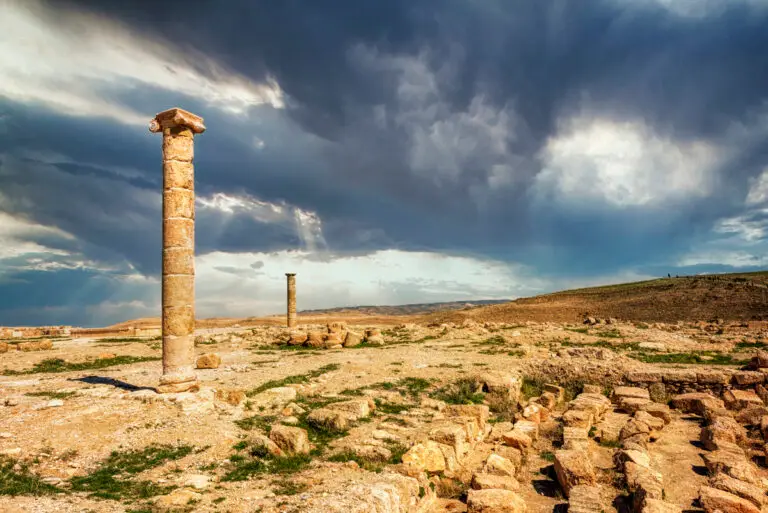
A Doric peristyle of about 660 m², with heart-shaped corner columns and its stone pavement still in place.
Baths and Mikveh
An Ionic bathhouse and a 12-step ritual bath in the north-east tower.
Cisterns
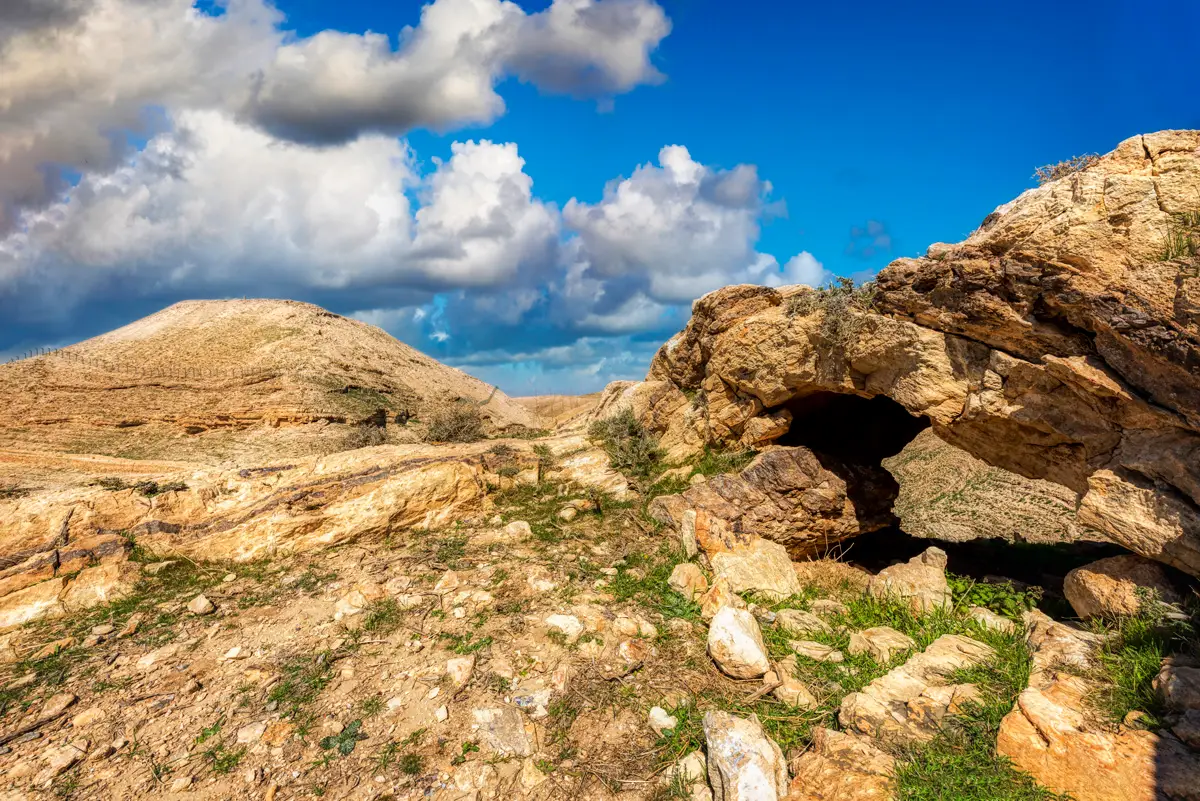
Deep cisterns and an aqueduct about 182 m long kept the fortress supplied with water.
The Siege Works
A Roman siege wall of about 3.5 km, 16 camps and an unfinished ramp still ring the hill.
The Royal Courtyard and the Gospel Story
The Gospels of Mark and Matthew tell how Salome danced at Antipas’s birthday banquet and asked for John’s head. Josephus does not mention the dance, but the excavator Győző Vörös has identified an apsidal niche in the royal courtyard as the king’s throne and proposed the courtyard as the setting of the banquet. Other scholars are cautious — but standing there, it is easy to see why the idea is compelling.
Destruction, Rediscovery, and Restoration
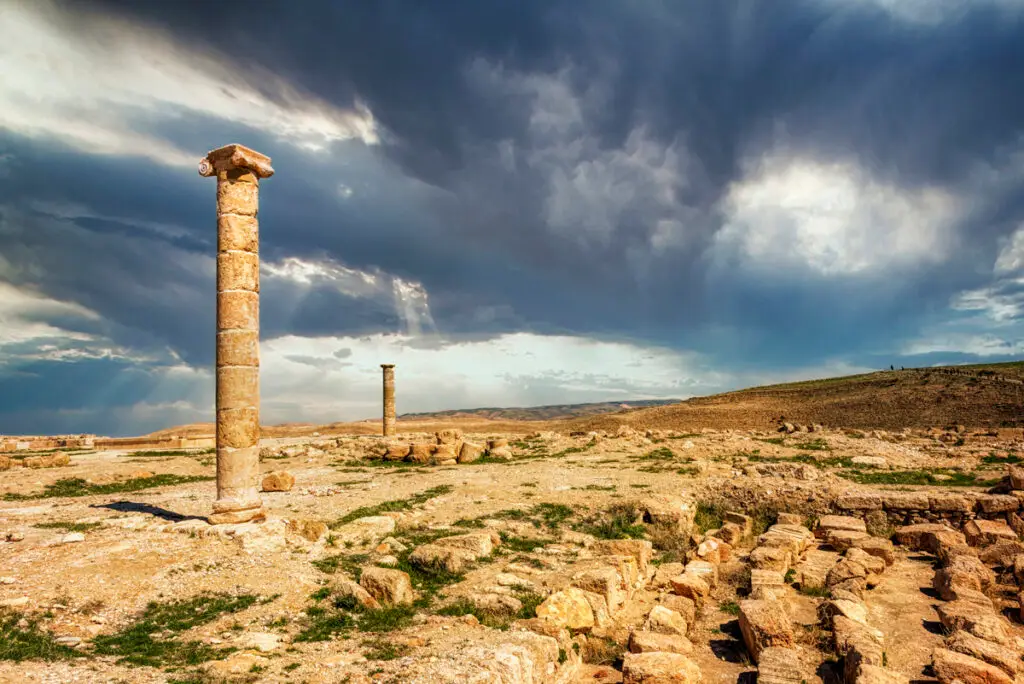
Ulrich Seetzen identified the ruins in 1807. Short excavations in 1968 were followed by Franciscan work under Virgilio Corbo from 1978 and by the Hungarian Academy of Arts under Győző Vörös, with the Department of Antiquities, since 2009. Two columns, one Doric and one Ionic, were re-erected during restoration work, using only their original stones.
Visiting Machaerus Today
From the car park, steps lead down to a path that climbs the hill. The ruins are not labelled, so look for the royal courtyard, the baths and the deep cisterns, and from the top trace the line of the Roman siege ramp. The late afternoon, with the sun setting over the Dead Sea, is unforgettable.
Further reading: Vörös, History of the Archaeological Missions to Machaerus (SHAJ 13).