












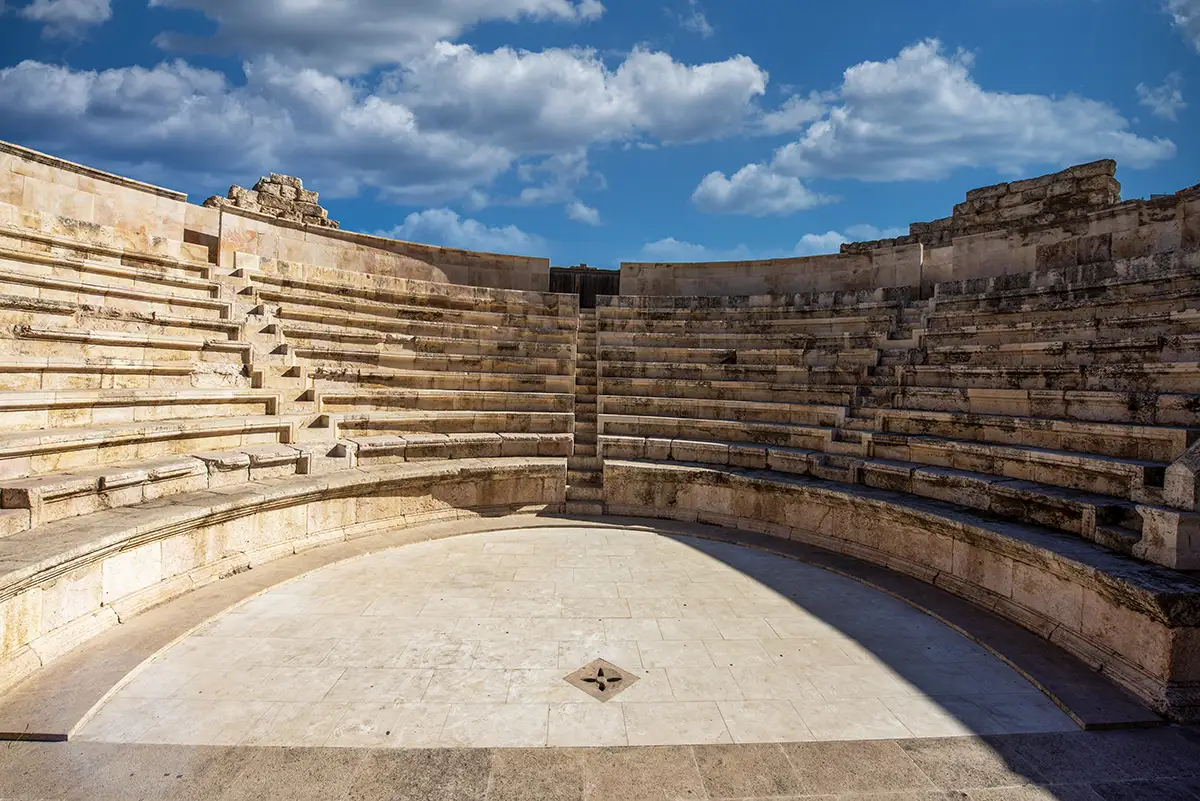
The Roman Odeon is a small, semicircular theatre in the heart of downtown Amman, built in the 2nd century AD when the city was Roman Philadelphia. It seated about 400 people and stands beside the much larger Roman Theatre. Restored by the Department of Antiquities in 1986, it is again used for concerts and other events.
Where Is the Roman Odeon?
The Odeon stands on the east side of the Hashemite Plaza in downtown Amman, close to the ancient forum and next to the Roman Theatre. The Roman Nymphaeum is a short walk away.
Historical Context and Origin
An odeon was a small, roofed or partly roofed theatre used for musical performances, poetry readings and civic gatherings, as distinct from the large open-air theatres used for plays and spectacles. The Department of Antiquities dates Amman’s Odeon to the 2nd century AD; its website gives about AD 130 for the start of work and about AD 141 for completion, during the building of the Great Roman Theatre. It was therefore a smaller companion to the big theatre in the city’s public centre.
The information board and the Department of Antiquities give a capacity of about 400 spectators. Archaeologists have suggested that the Odeon was covered by a wooden roof or a temporary awning to shelter audiences and performers, which would explain its more enclosed form compared with today’s open-air appearance. No roof survives.
Architectural Design
The Odeon is a semicircular building attached to an outer wall built in the form of a half barrel vault, with a tower at each of its northern and southern corners. It was built entirely of well-dressed limestone, from ground level up, rather than being cut into a hillside.
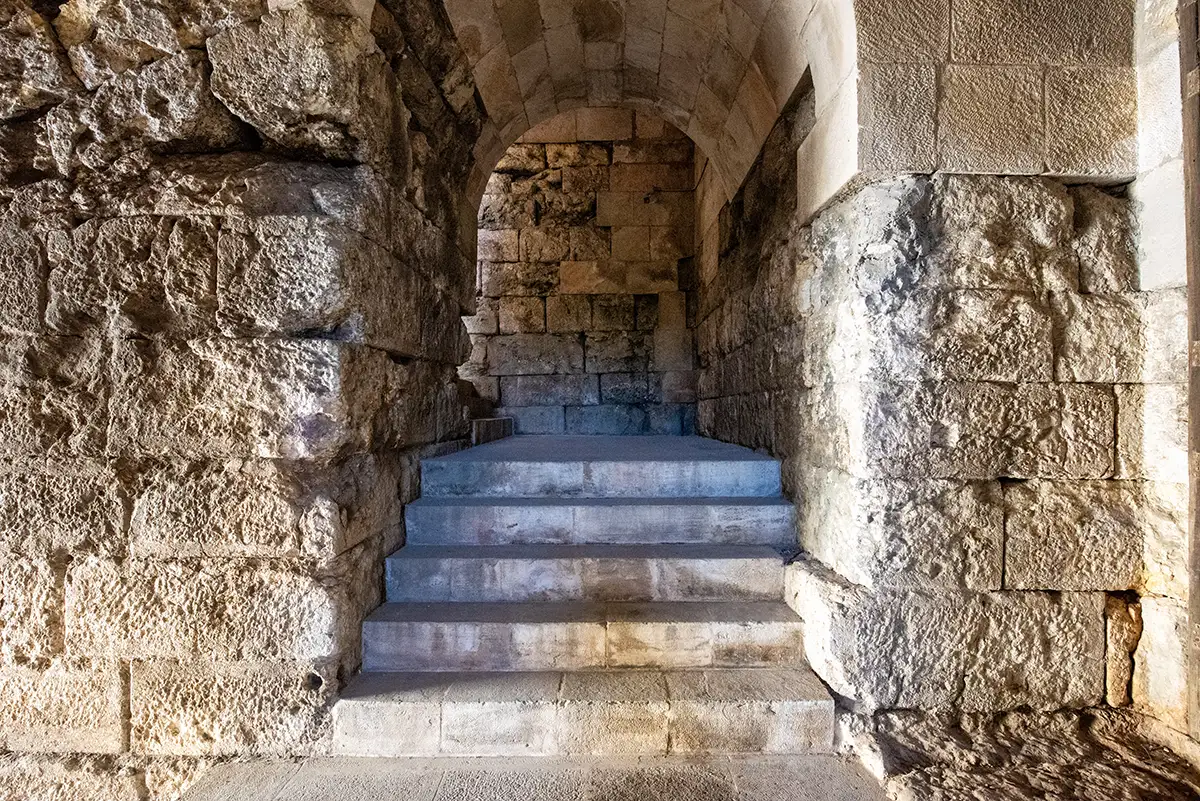
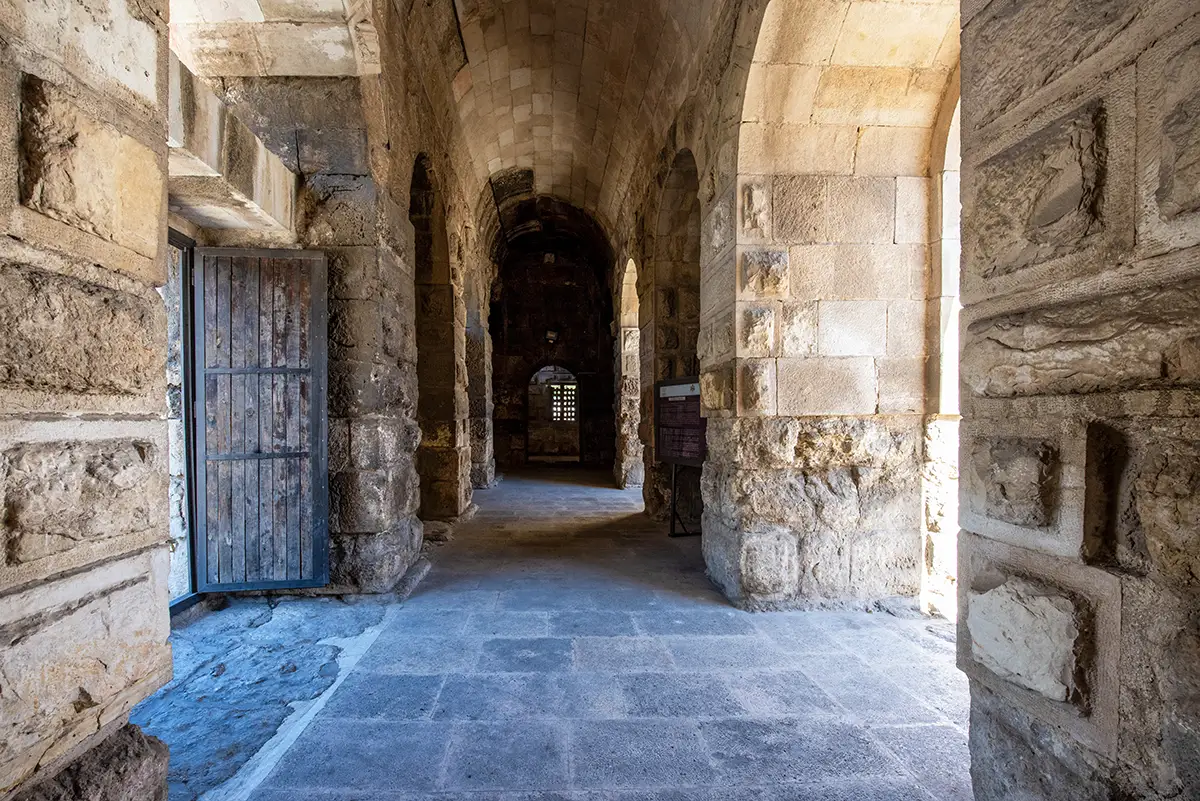
The seating (cavea) had two tiers. The lower tier (ima cavea) has nine rows divided into four sections by five stairways, and the upper tier (summa cavea) had seven rows divided into five sections by six stairways. A single walkway (praecinctio) separates the tiers and gives access to three vaulted passages (vomitoria). In front of the seating lie the semicircular orchestra and the raised stage (pulpitum), behind which stands the stage building (scaenae) with its changing rooms. It has five main entrances, two lateral entrances (parodoi) and another entrance at the rear.
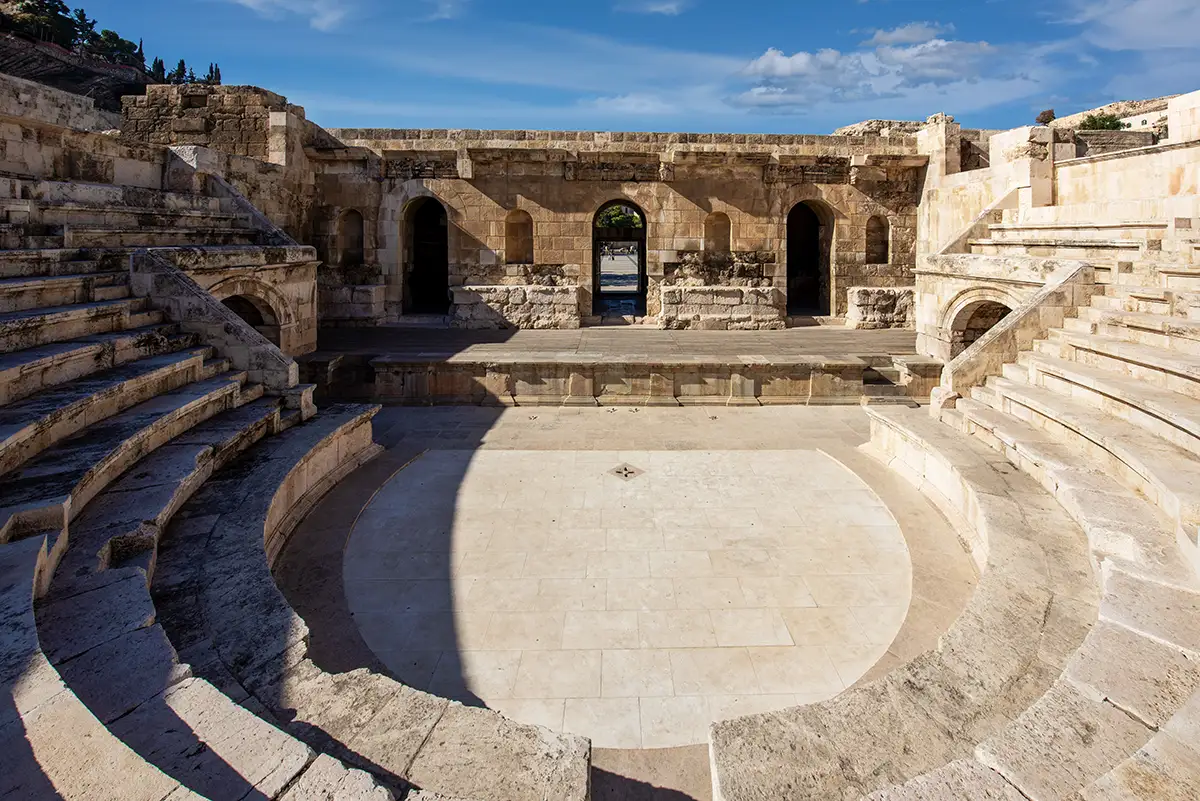
Restored Lower Seating
Nine rows of limestone seats in four sections, divided by five stairways.
Walkway and Vaulted Passages
A single walkway between the tiers, with three vaulted passages (vomitoria).
Stage Building
The scaenae, with five main entrances, two lateral entrances and a rear entrance.
Semicircular Orchestra
A semicircular floor between the seating and the stage, used again for performances.
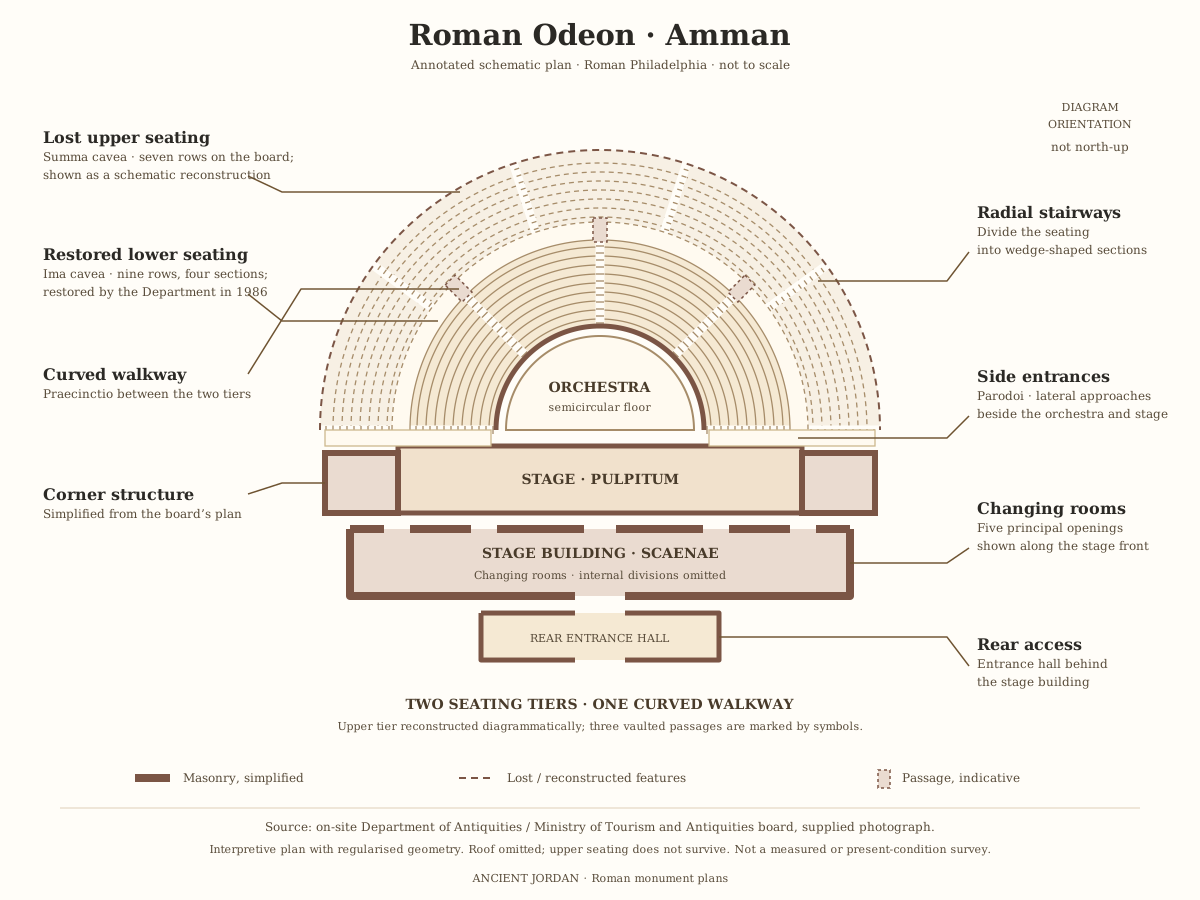
Roman Odeon, Amman
Schematic plan of the Roman Odeon in Amman, after the Department of Antiquities information board; interpretive, not a measured survey
Open drawing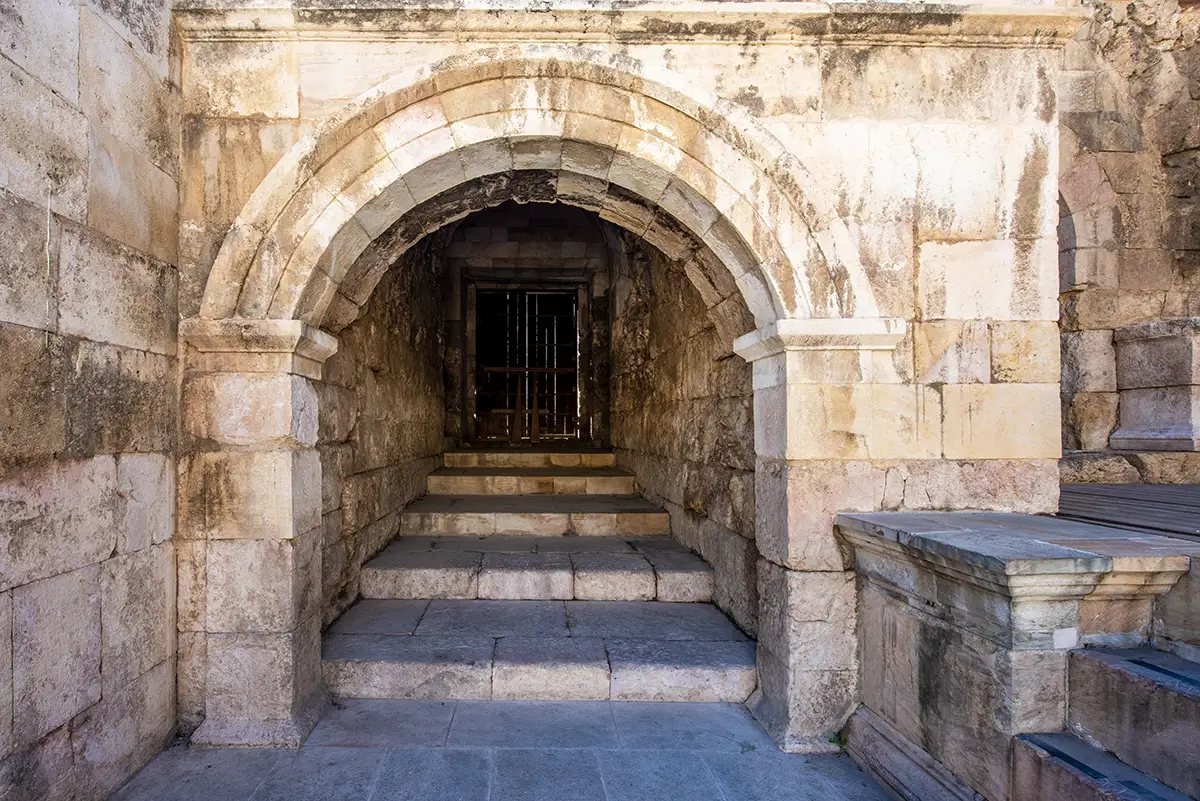
Photographs, Rediscovery, and Restoration
The information board at the site reproduces a photograph of the Odeon from the late 19th century and another from 1983, showing the ruin before and during modern work. The Department of Antiquities restored the building in 1986 and it again became a place for entertainment and concerts. Only the lower tier of seating was restored; the upper tier was not rebuilt because no remains of it survived.
Visiting the Roman Odeon Today
Admission is 2 JOD for visitors and 0.25 JOD for residents, on a ticket shared with the Roman Theatre, so the Jordan Pass covers it too. The Jordan Pass lists opening hours of 8:00 to 17:00 for the Roman Theatre; hours can change with the season, so check locally. You can walk down into the orchestra, climb the restored seating and look into the vaulted passages behind the stage. Allow about 15 minutes. The Roman Theatre is right beside it and the Nymphaeum is a short walk away.
Further reading: Department of Antiquities, Odeon (Small Theatre), Amman; Odeon Theater (Amman), Wikipedia; the Department of Antiquities information board at the site.