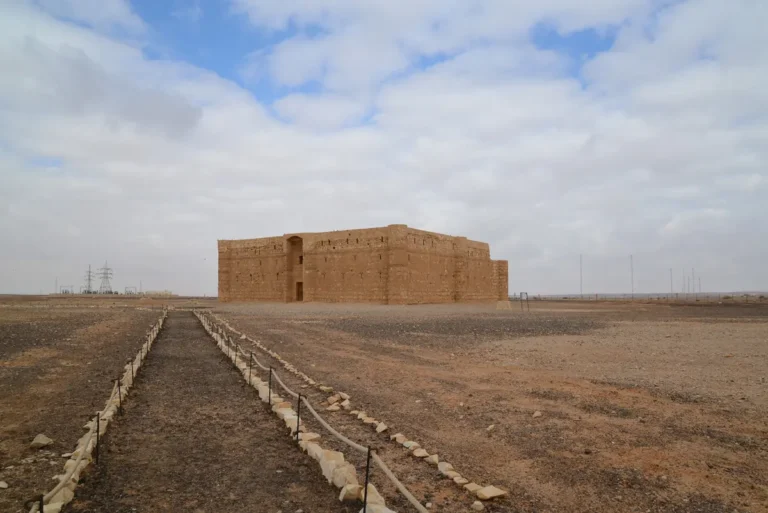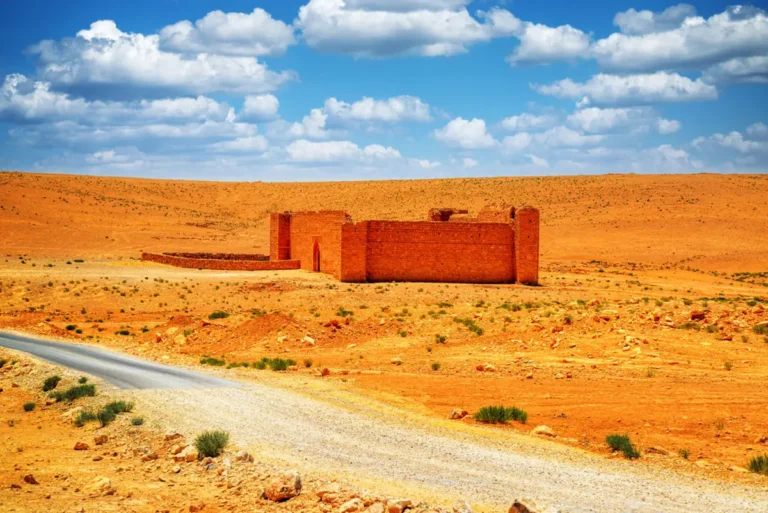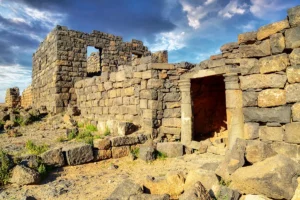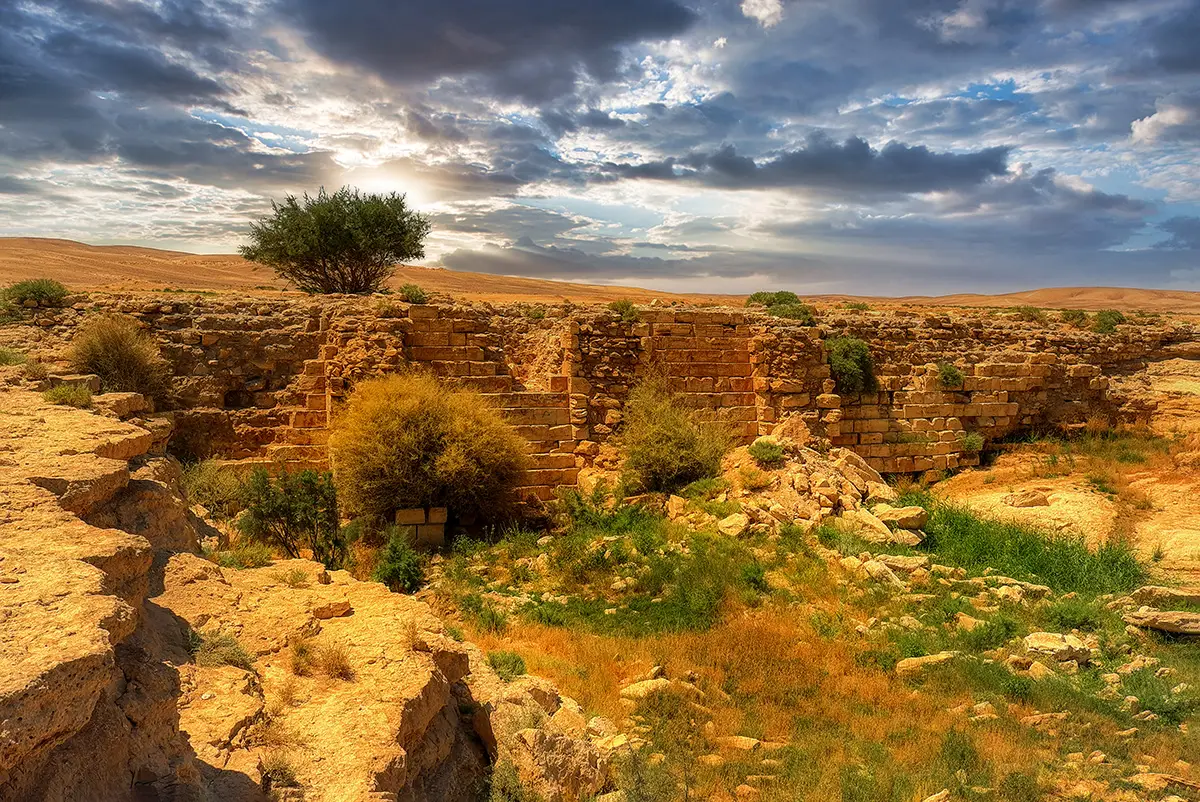

In the stony steppe south of Qasr Kharana, a rocky ravine holds winter floodwater long into the spring. This small seasonal oasis — Wadi Jilat — drew people for twenty thousand years, and an ancient dam still holds back its water.
Where Is Qasr Al-Jilat?
Wadi Jilat lies in Jordan’s eastern desert, about 26 km south of Qasr Kharana and some 55 km south-west of Azraq, on the border between steppe and true desert. The ravine traps winter floods, which remain into late spring or early summer.
Historical Context and Origin
Between 1982 and 1989 the Azraq Project, led by Andrew Garrard, surveyed and excavated the area and recorded 32 prehistoric sites in Wadi Jilat. Jilat 6, an Early Epipalaeolithic site of more than 18,000 m², dates to about 20,000 years ago; with its ochre-stained floors, it seems to have been a seasonal gathering place for hunter-gatherers, like Kharaneh IV to the north. Later, Neolithic people camped here too.
Architectural Design
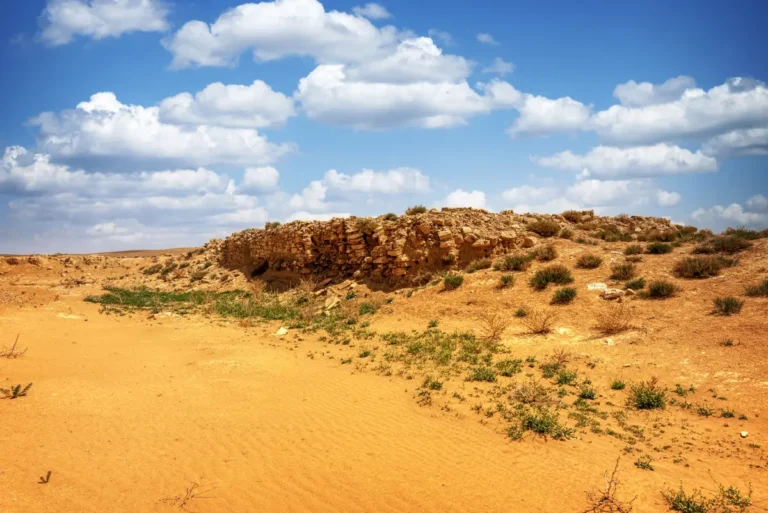
The standing monument is a stepped dam across the ravine, published by Konstantinos Politis in 1993. It still holds a reservoir and may date to the Nabataean period. No “qasr” or castle has been described here in the archaeological literature.
Stepped Dam
An ancient dam that still holds a reservoir, perhaps of Nabataean date.
Ice Age Gathering Place
Jilat 6, a huge Epipalaeolithic camp of about 20,000 years ago.
Early Wheat
Jilat 7 yielded some of the early domestic-type einkorn in the Levant.
Bead Makers
Neolithic camps where beads were made from local Dabba marble.
The First Farmers and Herders
Jilat 7, a Pre-Pottery Neolithic B site dated to about 8200–7350 BC, produced grains of einkorn wheat of domestic type — among the early finds of cultivated cereals in the region, although their status is debated. At Jilat 13 and Jilat 25, later Neolithic camps, people made stone beads from the local Dabba marble. From about 9,000 years ago, domestic sheep and goats appear in the Azraq Basin.
Destruction, Rediscovery, and Restoration
The prehistoric sites were excavated in the 1980s and have been left as they were found; the dam is still in use as a reservoir.
Visiting Qasr Al-Jilat Today
Wadi Jilat can be reached only by 4×4, and a guide is needed: there are no signs to the site. Combine it with Qasr Kharana and the other desert castles, and visit after winter rains, when the reservoir holds water.
Further reading: UCL — The Azraq Project; Politis, “The Stepped Dam at Wadi el-Jilat”, PEQ 125 (1993).