











Qasr Al-Qastal
An Umayyad palace, a mosque and one of the oldest minarets
BuiltLate 7th–early 8th c.
PalaceAbout 68 m square
LocationBy Queen Alia Airport
StatusUNESCO Tentative List
Introduction
One of the oldest and most complete Umayyad provincial communities in the Near East. – UNESCO Tentative List
Al-Qastal was long taken for a Roman fort, but it is one of the earliest Umayyad settlements in Jordan: a square palace, a mosque with a round minaret, a cemetery, a dam, a reservoir and some 70 cisterns. It was probably begun under Caliph Abd al-Malik (r. 685–705) and was still in use when Mushatta was being built nearby.
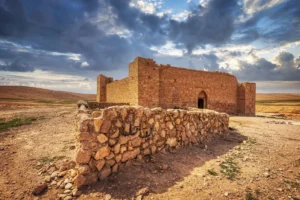
The site lies in the modern village of Al-Qastal, about 25 km south of Amman, beside the Airport Highway. About a third of the palace has been destroyed by modern building, but its walls, arches and carved stones are still impressive. The mosque beside it is in ruins, but you can still see its round minaret.
Best timeMar–May · Oct–Nov
Time needed30 min
TicketFree
From Amman30 km · 35 min
Combine withQasr Al-Mushatta · 15 min
Google rating4.4 · Reviews
Highlights · An early Umayyad settlement
Palace, mosque and water works
Carved stone, a round minaret and an Umayyad dam
Qastal was built and lived in, unlike unfinished Mushatta down the road. Walk from the palace to the mosque and then look at the carved stones that once decorated its rooms.
 01 / 05
01 · Architecture
The palace walls
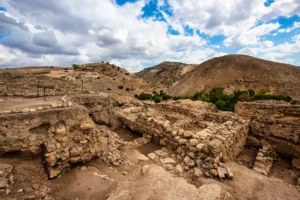
The palace
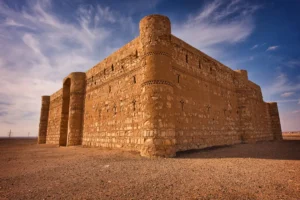
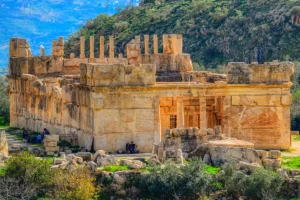
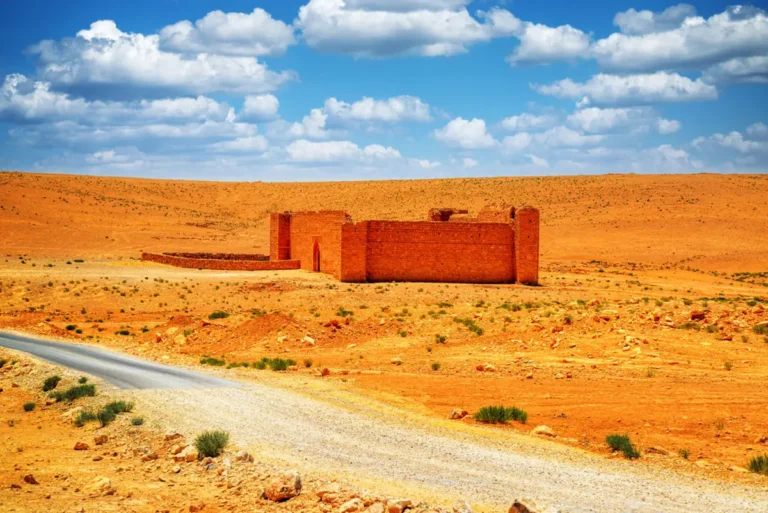
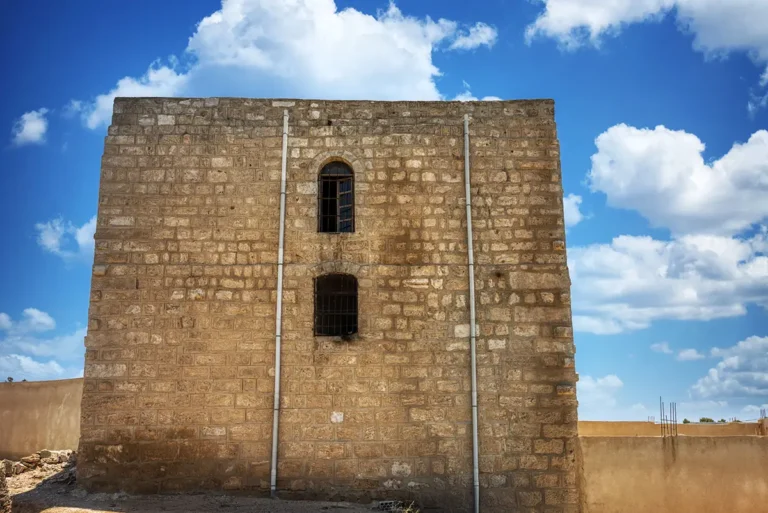
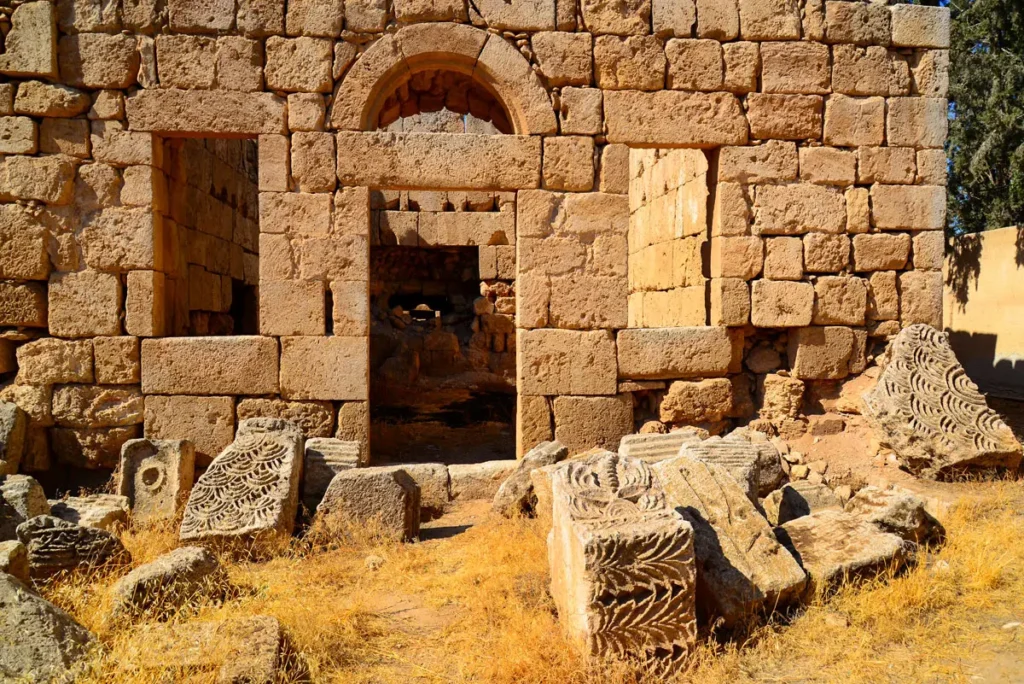
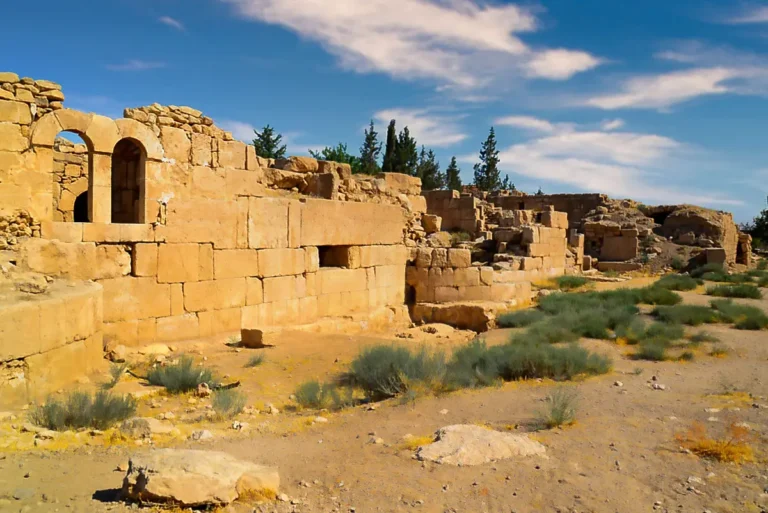
A square of nearly 68 m a side, with four round corner towers and twelve half-round towers. The entrance hall was in a tower on the east wall.
Look closely
The arched doorways and big limestone blocks.
1 of 5
Room by room
What to see
Five stops: the palace, the mosque and minaret, the buildings around them, the carved stones and the water works. Pick a stop to see what to look for.
1 / 801 · The qasr
Walk round the palace
The palace is a square of nearly 68 m a side, with four round corner towers and twelve half-round towers along the walls. Its rooms were grouped in six suites on each of two floors around a central courtyard, with a large cistern beneath it. Upstairs was a richly decorated audience hall with three apses.
Only the lower floor survives, and about a third of the palace has been destroyed by modern building since the 1970s.
About 68 m square16 towersTwo floorsCourtyard cistern
Look for
- The rounded towers along the walls
- Arched doorways into the rooms
- Where modern buildings cut into the palace
Dig deeperNot a Roman fort
The name Qastal was thought to come from Latin castellum, a fort, and for a long time the site was taken for Roman. Jean Sauvaget recognised the palace and mosque as Umayyad in 1939, and French excavations by Patricia Carlier and Frédéric Morin in 1983 and 1985 confirmed it.
The poet Kuthayyir ‘Azza already mentions “Qastal al-Balqa’” before 723.
 1 / 7
02 · Mosque and minaret
Find the mosque and minaret
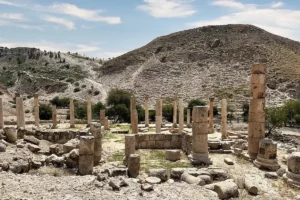
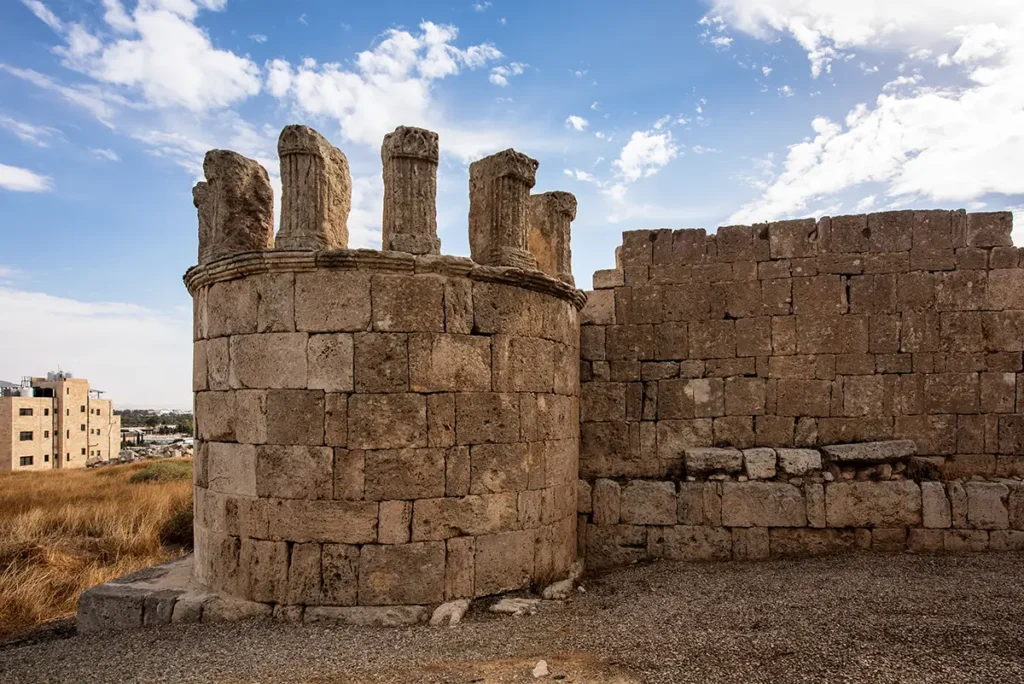
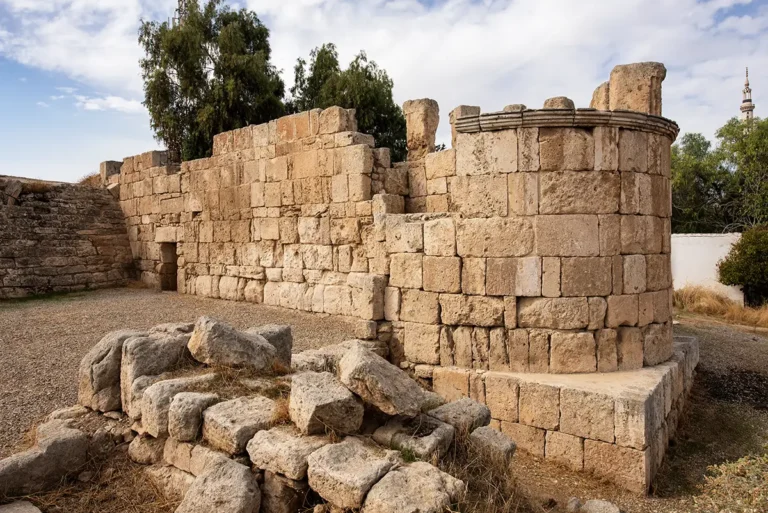
Immediately north of the palace stands the mosque, a rectangular building turned slightly off the direction of Mecca. Its original rectangular mihrab was later replaced by a semicircular one. The round minaret has a spiral staircase inside and is contemporary with the palace.
The mosque is in ruins today, but the round minaret still stands out among the walls.
Round minaretSpiral stairBuilt with the palaceRectangular prayer hall
Look for
- The round minaret
- The semicircular mihrab
- How the stonework matches the palace
Dig deeperThe oldest minaret?
Qastal’s minaret is often called the oldest surviving minaret built as such. UNESCO’s description says, more cautiously, that it is one of the earliest.
Studies of its mortar and foundations show that it was built at the same time as the palace, in the late 7th or early 8th century.
 1 / 6
03 · Around the palace
Explore the buildings around it
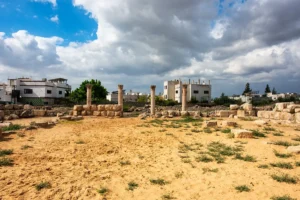
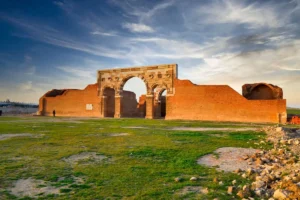
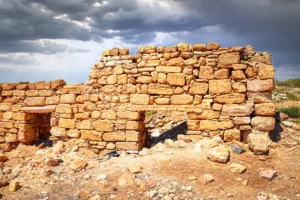
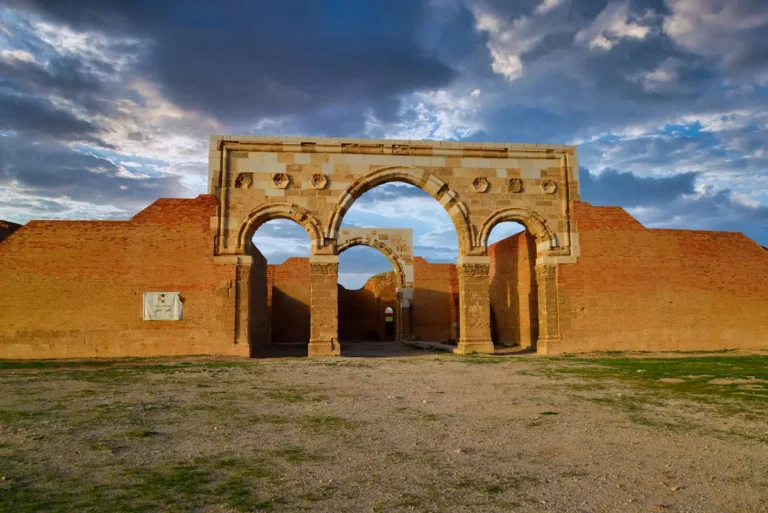
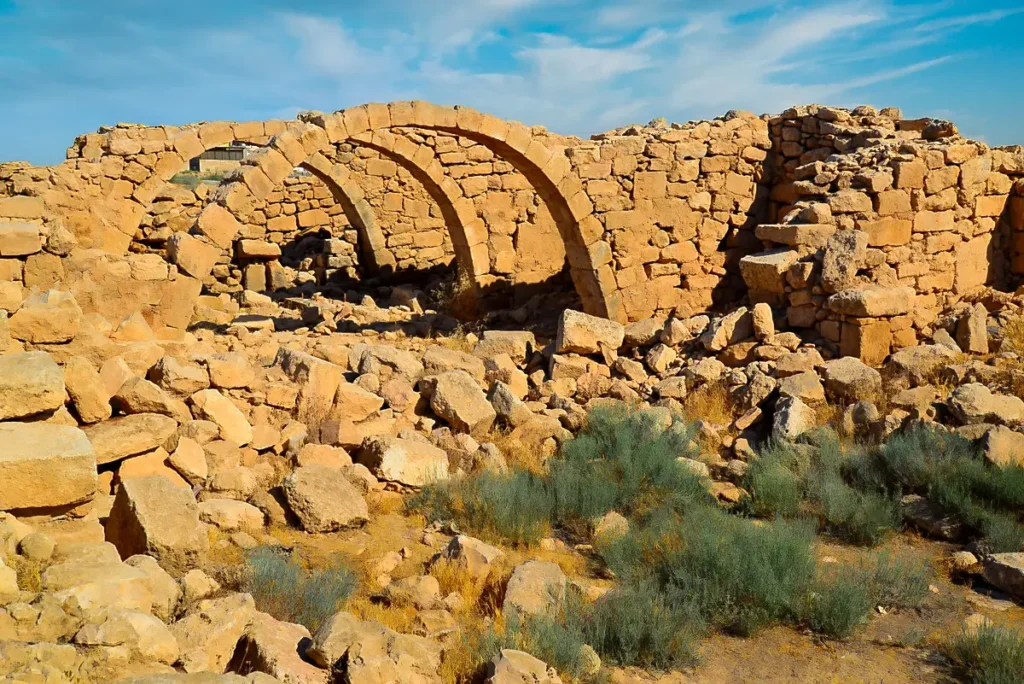
Around the palace are the ruins of other buildings, some still spanned by stone arches. Many of the rougher walls belong to a later village: after a short gap, the site was reoccupied in the Ayyubid and Mamluk periods (1171–1516).
West of the palace are faint remains of an Umayyad bath. Southwest of it lies the cemetery, the only known early Islamic cemetery in Jordan.
Stone archesAyyubid–Mamluk housesBath remainsEarly Islamic cemetery
Look for
- Arches still standing
- Rough later walls on older foundations
- The cemetery to the southwest
Dig deeperLions in a mosaic
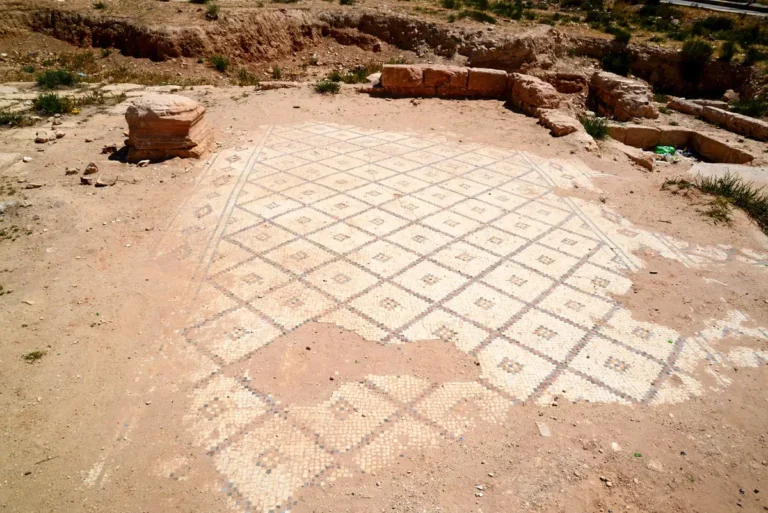
In 2000, a building west of the palace yielded two mosaic panels of big cats attacking their prey, with birds in the corners. Glass cubes in the mosaic point to a late Umayyad date. Calling the building a bath is still a guess.
At least 17 inscribed tombstones from the cemetery are now in the Madaba Archaeological Museum.
 1 / 9
04 · Decoration
Look at the carved stones
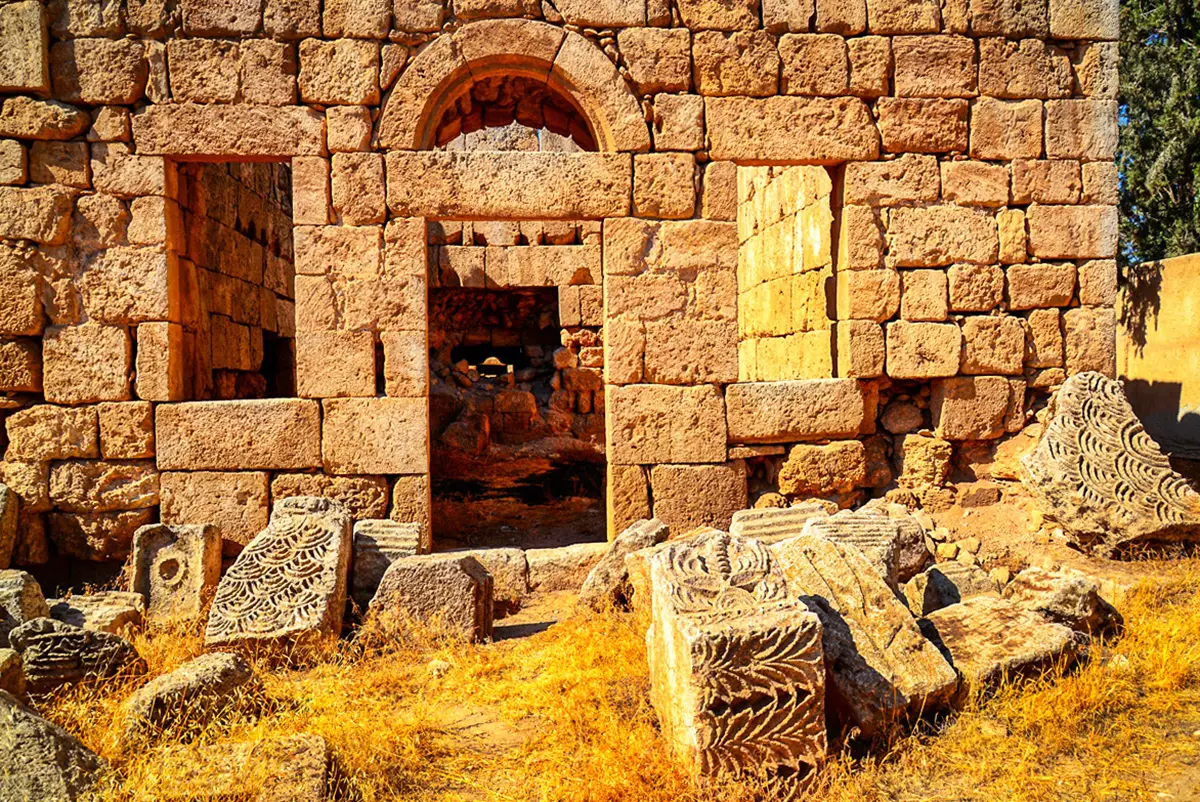
Carved blocks lie around the palace: fish-scale patterns, rosettes, scrolls and acanthus leaves. They once decorated doorways and walls, together with carved stucco and floors of glass and stone mosaic, even in the latrines.
Most of the decoration is based on plants and gardens.
Fish-scale patternRosettesAcanthusGarden themes
Look for
- The fish-scale block
- A rosette carved in deep relief
- Acanthus leaves on a capital
 1 / 5
05 · Water works
See how Qastal stored water
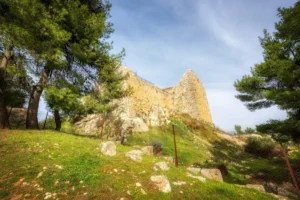
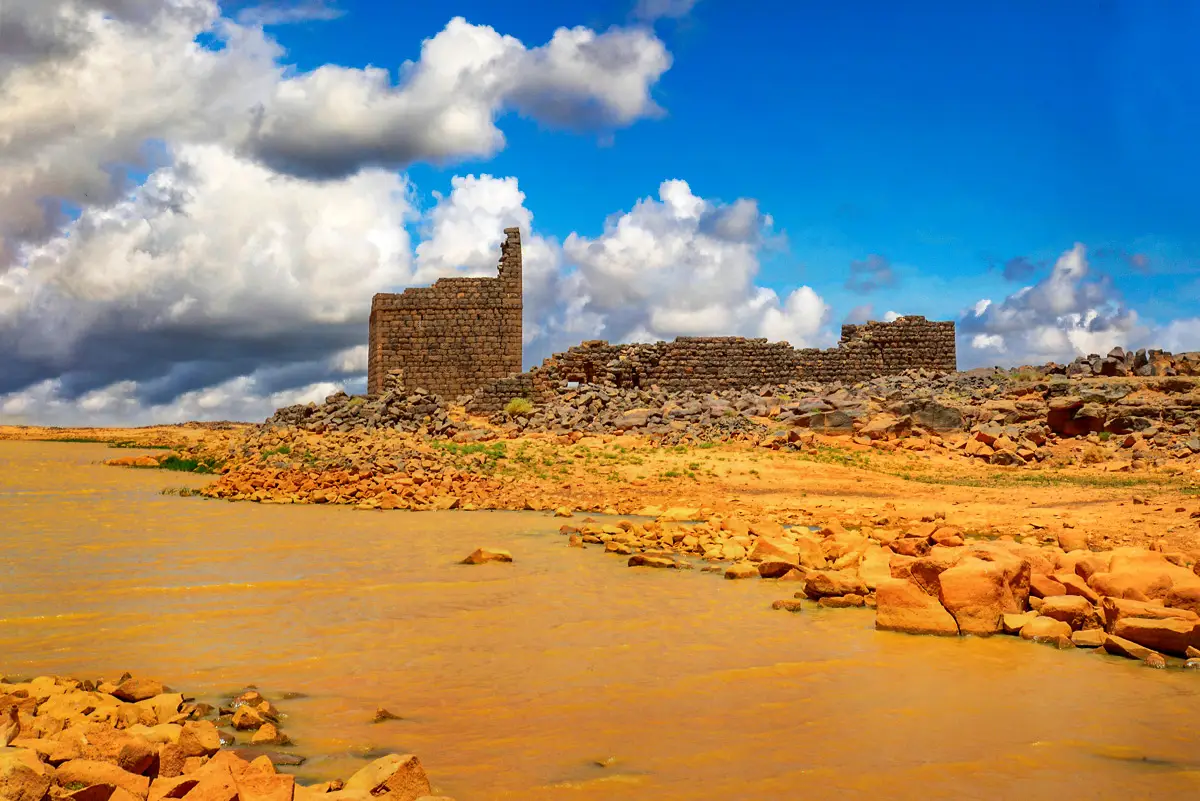
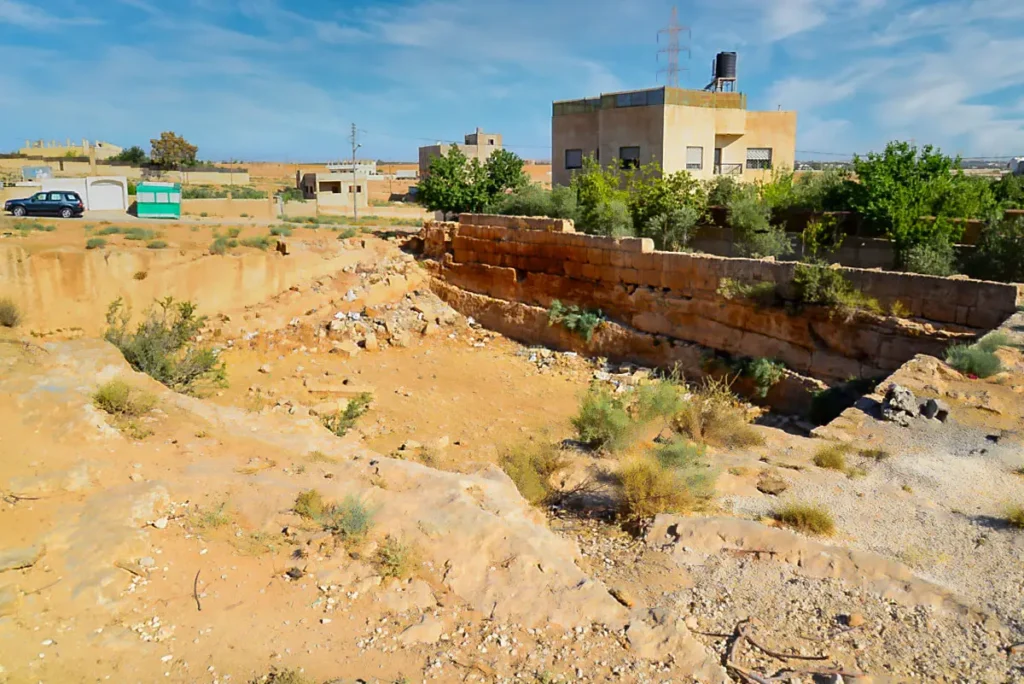
About 1 km northwest of the palace, the quarry that supplied the building stone was turned into a reservoir of about 30 × 22 m and 6.5 m deep. The lower part of its water gauge survives. Around the site, some 70 small cisterns stored rain water.
Just over 1 km east, across the highway, a dam about 400 m long held back water for the fields, perhaps nearly two million cubic metres.
Reservoir 30 × 22 mAbout 70 cisterns400 m damQuarry reused
Look for
- Cistern openings in the rock
- The cut faces of the quarry
- The line of the dam to the east
History & significance
One of the first Umayyad settlements
Al-Qastal was probably begun under Caliph Abd al-Malik (685–705) and was still used by al-Walid II while Mushatta was being built. It was reoccupied in the Middle Ages and is on UNESCO’s Tentative List.
- c. 685–705Probably begun under Abd al-Malik
- 1171–1516Reoccupied as a village
- 1983, 1985French excavations
- 2001UNESCO Tentative List
- 2000Lion mosaics found west of the palace
 ProfileQasr Al-Qastal: the full storyHistory, architecture, the mosque, the water system and the timeline. About 3 min read.Read the profile →
Plan your visit
Everything you need to know before you go
Al-Qastal is in the village of the same name, just west of the Airport Highway and north of Queen Alia Airport. There are no signs and no car park, but small roads lead up to the site.
Good to know: there are no signs, facilities or car park, and little shade. Small village roads lead right up to the ruins.
Opening hoursOpen accessUnstaffed site · visit in daylight
Entry ticketFreeNo ticket office
Time to visit30 minLonger with the reservoir and the dam
From Amman30 kmAbout 35 minutes south via the Airport Highway
LocationAl-Qastal31.7458° N, 35.9399° EGet directions
Opening hours and prices checked October 2026. Spotted a change? Let us know
On site
What you’ll find at Qasr Al-Qastal
Not on site: visitor centre, ticket office, toilets, designated parking, museum, guide, food & drinks, market / shop, hotels
Access: no 4x4 needed
When to go
Any time of year. Spring and autumn are the most comfortable, as there is little shade.
J
F
M
A
M
J
J
A
S
O
N
D
BestGood, cooler or warmVery hot
Tip: combine it with Qasr Al-Mushatta, only about 5 km away on the other side of the airport, for a half day of early Islamic palaces.
Before you go
Services are limited out in the desert.
- Water and snacksSmall shops in the village
- Sun hat and sunscreenVery little shade outside
- Comfortable shoesUneven, stony ground
- Cash in Jordanian dinarsFor small purchases
- Toilet paperBring your own, just in case
Common questions
Quick answers before you set off.
Is there an entrance fee?
No. The site is open and unstaffed.
Is the mosque still in use?
No. The mosque is in ruins, but you can still see its round minaret.
Is the minaret really the oldest?
It is often called the oldest surviving minaret built as such, and it is certainly one of the earliest. It was built at the same time as the palace.
Are the lion mosaics on show?
No. The mosaics found in 2000 are not displayed on site. Inscribed tombstones from the cemetery are in the Madaba Archaeological Museum.
Can I combine it with Mushatta?
Yes. Qasr Al-Mushatta is about 5 km away, beside the airport, and our Best of Desert Castles tour starts there.
What should I wear?
Comfortable, closed shoes for uneven ground, and light clothing that covers your shoulders and knees, which is respectful in rural Jordan and protects you from the sun.
Combine with
Al-Qastal is close to the airport and the start of the road east. Drive times are from Al-Qastal.
Explore this site
More from Qasr Al-Qastal
Panoramas, walk-throughs, photos and stories about this site.
ProfileQasr Al-Qastal: history & architecture Photo albumQasr Al-Qastal: An Early Umayyad Palace in Photos
 360°360° panoramaQasr Al-Qastal: 360° Panorama
 Travel articleDiscovering the Secrets of Qasr Al-Qastal in Jordan
 360°360° panoramaQasr Al-Qastal Mosque: 360° Panorama
Nearby
Also south of Amman
From guide to visit
See Qasr Al-Qastal with a private guide
Al-Qastal isn’t part of our regular tours, but it is only minutes from Qasr Al-Mushatta, the first stop of our Best of Desert Castles tour. Tell us when you’d like to go, and we’ll plan a private day that includes it.