
Wadi Rum Protected Area
A desert of sandstone mountains and red sand, with 12,000 years of history carved on its rocks
ProtectedSince 1997
UNESCOWorld Heritage Site
Location60 km NE of Aqaba
Getting around4x4 · camel · on foot
Introduction
Herders and travellers have carved their stories into these rocks for thousands of years.
Wadi Rum is a desert of towering sandstone mountains, narrow gorges and red sand dunes in the far south of Jordan, about 60 km north-east of Aqaba. Its rocks carry some 25,000 carvings and 20,000 inscriptions, and in 2011 UNESCO made it a World Heritage Site for both its nature and its culture.
Pay the entrance at the Visitor Centre, then explore with a local Bedouin by 4x4, on a camel or on foot. Allow a full day, or stay the night in one of the camps.
Best timeMar–May · Sep–Nov
Time neededFull day
Ticket5 JOD · Jordan Pass
From Amman300 kmAbout 3 hr 45 min
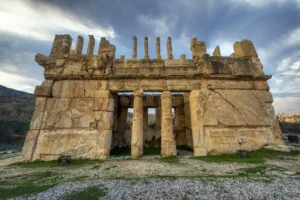
Combine withTemple of Allat in Wadi Rum
Google rating4.7 · Reviews
Highlights · A desert of rock and sand
Six things not to miss in Wadi Rum
Dunes, rock art, rock bridges and sunsets
Wadi Rum is huge. These are the places most visitors remember.
 01 / 06
01 · Landscape
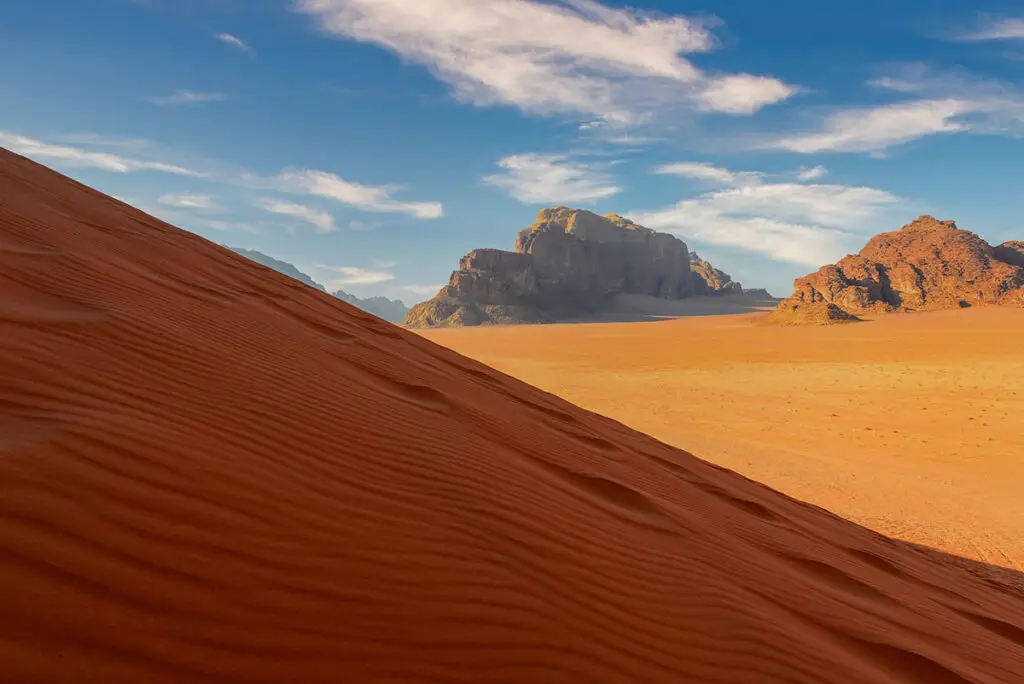
The red dunes
Mountains and dunes
Red sand drifted against the mountains.
Look closely
The view from the top of a dune.
1 of 6
Explore Wadi Rum
What to see
Five parts of a day in Wadi Rum: the mountains and dunes, Lawrence’s Spring, Khazali Canyon, the rock bridges and the sunset. Pick one to see what to look for.
 1 / 10
01 · The landscape
Cross the sand
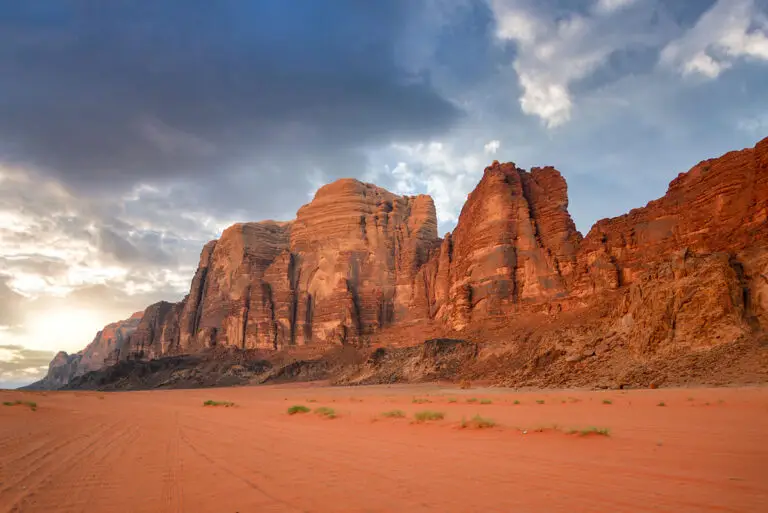
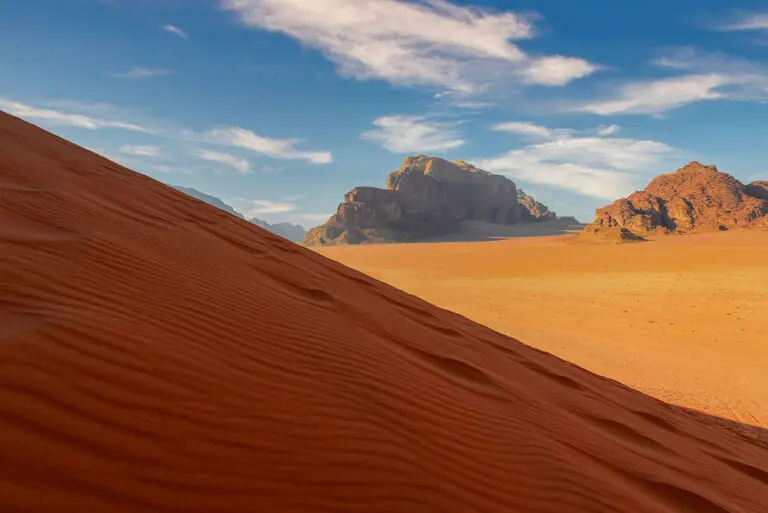
About 1,000 m of sandstone, some 500 million years old, lies over a base of granite and other ancient rocks. Wind and water have carved it into cliffs, domes and honeycomb weathering, and red sand has drifted into dunes between the mountains.
Climb one of the red dunes for the view across the valleys.
SandstoneRed dunesHoneycomb rock
Look for
- Honeycomb weathering in the sandstone
- The red sand dunes
- The cliffs of Jebel Rum
Dig deeperJordan’s highest mountain
Jebel Umm ad-Dami, near the Saudi border, is the highest point in Jordan at about 1,840 m. Jebel Rum, beside Rum village, rises above 1,700 m.
 1 / 6
02 · Water in the desert
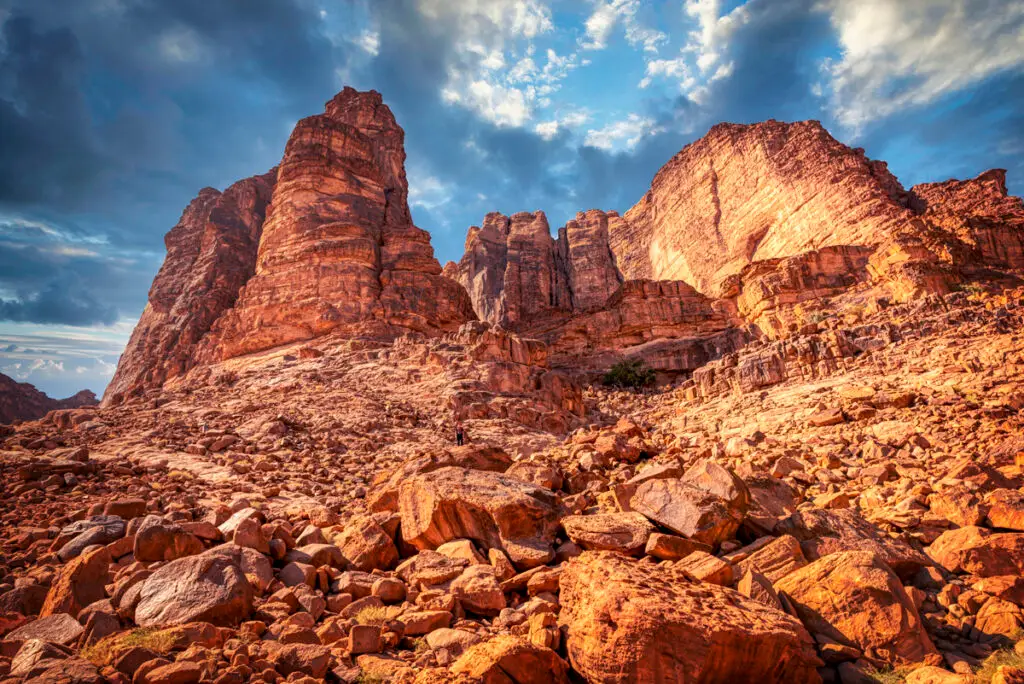
Visit Lawrence’s Spring
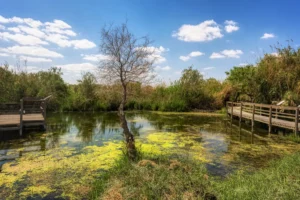
On the slopes of Jebel Rum, a small spring feeds a patch of green among the rocks. It is named after T. E. Lawrence, who passed through Rum several times in 1917–18 during the Arab Revolt and wrote about its springs in Seven Pillars of Wisdom.
The springs have always drawn people and animals here: the Nabataeans built a temple to the goddess Allat below Jebel Rum.
Jebel RumT. E. Lawrence1917–18
Look for
- The spring among the rocks
- The view across the valley
- Camels resting on the sand
Dig deeperThe Seven Pillars of Wisdom
The rock massif called the Seven Pillars of Wisdom, near the Visitor Centre, was named after Lawrence’s book in the 1980s. It was formerly known as Jebel al-Mazmar.
 1 / 6
03 · Rock art
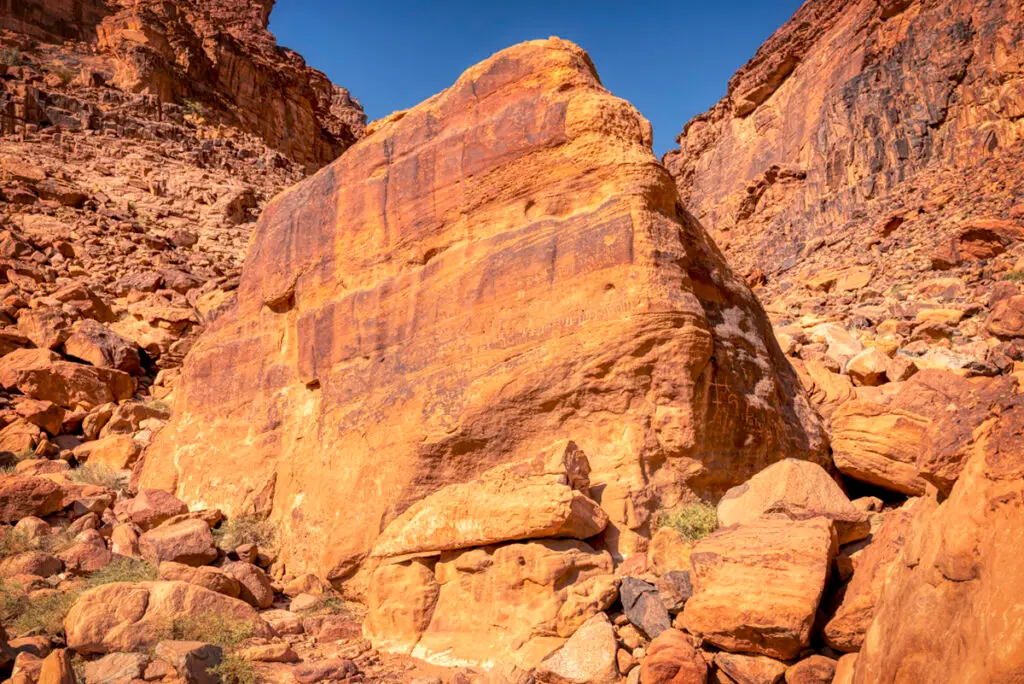
Walk into Khazali Canyon
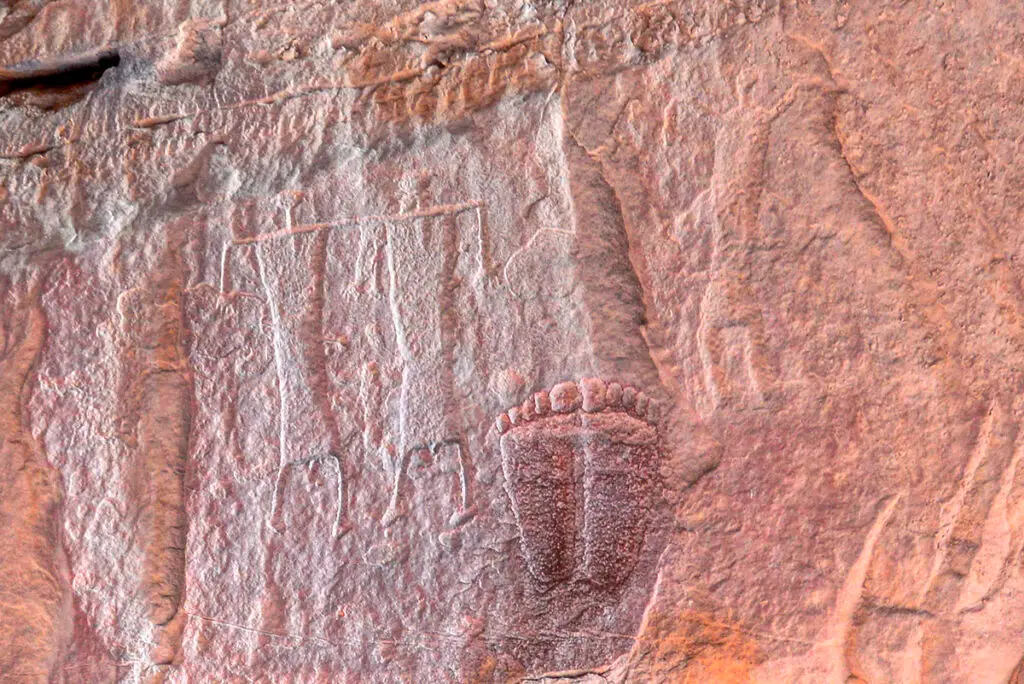
Khazali is a narrow cleft in a mountain, with rock carvings of people and animals and ancient inscriptions on its walls. Walk in as far as the rocks allow, and look carefully: many of the carvings are faint.
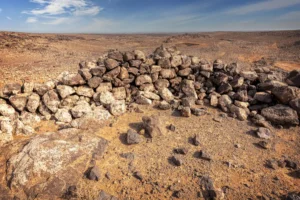
UNESCO counts about 25,000 rock carvings, 20,000 inscriptions and 154 archaeological sites in the protected area.
Rock carvingsInscriptionsShade
Look for
- Carvings of people and animals
- Lines of ancient script
- The narrow walls of the cleft
Dig deeperThamudic or Hismaic?
Scholars call many of the local inscriptions Thamudic or Hismaic. They are written in North Arabian scripts, and most date from around the turn of the era. The name describes the script, not a people living at Rum.
 1 / 5
04 · Shaped by wind and water
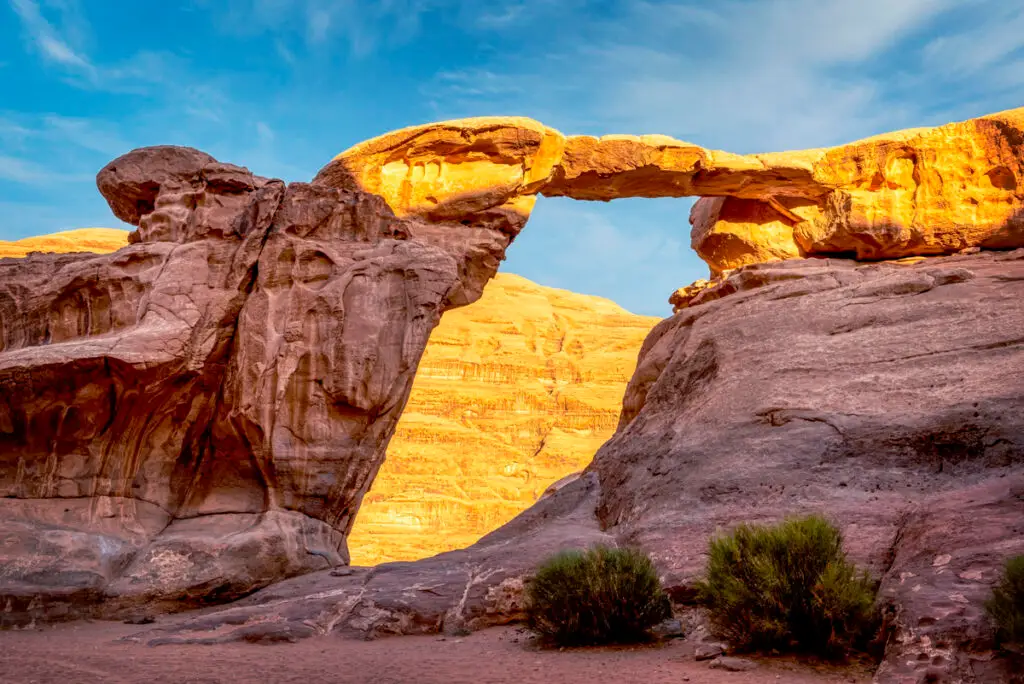
Find the rock bridges
Wind and water have cut natural arches through the sandstone. The best known are Burdah, high on a mountain ridge, and the smaller Umm Fruth, which many visitors climb. Our photos show Burdah.
Nearby, the wind has carved boulders into strange shapes, such as the Mushroom Rock.
BurdahUmm FruthMushroom Rock
Look for
- Burdah Rock Bridge against the sky
- The Mushroom Rock
- Hollows carved by the wind
 1 / 4
05 · Evening in the desert
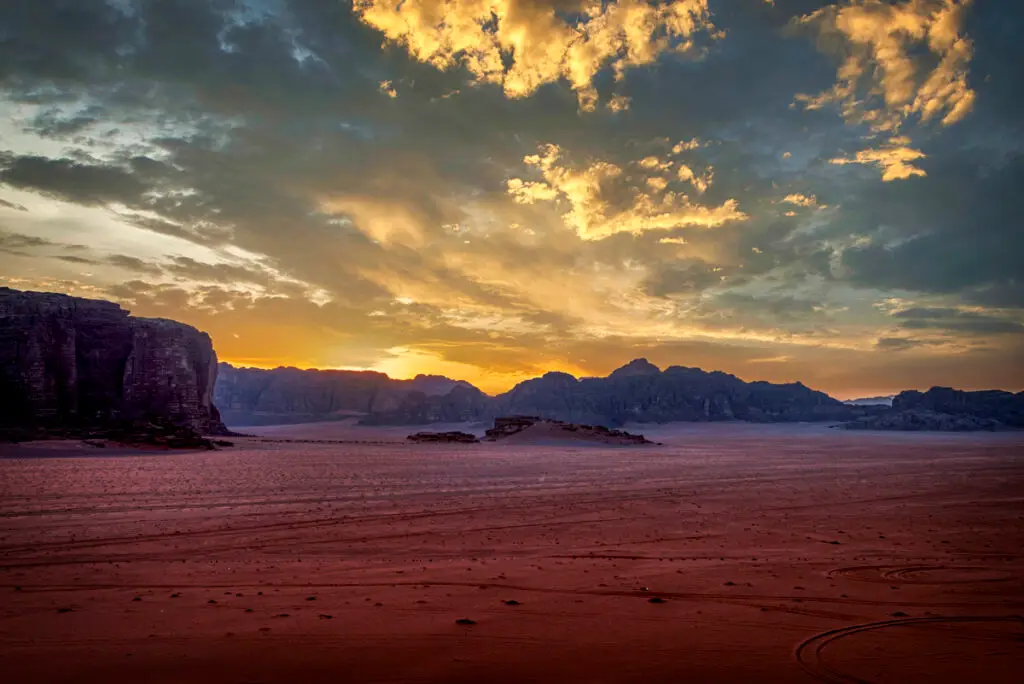
Stay for the sunset
In the evening the sand and cliffs turn deep red, and the mountains become dark silhouettes. Many jeep tours end at a sunset viewpoint.
Stay the night in a camp to see the stars over the desert.
SunsetCampsStars
Look for
- The sand glowing red
- The mountains turning to silhouettes
History & significance
Hunters, herders and traders
People have lived in Wadi Rum for at least 12,000 years. The Nabataeans called it Iram and built a temple to the goddess Allat; T. E. Lawrence passed through in 1917–18.
- c. 10,000 BCThe first traces of people in Wadi Rum
- 1st c. BC–3rd c. ADThe Nabataean temple of Allat is in use
- AD 1917–18T. E. Lawrence passes through during the Arab Revolt
- AD 1997The protected area is established
- AD 2003The Aqaba Special Economic Zone Authority takes over
- AD 2011UNESCO World Heritage Site
 ProfileWadi Rum Protected Area: the full storyThe history, the rock art and the landscape of Wadi Rum.Read the profile →
Plan your visit
Everything you need to know before you go
The Visitor Centre stands at the entrance of the protected area, off the Desert Highway, a few kilometres before Rum village. It is about 60 km north-east of Aqaba and about 290 km south of Amman.
Good to know: private cars cannot go beyond Rum village; tours are run by local Bedouin by 4x4, on camels or on foot.
Opening hoursVisitor CentreUsually 8:00–16:00 daily · late arrivals through your camp
Entry ticket5 JODResidents 1 JOD · Jordan Pass
Time to visitFull dayA full day, or stay the night
From Amman300 kmAbout 3 hours 30 to 4 hours by road
LocationRum village29.5559° N, 35.4076° EGet directions
Opening hours and prices checked October 2026. Spotted a change? Let us know
Facilities by location
Within the protected area
Desert viewpoints, walking routes and Bedouin-run camps across the protected area. Facilities vary by camp and route; they are not available at every stop.
Near the entrance
Visitor Centre, ticket office, information and toilets at the protected-area entrance, before Rum village.
Designated parking
In the surrounding town
Rum village has designated parking, food, shops, accommodation and local tour operators. Additional camps are dispersed in the desert.
Access: A normal car can reach Rum village. Beyond the village, arrange a local 4x4 tour, camel trip or walking route.
When to go
Spring and autumn are best. Summer days are very hot, and winter nights in the desert are cold.
J
F
M
A
M
J
J
A
S
O
N
D
BestGood, cooler or warmVery hot
Tip: stay the night in a camp to see the sunset and the stars.
Before you go
Rum village has small shops, and the camps provide meals for their guests.
- A hat and sunglassesStrong sun on the sand
- WaterIt is hot and dry
- Closed shoesFor sand and rocks
- Jordan PassIf you have one, it covers the entrance
- Cash in Jordanian dinarsFor tours and small purchases
Common questions
Quick answers before you set off.
Can I drive my own car in Wadi Rum?
Only as far as Rum village. Beyond it, tours are run by local Bedouin by 4x4, on camels or on foot.
How much time do I need?
A full day for the main sights, or stay the night in a camp to see the sunset and the stars.
Is Wadi Rum included in the Jordan Pass?
Yes. Without the Jordan Pass, the entrance is 5 JOD for visitors and 1 JOD for residents, paid at the Visitor Centre.
Where can I stay?
Many Bedouin-run camps lie around Rum village and in the desert, from simple tents to domes, such as Rum Stars, Wadi Rum Night and Memories Aicha. Stays usually include dinner and breakfast.
Where is the Temple of Allat?
Near Rum village, at the foot of Jebel Rum. See our Temple of Allat guide.
Combine with
Wadi Rum combines with the Nabataean temple near Rum village and with Petra to the north. Drive times are from Rum village.
Explore this site
More from Wadi Rum Protected Area
Panoramas, walk-throughs, photos and stories about this site.
ProfileWadi Rum Protected Area: history & architecture Photo albumWadi Rum: Mountains and Red Sand in Photos
 360°360° panoramaRed Sand Dunes of Wadi Rum: 360° Panorama
 Travel articleNajd Luxury Camp vs. Memories Aicha Luxury Camp: Two Faces of Wadi Rum
 Travel articleJordan’s Top 5 Tourist Attractions
 Travel articleA Journey Through Jordan: Moments That Stayed with Me Forever
Nearby
Also in the south
From guide to visit
Explore Wadi Rum with a private guide
Tell us when you’d like to go, and we’ll plan a private trip that includes Wadi Rum.