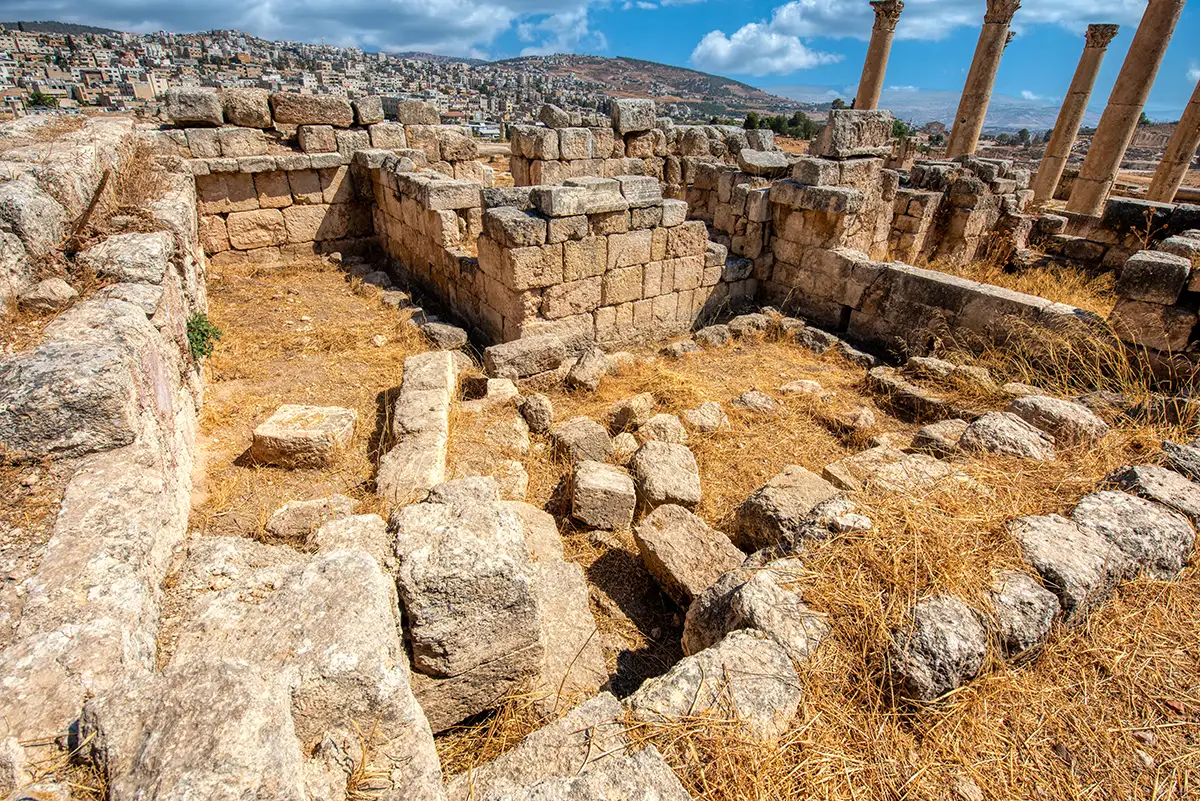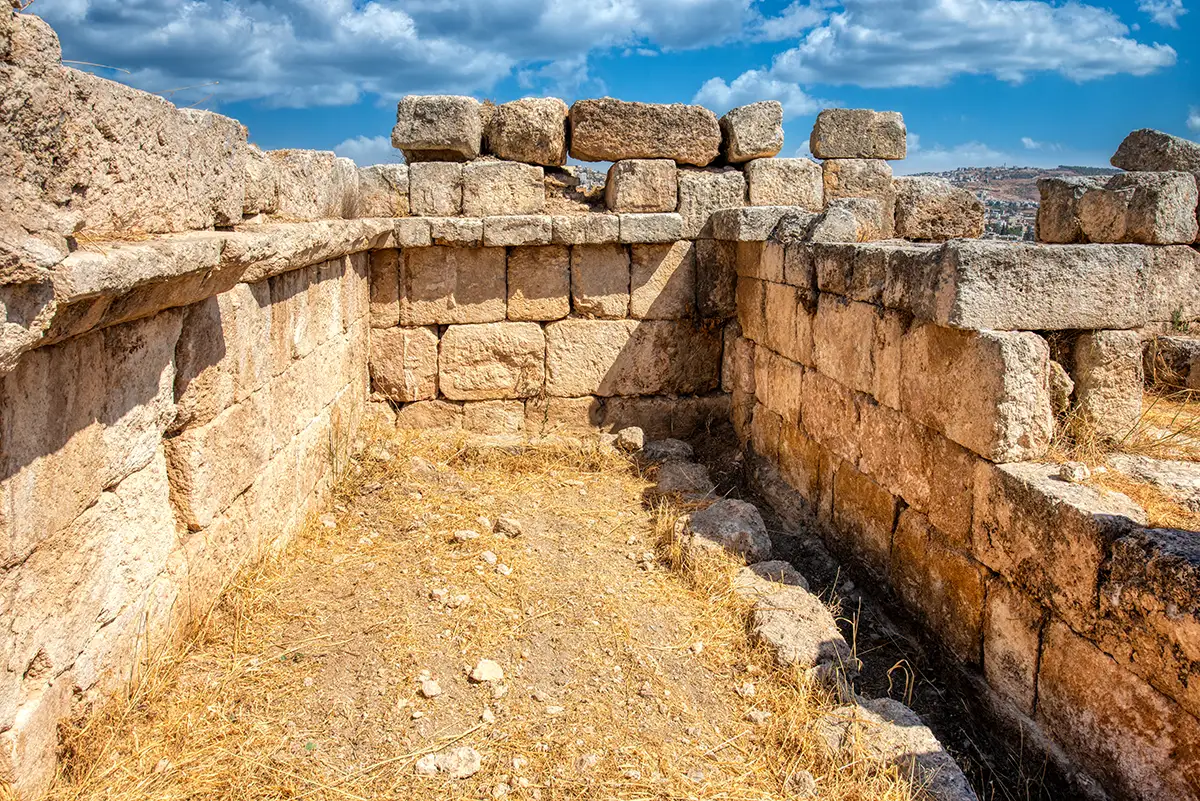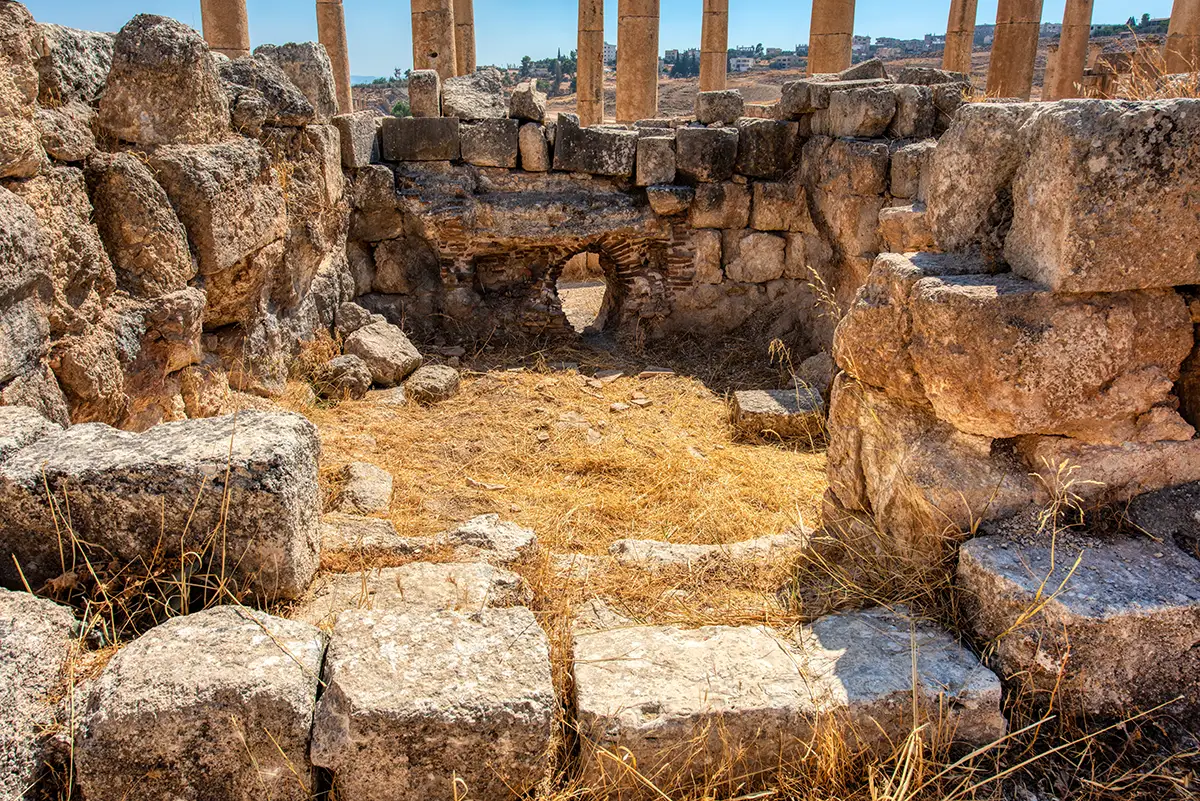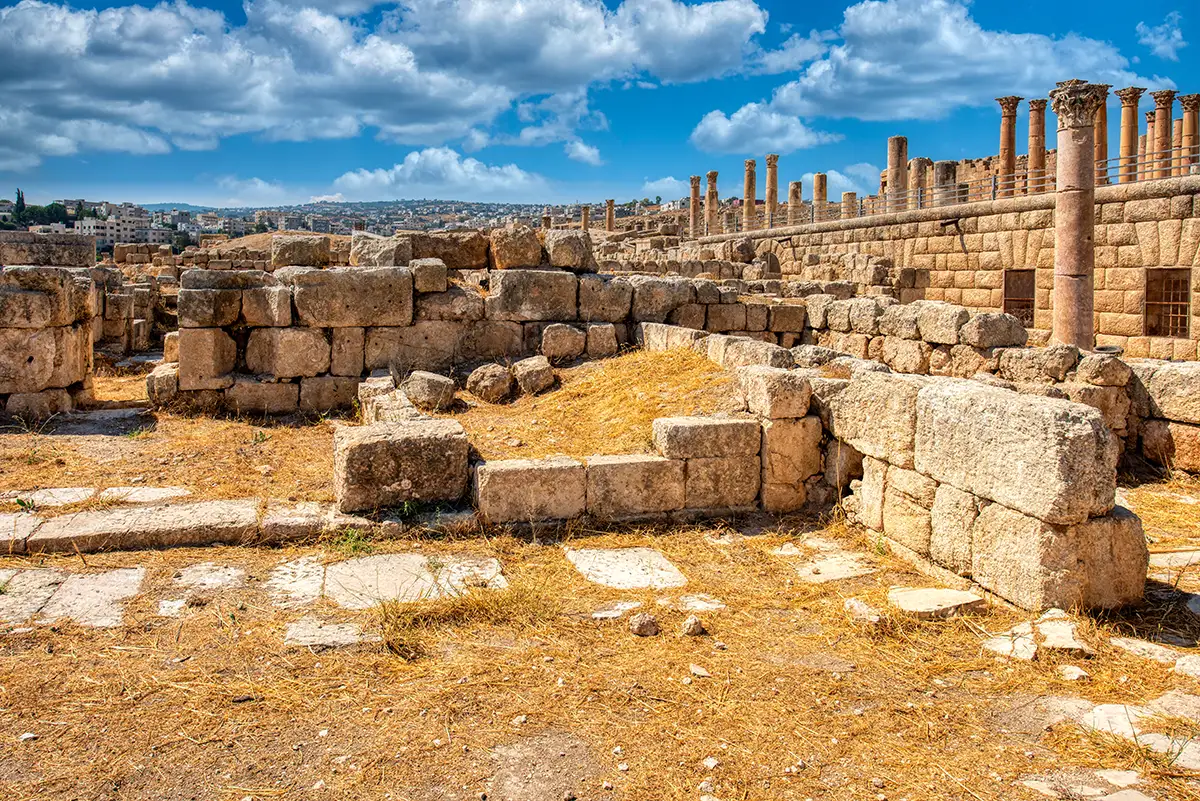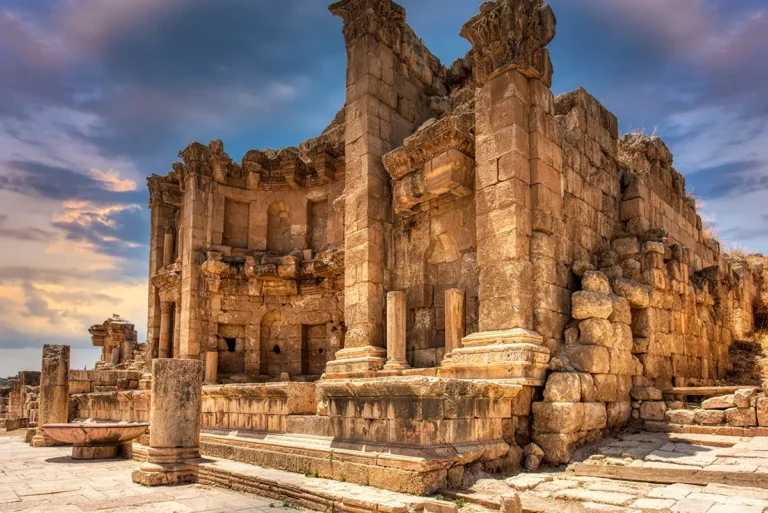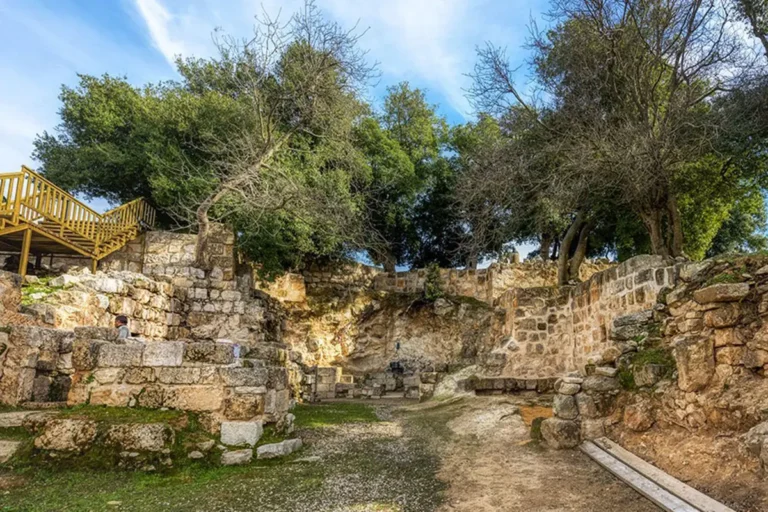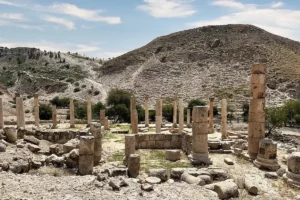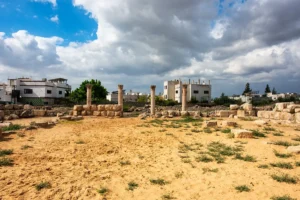
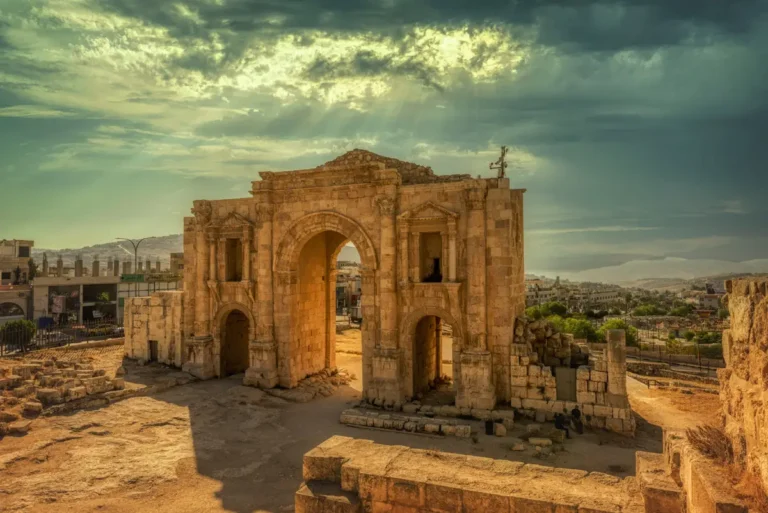

The Baths of Placcus tell the story of a city that kept bathing even as it changed its faith. Built in AD 454/455 by Bishop Placcus, between the Cathedral and the Sanctuary of Artemis, this compact Byzantine bathhouse reused columns, capitals and friezes from the Temple of Zeus — and replaced the great communal pools of Roman baths with small individual tubs.
Where Are the Baths of Placcus?
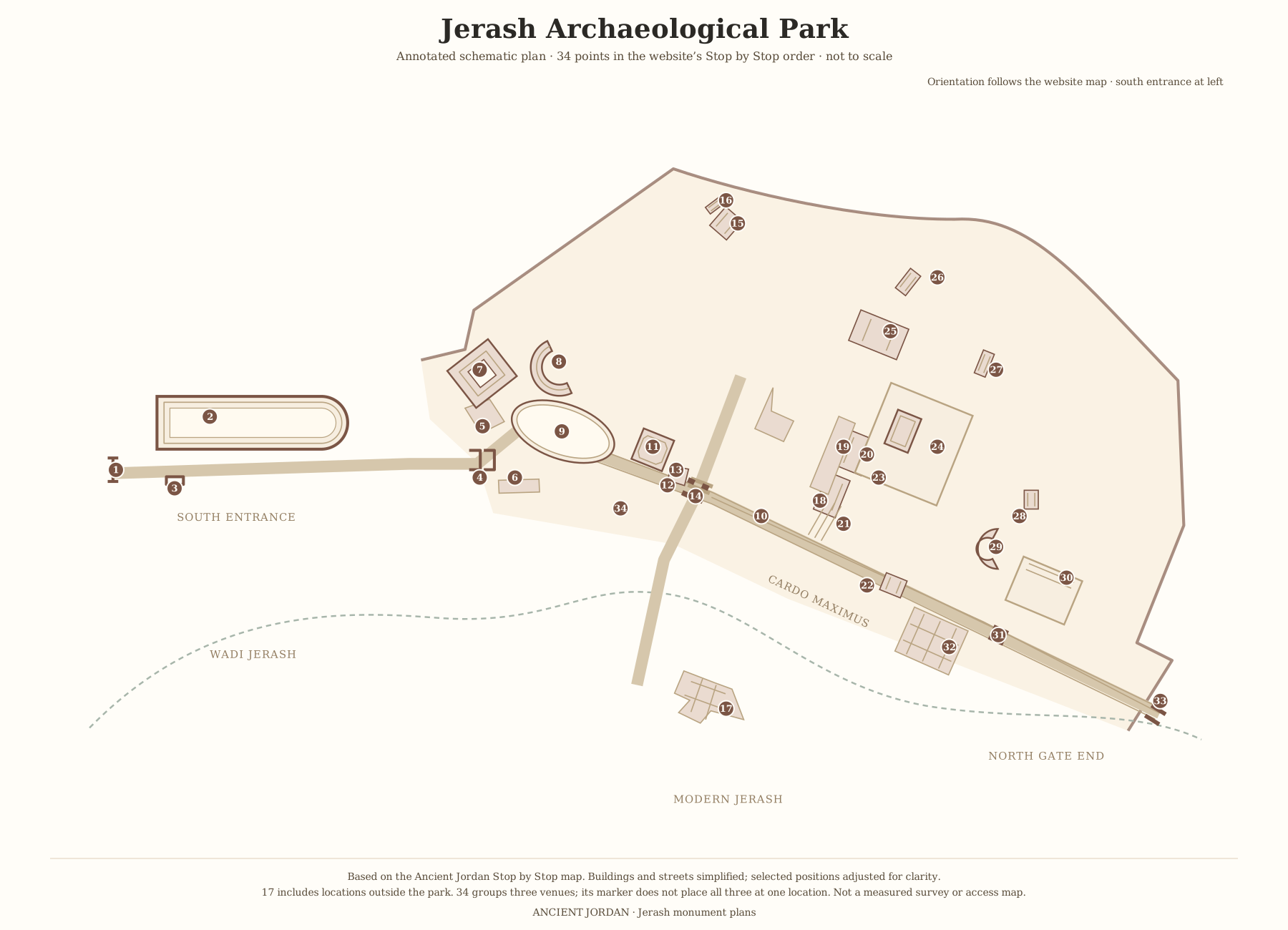
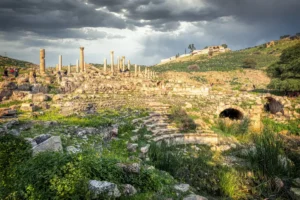
The baths lie between the Fountain Court of the Cathedral and the Sanctuary of Artemis, beside the street that led up towards the sanctuary. The Church of St Theodore and the Cardo Maximus are a few steps away.
Their place among churches and a former temple shows that bathing remained part of everyday life in the Christian city — a place to wash, but also to meet and rest.
Historical Context and Origin
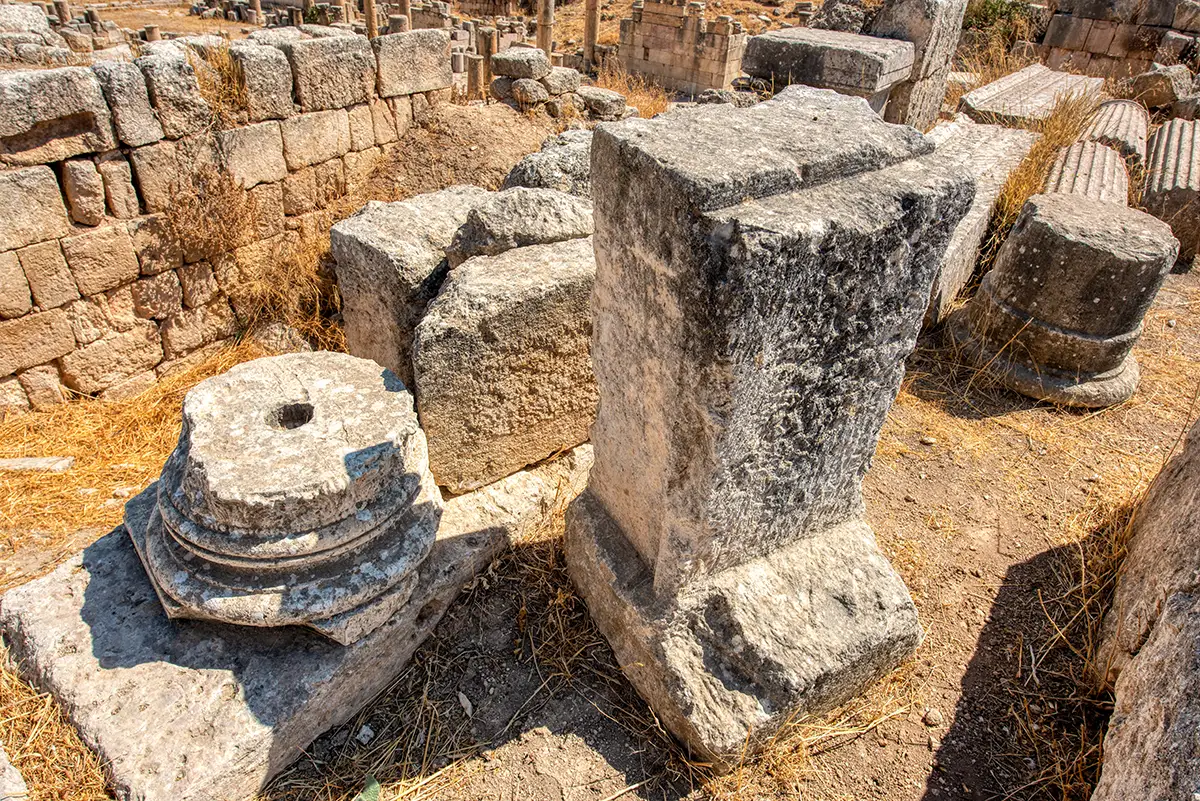
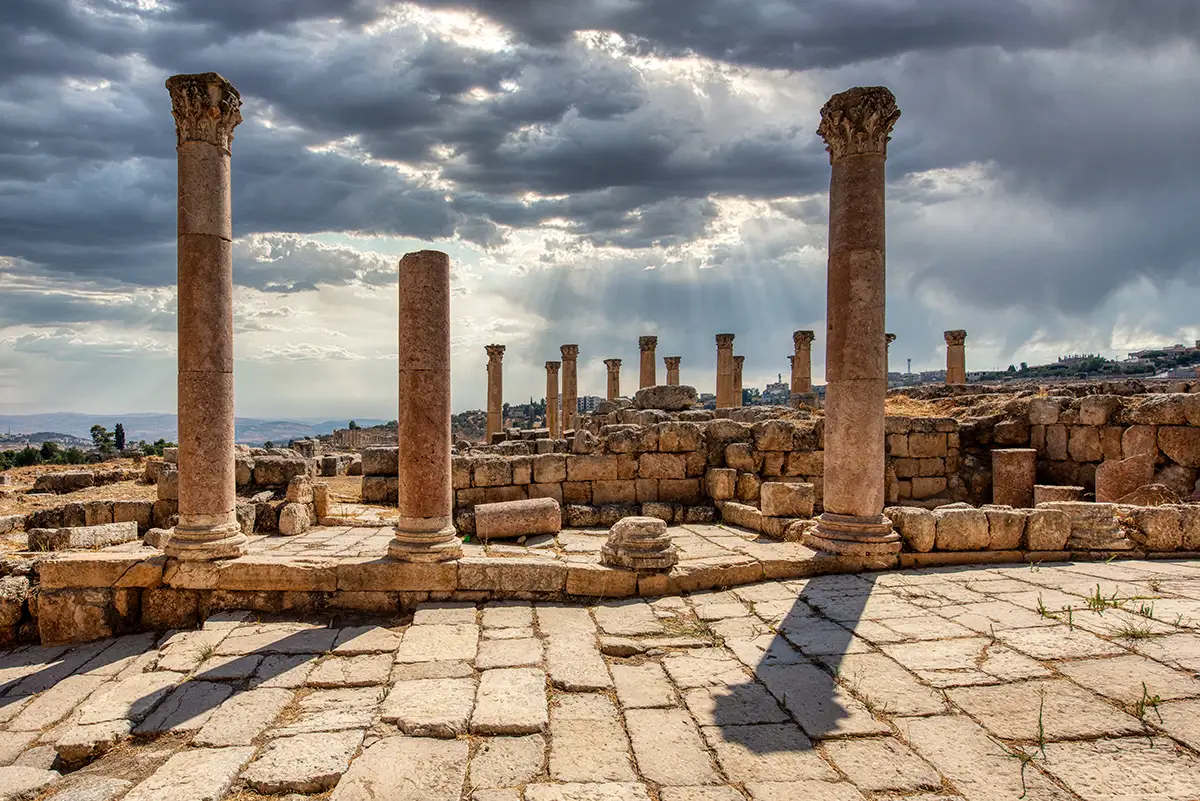
According to its Greek inscription, the bathhouse was built “from the foundations” under Bishop Placcus in AD 454/455. Its builders took columns and friezes from the Temple of Zeus to frame the entrance porticoes — a vivid sign of how Christian Gerasa reused the stones of its pagan past.
Around the AD 550s Bishop Marianos reorganised the baths, bringing them closer to the style of the later Umayyad palace baths. They remained in use through the Byzantine and early Islamic periods, until the earthquake of AD 749 ruined them for good.
Architectural Design
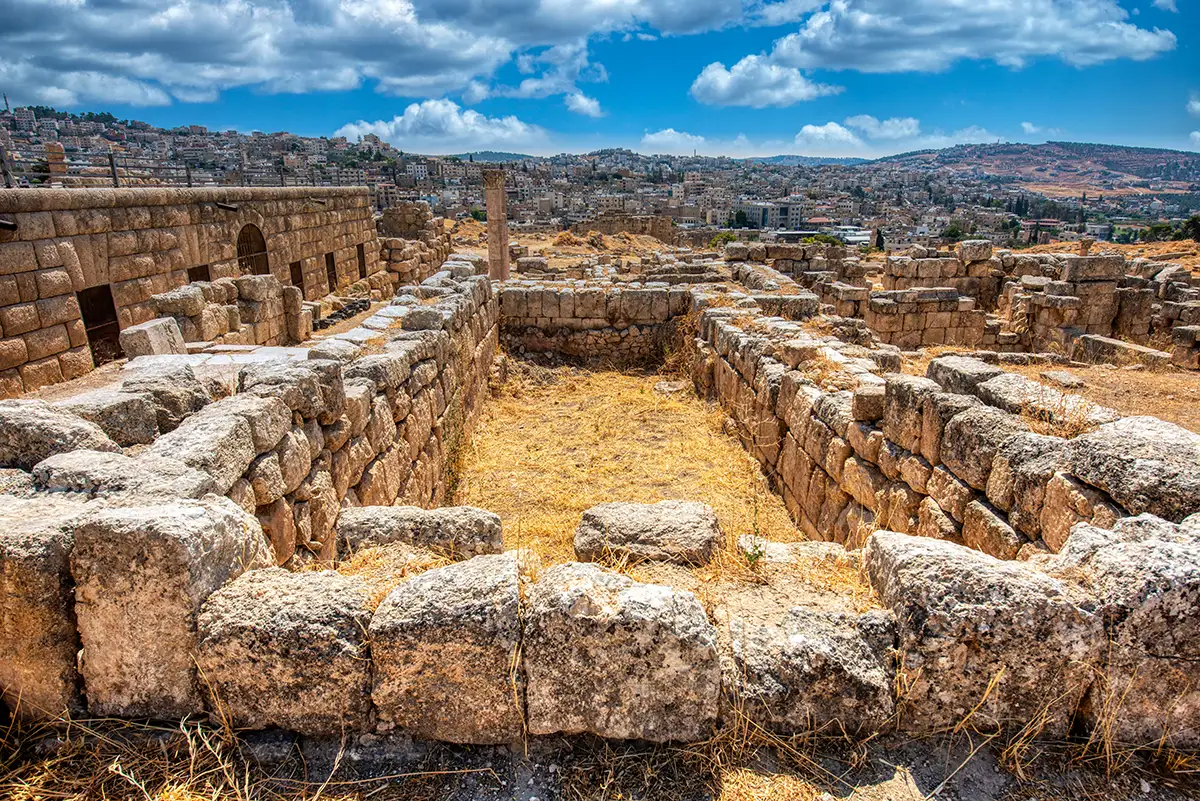
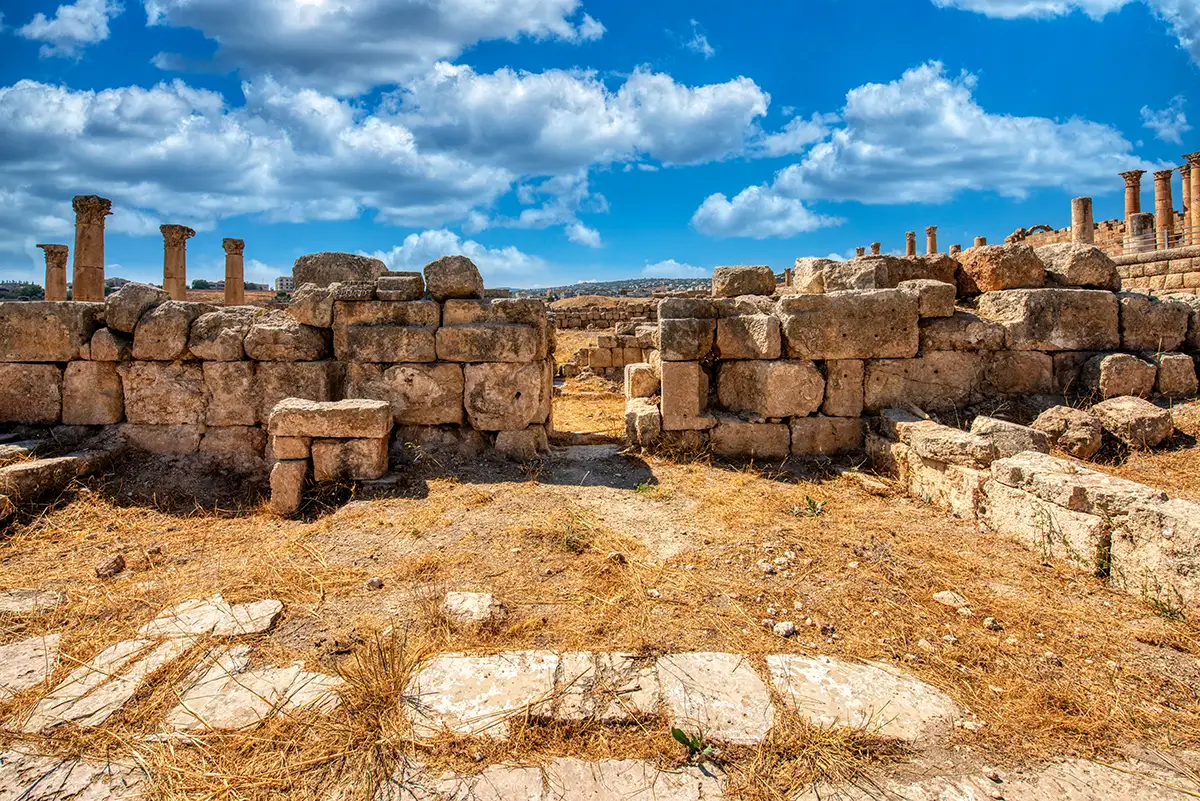
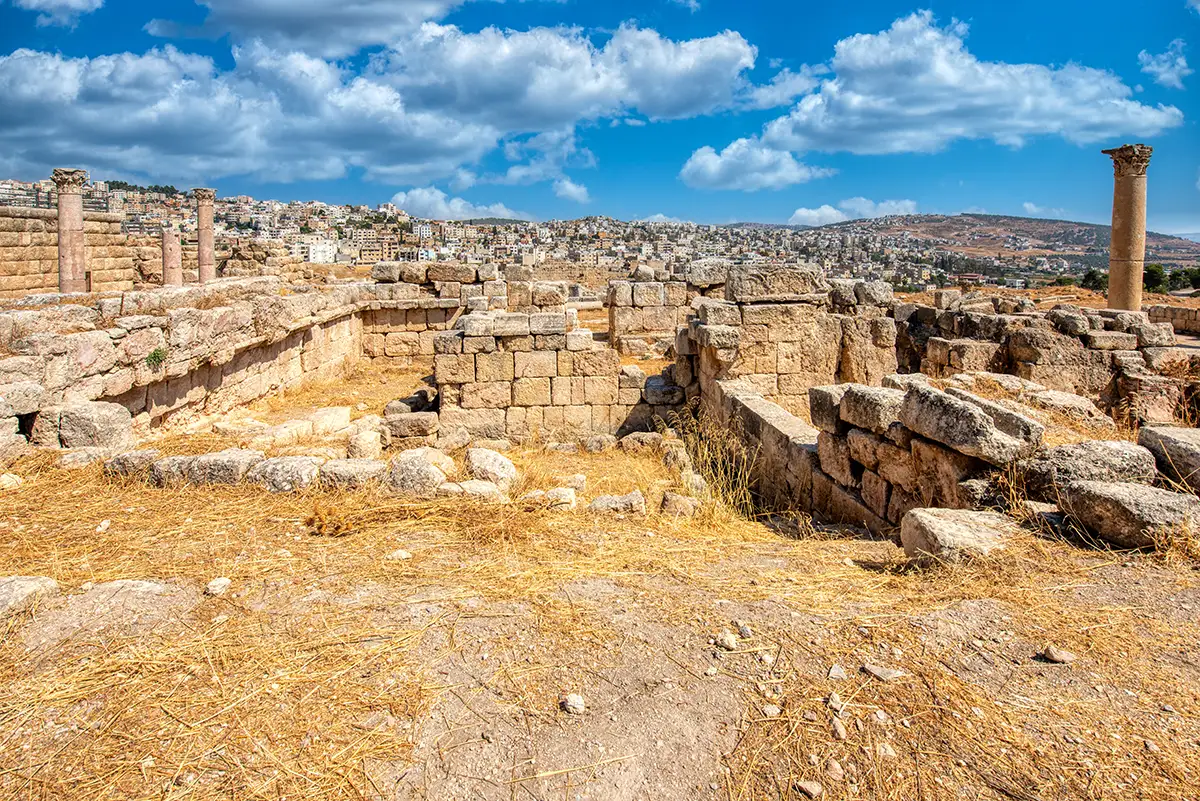
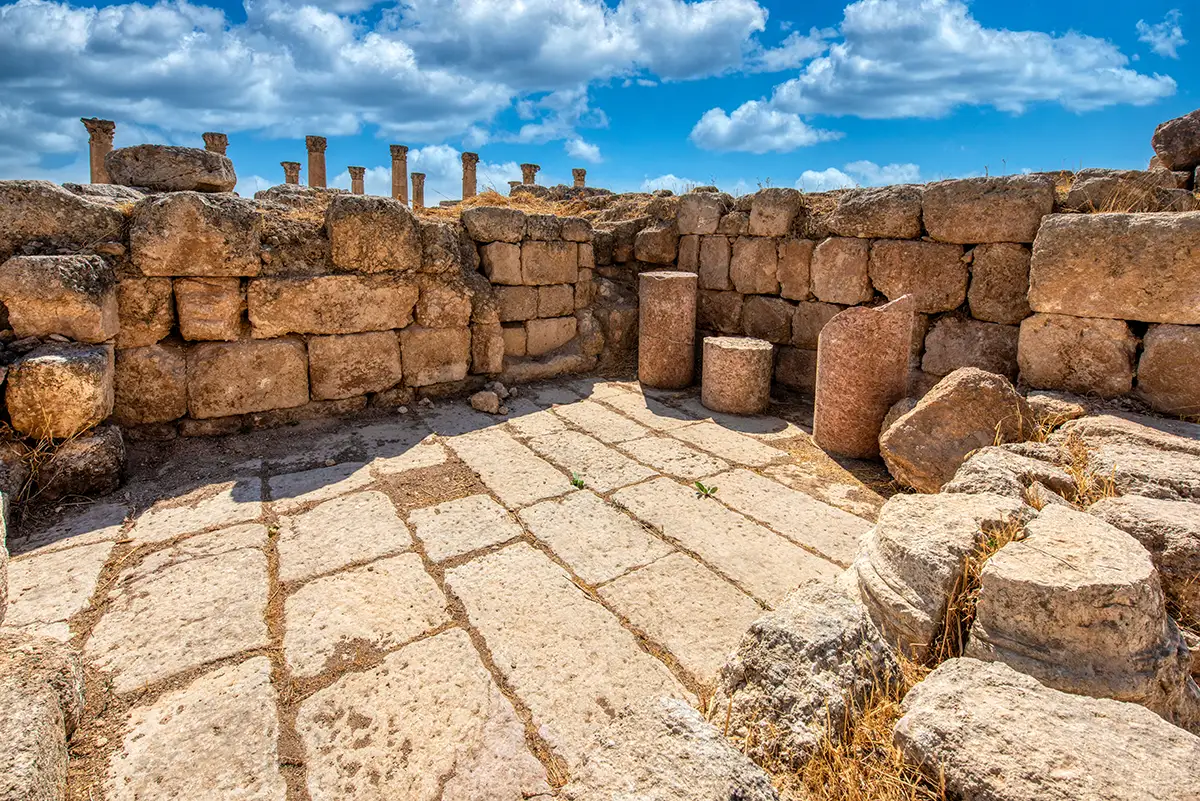
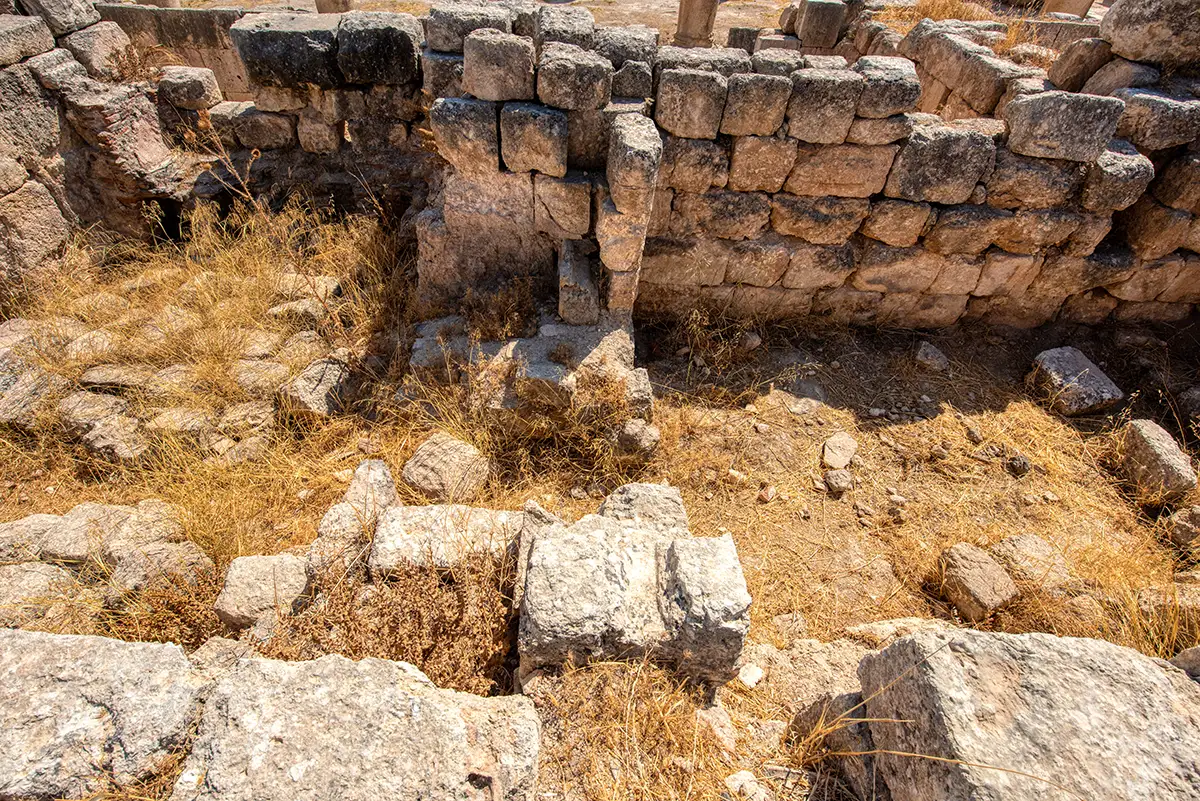
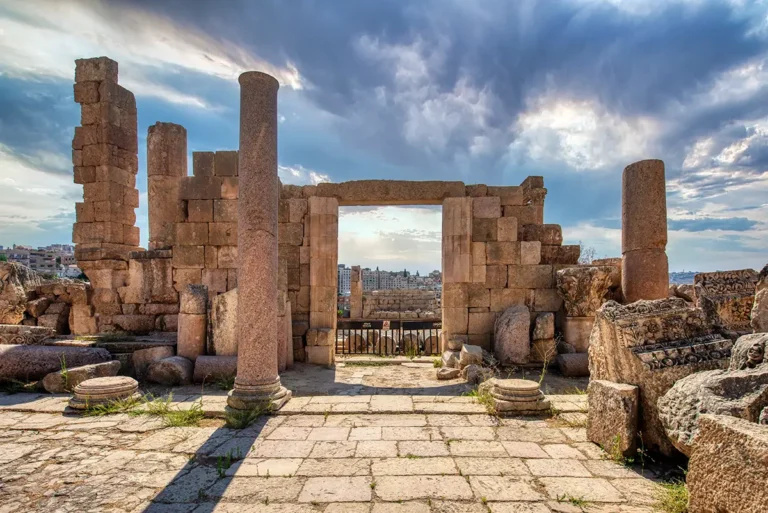
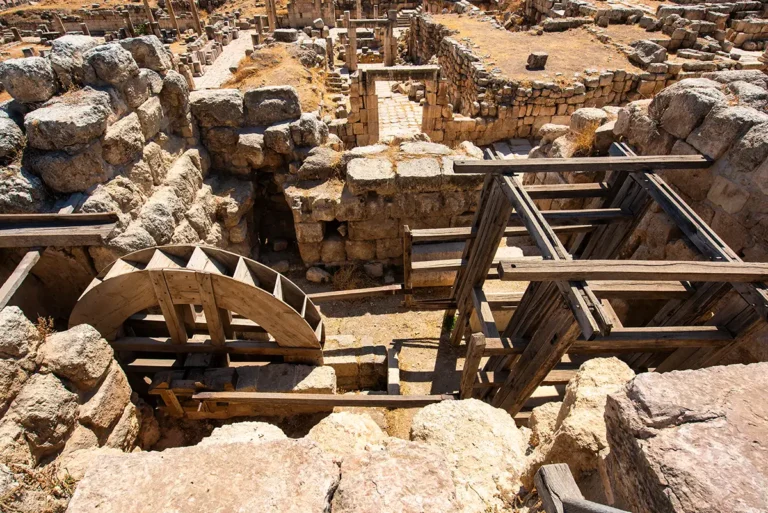
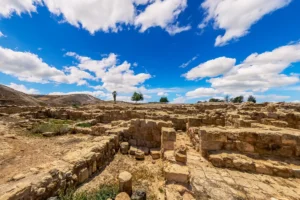
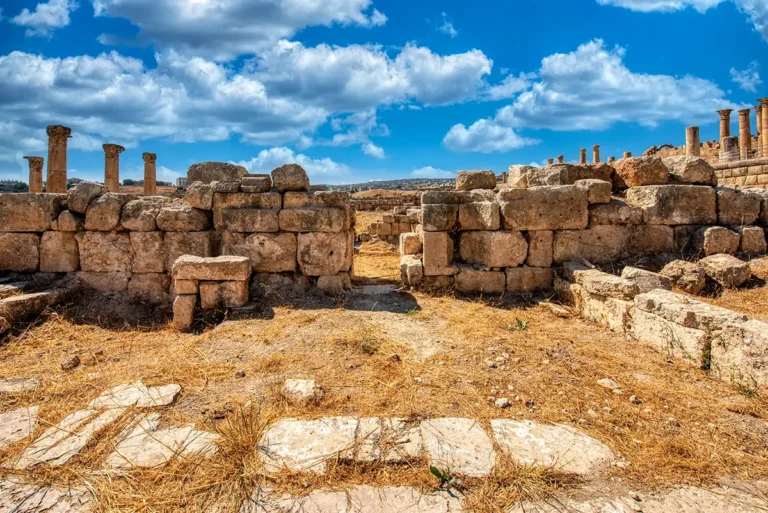
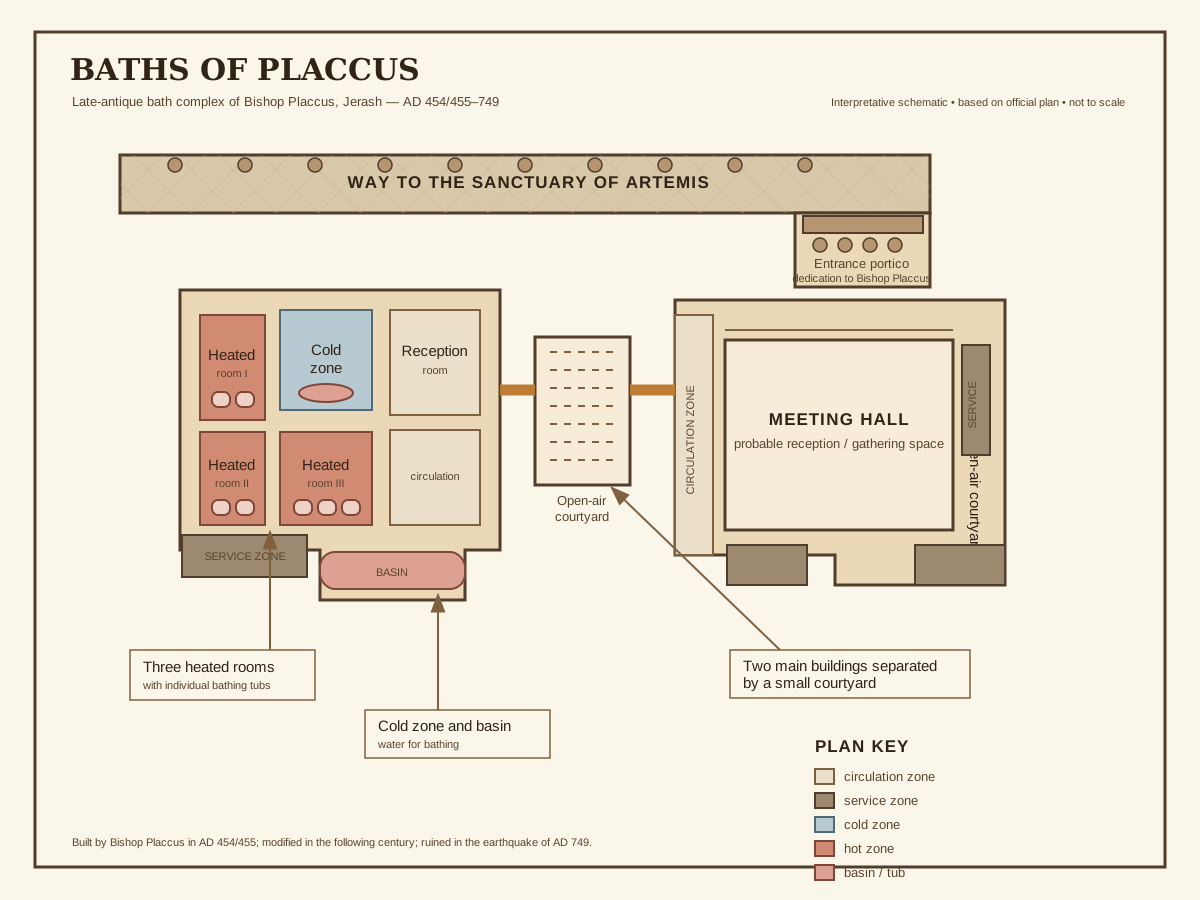
The complex, about 32 by 25 metres, has two main buildings separated by a small open-air courtyard entered from the street. The eastern building was probably a large meeting or reception hall. The western one was the bathhouse itself, with a reception room, three heated rooms and small tubs — a change from the large collective pools of earlier Roman baths to more individual bathing.
Stones from Zeus
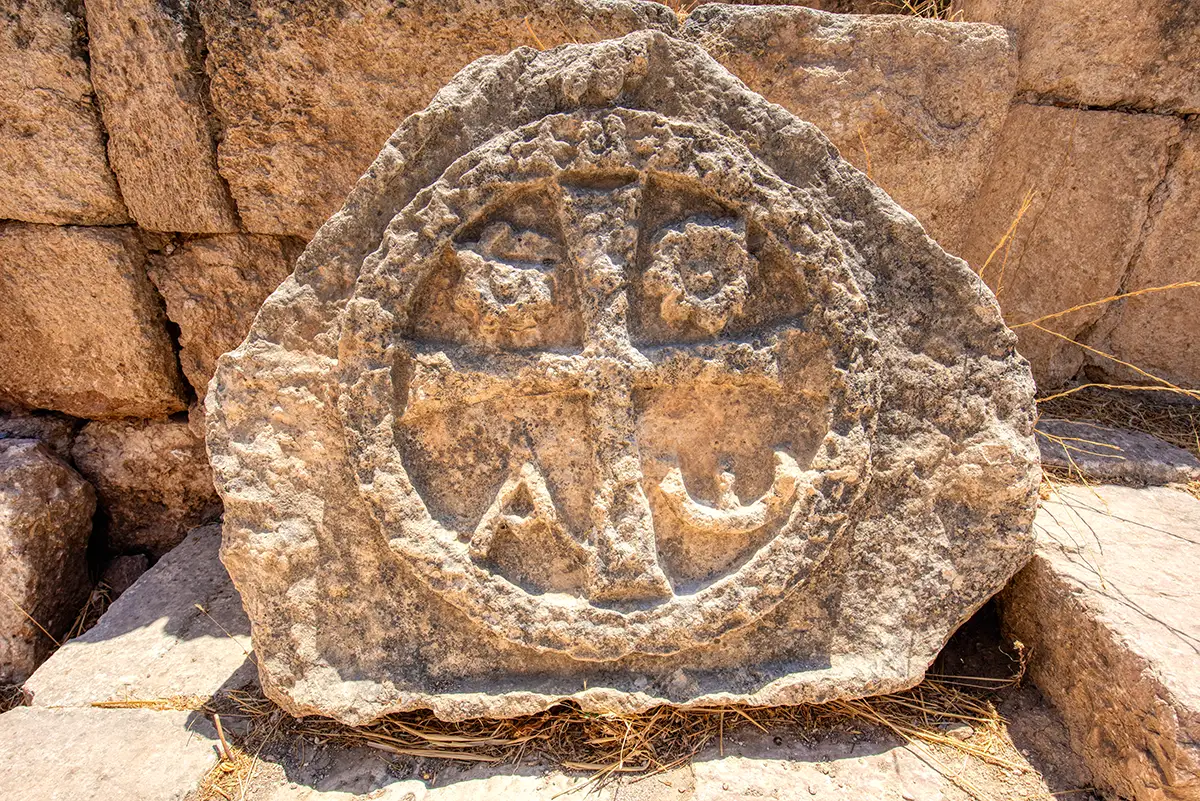
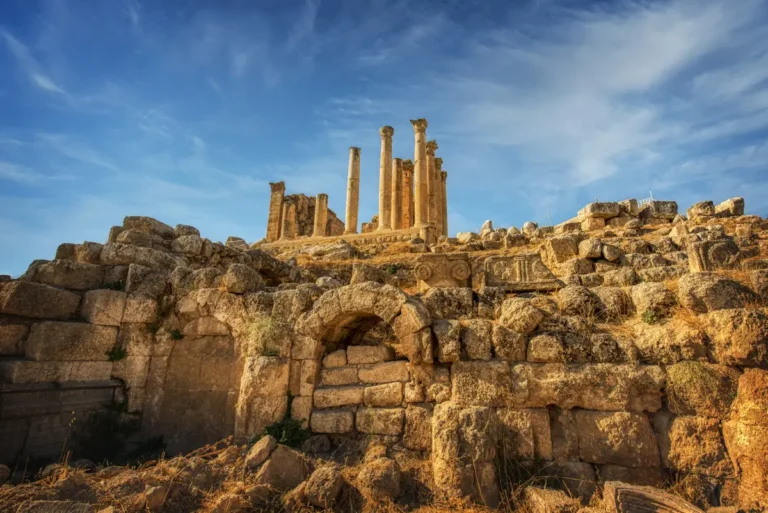
Columns, capitals and carved friezes from the Temple of Zeus were reused to frame the entrance porticoes.
The Courtyard
A small open court, entered from the street, links the hall on the east with the bathhouse on the west.
The Meeting Hall
The eastern building was probably a large hall for meeting and waiting — baths were social places.
Rooms and Tubs
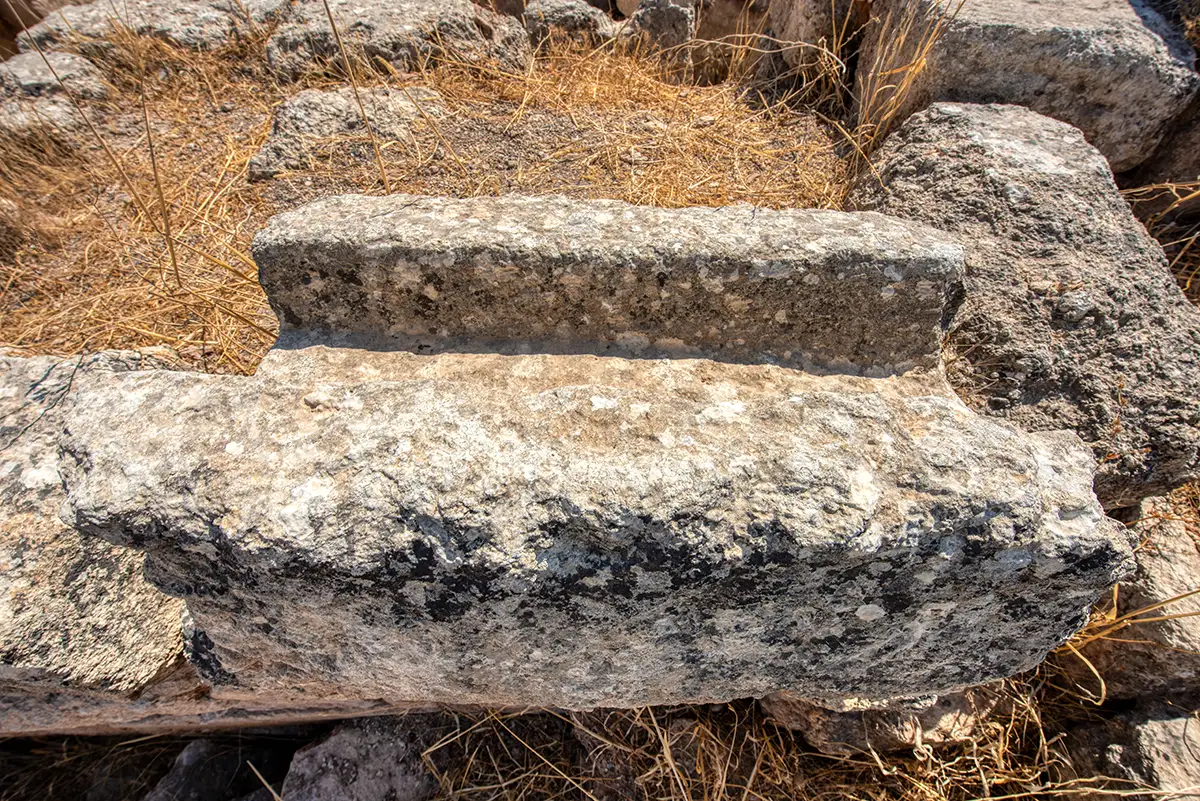
The bathhouse had a reception room, three heated rooms and small individual tubs instead of big pools.
The Founding Inscription of the Baths of Placcus
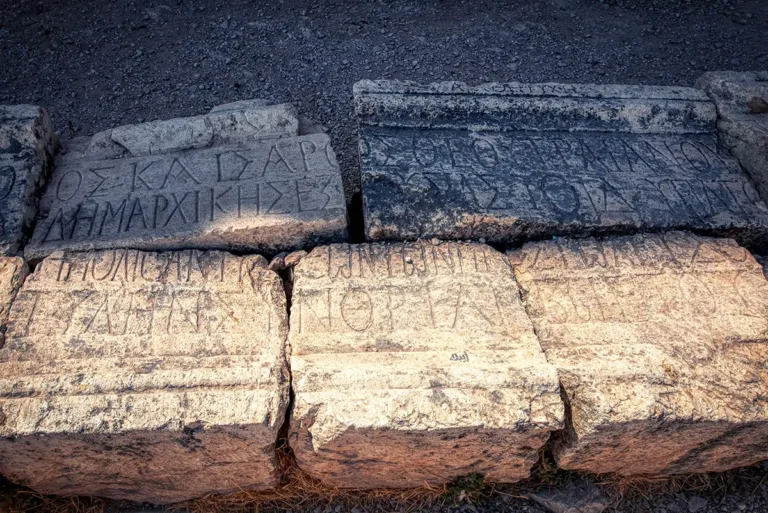
The inscription gives the baths a secure date and names Bishop Placcus, “the most God-beloved bishop”. It says the bathhouse was built from its foundations and “adorned” — a hint at the fine reused stonework of its porticoes. Published as Gerasa inscription 296.
☩ ἐπὶ Πλάκκου τοῦ θεοφιλεστάτου ἐπισκόπου σὺν θεῷ τόδε
τὸ βαλανεῖον ἐκ θεμελίων κτισθὲν ἐκοσμήθη ἐν ἔτει ☩
τῆς πόλεως ἰζφʹ. ☩
Under Placcus, the most God-beloved bishop, with God’s help, this bathhouse, built from the foundations, was adorned in the year 517 of the city.
Destruction, Rediscovery, and Restoration
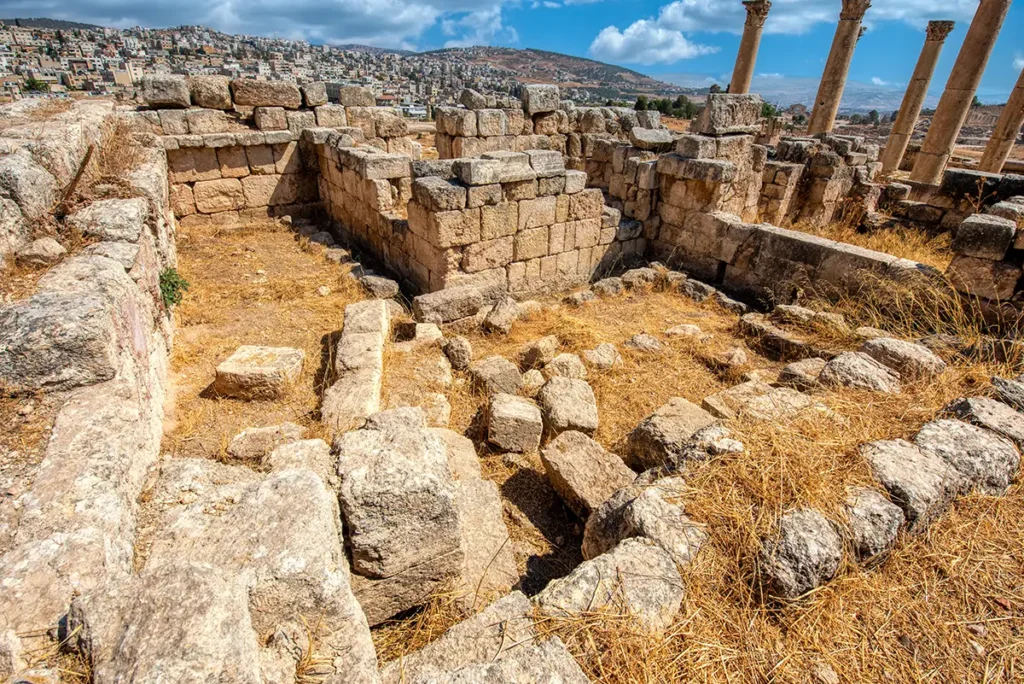
After the earthquake of AD 749 the baths were never used again. In modern times excavation and reconstruction have clarified the courtyard, the hall and the bath rooms, though much of the building survives only as low walls and scattered fragments.
Visiting the Baths of Placcus Today
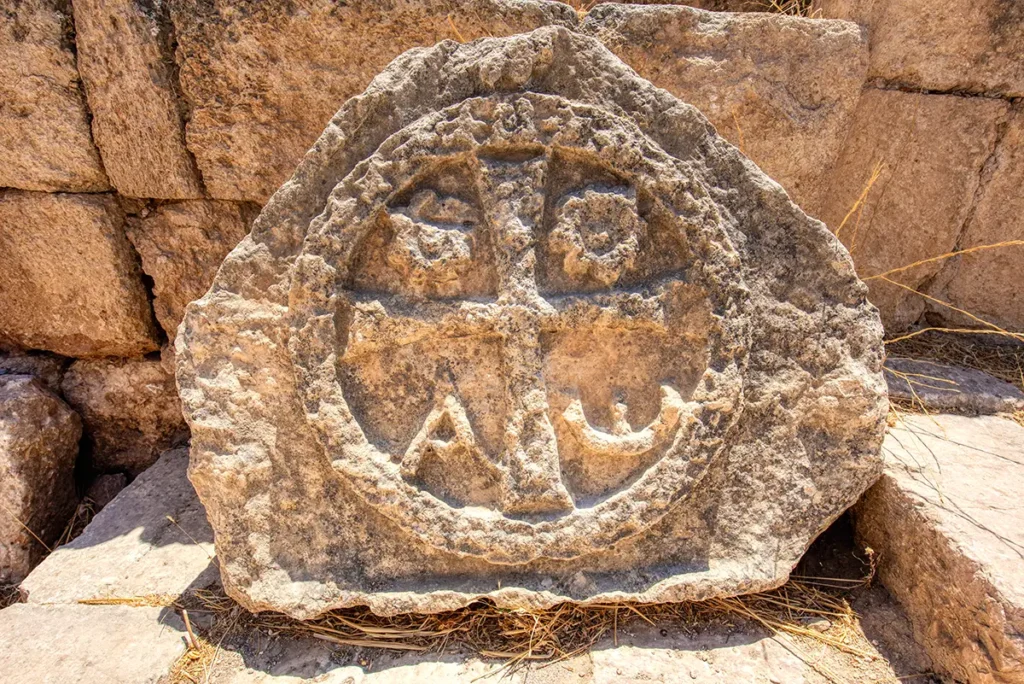
Enter from the street as ancient bathers did, through the small courtyard, then look for the hall on one side and the heated rooms on the other. Look closely at the reused carved stone — pieces that once belonged to the Temple of Zeus.
The remains need a slow visit, and they are easiest to read together with the Cathedral, the Church of St Theodore and the route up to the Sanctuary of Artemis.
Further reading: Gerasa inscription 296 (PHI Greek Inscriptions).