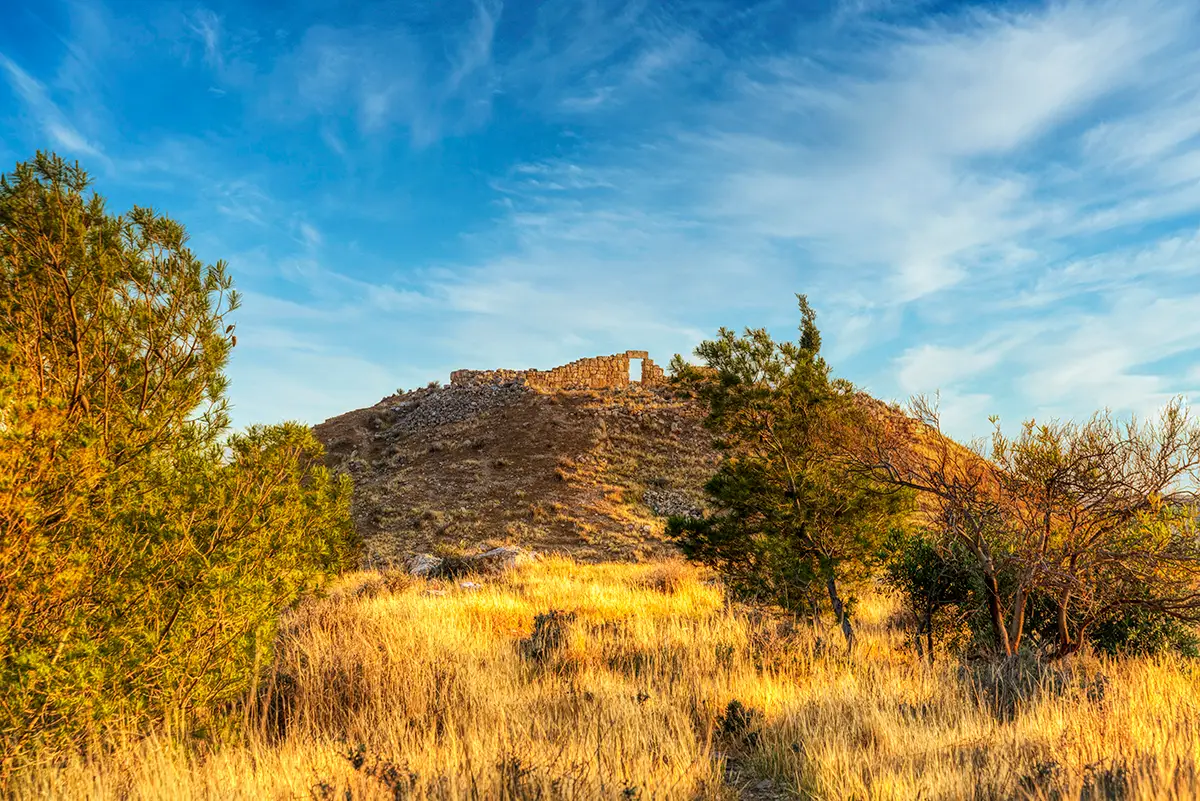


On the summit of Khirbet al-Mukhayyat — the ancient town of Nebo — stand the walls of the Church of St George. Its mosaic floor, completed in AD 535/536, shows scenes of farming, animals and the portrait of one of its benefactors. Today the restored floor can be seen at the nearby sanctuary of Mount Nebo.
Where Is the Church of St George?
The church stands on the highest point of Khirbet al-Mukhayyat, about 9 km north-west of Madaba and a few kilometres south-east of Mount Nebo. The Church of St Lot and St Procopius lies just below it, and the springs of Moses Spring are in the valley to the north.
From the summit the land falls away to the west, with views over the valleys towards the Jordan.
Historical Context and Origin
In the 6th century Nebo was a Christian village with several churches: besides St George and St Lot and St Procopius, a chapel of the priest John and a church of Saints Amos and Casiseos. The church was built in the time of Bishop Elias of Madaba, and its mosaic floor is dated AD 535/536. It was laid by the mosaicists Naum, Kyriakos and Thomas.
Architectural Design
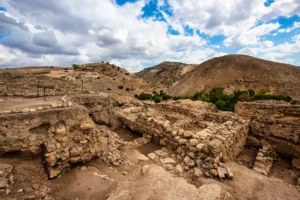
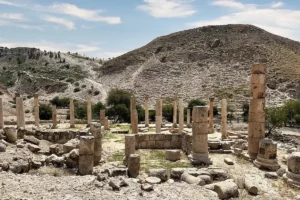
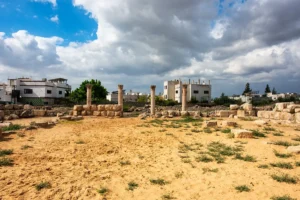
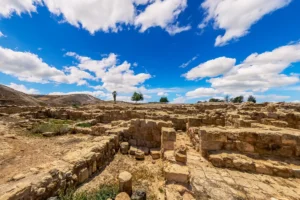
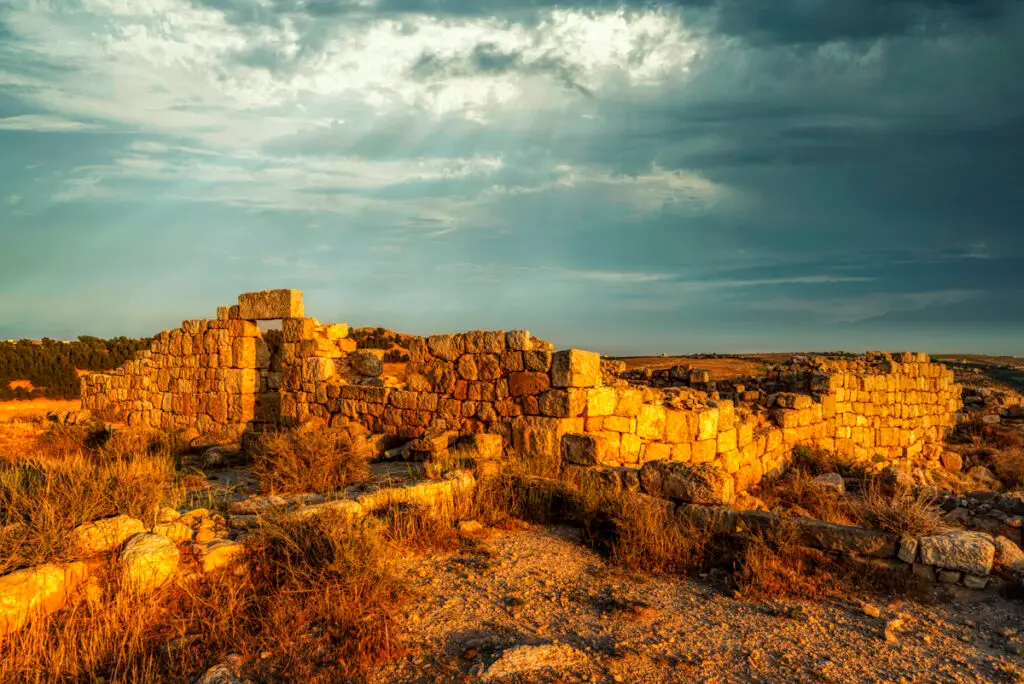
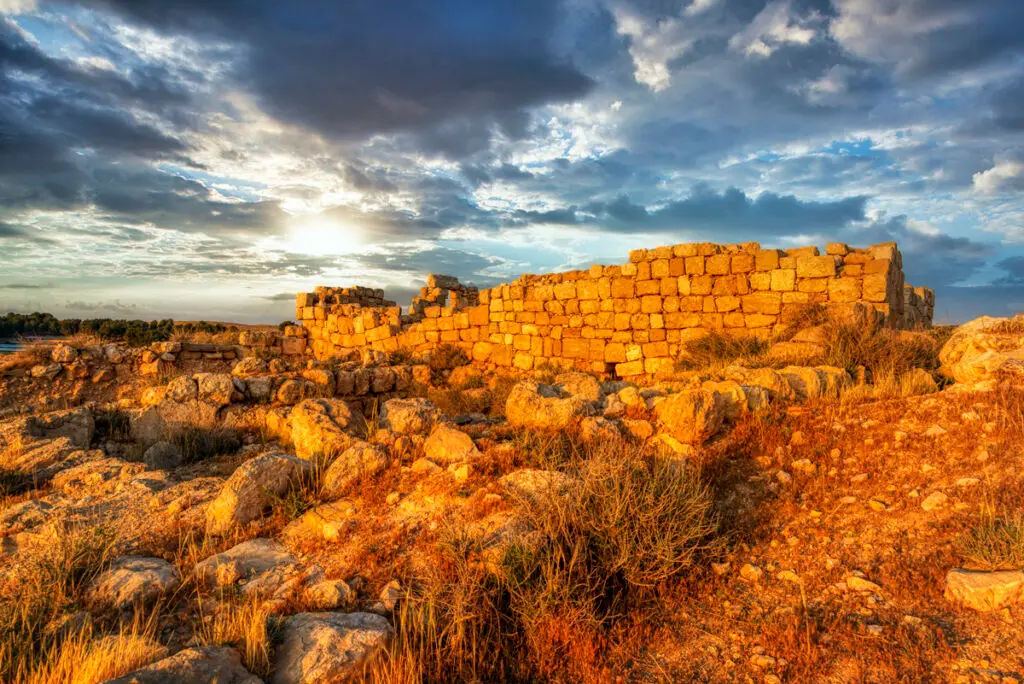
The church was a basilica built on the acropolis of the old town, its walls of local stone. Today its walls stand only a few courses high, with a window opening in one of them, and column drums, a millstone and stone basins lie among the ruins.
The Summit Church
The church crowns the acropolis of ancient Nebo, with wide views over the valleys to the west.
Farming Scenes
Acanthus scrolls in the nave framed farming scenes with exotic animals; vine scrolls in the north aisle held hunting scenes.
An Early Portrait
The benefactor John son of Ammonius is shown in the floor — one of the earliest portraits in Jordan.
Six Inscriptions
Greek inscriptions in the floor record the date, the donors and the mosaicists Naum, Kyriakos and Thomas.
The Mosaic Floor
Acanthus scrolls in the nave framed scenes of farm life, surrounded by exotic animals, and in the north aisle vine scrolls enclosed hunting scenes. Among the figures is the benefactor John son of Ammonius — one of the earliest portraits found in Jordan. Elsewhere, two deer or goats and a pair of doves face a date palm. Six Greek inscriptions in the floor record the dedication, the donors and the craftsmen.
Rediscovery and Restoration
The Franciscans acquired the hill in 1932, and the church was excavated in 1935 by Brother Jerome Mihaic; Sylvester Saller and Bellarmino Bagatti published its inscriptions in The Town of Nebo (1949). Anne Michel led new excavations in 1995–1997. The mosaic was later lifted and restored by the Franciscan archaeologists and is now displayed at the Mount Nebo sanctuary, near its interpretation centre.
Visiting the Church of St George Today
Climb to the summit for the walls of the church and the view, ideally at sunset. Then see the restored mosaic at Mount Nebo, a short drive away, and visit the Church of St Lot and St Procopius on the way.
Further reading: Creighton University: Khirbet al-Mukhayyat, Custody of the Holy Land: works at Mount Nebo.