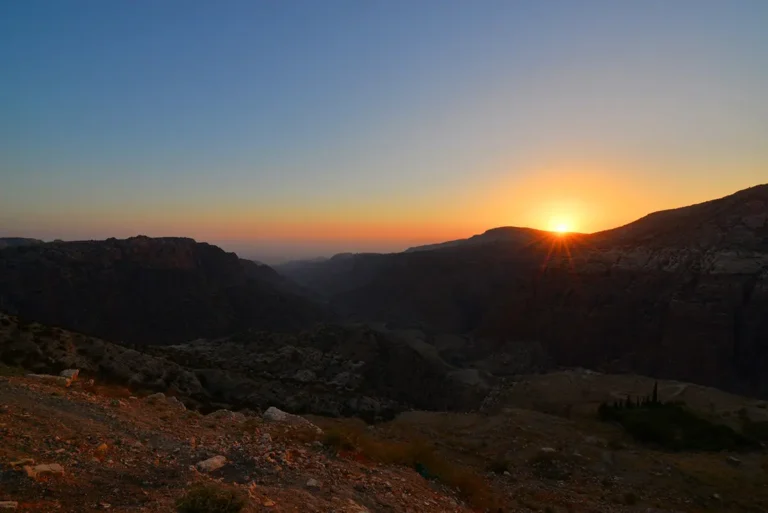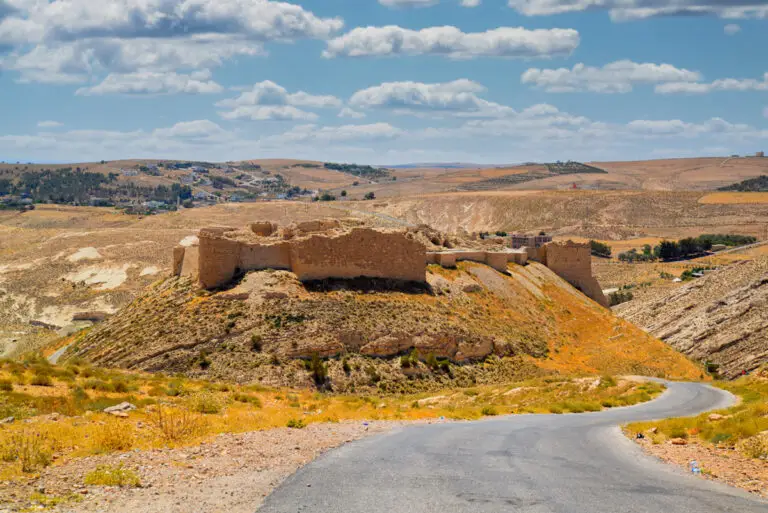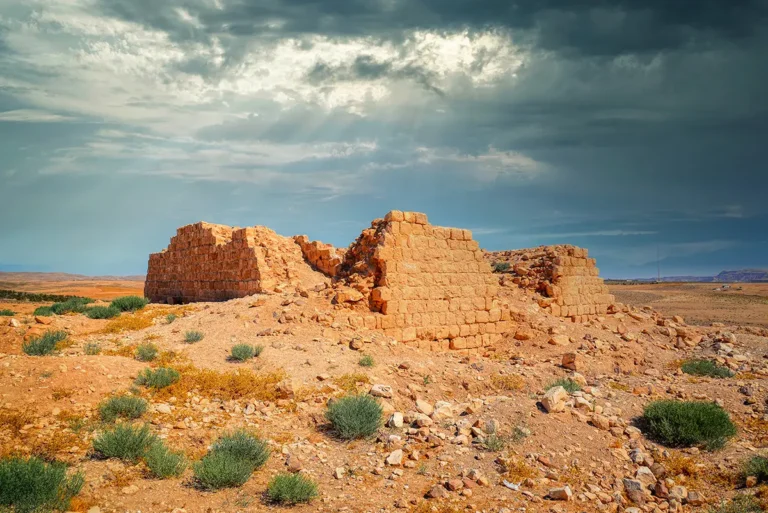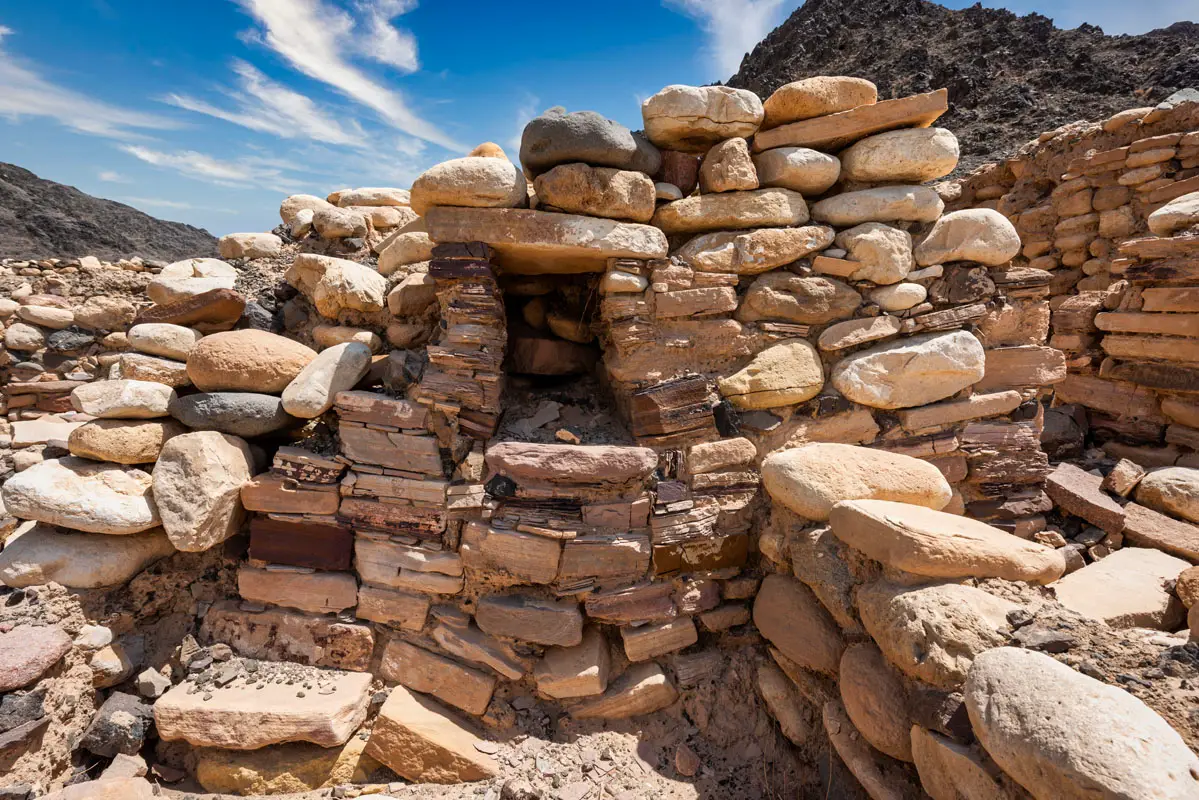


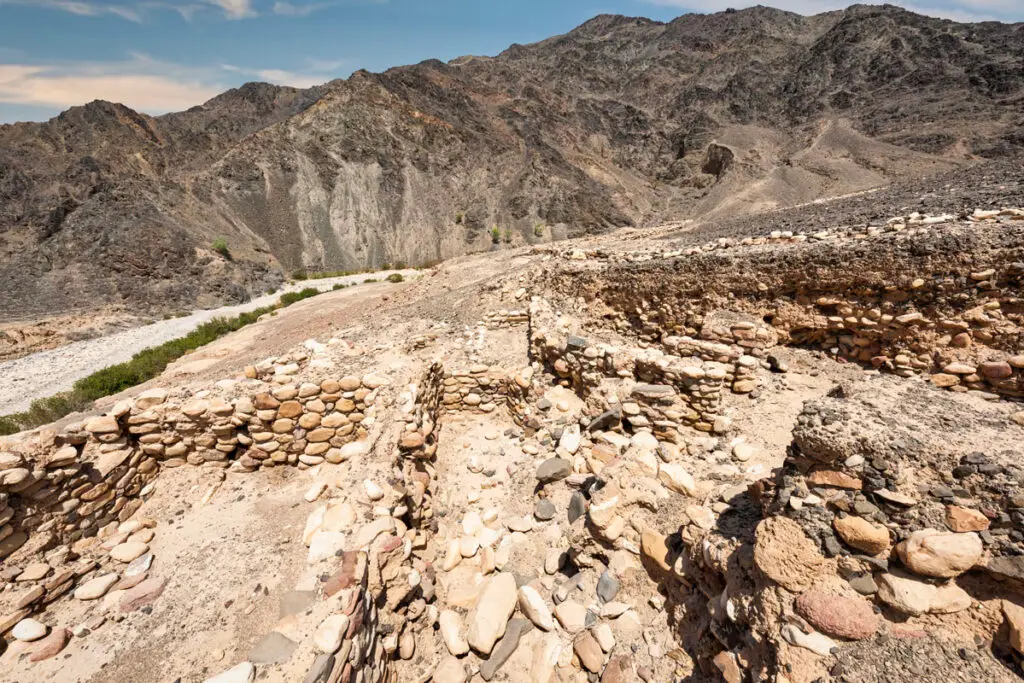
On a slope above Wadi Faynan, the stone walls of a village some ten thousand years old still stand to head height. Ghwayr I was home to one of the early farming and herding communities of the southern Levant, in the Pre-Pottery Neolithic B period.
Where Is Ghwayr?
Ghwayr I overlooks the junction of Wadi Ghuwayr and Wadi Faynan, in the Faynan area of southern Jordan, on a drainage route that runs west to the Dead Sea basin. The older Neolithic site of WF16 lies a short distance away.
Historical Context and Origin
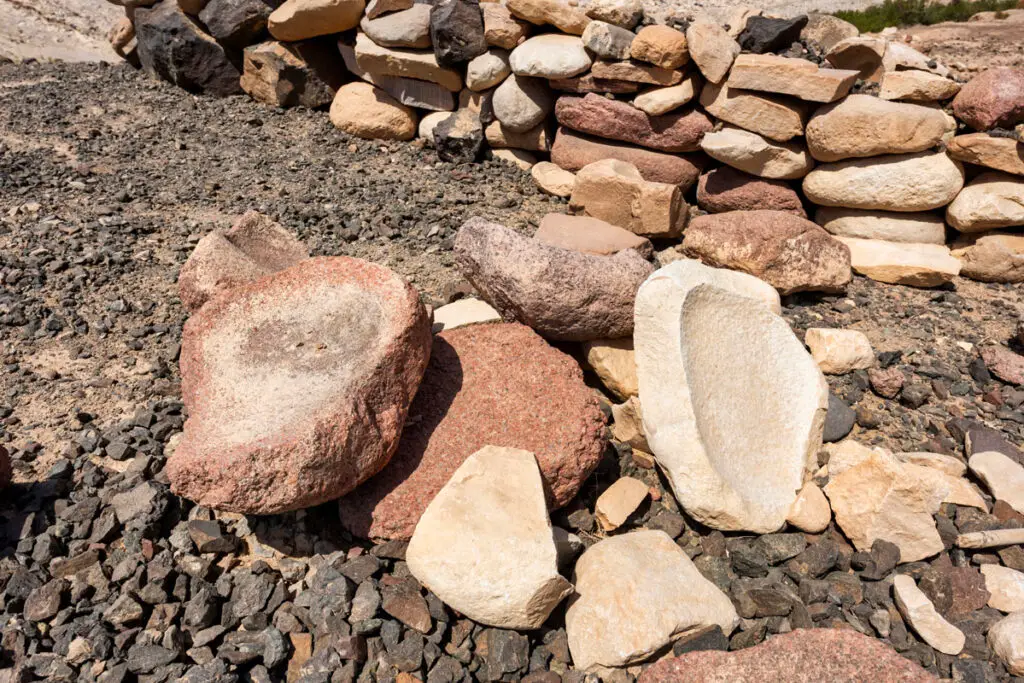
Some twenty radiocarbon dates place the village between about 8000 and 7500 BC. Its people herded goats and also hunted wild animals; aurochs, the wild cattle, may have been eaten at feasts. Many grinding stones show the preparation of plant foods, and the excavators describe a self-reliant community that moved little.
Architectural Design
Ghwayr is a cluster of rectangular stone buildings built wall to wall, some of them partly two storeys high. Over more than 3 m of deposits the excavators traced at least four building phases. Walls with doorways and windows survive more than 2 m high, and some structures stand up to 3 m. Over time the rooms were divided into smaller spaces, and special structures appeared, including a complex that may have been a theatre-like communal meeting place.
Standing Walls
Stone walls with doorways and windows survive over 2 m high, some up to 3 m.
Clustered Houses
Rectangular rooms built wall to wall, some of them once two storeys high.
Gathering Place
A complex that may have been a communal, theatre-like meeting place.
Goat Herders
Mainly goats, with wild animals hunted; aurochs were perhaps eaten at feasts.
Life and Ritual in a Neolithic Village
An elaborate infant burial suggests that status could be inherited. Goat skulls, an aurochs skull and a horn core found with it appear to be offerings. The excavators recovered more than 48,000 pieces of chipped stone, including many tiny microliths.
Destruction, Rediscovery, and Restoration
Ghwayr I was excavated in the 1990s and 2000s by a joint project of the University of Nevada, Las Vegas, and Jordan’s Department of Antiquities, directed by Alan Simmons and Mohammad Najjar. Today an information panel on site explains the village.
Visiting Ghwayr Today
Ghwayr is reached on foot from Wadi Al Ghwer Camp in the Faynan area. Bring water and sun protection, and visit in the cooler months. Our photo album shows the houses and grinding stones.
Further reading: UNLV — Ancient cultures of arid lands (Ghwair I); ex oriente — Ghwair I site record.