

Qal’at Dab’a
An 18th-century Hajj fort with four corner towers and a great reservoir on the plain south of Amman
Built18th c. AD
SizeAbout 25 m square
Location56 km S of Amman
AccessGate often locked
Introduction
A halt on the pilgrim road where the Hajj caravan drew water, and later the railway passed by.
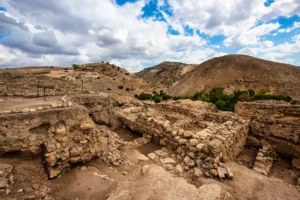
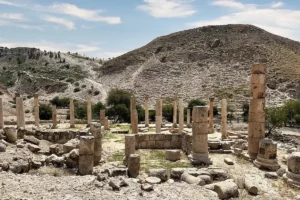
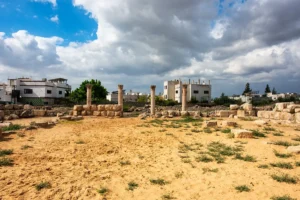
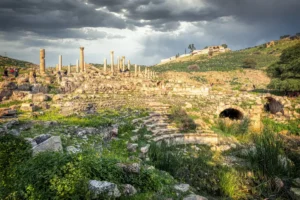
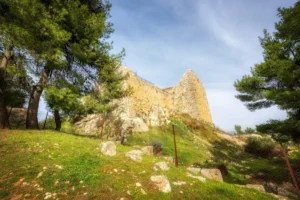
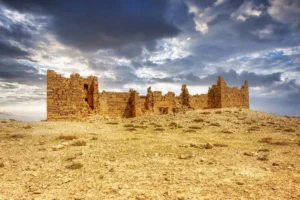
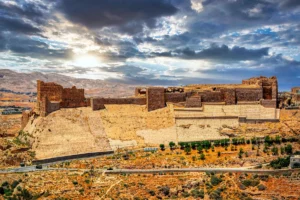
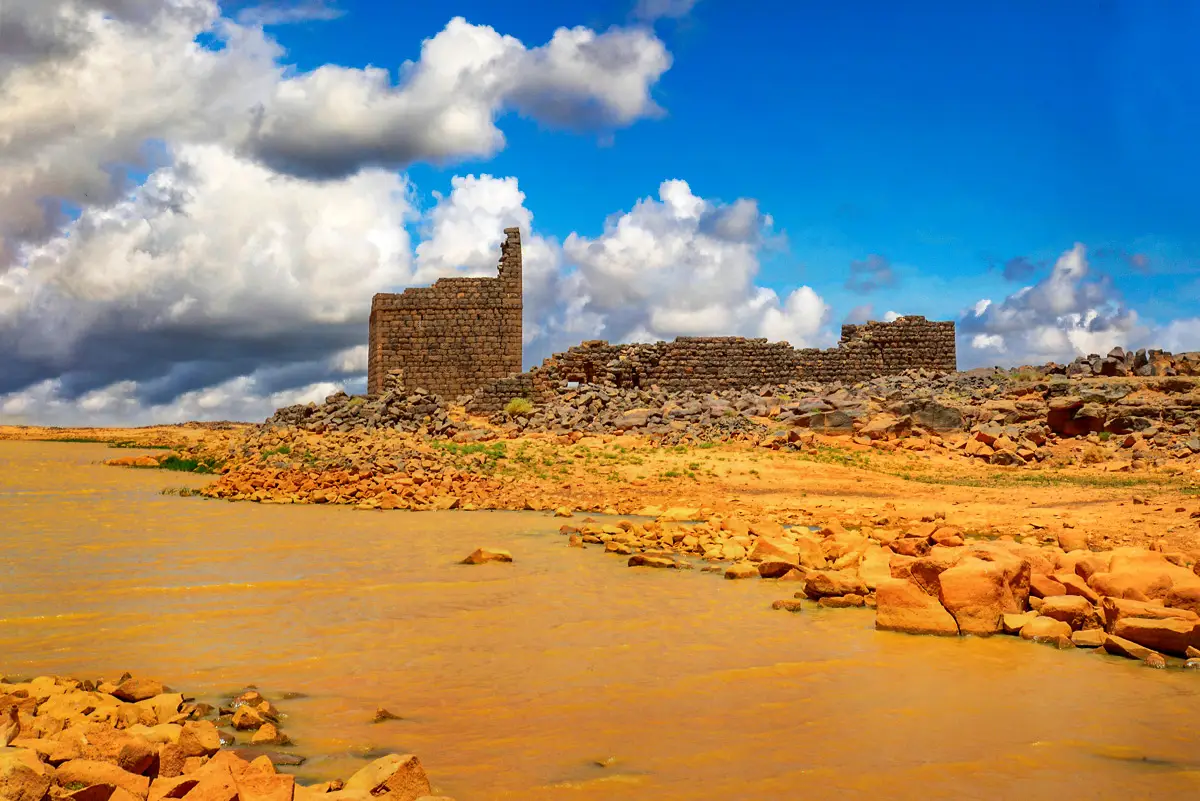
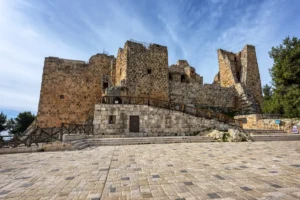
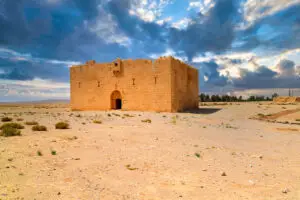
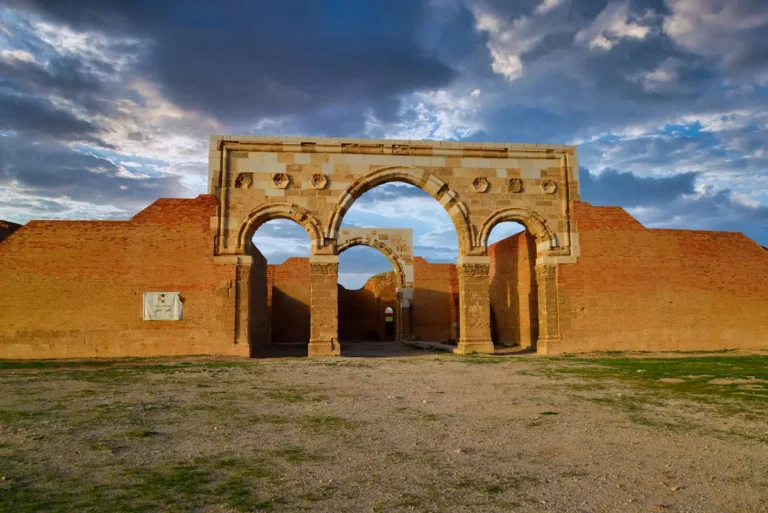
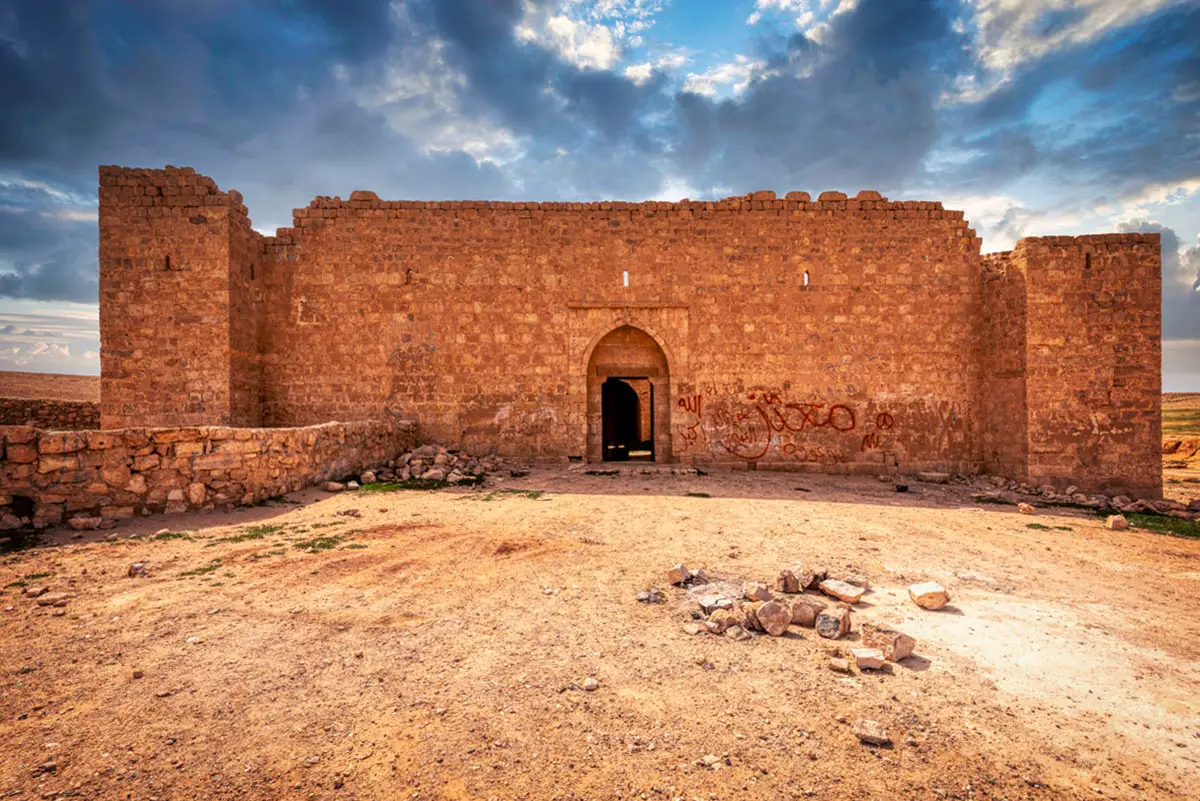
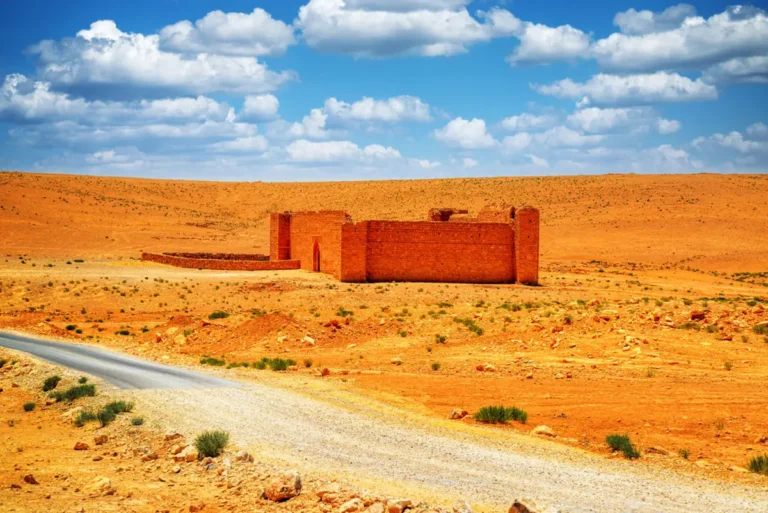
On the open plain about 56 km south of Amman, a square fort with four corner towers marks a halt on the old pilgrim road from Damascus to Mecca. Qal’at Dab’a guarded a reservoir where the Hajj caravan drew water. The name Dab’a means “hyenas”.
The fort is an 18th-century building: a recorded inscription, now lost, commemorated its restoration by ʿUthman Pasha, governor of Damascus, in AH 1180 (AD 1766–67). It is easily reached by a normal car. On our visits in 2026 the gate was locked, with no guard to open it, so you may only see the fort from outside; the 360° panorama shows the courtyard. Walk round the towers, see the roofed reservoir and finish at the Hejaz Railway station about 1 km to the east.
Best timeOct–Apr
Time needed30 min
TicketFree
From Amman60 km · 1 hr
Combine withQal’at Qatrana · 30 min
Google rating3.9 · Reviews
Highlights · A Hajj fort
Towers, a courtyard and a reservoir
Five things to look for at Qal’at Dab’a
Dab’a is a small fort on an empty plain. These are the places that make the visit.
 01 / 05
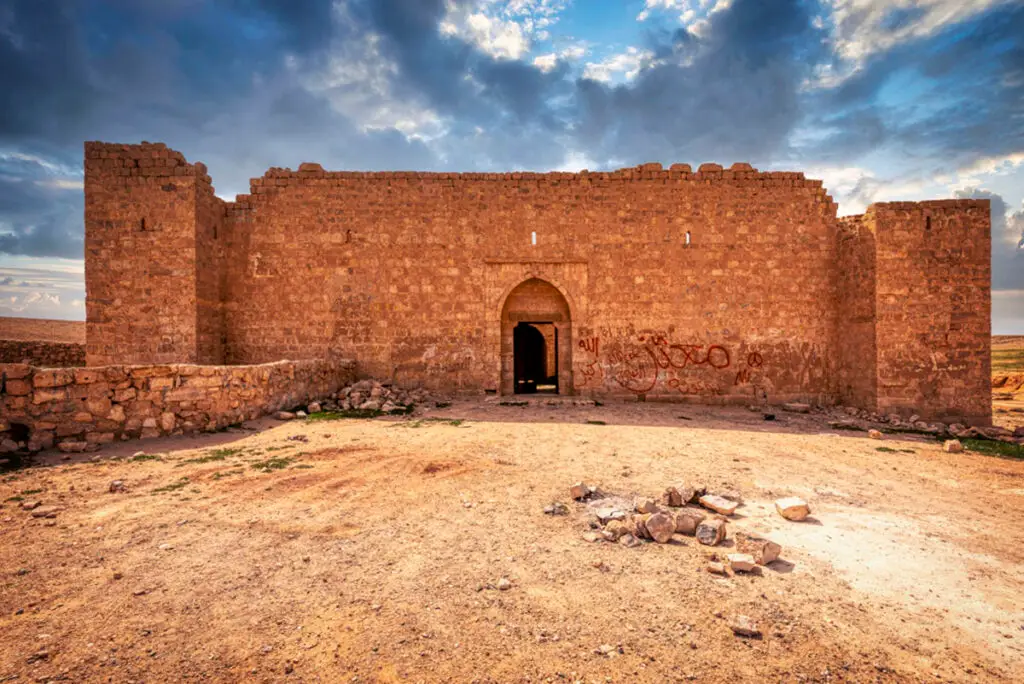
01 · Defence
The gate
The fort
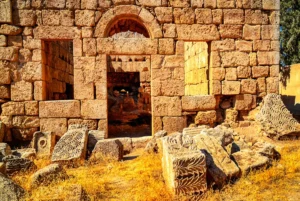
The single gate leads through a vaulted passage into the courtyard.
Look closely
The dressed stone round the doorway.
1 of 5
Part by part
What to see
Four parts of the visit: the fort, the rooms inside, the reservoir and the railway station. Pick one to see what to look for.
1 / 701 · Walls and towers
Walk round the fort
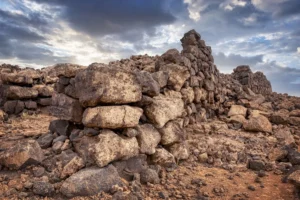
The fort is about 25 m square, with a projecting tower at each corner. Corner towers like these were added to the Hajj forts of the 18th century, when the Bedouin tribes had acquired firearms; they let the small garrison cover the walls with musket fire.
The forts were placed within musket range of their reservoirs, and Dab’a’s reservoir lies just beside it.
About 25 m squareCorner towers18th c. AD
Look for
- The projecting corner towers
- The single gate
- Narrow slits in the walls
Dig deeperWhy towers?
Earlier Hajj forts had plain walls. In the 18th century, when the Bedouin tribes had firearms, towers were added so that a few defenders could fire along the walls.
 1 / 8
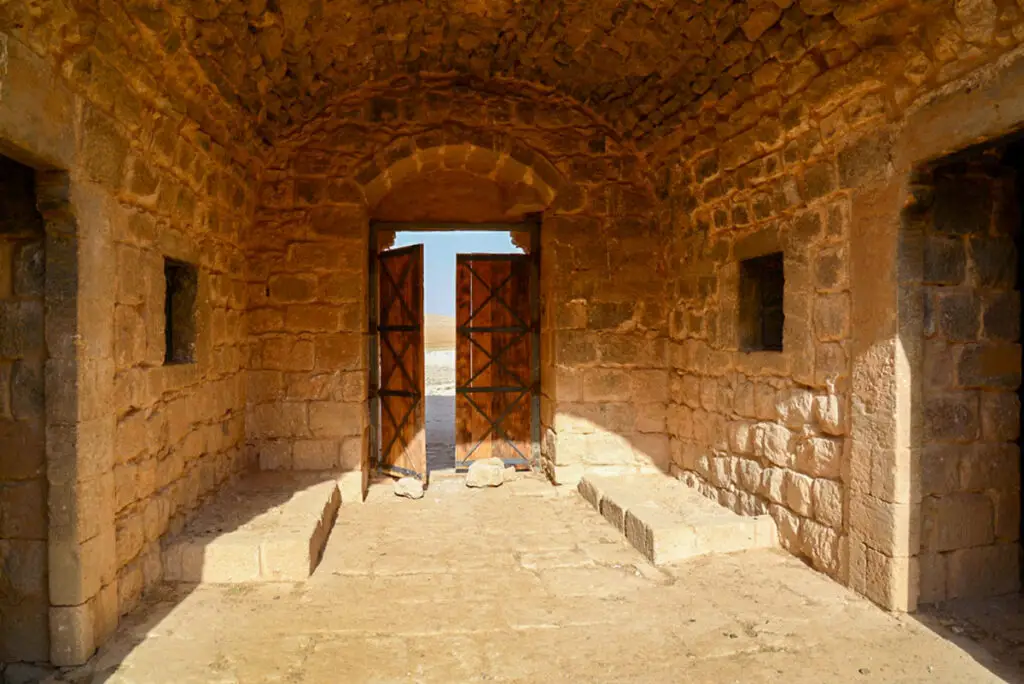
02 · Around the courtyard
Explore the rooms
Through the gate, a vaulted passage leads into the central courtyard, with rooms on two floors around it; the stair, destroyed after 1986, was rebuilt in 2004.
On our visits in 2026 the gate was locked, with no guard to open it, so you may only be able to see the inside in the 360° panorama. If it is open, keep away from loose walls: parts of the fort are at risk of collapse.
Two floorsCourtyardStair rebuilt 2004
Look for
- The vaulted gate passage
- The rooms around the courtyard
- Openings into the cisterns
Dig deeperA lost inscription
A recorded Arabic inscription commemorated restoration by ʿUthman Pasha in AH 1180 (AD 1766–67). He was governor of Damascus from 1760 to 1771 and led the pilgrim caravan for about ten years. The inscription’s original position is unknown, perhaps the mosque room, and it has since been lost.
 1 / 5
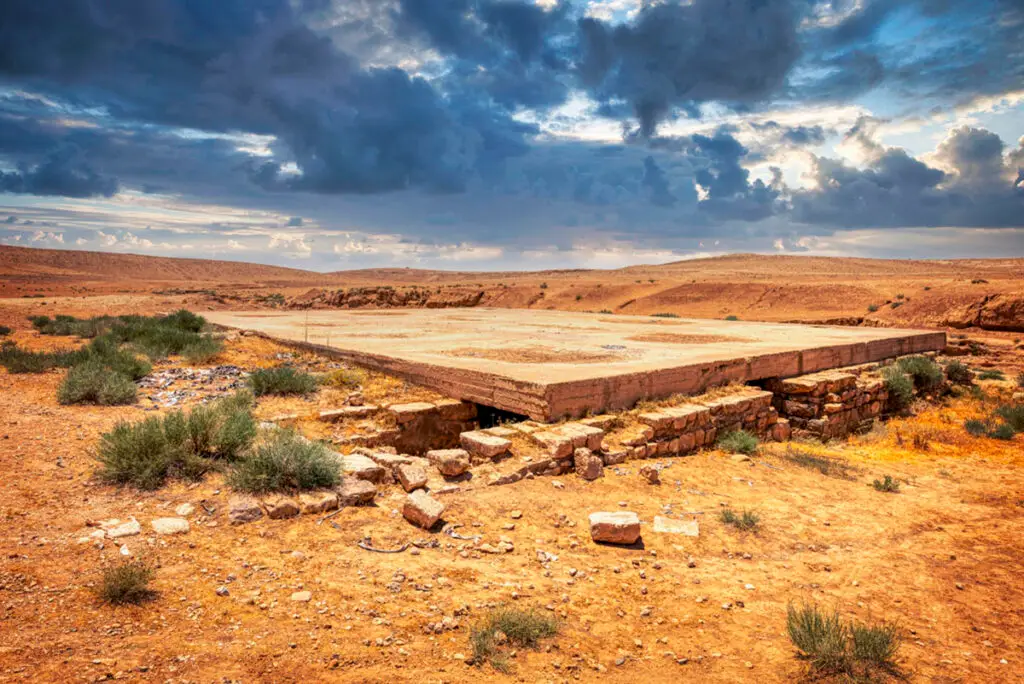
03 · Water for the caravan
See the reservoir
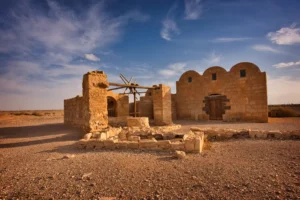
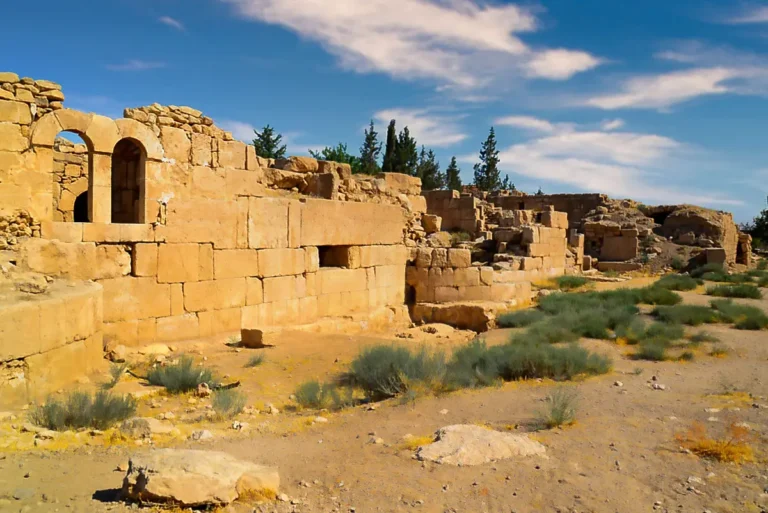
Beside the fort lies a large reservoir, now roofed, and further cisterns near the wadis, which collected winter rain for the caravans.
A halt called Balqa’ already appears on the Ottoman Hajj itineraries of the 16th century, and the reservoir may date from that time, older than the fort itself.
Roofed reservoirCisternsPossibly 16th c.
Look for
- Openings into the roofed reservoir
- The channels that brought rainwater
- The fort seen across the plain
 1 / 3
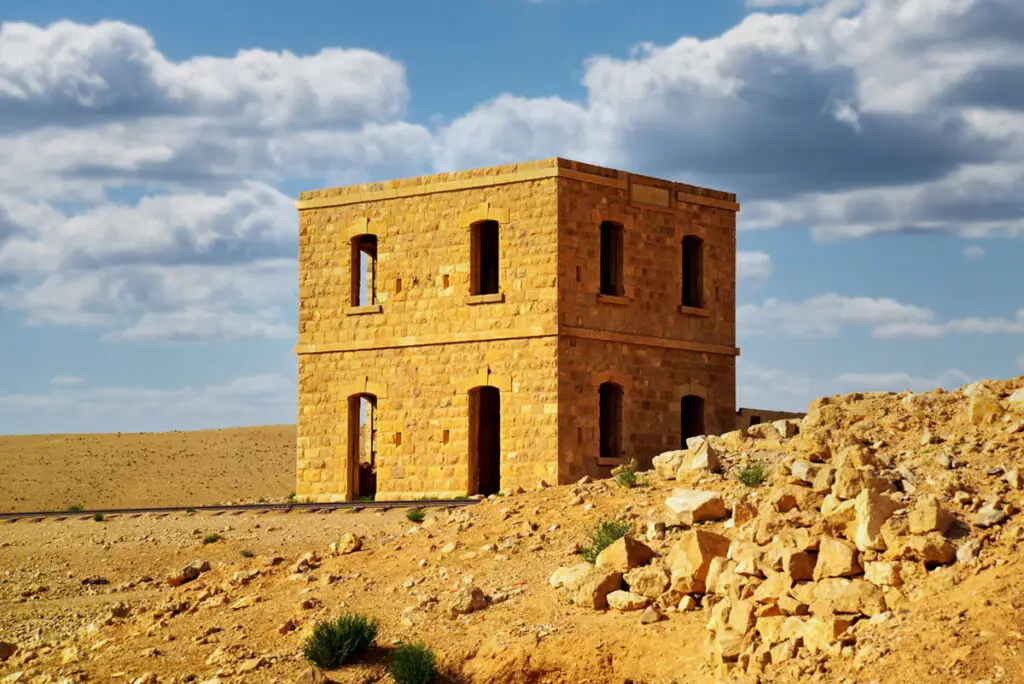
04 · The Hejaz Railway
Visit the station
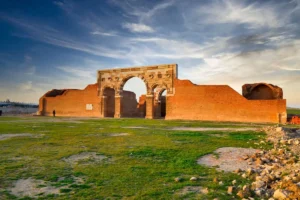
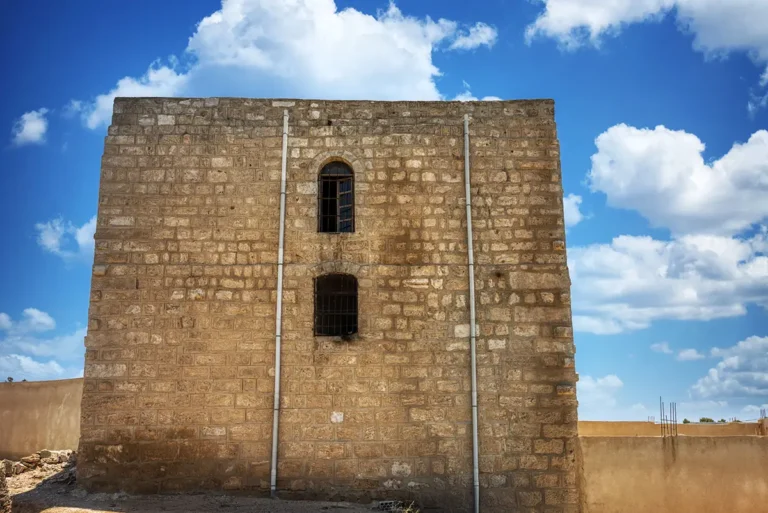
In the early 20th century the Hejaz Railway was built past Dab’a, and the railway soon replaced the camel caravans. Its station, about 1 km east of the fort, was a small desert halt.
A large cemetery beside it holds the graves of railway workers who died in epidemics.
Hejaz RailwayAbout 1 km eastCemetery
Look for
- The stone station building
- The railway line
- The workers’ cemetery
History & significance
A halt on the pilgrim road
Dab’a was a water stop of the Syrian Hajj caravan. The fort was rebuilt in the 18th century, when the Ottomans strengthened the road to Mecca, and the Hejaz Railway passed it in the early 20th century.
- 16th c. ADA Hajj halt called Balqa’; the reservoir may date from this time
- AD 1766–67Restoration by ʿUthman Pasha (recorded inscription, now lost)
- AD 1898Recorded by Brünnow and Domaszewski
- Early 20th c. ADThe Hejaz Railway passes Dab’a
- AD 2004The stair is rebuilt
 ProfileQal’at Dab’a: the full storyThe history, the inscription and the railway of Qal’at Dab’a.Read the profile →
Plan your visit
Everything you need to know before you go
The fort lies about 56 km south of Amman. From the Desert Highway, a side road runs about 6.5 km east, easily driven in a normal car. The Dab’a railway station is about 1 km further east.
Good to know: the gate into the fort was locked on our visits in 2026, with no guard to open it. Parts of the fort are at risk of collapse: keep away from loose walls.
Opening hoursOpen siteGate often locked · no guard
Entry ticketFreeNo ticket office
Time to visit30 minAbout 30 minutes, more with the station
From Amman60 kmAbout 1 hour by road
LocationDesert Highway31.5962° N, 36.0506° EGet directions
Opening hours and prices checked October 2026. Spotted a change? Let us know
On site
What you’ll find at Qal’at Dab’a
- Viewpoint
Not on site: visitor centre, ticket office, toilets, designated parking, museum, guide, food & drinks, market / shop, hotels
Access: no 4x4 needed
When to go
October to April is best. Summer days on the open plain are very hot, with no shade.
J
F
M
A
M
J
J
A
S
O
N
D
BestGood, cooler or warmVery hot
Tip: combine the fort with the railway station 1 km to the east.
Before you go
There are no services at the site.
- WaterNo shade and no services
- Sun hat and sunscreenEspecially from May to September
- Good shoesRubble and uneven floors
- The map pinSigns are few or missing
Common questions
Quick answers before you set off.
Is there an entrance fee?
No. The site is free, with no guard or ticket office.
Can I get there in a normal car?
Yes. The 6.5 km side road from the Desert Highway is easily driven in a normal car.
How long do I need?
About 30 minutes for the fort and the reservoir, a little more if you visit the railway station.
Can I go inside?
On our visits in 2026 the gate was locked, with no guard to open it, so you may not be able to go inside. If it is open, keep away from loose walls: parts of the fort are at risk of collapse.
Combine with
Dab’a lies between Amman and Qatrana. Drive times are from Qal’at Dab’a.
Explore this site
More from Qal’at Dab’a
Panoramas, walk-throughs, photos and stories about this site.
ProfileQal’at Dab’a: history & architecture Photo albumQal’at Dab’a: A Hajj Fort in Photos
 360°360° panoramaInside Qal’at Dab’a: 360° Panorama
Nearby
Also south of Amman
From guide to visit
Explore the Hajj forts with a private guide
Tell us when you’d like to go, and we’ll plan a private day along the old pilgrim road, with door-to-door transport from Amman.