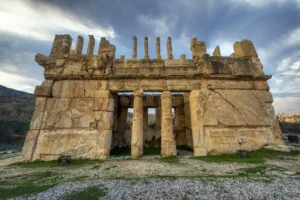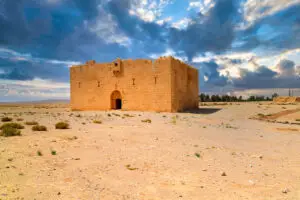
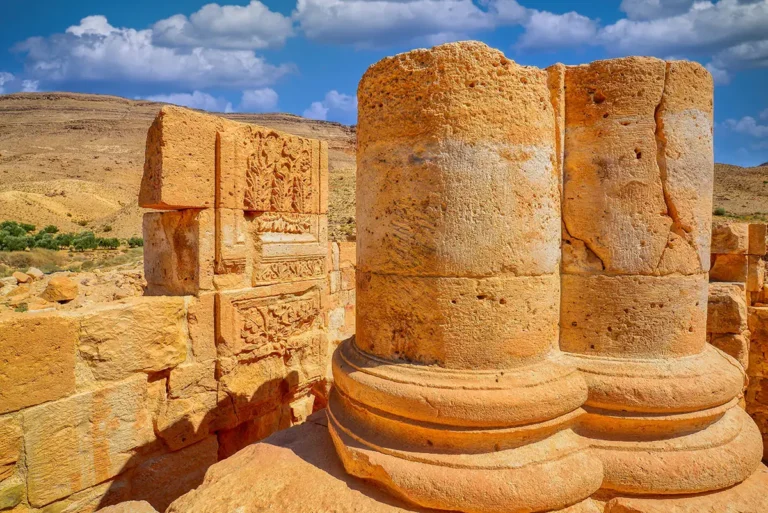
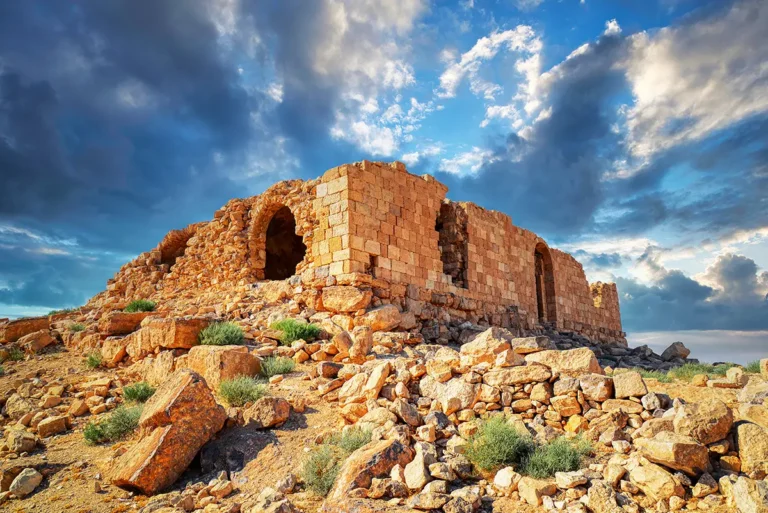
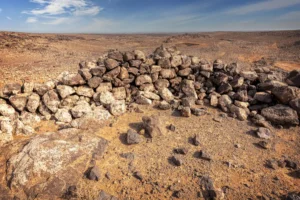


An Ottoman Hajj fort of 1760 beside the old bridge over the flood valley of Wadi al-Hasa
The crossing of Wadi al-Hasa was one of the most dangerous on the pilgrim road.
Wadi al-Hasa was one of the most dangerous crossings on the pilgrim road: its winter floods could sweep away men and animals. In 1730–33 the governor of Damascus, Abdullah Pasha al-Aydinli, had a bridge and a paved road built across it, and in 1760 a fort with a reservoir followed to guard the crossing.
The fort stands on the south bank of the wadi beside the Desert Highway, about 140 km south of Amman. Entry is free; visit during daylight, as access to the interior is not guaranteed. See the courtyard with its well housing, the reservoir and the old bridge and road over the wadi.
Five things to look for at Qal’at Al-Hasa
Al-Hasa is a quiet stop on the Desert Highway. These are the places that make the visit.
 01 / 05
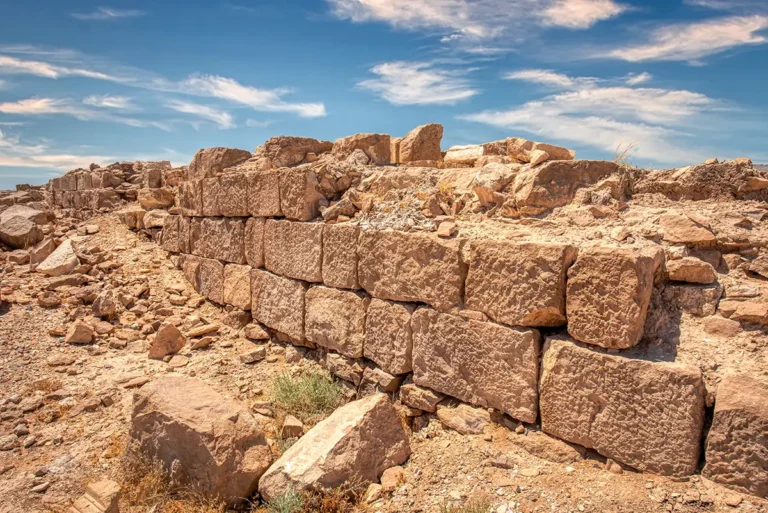
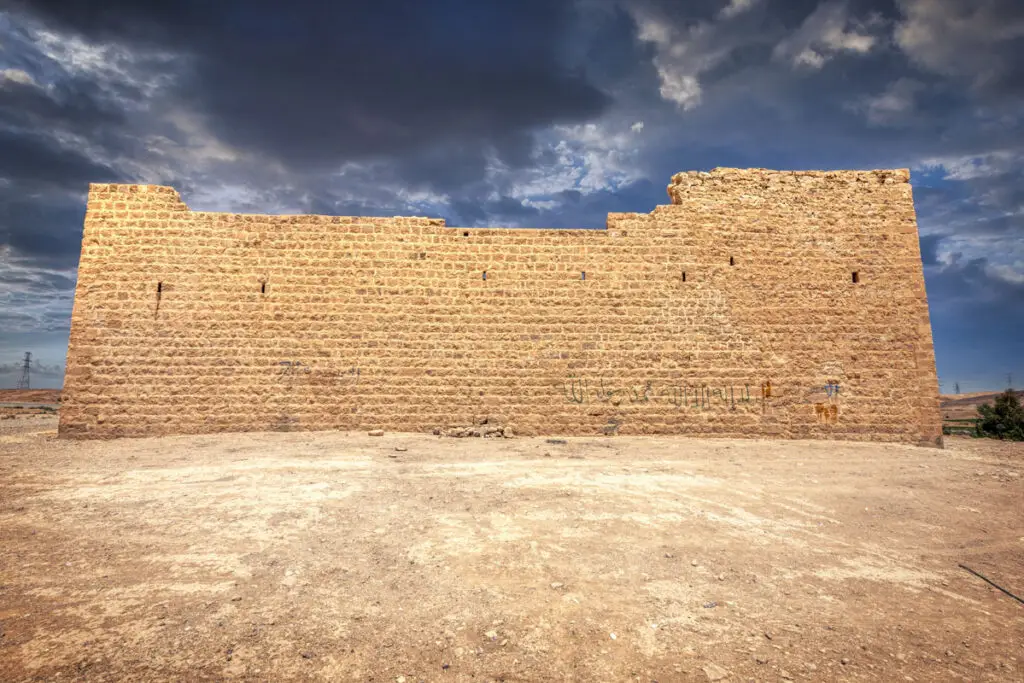
The north wall is of fine ashlar; the others are of rougher limestone, with towers at the corners.
The gun slits in the walls.
Four parts of the visit: the fort, the courtyard and rooms, the reservoir and the bridge. Pick one to see what to look for.
1 / 6The gate lies in the middle of the south wall, under a pointed vault. The north wall is of fine ashlar; the others are of rougher limestone. Towers stand at the corners, and slit windows and gun slits pierce the walls.
The fort was restored in the late 1980s and early 1990s, when the south wall was partly rebuilt.
 1 / 9
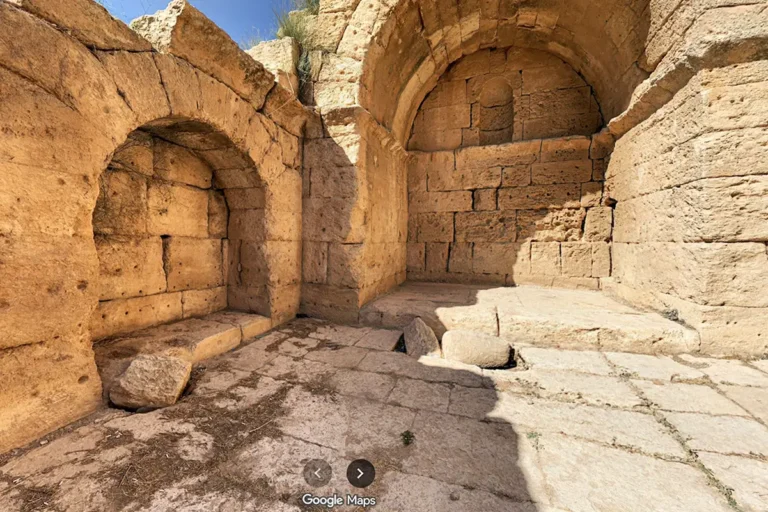
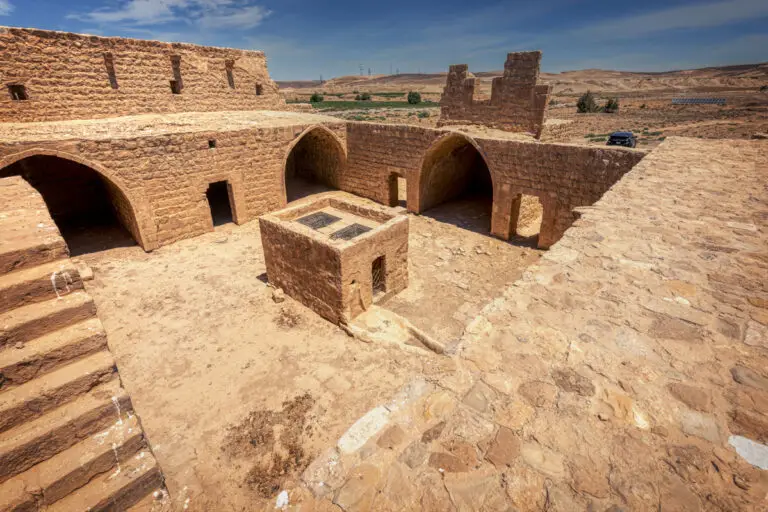
The gate leads to a courtyard 12.5 m square, with a tall structure over a well about 10 m deep at its centre. Nine rooms surround the courtyard on the ground floor.
On the first floor, the southern range has barrel-vaulted rooms on either side of a central iwan with a plain mihrab, where a building inscription, now lost, recorded the fort’s construction in 1760 under Sultan Mustafa III.
In the 1860s travellers found guards whose families had lived here for generations, tending a small garden between the fort and the cistern.
 1 / 5
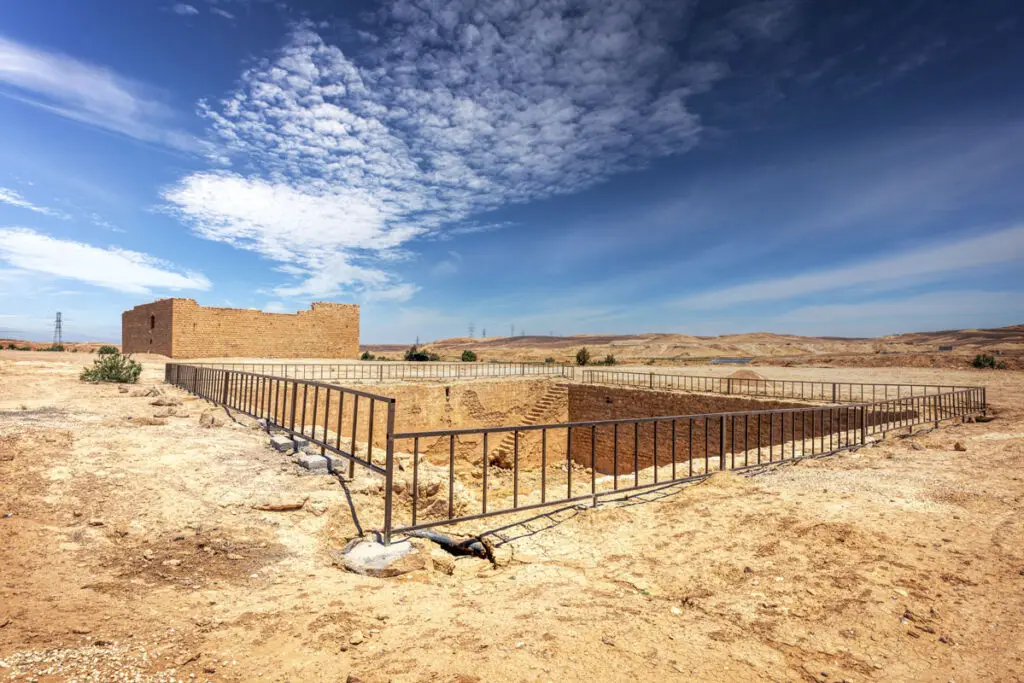
A plastered reservoir about 20 m square, with steps in one corner, lies 50 m east of the fort. An underground channel links it to the courtyard well.
The reservoir is fenced today; view it from the edge.
 1 / 7
Because flash floods in the wadi were often deadly, Abdullah Pasha al-Aydinli had a two-arched bridge and a paved approach road built in 1730–33 to carry the caravan safely over the flood channel. They are the oldest structures on the site.
In 1779 the traveller Mehmed Edib described the bridge, fort and cistern.
The Hejaz Railway passed al-Hasa in the early 20th century, about 5 km south-east of the fort. In 1918 Arab forces captured and destroyed the railway station.
Al-Hasa was a halt on the Hajj road from the 16th century. The Ottomans bridged the wadi in the 1730s and built the fort in 1760; the Hejaz Railway passed nearby in the 20th century.
 ProfileQal’at Al-Hasa: the full storyThe history, the bridge and the architecture of Qal’at Al-Hasa.Read the profile →
The fort stands on the south bank of Wadi al-Hasa beside the Desert Highway, about 140 km south of Amman, in Tafila Governorate. The Hejaz Railway station of al-Hasa is about 5 km to the south-east.
Opening hours and prices checked October 2026. Spotted a change? Let us know
What you’ll find at Qal’at Al-Hasa
Not on site: visitor centre, ticket office, toilets, museum, guide available, food & drinks, hotels, market / shop · Access: no 4x4 needed
October to April is best. Summer days are very hot, and after heavy winter rain the wadi can flood.
There are no services at the site.
Quick answers before you set off.
No. Entry to Qal’at Al-Hasa is free.
Access to the interior is not guaranteed. When the fort is open you can walk round the courtyard and climb to the first floor.
No. The two-arched bridge and paved road were built by the Ottomans in 1730–33, for the Hajj caravan.
About 30 minutes for the fort, the reservoir and the bridge.
Al-Hasa lies between Qatrana and Ma’an, near the Nabataean temples of Wadi al-Hasa. Drive times are from Qal’at Al-Hasa.
Panoramas, walk-throughs, photos and stories about this site.
ProfileQal’at Al-Hasa: history & architecture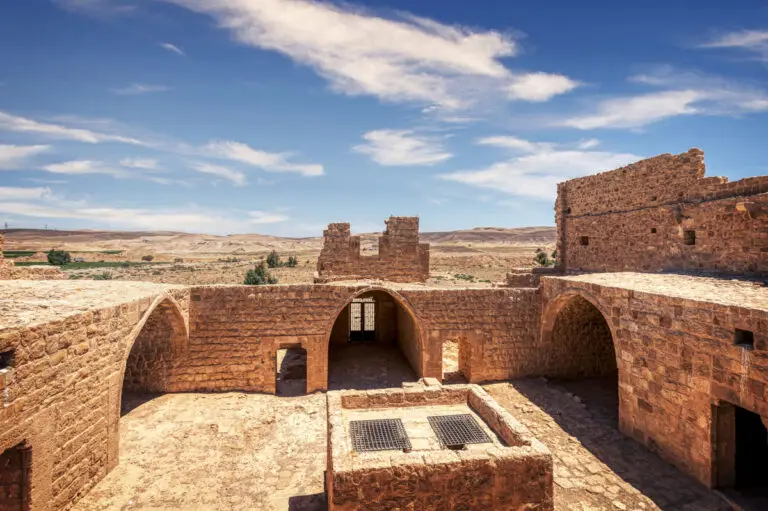 Photo albumQal’at Al-Hasa: A Hajj Fort and Ottoman Bridge in Photos
 360°360° panoramaAl-Hasa Ottoman Train Station: 360° Panorama
Tell us when you’d like to go, and we’ll plan a private day along the old pilgrim road, with door-to-door transport.