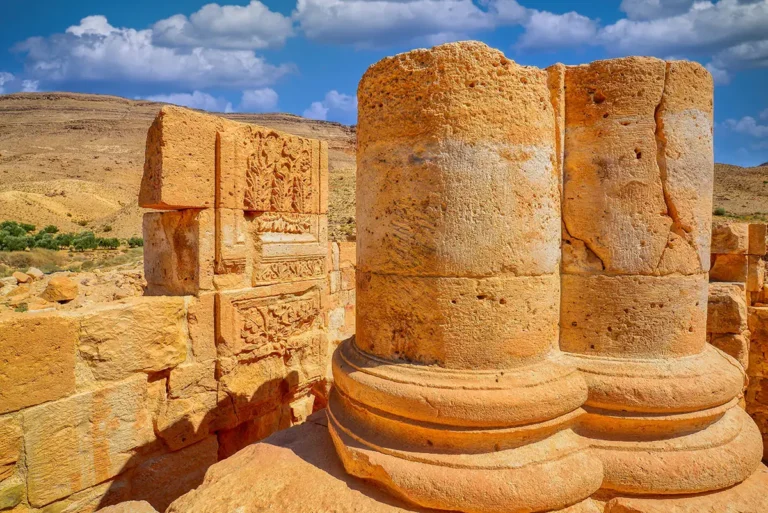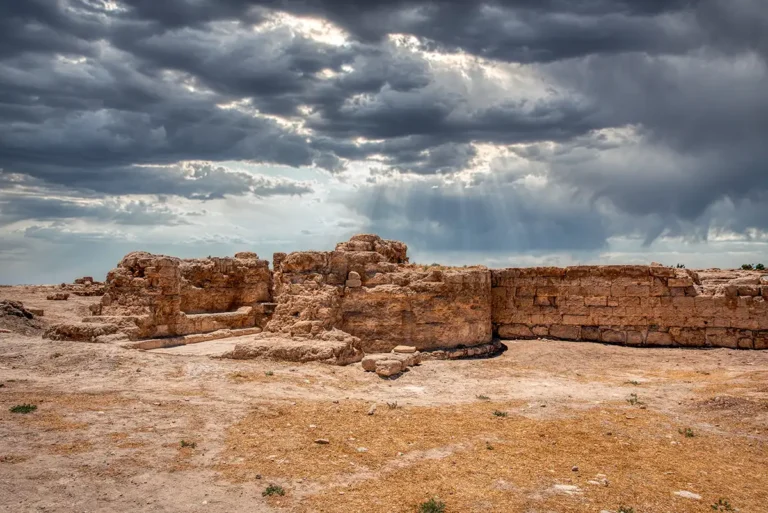
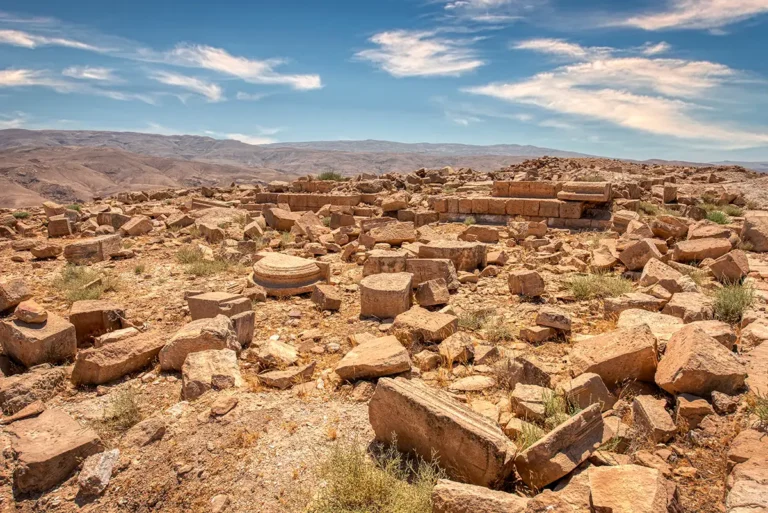
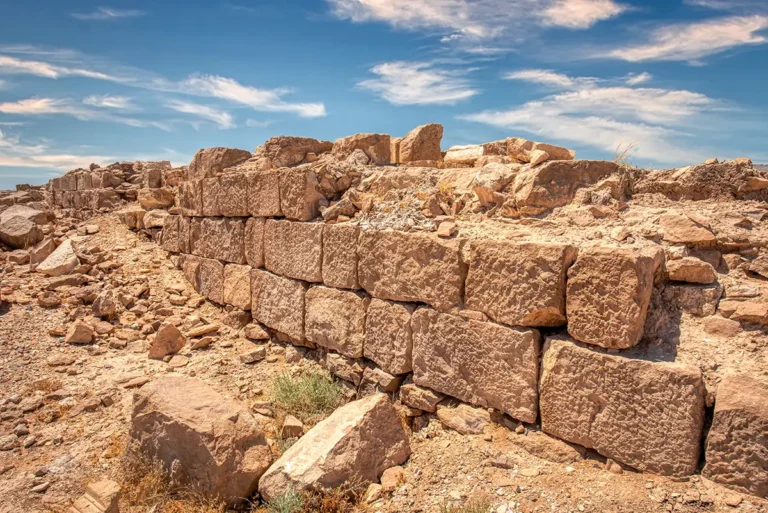

On a lonely summit above the gorge of Wadi al-Hasa, the Nabataeans built a small temple to which pilgrims climbed to make offerings. Its sculptures, among the finest of Nabataean art, were excavated in 1937 and now stand in museums in Amman and Cincinnati; on the hilltop, the walls and the altar platform remain.
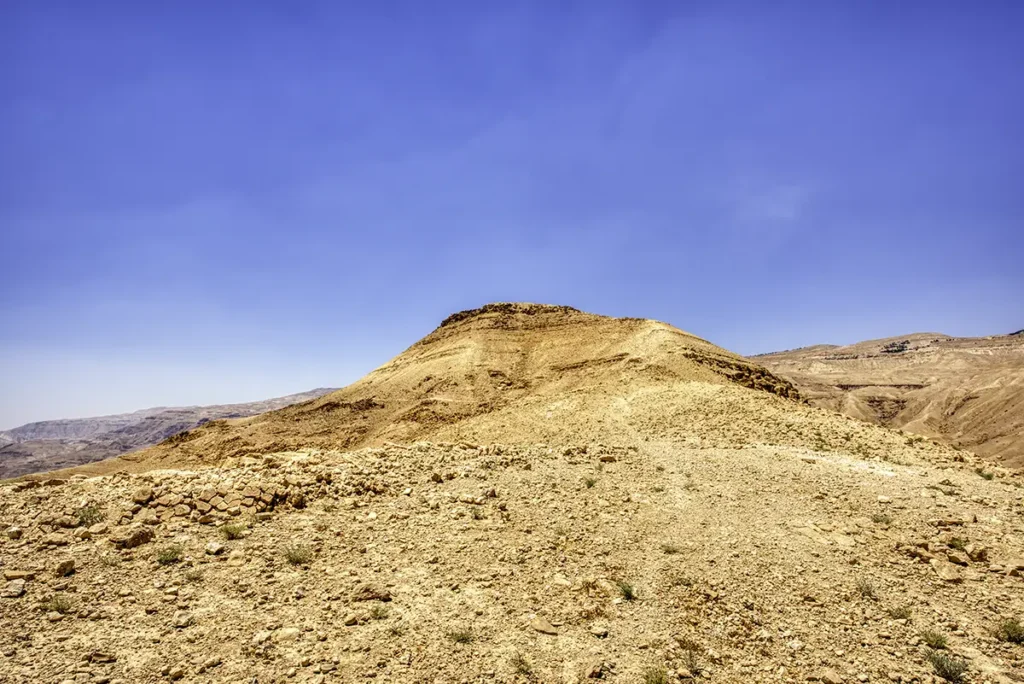
Where Is Khirbet et-Tannur?
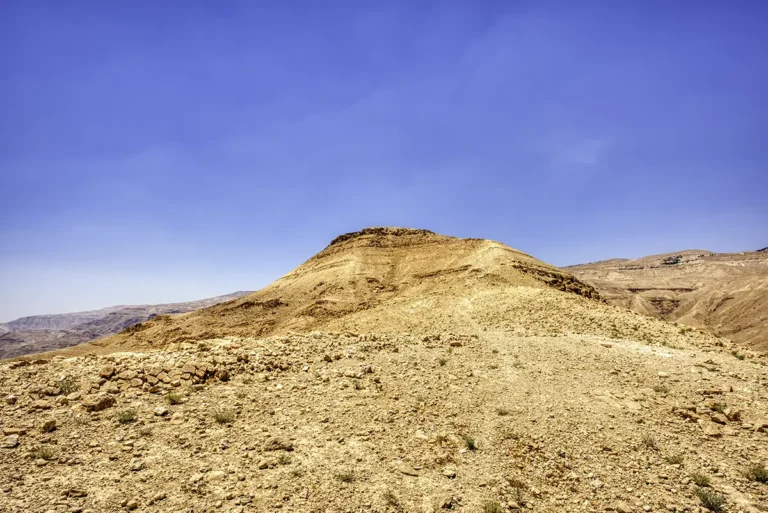
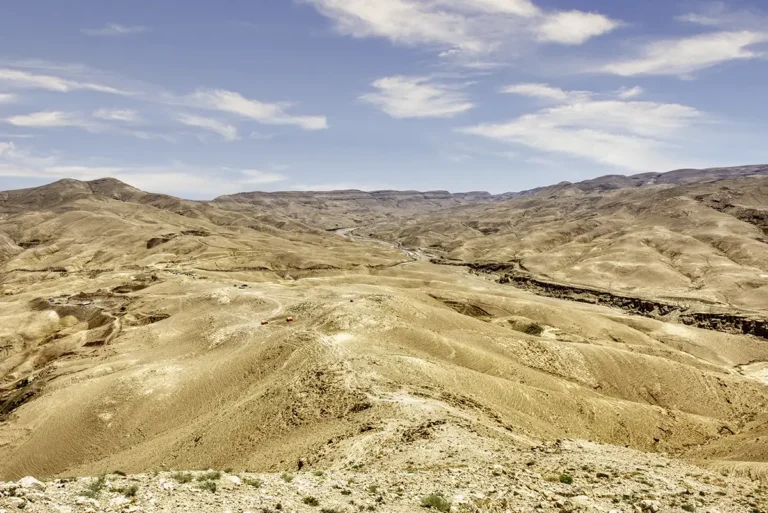
The temple stands alone on the flat summit of Jebel et-Tannur, above the meeting of Wadi al-Hasa and Wadi La’aban, beside the King’s Highway north of Tafila. Its “parent” village, Khirbet edh-Dharih, with springs and lodgings, lies about 7 km to the south. The only way up is an ancient path on the south-east ridge.
Historical Context and Origin
The first altar was built in the 2nd century BC. A dedication of year 2 of the Nabataean king Aretas IV (8/7 BC) belongs to this early phase. In the first half of the 2nd century AD the sanctuary was rebuilt in dressed stone with a richly sculpted shrine, and it was repaired again after an earthquake in the late 2nd or 3rd century. The great earthquake of AD 363 brought down the shrine and ended worship; the sanctuary was never rebuilt.
Architectural Design
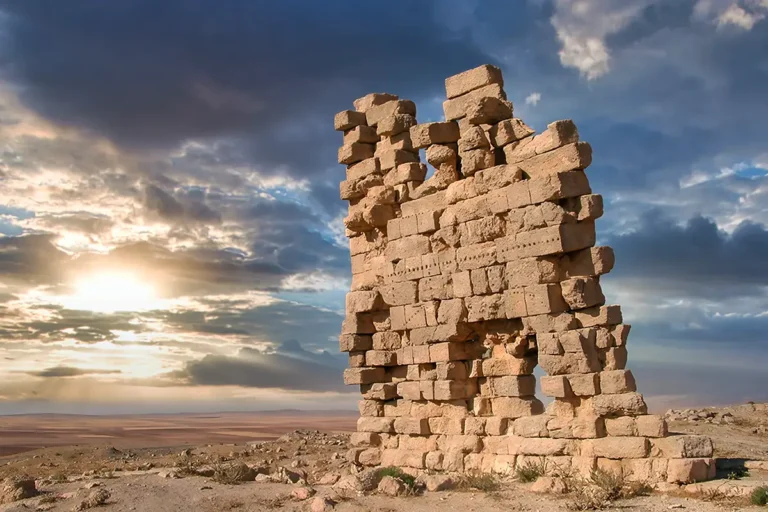
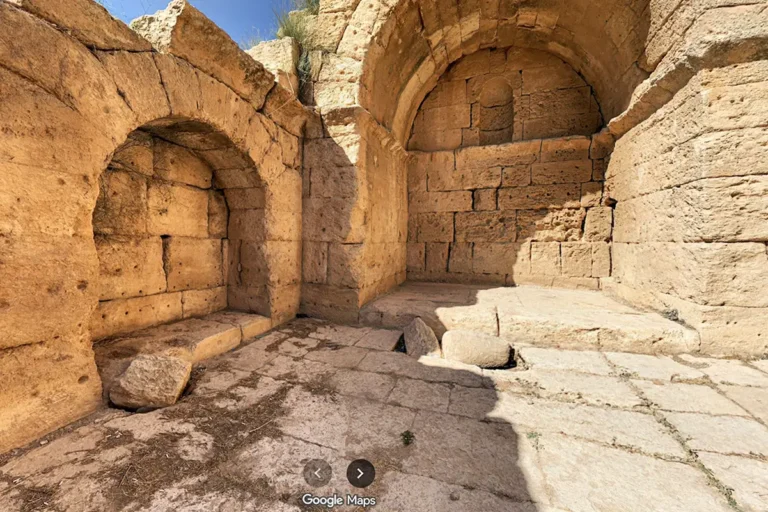
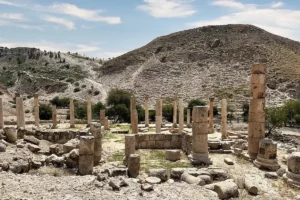
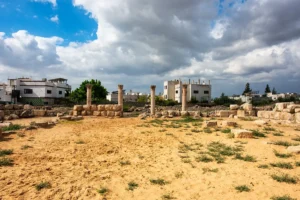
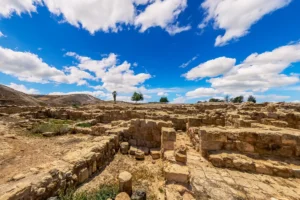
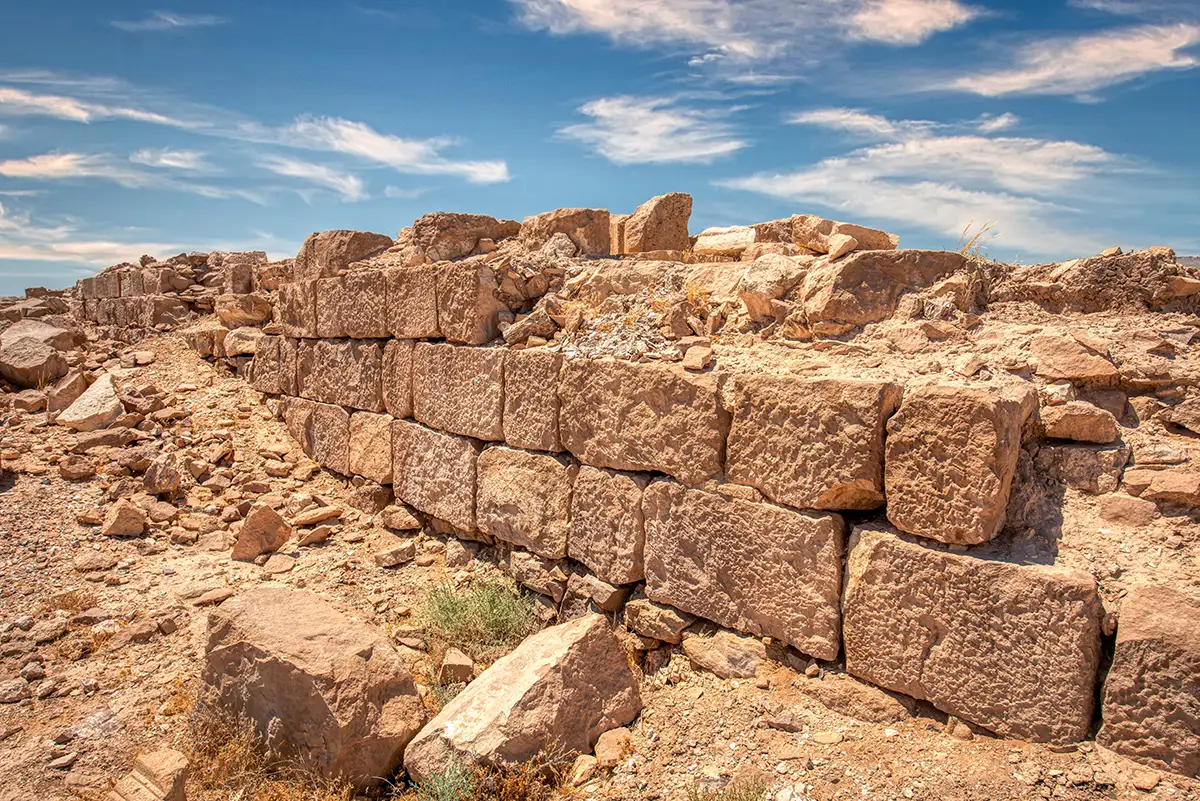
A walled, paved forecourt led to a tall, unroofed inner enclosure. At its centre, under the open sky, stood the square altar platform, with a cult niche on its front and a stair up to the sacred flame. Dining rooms on the north and south sides served pilgrims’ feasts, and smaller altars, including portable incense altars, stood around the court. Burnt offerings of sheep, goats and grain were found.
Hilltop Altar
The altar platform stood open to the sky at the heart of the shrine.
The Zodiac Relief
A Victory holding up a ring of the zodiac, now split between two museums.
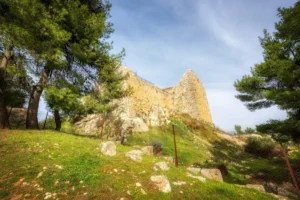
Gods of the Storm and Spring
A storm god and a fertility goddess were worshipped here.
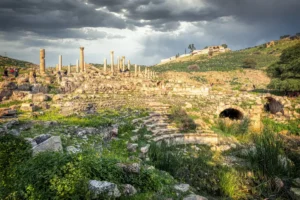
Spectacular Setting
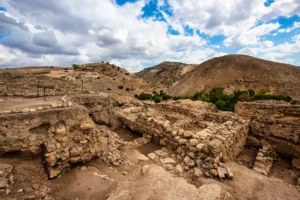
Views over the junction of Wadi al-Hasa and Wadi La’aban.
Gods of Khirbet et-Tannur
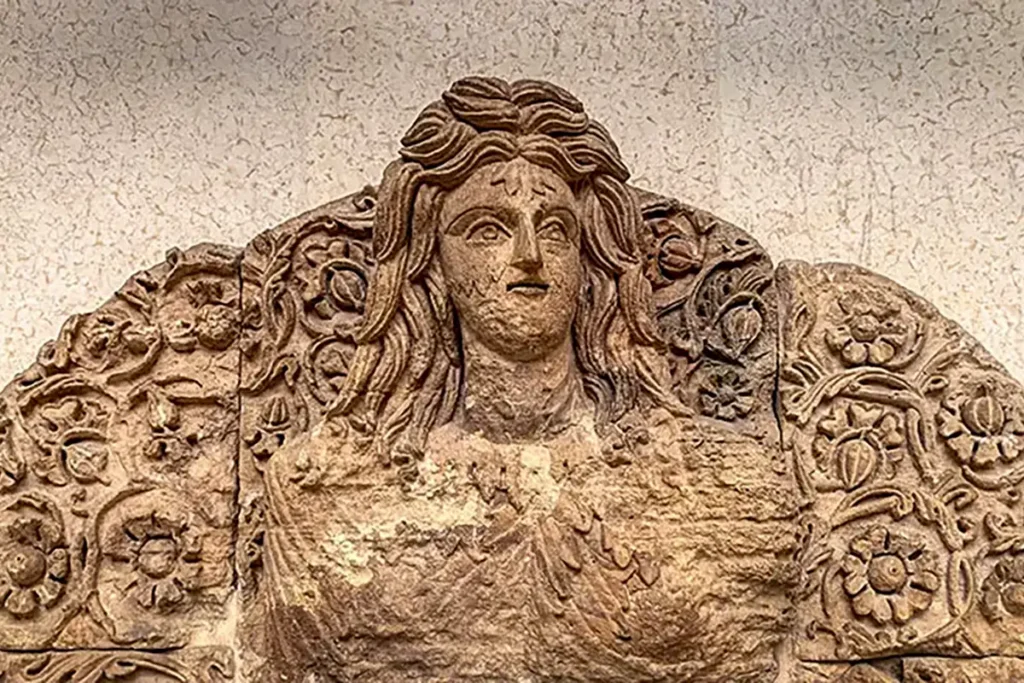
The only god named in an inscription is Qos, the old Edomite storm god. The main cult statues show a storm god with thunderbolt and bull calves, and a goddess seated on a lion throne, probably Allat with features of Isis. A goddess veiled in leaves, the “Vegetation Goddess”, may personify the spring below. A Victory holding up the ring of the zodiac, with Tyche at its centre, is now split between the Cincinnati Art Museum and The Jordan Museum in Amman.
Destruction, Rediscovery, and Restoration
Nelson Glueck excavated the temple in 1937 for the American Schools of Oriental Research and the Department of Antiquities of Transjordan. The finds were divided: Jordan’s share is now in The Jordan Museum, and the American share went to the Cincinnati Art Museum. Glueck published the sculptures in Deities and Dolphins (1965), and Judith McKenzie and Joseph Greene re-studied the archive and published the full excavation in 2013.
Visiting Khirbet et-Tannur Today
The site is open and free. There is no parking: leave the car where the track ends and climb for 30–40 minutes to the summit, which has no shade. Allow about two hours in all. Combine it with Khirbet edh-Dharih and the sculptures in The Jordan Museum. See our Khirbet et-Tannur travel guide for directions.
Further reading: Oxford — A Gem of a Small Nabataean Temple (2016); McKenzie et al., The Nabataean Temple at Khirbet et-Tannur (review, AJA).