












Qasr Al-Mushatta
The largest and most ambitious Umayyad palace in Jordan
Begunc. AD 743–744
Size144 × 144 m
LocationBy Queen Alia Airport
Attributed toAl-Walid II
Introduction
The largest and most ambitious of the Umayyad palaces in Jordan. – UNESCO Tentative List
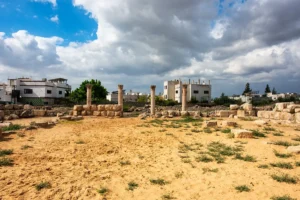
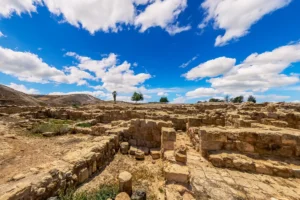
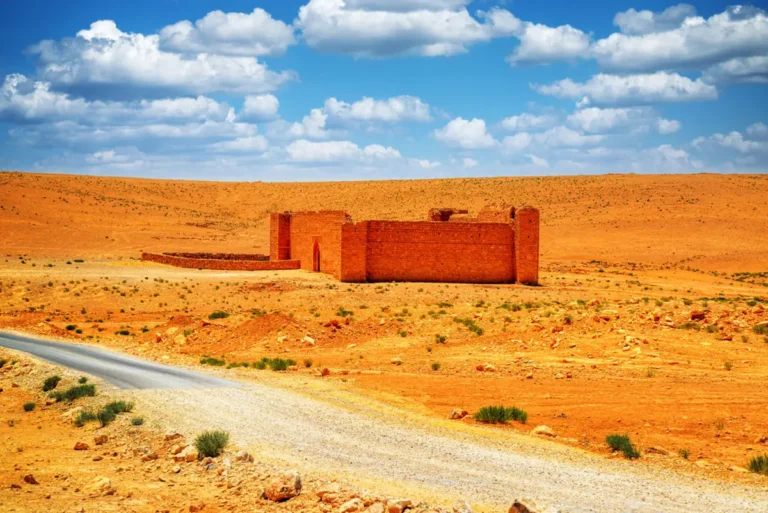
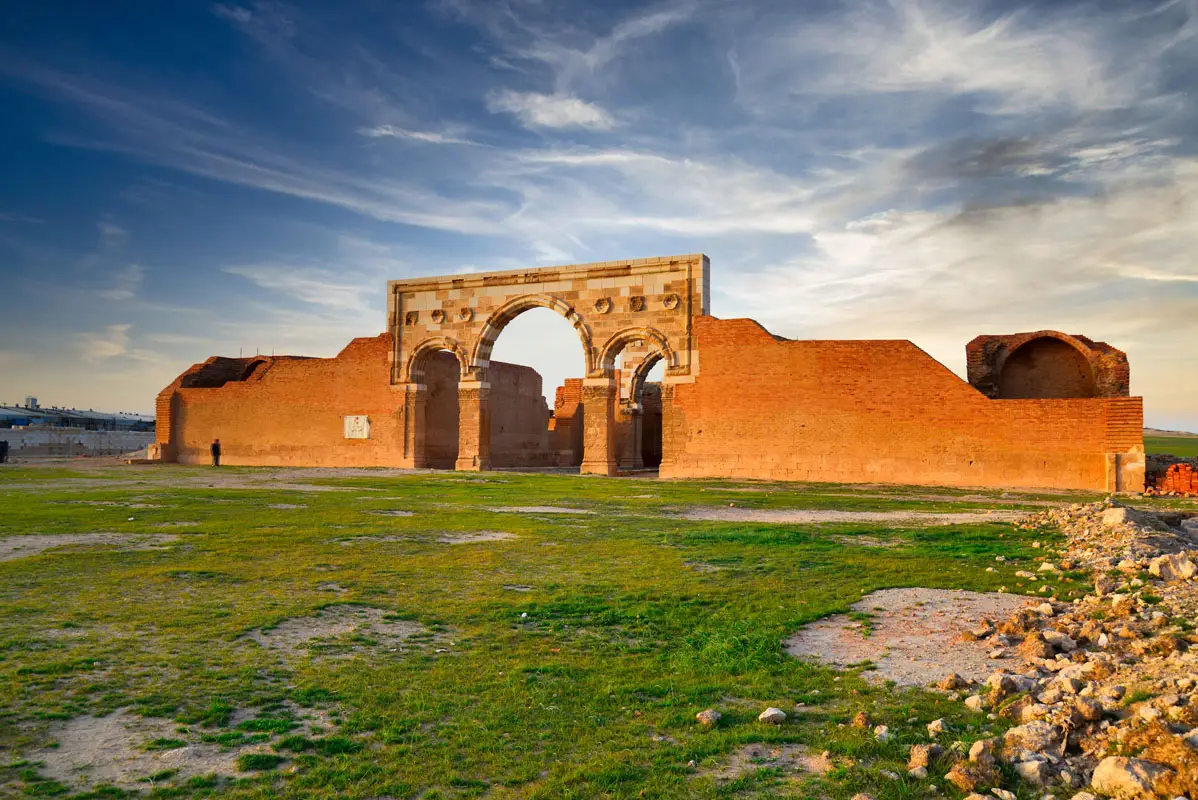
Qasr Al-Mushatta, often called the Winter Palace, is one of the largest and most ambitious Umayyad buildings in Jordan. It lies about 30 km south of Amman, right beside Queen Alia International Airport. A square enclosure of 144 by 144 m, ringed by 25 towers, was meant to hold a caliph’s palace, but it was never finished.
Its south façade was carved with one of the masterpieces of early Islamic art: a zigzag frieze of great rosettes among vines, animals and figures. About three quarters of it was given to Germany in 1903 and is now in Berlin. What stays in Jordan is still extraordinary: the fired-brick throne hall, its re-erected arches and the carved stones of the gate.
Best timeMar–May · Oct–Nov
Time needed20–30 min
TicketFree (2026)
From Amman30 km · 45 min
Combine withQasr Al-Qastal · 15 min
Google rating4.0 · Reviews
Highlights · An unfinished palace
A caliph’s palace that was never completed
Carved stone, fired brick and the arches of a throne hall
Only the central strip of the enclosure was ever built, and even that was left unfinished when al-Walid II was killed in AD 744. What survives shows the scale of his ambition and the skill of craftsmen who drew on Byzantine, Coptic, Syrian and Sasanian art.
 01 / 05
01 · Decoration
The carved façade
South façade
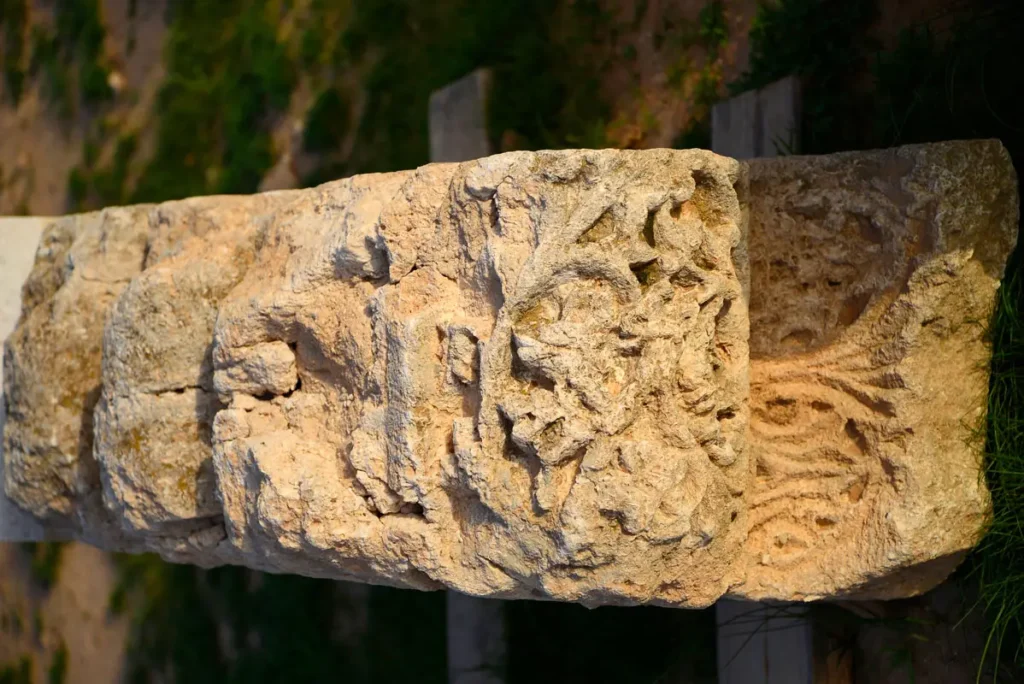
Vine and acanthus scrolls, rosettes, animals and figures covered the central part of the south façade. The part left in Jordan lets you see the carving up close.
Look closely
Animals hidden among the scrolls.
1 of 5
Room by room
What to see
Five stops, from the gate to the back wall: the south façade and gateway, the great courtyard, the triple-arched entrance, the throne room and its suites, and the outer walls. Pick a stop to see what to look for.
 1 / 8
01 · Façade and gateway
Start at the south façade
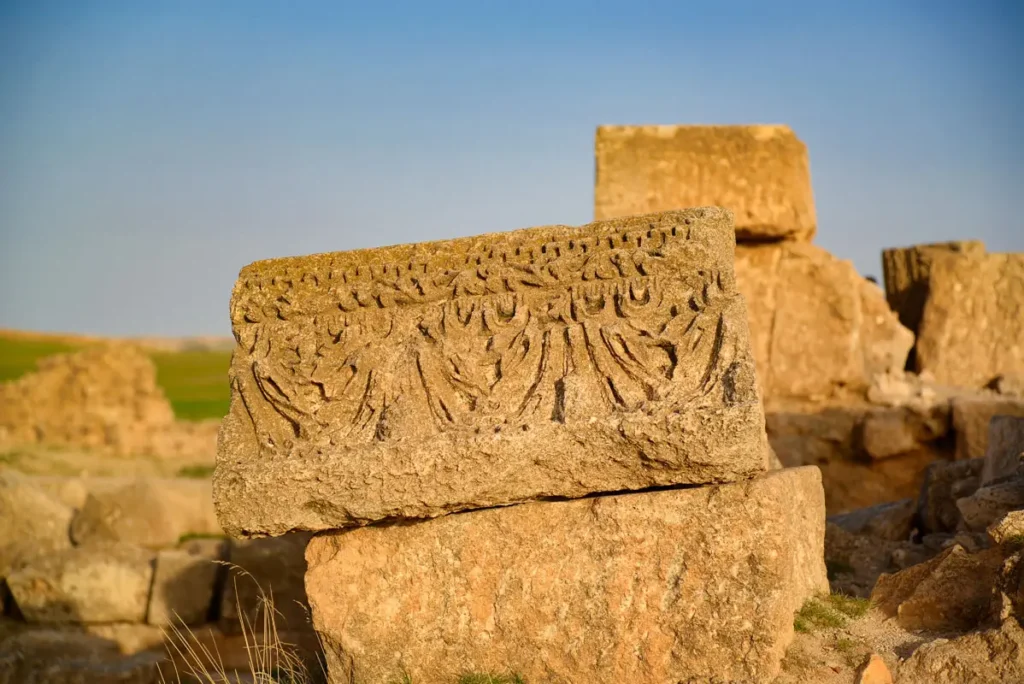
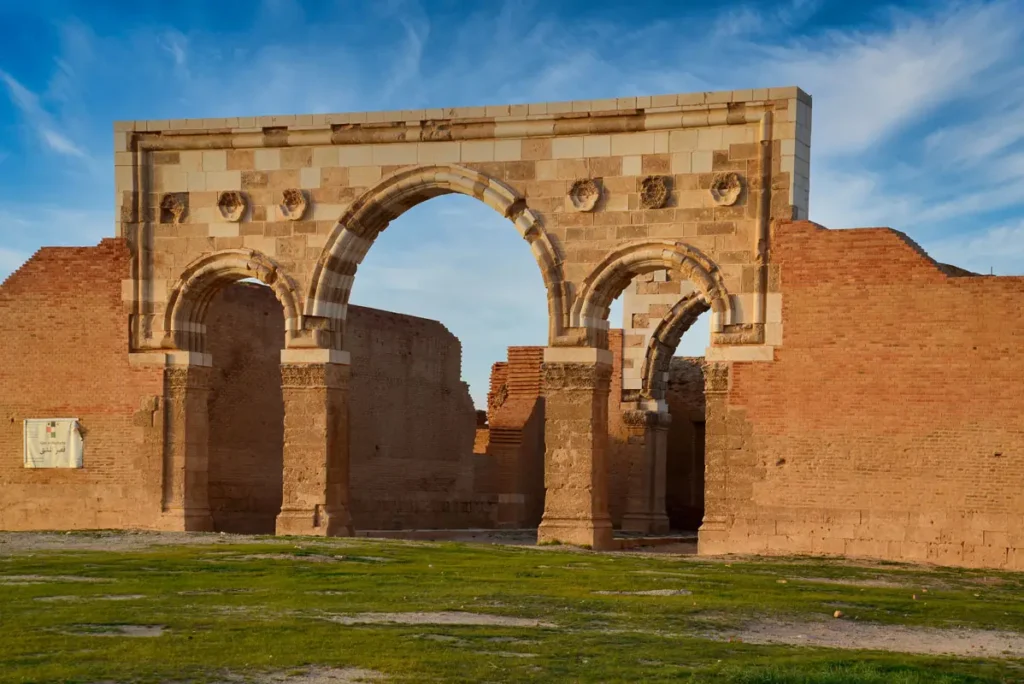
The enclosure has a single gate in the middle of its south wall, flanked by two semi-octagonal towers. On either side, the central part of the façade was carved with a zigzag band forming triangles, each with a large rosette, among vines, acanthus, animals and figures. Most of the carved section is in Berlin, but stones from it remain on site.
Just inside, the gateway block held a small mosque on the east side, with a mihrab in its south wall, and rooms on the west. Its mihrab and carved façade survive.
Carved façadeSingle gateRosettes and vinesGateway mosque
Look for
- Carved blocks that stayed in Jordan
- The mosque’s mihrab and carved façade
- The semi-octagonal towers beside the gate
Dig deeperHow the façade went to Berlin
Sultan Abdülhamid II gave the carved façade to Kaiser Wilhelm II. In 1903 about three quarters of it was cut from the wall and shipped via Beirut to Berlin, where it went on show in 1904 and later in the Pergamonmuseum. A bomb damaged it in the Second World War, and it was restored in the 1950s.
The Pergamonmuseum has been closed for refurbishment since October 2023. Its north wing, with the Mshatta façade, is due to reopen on 4 June 2027.
 1 / 6
02 · The great court
Cross the great courtyard
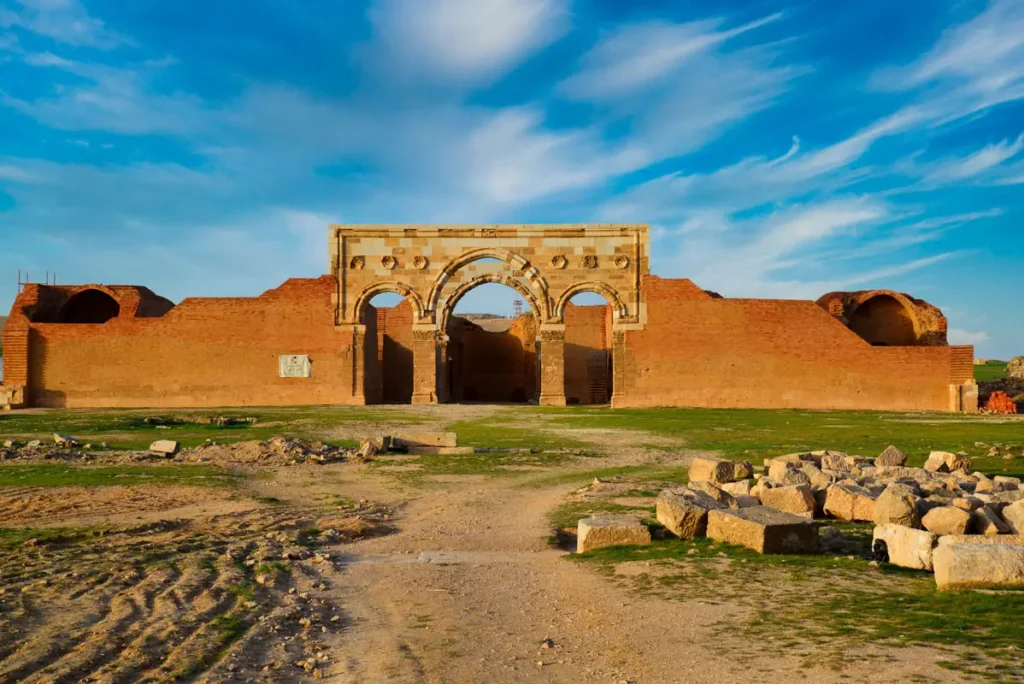
Beyond the gateway, a large open court stretches towards the main building. The enclosure was divided into three strips running north to south, but only the central one was ever built, and even that only partly. The side strips stayed empty.
Pause halfway across and look back at the gate, then ahead to the triple arch. The distance was part of the ceremony: visitors approached the caliph slowly, across open ground.
Open courtCentral stripUnfinished side stripsCeremonial approach
Look for
- The triple arch ahead of you
- The empty side areas that were never built
- The airport runway just beyond the walls
 1 / 6
03 · The main entrance
Stand under the triple arch
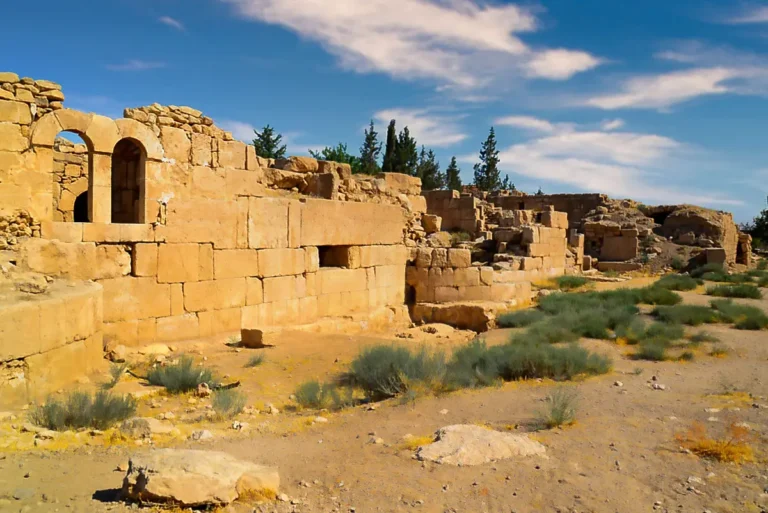
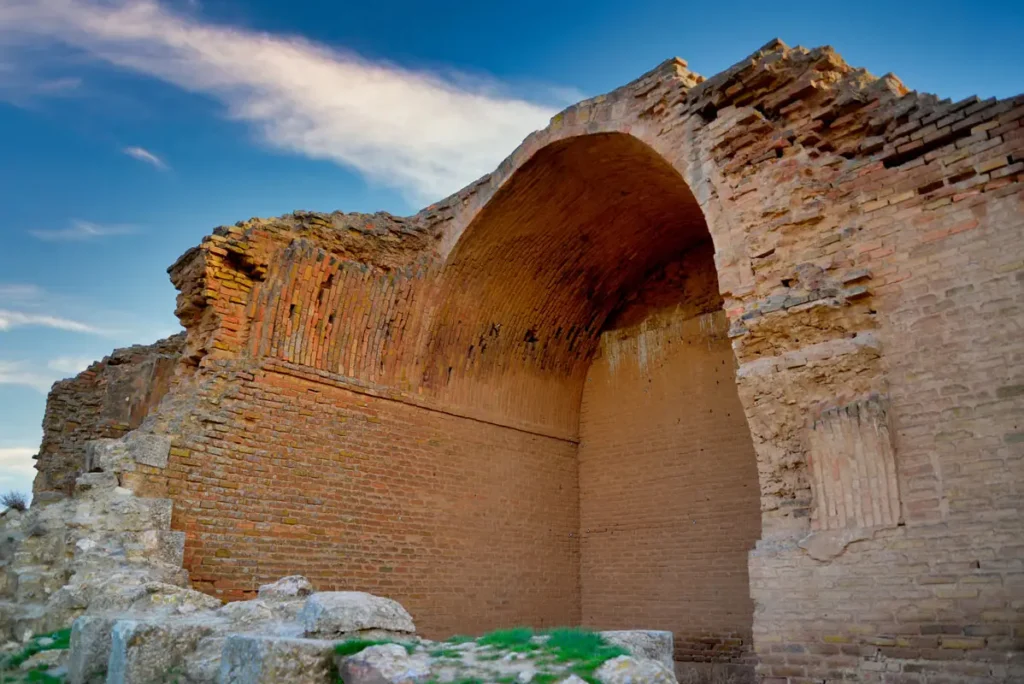
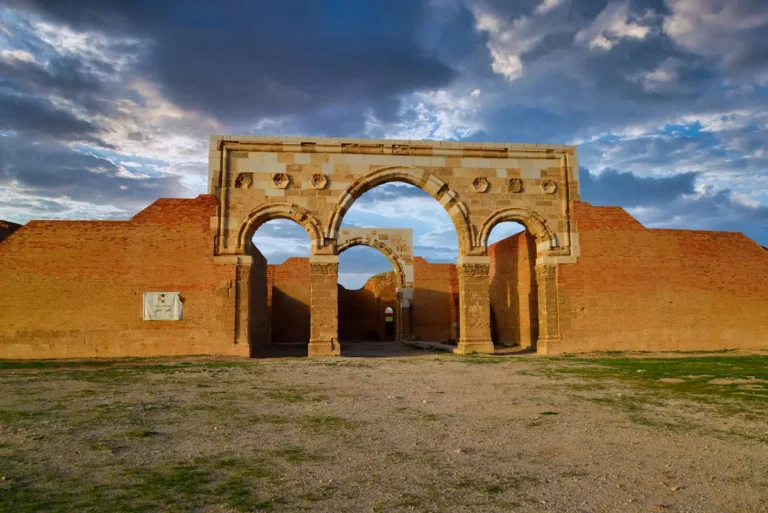
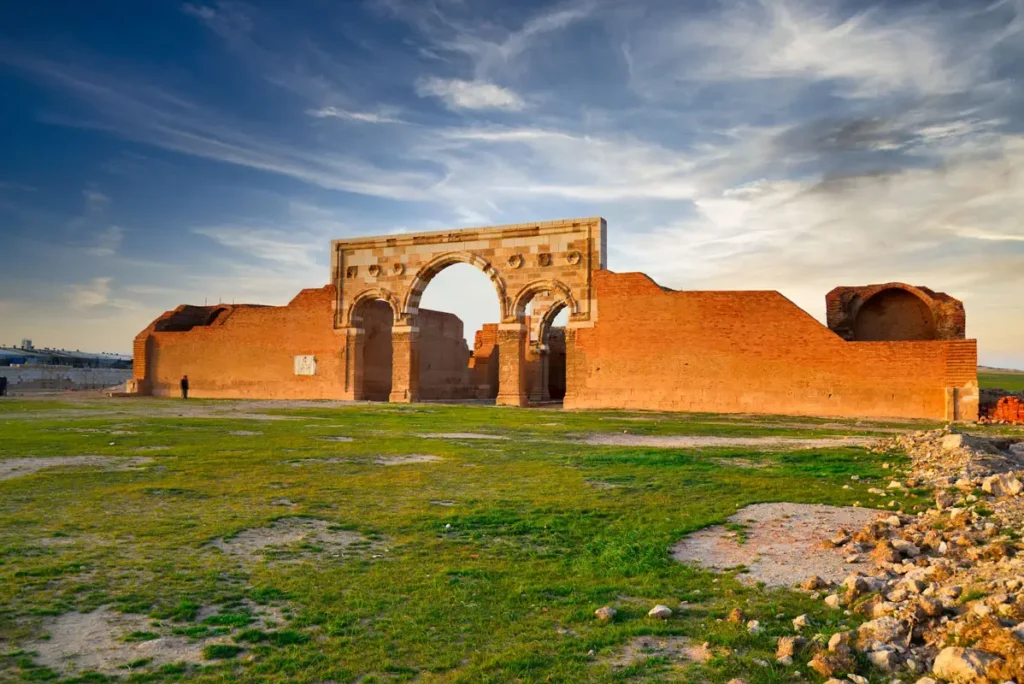
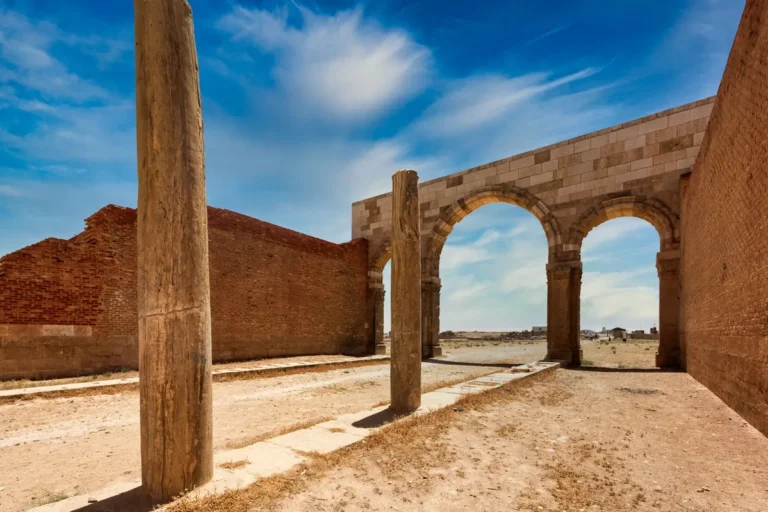
The main building opens with a triple-arched entrance into a three-aisled, columned hall. Stone columns and footings carry walls and arches of fired brick. The arches were re-erected from original material during the German–Jordanian project of 2009–2014.
Walk through the arches into the hall and look back towards the courtyard and gate: the view lines up along the whole length of the palace.
Triple archThree-aisled hallStone and fired brickRe-erected 2009–2014
Look for
- The capitals of the stone columns
- Where stone gives way to brick
- The view back to the gate
Dig deeperRescuing Mushatta
From 2009 to 2014 the Department of Antiquities, TU Berlin and the Museum für Islamische Kunst documented the whole site, recorded about 5,500 inscriptions and graffiti, re-erected the arches, repaired 150 m of the west wall and installed visitor information.
The palace was handed back to the Department of Antiquities on 18 May 2014.
 1 / 9
04 · Throne room and suites
Find the throne room and suites
At the end of the hall lay the throne room, with three apses (a triconch) under a brick vault and dome. On either side, four barrel-vaulted residential suites (bayts) were laid out for the caliph’s household.
Look at the brick vaults and the stairs and doorways of the suites. Concealed air ducts have been noted in the walls, probably for ventilation.
Triconch throne roomBrick vaultsFour suitesVentilation ducts
Look for
- The curve of the apses
- Barrel vaults in the suites
- The stairs and doorways between the suites
Dig deeperWho built it?
No building inscription survives. The attribution to al-Walid II (r. 743–744) is the scholarly consensus, supported by a brick with the name of Sulayman ibn Kaysan, active around 730–750; some scholars have argued for Yazid II instead.
Work stopped when al-Walid II was murdered in 744. The palace was probably damaged by the earthquake of 749, and recent research found a short later occupation of about fifty years.
 1 / 8
05 · Outer walls
Walk the walls and towers
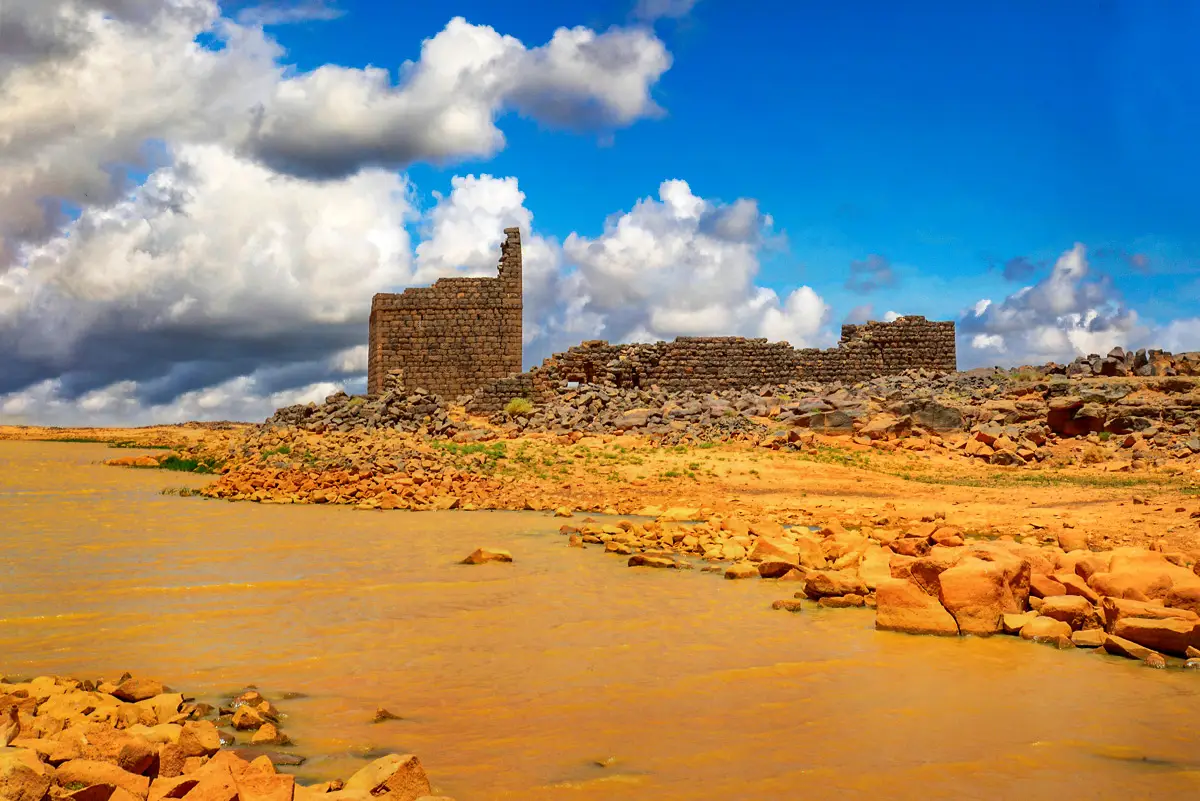
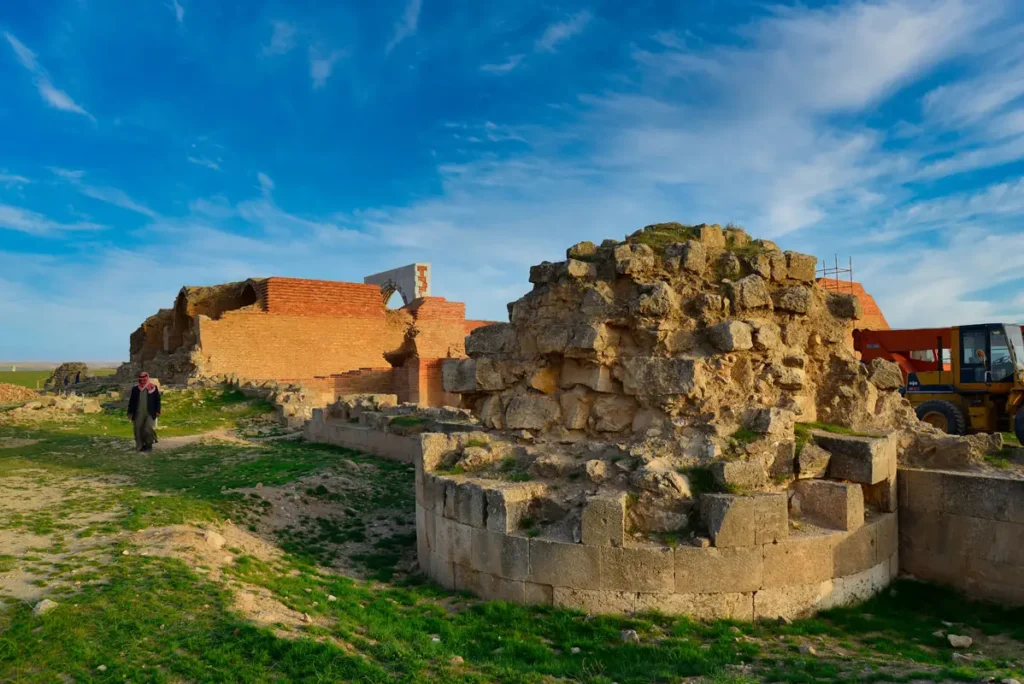
Walk along part of the outer wall. It runs 144 m on each side, 1.7 m thick, with 25 towers: four round towers at the corners and mostly semicircular ones along the sides. All are solid except four that held latrines.
The walls stand 3–5.5 m high: stone below, orange fired brick above. In the long evening light the brick glows warm against the sky.
25 towers144 × 144 mFired brickLatrine towers
Look for
- A corner tower
- The stone footings under the brick
- The repaired section of the west wall
History & significance
The palace that ran out of time
Mushatta was begun around AD 743–744, probably for the caliph al-Walid II, and abandoned unfinished when he was killed. Twelve centuries later, its most famous wall travelled to Berlin.
- c. 743–744Begun, probably for al-Walid II
- 744Work stops after his murder
- 1903Façade shipped to Berlin
- 2009–14German–Jordanian restoration
 ProfileQasr Al-Mushatta: the full storyHistory, architecture, the timeline and the story of the façade in Berlin. About 3 min read.Read the profile →
Plan your visit
Everything you need to know before you go
Qasr Al-Mushatta lies just north of the airport’s north runway and is reached by a road round the airport perimeter, with security checkpoints. It is close to Amman, but you need your own car or a taxi.
Good to know: take your passport. It’s always good to carry it while travelling in Jordan, and the road passes airport security checkpoints.
Opening hoursOpen dailyWinter 8:00–16:00 · April–May 8:00–17:30 · Ramadan 9:00–17:00
Entry ticketFreeFree for everyone at present (2026)
Time to visit20–30 minLonger if you walk the outer walls
From Amman30 kmAbout 45 minutes south via the airport road
LocationQueen Alia Airport31.7383° N, 36.0104° EGet directions
Opening hours and prices checked October 2026. Spotted a change? Let us know
On site
What you’ll find at Qasr Al-Mushatta
Not on site: visitor centre, ticket office, toilets, designated parking, museum, guide, food & drinks, market / shop, hotels
Access: no 4x4 needed
When to go
Spring and autumn are the most comfortable. There is almost no shade on the site.
J
F
M
A
M
J
J
A
S
O
N
D
BestGood, cooler or warmVery hot
Tip: come in the last hour before closing, when warm light brings out the colour of the brick and the depth of the carving.
Before you go
Services are limited out in the desert.
- Water and snacksNothing to buy at the site
- Sun hat and sunscreenVery little shade outside
- Comfortable shoesUneven, stony ground
- Your passportFor the airport checkpoint
- Toilet paperBring your own, just in case
Common questions
Quick answers before you set off.
Is Qasr Al-Mushatta included in the Jordan Pass?
It is listed in the Jordan Pass, but at present (2026) entry is free for everyone.
Do I need my passport?
Yes. It’s always good to carry your passport while travelling in Jordan, and the road to the palace passes airport security checkpoints.
Where is the famous façade?
About three quarters of the carved south façade is in Berlin. The Pergamonmuseum, where it is displayed, is due to reopen its north wing on 4 June 2027.
Was the palace ever finished?
No. Work stopped when al-Walid II was killed in AD 744, and only the central part of the enclosure was ever built.
Can I combine it with the other desert castles?
Yes. It is a natural first stop on a desert-castles day, and our Best of Desert Castles tour starts here.
What should I wear?
Comfortable, closed shoes for uneven ground, and light clothing that covers your shoulders and knees, which is respectful in rural Jordan and protects you from the sun.
Combine with
Mushatta is close to Amman and makes a natural first stop on a desert-castles day. Drive times are from Qasr Al-Mushatta.
1 Qasr Al-QastalUmayyad palace10 km · ~15 min drive2
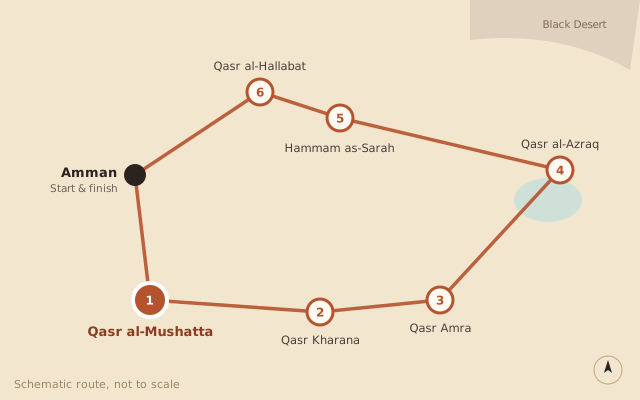
 Qasr KharanaUmayyad castle60 km · ~1 hr drive · Tour 13Qasr AmraUNESCO frescoes84 km · ~1 hr 20 min drive · Tour 14Qasr Al-MuwaqqarUmayyad palace and reservoir33 km · ~45 min drive5Qal’at Dab’aHajj fort40 km · ~40 min drive6Qasr Al-AbdHellenistic palace40 km · ~45 min drive
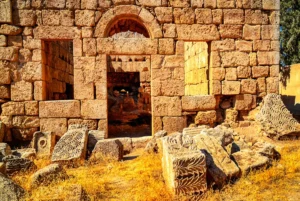 Qasr Al-QastalUmayyad palace10 km · ~15 min drive2
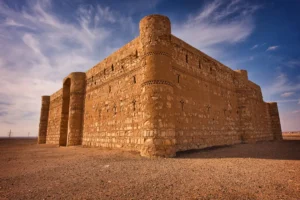 Qasr KharanaUmayyad castle60 km · ~1 hr drive · Tour 13
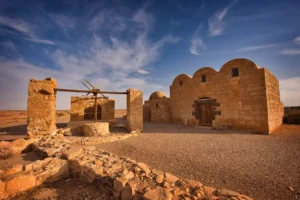 Qasr AmraUNESCO frescoes84 km · ~1 hr 20 min drive · Tour 14
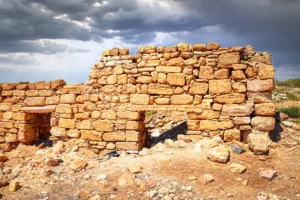 Qasr Al-MuwaqqarUmayyad palace and reservoir33 km · ~45 min drive5
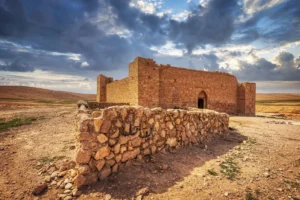 Qal’at Dab’aHajj fort40 km · ~40 min drive6
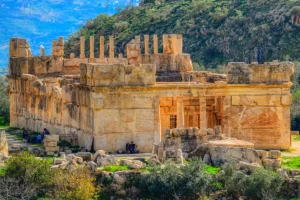 Qasr Al-AbdHellenistic palace40 km · ~45 min drive
Tour 1 Best of Desert Castles. Compare the tours
Private tours
A private day tour that includes Qasr Al-Mushatta
The tour is just for you: your own vehicle and driver, hotel pickup in Amman, entry tickets included, and one fixed price for up to three travellers.
Private: only your group
Your own vehicle & driver
Hotel pick-up in Amman
Entry tickets included
 from$150per group (1–3) · 105 JOD
Tour 1 · Full day · Private
Best of Desert Castles Private Full-Day Tour
Step into the fascinating world of the early Islamic period on this private full-day journey to Jordan’s remarkable Desert Castles. Scattered across the eastern desert, these mysterious complexes date largely to the 8th century and reflect the artistic and architectural brilliance of the Umayyad era.
HistoryArchitectureCultureArt6 Desert Castles
Duration7–8 hr
Pick-up8 or 9 AM
Group1–3, private
Included
- Private luxury transfer
- Entrance fees
- Bottled water, soft drinks, snacks
- Coffee/tea (on request)
- WiFi, Phone charger
Not included
- Professional on-site (local) guide
- Personal expenses
- Lunch
CancellationFull refund if you cancel at least 24 hours before the start. No refunds or changes within 24 hours.
Pick-upFrom your hotel lobby or home in Amman, 5 minutes before your chosen start time.
BringComfortable shoes, sun hat, sunblock and sunglasses. Tours run in English.
Explore this site
More from Qasr Al-Mushatta
Panoramas, walk-throughs, photos and stories about this site.
ProfileQasr Al-Mushatta: history & architecture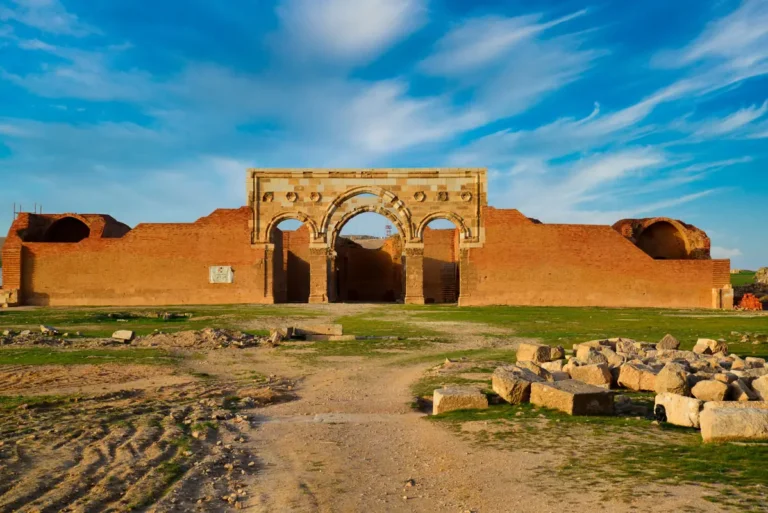 Photo albumQasr Al-Mushatta: The Unfinished Winter Palace in Photos
 360°360° panoramaQasr Al-Mushatta: 360° Panorama
Nearby