

A Nabataean village and sanctuary in a spring-fed valley beside the King’s Highway
Travellers and pilgrims found water, lodgings and a temple crowned with the signs of the zodiac.
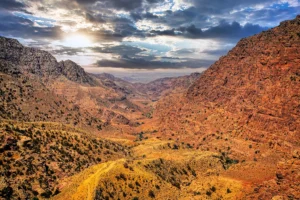
In a green valley fed by springs, beside the old road from Petra to Damascus, stand the ruins of a Nabataean village and its sanctuary. Khirbet edh-Dharih lies in Wadi al-La’aban beside the King’s Highway, north-east of Tafila, about 7 km south of the hilltop temple of Khirbet et-Tannur.
Around AD 100 the village was rebuilt on a grand scale, with a decorated temple, a caravanserai and baths. Its temple façade carried a frieze of the zodiac, now in The Jordan Museum in Amman. The site is fenced, with a gate but no guard or ticket office, and entry is free.
Five things to look for at Khirbet edh-Dharih
Dharih is a quiet ruin in a green valley. These are the places that make the visit.
 01 / 05
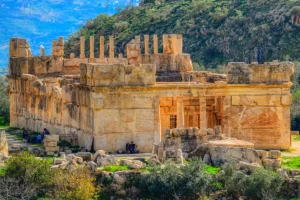
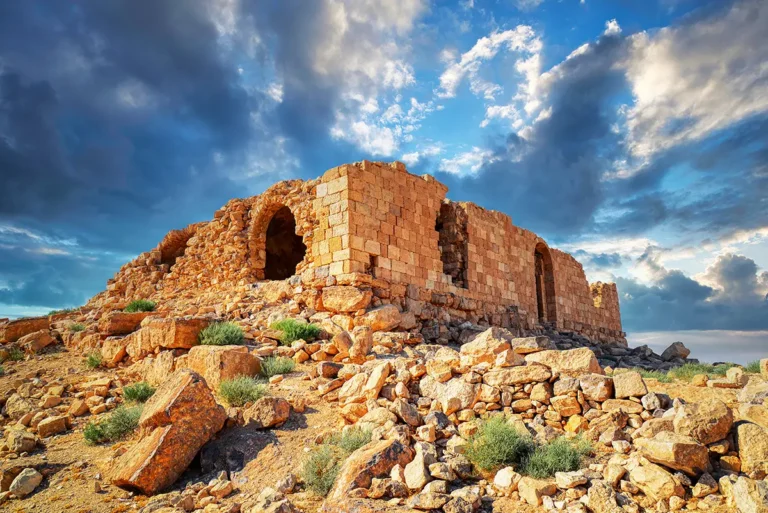
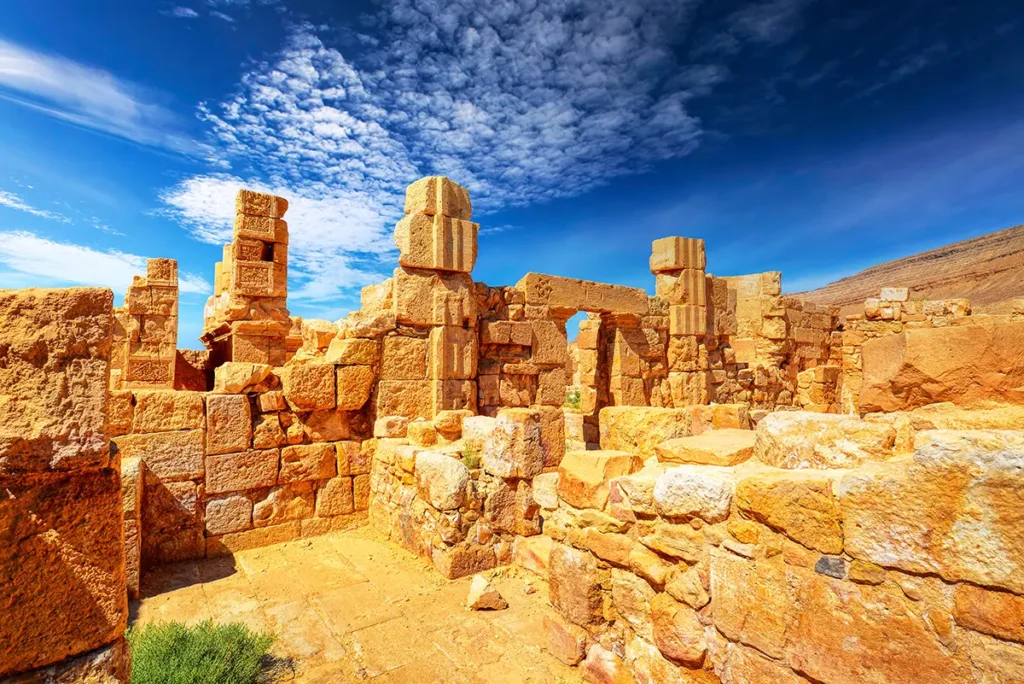
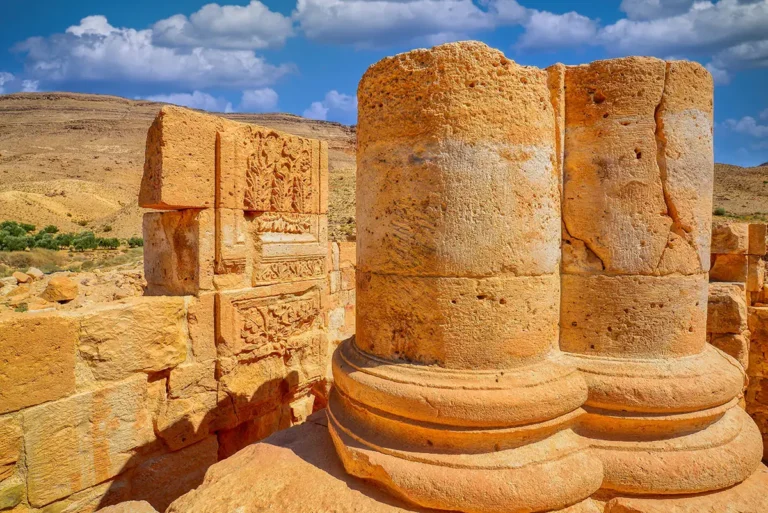
A temple about 15 m high, partly reassembled from its original blocks.
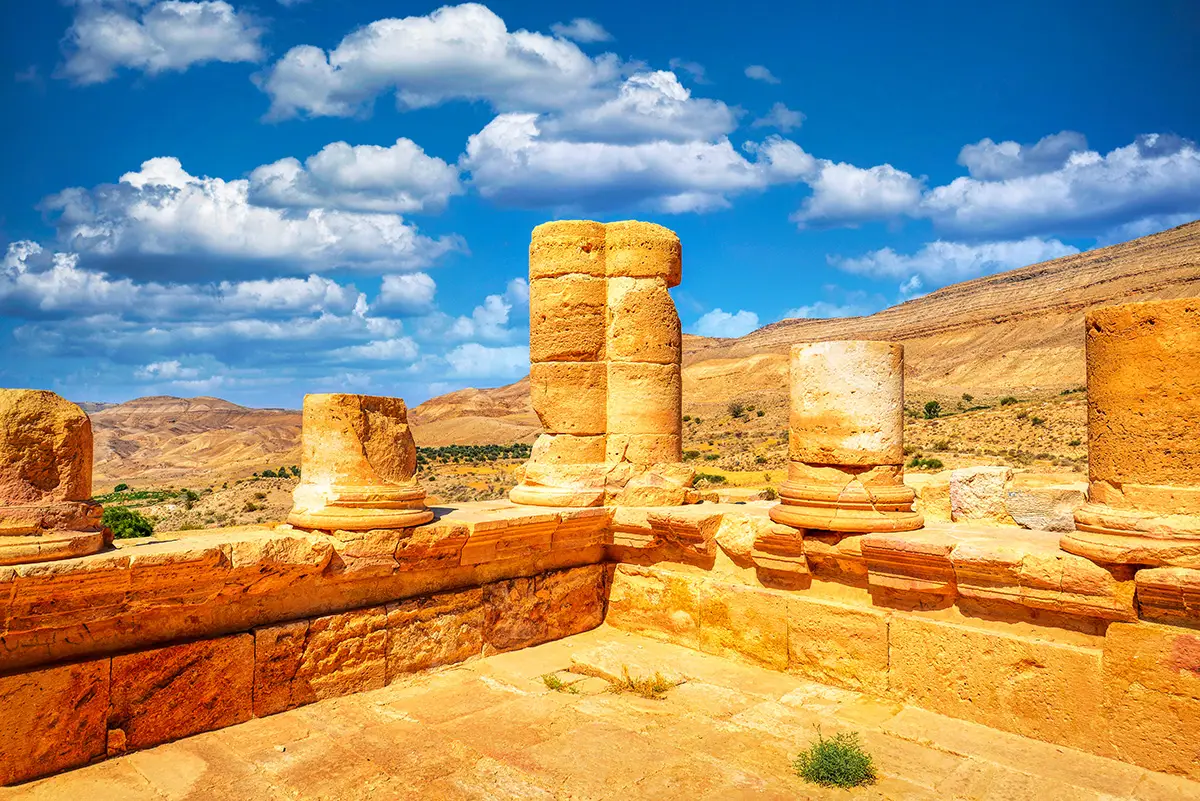
The reassembled columns.
Five parts of the visit: the temple, the central platform, the village around it, the olive press and the carved decoration. Pick one to see what to look for.
1 / 6The sanctuary, about 110 × 45 m, is laid out in successive courtyards leading to the temple, which stood about 15 m high. Its outer form was classical, but its decoration was local.
Parts of the temple were reassembled from their original blocks by the French–Jordanian mission that excavated the site from 1984 to 2013.
The deity worshipped at Dharih is not known. In the 6th century Christians resettled the village and turned the temple into a church.
 1 / 4
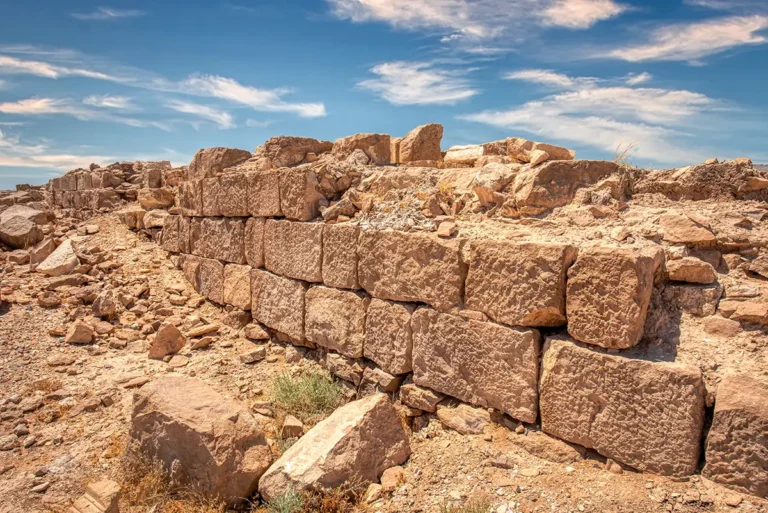
Inside the temple, a raised platform about 6.8 m square was surrounded by columns with lion-headed capitals.
Look for the column drums and bases still in place around it.
 1 / 6
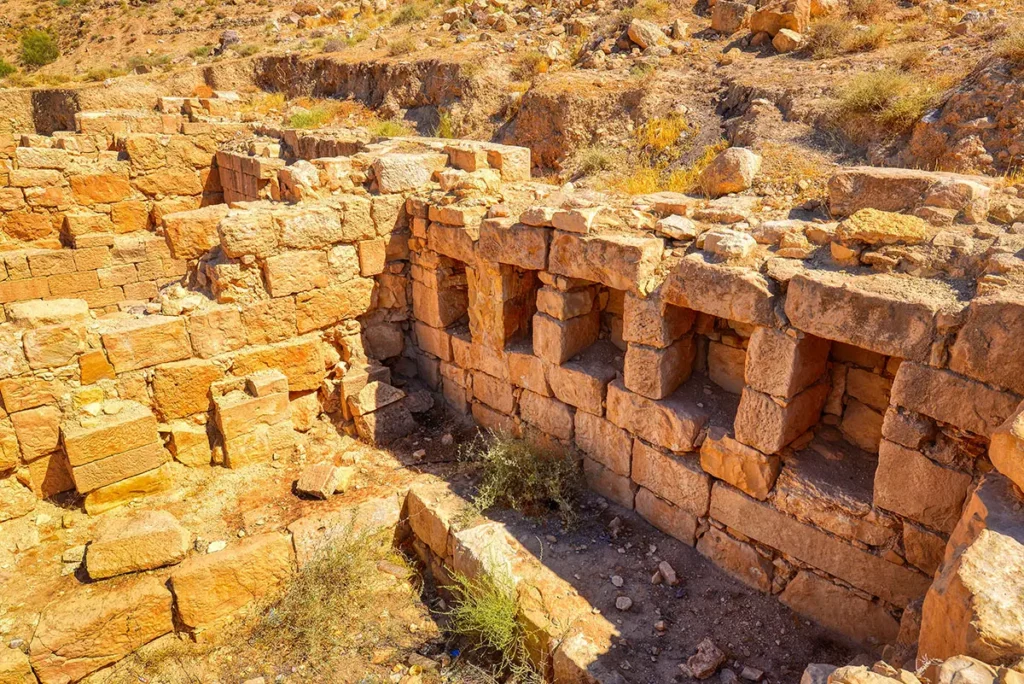
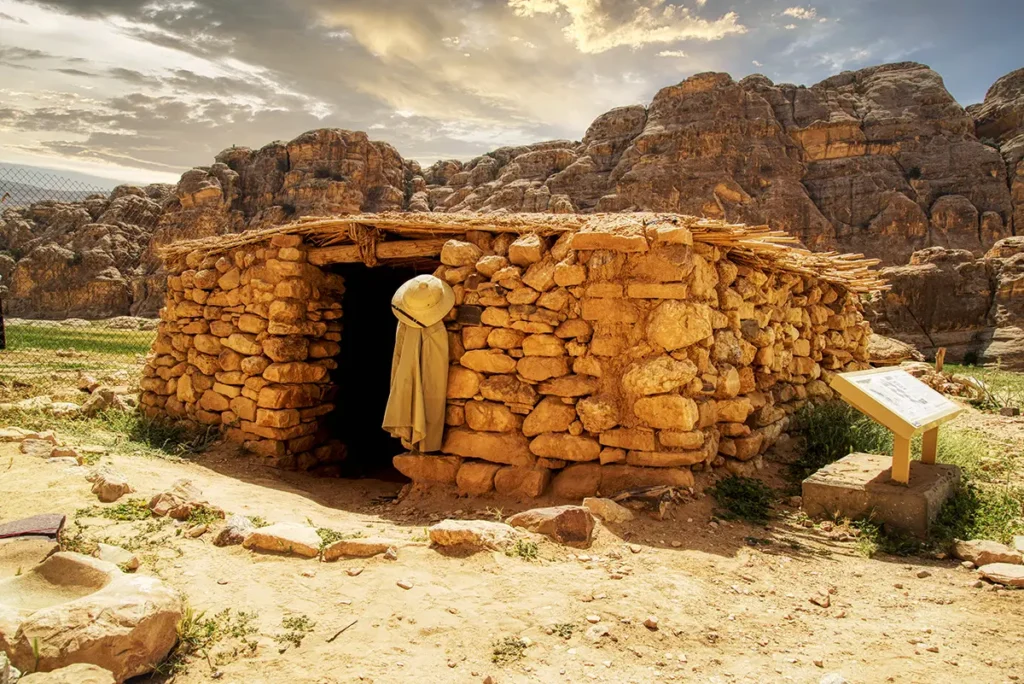
Around the sanctuary lay a caravanserai of about 30 × 20 m with shops and stables, a heated bath, about 20 houses and two cemeteries.
Dharih was the third caravan stop north of Petra on the road to Damascus, and pilgrims to Khirbet et-Tannur probably stayed here.
 1 / 4
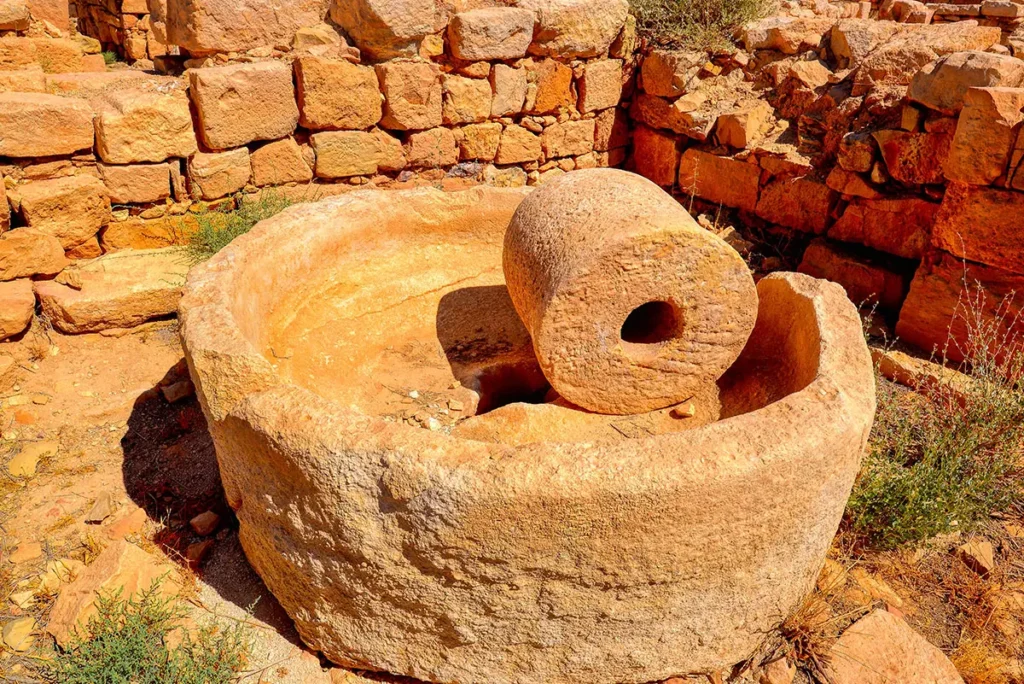
Houses in the village had olive presses, and a large press stone still lies in place.
Around AD 700 the site became a Muslim estate, until an 8th-century earthquake.
 1 / 4
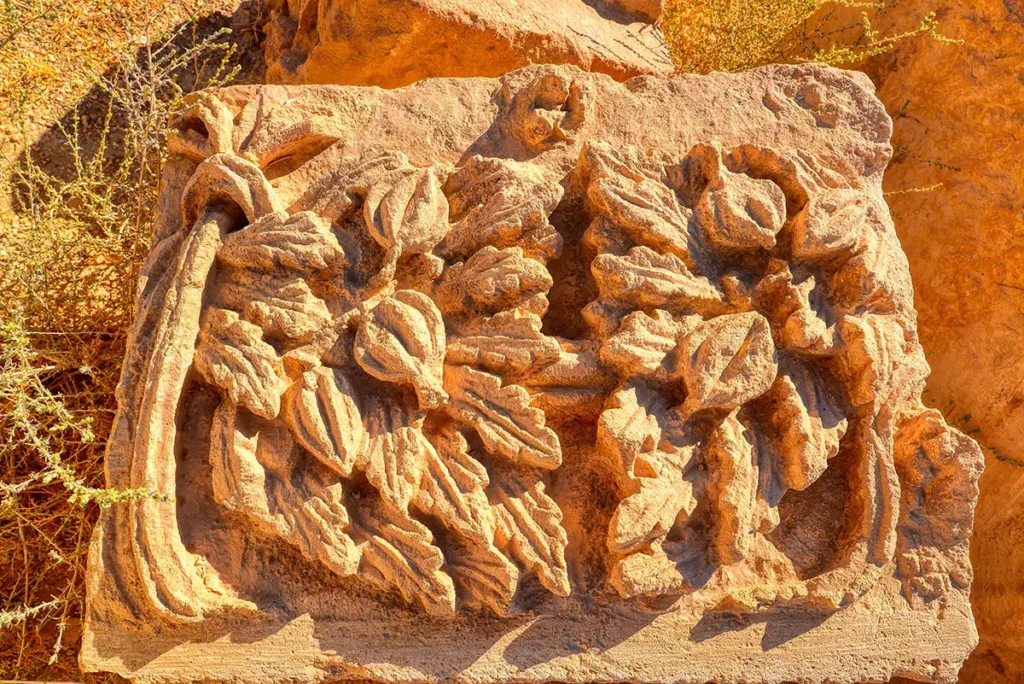
The temple façade carried a frieze of the signs of the zodiac, each crowned by a winged Victory. Taurus, Gemini, Cancer, Libra and part of Sagittarius survive and are now in The Jordan Museum in Amman.
On site, carved blocks show the same plant scrolls and mouldings.
A Nabataean village grew up here in the late 1st century BC and was rebuilt on a grand scale around AD 100. Abandoned after the earthquake of AD 363, it was resettled by Christians and later became a Muslim estate.
 ProfileKhirbet edh-Dharih: the full storyThe history, the zodiac frieze and the village of Khirbet edh-Dharih.Read the profile →
The site lies in Wadi al-La’aban beside the King’s Highway, north-east of Tafila, about 7 km south of Khirbet et-Tannur. It is fenced, with a gate but no guard or ticket office.
Opening hours and prices checked October 2026. Spotted a change? Let us know
What you’ll find at Khirbet edh-Dharih
Not on site: visitor centre, ticket office, toilets, museum, guide available, food & drinks, hotels, market / shop · Access: 4x4 needed
October to May is best; the valley is green in spring.
There are no services at the site.
Quick answers before you set off.
No. The site is fenced, with a gate but no guard or ticket office, and entry is free.
The surviving signs of the zodiac are in The Jordan Museum in Amman.
About 30–40 minutes. Combine it with Khirbet et-Tannur, about 7 km to the north.
Yes. Khirbet edh-Dharih is a stop on our King’s Highway tour from Amman to Petra.
Dharih is on the King’s Highway between Karak and Tafila. Drive times are from Khirbet edh-Dharih.
The tour is just for you: your own vehicle and driver, hotel pickup in Amman and entry tickets included. The price depends on how many travellers there are, up to three.
 from$330per group (1–3) · 235 JOD
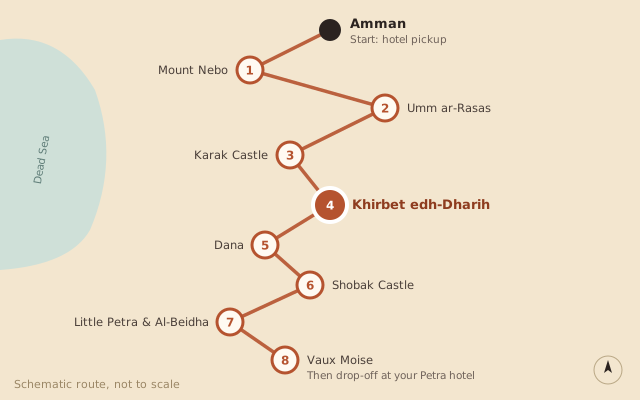
While Petra and Amman are among Jordan’s most famous destinations, the journey between them along the historic King’s Highway is filled with extraordinary landscapes, ancient monuments, and hidden archaeological treasures. This private one-way tour transforms a simple transfer into an unforgettable full-day exploration of Jordan’s history, culture, and natural beauty.
Panoramas, walk-throughs, photos and stories about this site.
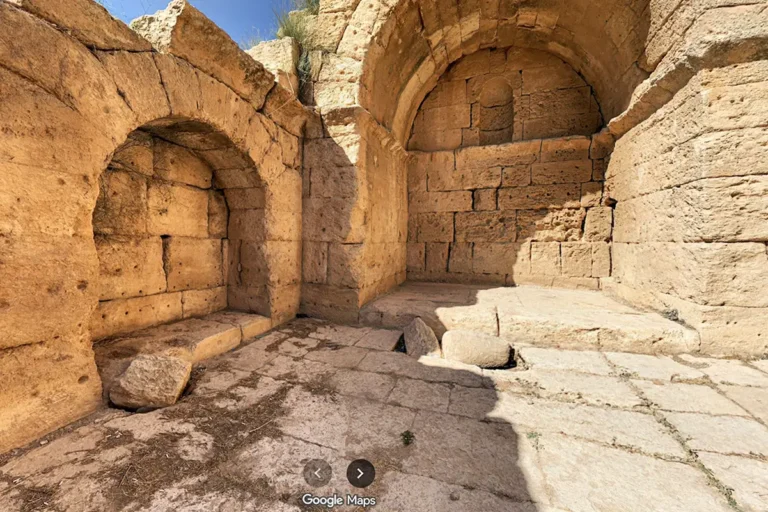
 360°360° panoramaRuins of Khirbet Edh-Dharih in 360°
 Photo albumKhirbet edh-Dharih: A Nabataean Sanctuary in PhotosProfileKhirbet edh-Dharih: history & architecture