














Amman Citadel
A hilltop city in the middle of Amman, with a Roman temple, a Byzantine church and an Umayyad palace
OccupiedSince the Bronze Age
Stops15 to explore
LocationCentral Amman
AccessRoad and parking
Travel GuidesBronze AgeByzantine PeriodCrusader and Ayyubid PeriodIron AgeRoman PeriodUmayyad PeriodJordan PassPart of Jordan’s Roman Cities And Forts
Introduction
A hill where every age of Amman left a building.
The Amman Citadel stands on Jabal al-Qal’a, an L-shaped hill above downtown Amman that was once one of the seven hills of the city. People have used it since the Bronze Age, and its ruins span the Iron Age, the Roman, Byzantine and Umayyad periods and the Ayyubid tower on its southern edge.
The visit is a walk through the open-air ruins: a Roman temple with giant columns, a Byzantine church, and a palace complex built by the Umayyad governors of Amman, with a mosque, a souk, a reception hall, a bath house and courtyard houses. The Archaeological Museum and its sculpture garden end the route, and the views reach across the whole of downtown.
Best timeOct–Apr
Time needed2–3 hr
Ticket3 JOD · Jordan Pass
From AmmanDowntown Amman
Combine withRoman Theatre, Amman · 15 min
Google rating4.5 · Reviews
Highlights · A hilltop city
Six things not to miss on the Citadel
A temple, a church, a palace and a museum
The Citadel has 15 stops. If your time is short, these are the places that make the visit.
 01 / 06
01 · Roman
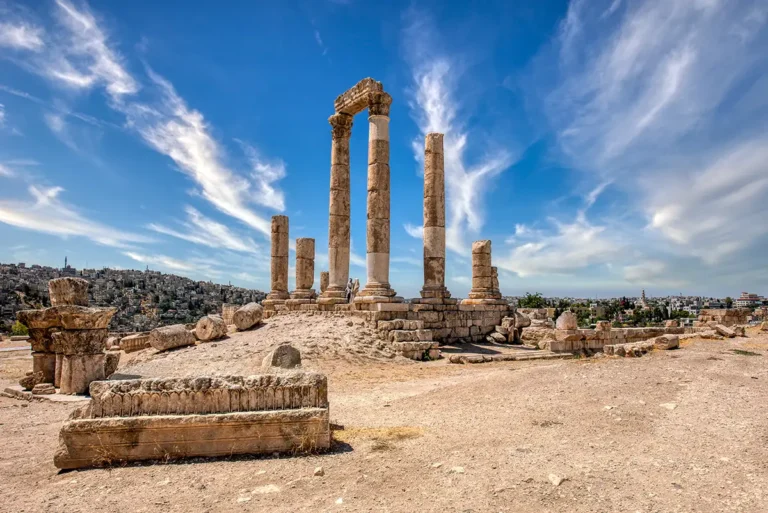
The Temple of Hercules
Temple of Hercules
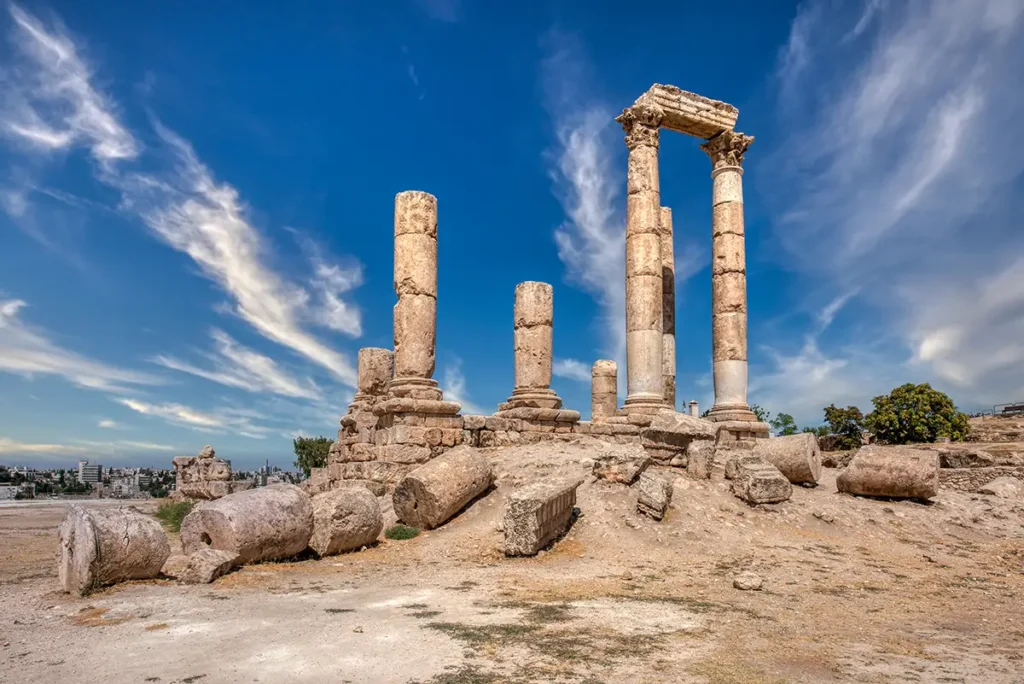
A 2nd-century Roman temple with giant restored columns, standing in a large precinct.
Look closely
The inscribed architrave on the restored columns.
1 of 6
Stop by stop
What to see
Fifteen stops in route order, in six groups: the first stops, the Temple of Hercules, the church and the mosque, the Umayyad complex, the palace precinct and the museum. Pick a group to see what to look for.
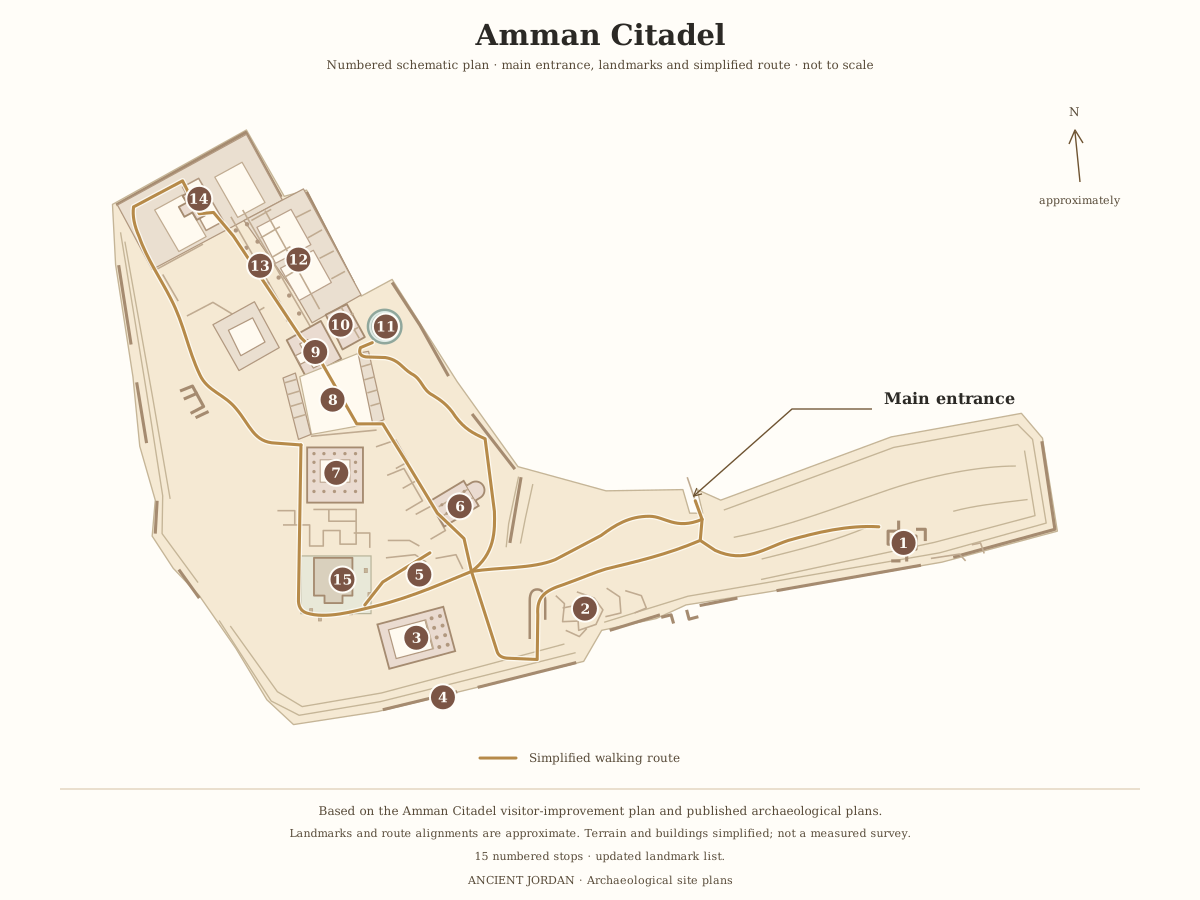 1Ammonite Palace2Byzantine Residential Complex3Temple of Hercules4Ayyubid Watch Tower5Bronze Age Cave6The Byzantine Church7The Umayyad Mosque8Courtyard & Souk9Reception Hall10Umayyad Bath House11The Open Reservoir12Umayyad Residential Units13Colonnaded Street14The Umayyad Palace15Archaeological Museum & Sculpture Gardens
All 15 monuments on the map
- 1Ammonite Palace
- 2Byzantine Residential Complex
- 3Temple of Hercules
- 4Ayyubid Watch Tower
- 5Bronze Age Cave
- 6The Byzantine Church
- 7The Umayyad Mosque
- 8Courtyard & Souk
- 9Reception Hall
- 10Umayyad Bath House
- 11The Open Reservoir
- 12Umayyad Residential Units
- 13Colonnaded Street
- 14The Umayyad Palace
- 15Archaeological Museum & Sculpture Gardens
 1 / 8
01 · The entrance and the south side
Start at the Ammonite Palace
The first stop is the Ammonite Palace on the lower terrace, about 100 m to the left of the main entrance. The Iron Age building, which may have been the palace of the Ammonite kings, has a plastered courtyard, massive walls and double-faced stone heads found in its rooms.
The second stop is on the south side of the Citadel, beside the Southern Gate: a group of Roman, Byzantine and Umayyad houses that includes a Byzantine villa with mosaic floors.
Iron AgeStone headsByzantine villaMosaic floors
Look for
- The excavated walls and white plaster patches of the Ammonite Palace
- The mosaic floors of the Byzantine villa
- Doorways and rooms that show signs of a second floor
Read the full story
Dig deeperA royal palace?
Visitor maps call the Iron Age building the Ammonite Palace, but its royal function is still under investigation.
1 / 802 · Roman temple, Ayyubid tower and Bronze Age tombs
Climb to the Temple of Hercules
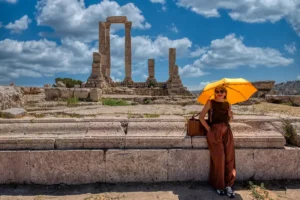
The Temple of Hercules, dedicated in the 2nd century AD, is the best-known landmark of the Citadel. Its giant restored columns stand in a large precinct.
Just south of the temple is the Ayyubid Watch Tower, which reuses Roman temple stone, and about 25 m north of it is the Bronze Age Cave, the oldest part of the Citadel. The tower and the cave are closed to visitors, so you see both from outside.
AD 166Giant columnsAyyubid towerBronze Age tombs
Look for
- The restored front columns and the inscribed architrave
- The Roman stone reused in the south facade of the watch tower
- The iron grille across the entrance of the cave
Read the full story
Dig deeperStone that was used again
Builders took stone from the Roman temple for later buildings: the Ayyubid Watch Tower has temple stone in its south facade, and the Byzantine church was built with it too.
 1 / 8
03 · Byzantine and Umayyad
Visit the church and the mosque
North of the temple stands the Byzantine Church, a 5th-century basilica and one of the oldest churches in Amman, with standing columns, a mosaic nave and stone reused from the Temple of Hercules.
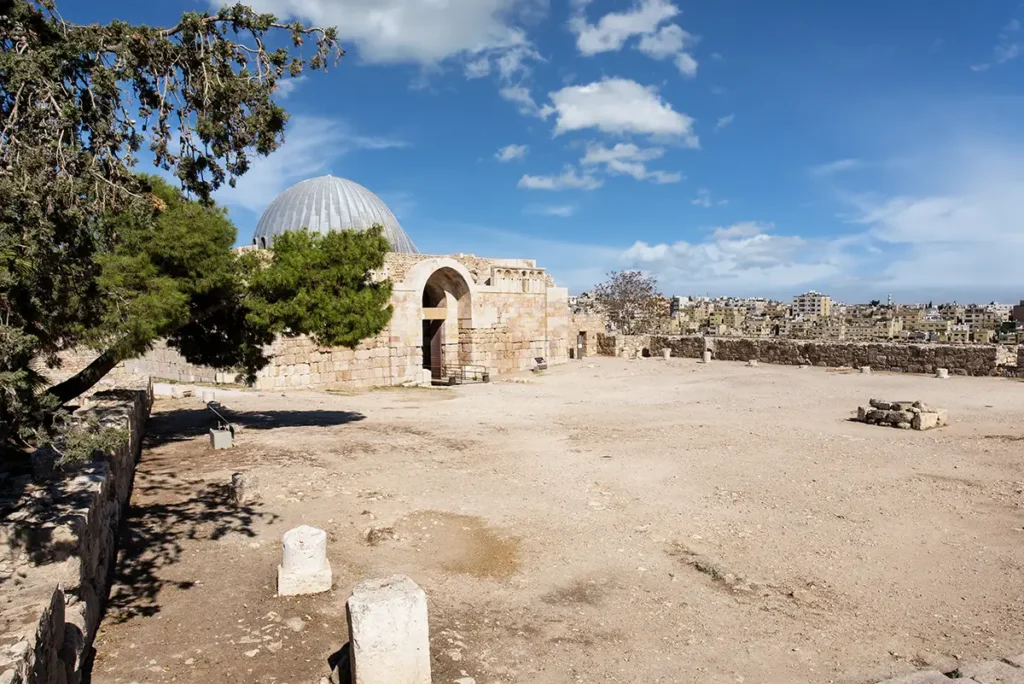
Further on, at the highest point of the Citadel, the Umayyad Mosque is a large hypostyle building. Its column bases show seven rows of six columns around an open courtyard.
5th c. ADMosaic naveHypostyle mosqueOpen courtyard
Look for
- The standing columns and the mosaic nave of the church
- The reconstructed entrance facade of the mosque
- The column bases of the prayer hall
Read the full story
 1 / 8
04 · Souk, hall, bath house and reservoir
Walk through the Umayyad complex
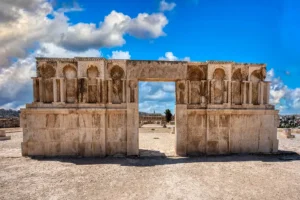
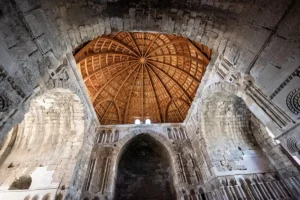
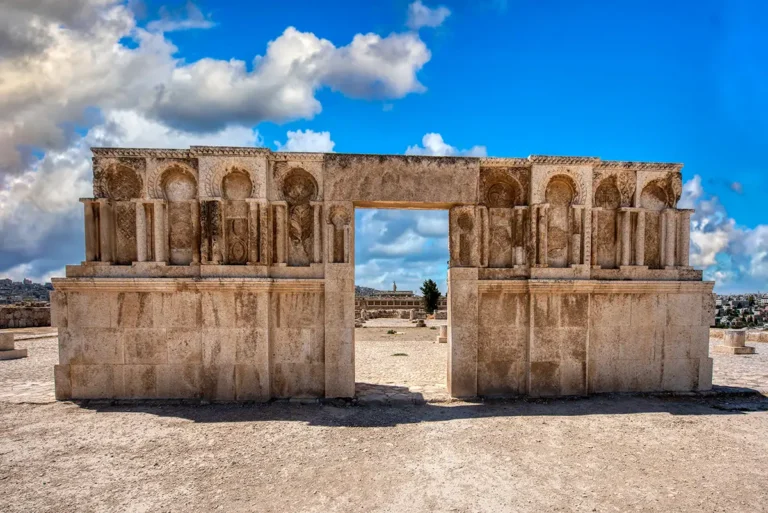
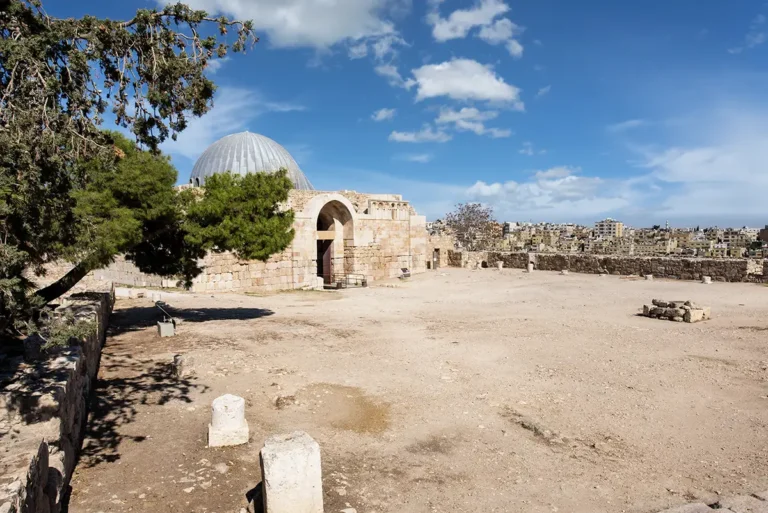
North of the mosque, the Courtyard & Souk was the open market square of the Umayyad complex, lined by rows of small shops. At its northern end the Reception Hall, with its domed cruciform plan and restored arched facade, was the entrance hall of the palace.
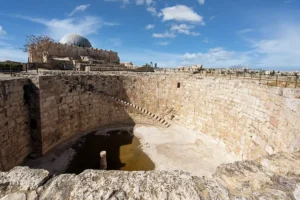
East of the hall are the Umayyad Bath House, which is closed to visitors and seen from outside, and the large circular Open Reservoir, which stored rainwater for the palace.
Early 8th c. ADShopsDomeBath houseReservoir
Look for
- The rows of shop rooms along the courtyard
- The dome and the restored facade of the Reception Hall
- The round walls of the reservoir
Read the full story
Dig deeperThe great tank
The Open Reservoir is about 17.5 m across and 7 m deep. According to the site board, it could hold about 1,700 cubic metres of water.
 1 / 8
05 · Houses, street and throne room
Follow the colonnaded street to the palace
Around the Reception Hall, nine Umayyad courtyard houses, the Umayyad Residential Units, stand on both sides of the Colonnaded Street, a paved route about 50 m long.
The street leads to the Umayyad Palace, the northern official precinct, where a courtyard, an iwan and a cruciform throne chamber served the governor.
Courtyard houses50 m streetIwanThrone chamber
Look for
- The arched doorways of the courtyard houses
- The raised walkways and column sections of the street
- The surviving patch of mosaic in the palace
Read the full story
Dig deeperAD 748–749
A major earthquake devastated the palace complex and ended its original monumental arrangement.
 1 / 8
06 · The end of the route
End at the Archaeological Museum
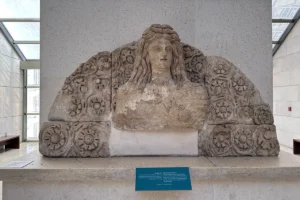
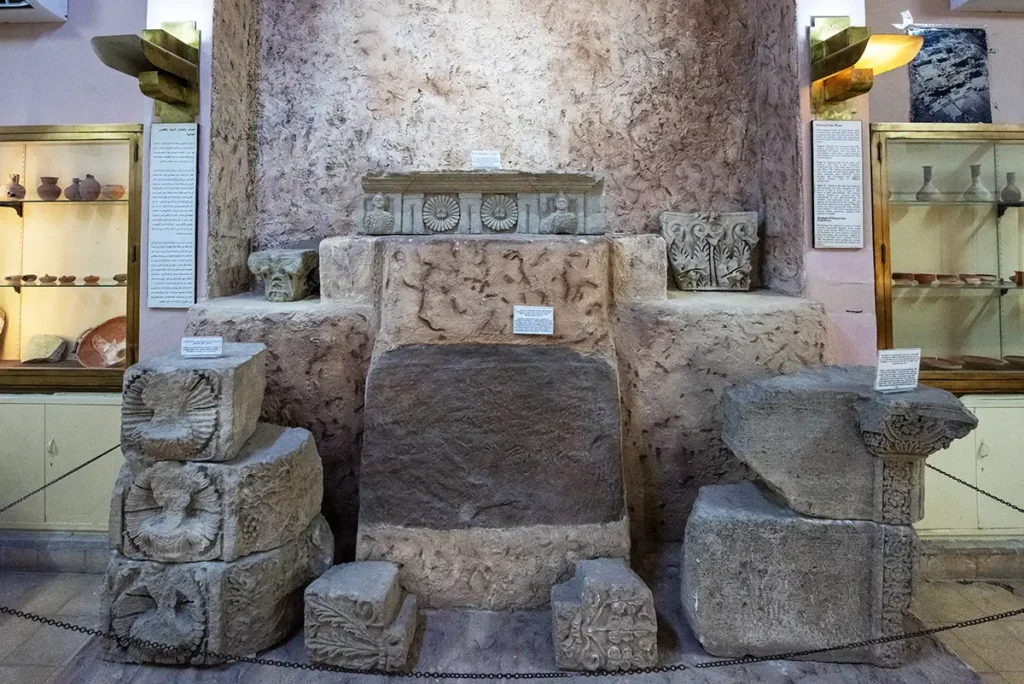
The Jordan Archaeological Museum opened on the Citadel in 1951. Its galleries show pottery, clay coffins, mosaics and carved stone from sites across Jordan, and an open-air sculpture garden stands around the building.
The museum is included in the Citadel ticket and keeps the same hours.
Opened 1951PotteryClay coffinsSculpture garden
Look for
- The anthropoid clay coffins with modelled faces
- The carved architectural stones in the garden
- The fragments of a colossal marble hand
Read the full story
Dig deeperBeneath the museum
In 1949 archaeologists cleared the museum site before building and found an Umayyad courtyard house.
History & significance
One hill, many cities
The Amman Citadel is the old acropolis of Amman. Its hill carried an Iron Age palace, a Roman temple and a Byzantine church, and in the early 8th century the Umayyad governors built a palace complex there.
- 10th c. BCThe Ammonite Palace is first built
- AD 166The Temple of Hercules is dedicated
- 5th c. ADThe Byzantine church is built
- Early 8th c. ADThe Umayyad palace complex is built
- AD 748–749An earthquake devastates the palace complex
- c. 1200The Ayyubid watch tower is built
- 1951The Archaeological Museum opens
 ProfileAmman Citadel: the full storyHistory, the Umayyad palace complex and the timeline of the hill.Read the profile →
Plan your visit
Everything you need to know before you go
The Amman Citadel is on Jabal al-Qal’a in the middle of Amman, above downtown. The entrance is on Museum Street, near King Ali Bin Al-Hussein Street, and there is a car park.
Good to know: the site is on a hilltop, in the open air, with steps and uneven ground. The Ayyubid Watch Tower, the Bronze Age Cave and the Umayyad Bath House are closed to visitors and are seen from outside.
Opening hoursOpen dailyWinter 8:00–16:00 · April–May 8:00–17:30 · Summer 8:00–18:30
Entry ticket3 JODResidents 0.25 JOD · museum included · Jordan Pass
Time to visit2–3 hrAbout 3 hours if you visit all 15 stops
From AmmanDowntown AmmanIn the centre of Amman, on Jabal al-Qal’a
LocationAmman31.9547° N, 35.9343° EGet directions
Opening hours and prices checked November 2026. Spotted a change? Let us know
On site
What you’ll find at Amman Citadel
- Visitor centre
- Ticket office
- Toilets
- Free parking
- Museum
- Guide available
- Food & drinks
- Market / shop
- Viewpoint
Nearby: hotels · Access: no 4x4 needed
When to go
Amman is mild in spring and autumn, hot in July and August, and can be cold and wet in winter. The site is open-air, with little shelter.
J
F
M
A
M
J
J
A
S
O
N
D
BestGood, cooler or warmVery hot
Tip: arrive at opening time for the quietest visit; in summer the site stays open until 18:30, which suits the late-afternoon light over downtown.
Before you go
Most of the route is in the open air, so bring water and sun protection.
- WaterLittle shade on the hilltop
- Sun hat and sunscreenThe ruins are open to the sky
- Comfortable shoesSteps and uneven ground
- Cash in Jordanian dinarsFor tickets and small purchases
- Jordan PassIf you have one, it covers the ticket
Common questions
Quick answers before you set off.
How long do I need at the Amman Citadel?
About 2–3 hours for all 15 stops, or about 1 hour for the highlights.
Is there an entrance fee?
Yes: 3 JOD for visitors and 0.25 JOD for residents. The ticket includes the Archaeological Museum, and the Amman Citadel is included in the Jordan Pass.
Can I walk up from downtown?
Yes, but the climb is steep. Many visitors take a taxi or drive, and there is a car park near the entrance.
Is everything open to visitors?
Most of the route is. The Ayyubid Watch Tower, the Bronze Age Cave and the Umayyad Bath House are closed to visitors at present and can be seen from outside.
When is the best time of day?
Early morning is quietest. In summer the site is open until 18:30, so late afternoon works well for the views over downtown; in winter it closes at 16:00.
What should I wear?
Comfortable shoes for steps and uneven ground, and modest clothing with shoulders and knees covered, which is respectful at a site with a mosque.
Combine with
The Citadel combines well with other sites around Amman. Drive times are from the Citadel and are estimates.
Private tours
A private day tour that includes Amman Citadel
Private: only your group
Your own vehicle & driver
Hotel pick-up in Amman
Entry tickets included
 from$160per group (1–3) · 113 JOD

Tour 1 · Half day · Private
Amman Downtown Heritage Tour: Jordan Museum, Roman Theatre & Citadel
Discover the history and everyday character of Jordan’s capital on this private half-day tour of downtown Amman. Over approximately four to five hours, explore the city’s major archaeological landmarks, visit its national museum, and experience the lively streets of Al-Balad.
HistoryArchitectureMuseumRoman theatreCitadelHalf day
Duration4–5 hr
Pick-up9 or 10 AM
Group1–3, private
Included
- Private luxury transfer
- Entrance fees
- Professional on-site (local) guide (for Amman Citadel)
- Bottled water, soft drinks, snacks
- Coffee/tea (on request)
- WiFi, Phone charger
Not included
- Personal expenses
- Lunch
CancellationFull refund if you cancel at least 24 hours before the start. No refunds or changes within 24 hours.
Pick-upFrom your hotel lobby or home in Amman, 5 minutes before your chosen start time.
BringComfortable shoes, sun hat, sunblock and sunglasses. Tours run in English.
Explore this site
More from Amman Citadel
Panoramas, walk-throughs, photos and stories about this site.
ProfileAmman Citadel: history & architecture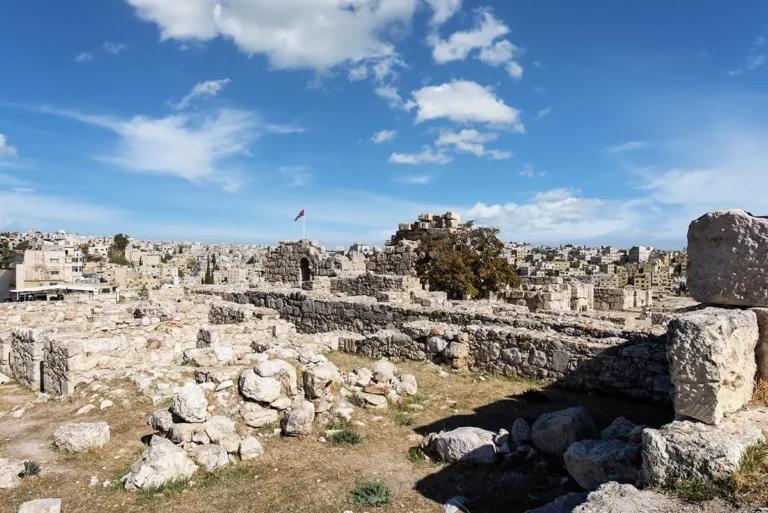 Photo albumAmman Citadel: A Hilltop City in Photos
 3D3D walk-throughAmman Citadel – 3D Virtual Walk-through
 360°360° panoramaTemple of Hercules, Amman Citadel: 360° Panorama
 360°360° panoramaAmmonite Palace, Amman Citadel: 360° Panorama
 360°360° panoramaUmayyad Bath House, Amman Citadel: 360° Panorama
Nearby