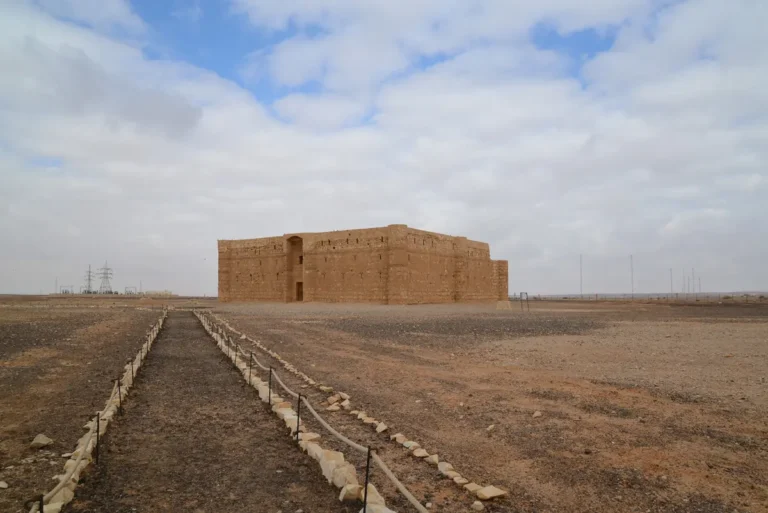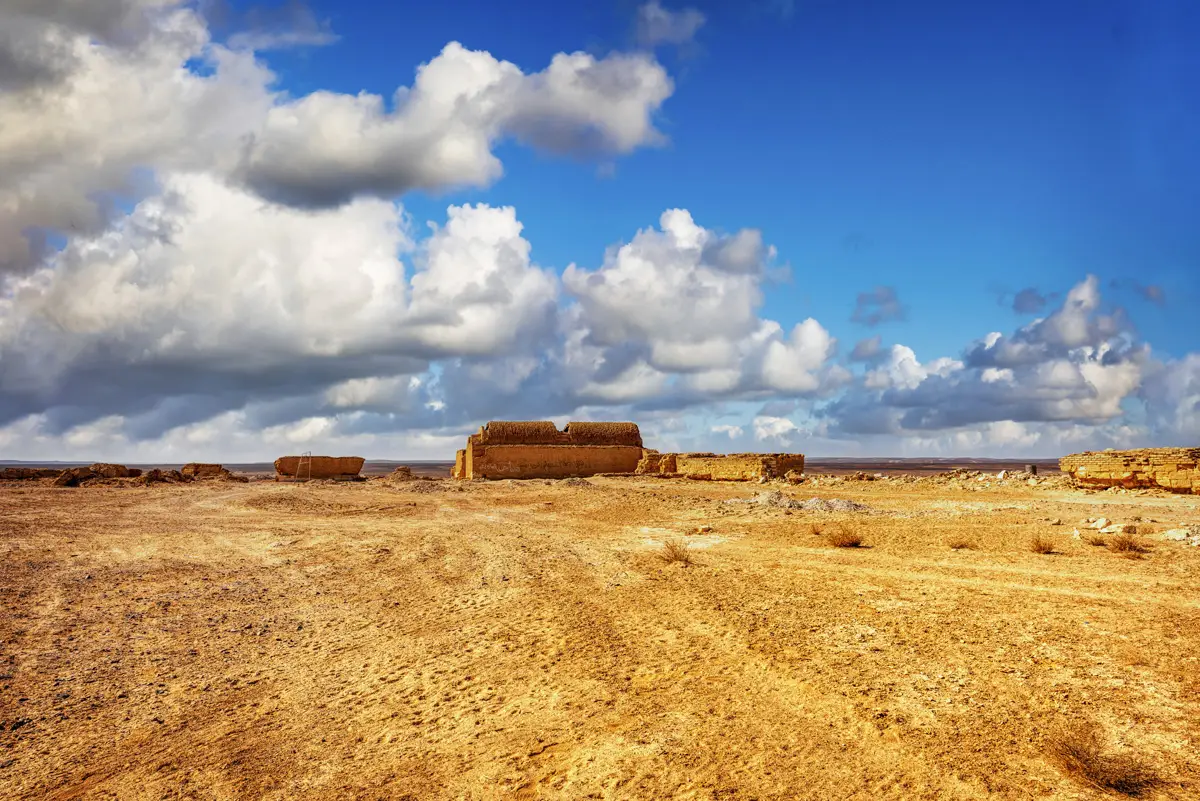
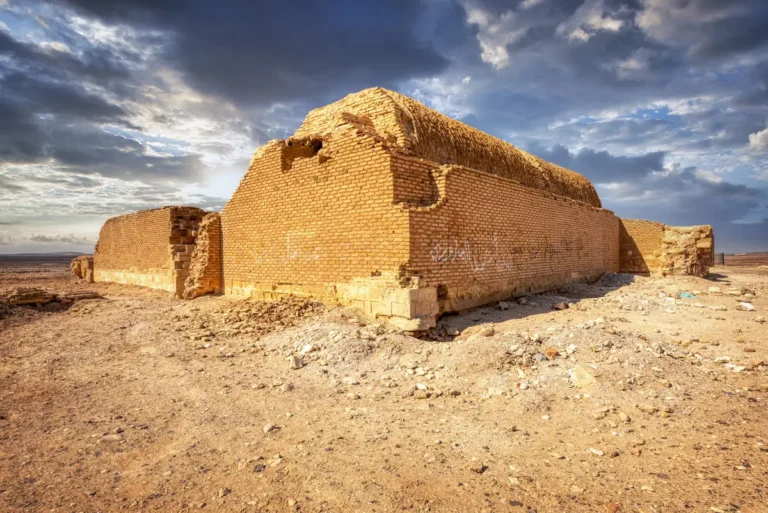


Qasr Tuba is one of the most remote and architecturally ambitious of the Umayyad desert castles in Jordan, located in the eastern desert near the Saudi border. Constructed in the early 8th century during the reign of Caliph al-Walid II, the site was intended as a large palatial complex and hunting lodge. Built primarily of limestone and basalt, Qasr Tuba originally featured twin rectangular enclosures with courtyards, residential quarters, and service areas, though only one wing was completed. Its massive size and elaborate layout indicate the Umayyad desire to demonstrate power and refinement even in the desert fringes of their empire.
Today, Qasr Tuba stands in partial ruin but still reveals the grandeur of its original design, with fragments of decorative stonework and wall structures hinting at its luxurious past. The site likely served both practical and ceremonial functions—offering rest for caliphs and nobles during desert excursions while reinforcing political presence in frontier regions. Its isolated location makes it less visited than other desert castles, but for those who reach it, Qasr Tuba offers a rare glimpse into the ambitious architectural vision and cultural richness of the Umayyad dynasty in early Islamic Jordan.