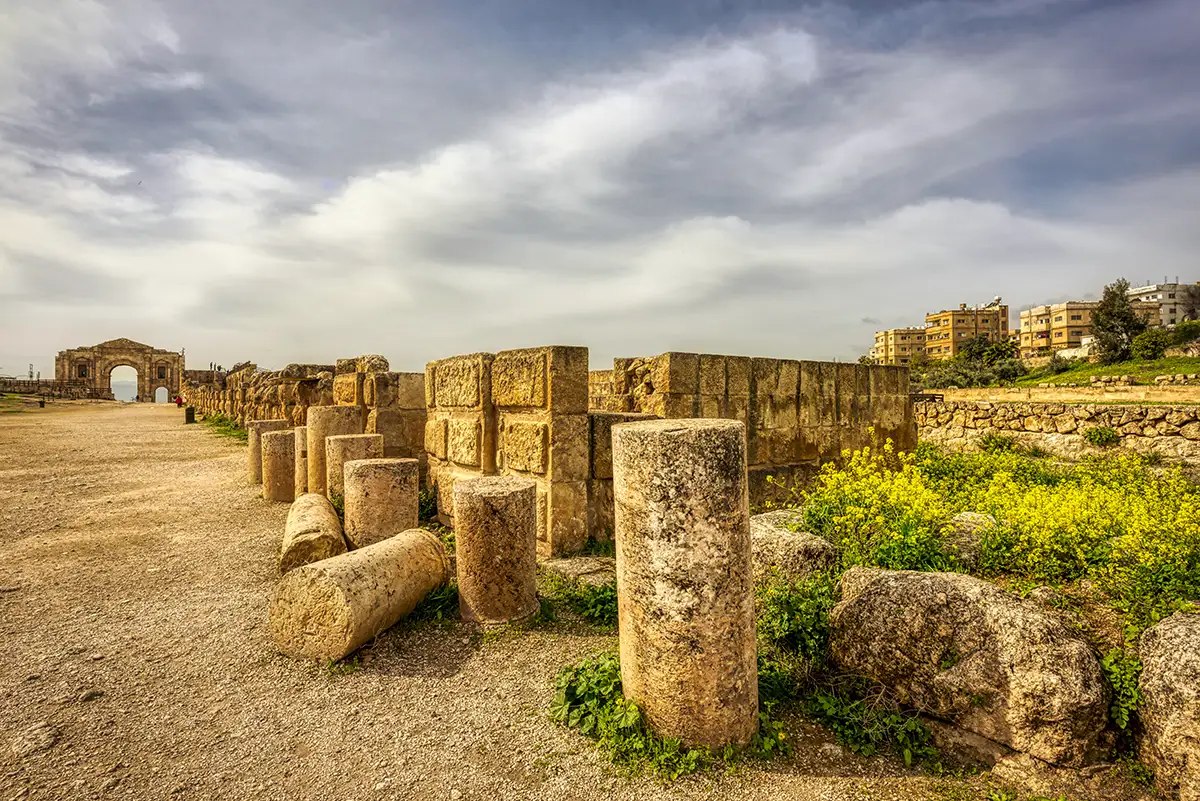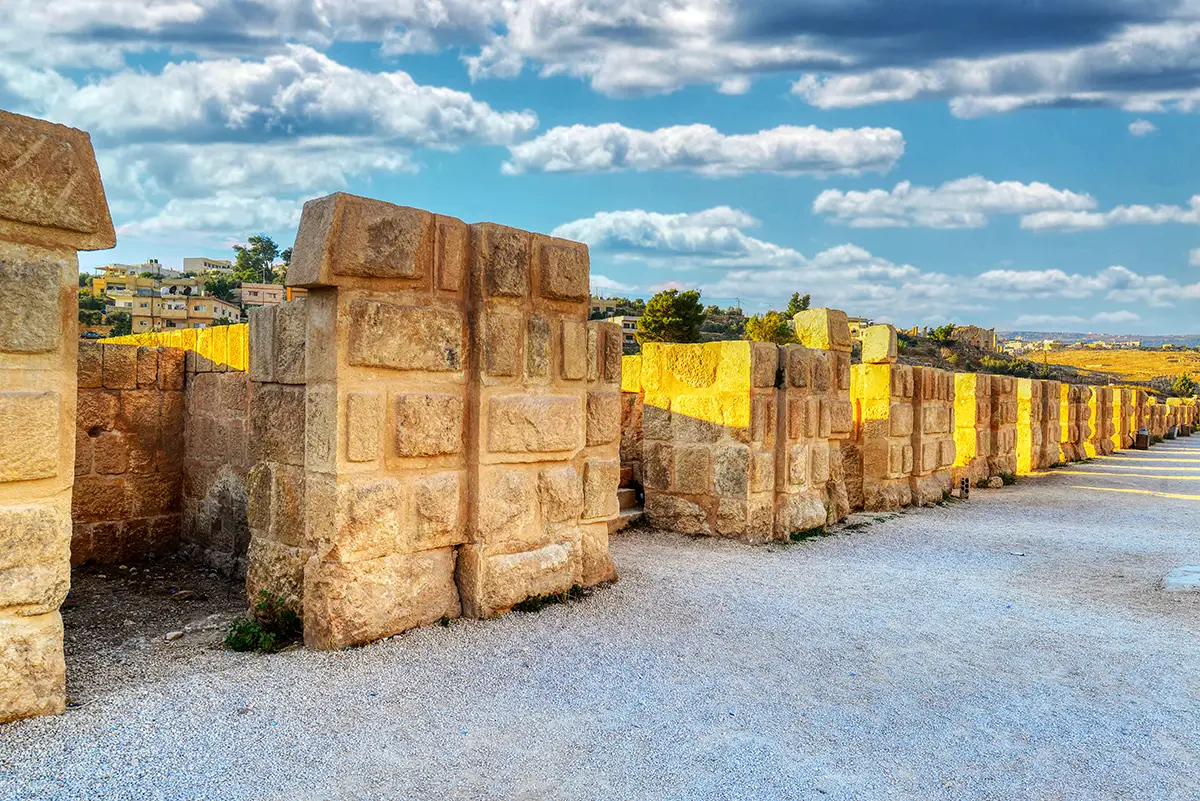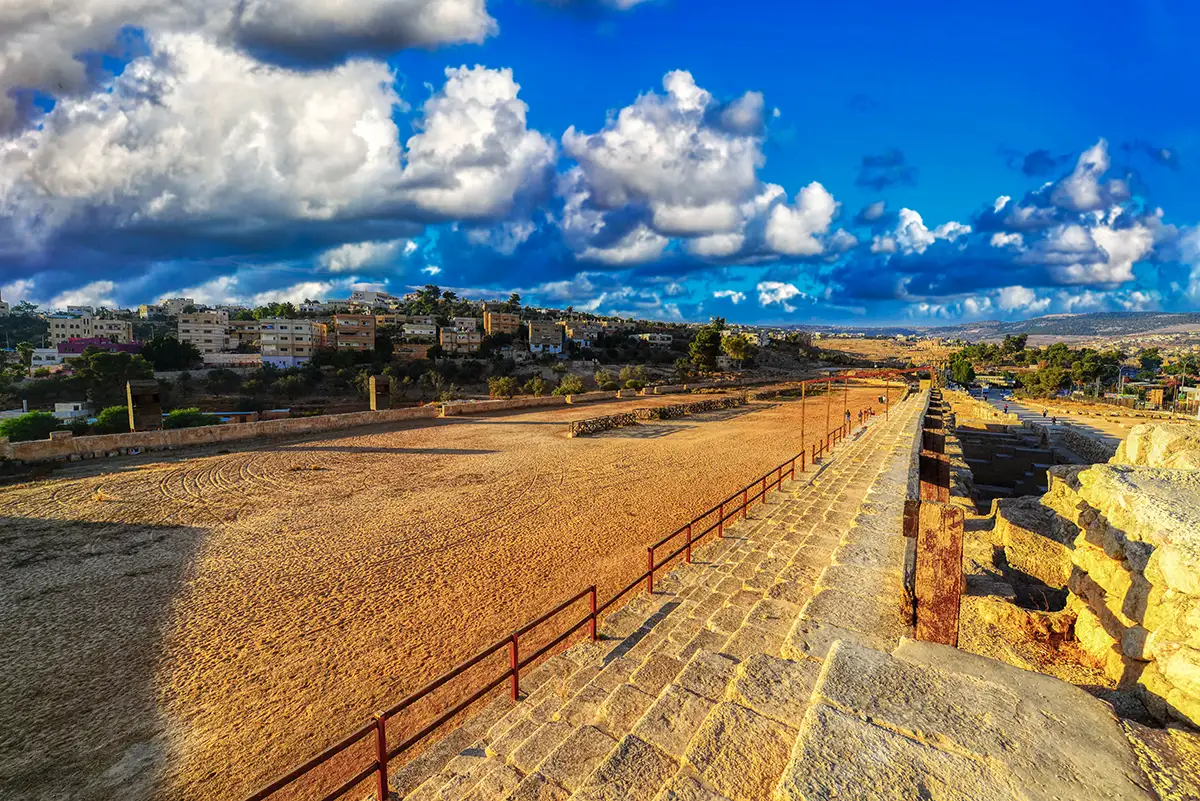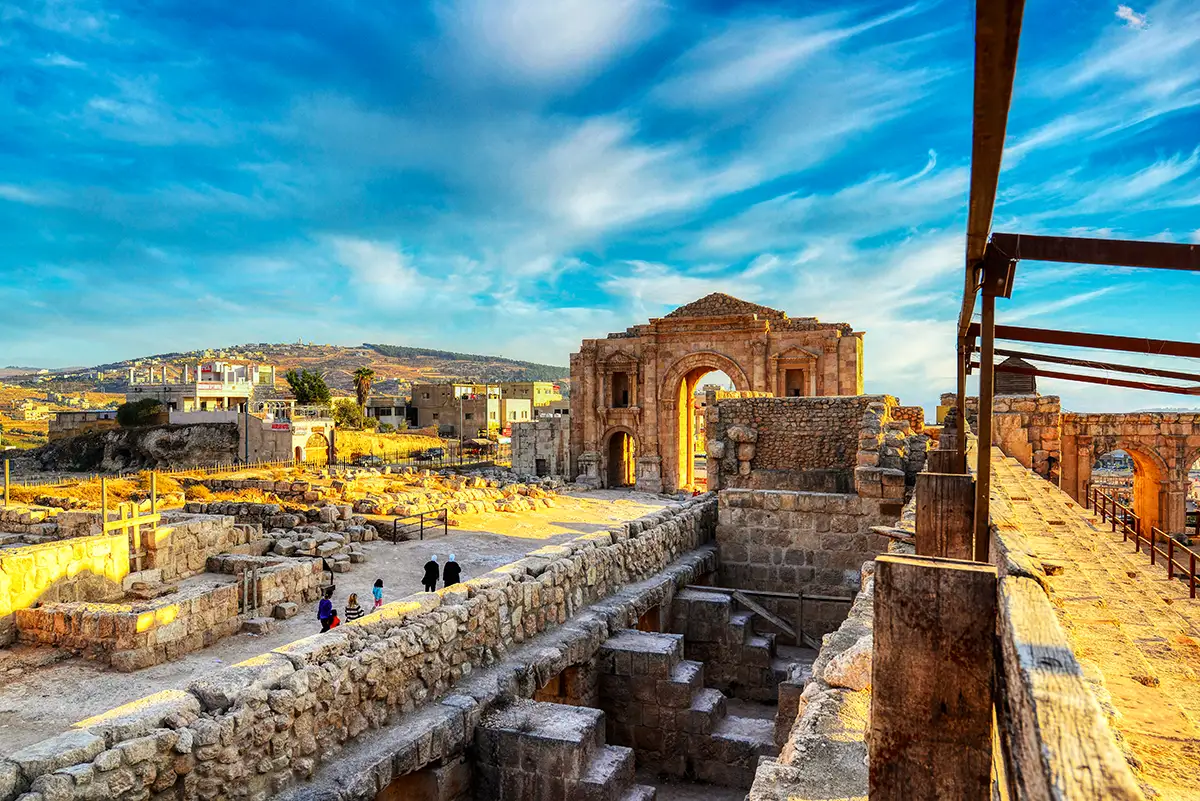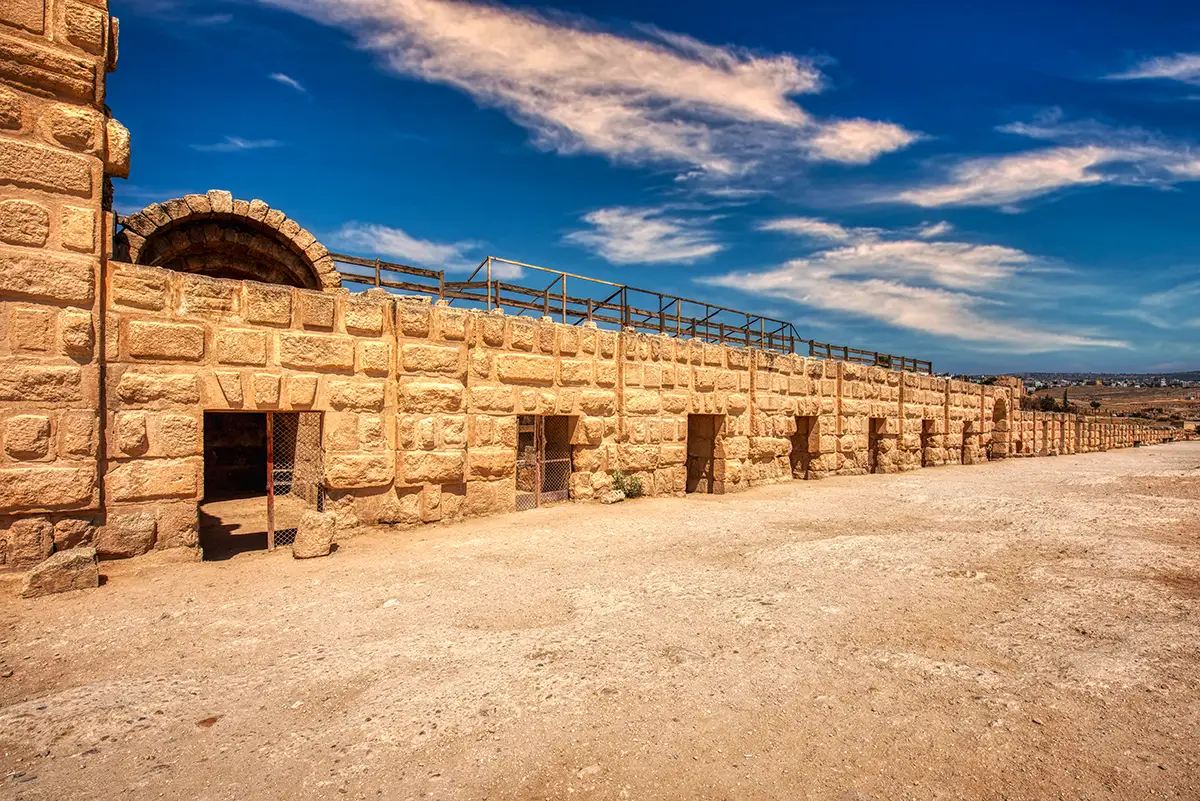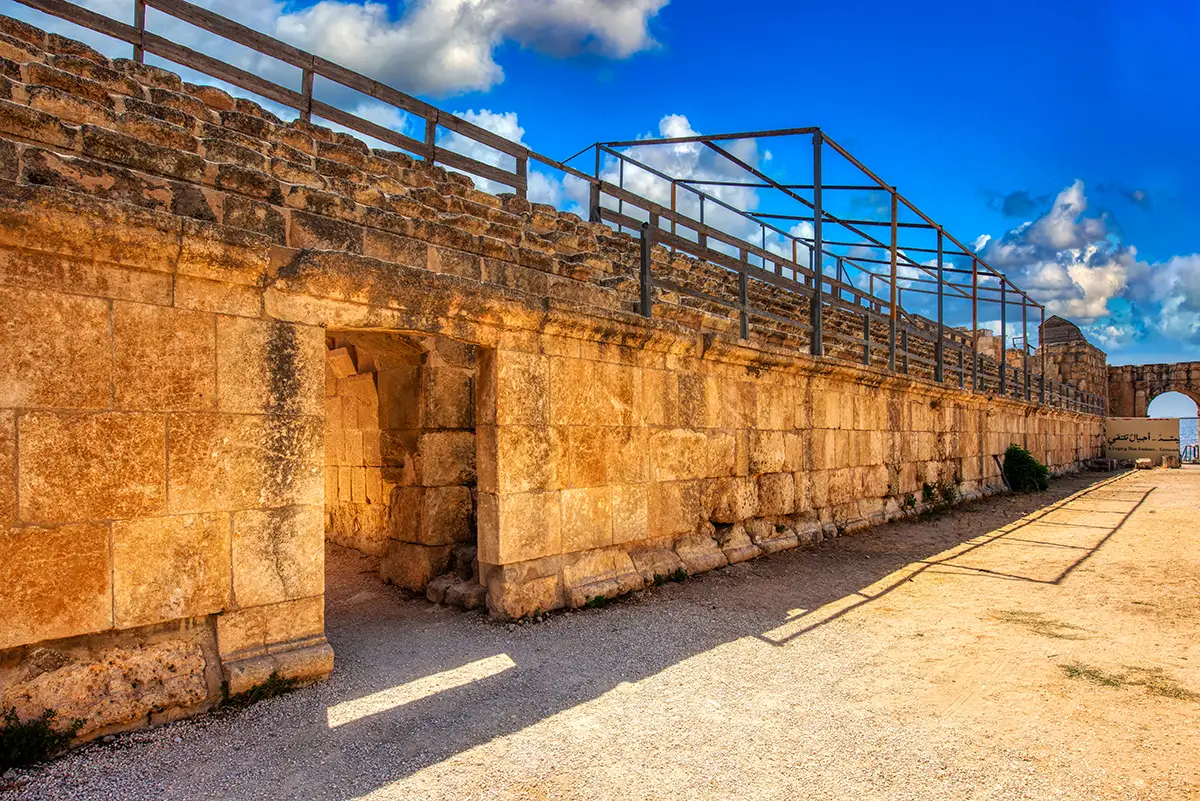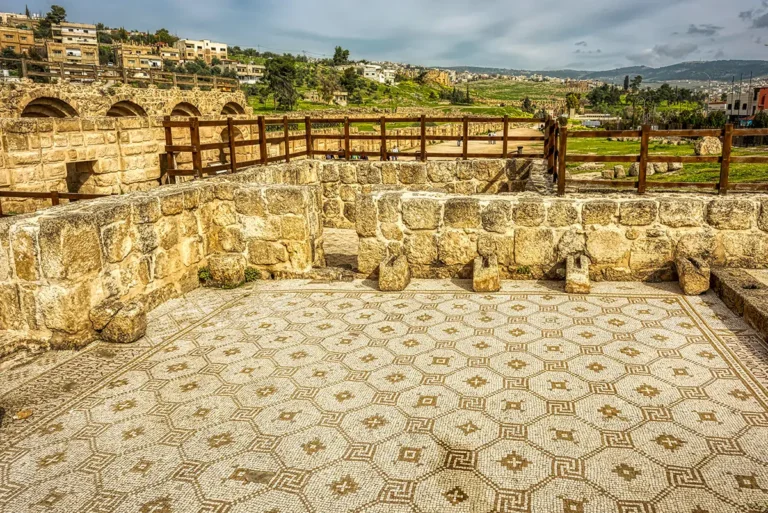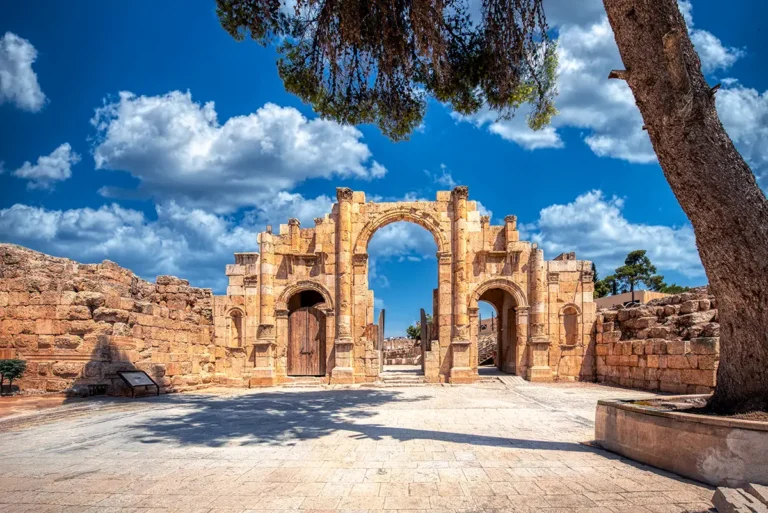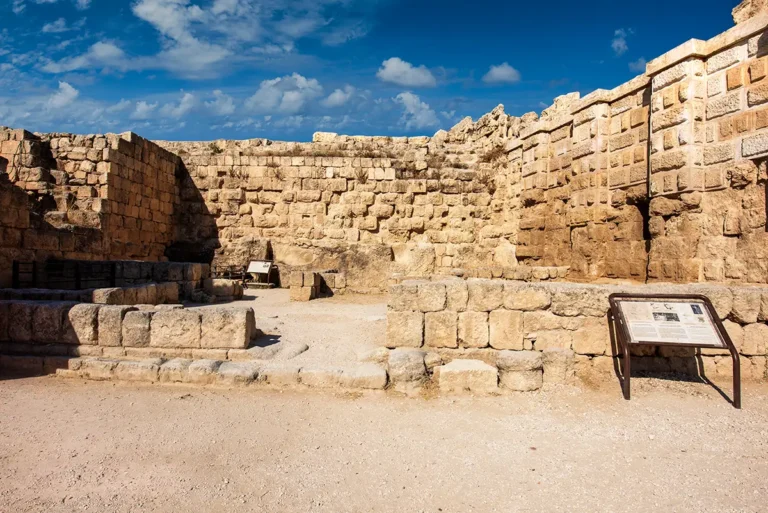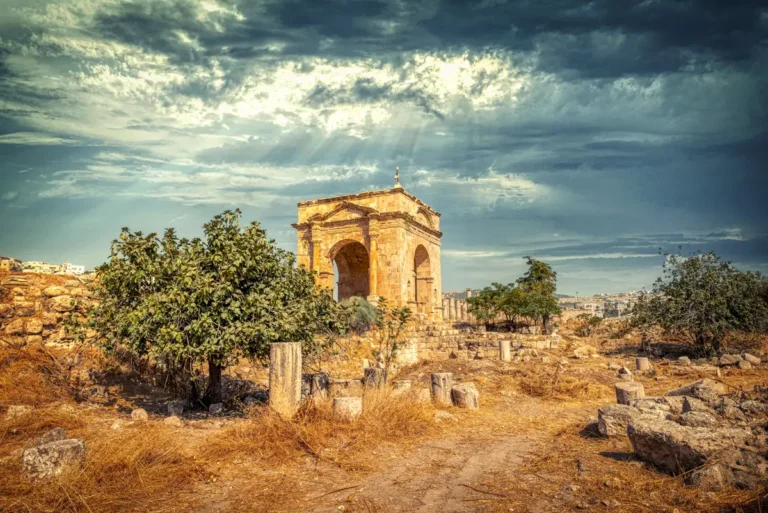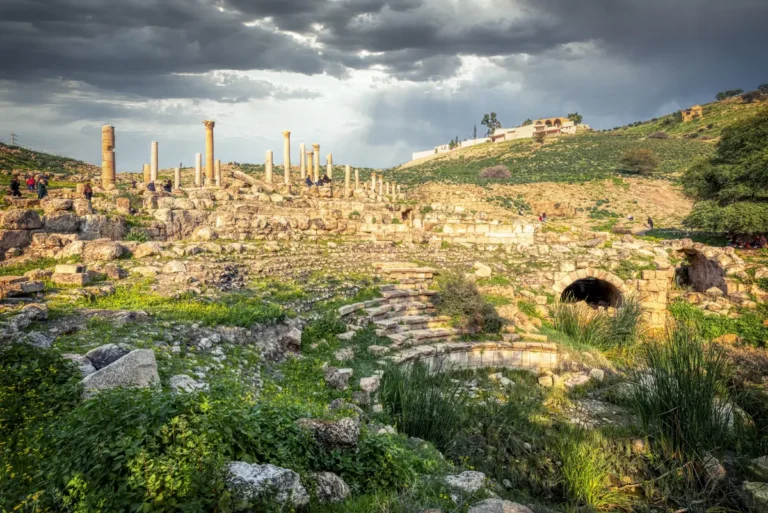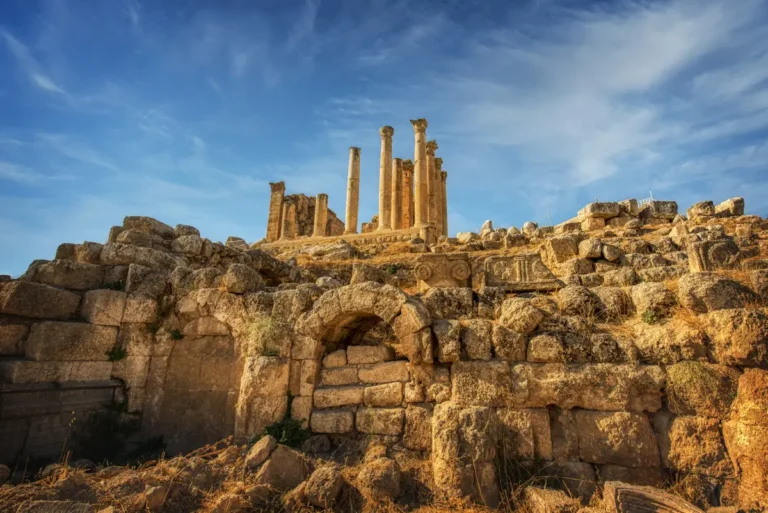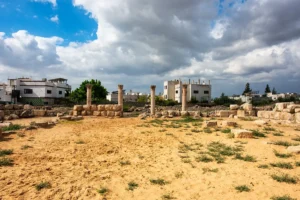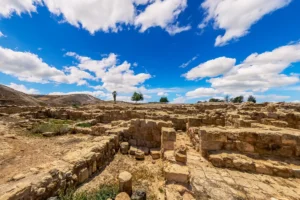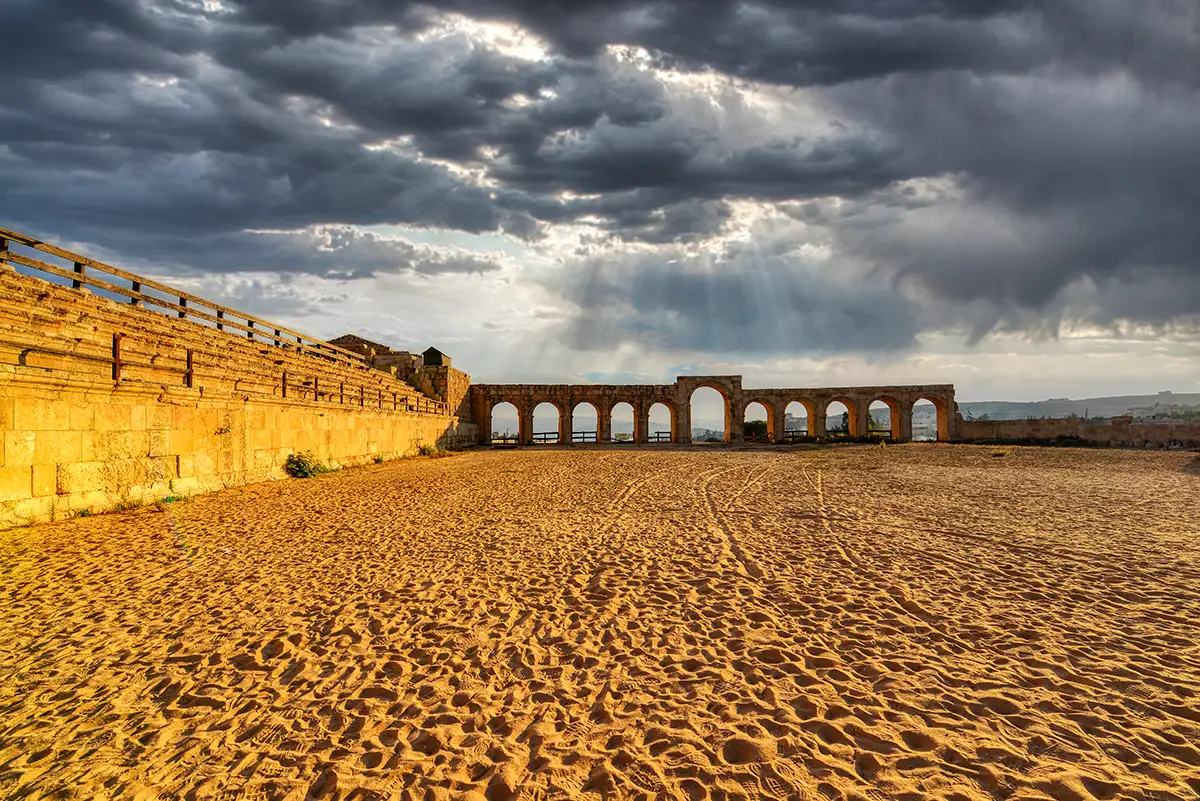
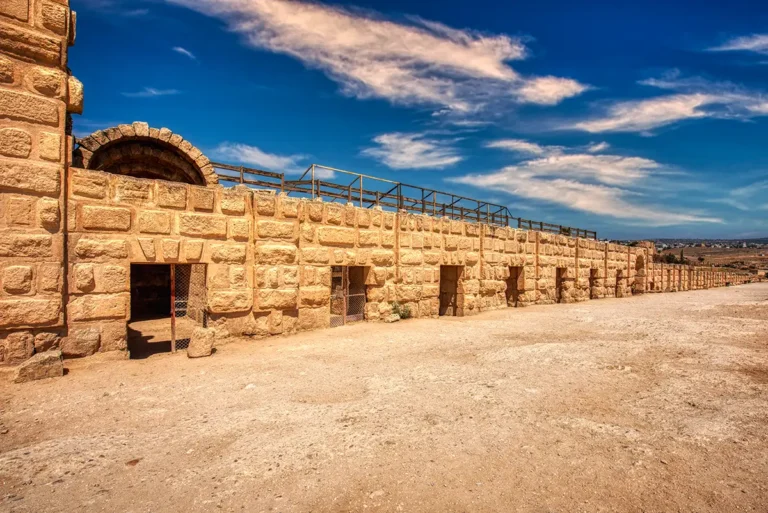
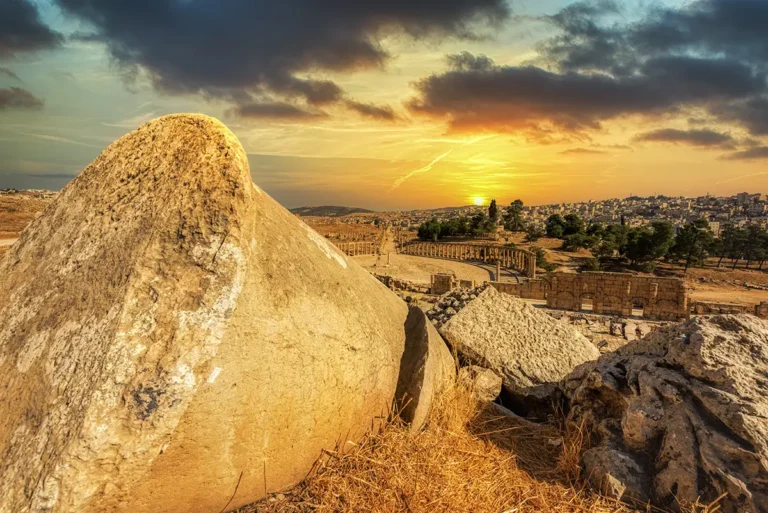
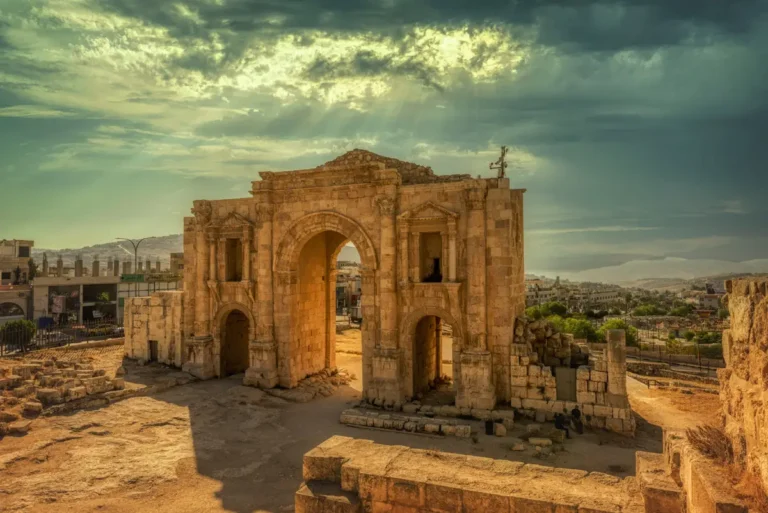

Stretching beside the path between Hadrian’s Arch and the South Gate, the Hippodrome is the first great public building you meet on the way into ancient Gerasa. Built for chariot races and athletic contests, it was one of the smallest hippodromes of the Roman world, yet it held some 15,000 spectators — and today it is one of the best preserved anywhere.
Where Is the Hippodrome?
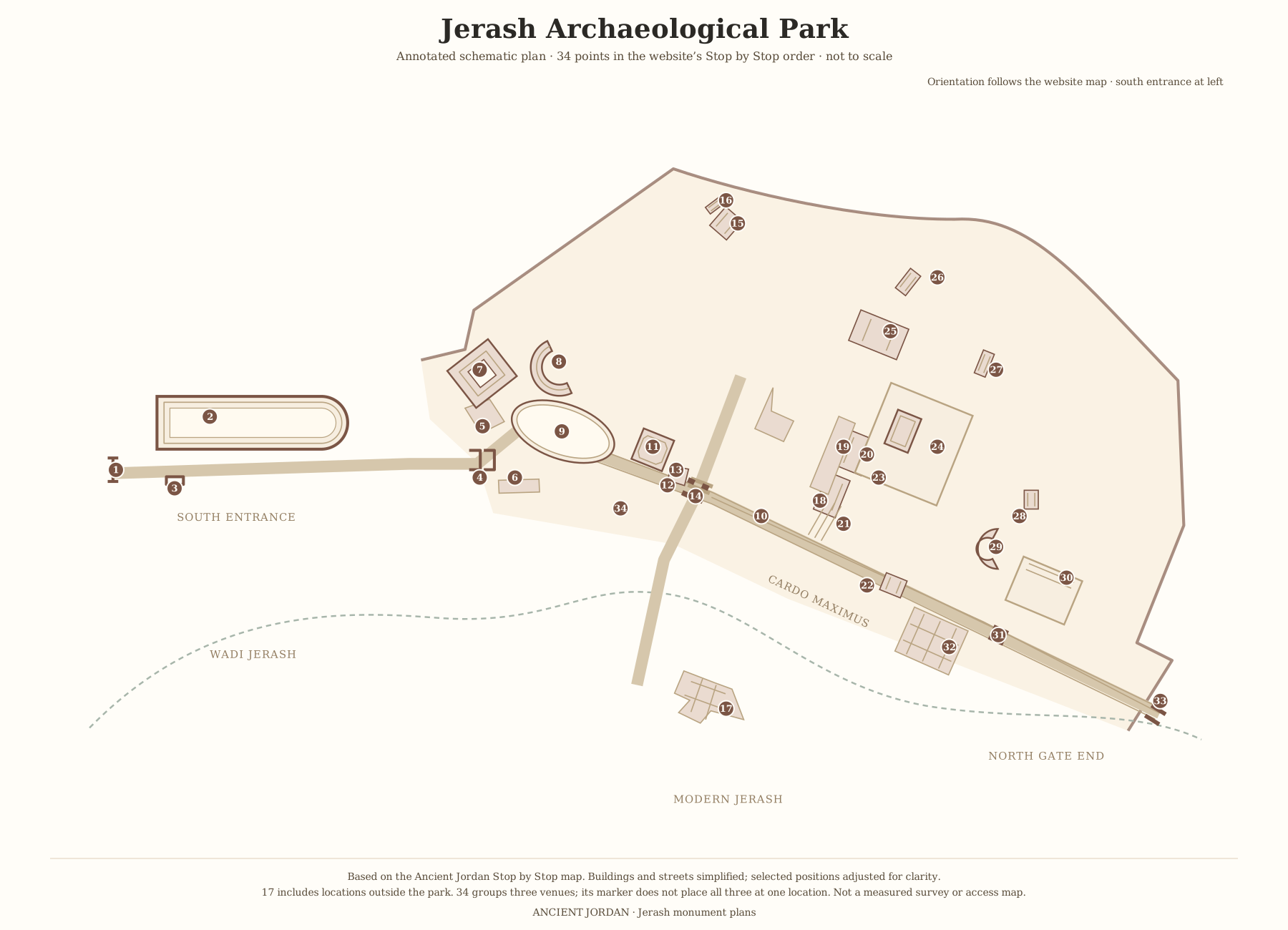
The Hippodrome lies just north of Hadrian’s Arch, on the left of the path as you walk from the visitor centre towards the South Gate. Like the arch, it stands outside the ancient city, on open ground to the south where there was room for a long racing track.
It runs alongside the old road from Philadelphia — modern Amman — so travellers arriving from the south passed the arena before they reached the city itself.
Historical Context and Origin
Plans for a hippodrome on old quarries south of the city followed Emperor Hadrian’s visit to Gerasa in AD 129–130. Construction began around the middle of the 2nd century, at the height of the city’s prosperity, and the arena was completed in the early 3rd century.
For more than a century the stands filled for chariot races, athletic contests and other public shows. In the late 4th century failing foundations brought racing to an end, and the north end of the arena was turned into a smaller amphitheatre. By the 6th century potters had built kilns in the arches, and the old arena became a ceramics workshop.
Architectural Design
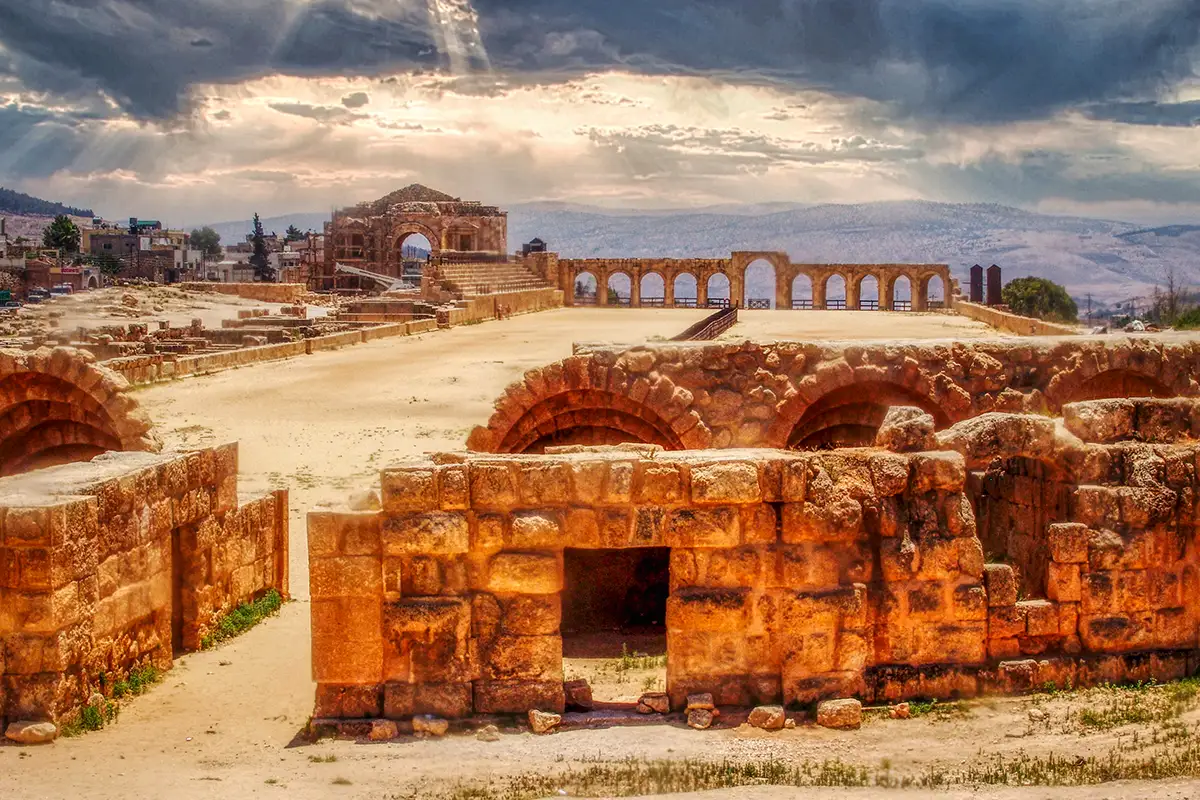
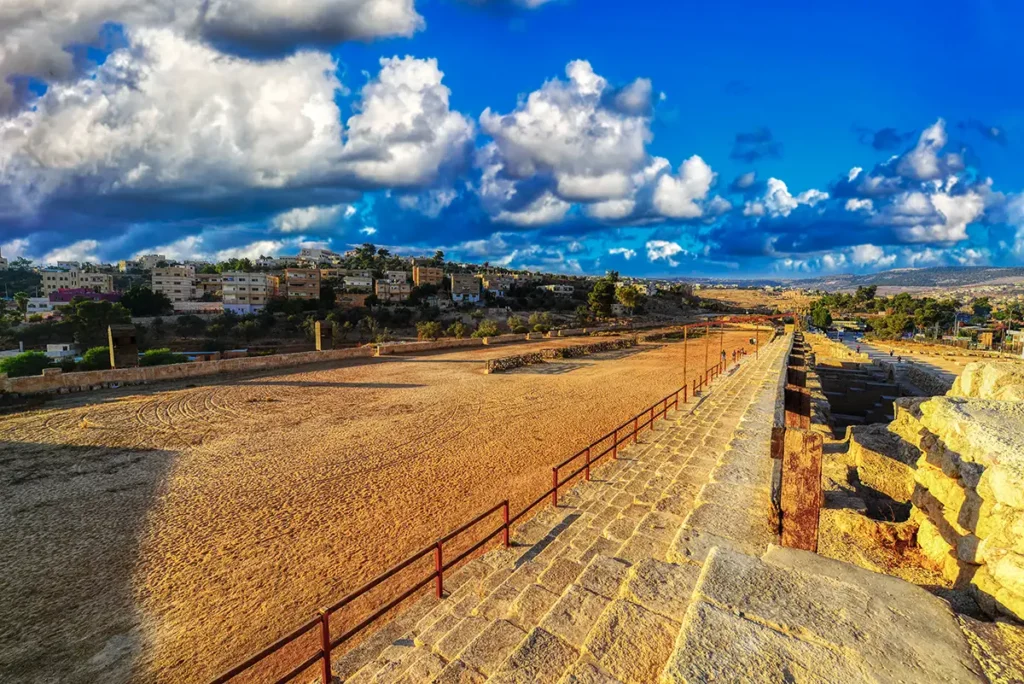
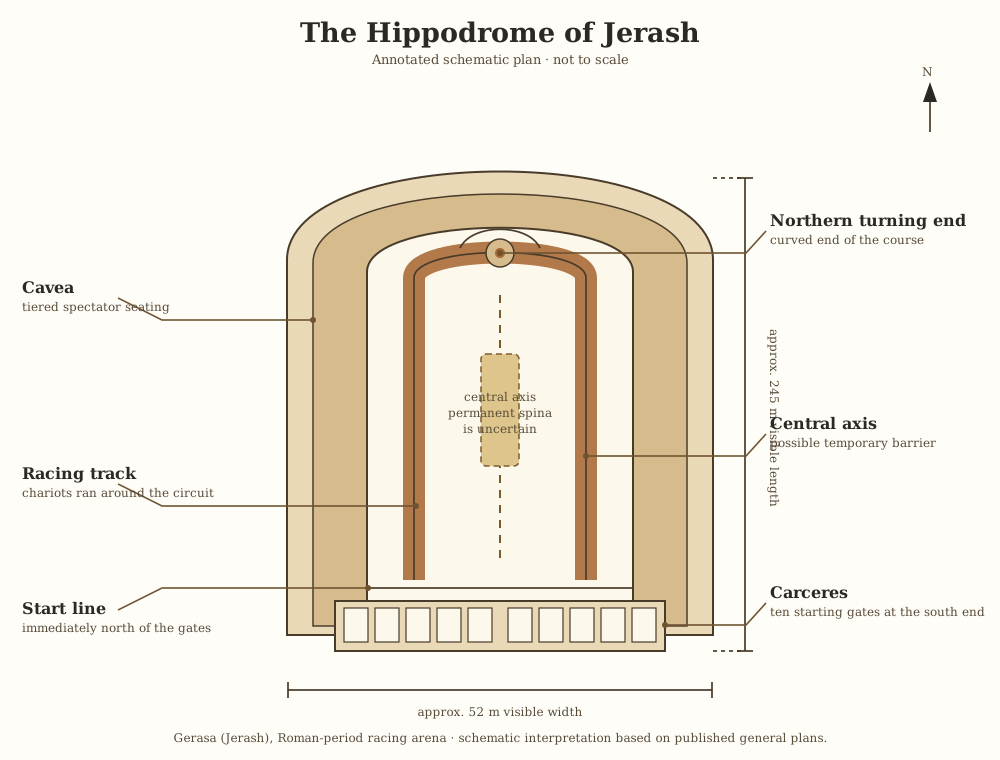
The Hippodrome follows the classic Roman circus plan: a long, narrow track closed by a curve at one end and by the starting gates at the other. It measures about 265 metres (870 feet) long and 50 metres (165 feet) wide — modest next to Rome’s Circus Maximus, but grand for a provincial city.
The Starting Gates (Carceres)
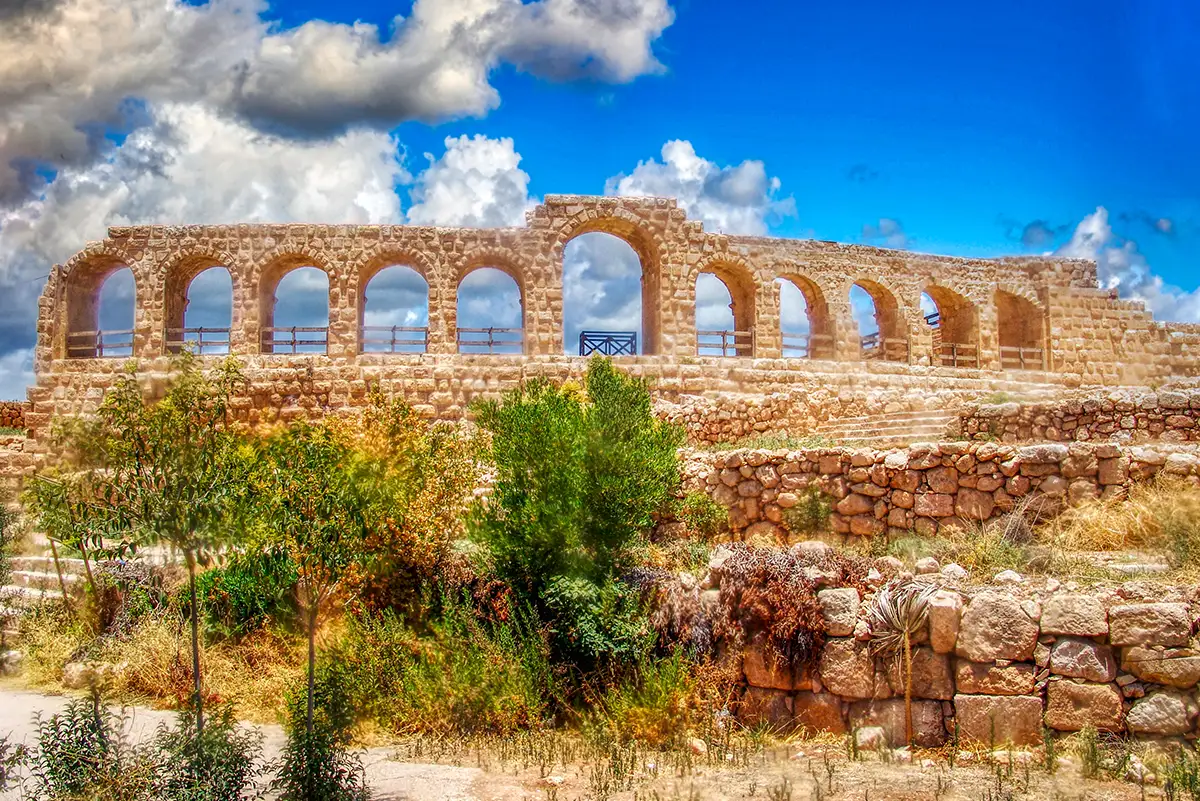
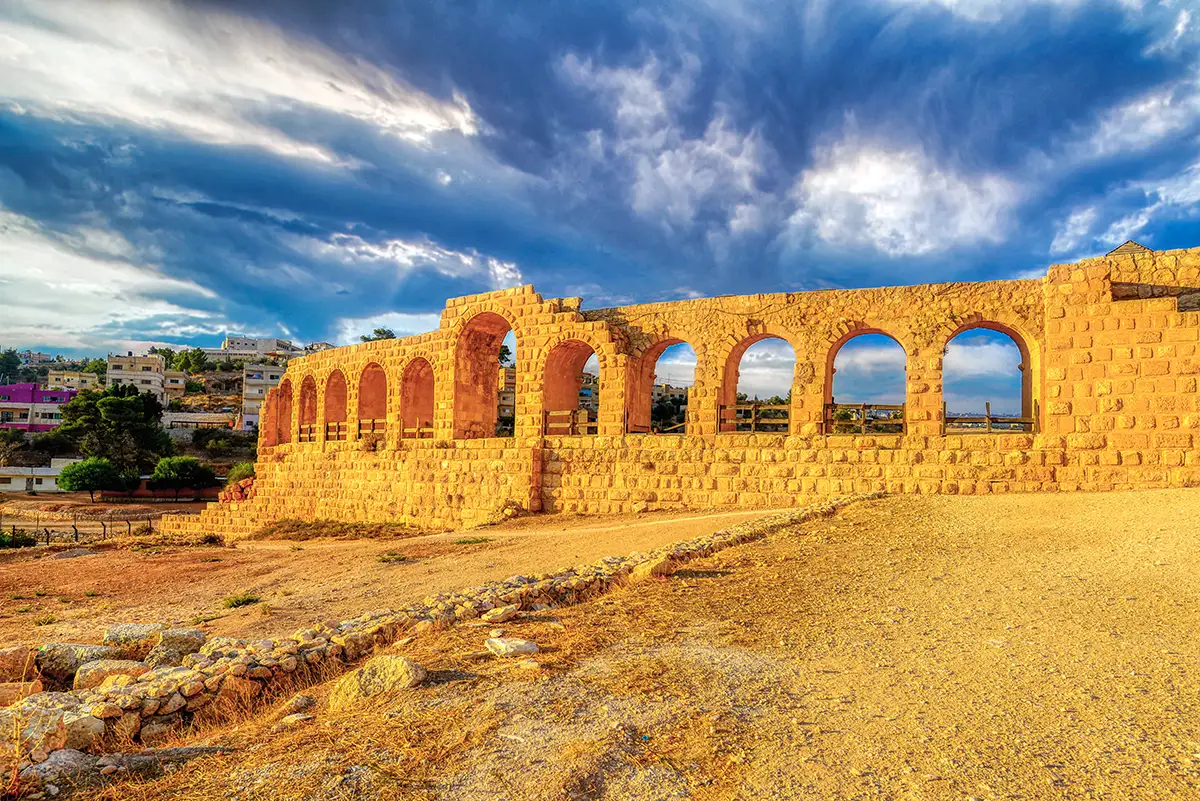
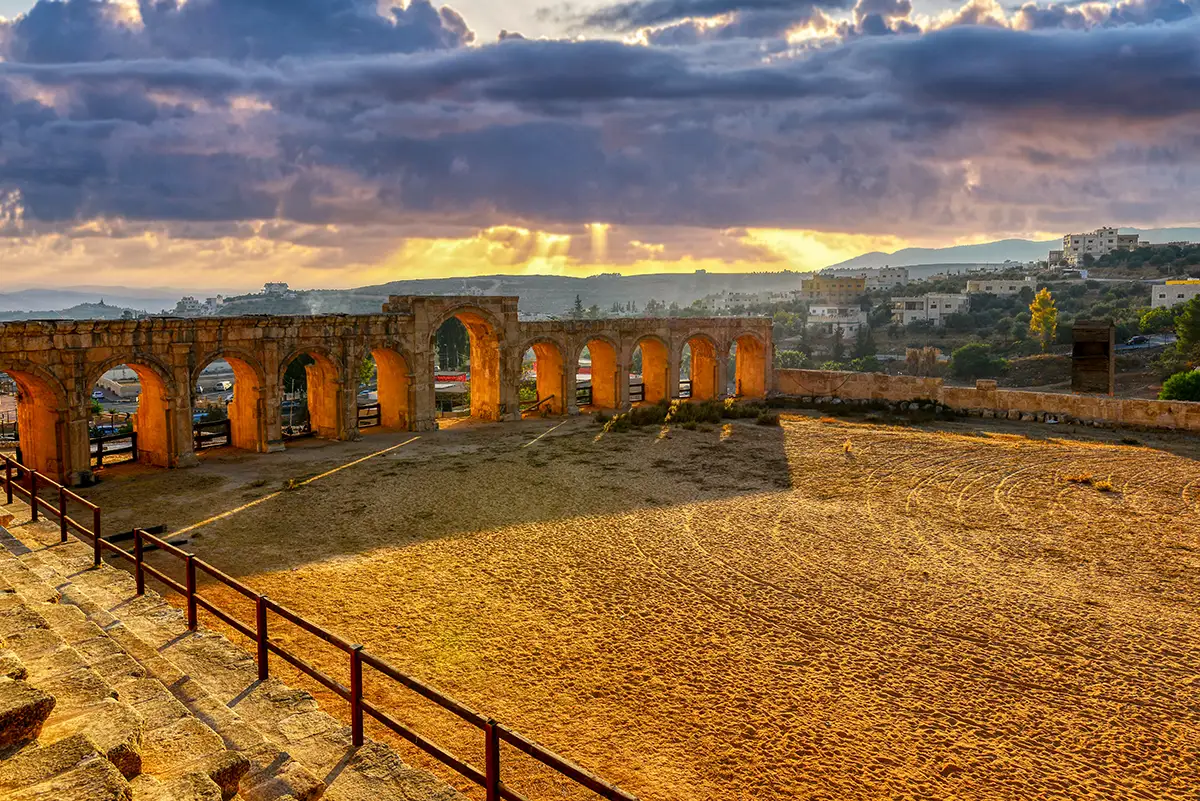
Ten arched stalls at the north end held the chariots before each race. Their rebuilt arches are the arena’s most striking feature.
The Spina
A low barrier ran down the middle of the track. Charioteers raced around it, taking tight and dangerous turns at each end.
The Curved South End
The rounded southern end, the sphendone, closed the track and carried stands for spectators watching the turns.
The Stands (Cavea)
Stone seats for some 15,000 spectators rose on vaulted chambers around the track.
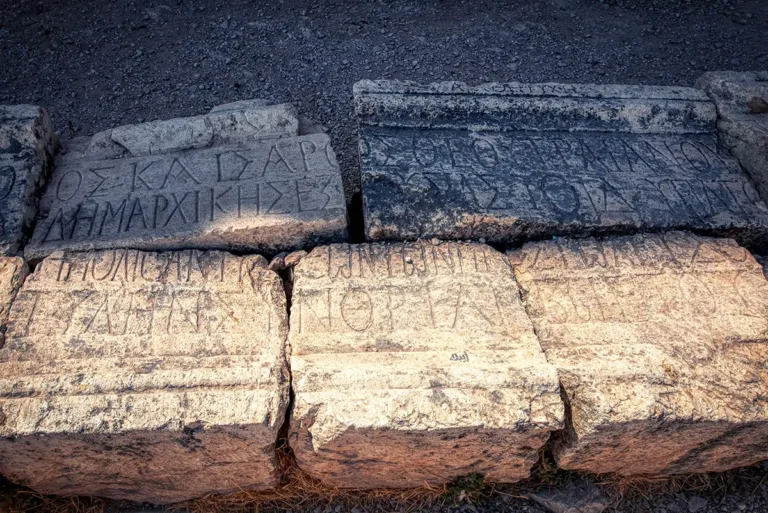
The Carceres Inscribed Altars
The carceres—the ten arched starting gates that launched horses and chariots onto the track—were originally topped by a grand architectural superstructure. Resting prominently atop this framework were four matching stone altars made of local, hard-dressed Jerash limestone.
Constructed in a traditional Roman imperial style, each altar featured a moulded base, a central stone die (body) reserved for the inscription, and a decorative capstone (focus) where liquid offerings or small sacrifices could be made before the start of the races. Because they were positioned directly above the starting gates, they were completely visible to the 15,000 spectators packed into the grandstands.
The Inscriptions and Language
The text carved into the stone bodies of the altars is written in ancient Greek, which was the dominant administrative and elite language of the Roman East (the Decapolis).
The letters are cleanly incised, uniform, and monumental in style. Based on the precise wording and references to the ruling imperial family, epigraphists have securely dated the carving of these altars to the Severan Period, specifically between 209 and 212 AD.
Translation and Dedications
The primary, best-preserved altar features a multi-layered dedication intended to secure divine favour for the games and demonstrate political loyalty to Rome. The inscription officially dedicates the arena and its events to a triad of powers:
The Good Fortune (Tyche): The personification of luck and fortune. In a sport as notoriously dangerous and unpredictable as chariot racing—where spectacular crashes (naufragia) were common—appealing to Tyche was an essential pre-race ritual for charioteers and organisers alike.
The Ruling Roman Emperors: Specifically mentioning Emperor Septimius Severus and his sons, Caracalla and Geta. Including the imperial family was a calculated political move by the elite citizens of Gerasa to showcase their absolute loyalty to the empire, ensuring continued imperial funding and favour for their city.
Zeus Uranios: The supreme deity of the heavens. In the Roman East, Zeus was frequently syncretised with local Semitic sky gods. Dedicating the altars to him elevated the chariot races from mere secular entertainment to a grand, sanctified religious festival.
For more information: Inscriptions on altars from the hippodrome of Gerasa
Destruction, Rediscovery, and Restoration
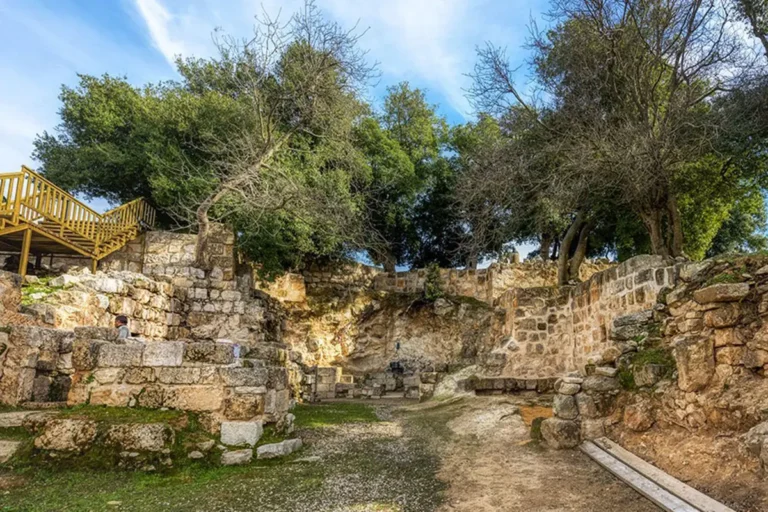
The great earthquake of AD 749 brought down the stands and buried the arena under fallen stone. For centuries it lay half hidden, looking like a natural hollow in the valley.
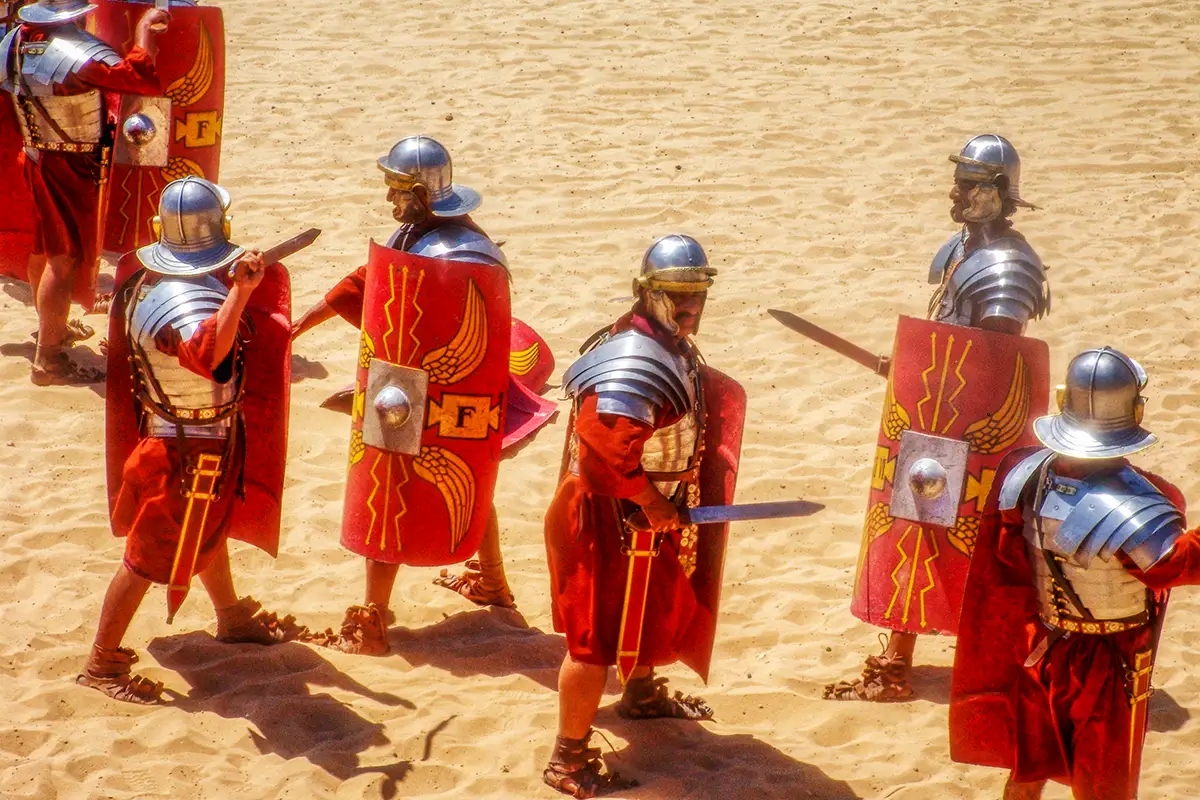
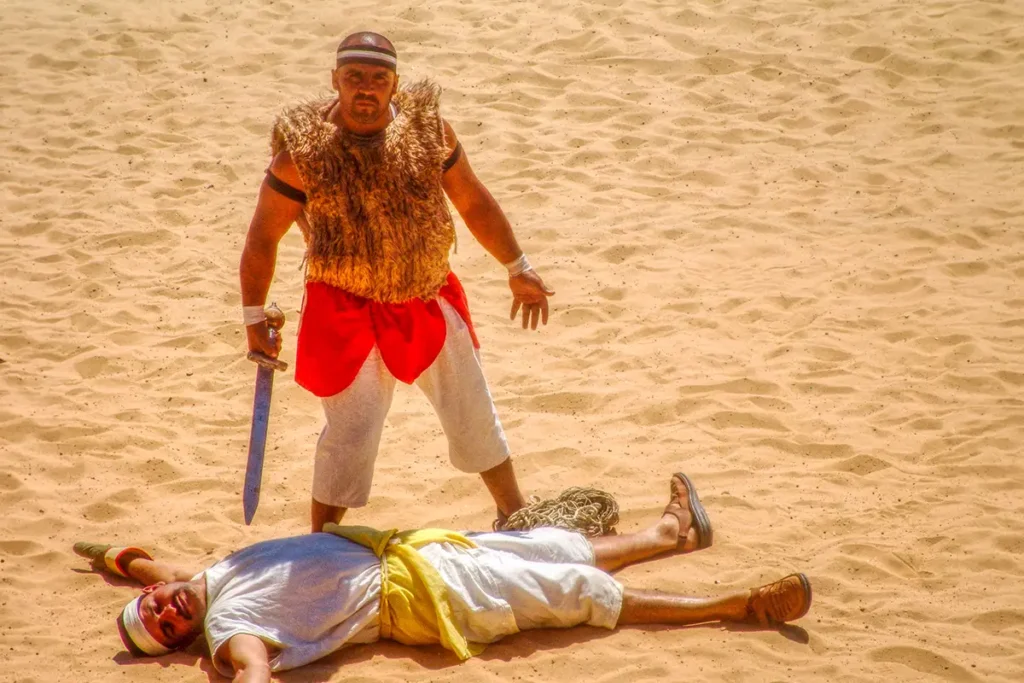
Modern excavation cleared the track, and restoration rebuilt the starting gates, the western stands and parts of the outer wall, making the Hippodrome one of the best-preserved Roman circuses in existence. For several years the arena also hosted the Roman Army and Chariot Experience, a show of re-enacted drills and chariot races on the ancient track.
Visiting the Hippodrome Today
The Hippodrome is the natural second stop after Hadrian’s Arch: its long wall runs beside you on the way from the visitor centre to the South Gate. Walk onto the sandy track and stand by the starting gates to look down the full length of the arena, then climb the rebuilt stands for the best overall view.
Early morning and late afternoon bring soft light and long shadows across the track. The arena is still used for performances, including events of the Jerash Festival for Culture and Arts.