
Qasr Al-Muwaqqar
A caliph’s reservoir that still holds water
Builtc. AD 720–724
Built forCaliph Yazid II
Palace65 × 39 m
LocationAl-Muwaqqar village
Introduction
A ruined palace above a reservoir that still holds water after 1,300 years.
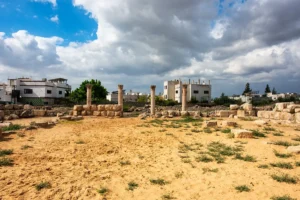
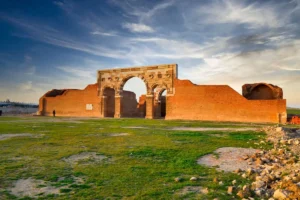
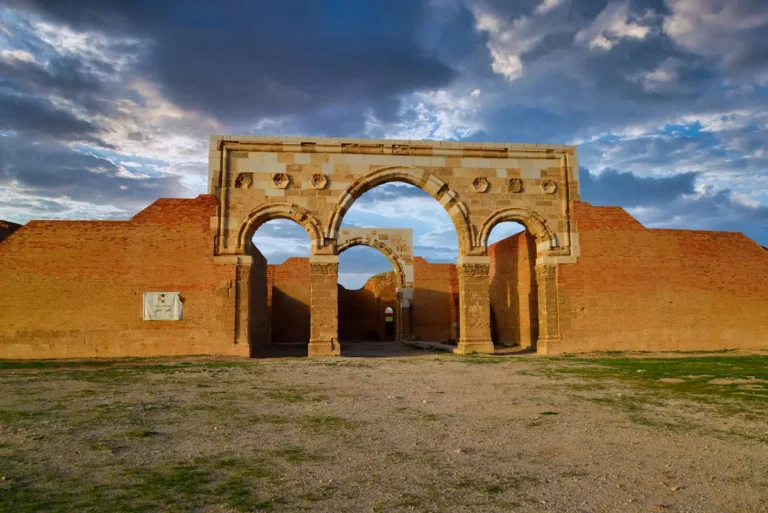
Al-Muwaqqar was a palace of Caliph Yazid II (r. AD 720–724), built on a natural rise with a large reservoir below it. The palace is badly ruined today and surrounded by the houses of the modern village, but the reservoir has been restored and still holds water, just south of Highway 40.
It is one of the few desert castles with a firm date. A column capital found nearby carries a Kufic inscription saying that Yazid ordered the building of “this pool” in AH 104 (AD 722–723), and marks the highest water level at 15 cubits. The capital is now in The Jordan Museum in Amman.
Best timeMar–May · Oct–Nov
Time needed20 min
TicketFree
From Amman30 km · 35 min
Combine withQasr Al-Qastal · 30 min
Google rating4.4 · Reviews
Highlights · Palace and pool
A palace, a pool and a water gauge
Vaulted foundations, carved stones and a reservoir still in use
Little of the palace stands above ground, but what is left tells a clear story: a caliph’s residence on a vaulted terrace, finely carved stonework, and water works dated to the year.
 01 / 05
01 · Water
The reservoir
Reservoir
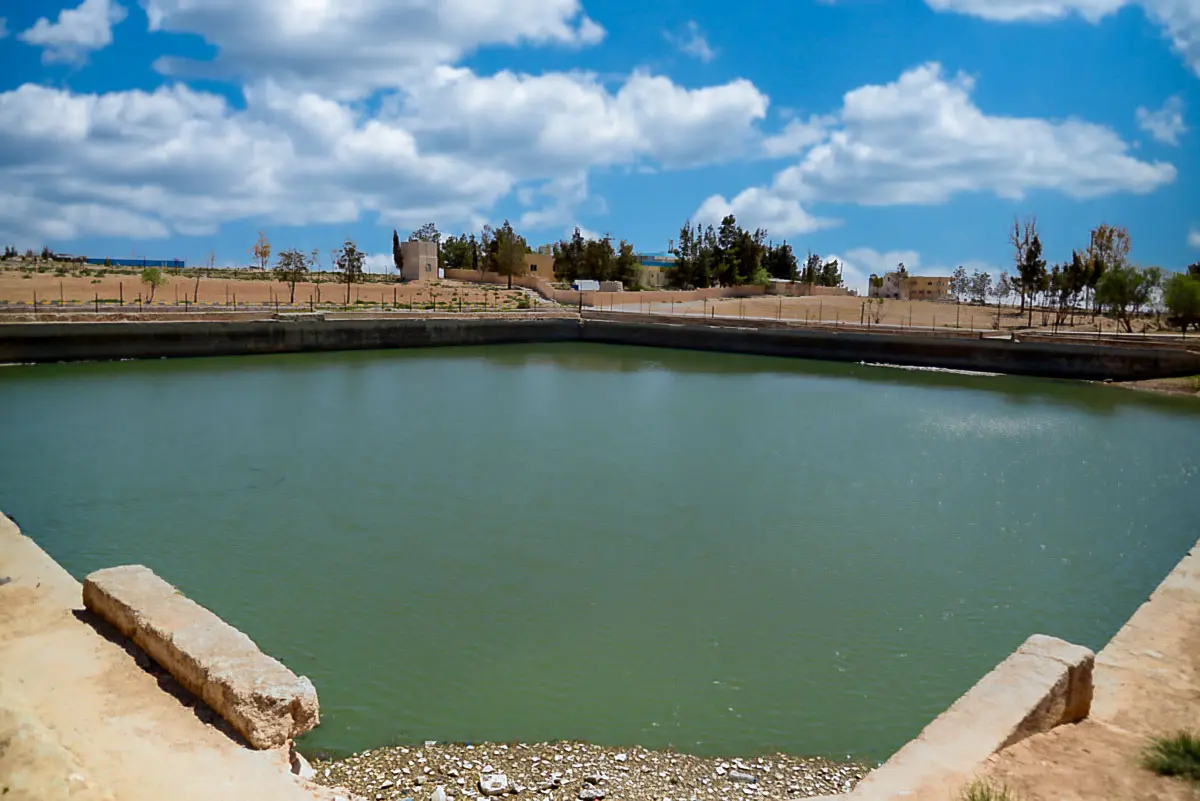
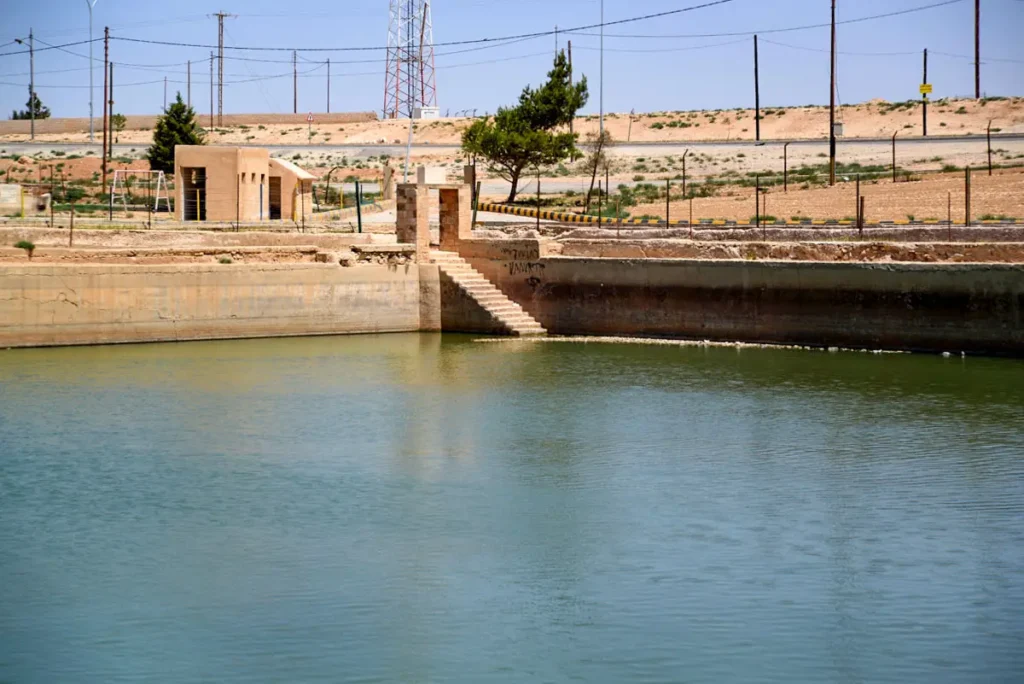
Built for Yazid II and dated AH 104 (AD 722–723), the reservoir has been restored and still collects water today.
Look closely
The stone walls and steps of the pool.
1 of 5
Room by room
What to see
Four stops: the vaulted terrace, the palace mound, the carved stones and the reservoir below. Pick a stop to see what to look for.
 1 / 3
01 · The terrace
Start at the vaults
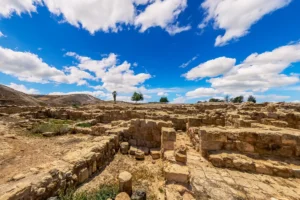
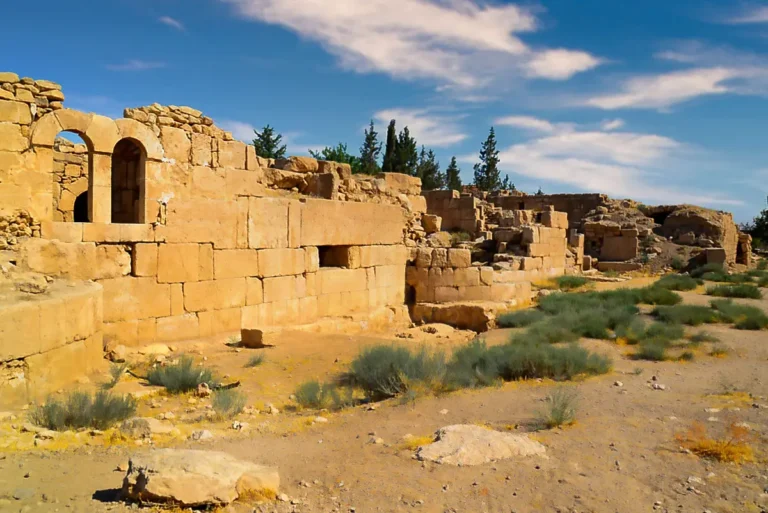
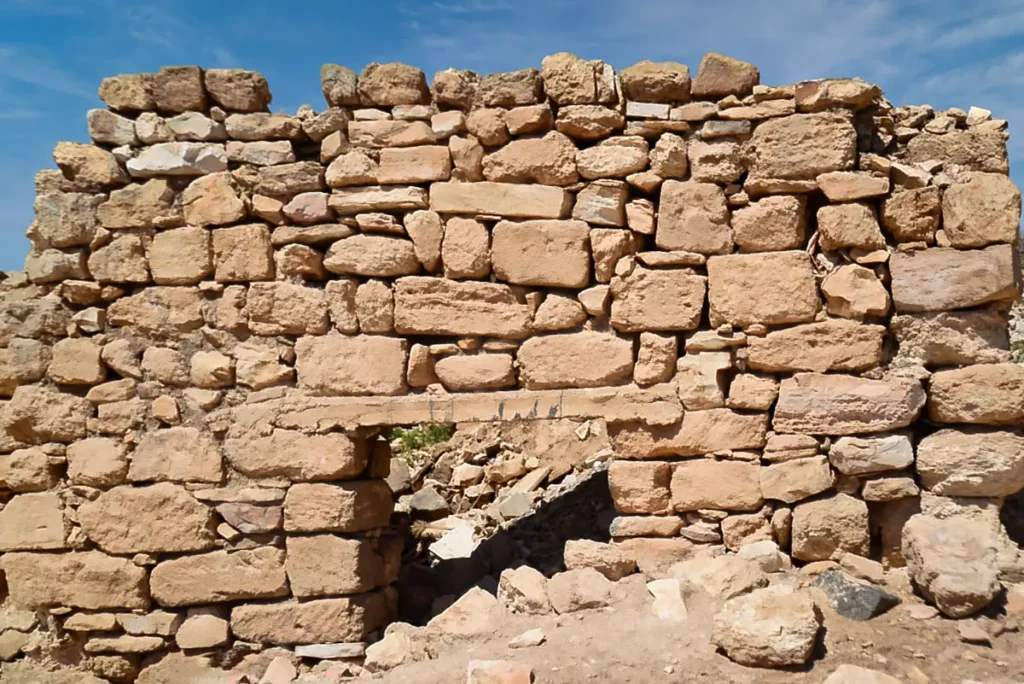
The palace was a rectangle of about 65 × 39 m with round corner towers and half-round towers along the walls. Its eastern part stood on an artificial terrace carried by eight barrel vaults, about 3.7 m wide. These vaults are the clearest part of the palace to survive.
They are the “subterranean vaults” that K.A.C. Creswell still saw among the village houses in 1968.
Eight vaults65 × 39 m palaceCorner towersUmayyad masonry
Look for
- The barrel vaults under the walls
- The size of the stone blocks
- How the terrace levels the hill
 1 / 3
02 · The palace
Walk over the palace mound
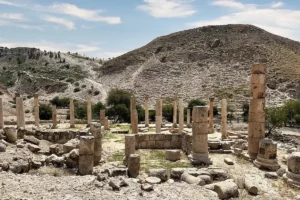
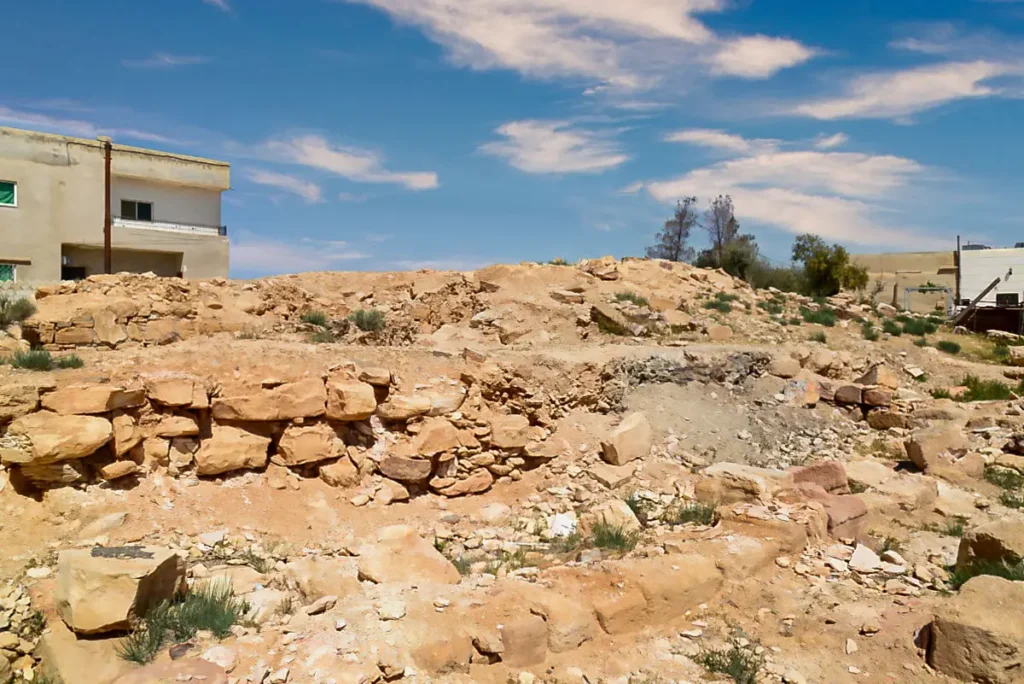
Above the vaults, only patches of the palace survive: a paved terrace, a thick wall that divided the interior into two unequal halves, and eight rooms. Much of the stone has been reused in village houses over the centuries.
The site sits among homes and animal pens. Please respect the neighbours’ privacy.
Paved terraceDividing wallEight roomsVillage setting
Look for
- Stretches of stone paving
- The line of the dividing wall
- Old blocks built into newer walls
Dig deeperRuined, rebuilt, abandoned
Excavations in the late 1980s, led by Mohammad Najjar of the Department of Antiquities, found two destruction levels. The palace was damaged, probably by the earthquake of AD 749. Local people then cleared the debris and built new walls on the palace paving; their Abbasid pottery dates from about 730 to 840.
About a century later a second destruction ended the settlement. Brünnow and Domaszewski found the site already badly ruined in 1889.
 1 / 7
03 · Decoration
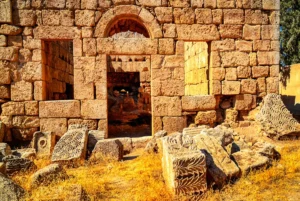
Look at the carved stones
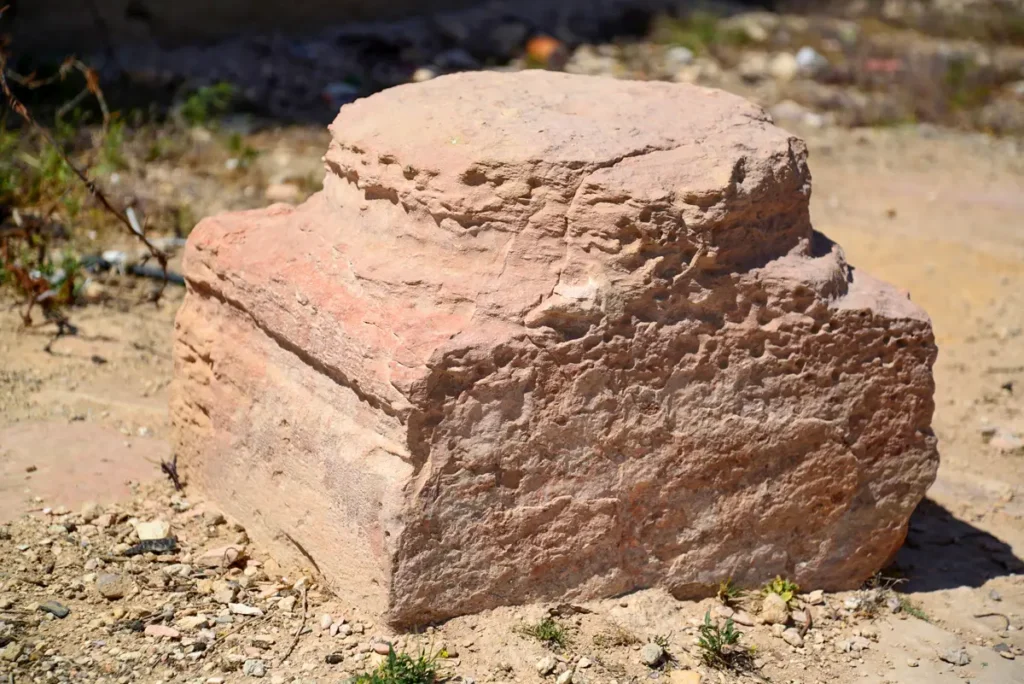
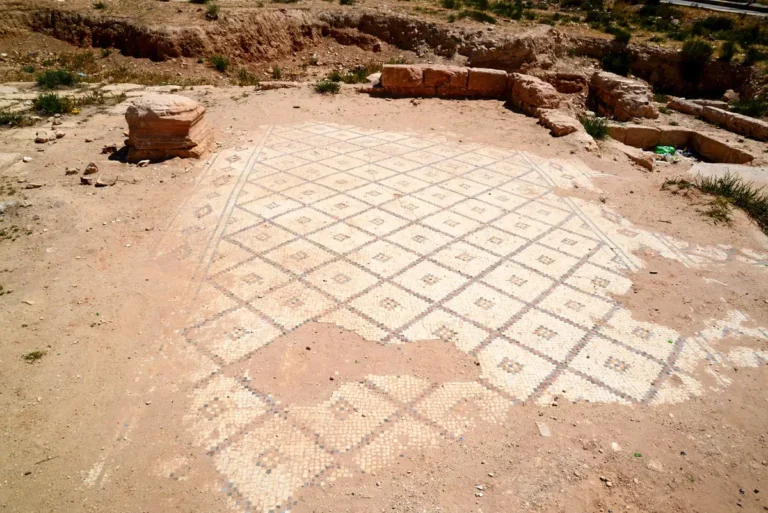
Moulded column bases and carved blocks lie around the mound. The palace columns had capitals carved with acanthus leaves; eighteen carved capitals are known from Muwaqqar.
Look also for the remains of mosaic floors, laid in small stone cubes in simple geometric patterns.
Column basesAcanthus capitalsMosaic floor
Look for
- Mouldings on the bases
- The grid pattern of the mosaic
- Tool marks on the stone
Dig deeperCapitals in three countries
Two Muwaqqar capitals are in the Princeton University Art Museum. Jordan gave them in 1965 as Roman capitals from Jerash, and they were recognised as Umayyad pieces from Muwaqqar only in 1981.
The most important one, with the inscription about the pool, is in The Jordan Museum in Amman.
 1 / 4
04 · Yazid’s pool
Finish at the reservoir
Below the palace, just south of Highway 40, lies the large reservoir. It is contemporary with the palace and has been restored, and it still fills in winter. Herders water their animals here, as they did in the 1950s when the pool was cleared of mud.
The inscribed capital once topped the gauge column that stood in this pool. It had already been moved when it was found in May 1943, broken in two, in the yard of a village house a few hundred metres from the palace.
AH 104 / AD 722–23Still in useRestoredSouth of Highway 40
Look for
- The steps down into the pool
- The inlet where run-off enters
- The palace mound above
Dig deeperThe water gauge
The capital carries a 10-line Kufic inscription: the Servant of God Yazid, Commander of the Faithful, ordered the building of this pool, carried out by ‘Abdallah ibn Sulaym, in AH 104.
It topped a column whose drums stood in the water, each marked in cubits, and the words “fifteen cubits” between two lines of text mark the highest water level. R.W. Hamilton published it in 1946.
History & significance
Yazid II’s palace and pool
Al-Muwaqqar was built for Caliph Yazid II around AD 720–724, with a reservoir dated AH 104 (AD 722–723). Damaged probably by the earthquake of 749, it was reoccupied in Abbasid times before being abandoned.
- 722–723Reservoir dated by inscription (AH 104)
- 749Probably damaged by an earthquake
- c. 750–850Reoccupied in Abbasid times
- 1943The inscribed gauge capital is found
 ProfileQasr Al-Muwaqqar: the full storyHistory, architecture, the water gauge inscription and the timeline. About 3 min read.Read the profile →
Plan your visit
Everything you need to know before you go
Al-Muwaqqar is the first desert castle on Highway 40 east of Amman, in the village of the same name. The reservoir is just south of the highway, with the palace mound above it.
Good to know: the palace ruins lie among village houses and animal pens, and parts are used for rubbish. There is no fence, sign or ticket office.
Opening hoursOpen accessUnstaffed site · visit in daylight
Entry ticketFreeNo ticket office
Time to visit20 minIncluding the reservoir
From Amman30 kmAbout 35 minutes east on Highway 40
LocationAl-Muwaqqar31.8126° N, 36.1037° EGet directions
Opening hours and prices checked October 2026. Spotted a change? Let us know
On site
What you’ll find at Qasr Al-Muwaqqar
Not on site: visitor centre, ticket office, toilets, designated parking, museum, guide, food & drinks, market / shop, hotels
Access: no 4x4 needed
When to go
Any time of year. The reservoir is fullest after winter rain, in late winter and spring.
J
F
M
A
M
J
J
A
S
O
N
D
BestGood, cooler or warmVery hot
Tip: see the inscribed capital in The Jordan Museum in Amman before or after your visit; it makes sense of what you see at the pool.
Before you go
Services are limited out in the desert.
- Water and snacksSmall shops in the village
- Sun hat and sunscreenVery little shade outside
- Comfortable shoesUneven, stony ground
- Cash in Jordanian dinarsFor small purchases
- Toilet paperBring your own, just in case
Common questions
Quick answers before you set off.
Is there an entrance fee?
No. The site is open and unstaffed.
Where is the inscribed capital?
In The Jordan Museum in Amman. It belongs to the collection of the Jordan Archaeological Museum.
Is there water in the reservoir?
Usually, yes. It was restored and still collects winter run-off, so it is fullest in late winter and spring.
Do I need a 4x4?
No. The reservoir is next to Highway 40 and the palace is in the village.
Can I combine it with other desert castles?
Yes. It is on the way to Qasr Kharana and Qasr Amra, and close to Qasr Al-Qastal and Qasr Al-Mushatta.
What should I wear?
Comfortable, closed shoes for uneven ground, and light clothing that covers your shoulders and knees, which is respectful in rural Jordan and protects you from the sun.
Combine with
Al-Muwaqqar is on Highway 40, the road to the Eastern Desert castles. Drive times are from Al-Muwaqqar.
Explore this site
More from Qasr Al-Muwaqqar
Panoramas, walk-throughs, photos and stories about this site.
ProfileQasr Al-Muwaqqar: history & architecture Photo albumQasr Al-Muwaqqar: Yazid II’s Palace and Reservoir in Photos
Nearby
Also east of Amman
From guide to visit
See Qasr Al-Muwaqqar with a private guide
Al-Muwaqqar isn’t a stop on our regular tours, but it is right on the road to the Eastern Desert castles. Tell us when you’d like to go, and we’ll plan a private day that includes it.