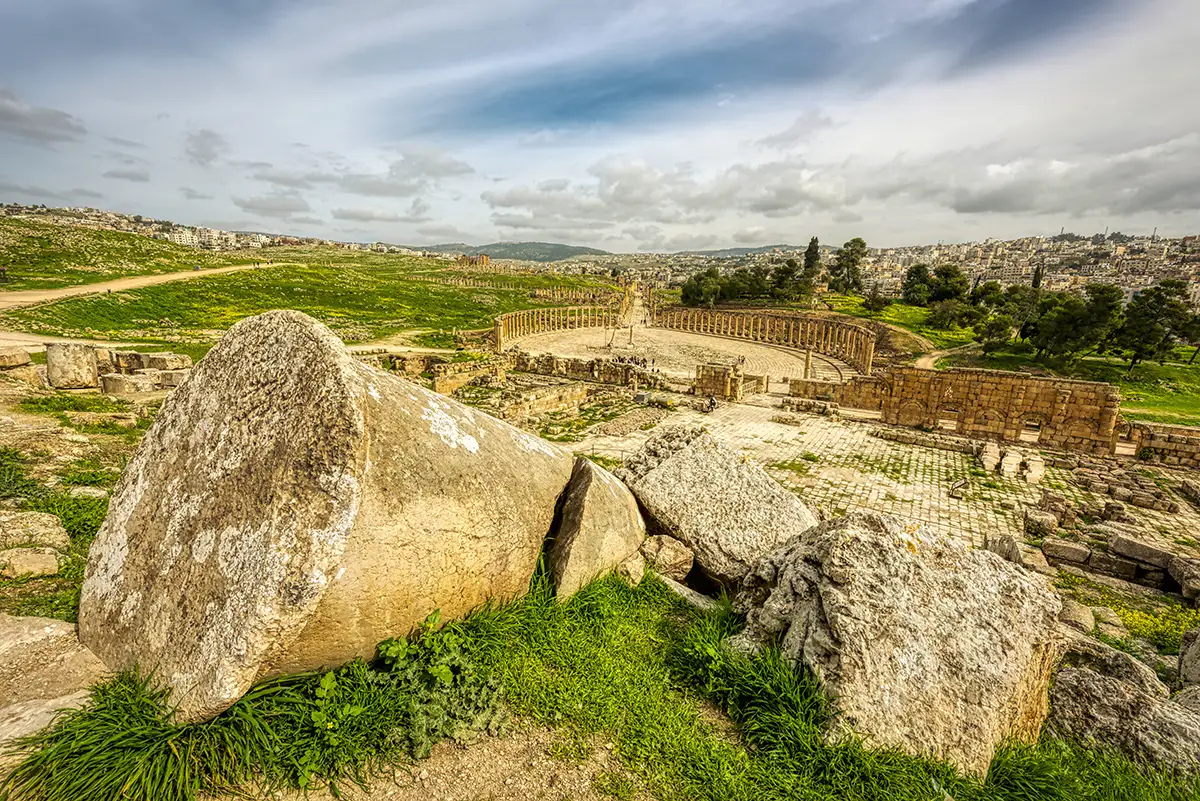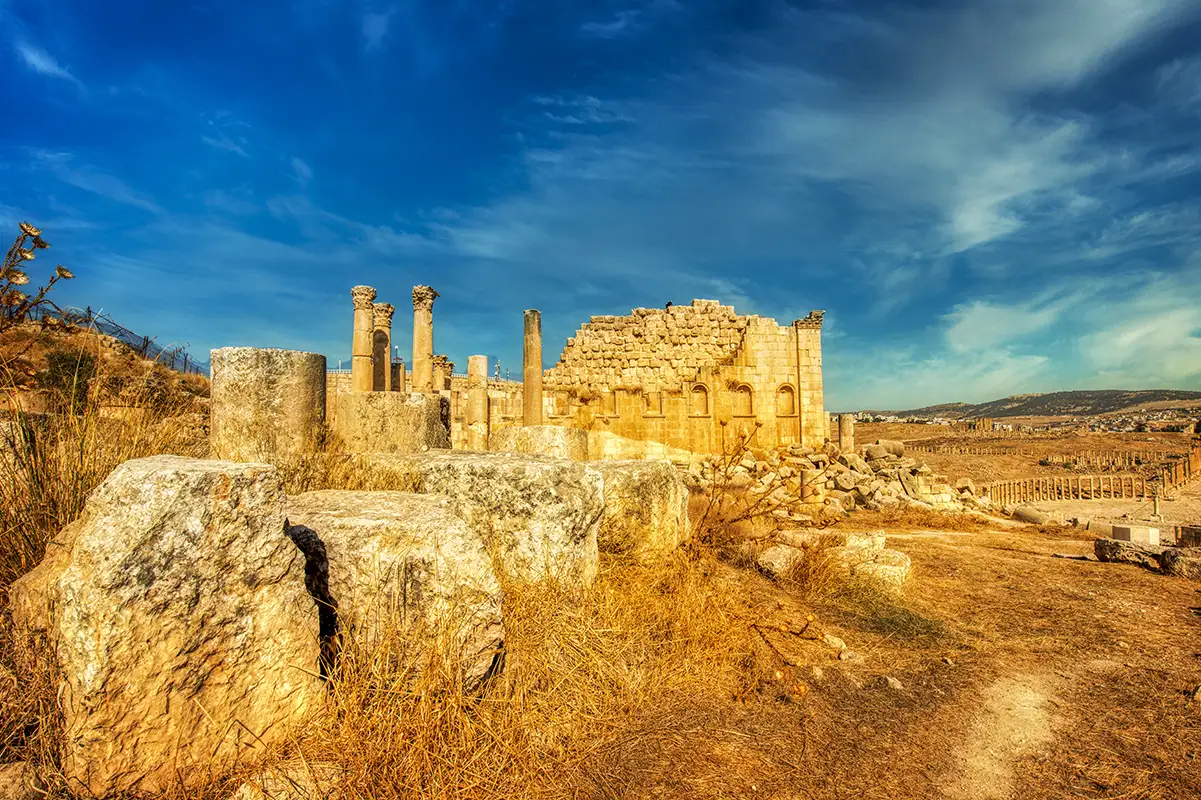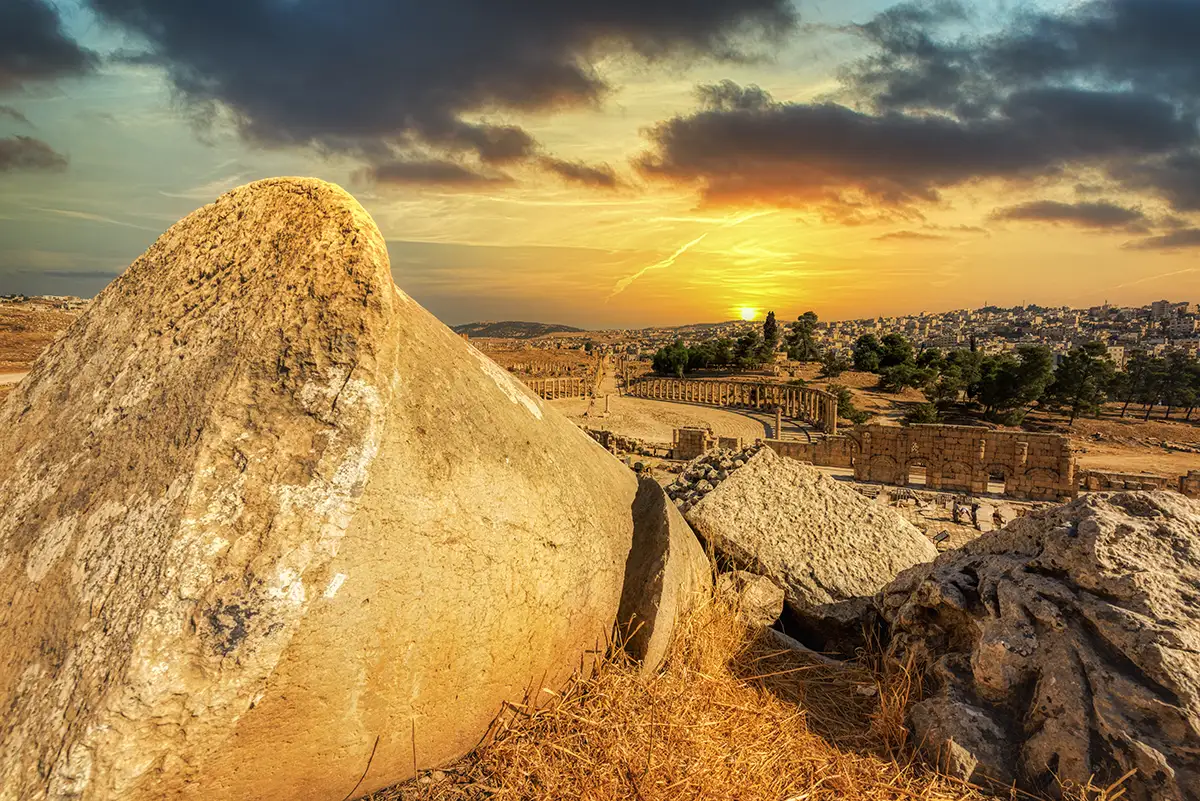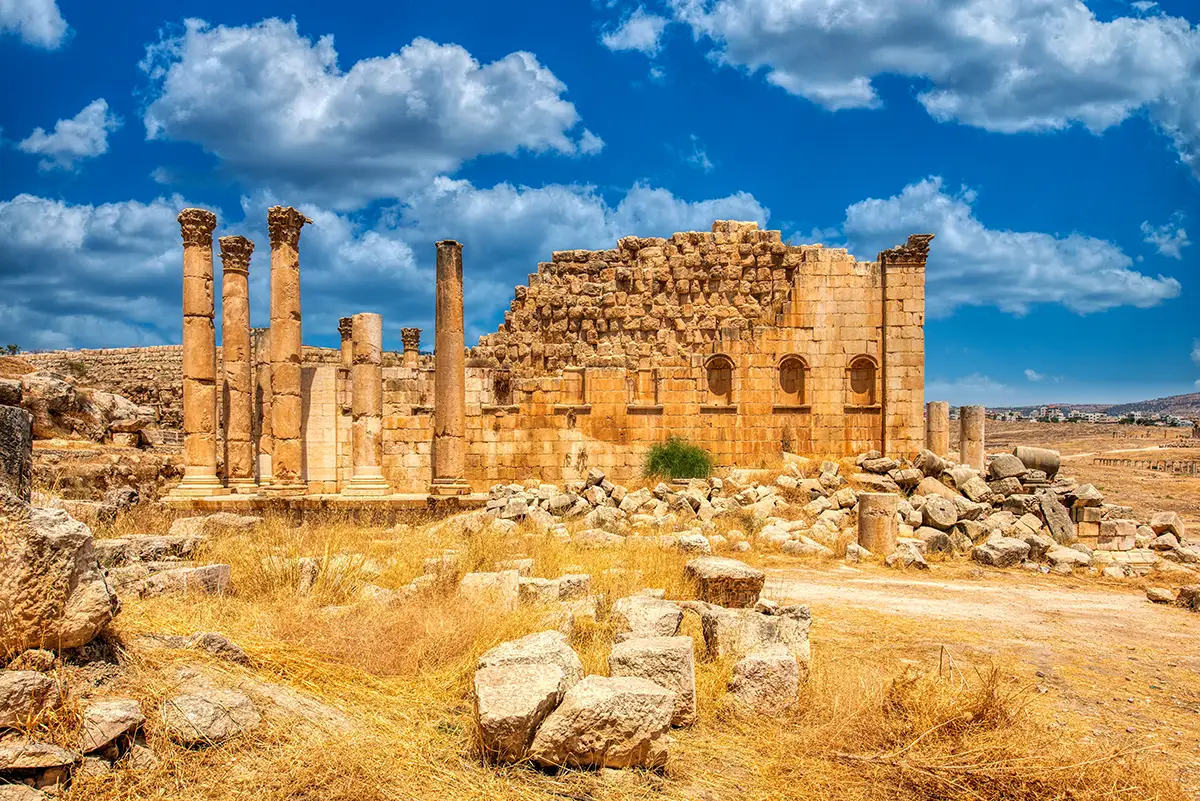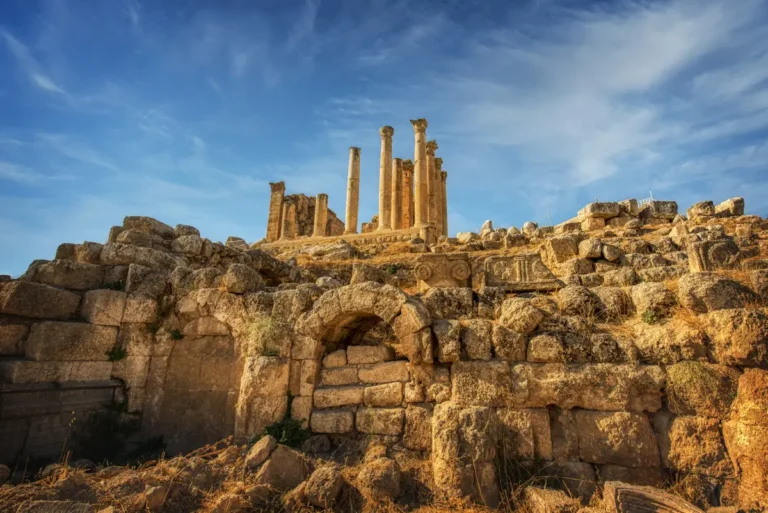

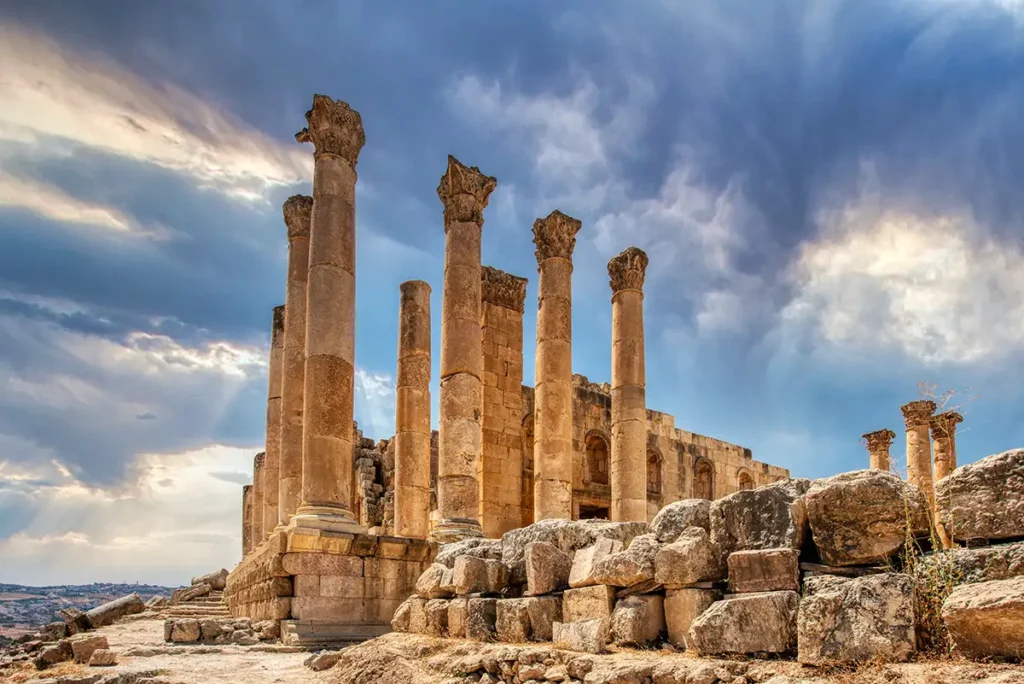
Rising on a hill above the Oval Plaza, the Sanctuary of Zeus was the religious heart of Gerasa for centuries. Its lower terrace, monumental stairs and great temple on a high podium were designed to be seen from all over the city — and today its surviving columns give one of the best views across the whole archaeological park.
Where Is the Sanctuary of Zeus?
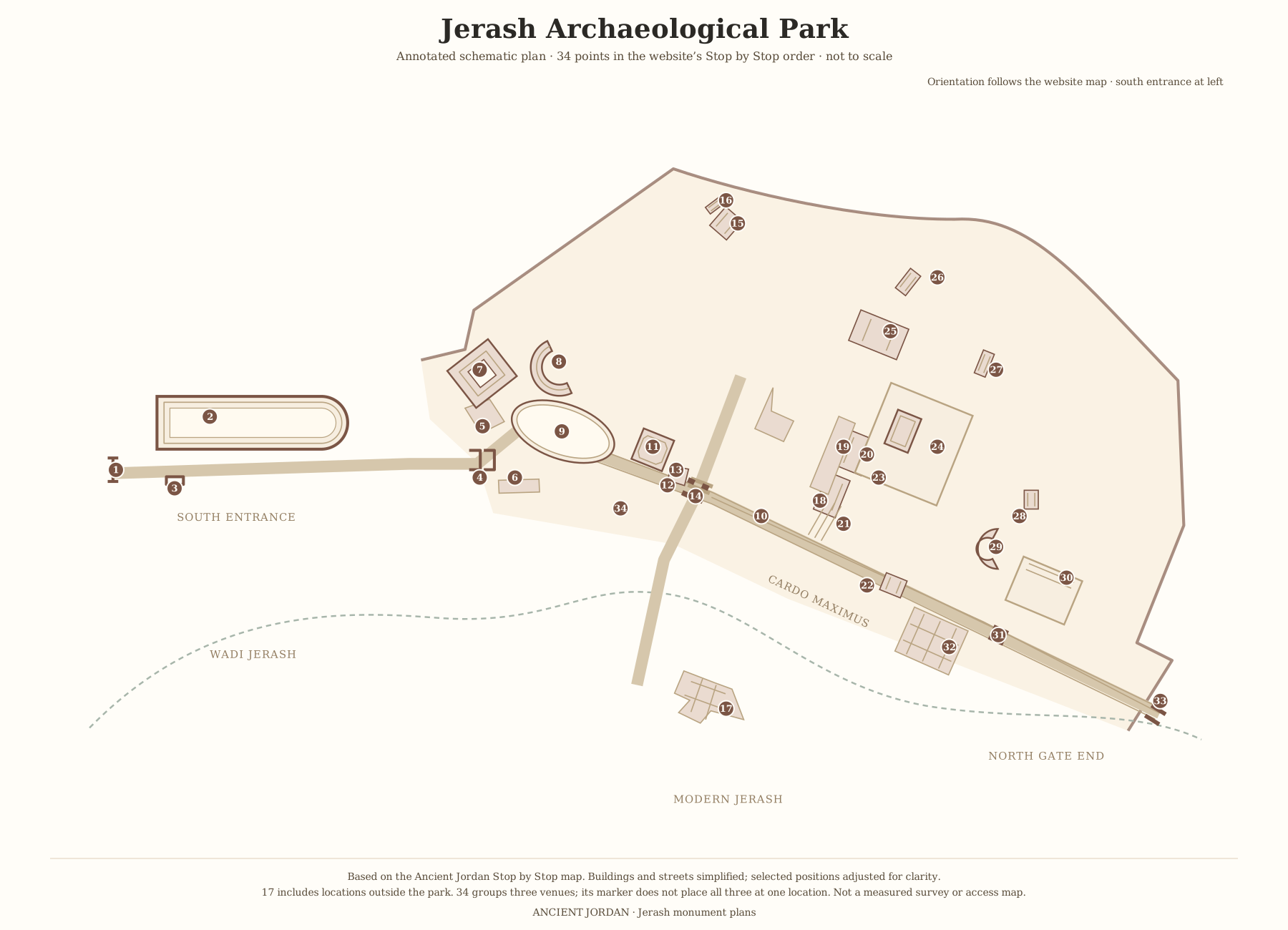
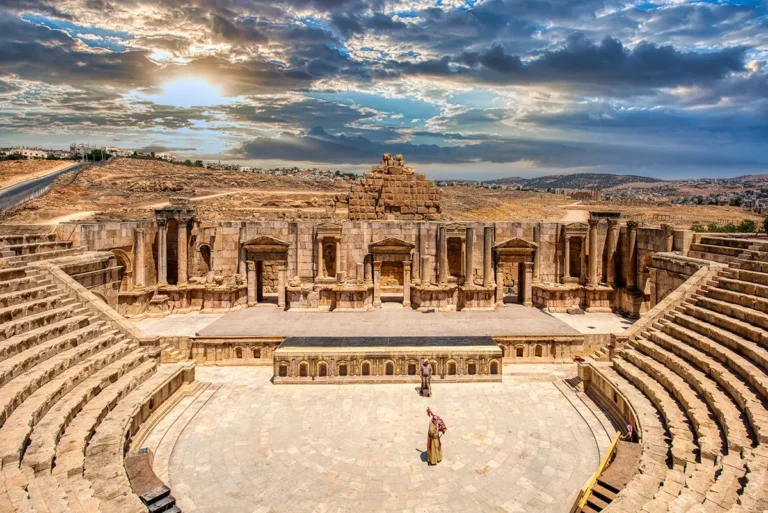
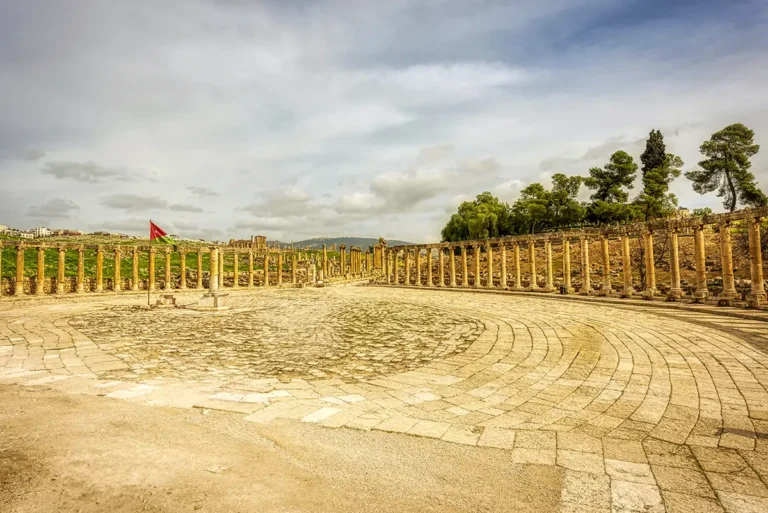
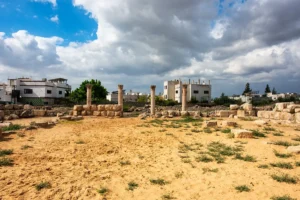
The sanctuary occupies the hill directly above the Oval Plaza, at the southern end of the ancient city. The South Theatre lies just behind it, and the South Gate and the West Souk are at the foot of the slope.
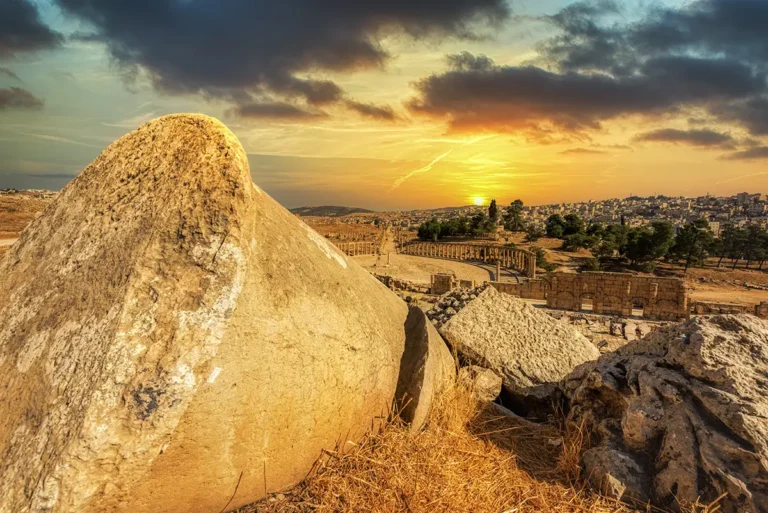
Its position was deliberate: the temple could be seen from the plaza and the main street, while from the top the whole southern city opens out below.
Historical Context and Origin
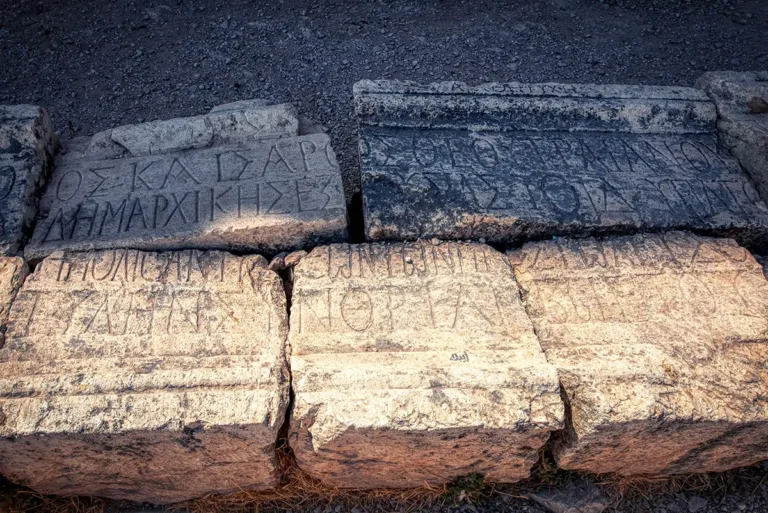
The hill was a place of worship long before the Romans — as early as the 7th–5th centuries BC. Around 80–70 BC a small temple made it Gerasa’s principal sanctuary. An inscription of AD 27/28 credits the architect Diodoros, son of Zebeidos, with enlarging the sacred court, and in AD 69/70 the early shrine was replaced as Gerasa grew into a Roman provincial city.
The great temple on the upper terrace was dedicated in AD 162–163. As Christianity spread, the cult of Zeus faded, and by the middle of the 5th century the sanctuary was out of use.
Architectural Design
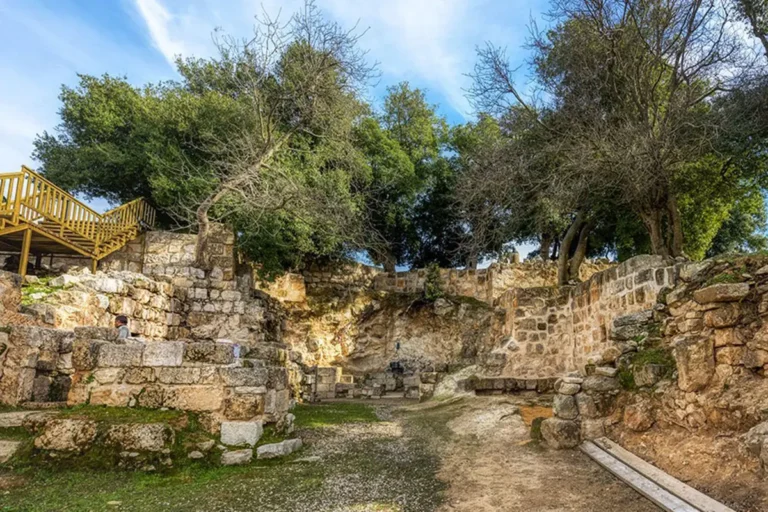
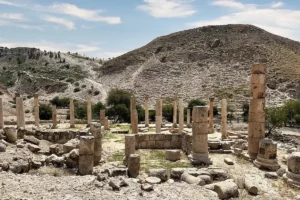
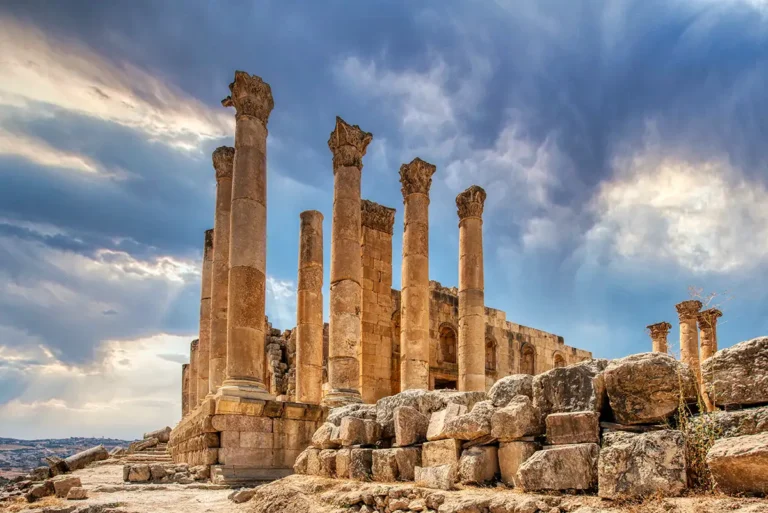
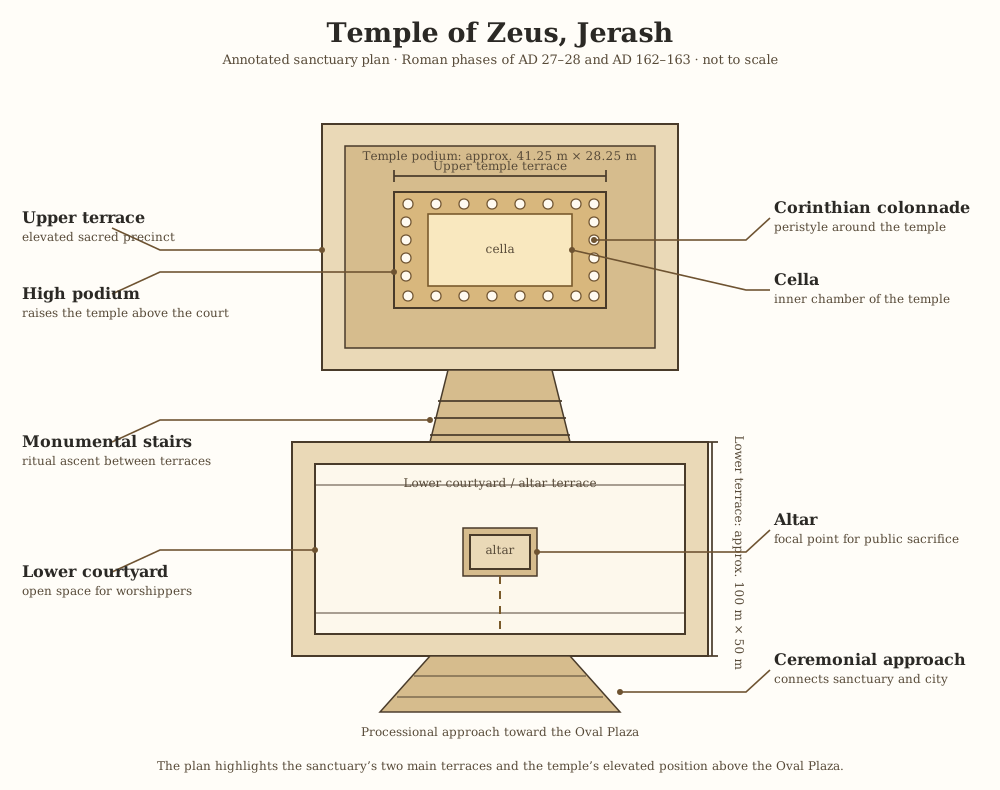
The sanctuary is built on two levels. Worshippers gathered on the broad lower terrace, around the altar where offerings were made in view of the temple above. Monumental stairs then climbed to the upper terrace, where the temple stood on its podium, surrounded by a colonnade of Corinthian columns, with eight across the front. Inside, the cella held the cult image of the god; most public ritual took place outside, in the courts and on the terraces.
The Lower Terrace
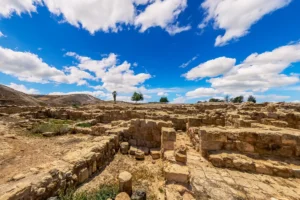
A sacred court of about 100 × 50 m, enlarged around AD 27/28, where worshippers gathered at the altar.
The Monumental Staircase
Stairs linked the two levels and turned the approach into a staged ascent. A French-Jordanian team is now studying and conserving them.
The Temple Podium
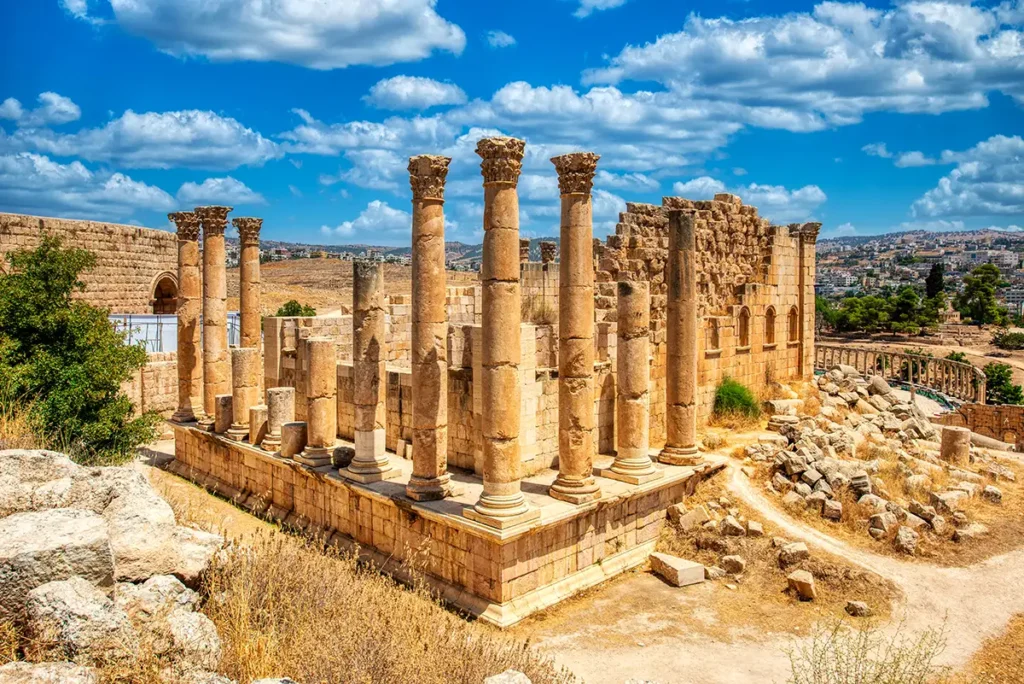
The temple stood on a high podium about 41 × 28 m, lifting it above the upper terrace and the city.
The Corinthian Columns
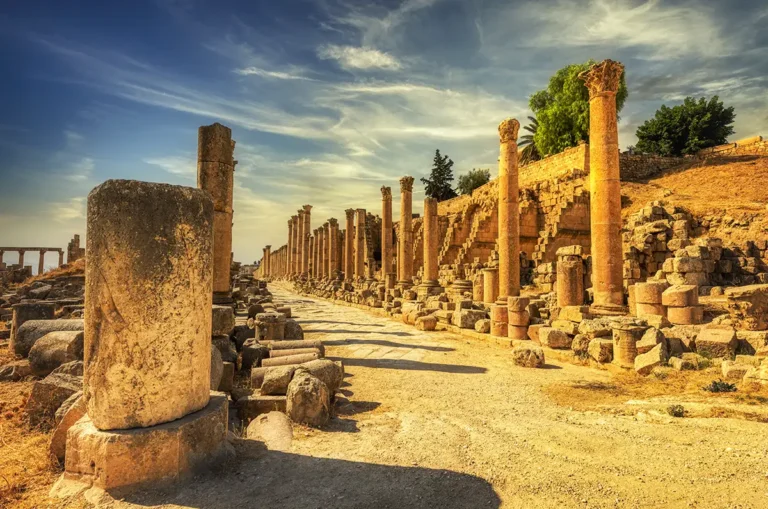
Eight columns stood across the front of the temple. Several still rise about 15 m against the sky.
Destruction, Rediscovery, and Restoration
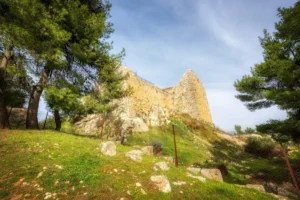
After worship ended, the abandoned temple was gradually ruined, and earthquakes later brought down much of its colonnade, leaving huge column drums scattered across the hill. Between 1982 and 1996 the Jerash International Project excavated the sanctuary and traced its long history. Since 2025 a French-Jordanian team has been studying and conserving the monumental staircase.
Visiting the Sanctuary of Zeus Today
Begin below, in the Oval Plaza, to see the temple as the city saw it. Climb to the lower terrace, then look back as you go higher: the Oval Plaza, the Cardo Maximus and the South Theatre unfold below you. The upper terrace is one of the best viewpoints in Jerash.
Late-afternoon light brings out the texture of the stonework and the terraces. Take a moment by the columns to appreciate their scale — a person standing at the base gives the best sense of it in photos.