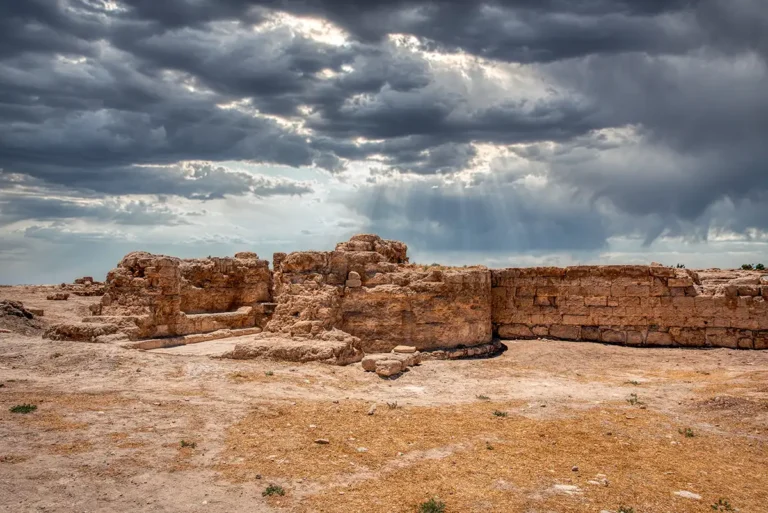

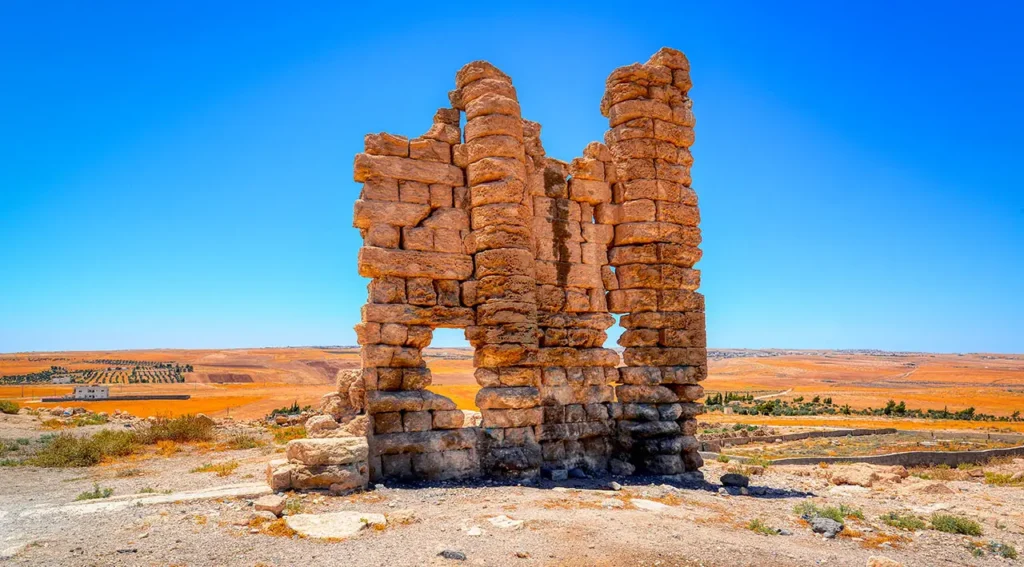
For centuries a single tall wall of dressed stone stood on the hilltop at Dhat Ras, visible far across the plateau. It was all that remained above ground of a Nabataean sanctuary — and it became one of the most recognisable ruins of southern Jordan, until it was taken down in 2025 to be rebuilt.
Where Is the Dhat Ras Wall?
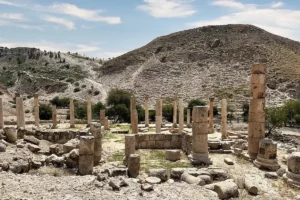
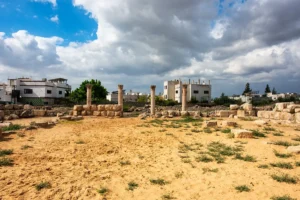
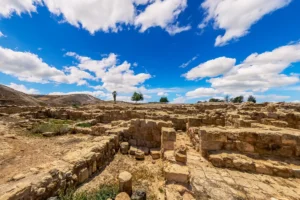
The wall stood on the northern hilltop, or acropolis, of Dhat Ras, a village on the north side of Wadi al-Hasa at the southern end of the Karak plateau, about 21 km south-south-east of Karak. Two temples stood on this hilltop; the wall belonged to the western one.
Historical Context and Origin
The archaeologist Robert Wenning dated the western acropolis building to the early 1st century AD, as a Nabataean sanctuary. It is one of three temples at Dhat Ras; the best-preserved, the small temple, stands in the village below.
Architectural Design
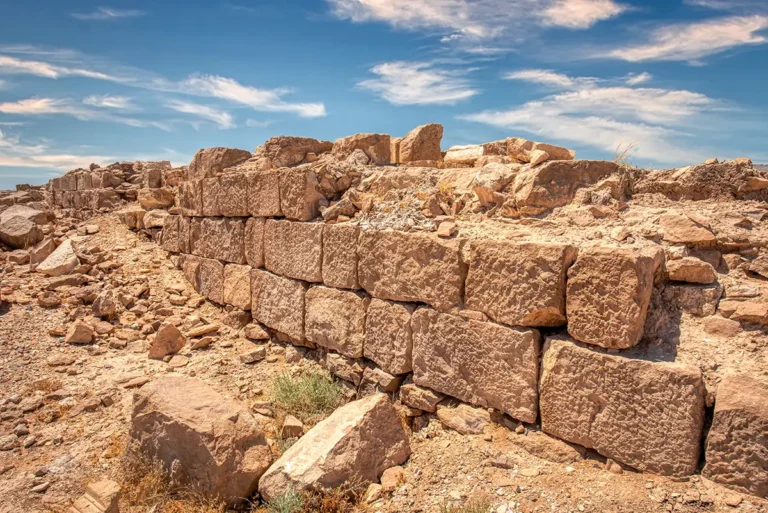
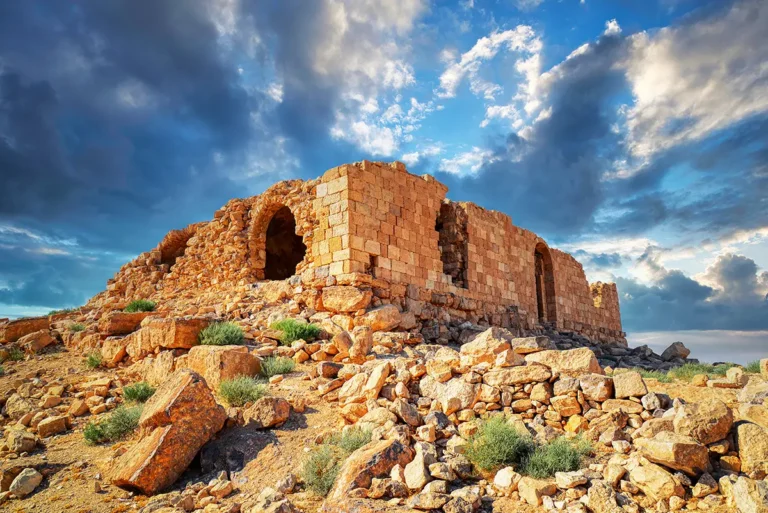
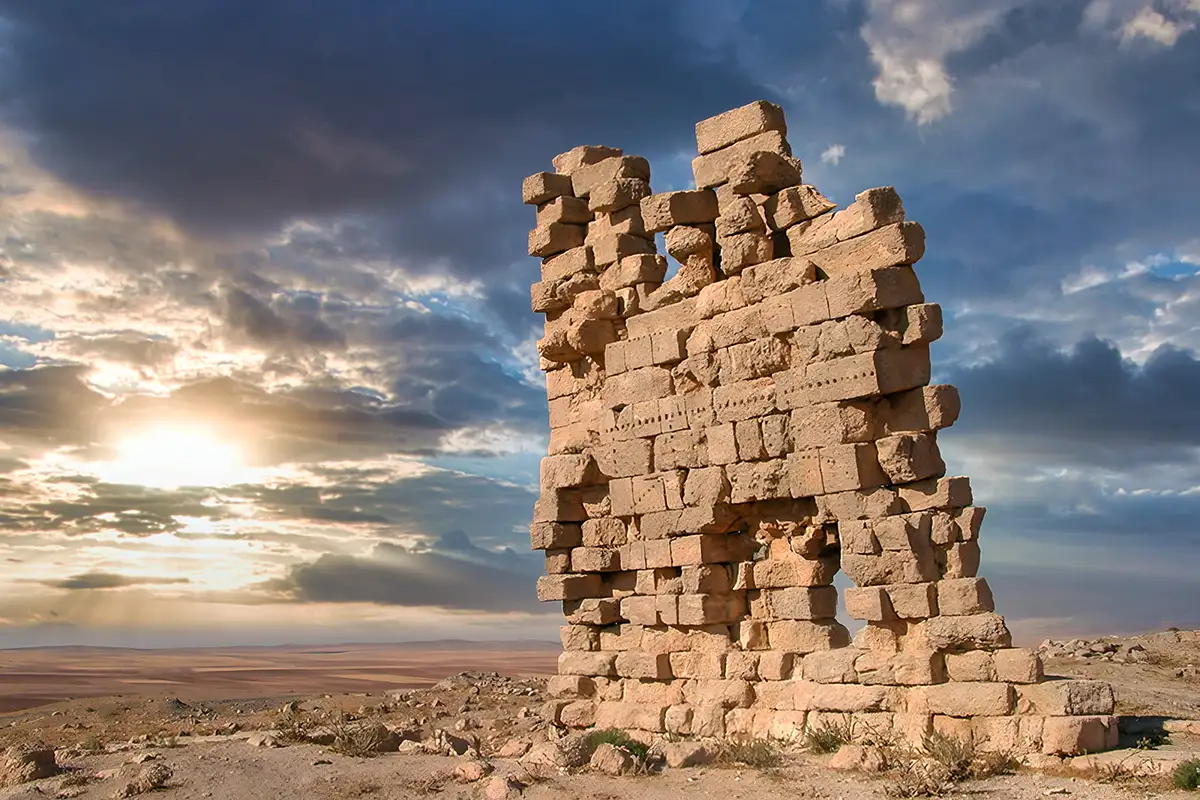
What survived was the high eastern wall — in fact only the northern half of the east side. It was built of large limestone blocks, and its face was decorated with pilasters and half-columns. A row of circular windows ran across its upper part. The architect Ammar Khammash, who described it in 2003, thought it looked more Nabataean than Roman.
A Lone Wall
Only the northern half of the east side stood, alone on the hilltop.
Pilasters and Half-Columns
Its face was articulated with pilasters and half-columns.
Circular Windows
A row of round windows pierced the upper part of the wall.
“The Minaret”
Villagers called the wall al-Mi’dhana — “the minaret”.
Temple Wall or Sanctuary Wall?
Villagers knew the wall as al-Mi’dhana, “the minaret”. What it was is still debated. Wenning noted that it is unclear whether it belonged to the temple itself or to the wall of the sacred enclosure (temenos) around it, and Khammash wondered whether the building might have been a mausoleum. Without excavation, the question remains open.
Destruction, Rediscovery, and Restoration
Nelson Glueck recorded the temples of Dhat Ras in the 1930s. By 2003 Khammash warned that the wall “might fall at any moment” and urged consolidation rather than reconstruction. A platform inside the sanctuary was later earmarked for a reconstruction of the temple. In 2025 the site was fenced and the authorities dismantled the wall in preparation for rebuilding it; the rebuilding is still under way.
Visiting the Dhat Ras Wall Today
The site is fenced while the wall is rebuilt, and it can no longer be seen standing. See our guide Visiting the Archaeological Sites of Dhat Ras for the current situation, and visit the small temple in the village below.
Further reading: Ammar Khammash on the Dhat Ras monuments; Megalithic Portal — Dhat Ras temples (with R. Wenning’s notes).