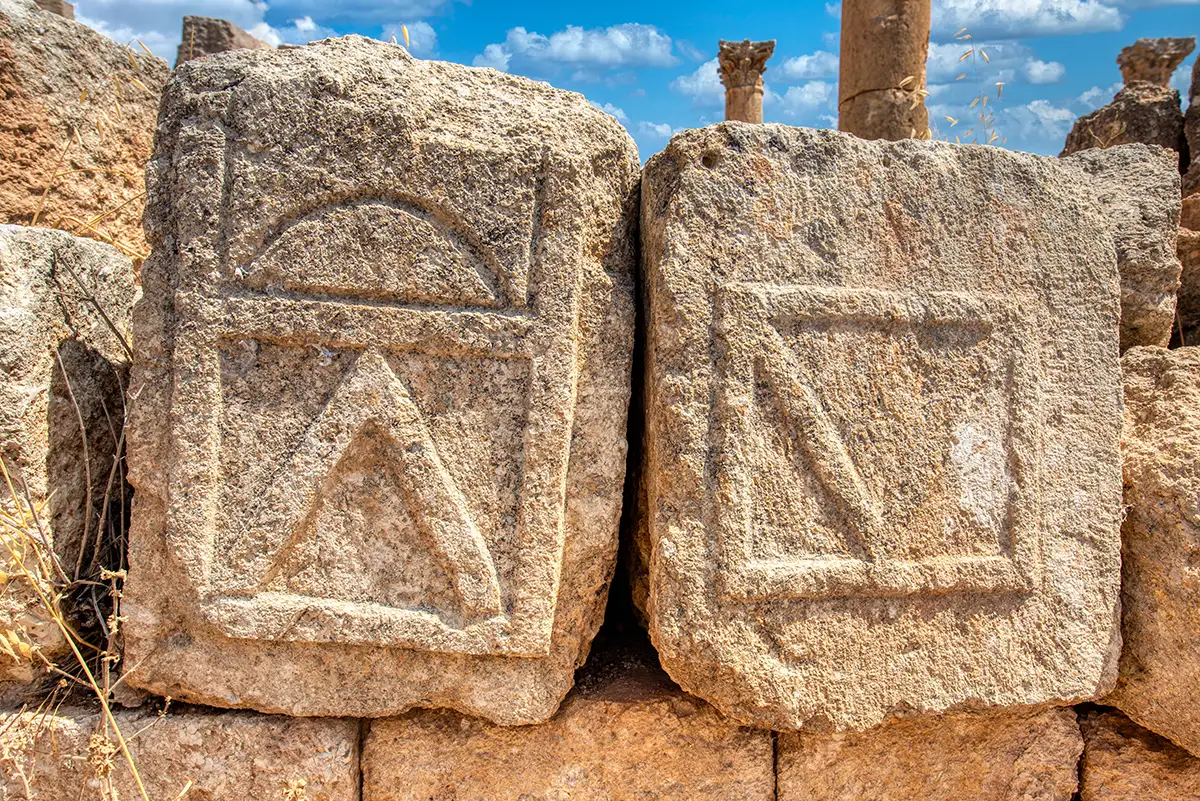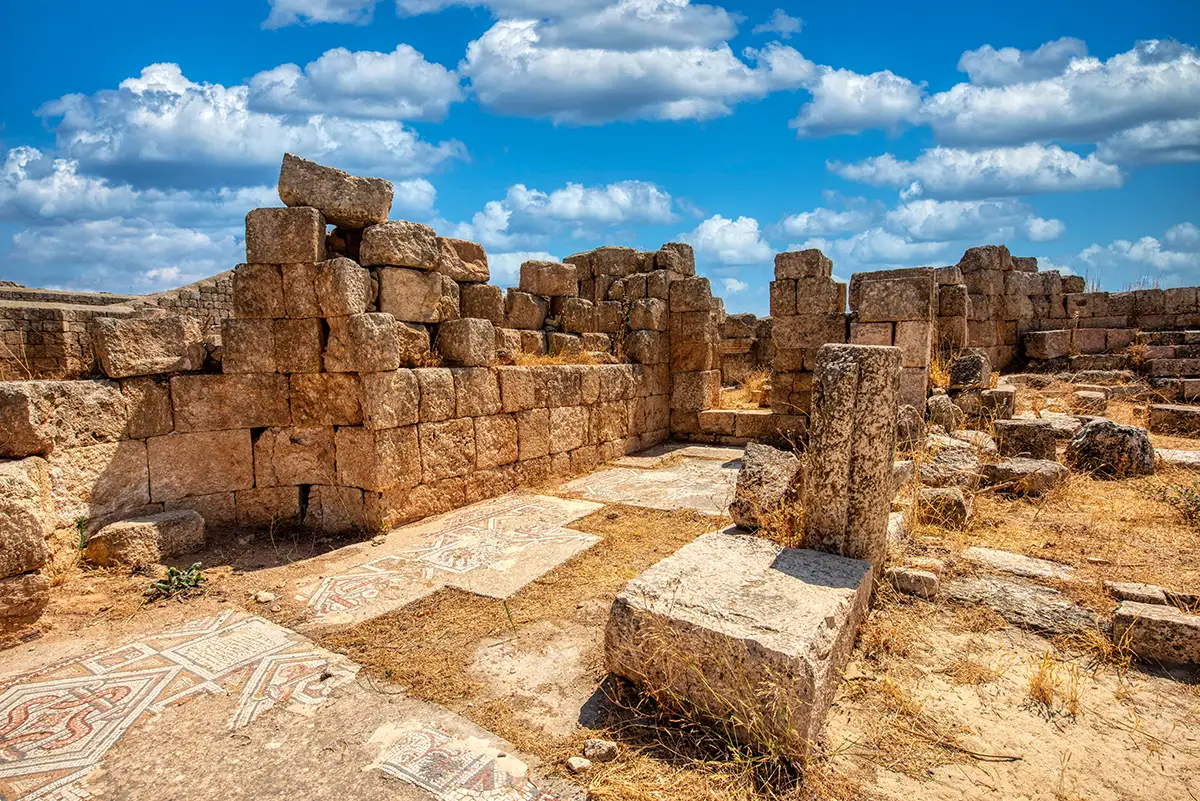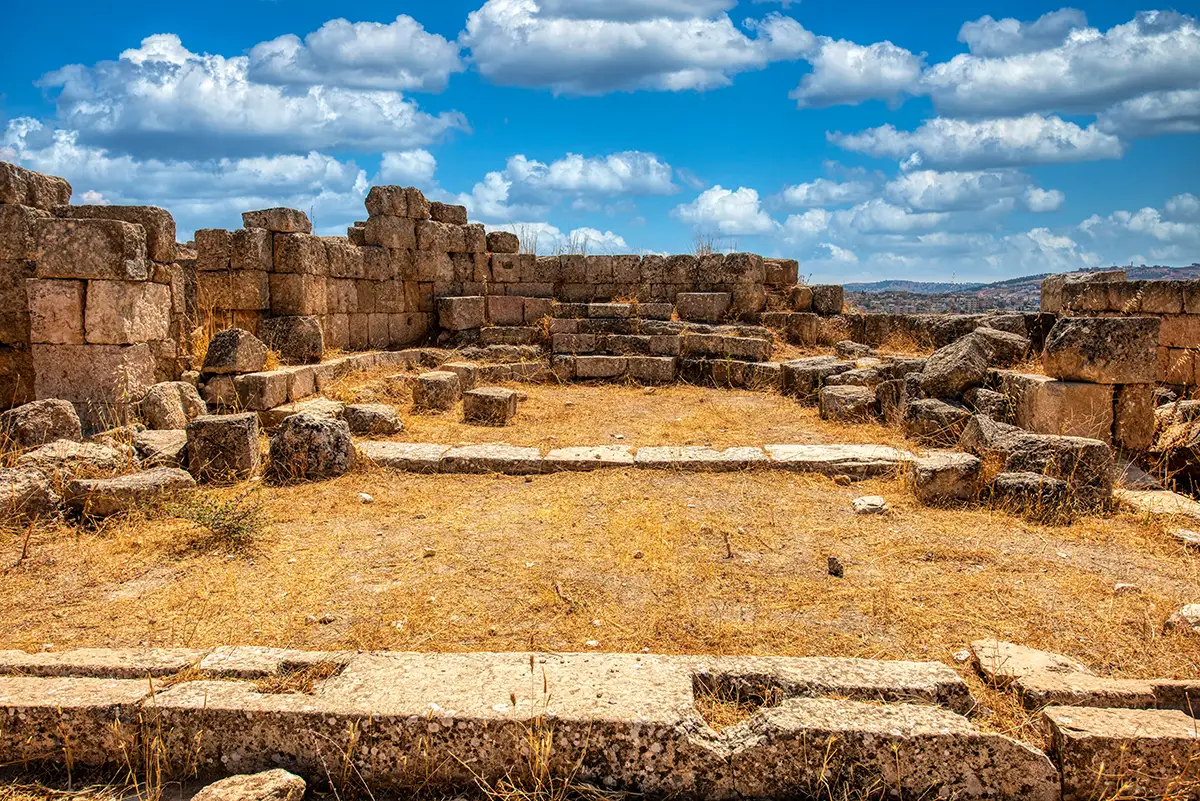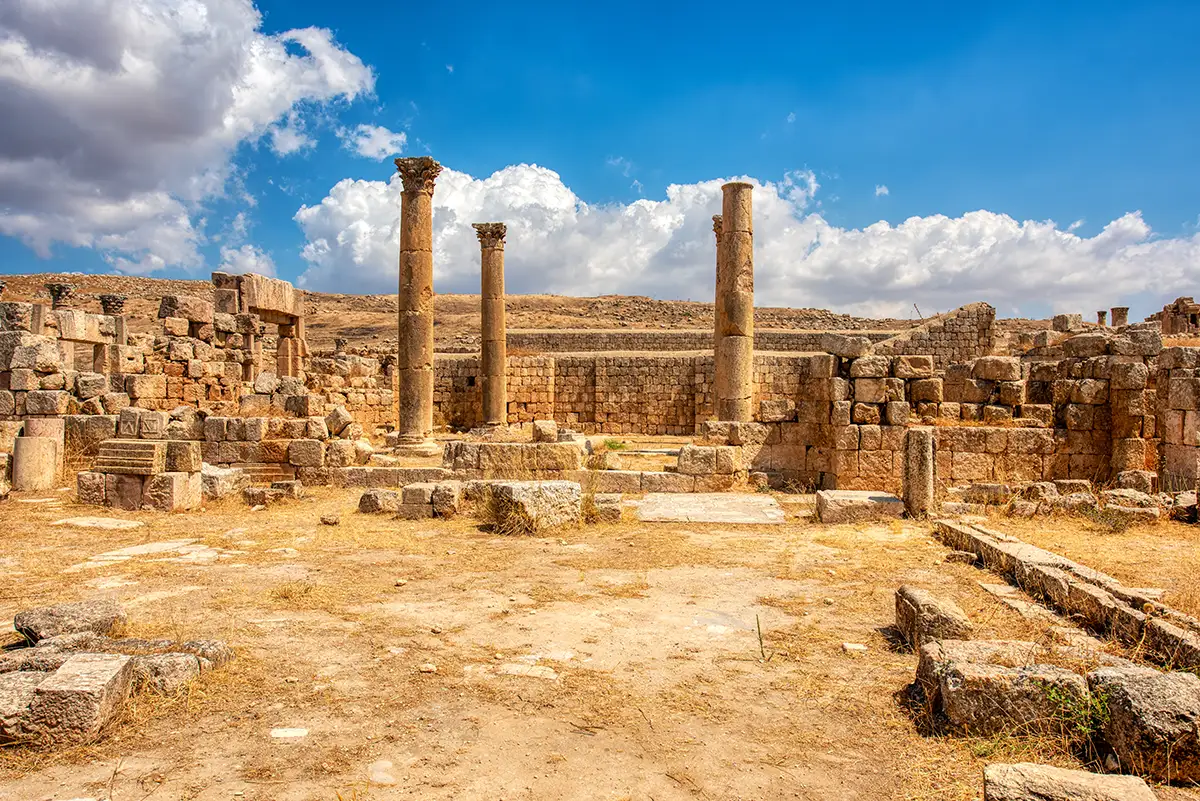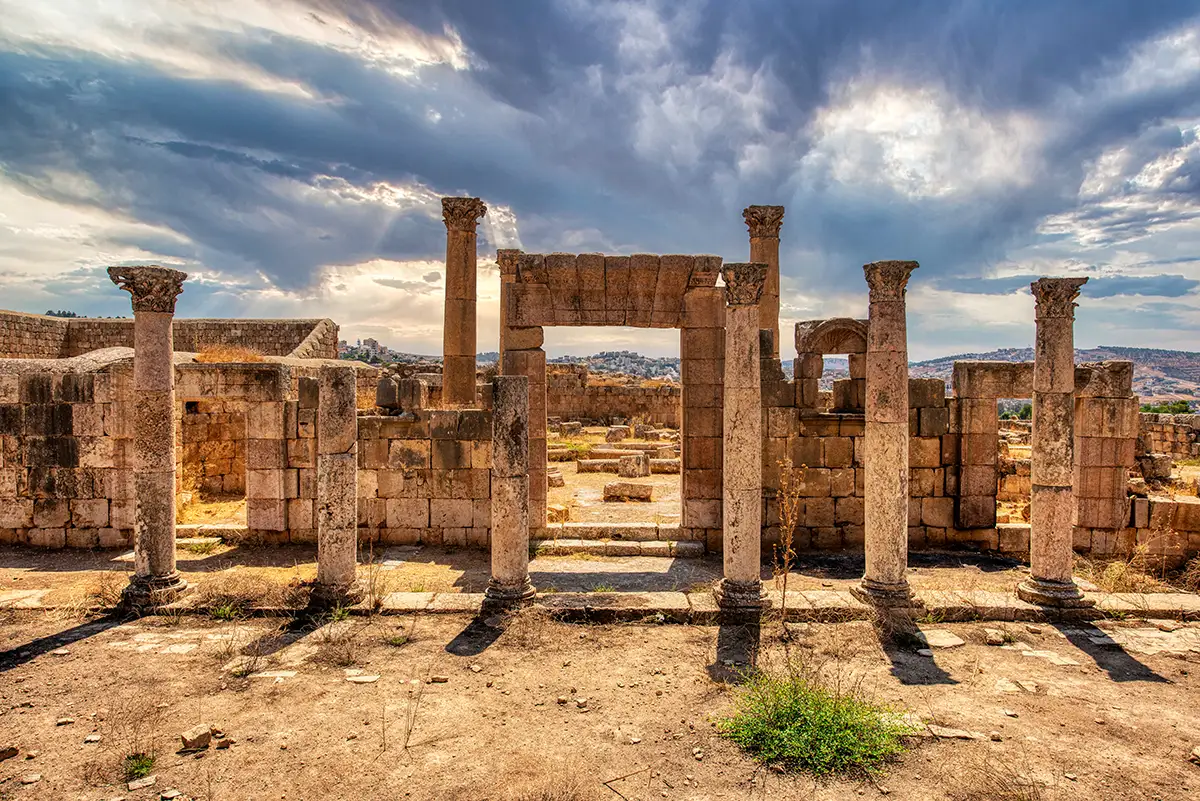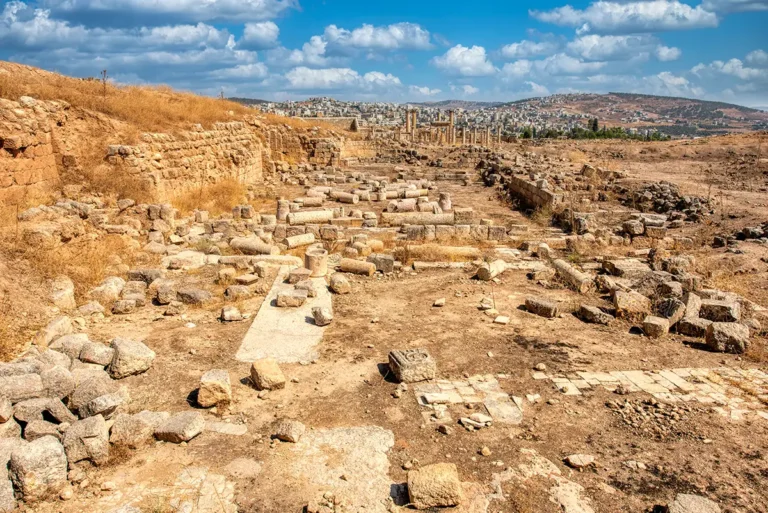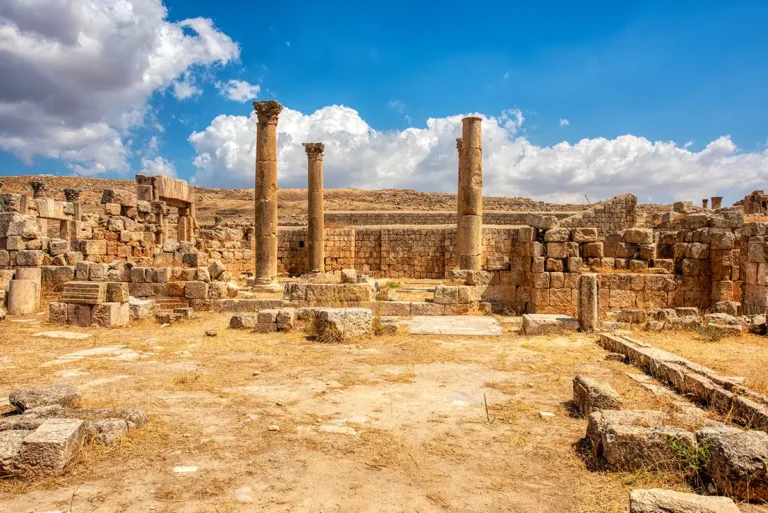
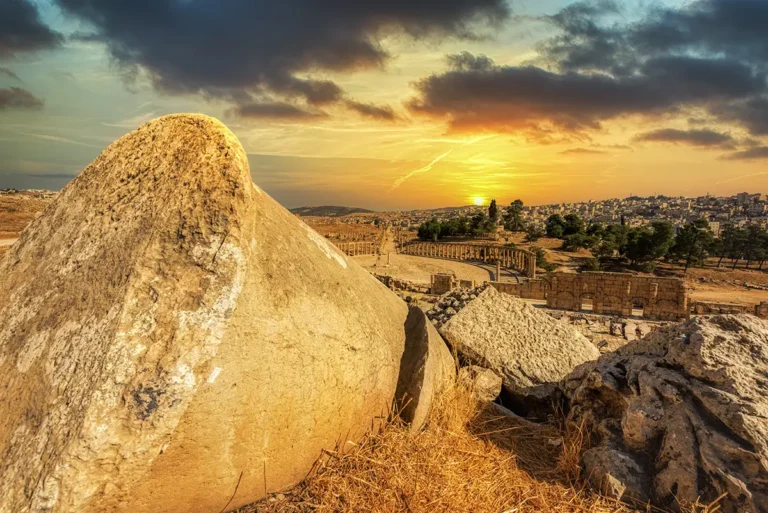
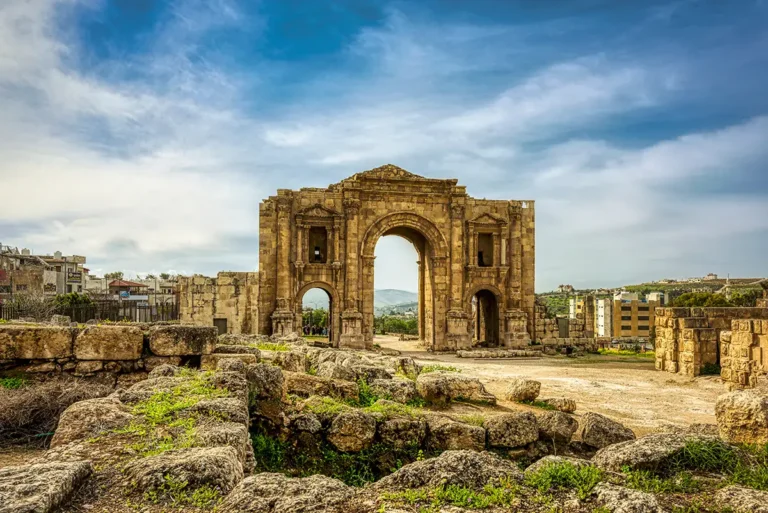
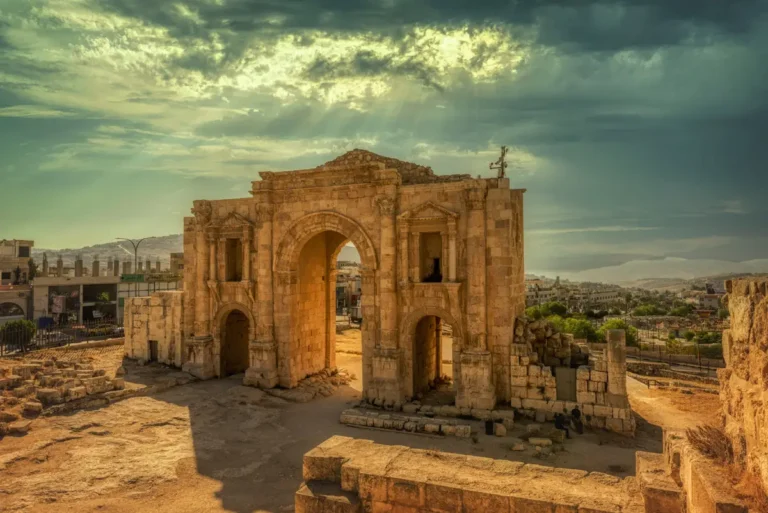

Between AD 529 and 533 the Christians of Gerasa built not one church but three, side by side: St George, St John the Baptist and Saints Cosmas and Damianus. Sharing a forecourt and walls, but each with its own saint, plan and mosaics, the Three Churches Complex is one of the clearest records of Jerash as a thriving Byzantine Christian city.
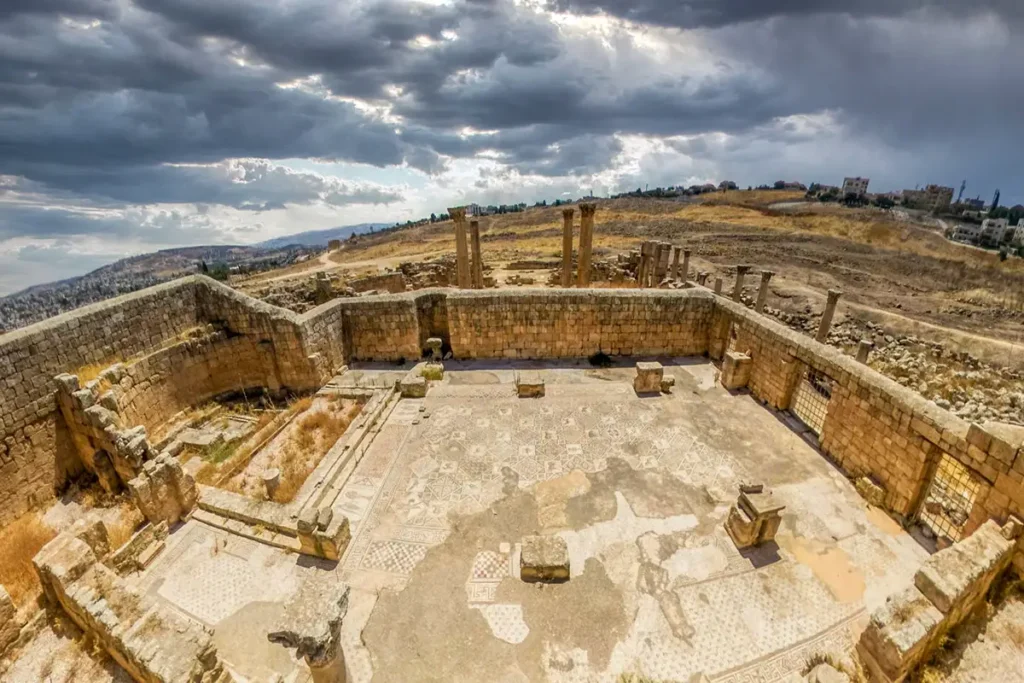
Where Is the Three Churches Complex?
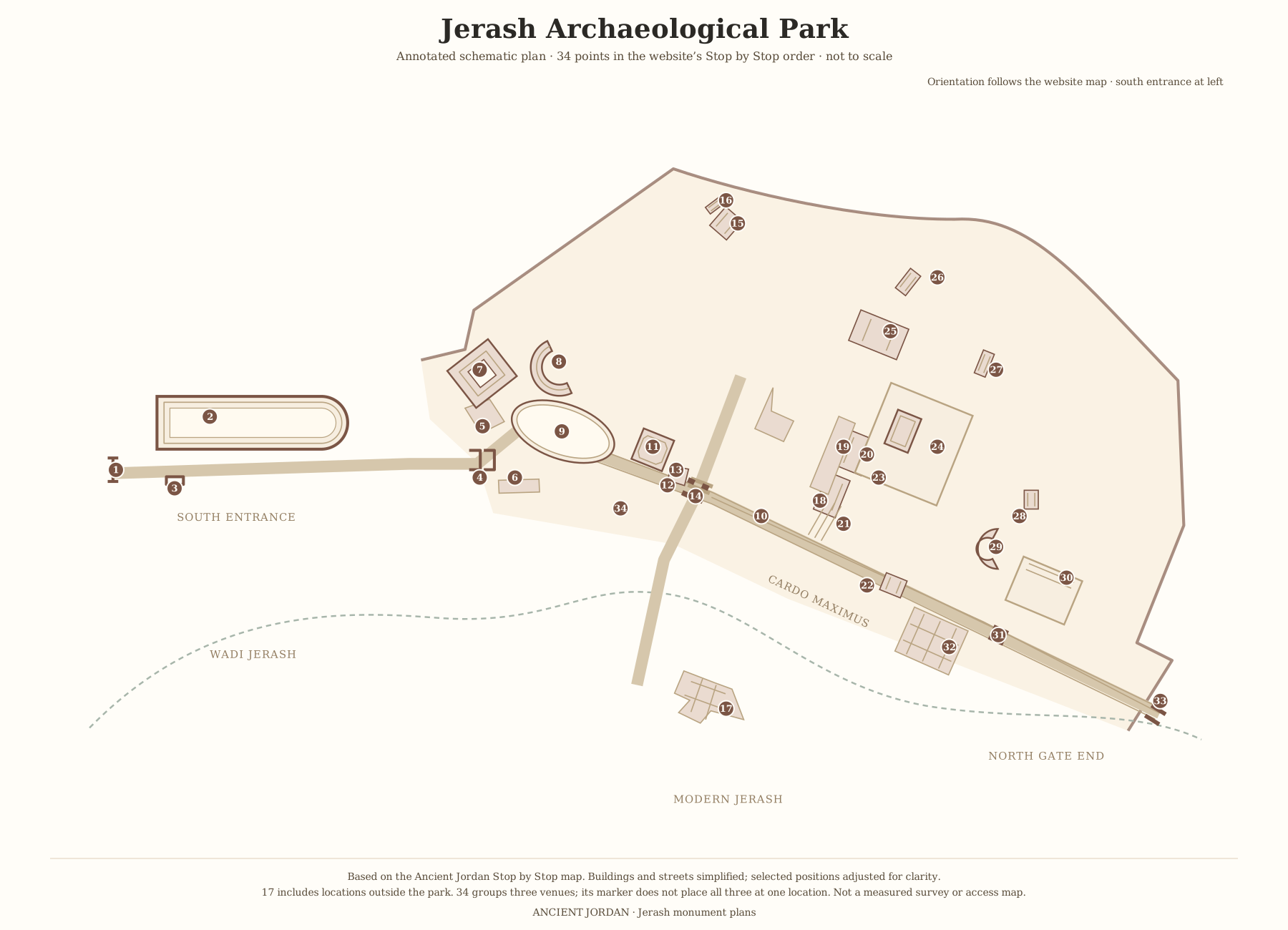
The complex lies west of the Church of St Theodore and south-west of the Sanctuary of Artemis, in the Christian quarter above the Cardo Maximus. The Church of Bishop Genesius is about 50 metres further west.
Visiting it after the Temple of Artemis makes the change in the city’s religion easy to see: one of its greatest pagan sanctuaries and one of its most important Christian quarters stand only a short walk apart.
Historical Context and Origin
Mosaic inscriptions date the three churches in quick succession: St George, the southern church, in AD 529/530; St John the Baptist, in the centre, in AD 531; and Saints Cosmas and Damianus, the northern church, in AD 533. Such close dates suggest one planned project rather than three separate ones. In the 6th century the churches shared a western forecourt, and a baptistery was added between two of them.
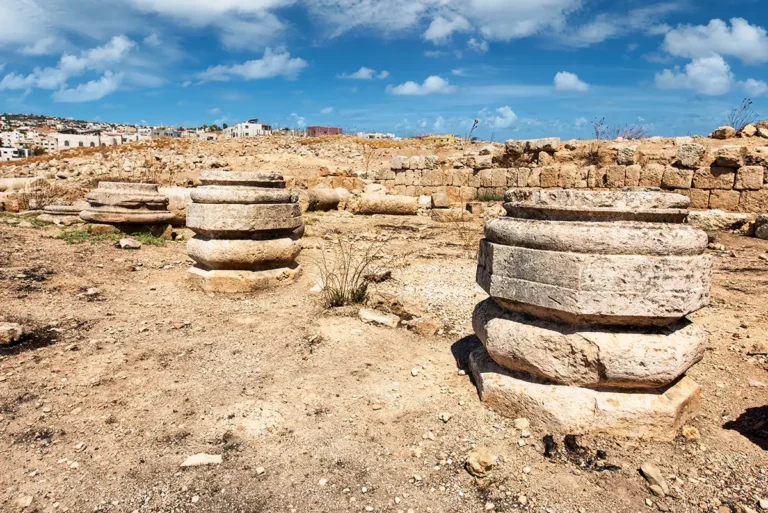
In the late 6th century St John and Saints Cosmas and Damianus fell out of use, and their stone was reused in St George, which stayed open into the 7th century.
Architectural Design
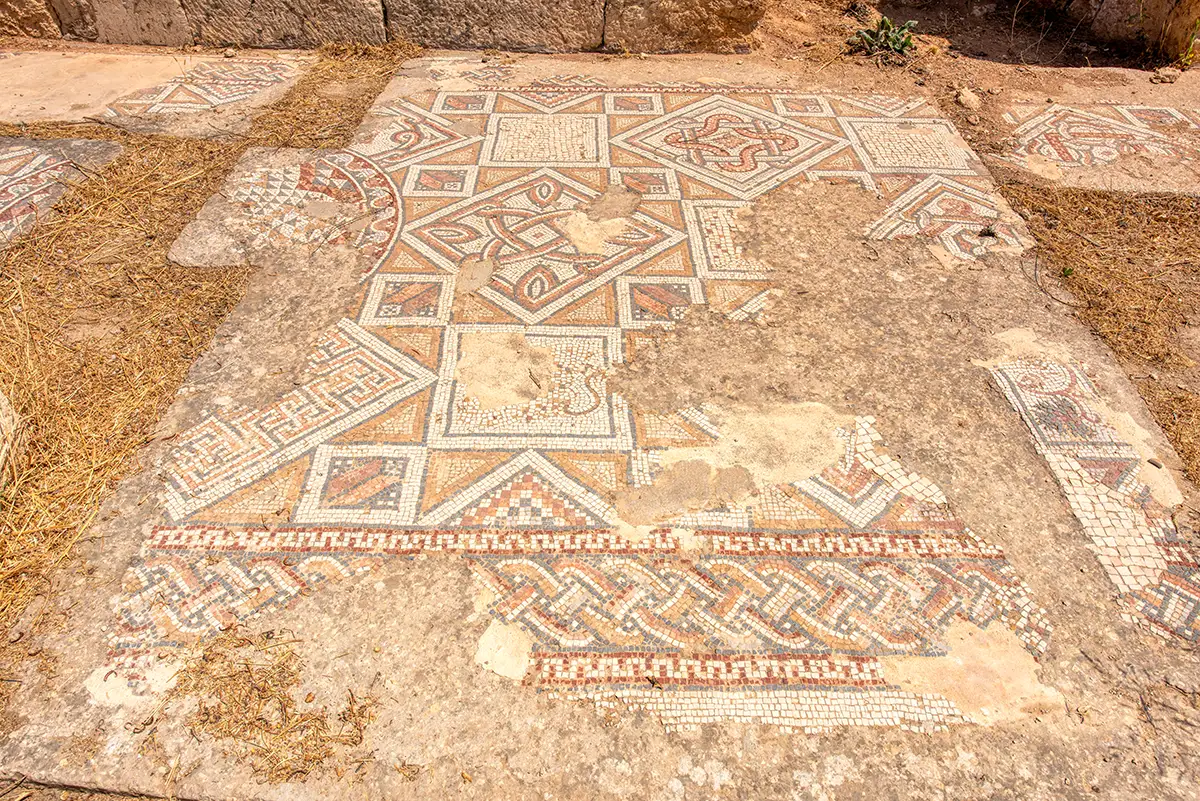
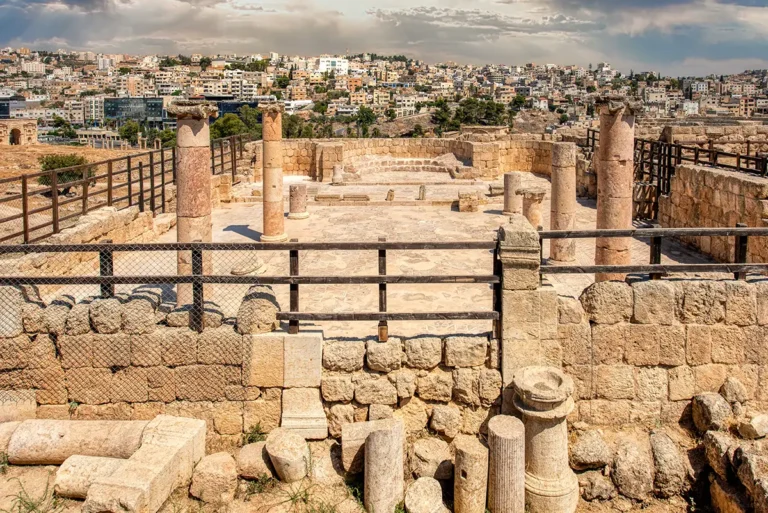
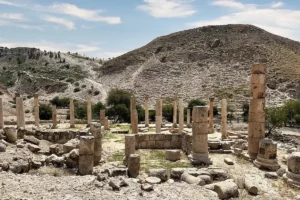
The complex measures about 55 metres north to south and 34 metres east to west. Each church faced east, towards its own apse and altar, but the builders did not repeat one design: St George and Saints Cosmas and Damianus follow the basilica plan with nave and aisles, while St John the Baptist has a round central space inside a square. Chancel screens separated each sanctuary from its congregation, and the floors were covered with mosaics of geometric patterns, animals, figures and Greek inscriptions.
St George
The southern church, completed in AD 529/530, stayed in use into the 7th century, long after its neighbours.
St John the Baptist
The central church, finished in AD 531, has an unusual round nave set inside a square.
Saints Cosmas and Damianus
The northern church, completed in AD 533, keeps the complex’s finest mosaic floor, with its donors’ portraits.
The Shared Forecourt
All three churches open onto one western court; a baptistery lies between two of them.
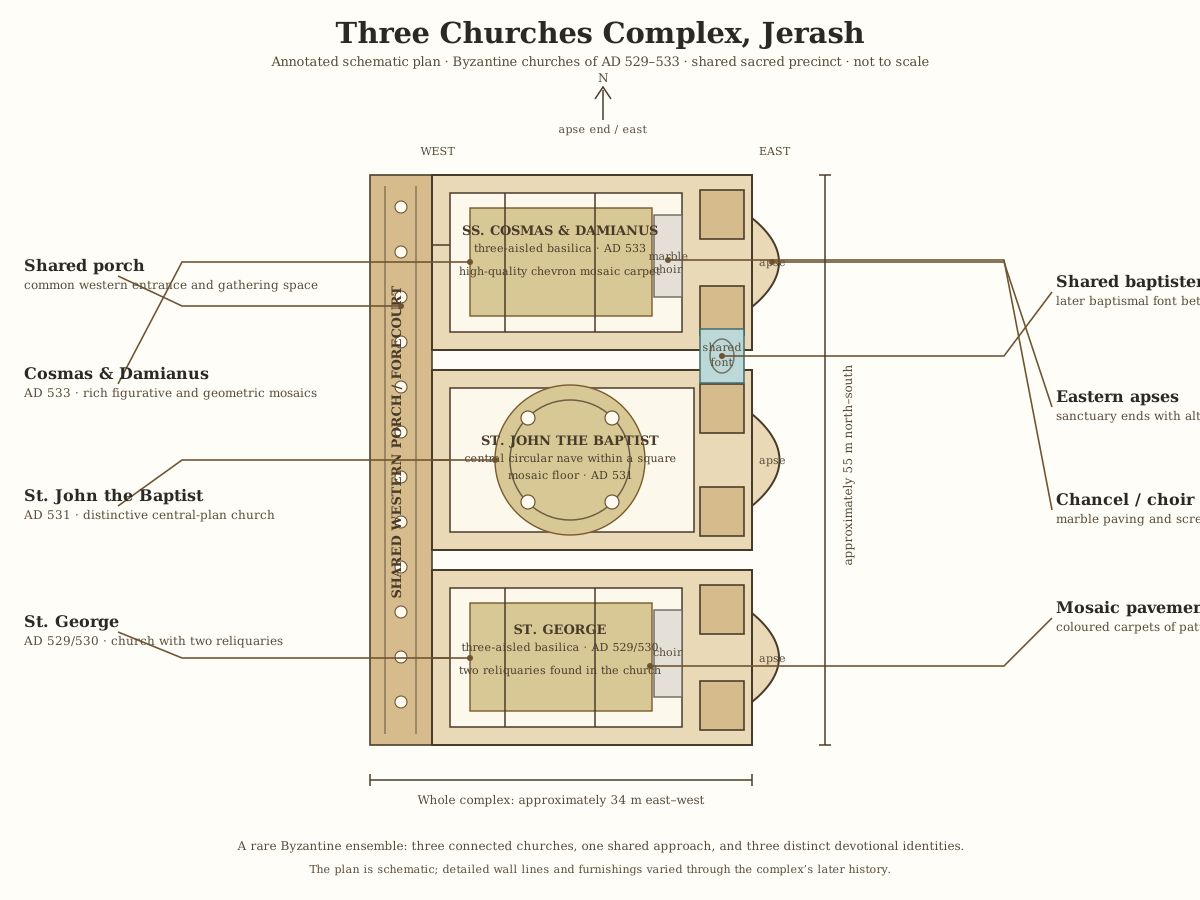
jerash-three-churches-complex-schematic
Tap the drawing to open it full size.
Open drawing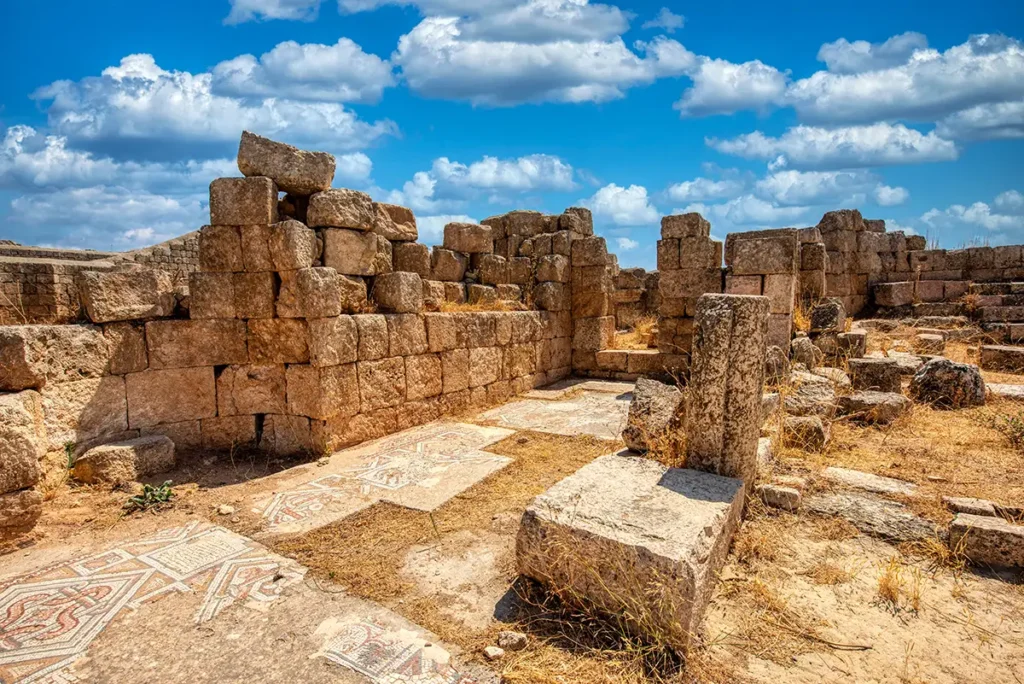
Destruction, Rediscovery, and Restoration
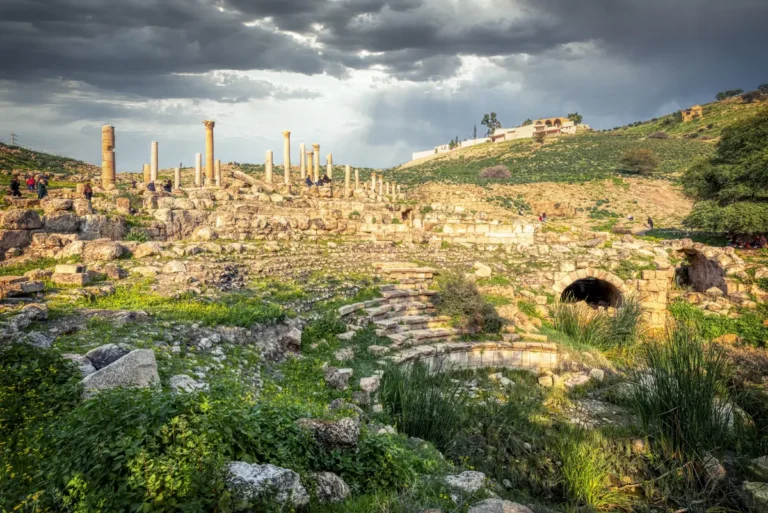
The earthquake of AD 749 brought down the walls, roofs and furnishings. In modern times excavation clarified the plan and the dates of the three churches, and conservation now protects their mosaics.
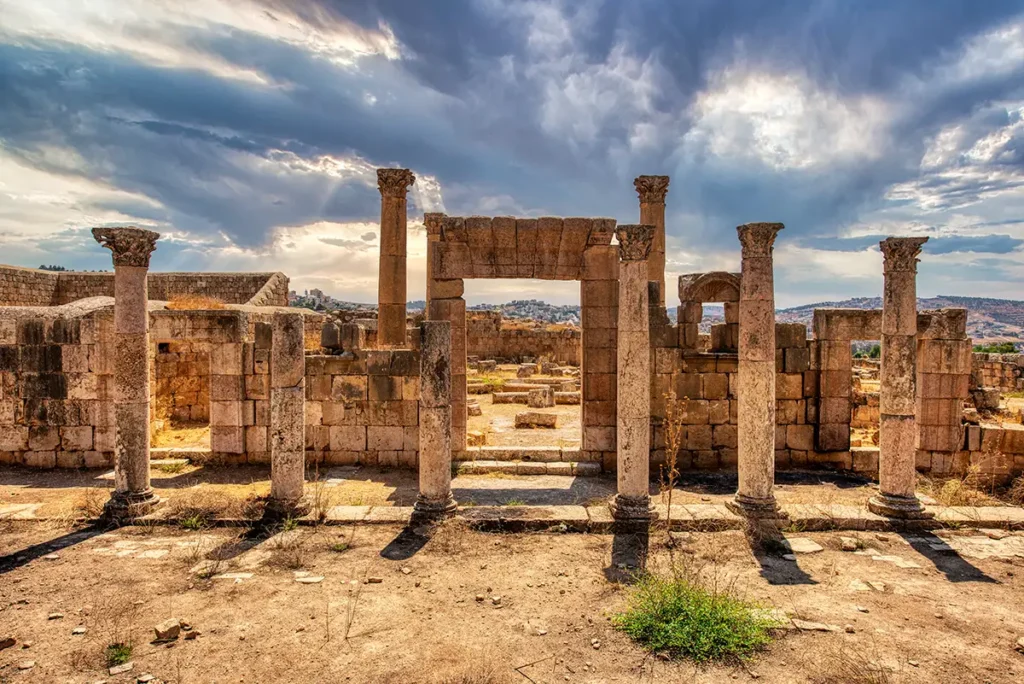
Visiting the Three Churches Complex Today
Start in the shared forecourt and find the three apses on the east side — once you see them, the plan falls into place. Then look at the mosaics, above all in Saints Cosmas and Damianus, where patterned borders, animals, figures and inscriptions show how colourful these churches once were.
Allow 20–30 minutes, and combine the visit with St Theodore, the Church of Bishop Genesius and the Sanctuary of Artemis.