Pella (Tabqet Fahel)
An ancient city by a spring in the Jordan Valley, from Canaanite temple to Umayyad town
SettledFrom c. 6000 BC
Monuments8 to explore
LocationN Jordan Valley
AccessPaved road
Travel GuidesBronze AgeByzantine PeriodHellenistic PeriodIron AgeMamluk PeriodNeolithic AgeRoman PeriodUmayyad PeriodJordan Pass
Introduction
A spring that has drawn people to the same valley for thousands of years.
Pella lies beside the village of Tabaqat Fahl, where the hills of northern Jordan drop to the Jordan Valley. The spring of Wadi Jirm still flows all year, and people have lived beside it since about 6000 BC, though not without breaks.
The ruins cover a wide valley and two hills. In the valley are a large Byzantine church and a small Roman theatre, the odeon. On the main mound are the Canaanite temple area, Umayyad houses and a Mamluk mosque, and on the slopes the East Church and the steep hill of Tell al-Husn. Come for the history, the quiet and the views over the Jordan Valley.
Best timeOct–Apr
Time needed2 hr
Ticket2 JOD · Jordan Pass
From Amman90 km · 1 hr 30 min
Combine withAjloun Castle · 55 min
Google rating4.2 · Reviews
Highlights · A city by a spring
Churches, an odeon and a hill above the valley
Six places to look for at Pella
Pella’s monuments are low ruins spread over a large site. These are the places that make the visit.
 01 / 06
01 · Churches
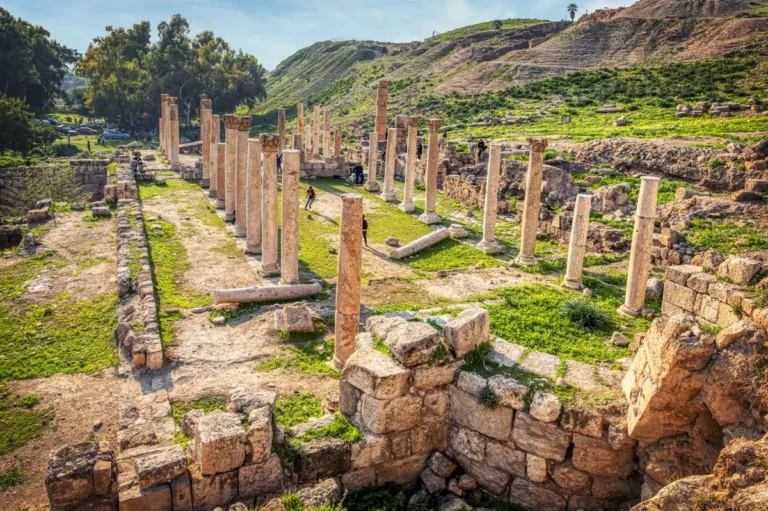
The Civic Complex Church
Civic Complex Church
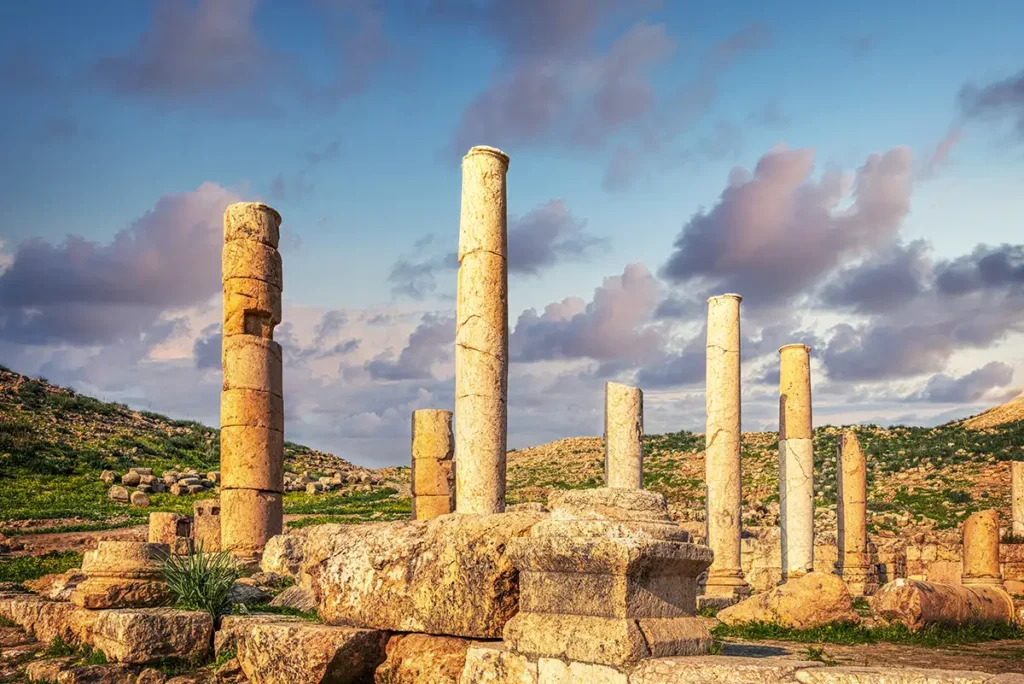
A large church of the 5th century, built over the civic centre of the Roman city in the valley of Wadi Jirm.
Look closely
The columns that still stand along the nave.
1 of 6
Stop by stop
What to see
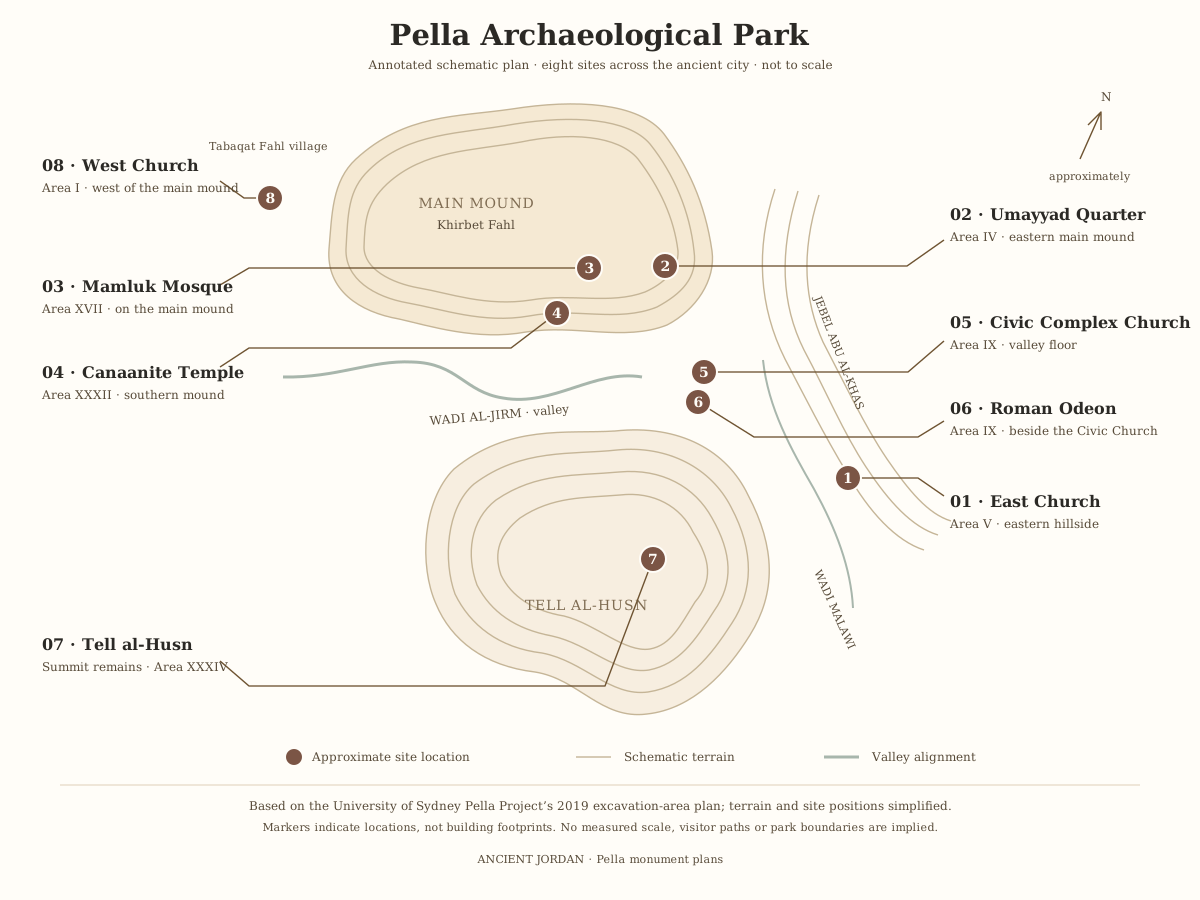
Six stops in route order: the East Church, the main mound, the Civic Complex Church and odeon in the valley, Tell al-Husn and the West Church. Pick a stop to see what to look for.
 1 / 8
01 · Above the city
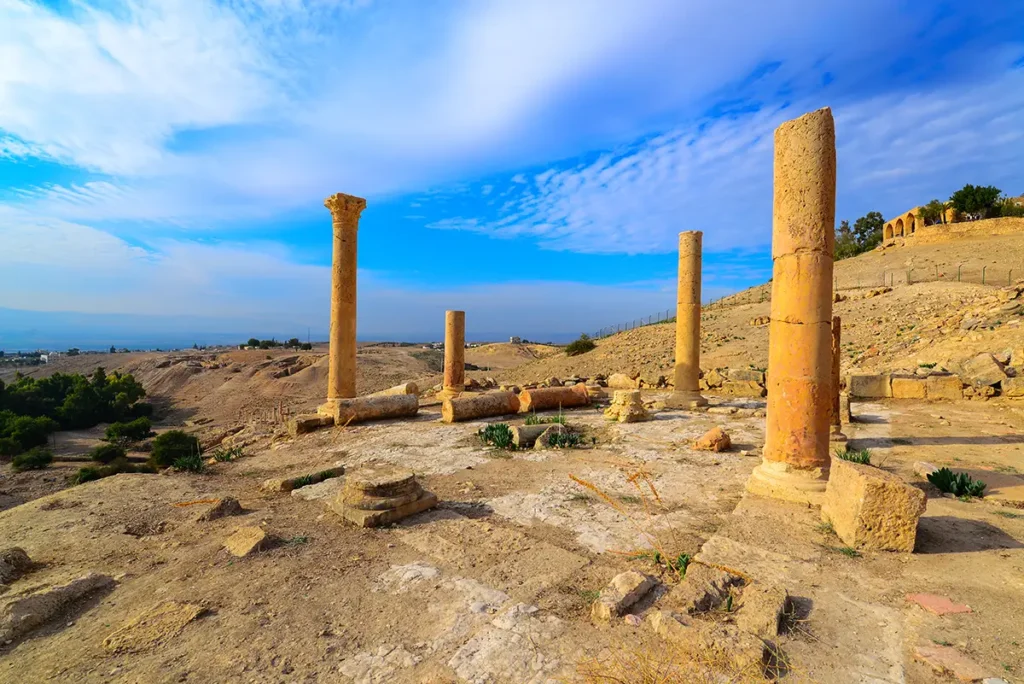
Start at the East Church
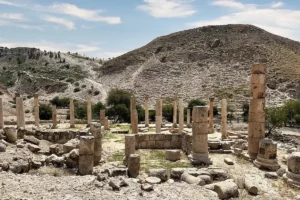
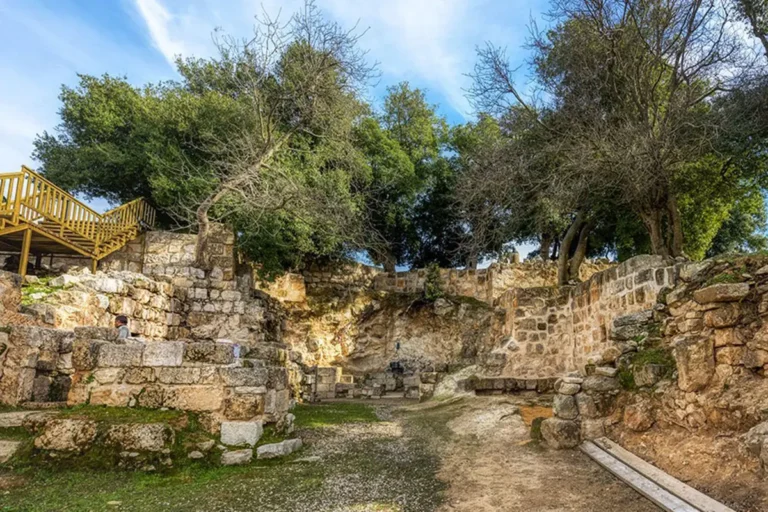
The East Church stands on the lower slope east of the valley, above the civic centre. It was built in the late 5th century, and several of its columns still stand.
It is one of the best places to see the layout of the whole city, with the main mound to the north and Tell al-Husn to the south.
Late 5th c.ColumnsViews
Look for
- The standing columns
- Carved capitals and crosses on fallen blocks
- The view over the valley and the Jordan Valley beyond
Read the full story
 1 / 8
02 · Khirbet Fahl
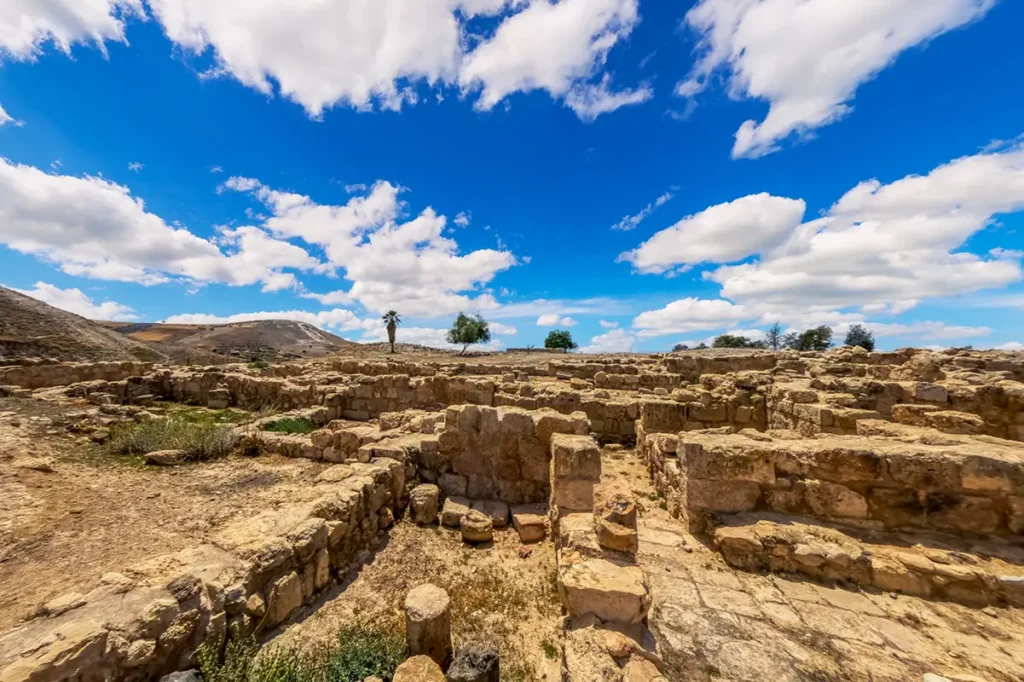
Climb the main mound
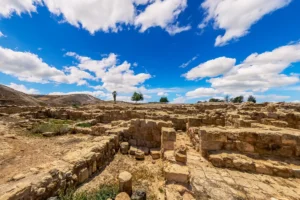
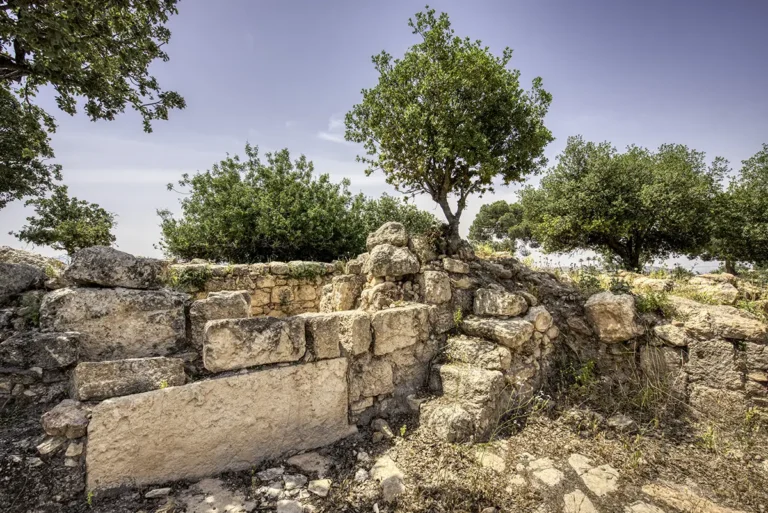
North of the valley rises the main mound, Khirbet Fahl, where the city was settled for thousands of years. Here are the houses of the Umayyad town of Fihl, brought down by the earthquake of 749, and a small mosque of the Mamluk period.
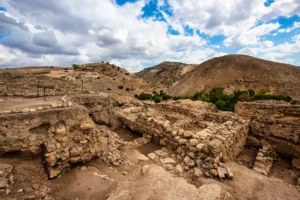
On its south side the University of Sydney found a great stone temple, used and rebuilt from about 1650 to 800 BC. View the excavated area from outside the fence.
Umayyad housesMamluk mosqueCanaanite temple
Look for
- The stone walls of the Umayyad houses
- The small Mamluk mosque
- The excavated temple area, seen from outside the fence
Read the full story
Dig deeperThe temple
The temple measured about 32 × 24 m, the largest pre-Classical building at Pella. In its Late Bronze Age phase it had two towers at the entrance. Finds include cult stands, scarabs, seals and gold jewellery.
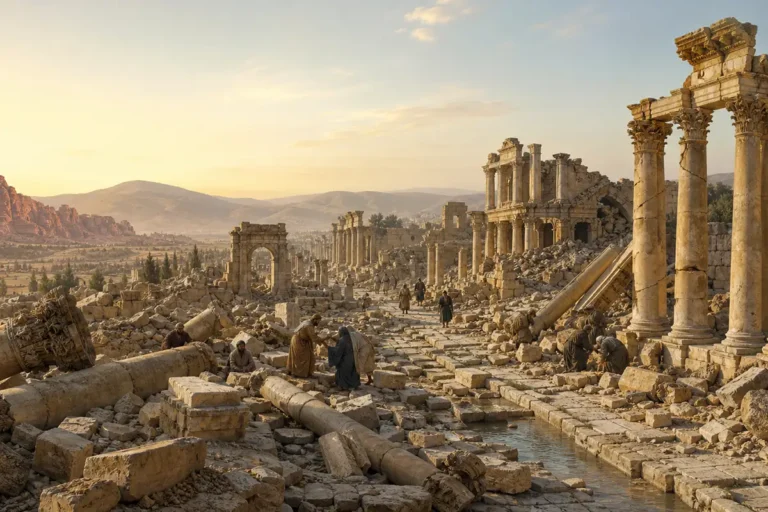
In December 634 or January 635 the Byzantines were defeated nearby at the Battle of Fahl, and the town flourished under the Umayyads until the earthquake of 749 brought its houses down on their inhabitants.
 1 / 8
03 · In the valley
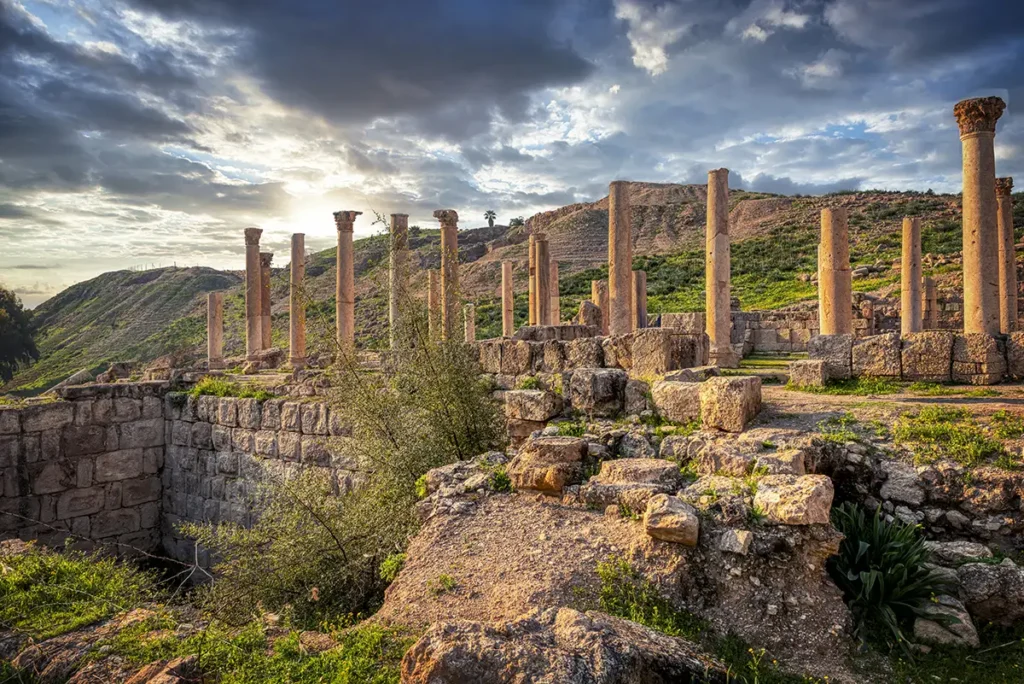
Walk down to the Civic Complex Church
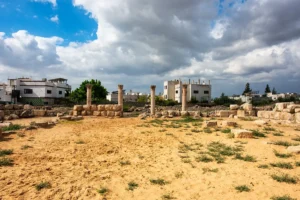
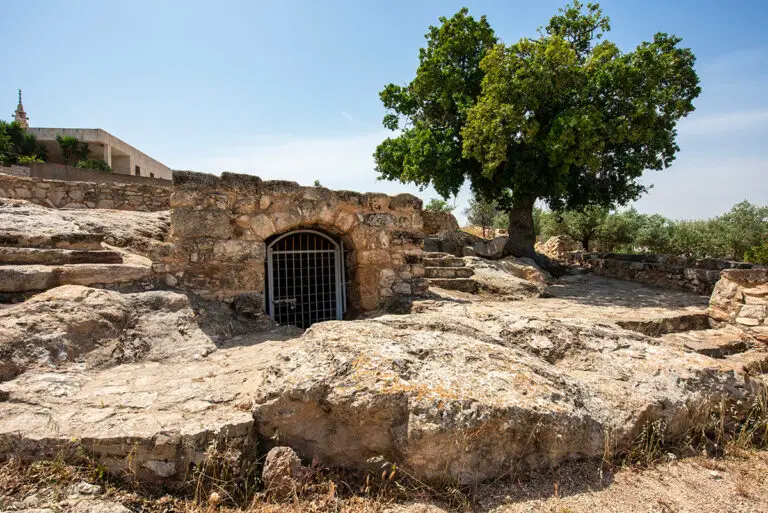
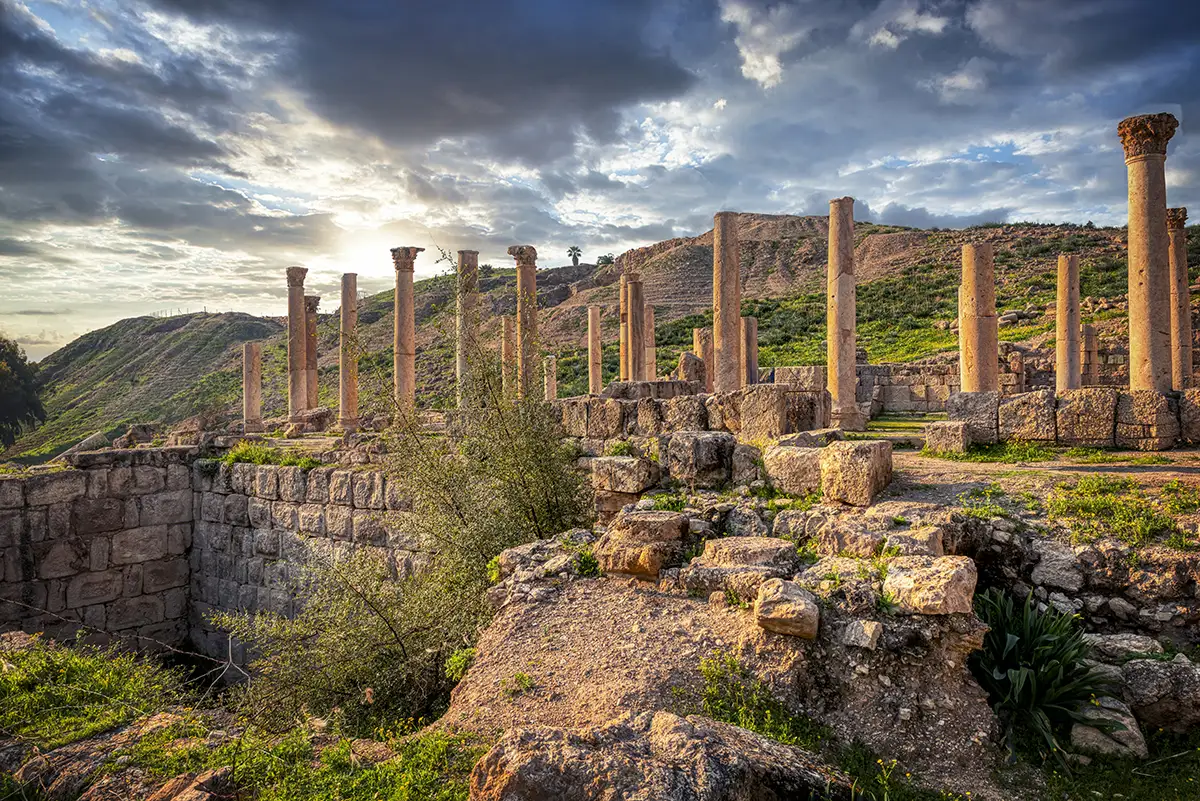
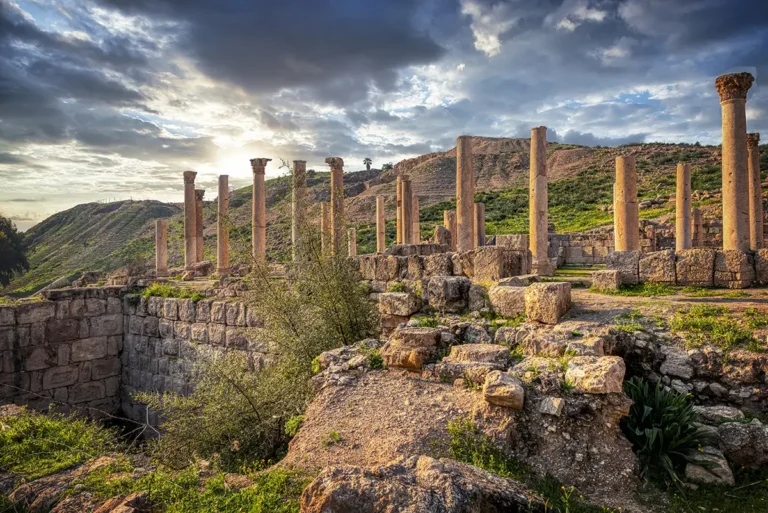
In the Roman period the city centre lay in the valley of Wadi Jirm, with baths, a nymphaeum and a small theatre. In the 5th century a large church was built over the Roman civic complex, and it was changed and enlarged over the next two centuries.
Today its columns are the landmark of the valley. Walk the length of the nave to the east end, then look across to the odeon beside it.
5th c. ADOver the Roman centreColumns
Look for
- The columns along the nave
- The steps of the atrium in front of the church
- Carved Roman blocks reused in the walls
Read the full story
Dig deeperA bishop’s city
Pella was a bishopric by 451. Two more churches stood on the slopes: the East Church and the West Church, whose low ruins lie near the modern village.
 1 / 8
04 · A small Roman theatre
Find the odeon
Next to the church lies the odeon, a small Roman theatre for about 400 spectators. Its seats were later robbed for building stone, and work on the theatre is still under way, so some parts may be fenced.
Around it lie carved blocks from the Roman buildings of the valley, some with fine mouldings and plant motifs.
RomanAbout 400 seatsWork under way
Look for
- The curve of the seating
- The vaulted passages
- Carved mouldings on the fallen blocks
Read the full story
 1 / 8
05 · The hill to the south
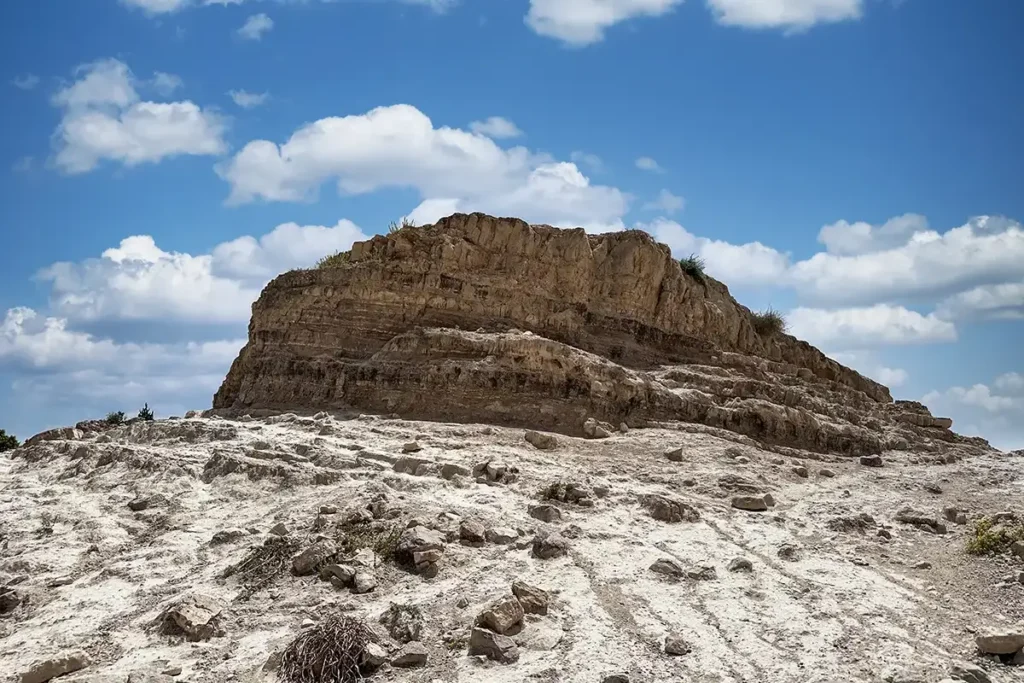
Climb Tell al-Husn
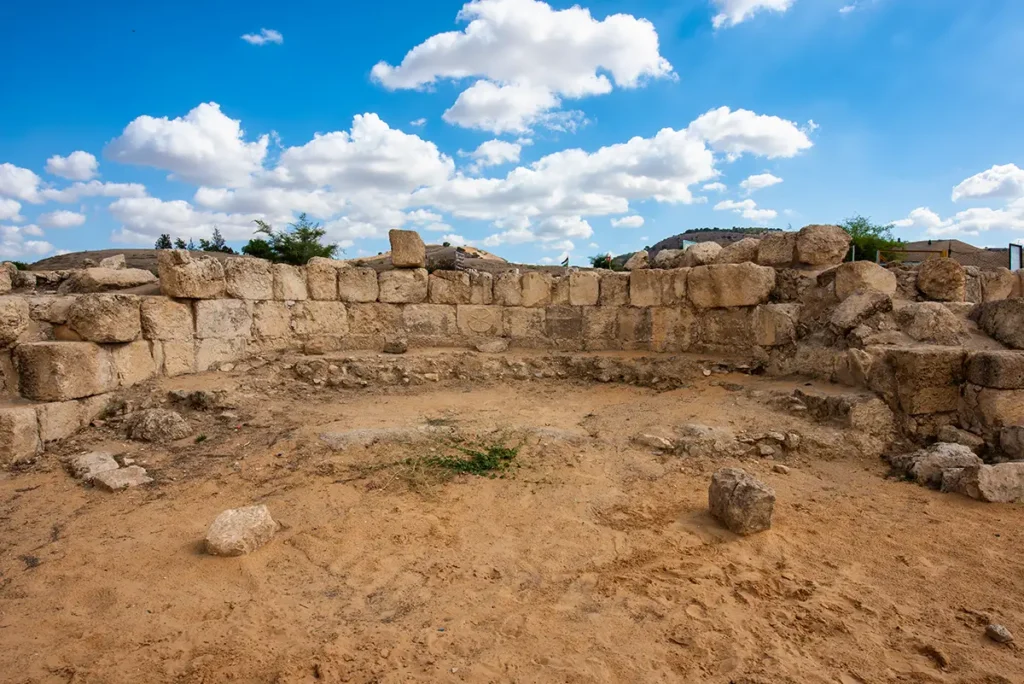
South of Wadi Jirm rises the steep hill of Tell al-Husn. It carried an Early Bronze Age wall and later a Byzantine fort, and excavation trenches cut into its top.
The climb is steep but short, and the view takes in the whole city, the Civic Complex Church in the valley below and the Jordan Valley to the west.
Early Bronze Age wallByzantine fortSteep climbViews
Look for
- The excavation trenches on the summit
- The Civic Complex Church seen from above
- The Jordan Valley to the west
Read the full story
 1 / 8
06 · Outside the park
Find the West Church
Just outside the park, across the road from its west entrance, the West Church was the first building excavated on a large scale at Pella, in 1967. It is a triapsidal church with a colonnaded atrium and three apses at the east end.
The four standing columns of the atrium are the easiest landmark to spot, about half a kilometre west of the Civic Complex Church.
c. AD 530Three apsesFirst large dig, 1967Outside the park
Look for
- The four standing columns of the atrium
- The three apses at the east end
- The burial under the north apse
Read the full story
History & significance
A city by a spring
Pella was a Canaanite town in the age of the pharaohs, a Greek and Roman city of the Decapolis, a Byzantine bishopric and an Umayyad town. It gave its name to the Battle of Fahl in 634/635.
- c. 6000 BCA farming village by the spring
- c. 1650–800 BCA great stone temple on the main mound
- 14th c. BCIts ruler writes to the pharaoh (Amarna letters)
- 63 BCRestored under Pompey; a Decapolis city
- 5th c. ADThe Civic Complex and East Churches are built
- AD 634/635The Battle of Fahl
- AD 749An earthquake destroys the Umayyad town
 ProfilePella (Tabqet Fahel): the full storyHistory, the Canaanite temple, the Decapolis city and the timeline.Read the profile →
Plan your visit
Everything you need to know before you go
Pella is beside the village of Tabaqat Fahl, about 1–2 km east of the Jordan Valley Highway at al-Mashare’a. The ticket office and the Rest House are above the ruins.
Good to know: the ruins are spread over a wide valley and two hills. The temple area is fenced and can be viewed from outside. The West Church is also fenced, but its gate is open and visitors can enter.
Opening hoursOpen daily8:00–17:00
Entry ticket2 JODResidents 0.25 JOD · Jordan Pass
Time to visit2 hrMore if you climb Tell al-Husn
From Amman90 kmAbout 1 hour 30 via the Jordan Valley
LocationTabaqat Fahl32.4497° N, 35.6156° EGet directions
Opening hours and prices checked October 2026. Spotted a change? Let us know
On site
What you’ll find at Pella (Tabqet Fahel)
- Visitor centre
- Ticket office
- Toilets
- Free parking
- Guide available
- Viewpoint
Not on site: museum, food & drinks, market / shop · Nearby: hotels
Access: no 4x4 needed
Details by location
At the monument: Viewpoints across the ruins and valley; walking paths link the different parts of the archaeological site.
Near the entrance: Visitor centre, ticket office, toilets and guide services in the access area above the ruins. The Rest House restaurant above the site is temporarily closed due to a lack of visitors.
In the surrounding town: Accommodation is near Tabaqat Fahl, outside the excavated ruins.
When to go
The Jordan Valley is mild in winter and spring, and very hot from June to September.
J
F
M
A
M
J
J
A
S
O
N
D
BestGood, cooler or warmVery hot
Tip: visit early in the morning for cooler temperatures and views over the valley.
Before you go
Bring water and any food you need; the Rest House restaurant is temporarily closed.
- WaterVery little shade on the site
- Sun hat and sunscreenThe Jordan Valley is hot
- Comfortable shoesUneven paths and a steep climb
- Cash in Jordanian dinarsFor tickets and small purchases
- Jordan PassIf you have one, it covers the ticket
Common questions
Quick answers before you set off.
How long do I need at Pella?
About 2 hours for the valley, the main mound and the East Church, more if you climb Tell al-Husn.
Is there an entrance fee?
Yes: 2 JOD for visitors and 0.25 JOD for residents. Pella is included in the Jordan Pass.
Is there somewhere to eat?
The Rest House restaurant above the ruins is temporarily closed due to a lack of visitors. Bring any food you need or arrange a meal elsewhere before your visit.
Can I see the Canaanite temple?
You can view the excavated temple area on the main mound from outside the fence.
Can I visit Pella on a tour?
Yes. Pella is the last stop of two of our private tours from Amman, both with Ajloun Castle; one also includes Jerash.
What should I wear?
Comfortable, closed shoes for uneven ground, and light clothing that covers your shoulders and knees, which is respectful in rural Jordan and protects you from the sun.
Combine with
Pella combines well with Ajloun and Jerash in the hills above the valley. Drive times are from Pella.
1 Ajloun CastleAyyubid castle40 km · ~55 min drive · Tours 1 & 22Ajloun Forest Biosphere ReserveForest reserve40 km · ~1 hr drive3Jerash (Gerasa)Roman city65 km · ~1 hr 15 min drive · Tour 2
 Ajloun CastleAyyubid castle40 km · ~55 min drive · Tours 1 & 22
 Ajloun Forest Biosphere ReserveForest reserve40 km · ~1 hr drive3
 Jerash (Gerasa)Roman city65 km · ~1 hr 15 min drive · Tour 2
Tour 1 Ajloun Castle & Pella · Tour 2 Jerash, Ajloun Castle & Pella. Compare the tours
Private tours
2 private day tours that include Pella (Tabqet Fahel)
Both tours are just for you: your own vehicle and driver, hotel pickup in Amman and entry tickets included. The price depends on how many travellers there are, up to three.
Private: only your group
Your own vehicle & driver
Hotel pick-up in Amman
Entry tickets included
 from$195per group (1–3) · 140 JOD
Tour 1 · Full day · Private
Full-Day Private Tour to Ajloun Castle and Pella
Escape the city and journey into the lush highlands of northern Jordan on this private day tour from Amman. Discover a region where rolling green hills, ancient ruins, and layered history come together in one unforgettable experience.
HistoryArchitectureAyyubid castleJordan Valley5 stops
Duration6–7 hr
Pick-up8 or 9 AM
Group1–3, private
Included
- Private luxury transfer
- Entrance fees
- Bottled water, soft drinks, snacks
- Coffee/tea (on request)
- WiFi, Phone charger
Not included
- Professional on-site (local) guide
- Personal expenses
- Lunch
 from$235per group (1–3) · 167 JOD
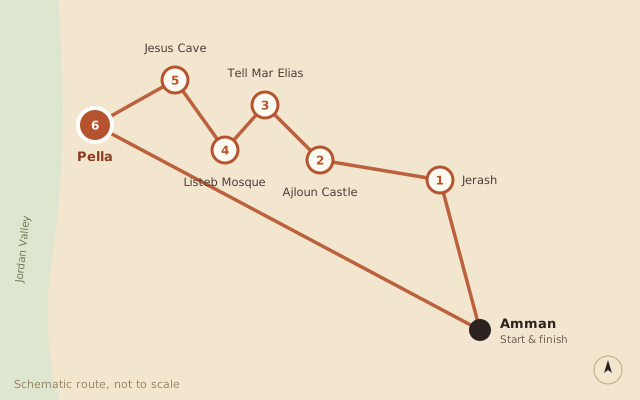
Tour 2 · Full day · Private
Private Tour to Jerash, Ajloun Castle and Pella
Discover the rich history and natural beauty of northern Jordan on this private day tour from Amman. Combining some of the country’s most remarkable archaeological sites with its greenest landscapes, this journey offers a refreshing and immersive experience beyond the typical tourist trail.
HistoryArchitectureRoman citiesAyyubid castleJordan Valley6 stops
Duration7–8 hr
Pick-up8 or 9 AM
Group1–3, private
Included
- Private luxury transfer
- Entrance fees
- Bottled water, soft drinks, snacks
- Coffee/tea (on request)
- WiFi, Phone charger
Not included
- Professional on-site (local) guide
- Personal expenses
- Lunch
Which tour is right for you?
| Ajloun Castle & Pella | Jerash, Ajloun Castle & Pella | |
|---|---|---|
| Price per group (1–3) | $195 (140 JOD) | $235 (167 JOD) |
| Duration | 6–7 hr | 7–8 hr |
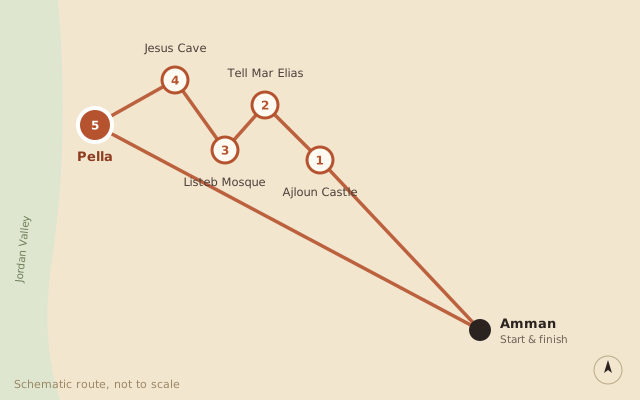
| Stops | Ajloun Castle, Tell Mar Elias, Listeb Mosque, Jesus Cave, Pella | Jerash, then the same five stops |
| Jerash | Not included | ✓ Included |
| Best for | A relaxed day in the north | Seeing the best of the north in one day |
CancellationFull refund if you cancel at least 24 hours before the start. No refunds or changes within 24 hours.
Pick-upFrom your hotel lobby or home in Amman, 5 minutes before your chosen start time.
BringComfortable shoes, sun hat, sunblock and sunglasses. Tours run in English.
Explore this site
More from Pella
Panoramas, walk-throughs, photos and stories about this site.
ProfilePella (Tabqet Fahel): history & architecture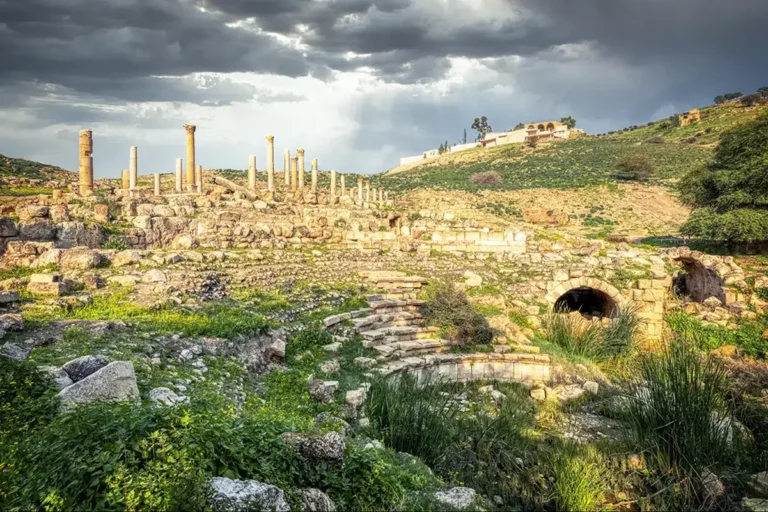 Photo albumPella: An Ancient City in the Jordan Valley in Photos
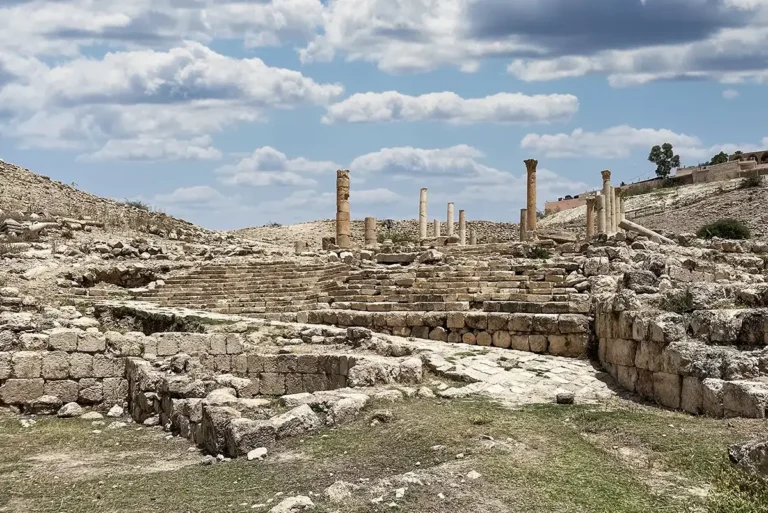 3D3D walk-throughPella – 3D Virtual Walk-through
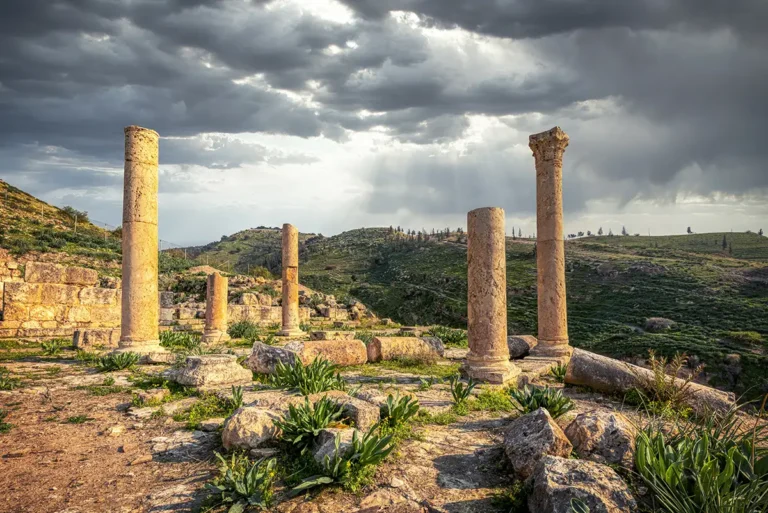 360°360° panoramaInside the East Church of Ancient Pella: 360° Panorama
 Travel articleJordan’s Ancient City of Pella
 Travel articleJordan’s Great Ancient Earthquakes: 363, 551, and 749 AD
Nearby