Karak Castle
A great Crusader castle on a spur above the Dead Sea valley, rebuilt by the Ayyubids and Mamluks
BuiltFrom c. 1142
BuildersCrusader · Mamluk
LocationKarak town
MuseumIn the ticket
Introduction
Crusaders, Ayyubids and Mamluks each rebuilt the castle, and each left their mark in its walls.
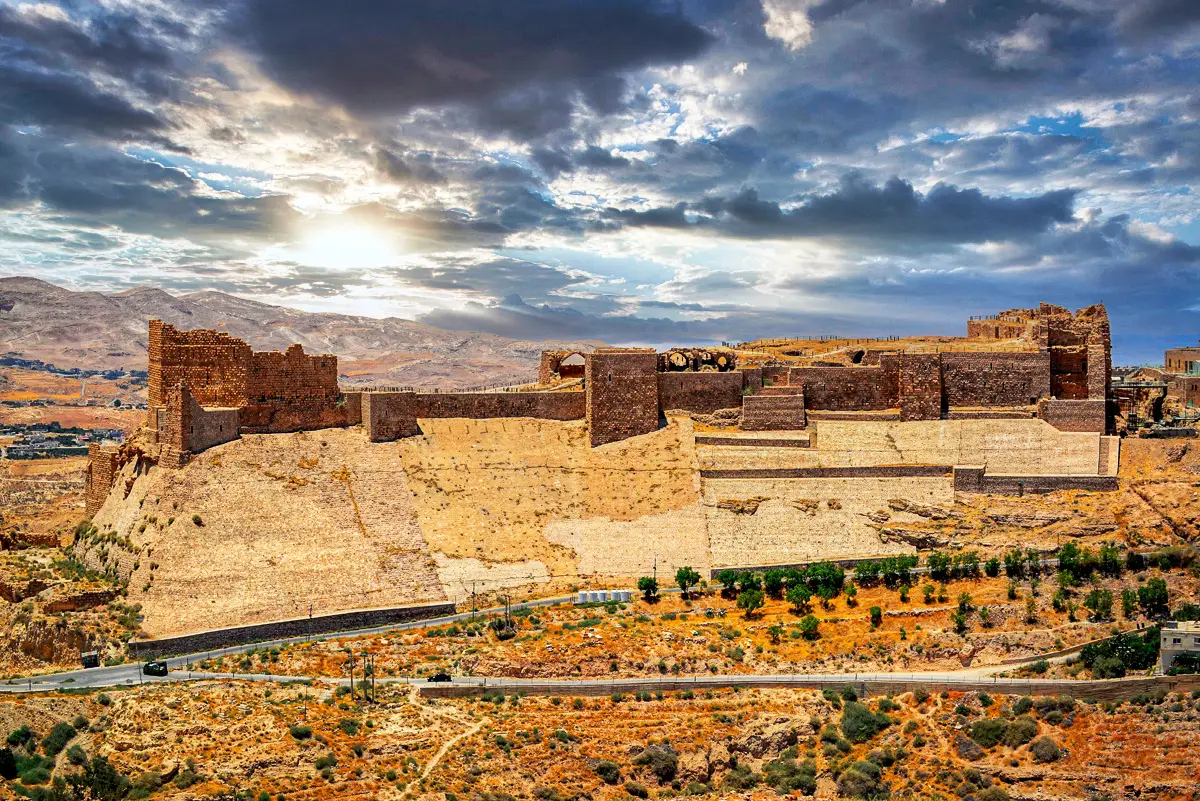
Karak Castle stands at the southern tip of the old walled town of Karak, about 120–125 km south of Amman and around 900 m above sea level. Steep slopes protect it on three sides, and deep rock-cut ditches cut it off from the town and the hill to the south.
The Crusaders began the castle around 1142 to control the road between Damascus, Egypt and Arabia. Saladin besieged it twice before it was starved into surrender in 1188, and the Ayyubids and the Mamluk sultan Baybars rebuilt it. Today you can walk its vaulted galleries, climb to the upper court and look out from the walls towards the Dead Sea.
Best timeMar–May · Sep–Nov
Time needed1–2 hr
Ticket2 JOD · Jordan Pass
From Amman125 kmAbout 2 hr
Combine withKhirbet edh-Dharih · 40 min
Google rating4.4 · Reviews
Highlights · A Crusader castle
Six things not to miss at Karak
Galleries, walls, reused stones and views
Karak is big and full of dark passages. These are the places that make the visit.
 01 / 06
01 · Crusader
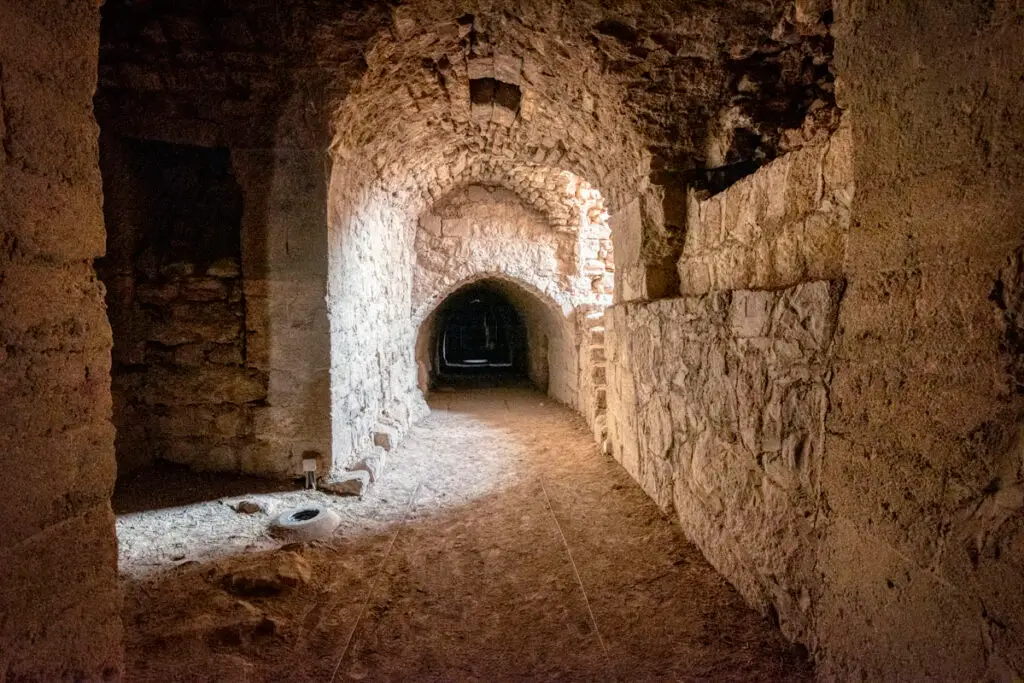
The vaulted galleries
Vaulted galleries
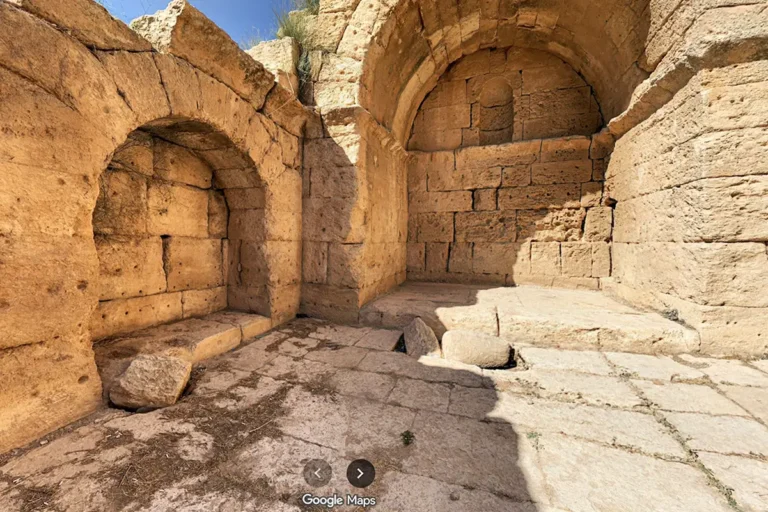
Long two-storey halls built into the north wall served as quarters, stables and fighting galleries.
Look closely
Light falling through the narrow openings.
1 of 6
Part by part
What to see
Five parts of the visit: the walls, the upper court, the vaulted galleries, the reused stones and the museum. Pick one to see what to look for.
 1 / 8
01 · The defences
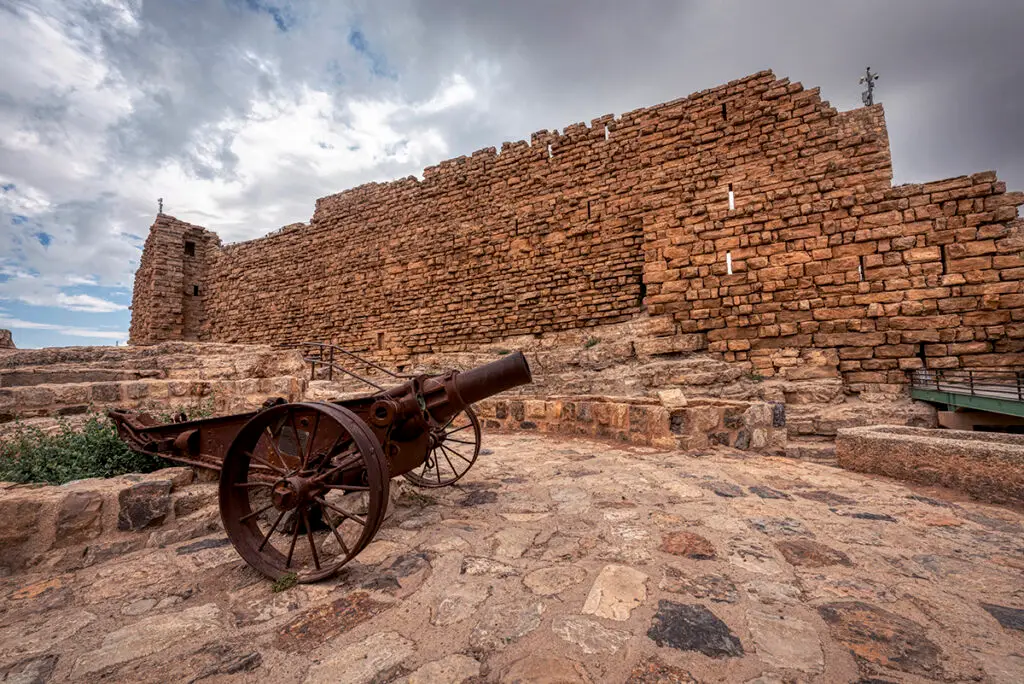
Walk the walls
The castle follows the shape of its spur, with the entrance on the north, facing the town. Steep slopes protect it on three sides, and deep ditches cut in the rock separate it from the town to the north and the hill to the south.
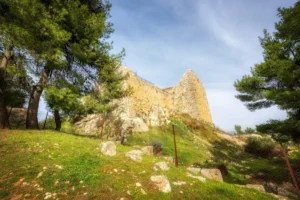
Look at the stone: the Crusader walls are built of dark, rough blocks, while the Ayyubid and Mamluk work is finer, dressed limestone. From the west walls the view reaches over the valleys towards the Dead Sea.
From c. 1142GlacisRock-cut ditchesViews
Look for
- Dark Crusader stone beside finer Mamluk masonry
- The steep stone glacis below the walls
- The deep valleys and the view towards the Dead Sea
Dig deeperTwo sieges and a blockade
Saladin besieged Karak in 1183 and 1184 without success. After Raynald of Châtillon was killed at the Battle of Hattin in 1187, the castle was blockaded and starved into surrender in 1188.
 1 / 8
02 · The heart of the castle
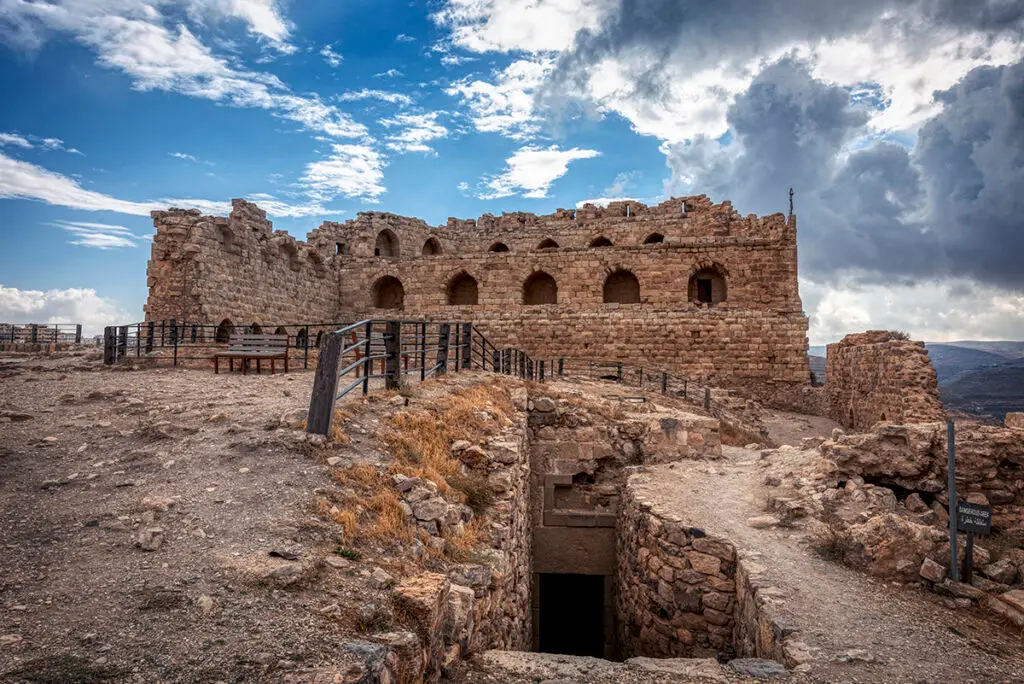
Climb to the upper court
The main buildings of the castle stand in the upper court. Here are the Crusader chapel, vaulted cellars and the Mamluk palace, and at the southern end the Mamluk keep, with walls over 6 m thick.
Below, to the west, the lower court is mostly Mamluk work on Crusader foundations.
Crusader chapelMamluk palaceMamluk keep
Look for
- The apse of the Crusader chapel
- The rooms of the Mamluk palace
- The massive Mamluk keep at the south end, with walls over 6 m thick
Dig deeperA sultan’s palace
Under the Mamluks, Karak became a palace, treasury, arsenal and prison. The future sultan al-Nasir Muhammad lived here in exile, and in 1311 he built a palace, a bath and a mosque.
1 / 903 · Underground halls
Explore the galleries
Long two-storey halls, roofed with stone vaults, are built into the north wall. They served as quarters, stables and fighting galleries, and they connect by dark passages and stairs.
Some are lit only by narrow openings in the walls. Bring a torch or use your phone’s light, and watch your step on the uneven floors.
Stone vaultsDark passagesBring a torch
Look for
- The long barrel-vaulted halls
- Narrow openings that let in the light
- Stairs between the levels
 1 / 8
04 · Older than the castle
Find the reused stones
The builders of the castle reused stones from older buildings. Look for a Nabataean relief of an armed rider, now a block in the castle walls, carved panels, a capital and a cross cut into the stone.
Arabic inscriptions and millstones tell of the castle’s later life under the Ayyubids, Mamluks and Ottomans.
Nabataean reliefCarved panelsInscriptions
Look for
- The Nabataean relief of a rider
- The carved geometric panel
- A cross cut into the stone
- An Arabic inscription above a doorway
Dig deeperA city of Moab
Karak is usually identified with Kir-hareseth, a capital of biblical Moab, and later with Charachmoba of Roman and Byzantine times. Stones from these older towns ended up in the castle walls.
 1 / 7
05 · Opposite the castle entrance
Visit the museum
The Karak Archaeological Museum is in the old Ottoman Saraya building opposite the castle entrance, and it is included in the castle ticket. It shows finds from Karak and the region, from prehistory to the Islamic period.
Look for the inscribed stones, pottery and glass, and the displays that explain the history of the castle and the town.
Opposite the entranceIncluded in the ticketPrehistory to Islamic
Look for
- Inscribed stones
- Pottery and glass
- The story of the castle
History & significance
Crusaders, Ayyubids and Mamluks
Karak was the seat of the Crusader lords of Oultrejordain. After Saladin took it, the Ayyubid and Mamluk sultans made it a palace, treasury and prison, and the Ottomans later kept a garrison here.
- c. AD 1142Pagan the Butler begins the castle
- AD 1177Raynald of Châtillon becomes lord of Karak
- AD 1183–1184Two sieges by Saladin fail
- AD 1188Starved by blockade, the castle surrenders
- AD 1263The Mamluk sultan Baybars takes and rebuilds it
- AD 1311Al-Nasir Muhammad builds a palace, bath and mosque
- AD 2017–2022The western wing is restored
 ProfileKarak Castle: the full storyThe history, the architecture and the timeline of the castle.Read the profile →
Plan your visit
Everything you need to know before you go
The castle is in the old town of Karak, about 120–125 km south of Amman by the Desert Highway or the King’s Highway. The entrance is on the north side, facing the town.
Good to know: the galleries are dark and the floors uneven, with steep steps and drops. Bring a torch and wear good shoes.
Opening hoursOpen dailyWinter 8:00–16:00 · April–May 8:00–17:30 · Summer 8:00–18:30 · Ramadan 9:00–17:00
Entry ticket2 JODResidents 0.25 JOD · museum included · Jordan Pass
Time to visit1–2 hrAllow 1–2 hours with the museum
From Amman125 kmAbout 1 hour 45 to 2 hours by road
LocationKarak town31.1829° N, 35.7030° EGet directions
Opening hours and prices checked October 2026. Spotted a change? Let us know
Facilities by location
At the monument
Viewpoints from the castle walls; the ruins have steep steps and dark galleries.
Near the entrance
Visitor centre, ticket office, toilets and guide services in the castle entrance area. The Karak Archaeological Museum is opposite the entrance.
No designated parking
In the surrounding town
Hotels, restaurants and shops are in Karak town. No designated parking at the castle.
Access: Reach the castle through Karak town, then explore on foot. No 4x4 is needed.
When to go
Spring and autumn are best. Karak is high and can be cold and windy in winter; summer days are hot on the walls.
J
F
M
A
M
J
J
A
S
O
N
D
BestGood, cooler or warmVery hot
Tip: bring a torch or use your phone’s light for the dark galleries.
Before you go
Shops and restaurants are in the town just outside the castle.
- Good shoesUneven floors, steep steps and drops
- A torch or phone lightFor the dark galleries
- WaterLittle shade on the walls
- Cash in Jordanian dinarsFor tickets and small purchases
- Jordan PassIf you have one, it covers the ticket
Common questions
Quick answers before you set off.
How long do I need at Karak Castle?
One to two hours for the walls, the upper court, the galleries and the museum.
Is the museum included in the ticket?
Yes. The ticket includes the Karak Archaeological Museum, opposite the castle entrance. Karak Castle is also included in the Jordan Pass.
Is it suitable for children?
Children usually love the dark galleries, but the castle has steep steps and unfenced drops, so keep them close.
Can I visit Karak on the way to Petra?
Yes. Karak is on the King’s Highway, and our King’s Highway tour stops here on the way from Amman to Petra.
What should I wear?
Good, closed shoes for the uneven floors and steps. In winter, bring a warm layer: Karak is high and can be cold and windy.
Combine with
Karak combines with the Nabataean temples and Roman forts nearby. Drive times are from Karak.
1 Khirbet edh-DharihNabataean temple35 km · ~40 min drive · Tour 12Qasr BshirRoman fort58 km · ~1 hr 10 min drive · Tour 23Shobak CastleCrusader castle115 km · ~1 hr 45 min drive · Tour 1
 Khirbet edh-DharihNabataean temple35 km · ~40 min drive · Tour 12
 Qasr BshirRoman fort58 km · ~1 hr 10 min drive · Tour 23
 Shobak CastleCrusader castle115 km · ~1 hr 45 min drive · Tour 1
Tour 1 King’s Highway to Petra · Tour 2 Desert forts & Karak. Compare the tours
Private tours
2 private day tours that include Karak Castle
Both tours are just for you: your own vehicle and driver, hotel pickup in Amman and entry tickets included. The King’s Highway tour is priced by the number of travellers, up to three; the desert forts tour has one fixed price for up to three.
Private: only your group
Your own vehicle & driver
Hotel pick-up in Amman
Entry tickets included
 from$330per group (1–3) · 235 JOD
Tour 1 · Full day · Private
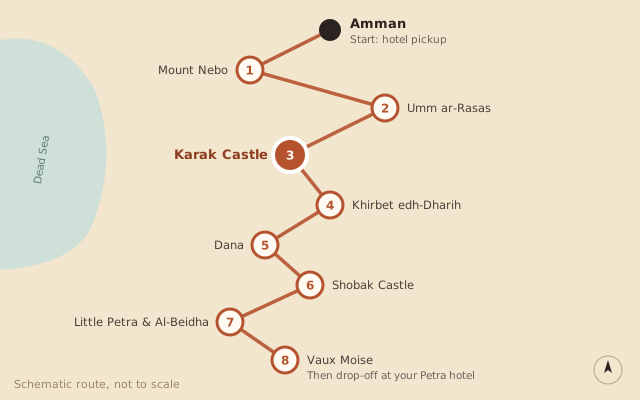
Best of King’s Highway from Amman to Petra
While Petra and Amman are among Jordan’s most famous destinations, the journey between them along the historic King’s Highway is filled with extraordinary landscapes, ancient monuments, and hidden archaeological treasures. This private one-way tour transforms a simple transfer into an unforgettable full-day exploration of Jordan’s history, culture, and natural beauty.
Crusader castlesNabataean sitesOne way to Petra8 stops4x4
Duration12–13 hr
Pick-up8 AM
Group1–3, private
Included
- Private luxury transfer
- Entrance fees
- Bottled water, soft drinks, snacks
- Coffee/tea (on request)
- WiFi, Phone charger
Not included
- Professional on-site (local) guide
- Personal expenses
- Lunch
 from$250per group (1–3) · 178 JOD
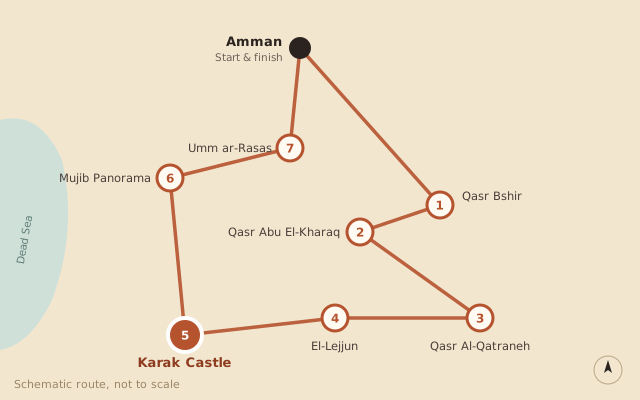
Tour 2 · Full day · Private
Expedition to Qasr Bshir, Lejjun, Umm Ar-Rasas, Karak
Set high at around 800 meters above sea level, deep within a vast and rugged basalt plain, Qasr Bshir (Castra Praetorium Mobene) remains one of Jordan’s most remote and best-preserved Roman frontier forts. Its isolated location makes it difficult to reach for the average traveller—but that’s exactly what makes this journey so rewarding.
Roman fortsByzantine townCrusader castle7 stops4x4
Duration8–9 hr
Pick-up8 or 9 AM
Group1–3, private
Included
- Private luxury transfer
- Entrance fees
- Bottled water, soft drinks, snacks
- Coffee/tea (on request)
- WiFi, Phone charger
Not included
- Professional on-site (local) guide
- Personal expenses
- Lunch
Which tour is right for you?
| King’s Highway to Petra | Desert forts & Karak | |
|---|---|---|
| Price per group (1–3) | $330 (235 JOD) | $250 (178 JOD) |
| Duration | 12–13 hr | 8–9 hr |
| Route | One way from Amman to Petra, along the King’s Highway | A loop from Amman through the desert forts |
| Also see | Mount Nebo, Umm ar-Rasas, Dana, Shobak, Little Petra | Qasr Bshir, El-Lejjun, Umm ar-Rasas |
| Best for | Travelling to Petra | Forts off the beaten track |
CancellationFull refund if you cancel at least 24 hours before the start. No refunds or changes within 24 hours.
Pick-upFrom your hotel lobby or home in Amman, 5 minutes before your chosen start time.
BringComfortable shoes, sun hat, sunblock and sunglasses. Tours run in English.
Explore this site
More from Karak Castle
Panoramas, walk-throughs, photos and stories about this site.
ProfileKarak Castle: history & architecture Photo albumKarak Castle: A Crusader Fortress in Photos
 360°360° panoramaKarak Castle’s Upper Court: 360° Panorama
Nearby