











Qasr Al-Hallabat
A Roman fort that became an Umayyad palace
In use2nd–8th century AD
Greek edictOver 100 blocks
LocationNear Zarqa, Jordan
HighlightsMosaics & mosque
Introduction
One of the grandest Umayyad desert complexes, built over a Roman fort on the edge of the desert.
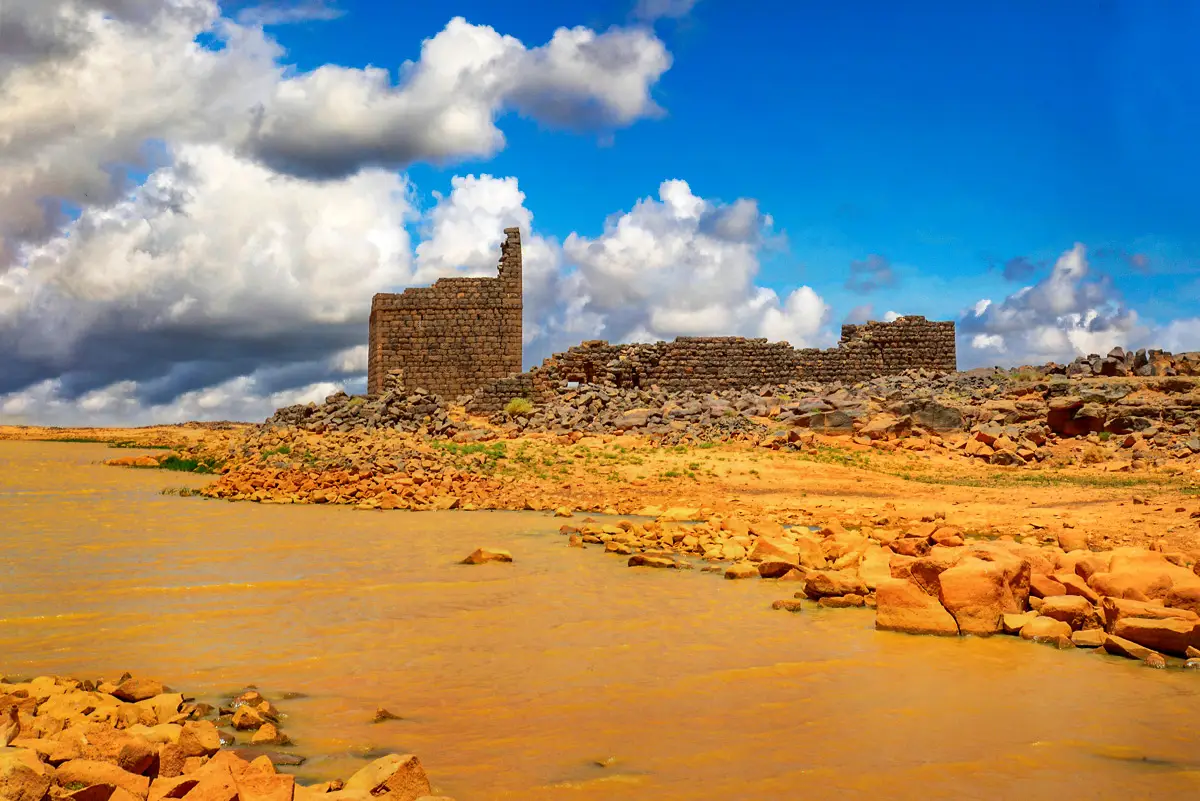
Situated about 30 km from Zarqa and 55 km from Amman, Qasr Al-Hallabat is a remarkable testament to the cultural shifts that shaped the Near East. In one hilltop building you can follow six centuries: a small Roman fort, a Late Roman stronghold with four corner towers, a 6th-century palace and monastery, and finally an Umayyad palace with mosaics, carved plaster and a mosque.
Its walls hold another surprise. Black basalt blocks carved with a long Greek imperial edict were reused in the masonry, scattered at random, like pages torn from a law book and built into a wall.
Best timeMar–May · Oct–Nov
Time needed40–50 min
Ticket3 JOD · Jordan Pass
From Amman60 km · 1 hr
Combine withHammam As-Sarah · 10 min
Google rating4.7 · Reviews
Highlights · Six centuries in one building
From Roman fort to Umayyad palace
Mosaics, a Greek edict in the walls and a mosque built to be seen
Each owner of Hallabat rebuilt it for a new purpose, and each left something behind: Roman walls, Byzantine inscriptions, Umayyad mosaics and plaster. Together they make it one of the best places in Jordan to see the change from Late Antiquity to the early Islamic world.
 01 / 06
01 · Mosaics
The animal mosaic
Mosaics
Umayyad floor mosaics fill interlaced circles with baskets, birds and a chalice with a fish, laid in small stone and glass cubes.
Look closely
The fish in the chalice and the birds in neighbouring circles.
1 of 6
Room by room
What to see
Five stops around the hilltop: the fort walls, the palace rooms, the mosaics, the inscribed stones and, outside, the mosque and water system. Pick a stop to see what to look for.
 1 / 6
01 · The Roman fort
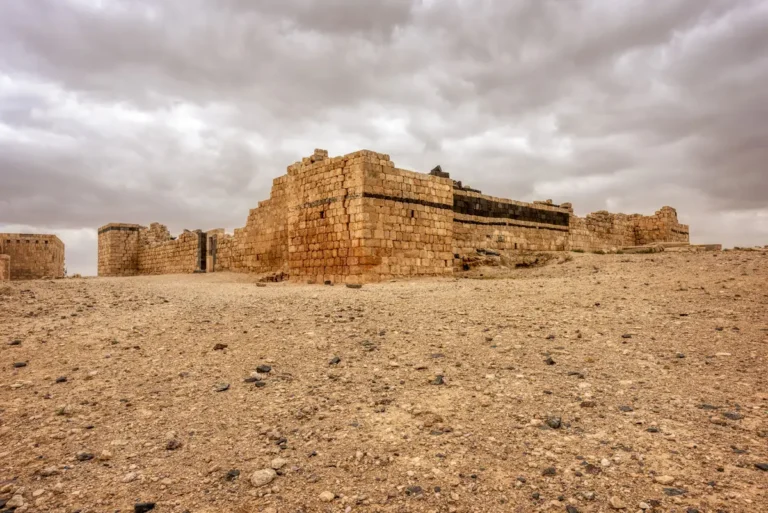
Walk around the fort walls
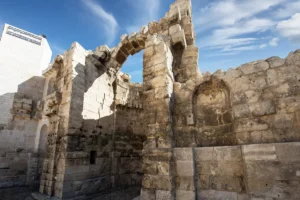
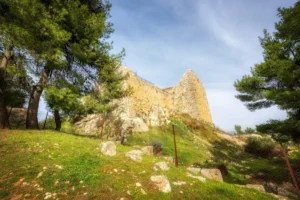
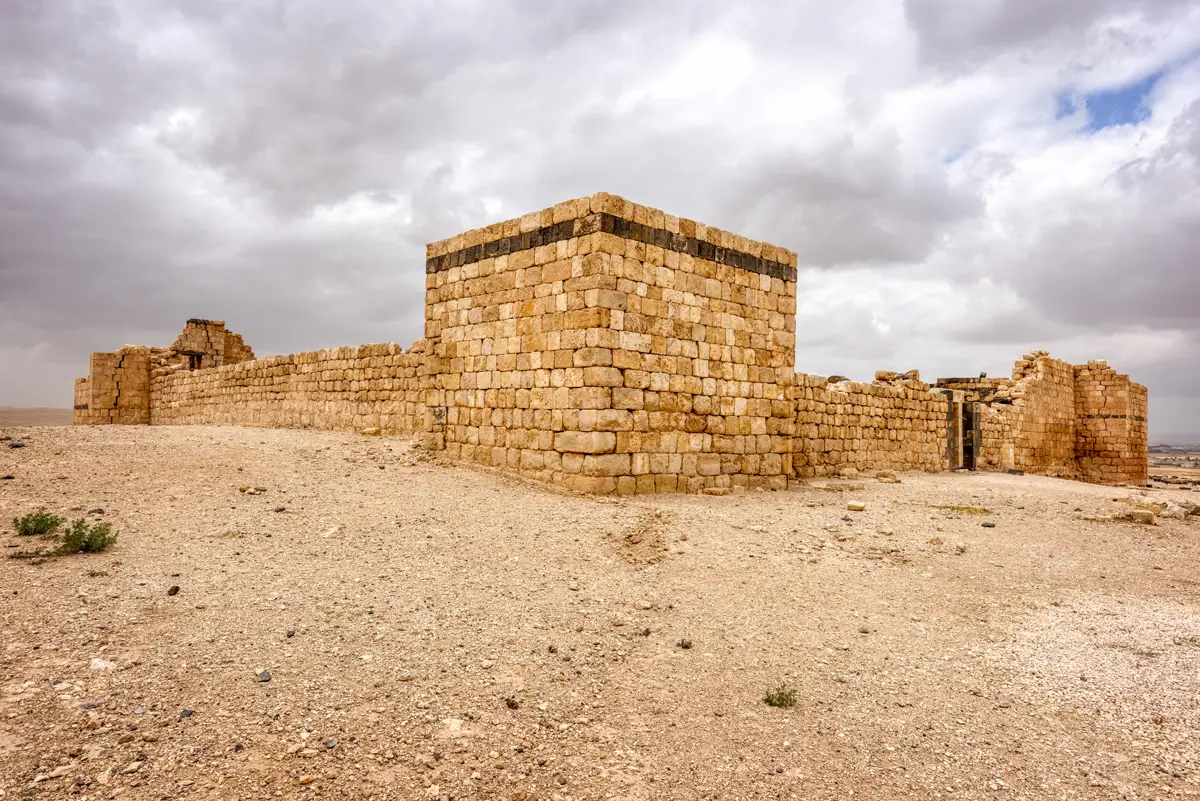
Start outside and walk around the walls. The first fort, about 17.5 m square, was built in the late 2nd or early 3rd century AD in what is now the northern corner of the building. In the 4th century it was enlarged into a square fort about 38 m across with four corner towers, most probably under Diocletian.
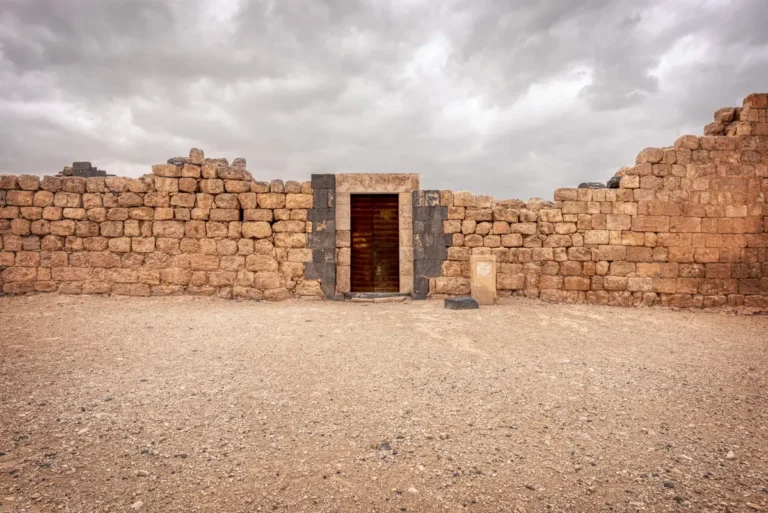
Look for the mix of black basalt and pale limestone, and for straight joints where later builders added to older walls.
Roman fortCorner towersBasalt and limestoneVia Nova Traiana
Look for
- The corner towers of the 4th-century fort
- Straight joints between building phases
- The view east over the desert the fort once watched
Dig deeperA fort on the Roman frontier
Hallabat was one of the forts along the Via Nova Traiana, the road Trajan built between AD 111 and 117 after annexing the province of Arabia in AD 106. The small first fort sat on top of an earlier Nabataean outpost.
After an earthquake in AD 551 damaged the already abandoned fort, it was rebuilt in the later 6th century as a palace and monastery with a chapel. The excavator, Ignacio Arce, links this phase to the Ghassanids, the Arab allies of Byzantium.
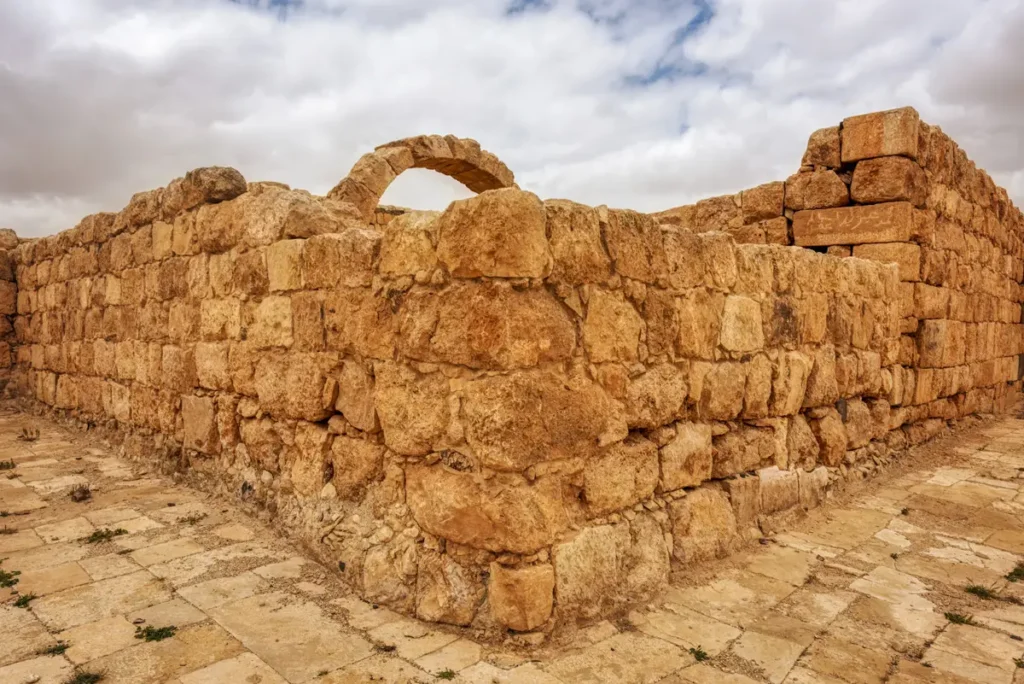 1 / 9
02 · The Umayyad palace
Explore the palace rooms
Inside, rooms with arched doorways and vaults surround the courtyards. In the late 7th and 8th centuries AD the Umayyads refurbished the palace with new mosaics, wall paintings and carved plaster, while the old monastery wing became storerooms and wine presses.
Reconstruction here was limited to parts with full evidence. New stones are marked by their sharp-edged carving, so you can tell the restored masonry from the original.
Arched roomsCourtyardCarved plasterRestored 2002–2013
Look for
- Sharp-edged new stones beside weathered originals
- The cistern in the main courtyard
- Traces of carved plaster on the walls
Dig deeperWhich caliph?
The palace is often attributed to Caliph Hisham or to al-Walid II, but the excavator names no caliph. What is clear is that the work belongs mainly to the period after Abd al-Malik’s reforms, and that the palace was destroyed and abandoned in AD 749.
A plaster frieze from the palace shows a camel, an oryx, a hound, a lion and a gazelle, the animals of the desert around it.
 1 / 6
03 · Floor mosaics
Look down at the mosaics
The Umayyad floors are laid in stone and glass cubes with animal, human, plant and geometric motifs. In the portico, interlaced circles hold baskets, birds and a chalice with a fish. The central room has a carpet of repeating diamonds.
Many of the floors are visible and easy to reach. Stay on the walkways and don’t step on the mosaics; more finds are shown in the site museum.
Glass and stone cubesAnimals and birdsGeometric carpetsUmayyad
Look for
- The chalice with a fish
- Birds and baskets in the circles
- The diamond carpet of the central room
Dig deeperLost and saved
About 30 square metres of mosaic were stolen in the spring of 1990, a reminder of how vulnerable these floors are.
The Department of Antiquities cleared and excavated the site under Ghazi Bisheh in 1979–1984, and the Spanish mission led by Ignacio Arce excavated and restored it in 2002–2013, building the visitor centre and site museum.
 1 / 7
04 · Inscribed stones
Find the Greek edict
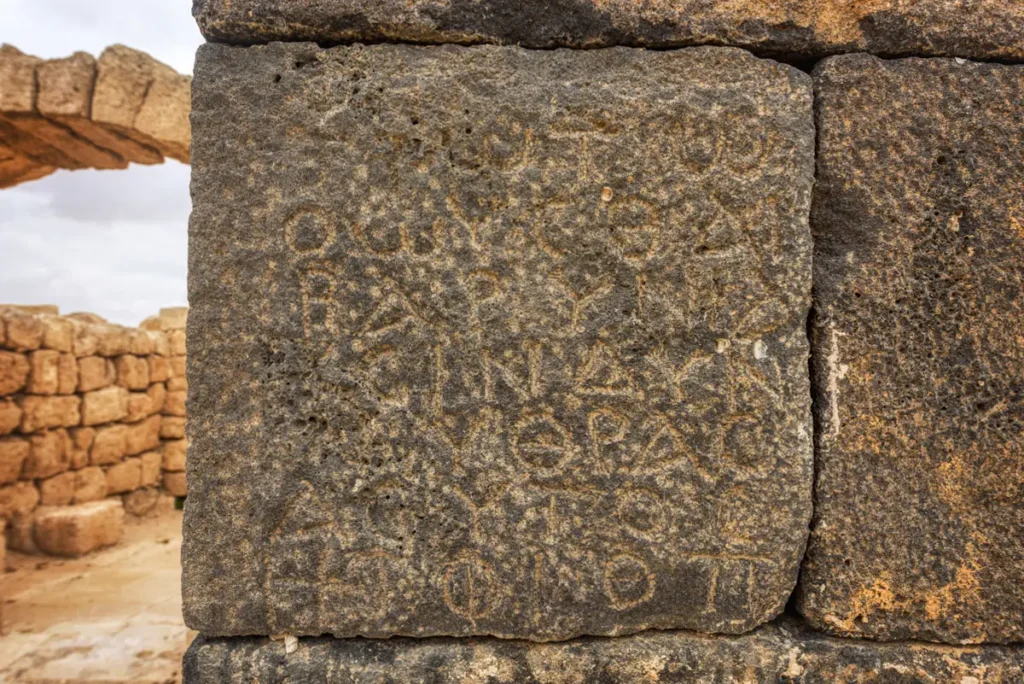
Look closely at the black basalt blocks in the walls. More than 100 of them carry parts of a Greek edict of the Byzantine emperor Anastasius I (491–518), regulating the military administration of the Byzantine armies and their Arab allies in Arabia, Palestine and other provinces.
The blocks were probably brought from a nearby town and reused at random in the 6th-century rebuilding, so the text now runs sideways, upside down and out of order.
Anastasius IGreek edictReused basalt6th century
Look for
- Greek letters on blocks set sideways or upside down
- Carved crosses from the monastery phase
- Decorated capitals and basins
Dig deeperA law book in the walls
The original edict ran to more than 300 lines in about 70 chapters. Scholars have pieced it together from the scattered blocks, and the count of inscribed fragments has grown with each study, from over 100 to about 160.
Because the edict dates from the reign of Anastasius (491–518), the rebuilding that reused its blocks must be later; the excavator places it after the earthquake of 551.
 1 / 7
05 · Outside the walls
Finish at the mosque and cisterns
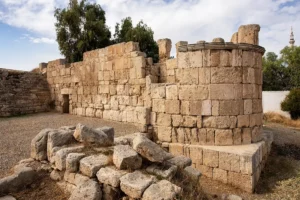
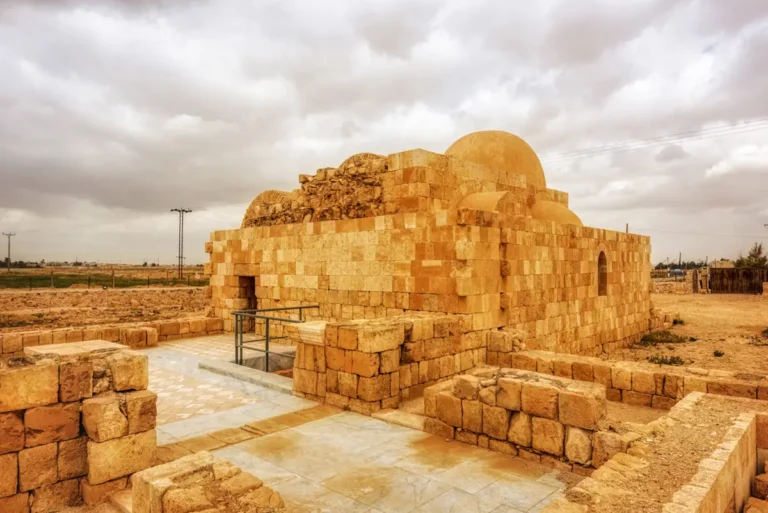
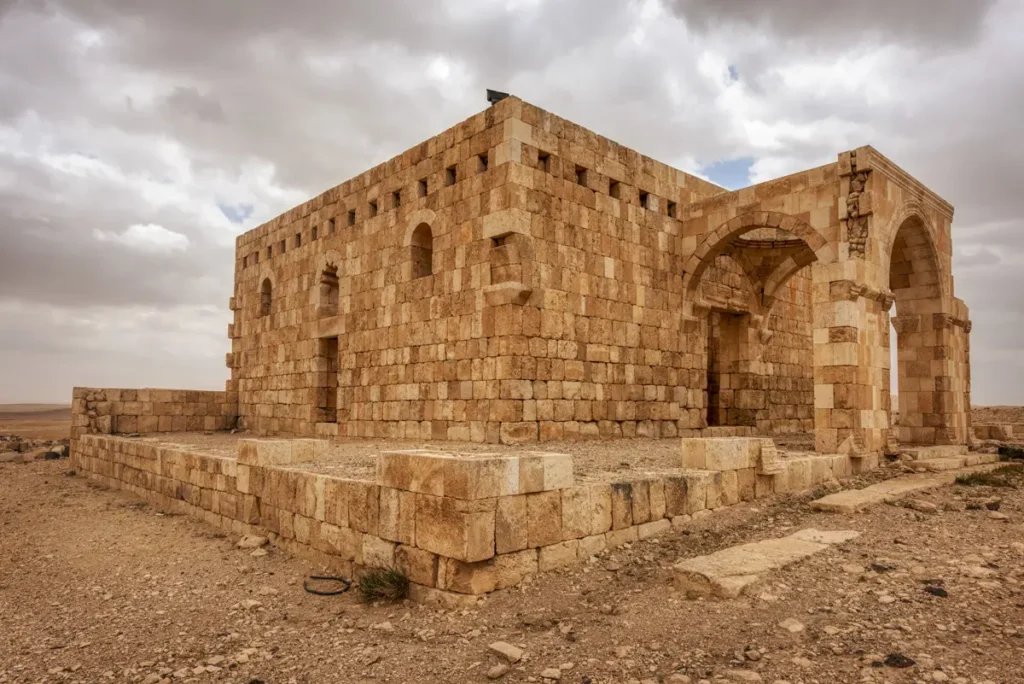
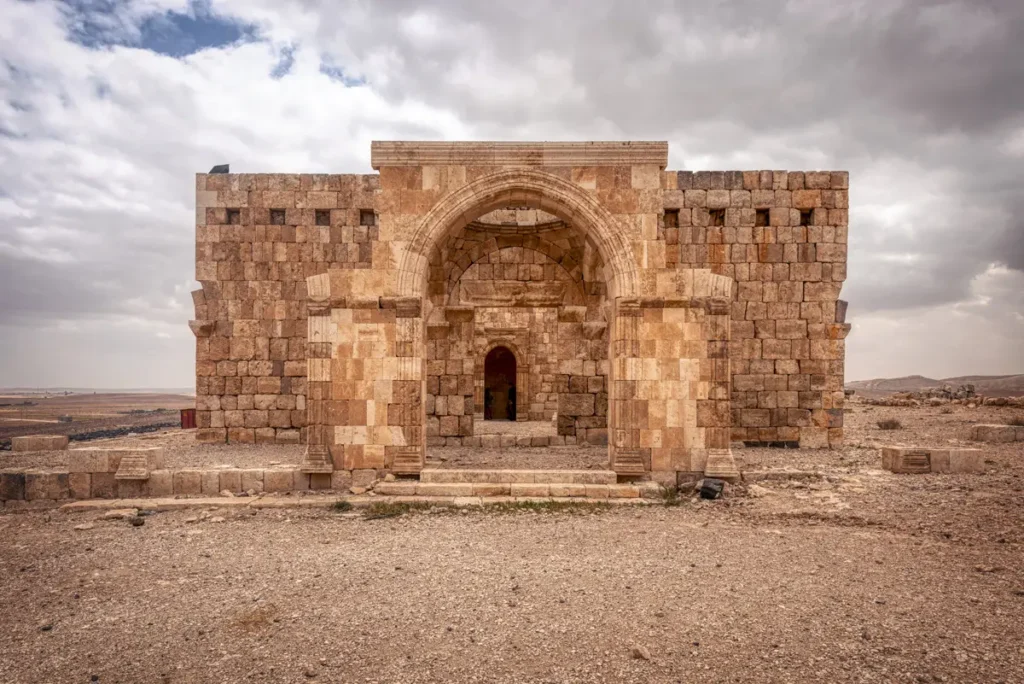
Just outside the palace, about 15 m away, stands a small rectangular mosque of layered limestone with three barrel vaults. A porch ran along three sides, and the mihrab survives in the south wall. Its inscriptions date it to the first Islamic century, and it was placed so it could be seen from afar.
Around the palace, look for the cisterns. With no springs, Hallabat depended on five cisterns, a large reservoir and channels that collected winter rain for a walled farm of about 270 × 220 m to the west.
Umayyad mosqueMihrabCisternsWalled farm
Look for
- The mihrab in the mosque’s south wall
- The cistern openings with their stone rims
- The line of the farm enclosure to the west
Dig deeperThe oldest Islamic garden?
The Spanish mission reported what it described as the oldest preserved Islamic garden at Hallabat, part of an estate that used every drop of winter rain for olives, vines or other crops.
In 2007 the remains of six people were found in one of the cisterns, dated between AD 772 and 895, a sign that someone still came here after the Umayyads had gone.
History & significance
Six centuries on one hilltop
A Roman fort, a Byzantine-era palace and monastery, then an Umayyad estate with a mosque, baths and gardens: Hallabat was rebuilt for each new power until an earthquake brought it down in AD 749.
- c. 200First Roman fort built
- After 551Rebuilt as a palace and monastery
- 749Destroyed and abandoned
- 2002–13Spanish mission restores the site
 ProfileQasr Al-Hallabat: the full storyHistory, architecture, the timeline and the Greek edict in the walls. About 3 min read.Read the profile →
Plan your visit
Everything you need to know before you go
Qasr Al-Hallabat stands on a low hill east of Zarqa, on the road towards Azraq. Hammam As-Sarah, its bathhouse, is just 3.5 km to the east, so plan to see both.
Good to know: the visitor centre and site museum are open. They are about 200 m from the ruins, along a stony path; the museum holds about 150 finds from the site.
Opening hoursOpen dailyWinter 8:00–16:00 · April–May 8:00–17:30 · Ramadan 9:00–17:00
Entry ticket3 JODVisitors · 0.25 JOD for residents · free with Jordan Pass
Time to visit40–50 minIncluding the mosque and museum
From Amman60 kmAbout an hour north-east via Zarqa
LocationHallabat, near Zarqa32.0929° N, 36.3281° EGet directions
Opening hours and prices checked October 2026. Spotted a change? Let us know
On site
What you’ll find at Qasr Al-Hallabat
- Visitor centre
- Ticket office
- Toilets
- Free parking
- Museum
- Viewpoint
Not on site: guide, food & drinks, market / shop, hotels
Access: no 4x4 needed
Details by location
At the monument: Viewpoints across the palace ruins.
Near the entrance: Visitor centre, ticket office, toilets, designated parking and museum at the site entrance.
In the surrounding town: Shops and food are in Hallabat village, outside the monument.
When to go
Spring and autumn are the most comfortable. In spring the hills around the site turn green.
J
F
M
A
M
J
J
A
S
O
N
D
BestGood, cooler or warmVery hot
Tip: start at the visitor centre and museum, so you know what to look for on the hill.
Before you go
Services are limited out in the desert.
- Water and snacksShops in Hallabat village
- Sun hat and sunscreenVery little shade outside
- Comfortable shoesUneven, stony ground
- Cash in Jordanian dinarsFor tickets and small purchases
- Toilet paperBring your own, just in case
Common questions
Quick answers before you set off.
Is Qasr Al-Hallabat included in the Jordan Pass?
Yes. It is listed in the Jordan Pass. Show your pass at the ticket office instead of paying.
How far is Hammam As-Sarah?
About 3.5 km east, a few minutes by car. The bathhouse was part of the same Umayyad estate.
Can I see the mosaics?
Yes. Many mosaic floors are visible and accessible in place, and more finds are in the site museum. Stay on the walkways and don’t step on them.
Was it built by the Romans?
Its oldest part is a small Roman fort of the late 2nd or early 3rd century AD. It was enlarged in the 4th century and rebuilt as a palace in the 6th and again under the Umayyads.
Is it suitable for children?
Yes. Children usually enjoy the hilltop ruins and the museum. Watch for uneven ground and open cisterns.
What should I wear?
Comfortable, closed shoes for uneven ground, and light clothing that covers your shoulders and knees, which is respectful in rural Jordan and protects you from the sun.
Combine with
Hallabat is the first or last stop on a desert-castles day from Amman. Drive times are from Qasr Al-Hallabat.
1 Hammam As-SarahUmayyad bathhouse4 km · ~10 min drive · Tours 1 & 22Qasr AzraqBasalt fortress65 km · ~1 hr 5 min drive · Tours 1 & 23Qasr AmraUNESCO frescoes67 km · ~1 hr 5 min drive · Tours 1 & 24Qasr ShebibHajj fort25 km · ~30 min drive
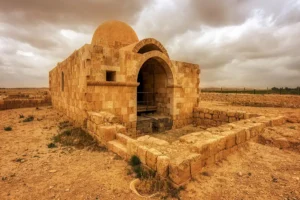 Hammam As-SarahUmayyad bathhouse4 km · ~10 min drive · Tours 1 & 22
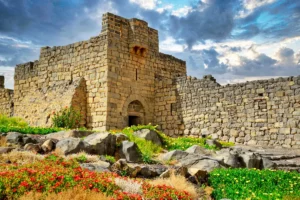 Qasr AzraqBasalt fortress65 km · ~1 hr 5 min drive · Tours 1 & 23
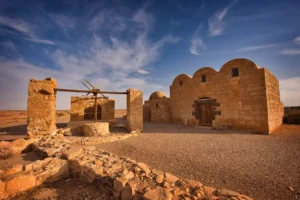 Qasr AmraUNESCO frescoes67 km · ~1 hr 5 min drive · Tours 1 & 24
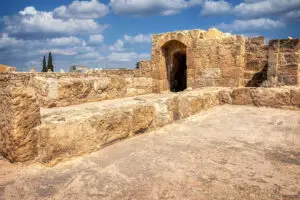 Qasr ShebibHajj fort25 km · ~30 min drive
Tour 1 Best of Desert Castles · Tour 2 Black Desert, Azraq Oasis & Desert Castles. Compare the tours
Private tours
Two private day tours that include Qasr Al-Hallabat
Both tours are just for you: your own vehicle and driver, hotel pickup in Amman, entry tickets included, and one fixed price for up to three travellers.
Private: only your group
Your own vehicle & driver
Hotel pick-up in Amman
Entry tickets included
 from$150per group (1–3) · 105 JOD
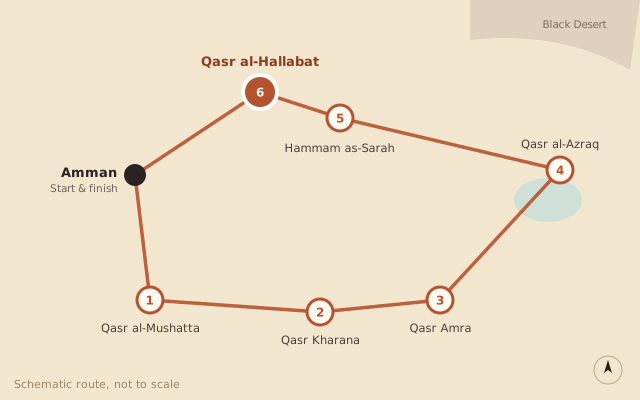
Tour 1 · Full day · Private
Best of Desert Castles Private Full-Day Tour
Step into the fascinating world of the early Islamic period on this private full-day journey to Jordan’s remarkable Desert Castles. Scattered across the eastern desert, these mysterious complexes date largely to the 8th century and reflect the artistic and architectural brilliance of the Umayyad era.
HistoryArchitectureCultureArt6 Desert Castles
Duration7–8 hr
Pick-up8 or 9 AM
Group1–3, private
Included
- Private luxury transfer
- Entrance fees
- Bottled water, soft drinks, snacks
- Coffee/tea (on request)
- WiFi, Phone charger
Not included
- Professional on-site (local) guide
- Personal expenses
- Lunch
 from$170per group (1–3) · 120 JOD
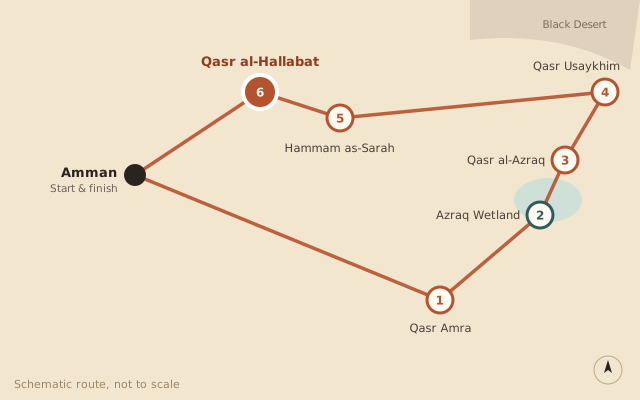
Tour 2 · Full day · Private
Black Desert, Azraq Oasis & Desert Castles Full-Day Tour
Journey deep into Jordan’s eastern desert on this private full-day adventure that combines remarkable history with unique desert landscapes. Scattered across the region are the mysterious Umayyad Desert Castles—impressive complexes dating back to the 8th century that once served as palaces, caravan stations, and administrative centres during the early Islamic period.
HistoryArchitectureNatureCultureArt5 Desert Castles
Duration7–8 hr
Pick-up8 or 9 AM
Group1–3, private
Included
- Private luxury transfer
- Entrance fees
- Bottled water, soft drinks, snacks
- Coffee/tea (on request)
- WiFi, Phone charger
Not included
- Professional on-site (local) guide
- Personal expenses
- Lunch
Which tour is right for you?
| Best of Desert Castles | Black Desert, Azraq Oasis & Desert Castles | |
|---|---|---|
| Price per group (1–3) | $150 (105 JOD) | $170 (120 JOD) |
| Duration | 7–8 hr | 7–8 hr |
| Stops | 6 Umayyad castles and palaces | 5 historic sites + Azraq Wetland Reserve |
| Qasr Al-Hallabat | ✓ Last stop | ✓ Last stop |
| Qasr Kharana & Mushatta | ✓ Both | Not included |
| Wetland walk & Black Desert views | Not included | ✓ Marsh trail + Qasr Usaykhim hilltop |
| Best for | Architecture and Umayyad history | History plus nature and landscape |
CancellationFull refund if you cancel at least 24 hours before the start. No refunds or changes within 24 hours.
Pick-upFrom your hotel lobby or home in Amman, 5 minutes before your chosen start time.
BringComfortable shoes, sun hat, sunblock and sunglasses. Tours run in English.
Explore this site
More from Qasr Al-Hallabat
Panoramas, walk-throughs, photos and stories about this site.
ProfileQasr Al-Hallabat: history & architecture Photo albumQasr Al-Hallabat: From Roman Fort to Umayyad Palace in Photos
 360°360° panoramaInterior of Qasr Al-Hallabat Mosque in 360°
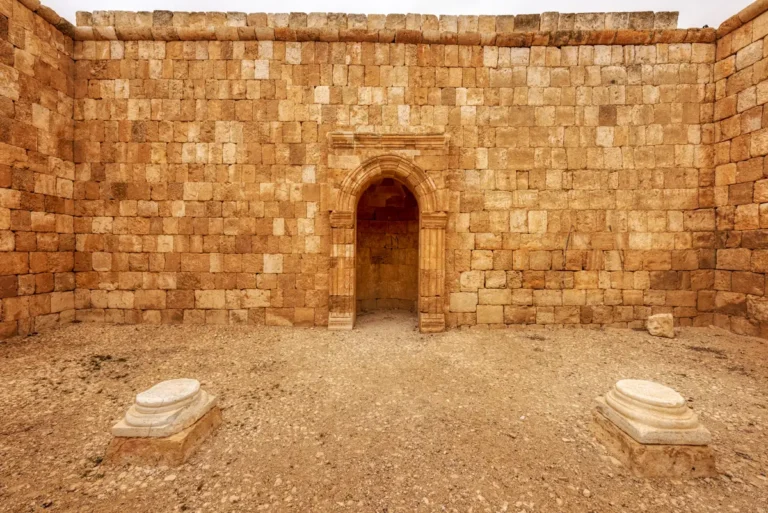 360°360° panoramaUmayyad Mosque of Qasr Al-Hallabat: 360° Panorama
 360°360° panoramaQasr Al-Hallabat: 360° Panorama
Nearby