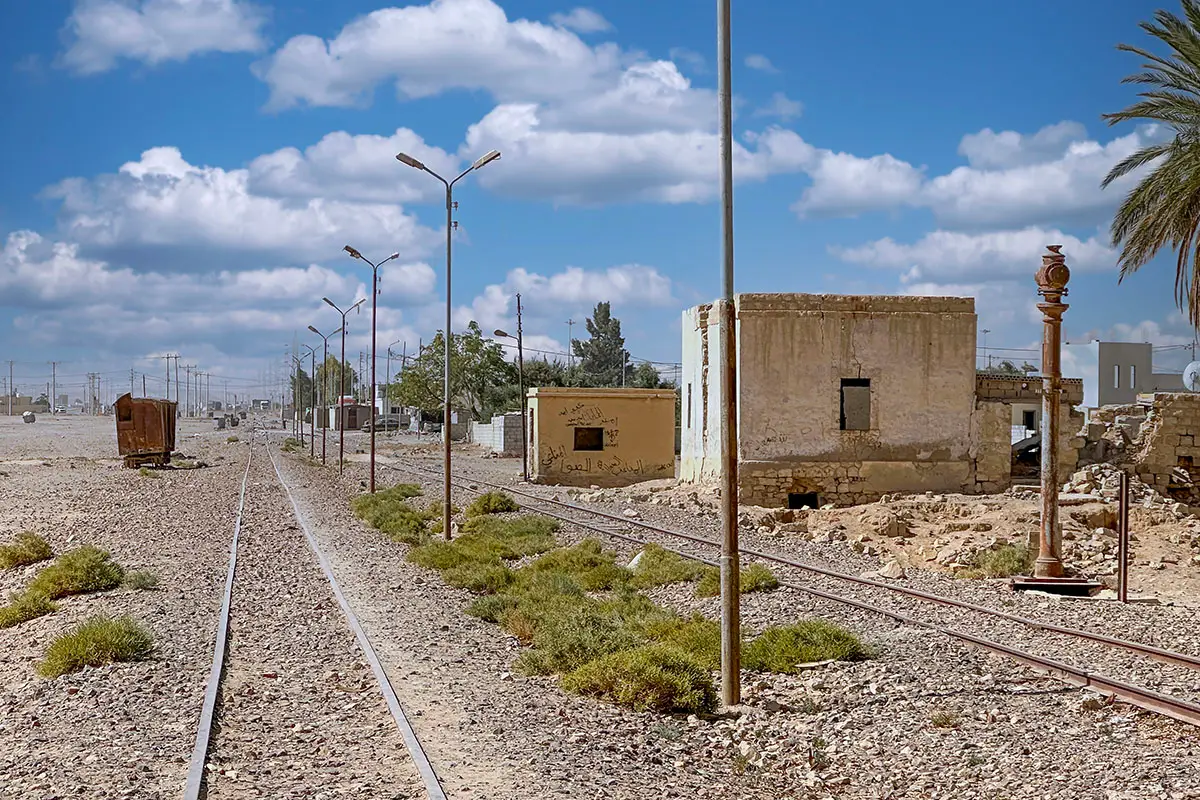


In the broad valley of Wadi al-Hasa, a stone building beside the tracks recalls the most ambitious project of the late Ottoman Empire: the Hejaz Railway, built to carry pilgrims from Damascus to Medina. In 1918 Al-Hasa station was on the front line of the Arab Revolt.
Where Is Al-Hasa Train Station?
The station lies in Wadi al-Hasa in southern Jordan, about 5 km south-east of the Ottoman pilgrimage fort of Qal’at al-Hasa. In 1918 British reports placed it about 35 miles (56 km) north of Ma’an by the line. A survey of the railway gave its height as 2,696 feet (about 820 m), at the foot of a long descent into the valley.
Historical Context and Origin
Sultan Abdülhamid II launched the Hejaz Railway in 1900 to link Damascus with the holy cities of Arabia. Track-laying began in September 1901 and moved south in stages; the line reached Ma’an in 1904, passing Al-Hasa on the way, and arrived in Medina on 1 September 1908. Stations along the line served pilgrims, freight and the soldiers who guarded the railway.
Architectural Design
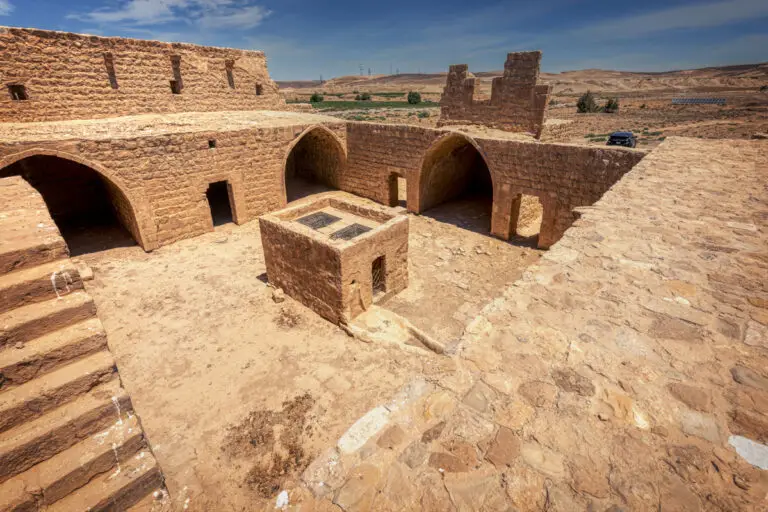
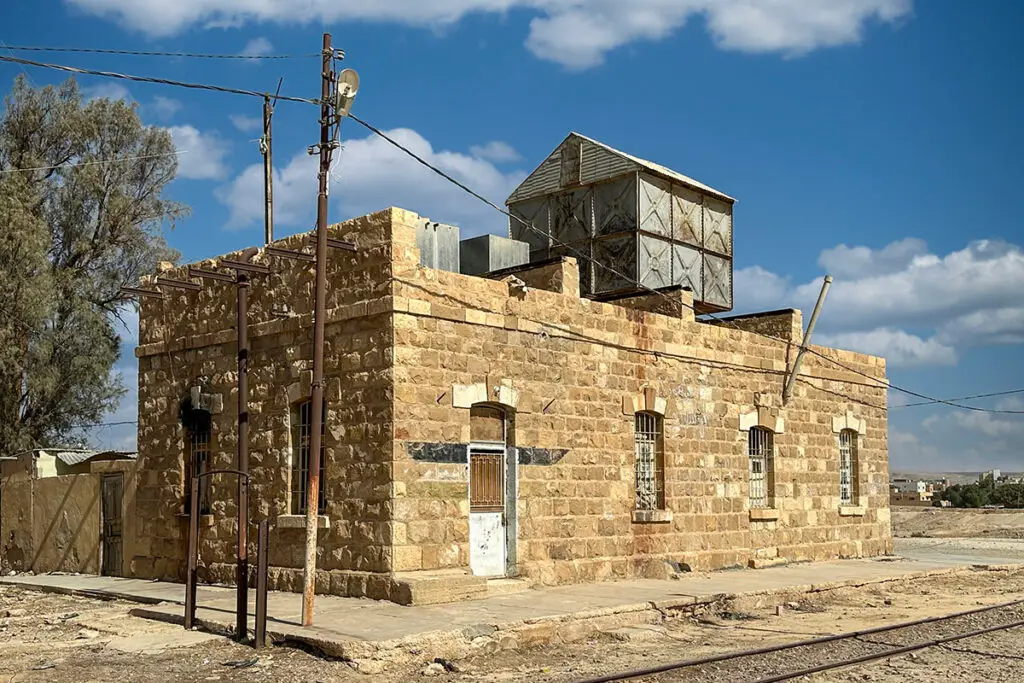
The station is a plain, sturdy building of dressed local stone set close beside the track, typical of the stations along the line. From here the railway ran on through the valley towards Ma’an.
Hejaz Railway
A stop on the line from Damascus to Medina, built 1900–1908.
Descent into the Valley
Surveyors recorded a long descent of 1 in 55 into the Wadi al-Hasa.
Arab Revolt
Arab forces captured and demolished the station in May 1918.
Still a Railway
The line here later carried phosphate trains from the Hasa mines.
Al-Hasa in the Arab Revolt
In early May 1918, Arab forces of the revolt captured and demolished the stations of Faraifra and Al-Hasa, and they reoccupied them on 30 May. On 18 June an Ottoman column found Al-Hasa unoccupied, and on 22 June two Ottoman battalions with artillery attacked Sharif Nasir’s forces near Al-Hasa; they were driven back to Faraifra with 20 killed and 15 taken prisoner. In August the Ottoman command was still ordering supplies for 3,000 men to be gathered at Al-Hasa and Jurf al-Darawish.
Destruction, Rediscovery, and Restoration
After the war the line south of Ma’an was never fully restored. In Jordan the railway lived on as a freight line: phosphate mines at Al-Hasa sent their ore south, and in 1975 an extension to Aqaba opened. Freight operations on the Aqaba railway were suspended in 2018.
Visiting Al-Hasa Train Station Today
The station is open to visitors and is easily combined with a visit to the Qal’at al-Hasa fort. Thirty minutes is enough. Our 360° panorama shows the station and tracks.
Further reading: Qatar Digital Library — Summary of the Hejaz Revolt (1918); Jordan Hejaz Railway Corporation — history.