

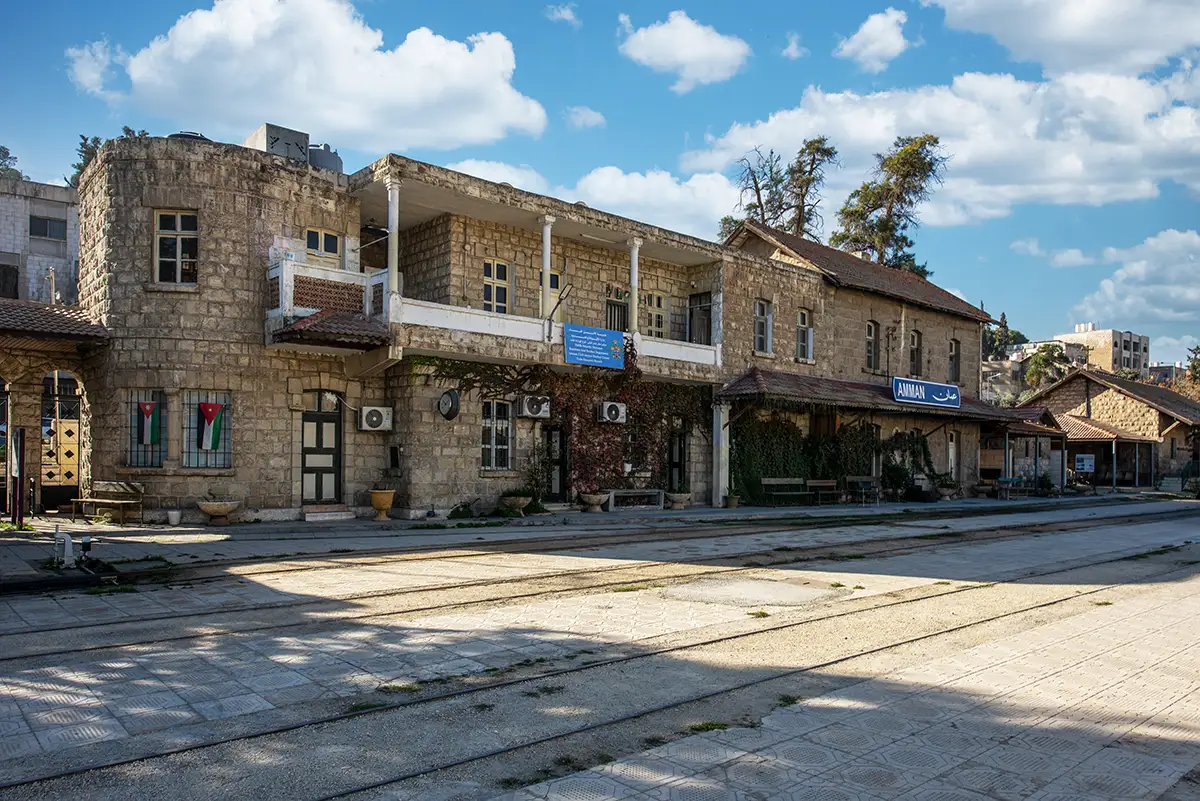
The Amman Railway Station is the historic Hejaz Railway station of the Jordanian capital, in the Al-Mahatta district. The railway reached Amman in 1903, and the station, with its locomotive shed, turntable, water tower and railway museum, is now a heritage site that you can visit free of charge.
Where Is the Amman Railway Station?
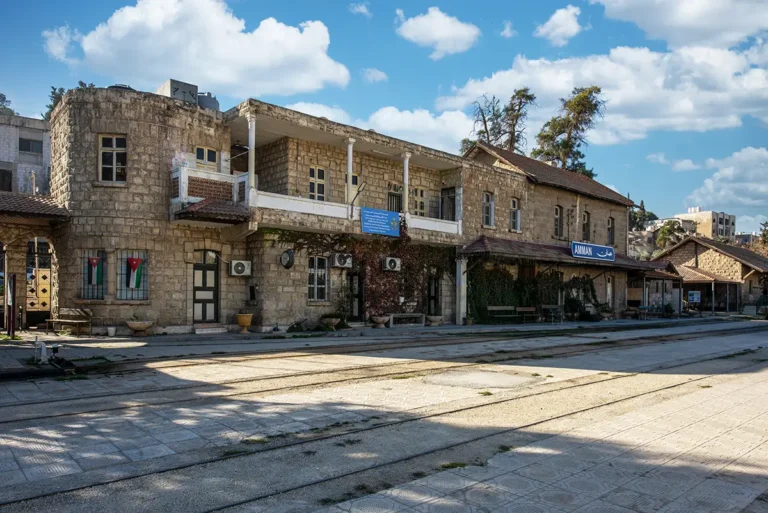
The station stands in Al-Mahatta, a district named after it (mahatta is Arabic for “station”), north-east of downtown Amman. The station buildings run parallel to the railway line, with the long locomotive shed at one end of the yard. A local guide is available on site.
Historical Context and Origin
In the middle of the 19th century Amman was a town on the southern frontier of the Ottoman Empire, populated by local Arab tribes. In the second half of the century the Ottoman administration resettled Circassian families in and around the town. The Amman Stream and the arrival of other settlers helped the town to revive, and the railway then gave it a new place on the map of the region.
The Ottoman Hejaz Railway reached Amman in 1903, linking the town by rail to Damascus, and the line was completed to Medina in 1908. It carried pilgrims from the northern provinces of the empire to the Hejaz, and it also brought soldiers, merchants and new ideas. The information board at the station explains that Amman then grew around two centres: the station, from which the town spread towards Marka and the downtown area, and the Al-Husseini Mosque, from which it climbed into the surrounding hills.
Architectural Design
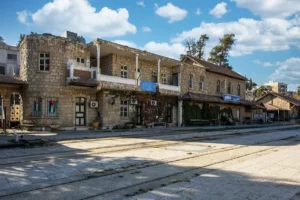
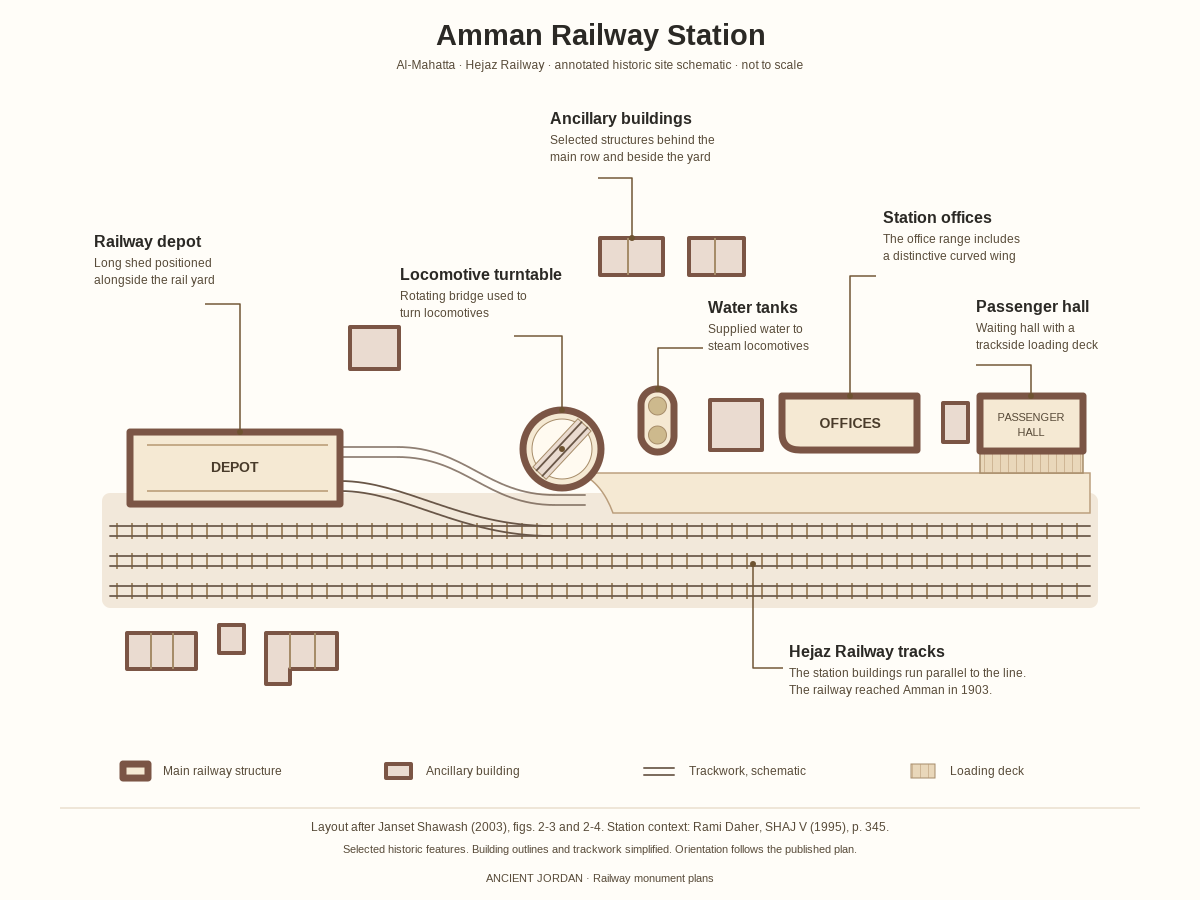
The station follows the unified design used for the buildings of the Hejaz Railway. Along the tracks stand the long locomotive shed, the locomotive turntable, the water tanks, an ancillary building, the station offices with a distinctive curved wing, and the passenger hall with its trackside loading deck. Further ancillary blocks lie behind the station row and opposite the shed.
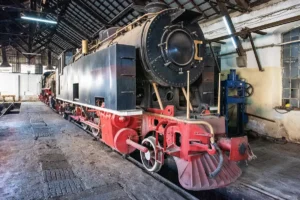
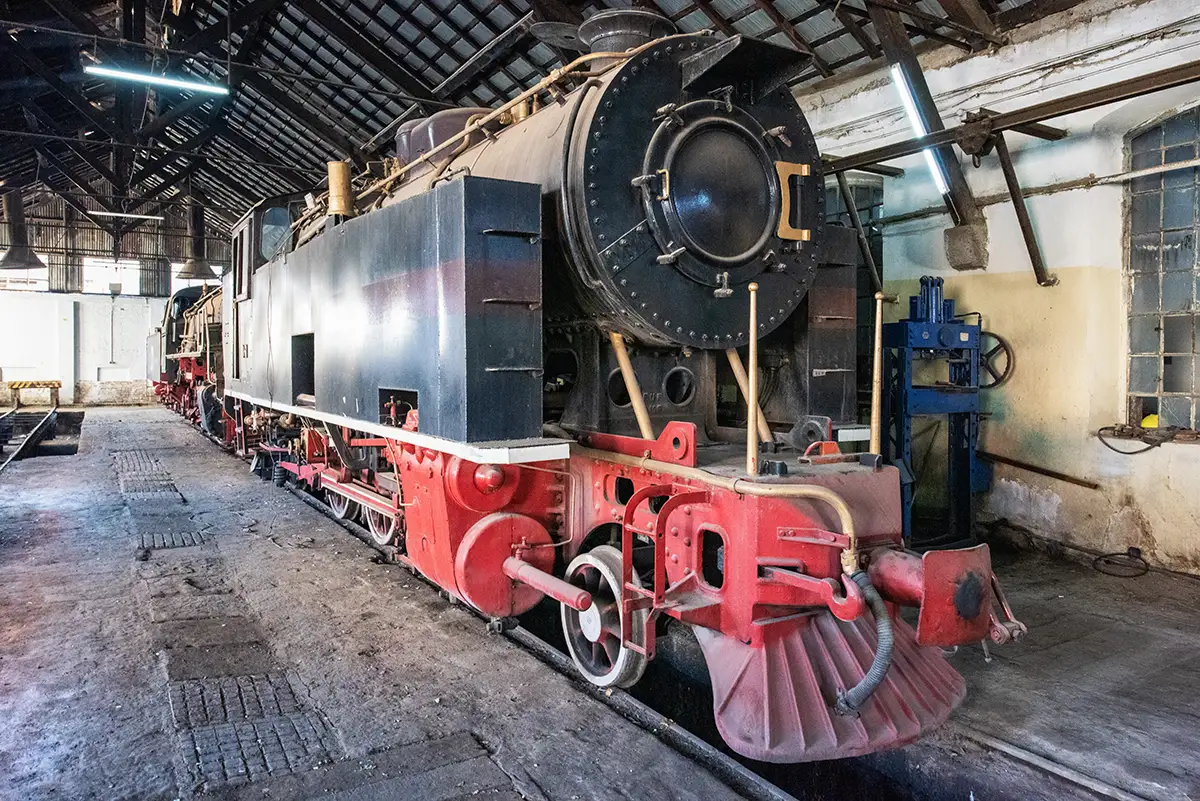
The locomotive shed was built in 1906. Locomotive sheds were added only to the main stations, such as Amman and Ma’an, to house, maintain and clean the engines. The Amman shed is a single open hall measuring 57 by 14 metres, big enough for at least six locomotives parked in two rows. It has stone walls under a timber-truss roof with openings for ventilation, light and chimneys, and two pits along its length let workers inspect the engines from below. The board describes it as a large engineering structure that still works at full capacity after more than a century, and the locomotives are fully operational and used for private bookings.
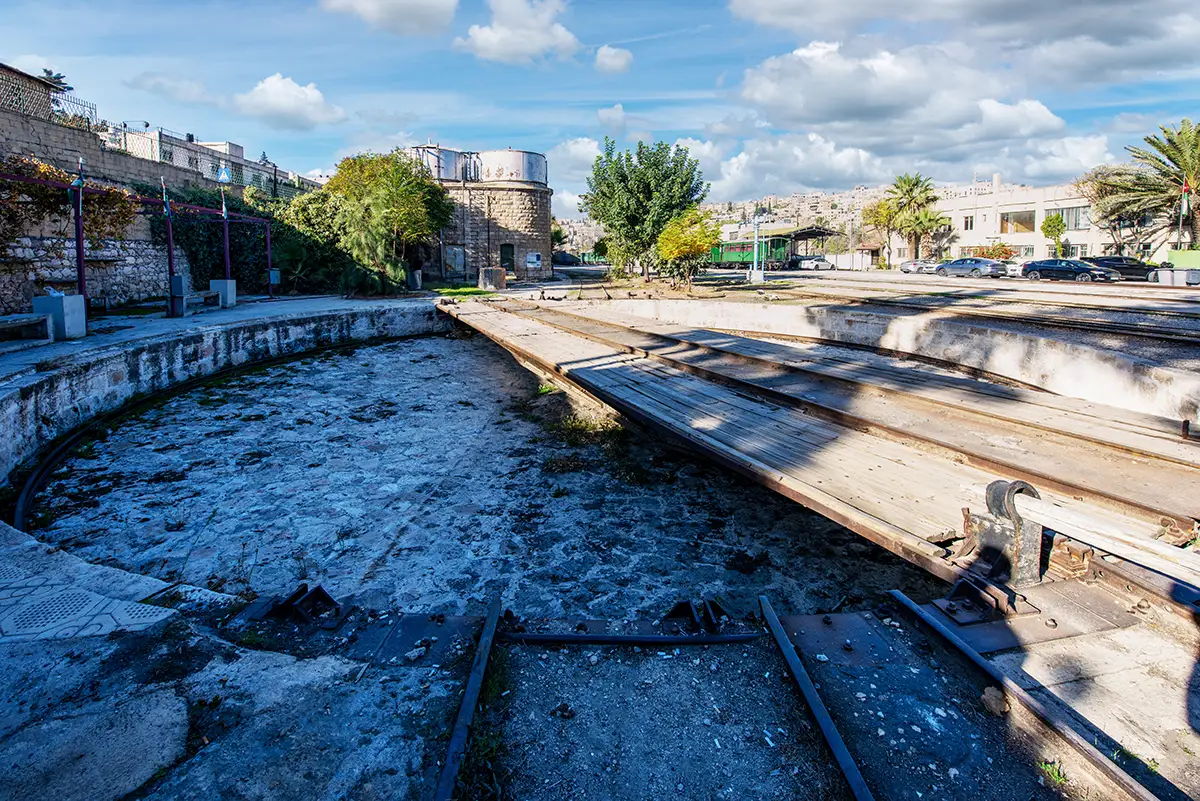
The turntable lets engines be turned or moved onto another track. A short bridge of rails pivots across a circular pit.
Locomotive Shed
Built in 1906: a 57 by 14 metre hall with a timber-truss roof and two inspection pits.
Water Tower
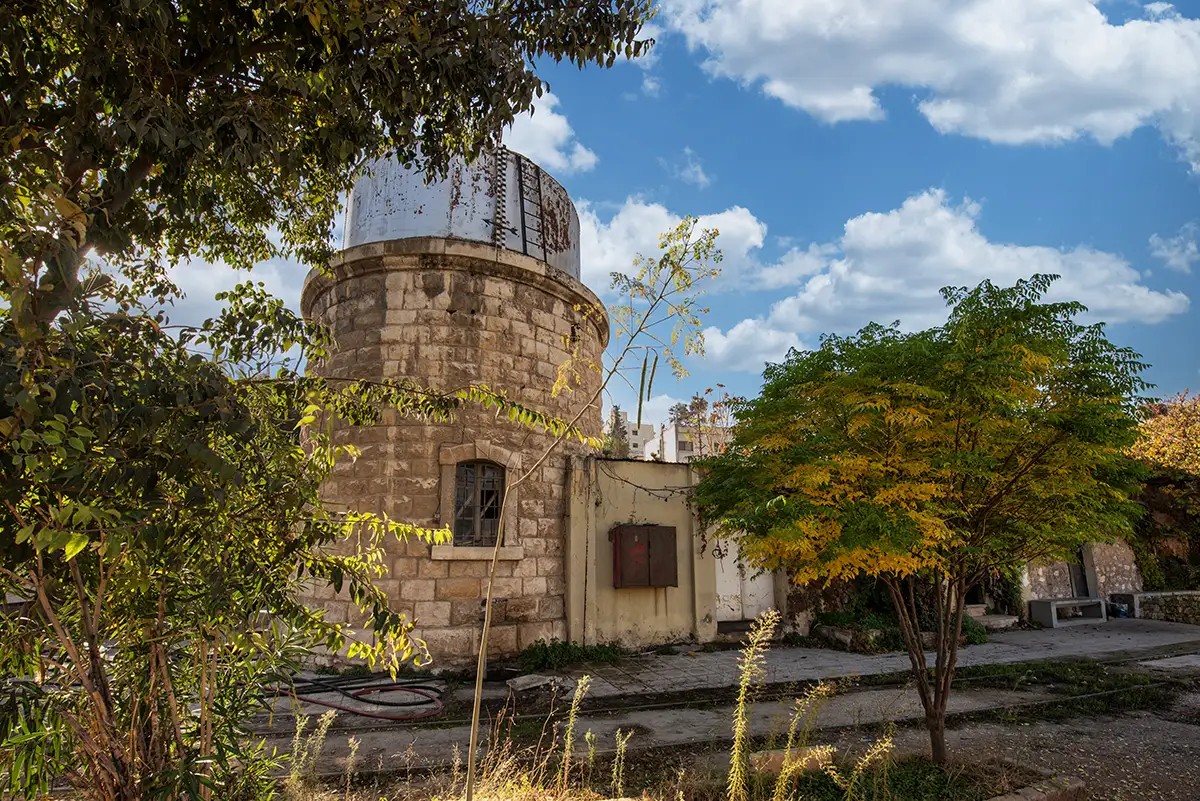
A round stone tower topped by a metal tank that supplied the steam locomotives.
Locomotive Turntable
A pivoting bridge of rails that turned engines or lined them up with another track.
Station Offices
A trackside range with an upper gallery and a distinctive curved wing.
Amman Railway Station
Schematic plan of Amman Railway Station, after Shawash (2003)
Open drawingLocomotives, War, and the Museum
The board records that in 1907 the Hejaz Railway had 55 steam locomotives, 32 passenger carriages and 552 freight wagons, most of them imported from Germany and a few from Belgium. By the First World War the fleet had grown to 120 steam locomotives, with about 100 passenger carriages, 1,200 freight wagons and 20 mail wagons. Between 1916 and 1918 the line was attacked during the Arab Revolt, which cut the through service to Medina. In 1921 Emir Abdullah travelled by train from Ma’an to Amman during the founding of the Emirate of Transjordan.
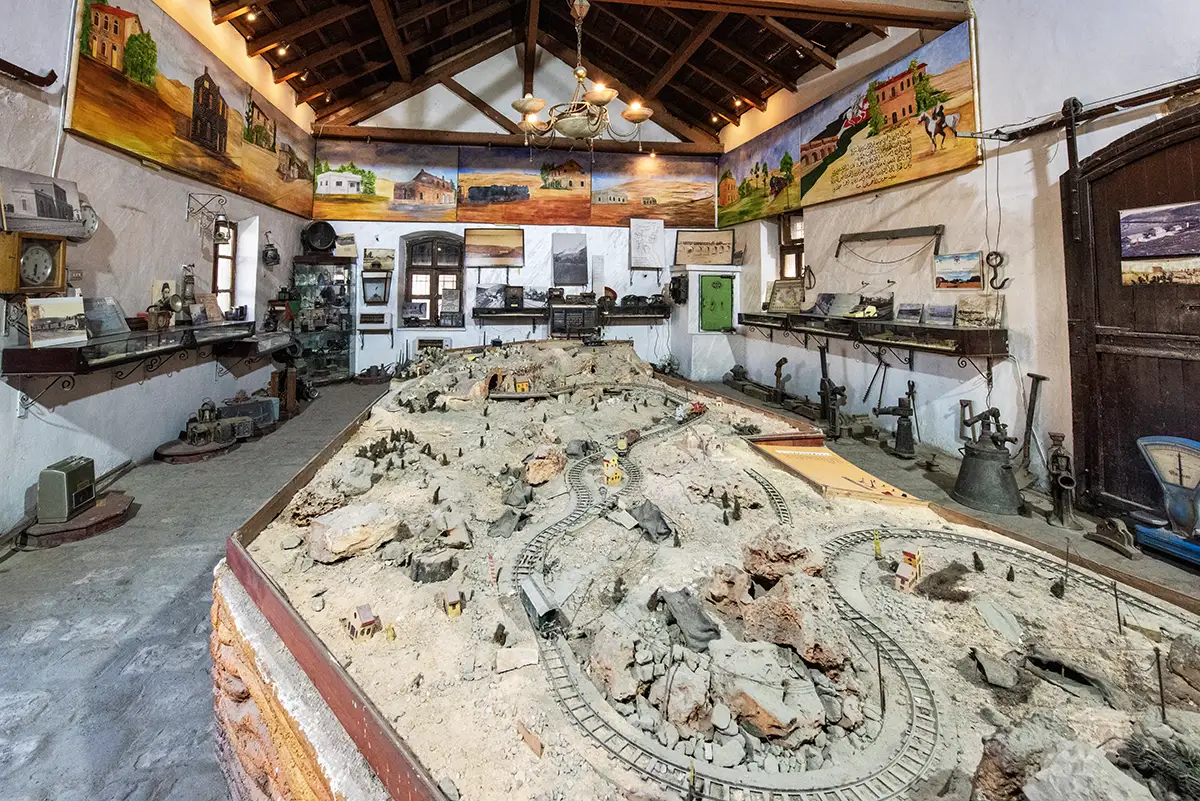
After the war the Hejaz Railway assets in Jordan came under the British Mandate authorities and were run by the Palestine Railways company. In 1948 the Jordanian government took back the management of the line within its territory. Work on a museum at the station began in 1999, to preserve the railway’s equipment, records and history. The Hejaz Railway Museum now occupies part of the station, and the Emir’s carriage is preserved there.
Visiting the Amman Railway Station Today
Admission is free for visitors and residents, and a local guide is available on site. Allow about 40 minutes to see the station offices, the water tower, the turntable, the locomotive shed and the museum. The locomotives can be booked privately. The station is open from 7:00 to 15:00 and closed on Fridays and Saturdays. Two boards on the site tell the story of the locomotive shed and of the railway’s effect on the growth of Amman.
Further reading: Jordan Hejaz Railway, culture; Jordan Hejaz Railway, about; UNDP, Heart of Amman; Janset Shawash (2003), plan of the station; the information boards at the site.