
















Petra
The rock-cut capital of the Nabataeans, with tombs, temples and a theatre carved into rose-coloured sandstone
Heyday1st c. BC–1st c. AD
TrailsFive main trails
LocationWadi Musa
UNESCOWorld Heritage Site
Travel GuidesNabataean KingdomRoman PeriodUNESCO World HeritageJordan PassPart of Jordan’s Nabataean Temples
Introduction
A city carved into the mountains, reached through a narrow gorge.
Hidden among the sandstone mountains of southern Jordan, Petra was the capital of the Nabataeans, Arab traders who grew rich on the caravan routes of incense and spice. Over about two centuries they carved hundreds of tombs, temples and dining halls into the rock and channelled water through the desert to supply the city.
The main entrance is through the Siq, a winding gorge about 1.2 km long, which opens onto the Treasury. Beyond it, five main trails lead through the city and up to its high places: the Main Trail, the Monastery Trail, the Backdoor Trail from Little Petra, the High Place of Sacrifice and al-Khubtha. Allow at least a full day; two or three days are better.
Best timeMar–May · Oct–Nov
Time needed1–3 days
TicketFrom 50 JOD · Jordan Pass
From Amman235 km · 3 hr
Combine withSiq al-Barid (Little Petra) · 15 min
Google rating4.8 · Reviews
Highlights · The rose city
Six things not to miss in Petra
The Siq, the Treasury, the tombs and the high places
Petra is vast. If your time is short, these are the places that make the visit. Pick one to see which trail it is on.
 01 / 06
01 · Main Trail
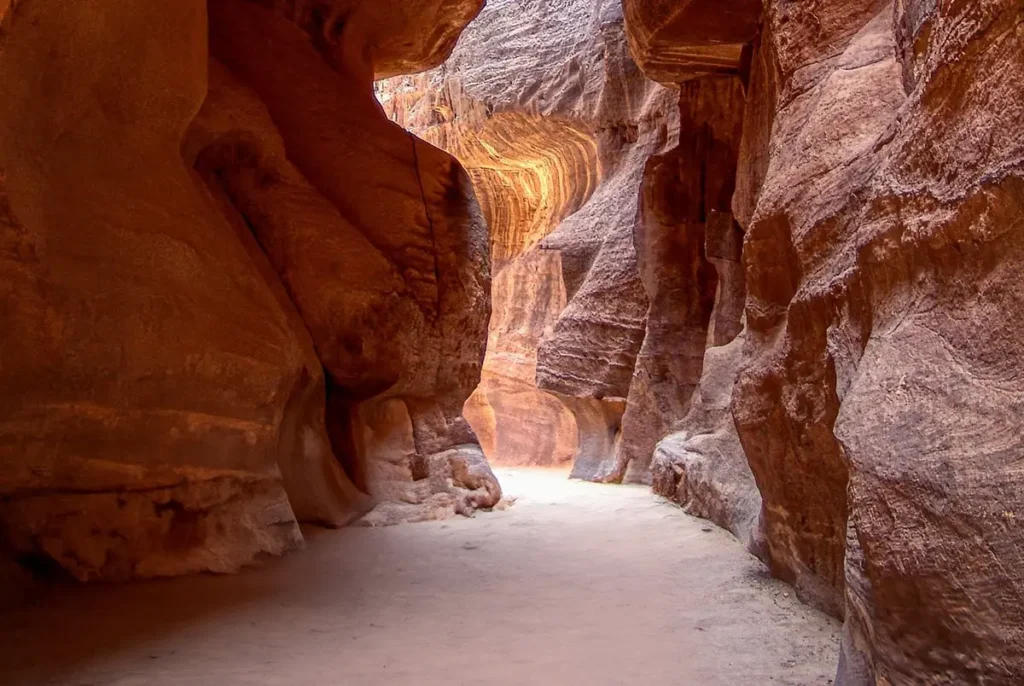
The Siq
Main Trail
A narrow gorge about 1.2 km long, in places only 3 m wide, the main entrance to the city.
Look closely
The water channels cut along its walls.
1 of 6
Trail by trail
What to see
Five trails through Petra. Start with the Main Trail, then pick the others by your time and fitness. Pick a trail to see what to look for.
1 / 701 · The Siq to Qasr al-Bint
Walk the Main Trail
From the Petra Visitor Centre, the Bab as-Siq road leads to the Siq, a winding gorge about 1.2 km long. It opens onto the Treasury, a tomb façade about 40 m high, probably of King Aretas IV.
Beyond, the valley widens past the Street of Façades and the rock-cut Theatre to the city centre, with the Colonnaded Street, the Great Temple and the temple of Qasr al-Bint. The walk to Qasr al-Bint and back is about 8 km and takes 4–5 hours with stops.
About 8 km return4–5 hrEasy
Look for
- The water channels along the Siq
- The first view of the Treasury
- The rock-cut Theatre
- The Colonnaded Street and Qasr al-Bint
Dig deeperWater in the desert
Dams, channels and cisterns kept the city supplied with water. Look for the channels cut into the walls of the Siq, which carried water from the spring of Wadi Musa into the city.
 1 / 7
02 · Up to ad-Deir
Climb to the Monastery
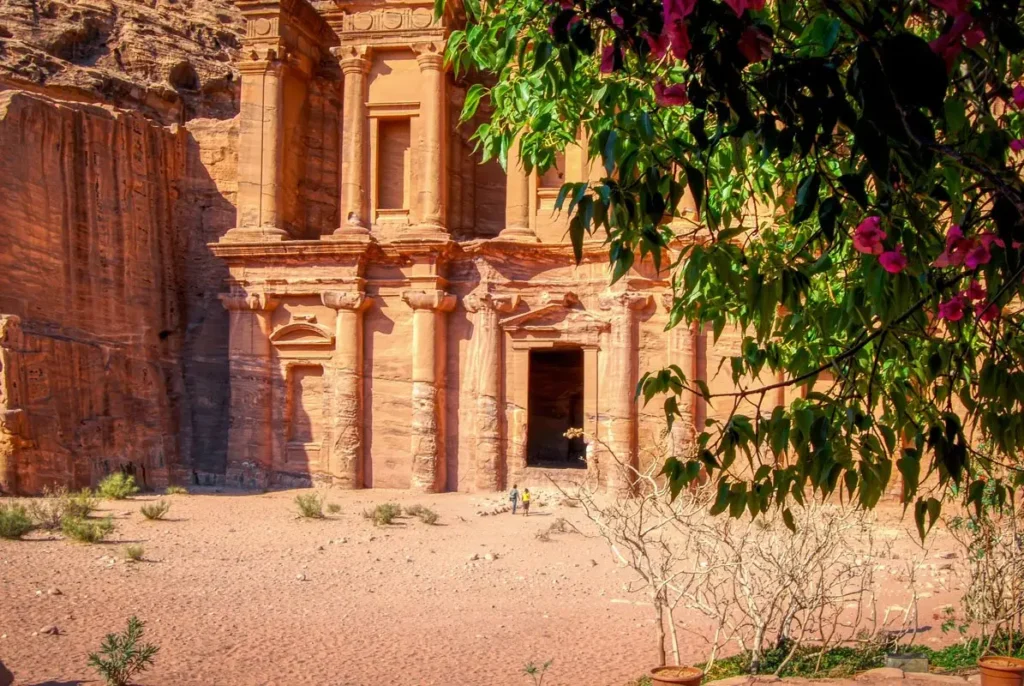
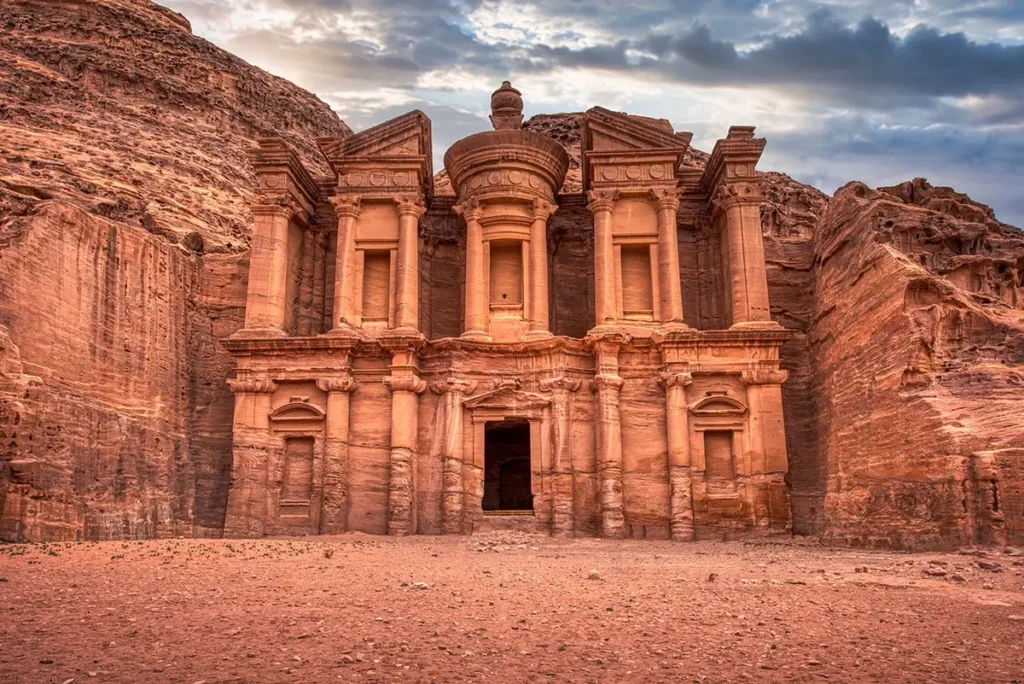
From the city centre near Qasr al-Bint, a stairway of about 800 steps climbs the mountain to the Monastery, ad-Deir. The climb takes about an hour each way; allow 3–4 hours in all.
The Monastery is the largest façade in Petra, about 47 m wide, and was probably a hall for religious feasts. Viewpoints on the hilltops beyond look over Wadi Araba.
About 800 steps1 hour each wayModerate
Look for
- The rock-cut steps of the stairway
- The urn on top of the Monastery
- The views towards Wadi Araba
 1 / 7
03 · From Little Petra
Take the Backdoor Trail
The Backdoor Trail leads from the Little Petra area to the Monastery, so you enter Petra from above. It takes about two hours, with uneven ground and steep sections.
A guide is recommended, and a valid Petra ticket is required.
About 2 hrModeratePetra ticket required
Look for
- The mountain landscape north of Petra
- The first view of the Monastery from above
- Rock-cut steps along the way
 1 / 7
04 · The High Place of Sacrifice
Climb to the High Place
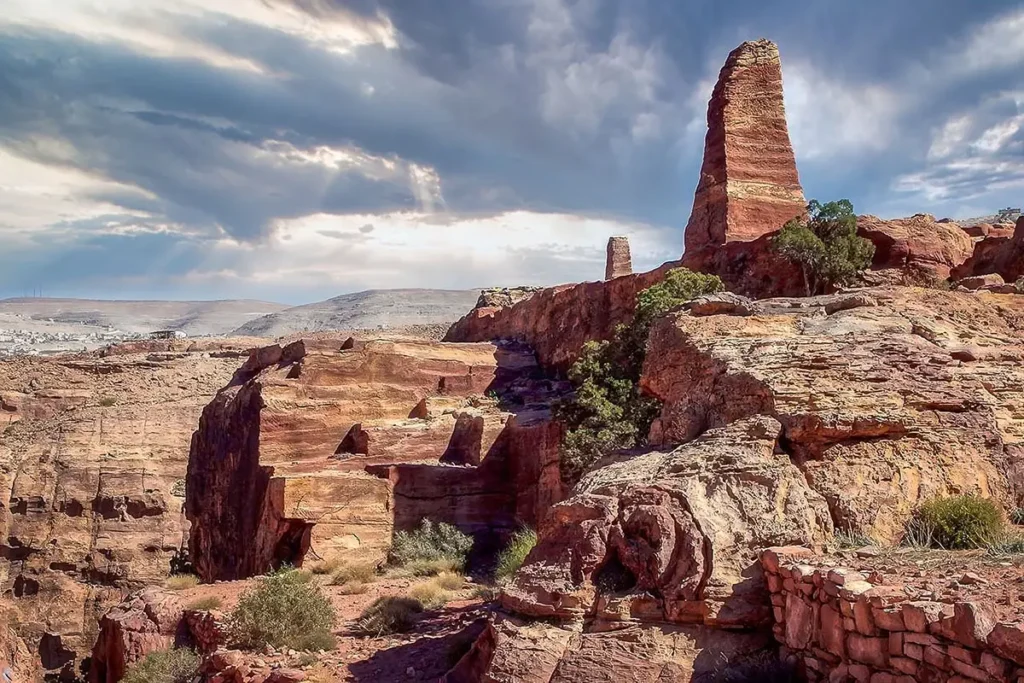
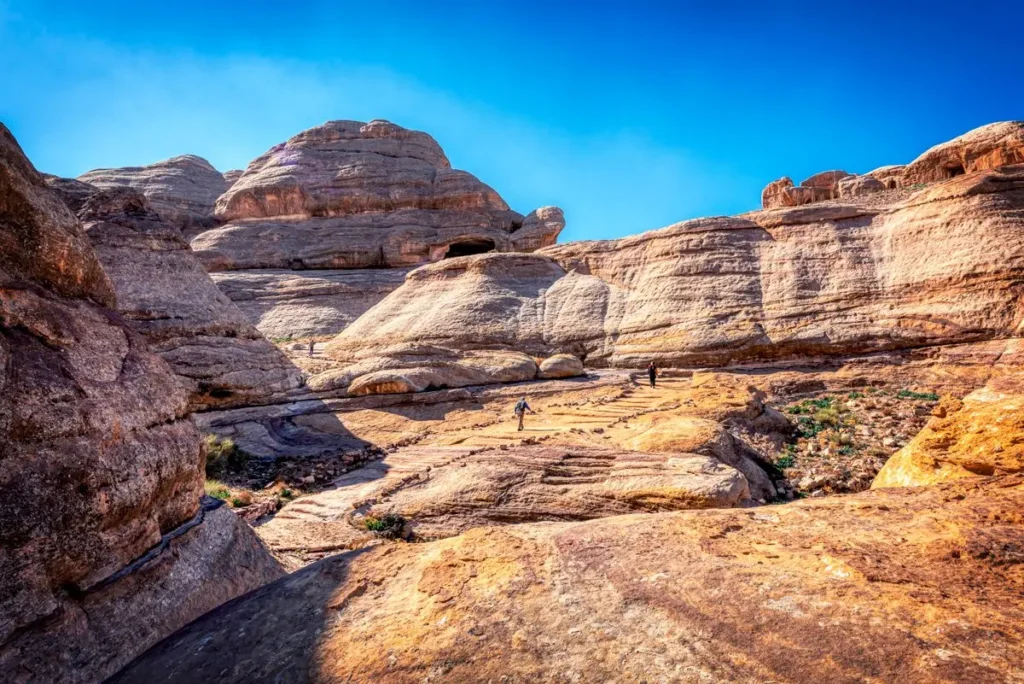
Near the Theatre, a stairway of about 700 steps climbs to the High Place of Sacrifice, with its obelisks and altar on the summit. The climb takes 45–60 minutes.
You can come down through Wadi Farasa, past the Garden Temple, the Tomb of the Roman Soldier and the Coloured Triclinium. Allow 2–3 hours in all.
About 700 steps2–3 hrModerate
Look for
- The two obelisks
- The altar on the summit
- The Garden Temple and the Tomb of the Roman Soldier
Dig deeperHigh places
High places for sacrifice crown the peaks around Petra. The Nabataean gods were often shown as standing stones, like the obelisks on this ridge.
 1 / 7
05 · Above the Treasury
Walk al-Khubtha
Royal tombs line the cliff of al-Khubtha above the city centre: the Urn, Silk, Corinthian and Palace Tombs. In AD 446 the Urn Tomb was turned into a church.
A trail climbs behind them to a viewpoint above the Treasury. The walk is about 4–6 km return, depending on your starting point, and needs a reasonable level of fitness.
4–6 km returnModerateTreasury viewpoint
Look for
- The Urn Tomb and its terrace
- The coloured rock of the Silk Tomb
- The Treasury seen from above
Dig deeperByzantine Petra
A great earthquake in AD 363 damaged much of the city, but Petra lived on as the seat of a bishop. In 1993 more than 140 carbonised papyrus scrolls of the 6th century were found beside the Petra Church.
History & significance
The rose city of the Nabataeans
Petra was the capital of the Nabataean kingdom, a Roman city after AD 106 and a Byzantine bishopric. Known to the Bedouin, it was described to Europe by Burckhardt in 1812.
- 312 BCThe Nabataeans first appear in history
- 9 BC–AD 40King Aretas IV; Petra at its height
- AD 106Rome annexes the kingdom as Arabia
- AD 363A great earthquake damages the city
- AD 1812Burckhardt describes Petra to Europe
- AD 1985UNESCO World Heritage Site
 ProfilePetra: the full storyThe history, the architecture and the Turkmaniyya inscription.Read the profile →
Plan your visit
Everything you need to know before you go
Petra lies beside the town of Wadi Musa, about 235 km south of Amman and 130 km north of Aqaba. Enter at the Petra Visitor Centre, where you buy tickets; a valid passport is required.
Good to know: distances are long and much of Petra is on foot, with steep stairways on the side trails. Start early and carry water.
Opening hoursOpen dailySummer 6:00–18:00 · Winter 6:30–17:00
Entry ticketFrom 50 JOD50 / 55 / 60 JOD for 1 / 2 / 3 days · 90 JOD without an overnight stay in Jordan · Jordan Pass
Time to visit1–3 daysAt least a full day; two or three are better
From Amman235 kmAbout 3 hours by the Desert Highway
LocationWadi Musa30.3243° N, 35.4678° EGet directions
Opening hours and prices checked October 2026. Spotted a change? Let us know
On site
What you’ll find at Petra
- Visitor centre
- Ticket office
- Toilets
- Free parking
- Museum
- Guide available
- Food & drinks
- Market / shop
- Viewpoint
Nearby: hotels
Access: no 4x4 needed
When to go
Spring and autumn are best. Summer days are hot; start at opening time. Winter can be cold, with occasional rain.
J
F
M
A
M
J
J
A
S
O
N
D
BestGood, cooler or warmVery hot
Tip: be at the gate at opening time to walk the Siq and see the Treasury before the crowds.
Before you go
Cafés, toilets and water are along the Main Trail; prices are higher inside Petra.
- Good walking shoesLong distances and steep steps
- WaterAt least 2 litres for the side trails
- Sun hat and sunscreenLittle shade in the city centre
- Passport or Jordan PassA passport is required at the ticket office
Common questions
Quick answers before you set off.
How much is the Petra ticket?
50, 55 or 60 JOD for one, two or three days for visitors who stay at least one night in Jordan, including day trips from a hotel in Amman, and 90 JOD for visitors who do not stay overnight anywhere in Jordan. A valid passport is required. The Jordan Pass includes Petra.
How long do I need?
At least a full day for the Main Trail and one side trail. Two or three days let you add the Monastery, the High Place of Sacrifice and al-Khubtha.
What is Petra by Night?
Petra by Night runs Sunday to Thursday, 8:30–10:30 pm, for an extra 30 JOD, together with a daytime ticket or Jordan Pass.
Can I enter from Little Petra?
Yes, by the Backdoor Trail to the Monastery, about two hours. A guide is recommended and a valid Petra ticket is required.
Combine with
Petra combines with Little Petra and the Crusader castles nearby. Drive times are from the Petra Visitor Centre.
Explore this site
More from Petra
Panoramas, walk-throughs, photos and stories about this site.
ProfilePetra: history & architecture Photo albumPetra: The Rose City in Photos
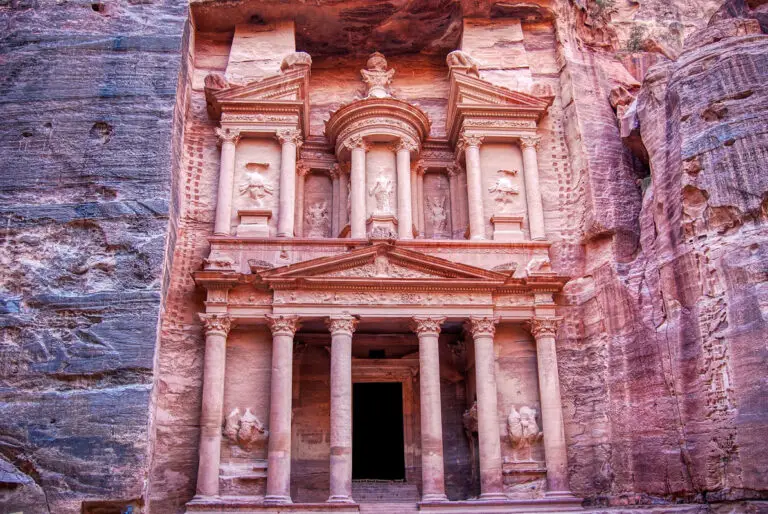 360°360° panoramaAl-Khazneh (The Treasury), Petra: 360° Panorama
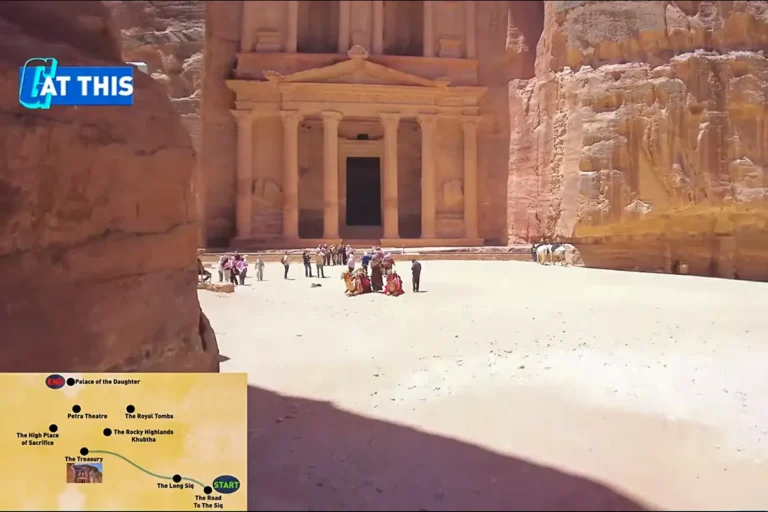 VideoPetra: Full Cinematic Tour of a World Wonder
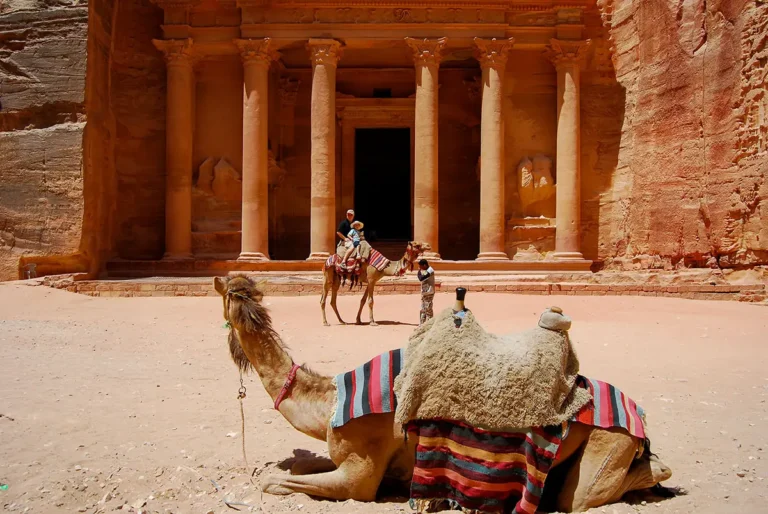 Travel articlePetra Main Trail: A Walk Through History & Wonder
 Travel articleWhy you should Visit Petra, in Jordan
Nearby
Also around Petra
From guide to visit
Explore Petra with a private guide
Tell us when you’d like to go, and we’ll plan your days in Petra and the sites around it.