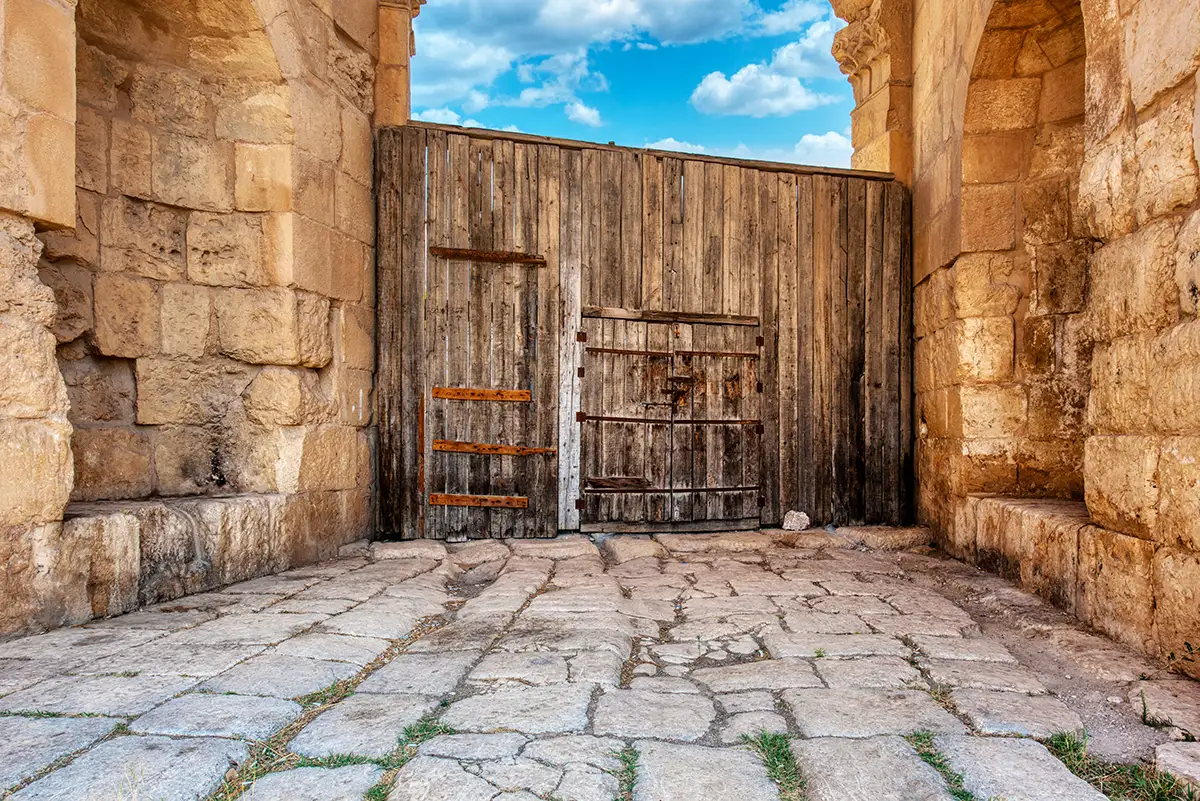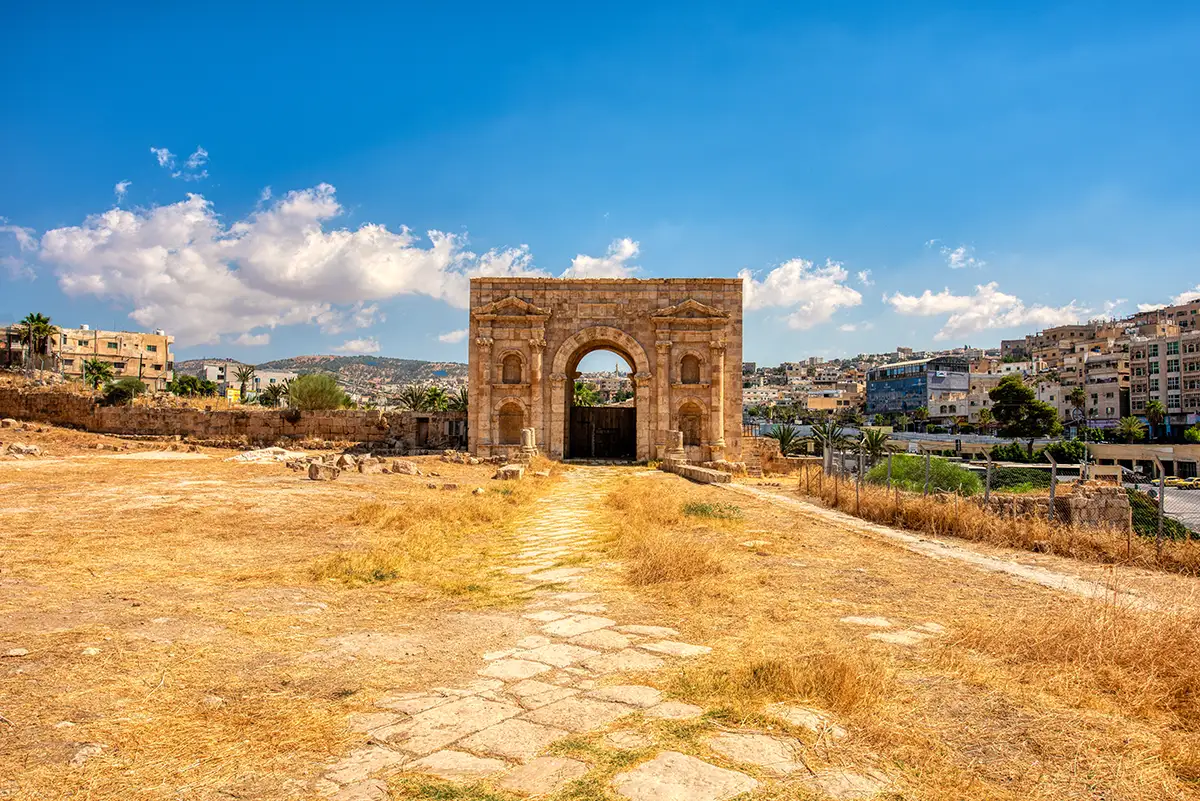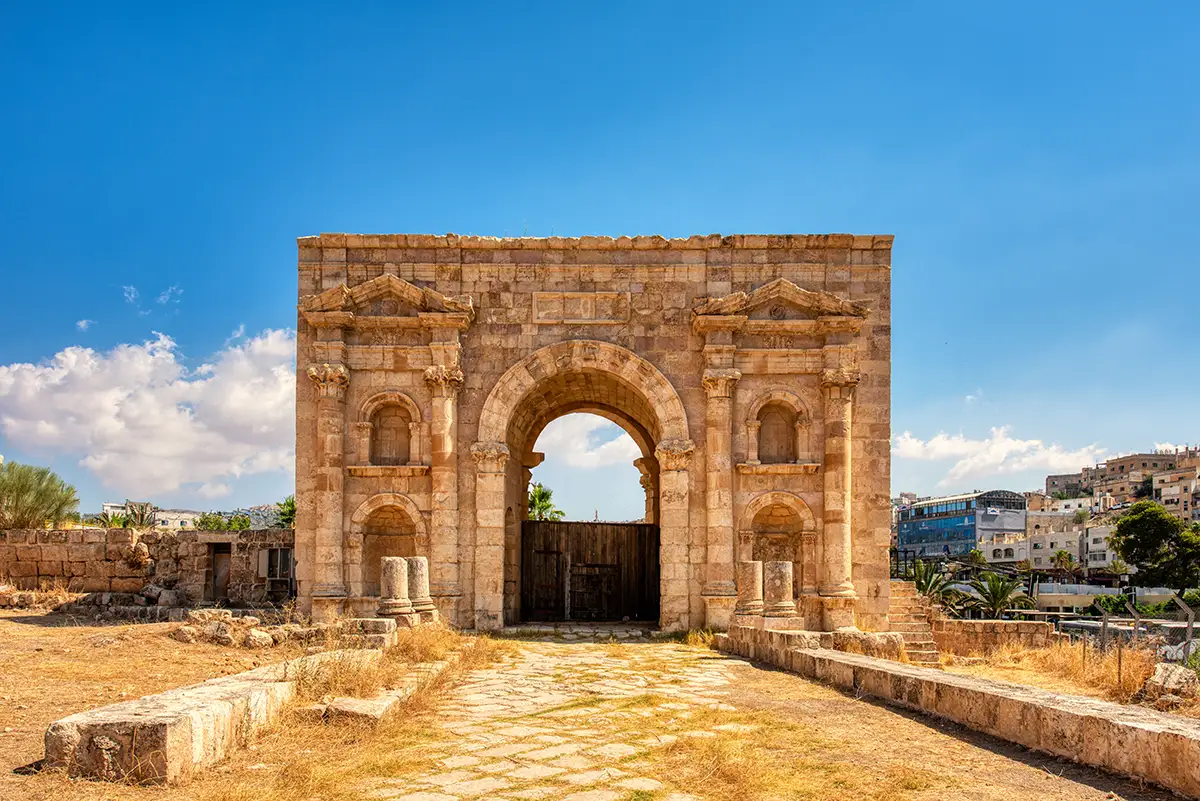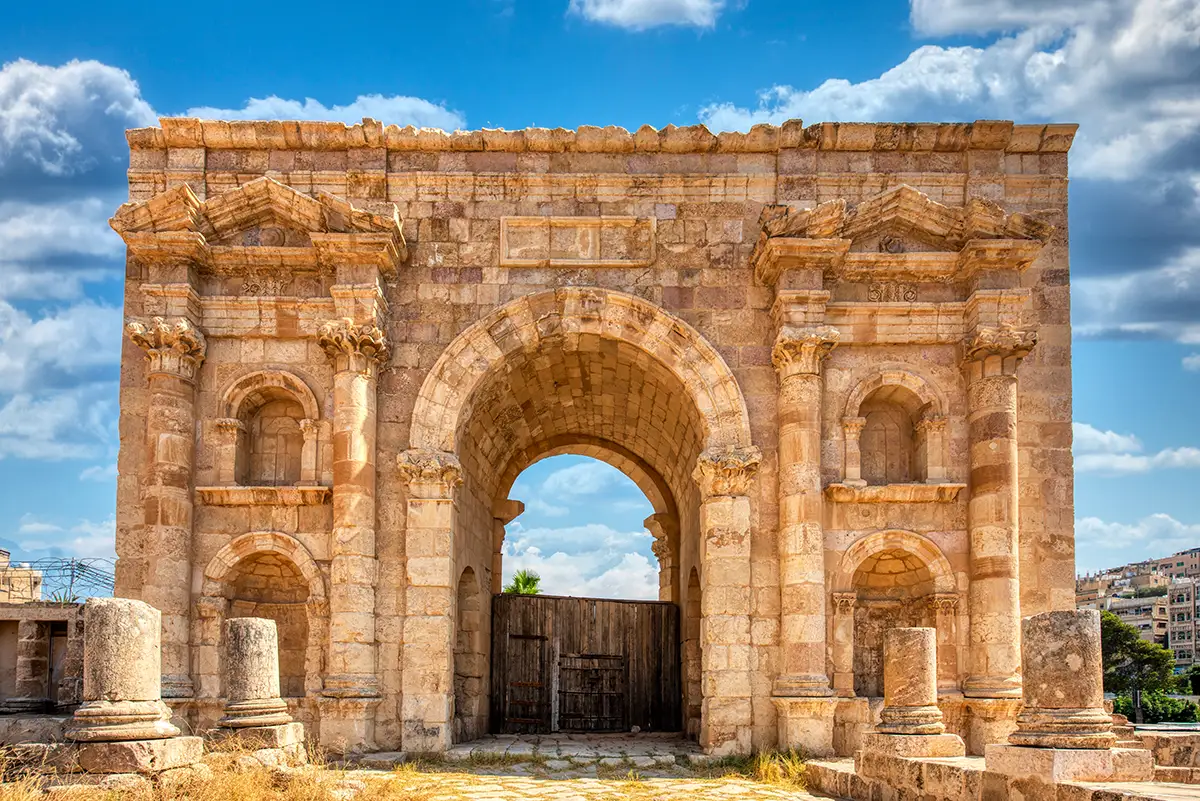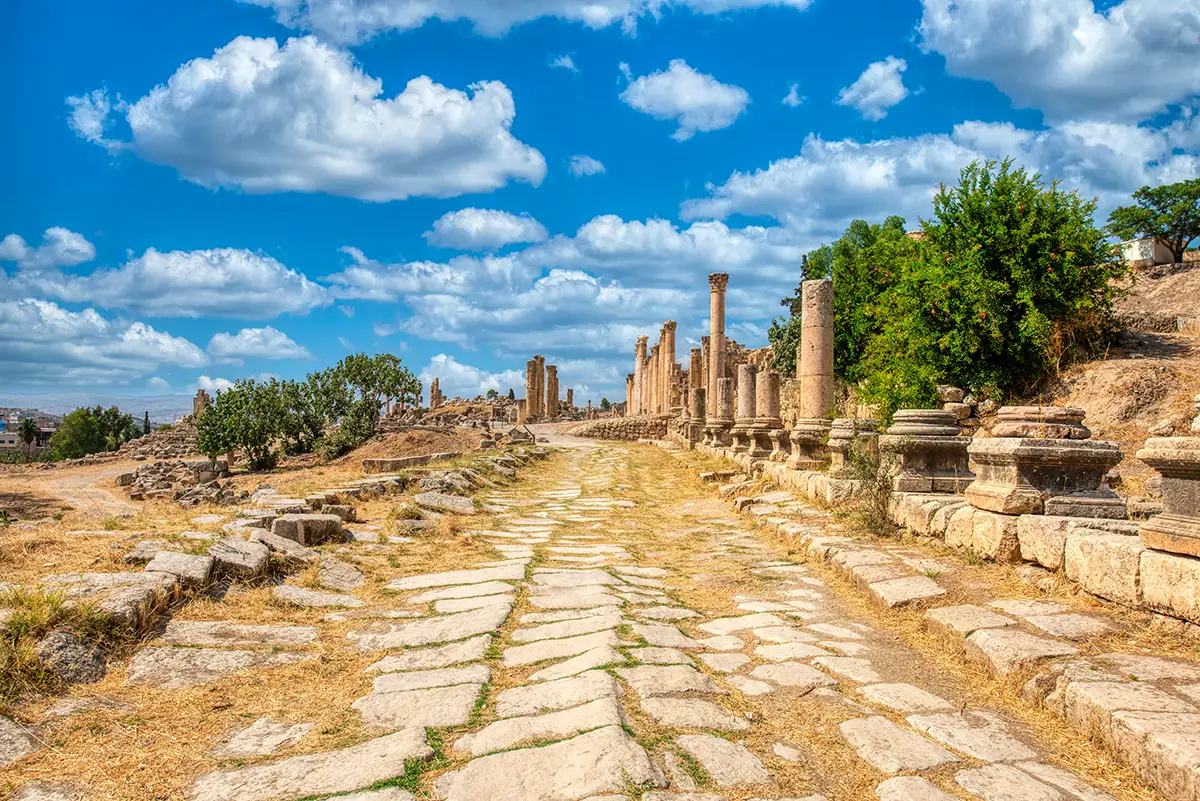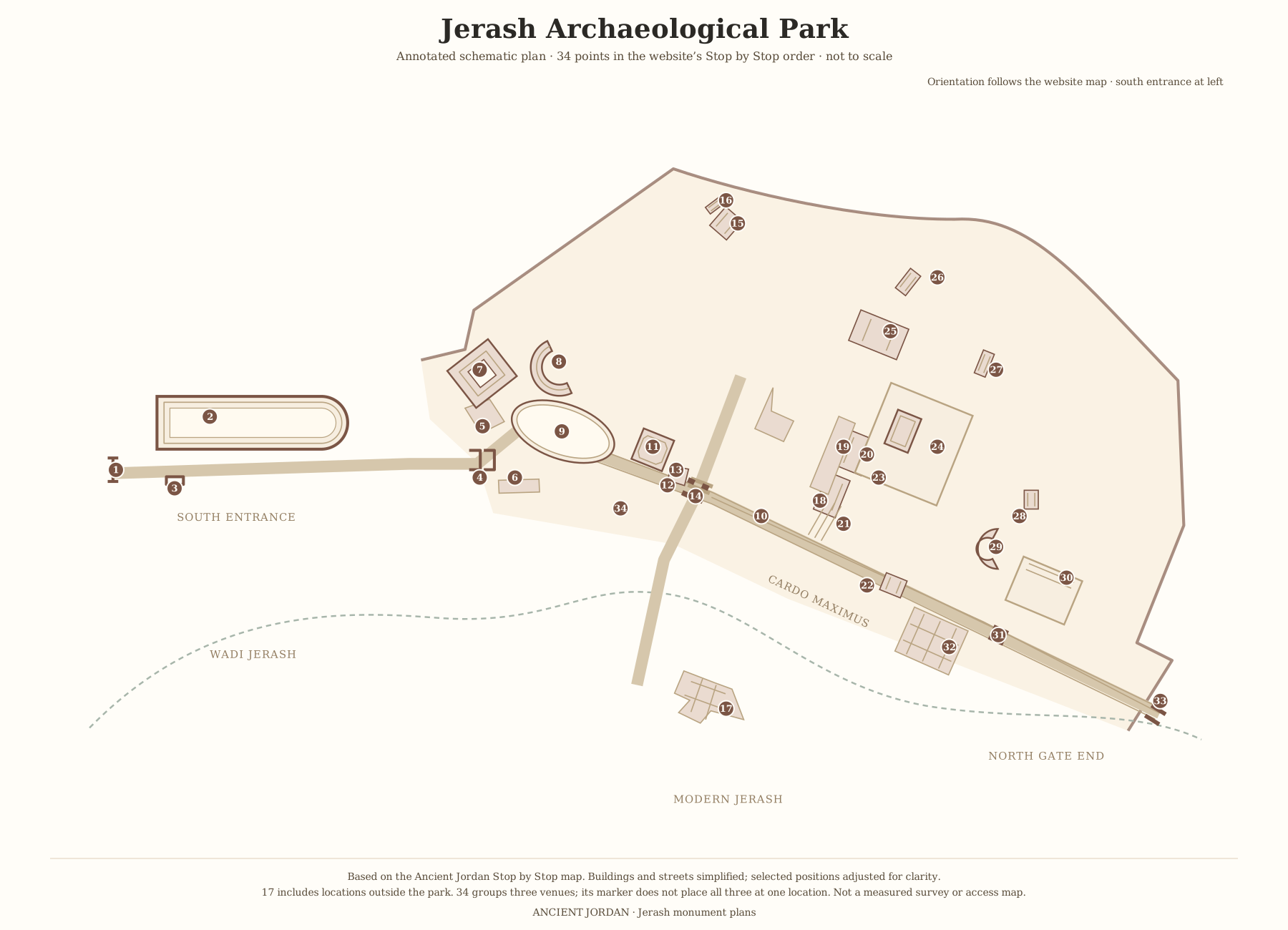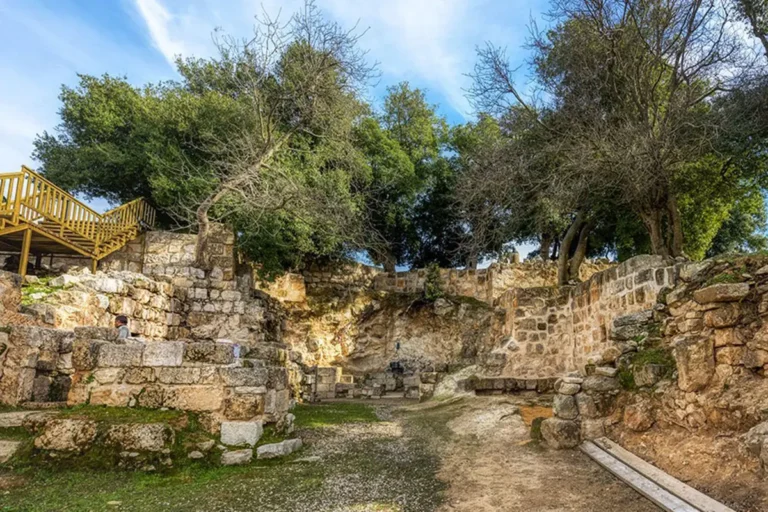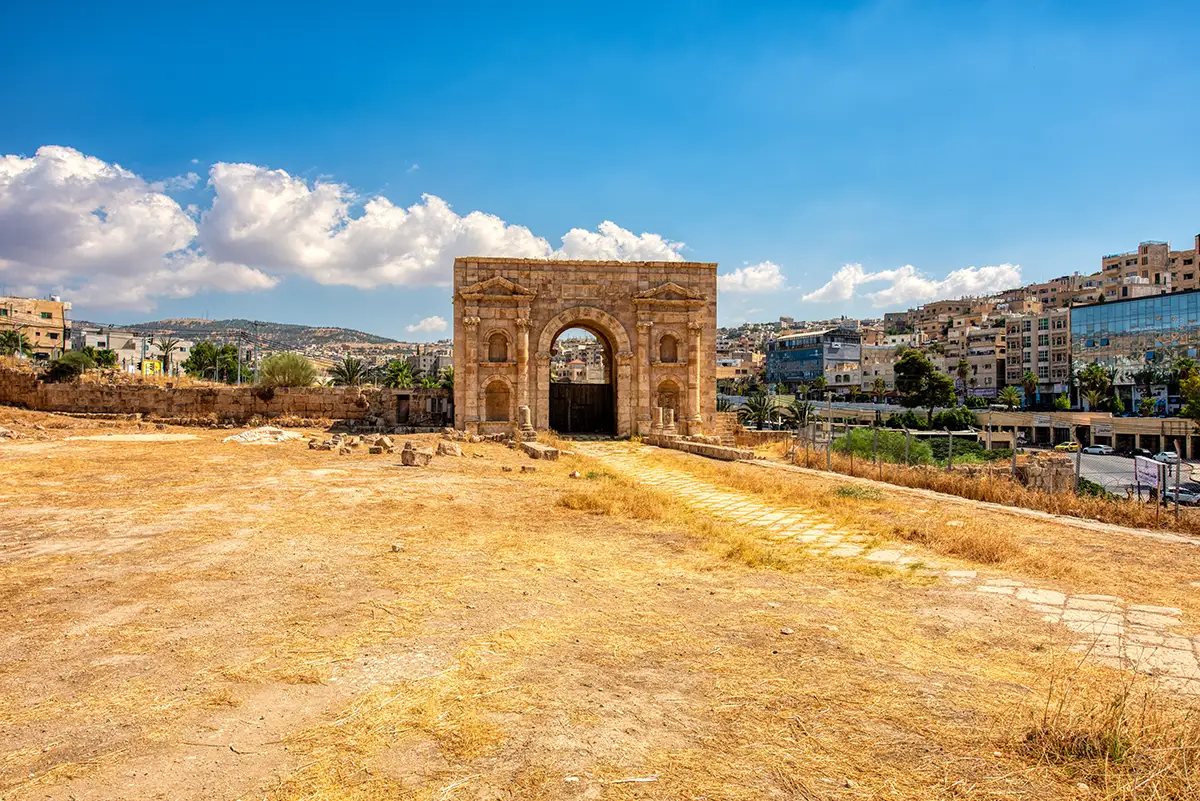
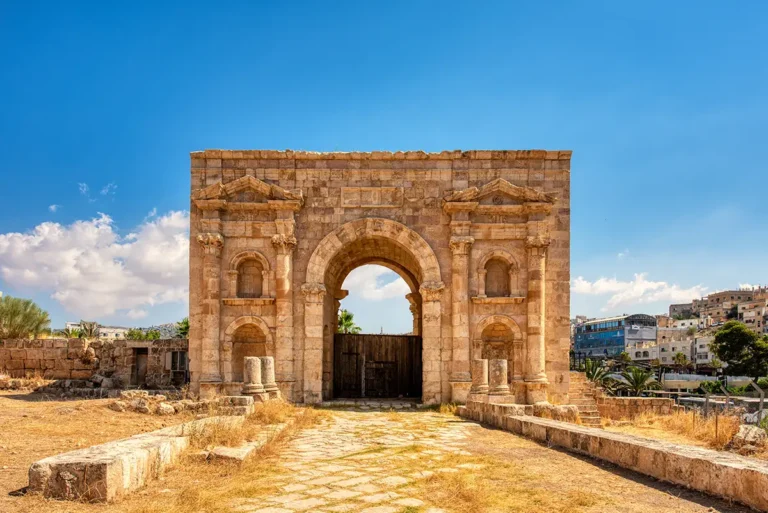
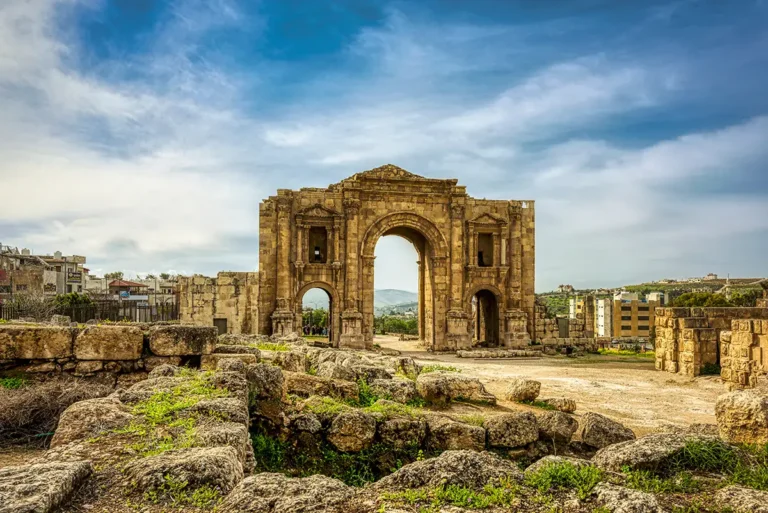
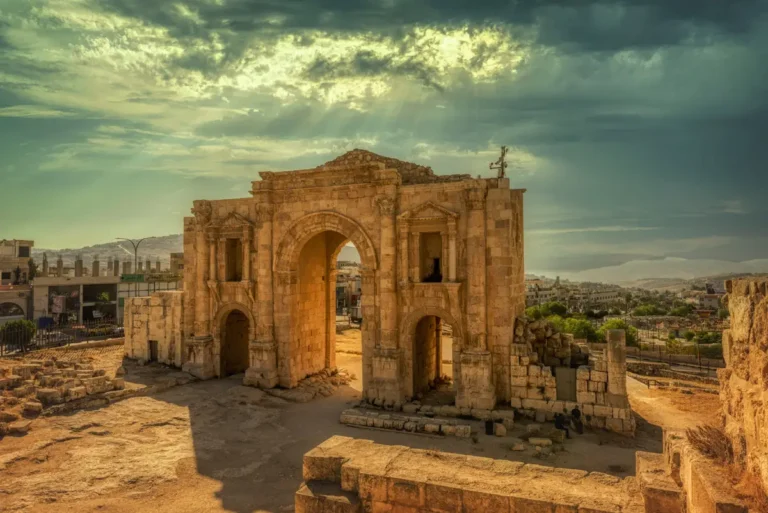

At the far northern end of ancient Jerash, the Cardo Maximus reaches its final monument: the North Gate. Dedicated in AD 115 under Emperor Trajan, it greeted travellers arriving from Pella and Gadara and sent citizens out into the roads of northern Jordan — the last great architectural statement of the city’s main street.
Where Is the North Gate?
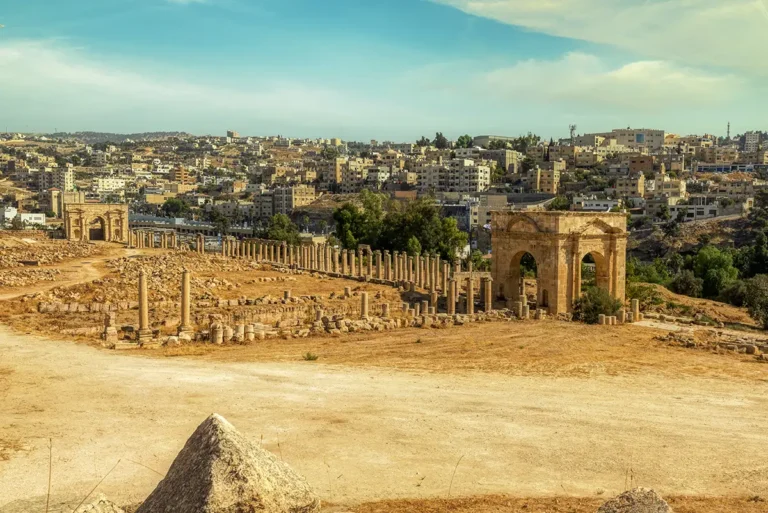
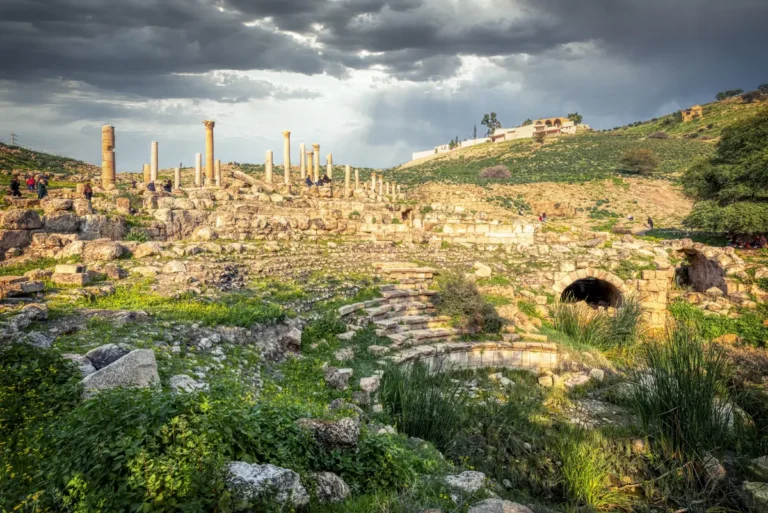
The gate stands at the northern end of the Cardo Maximus, about 800 metres from the Oval Plaza. On the way you pass the North Tetrapylon, with the North Theatre and the Civic Complex just to the west.
Compared with the busy centre around the Nymphaeum and the Cathedral, this last stretch of the Cardo feels calm and open.
Historical Context and Origin
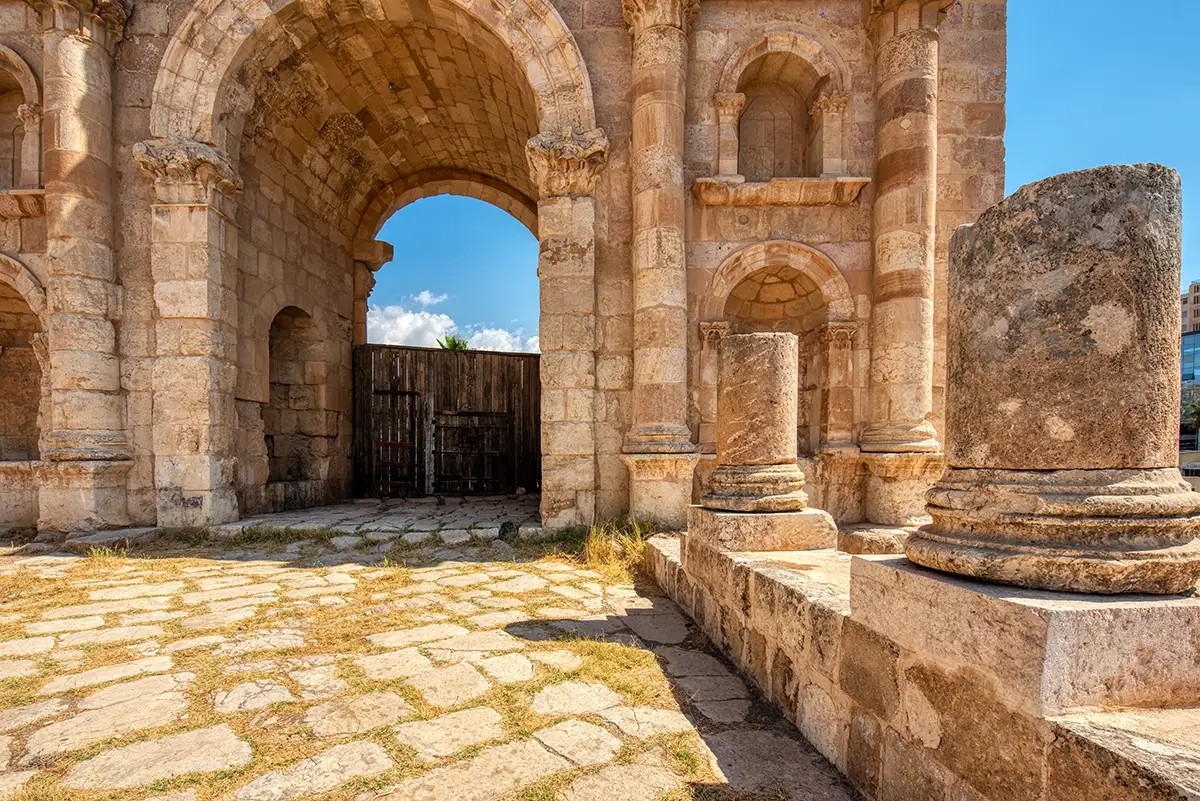
The gate was built under Trajan, and its Greek inscription, dated AD 114–115, hails the emperor as the city’s saviour. It marked the end of the Cardo and the start of the roads to Pella and Gadara, and its arch, façade and inscription advertised Gerasa’s wealth and its ties to Rome.
In the 4th to 6th centuries the gate became part of a more heavily fortified city edge; some of the visible masonry may belong to a later rebuilding.
Architectural Design
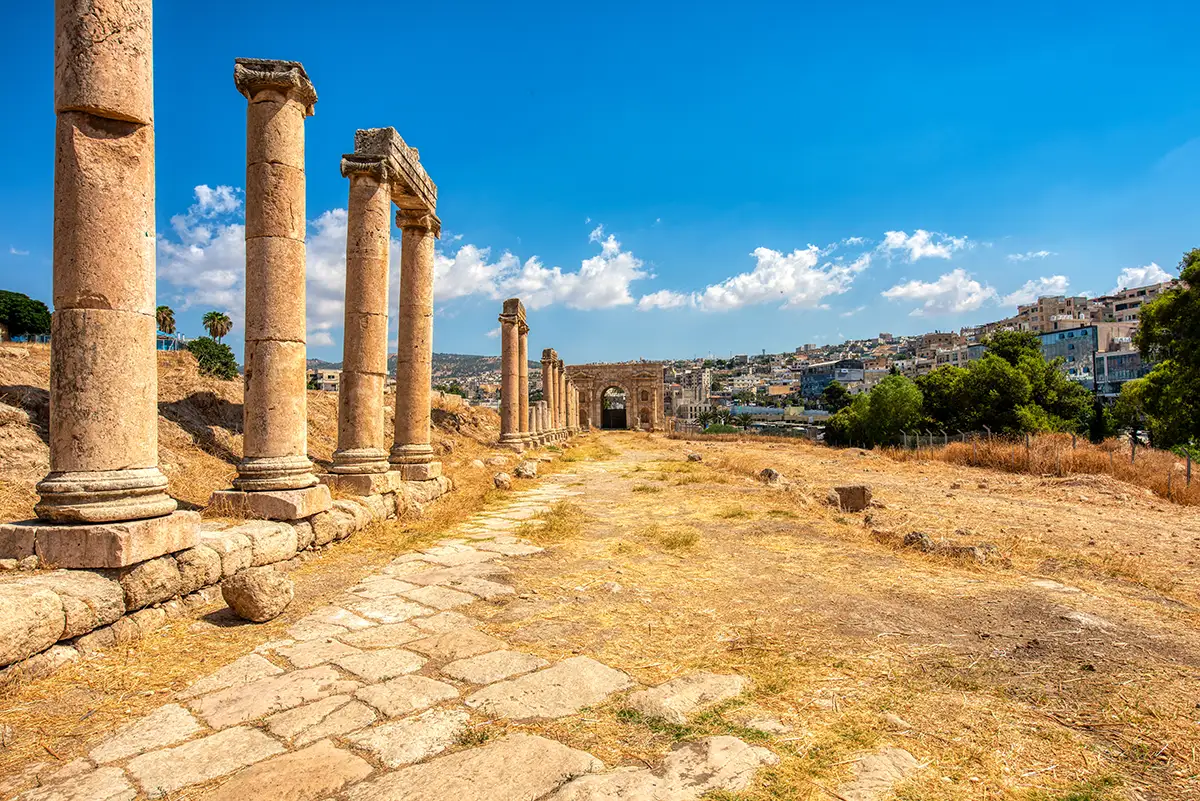
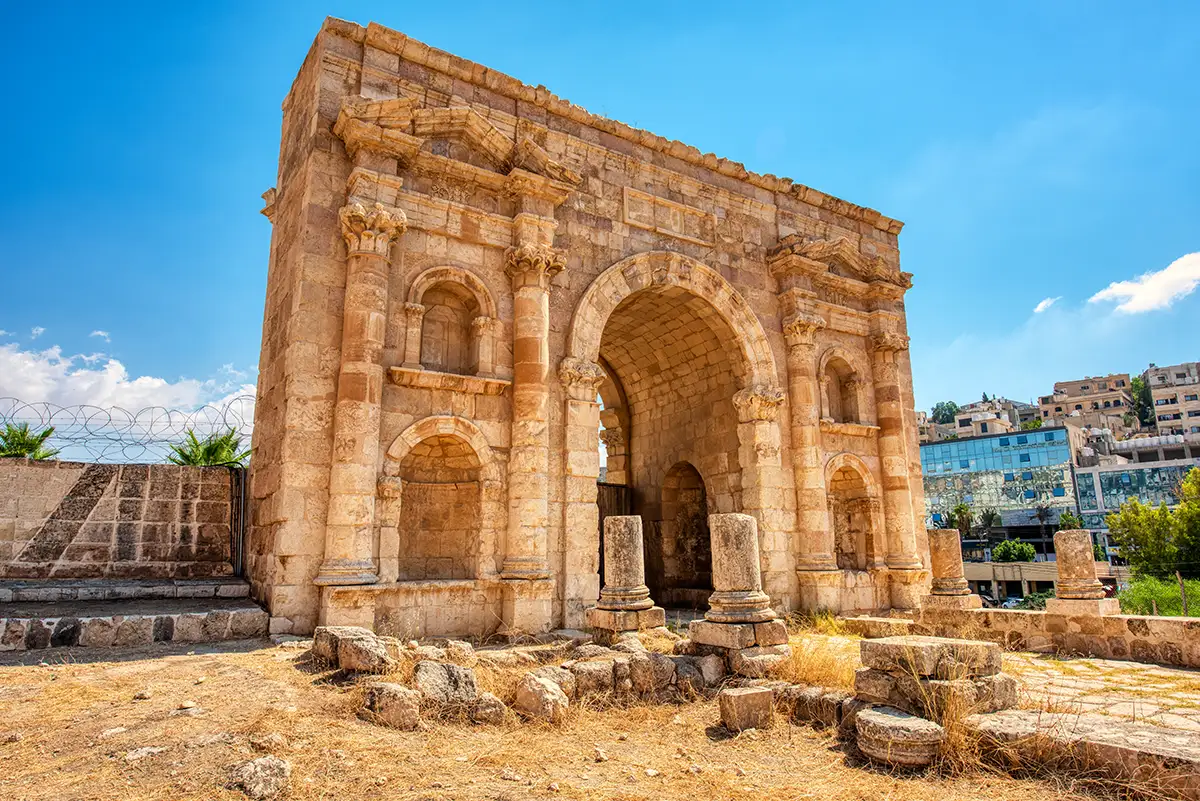
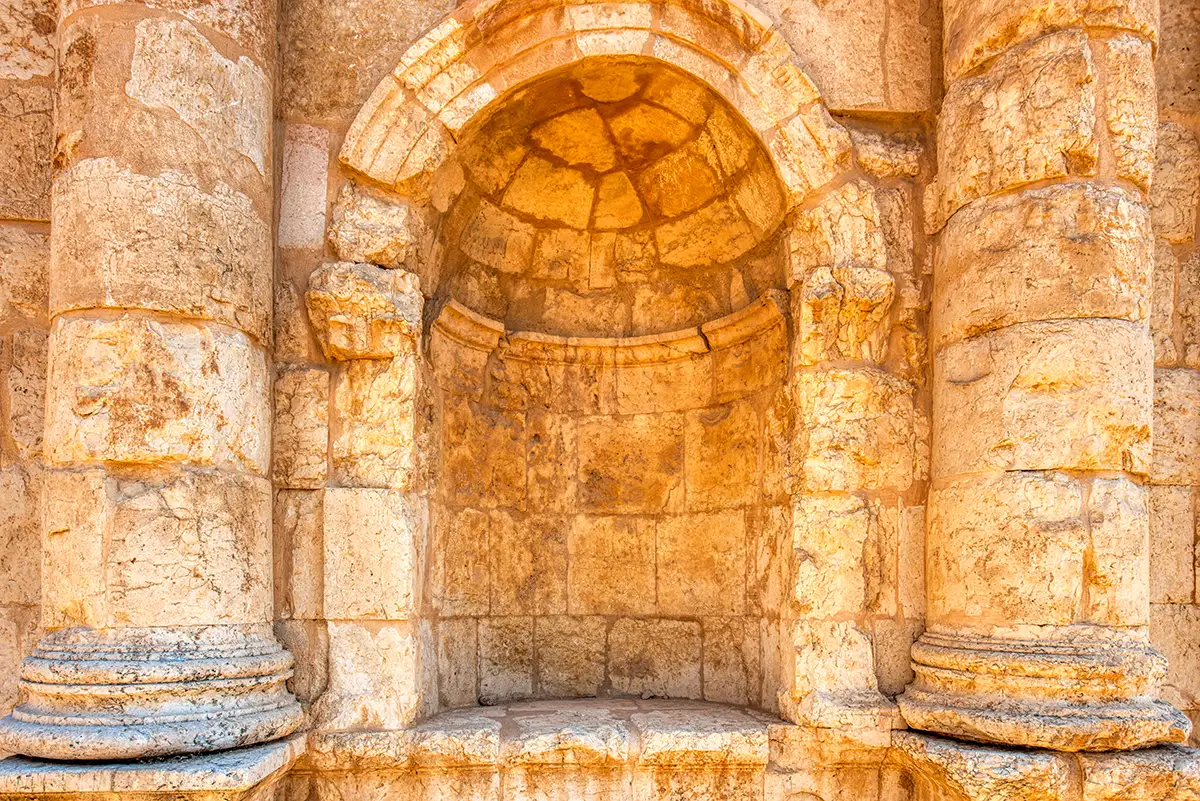
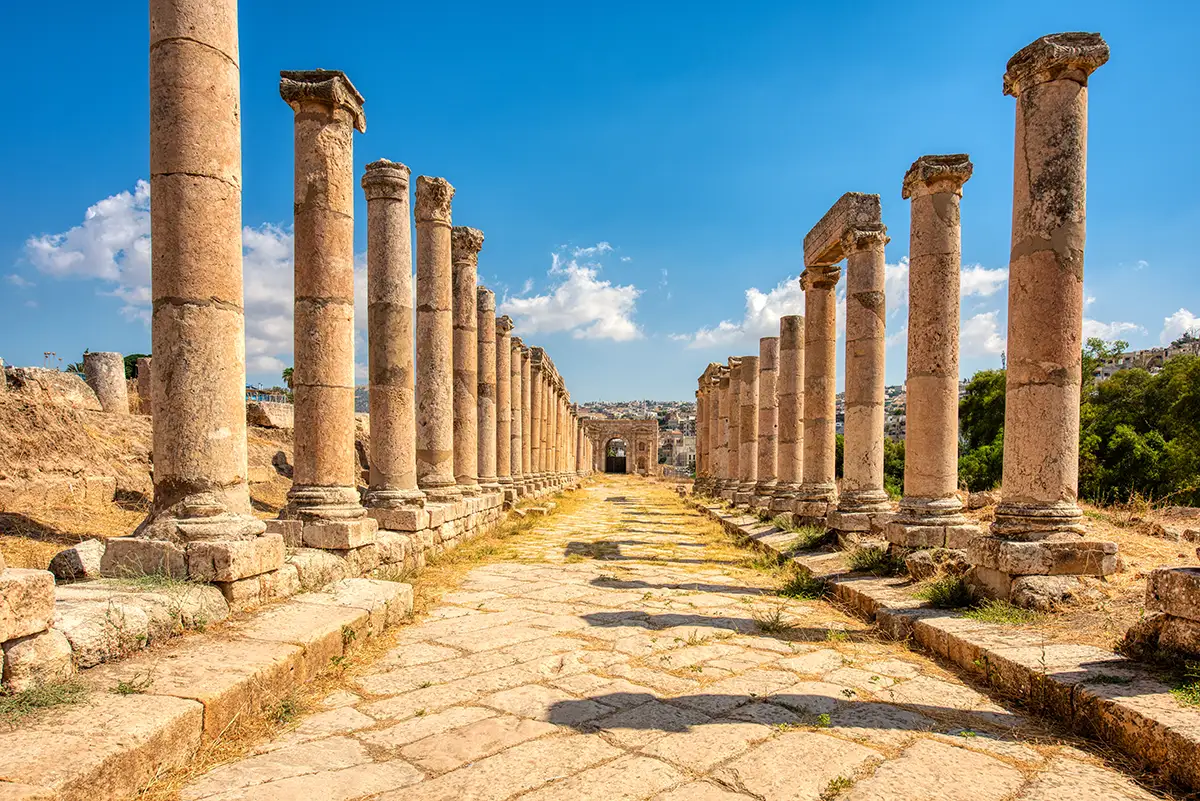
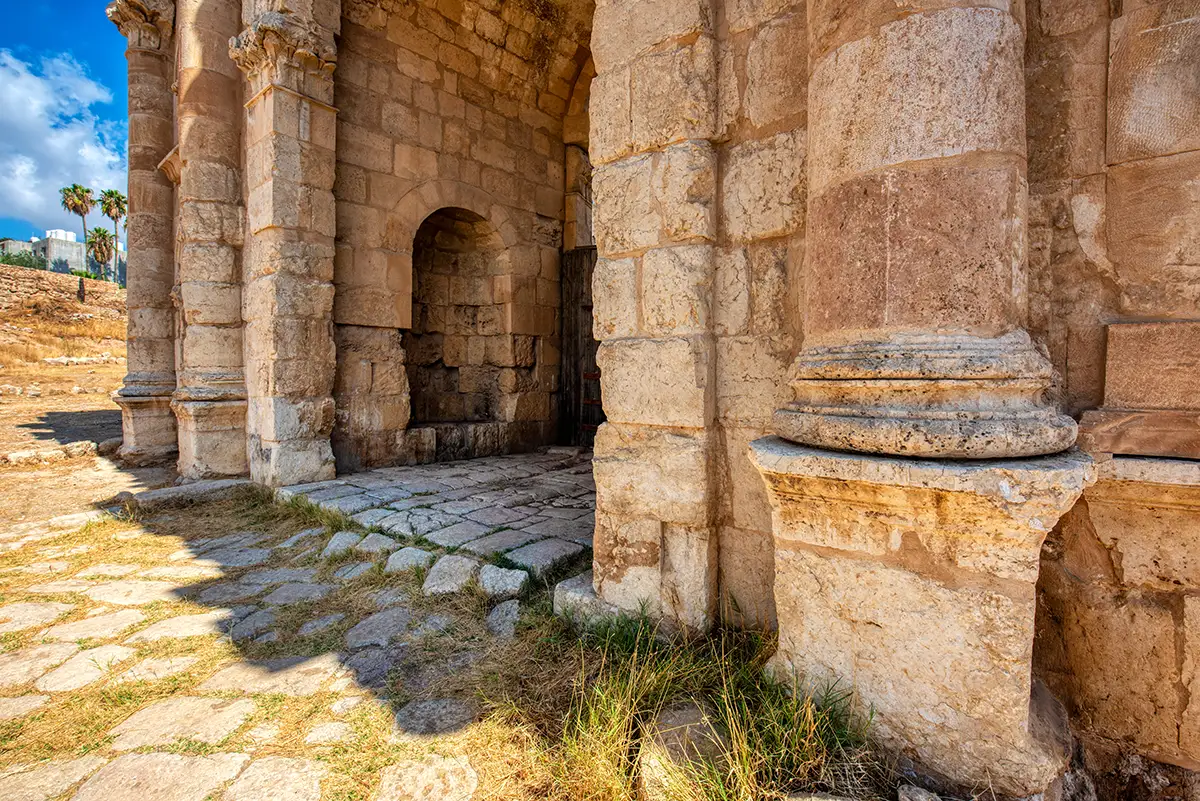
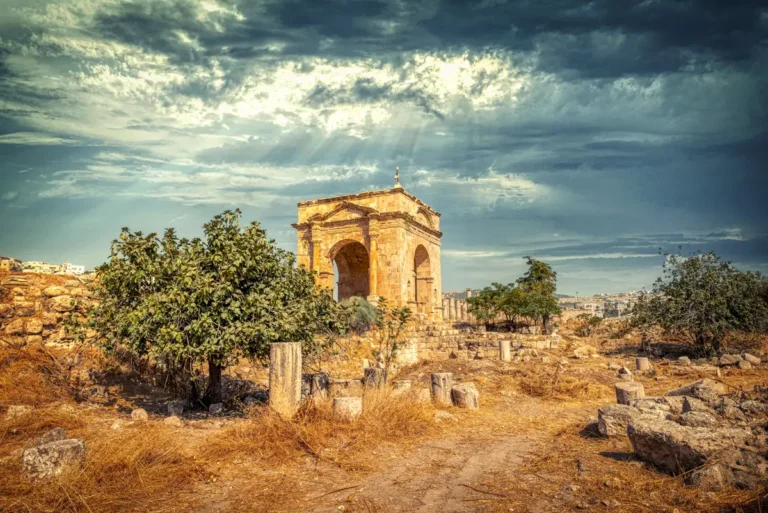
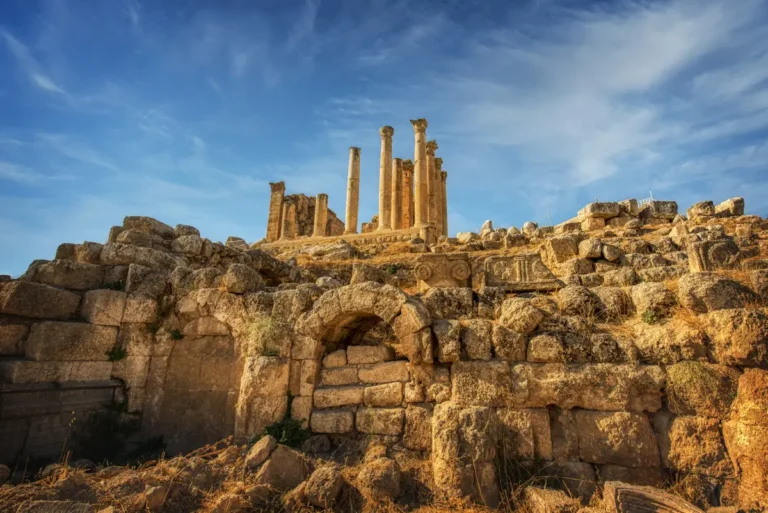
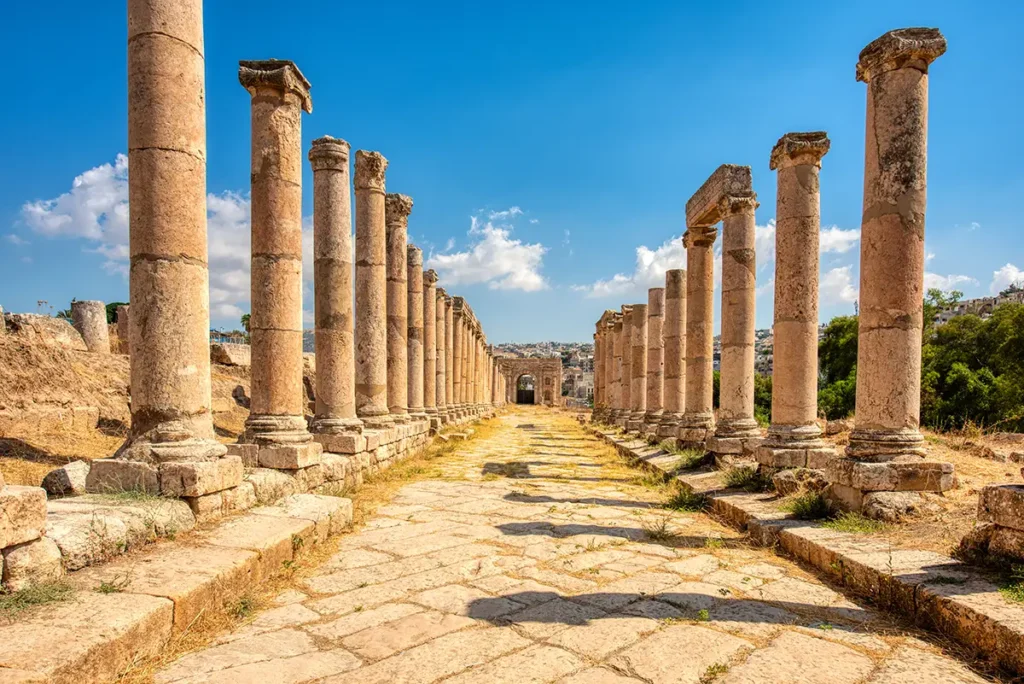
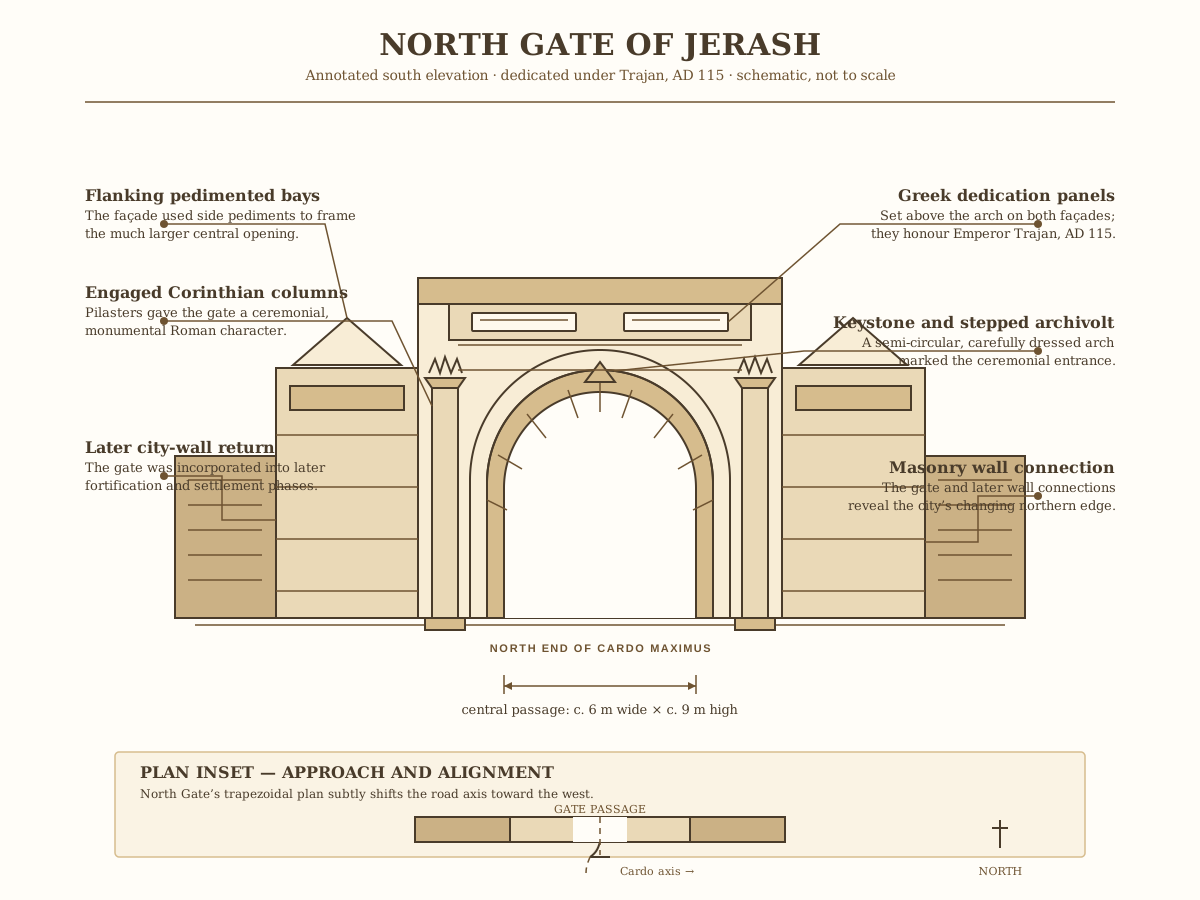
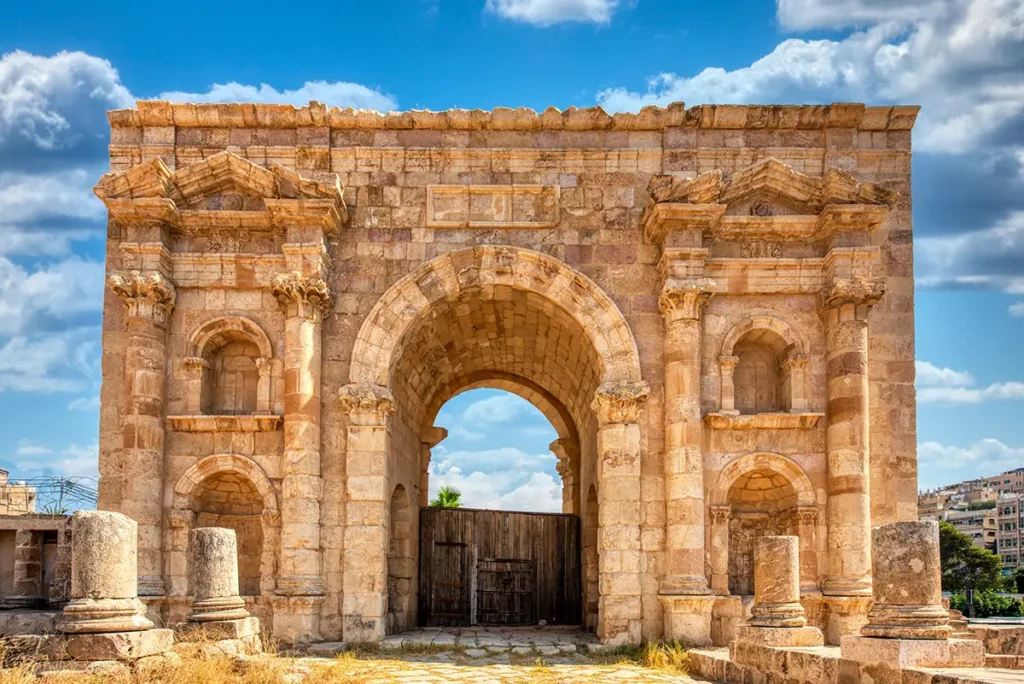
The gate is about 20–22 metres wide, with one broad central arch framed by engaged columns and Corinthian capitals. Its plan is slightly trapezoidal: the gate turns the line of the road outside slightly westward, so that it meets the Cardo — a practical answer to the terrain and older routes. Inside, the last stretch of the Cardo is lined with Ionic columns, simpler than the Corinthian colonnades further south.
A Single Arch
One broad passage, large enough for people, animals and carts, framed by engaged columns.
An Angled Plan
The gate is slightly trapezoidal, turning the road outside to meet the line of the Cardo.
The Ionic Cardo
Between the North Tetrapylon and the gate, the Cardo is lined with Ionic rather than Corinthian columns.
The Trajan Inscription
Two matching panels above the arch dedicated the gate to Emperor Trajan in AD 115.
The Trajan Dedication Inscription
Carved on two matching panels above the arch, on the north and south façades, the text dates the gate to AD 115 and honours Emperor Trajan as the city’s saviour. Square brackets mark letters restored by editors; the word ktistēs (“founder”) is a restoration and remains uncertain.
Αὐτοκράτορι Καίσαρι
θεοῦ Νέρ[ου] υἱῷ Νέρουα Τραιανῷ
ἀρίστῳ
Σεβαστῷ Γερμανικῷ Δακικῷ, ἀρχιερεῖ μεγίστῳ, δημαρχικῆς
ἐξουσίας τὸ ιθʹ, αὐτοκράτορι τὸ θʹ, ὑπάτῳ τὸ εʹ, πατρὶ πατρίδος,
Ἀντιοχέων τῶν πρὸς τῷ Χρυσορόᾳ τῶν πρότερον Γερασηνῶν
ἡ [πόλ]ις τῷ ἰδίῳ σ[ω]τῆρι κ[αὶ κ]τί[στῃ(?)] ἐπὶ Κλαυδίου
Σεουήρου
[ὑπ]ατικοῦ πρεσ[βευτοῦ Σ]εβασ[τοῦ ἀντ]ιστρατήγου.
To Emperor Caesar Nerva Trajan Optimus Augustus, son of the deified Nerva, conqueror of the Germans and Dacians, chief priest, holding tribunician power for the nineteenth time, acclaimed imperator for the ninth time, consul for the fifth time, Father of his Country: the city of the Antiochenes by the Chrysorhoas, formerly the Gerasenes, [dedicated this] to its own Saviour and Founder, during the governorship of Claudius Severus, imperial legate with praetorian authority.
Destruction, Rediscovery, and Restoration
The earthquake of AD 749 and the abandonment that followed ended the gate’s role as a city entrance. In the 19th and 20th centuries excavation and conservation clarified its plan and its inscription.
Visiting the North Gate Today
Walk the last stretch of the Cardo from the North Tetrapylon, between the Ionic columns, and stand beneath the arch to look out of the ancient city. Then turn back and look south down the whole length of the Cardo — one of the best views of the street.
It takes about 15 minutes, and it is a quiet end to a walk through Jerash.
Further reading: The North Gate in the Dead Sea earthquake catalogue, Russell (1985) on the AD 749 earthquake.