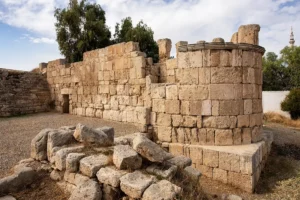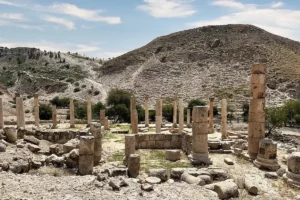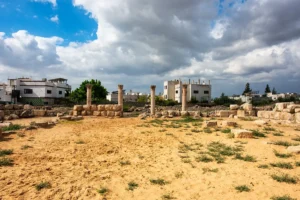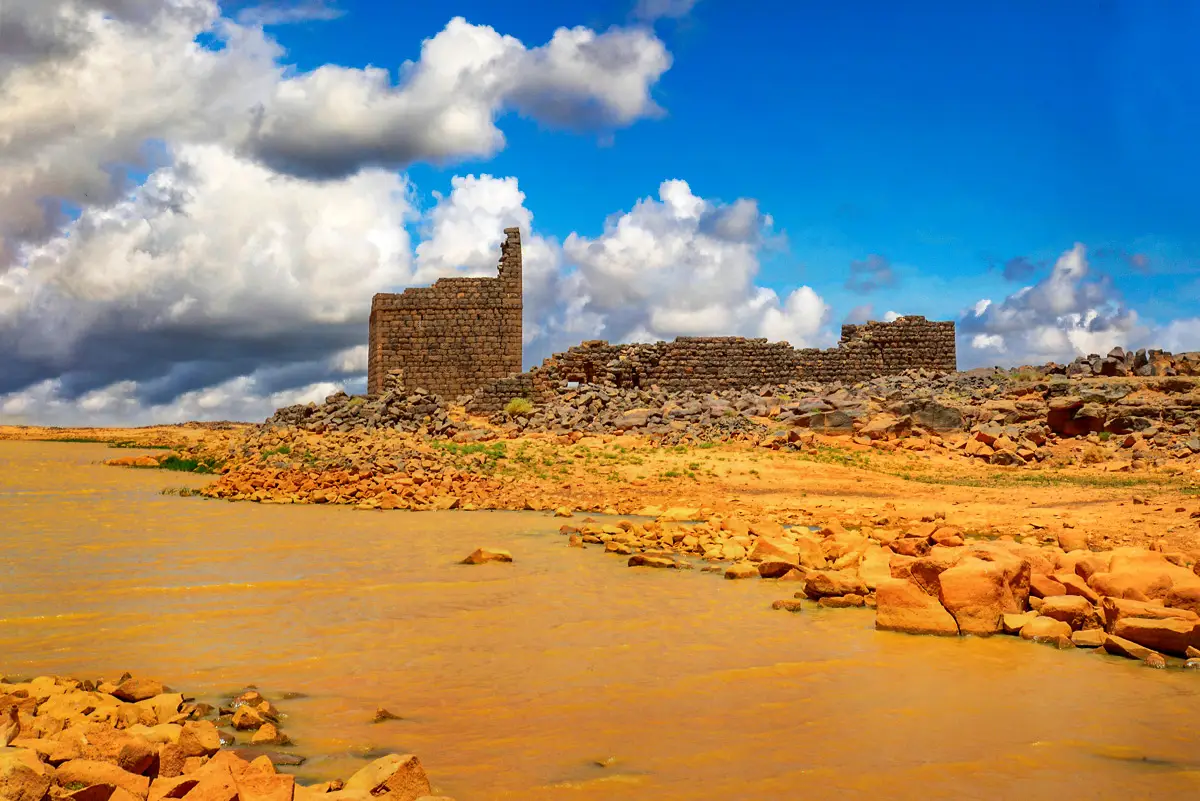












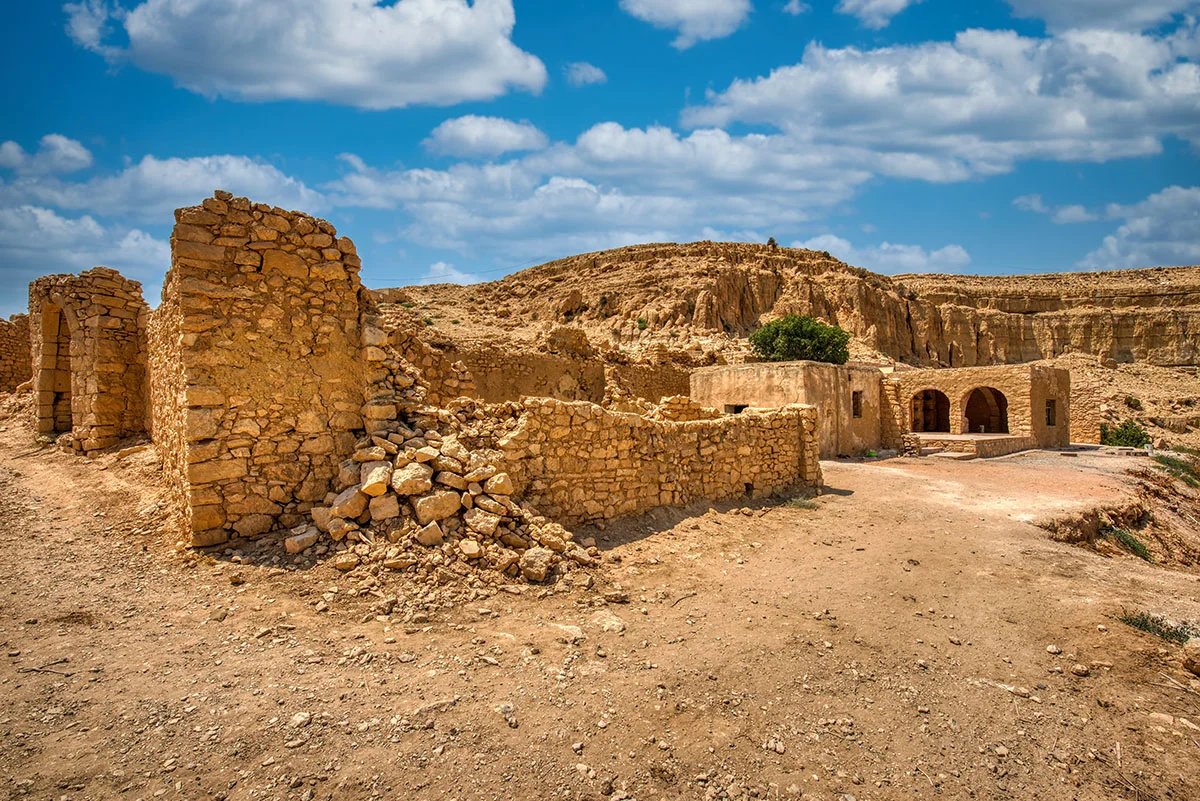

On a cliff top above the deep wadis south of Tafila, the stone houses of al-Ma’tan stand roofless and empty. Until the 1980s this was a living farming village; today its lanes are quiet, while a small heritage camp on its edge welcomes hikers and visitors.

Where Is Al-Matan Historic Village?
Al-Ma’tan lies in Tafila Governorate in southern Jordan, about 12 km from the centre of Tafila, next to the village of as-Sila’ and close to Busayra. It stands on a cliff top high above Wadi Labun, and it is an overnight stop on the Jordan Trail.
Historical Context and Origin
Al-Ma’tan is a village of the late Ottoman period and the 19th–20th centuries. Its families lived by small-scale farming and herding. Over the 20th century life here grew harder — rainfall fell, and schools, electricity, water and roads arrived late — and families gradually moved away. By 1983 the last residents had left for al-Ein al-Baida; in 2015 the official population was zero.
Architectural Design
The houses are built of local stone and clay, set close together along winding lanes that follow the slope. The village also has an old mosque, now restored, and an old primary school, planned as a visitor centre.
Stone and Mud Houses
Houses of local stone and clay, built for farming and herding families.
Old Mosque
The village mosque has been restored.
Cliff-Top Setting
From its cliff top the village looks out over Wadi Labun.
Heritage Camp
Chalets in the old style, an eco-camp and a restaurant opened in 2015.
Life After Abandonment
In 2015 the Ministry of Tourism and the local Buqai’ al-Ma’tan cooperative opened a tourism project on the edge of the village: ten chalets built in the old style, an eco-camp, a restaurant and a small display of household tools about a century old. Guest cabins were later renovated with the support of USAID heritage projects. Researchers from Bournemouth University have studied the village as an example of the traditional architecture of southern Jordan.
Visiting Al-Matan Historic Village Today
The village is open to visitors and entry is free. Walk the lanes between the ruined houses, look out over Wadi Labun, and combine the visit with as-Sila’ and the rock of Sela next door. Hikers on the Jordan Trail stay overnight here. Read more in our travel guide to Al-Matan.
Further reading: Jordan Trail — Section 503: Karaka to al-Ma’tan; ACOR — Tafila: al-Ma’tan Heritage Village, 2018–2019.