











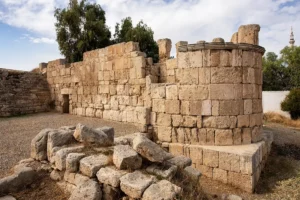

Qal’at Fassu’a
A small 18th-century Hajj fort at the head of the Batn al-Ghul pass, south-east of Ma’an
BuiltMid-18th c. AD
SizeAbout 20 m square
Location50 km SE of Ma’an
Access4x4 needed
Introduction
The last station on high ground before the pilgrims entered the desert.
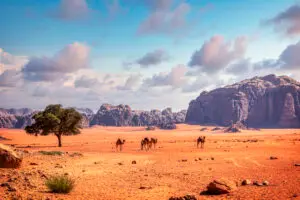
Where the plateau south of Ma’an breaks off into the desert, the pilgrims of the Hajj faced the steep, stony descent of Batn al-Ghul. At its head stands Qal’at Fassu’a, a small fort with two reservoirs, the last station on high ground before the long road south.
The fort dates from the mid-18th century, the reign of Sultan Mustafa III. By 1825 two of its walls had collapsed, and it has never been restored. It lies about 50 km south-east of Ma’an, off the Ma’an–Mudawwara road; a 4x4 is needed for the last stretch.
Best timeOct–Apr
Time needed30 min
TicketFree
From Amman265 km · 3 hr
Combine withQal’at Mudawwara · 1 hr 15 min
Google rating4.1 · Reviews
Highlights · A Hajj fort
A ruined fort above the desert
Four things to look for at Qal’at Fassu’a
Fassu’a is a remote ruin. These are the places that make the visit.
 01 / 04
01 · Defence
The fort
The fort
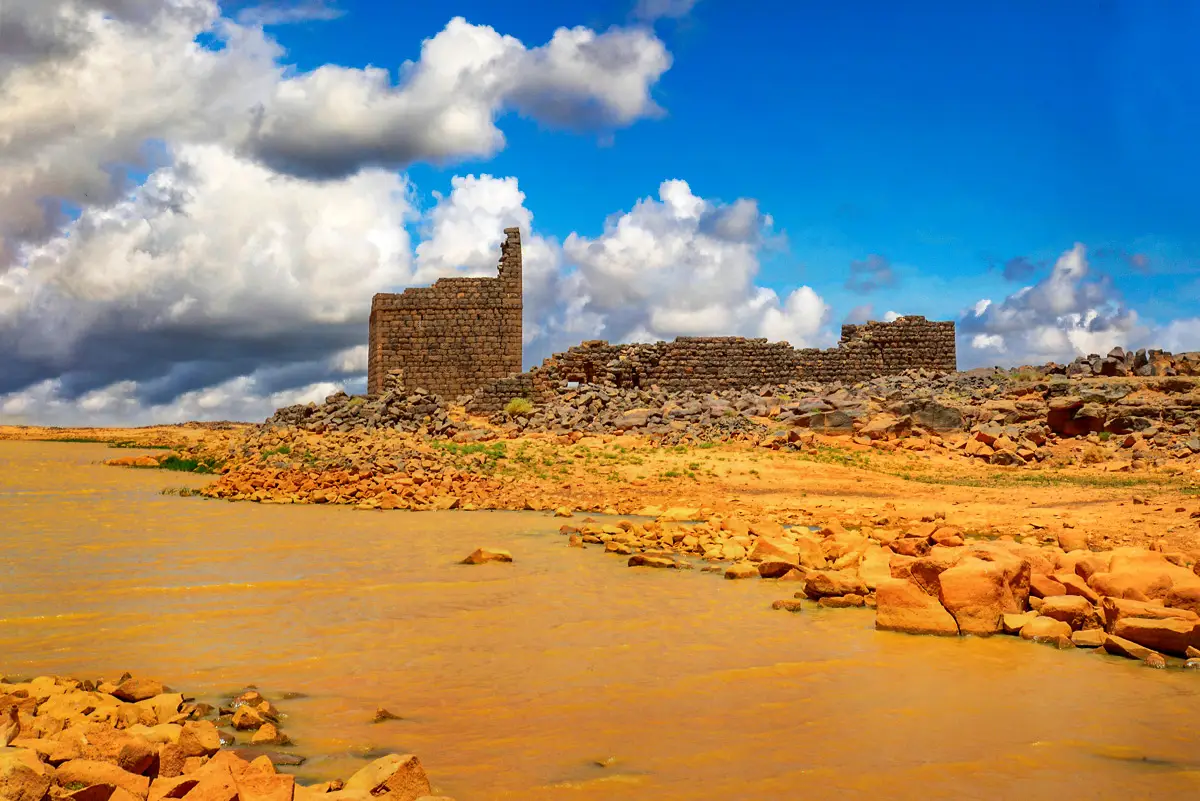
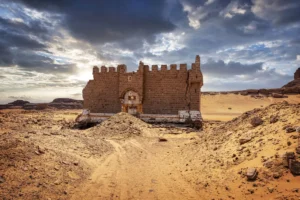
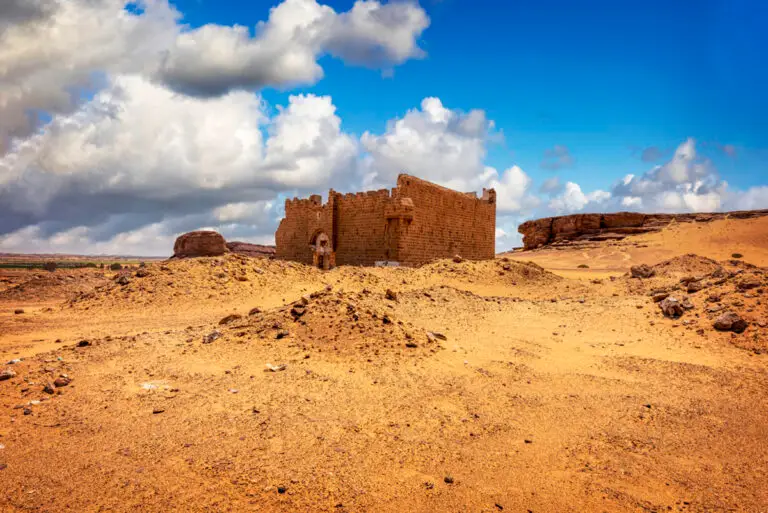
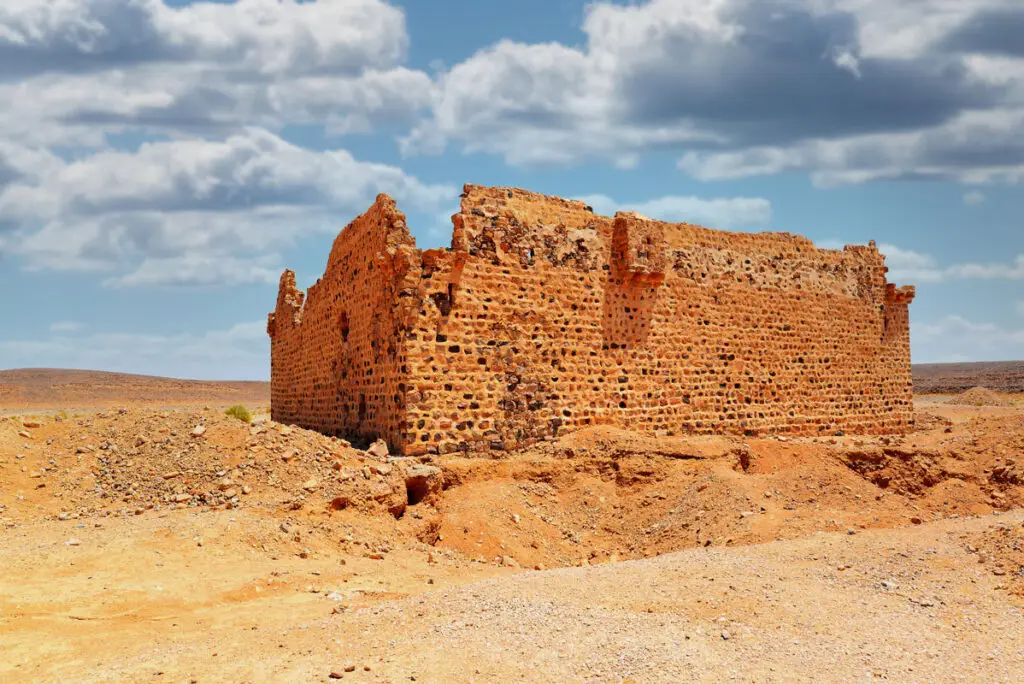
A fort about 20 m square and 7 m high, with small corner turrets.
Look closely
The gate with its sandstone frame in the north wall.
1 of 4
Part by part
What to see
Three parts of the visit: the fort, the inside and the reservoirs. Pick one to see what to look for.
1 / 701 · At the head of the pass
Walk round the fort
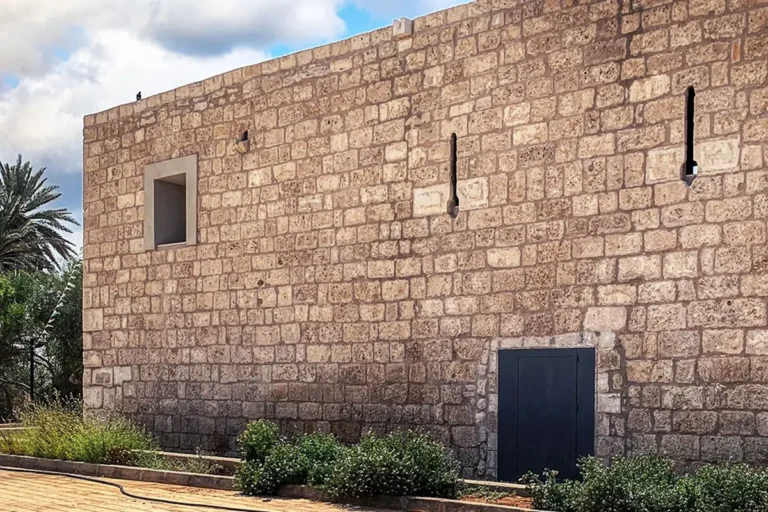
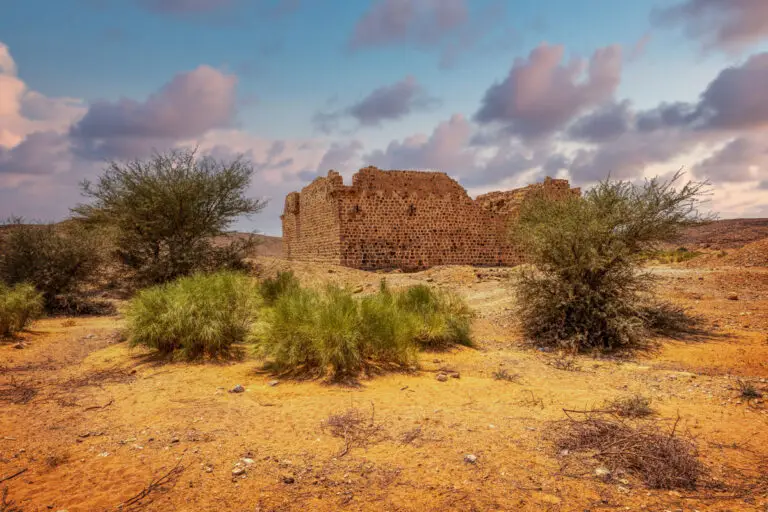
The fort is about 20 m square and about 7 m high, with two storeys around a small courtyard. Its single gate, in the middle of the north side, has a dressed sandstone frame and a round arch.
Small corner turrets and a box machicolation over the south wall defended it. By 1825 two of its walls had collapsed.
About 20 m squareNorth gateCorner turrets
Look for
- The sandstone frame of the gate
- The box machicolation on the south wall
- The collapsed walls
Dig deeperThe lost gate inscription
An inscribed sandstone panel formerly stood above the gateway but was removed after 1986, and its whereabouts are unknown. It held two cartouches within one composite panel, and its text was never fully deciphered.
 1 / 7
02 · Around the courtyard
Explore inside
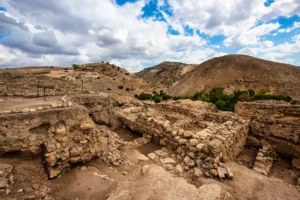
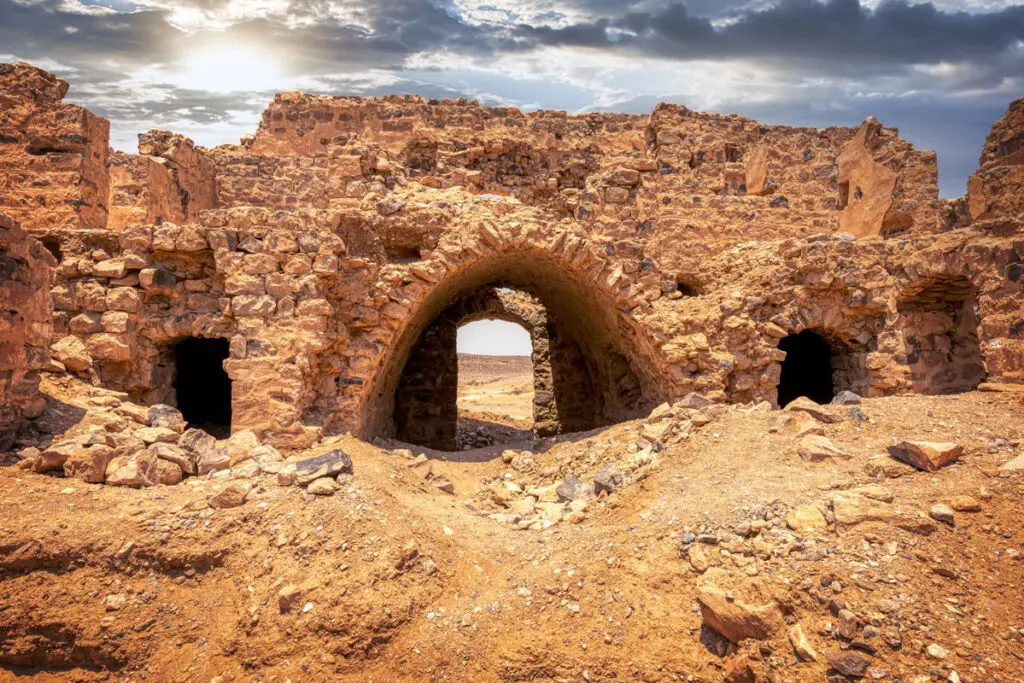
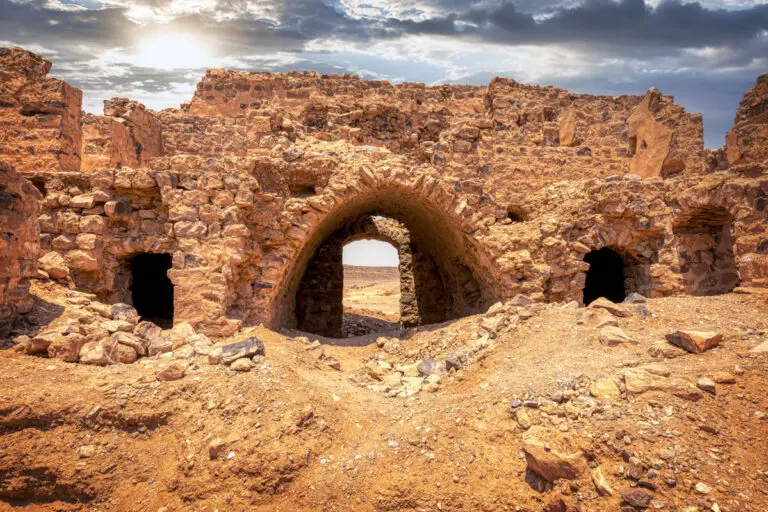
The ground-floor rooms served as stables and stores, and there is a prayer room with a mihrab on each floor. A cistern in the courtyard collected rain from the roof.
The fort has never been restored, and looting pits have been dug inside: watch your step.
Stables and storesTwo prayer roomsUnrestored
Look for
- The vaulted rooms round the courtyard
- The prayer niches
- The courtyard cistern
 1 / 7
03 · Water at the pass
See the reservoirs
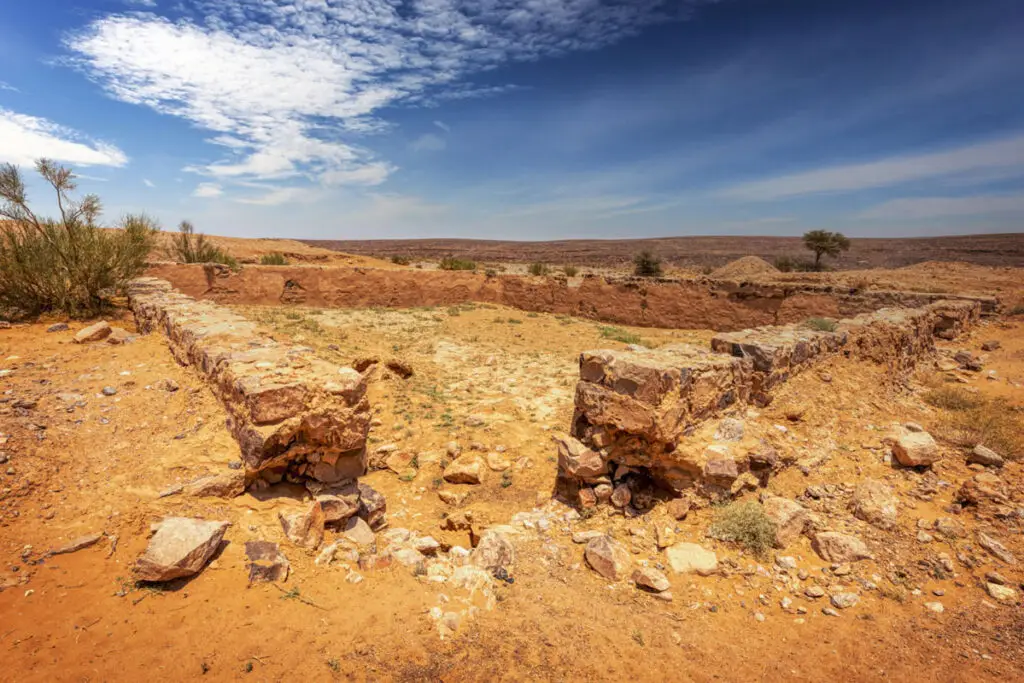
Outside the fort, two parallel reservoirs fed by stone catchments lie about 40 m from the gate, and a modern pool nearby is still used by Bedouin.
The Hejaz Railway, opened in 1908, ended the caravans, though the reservoirs supplied the railway until 1918. The old station is about 2 km to the east.
Two reservoirsStone catchmentsUsed until 1918
Look for
- The two parallel reservoirs
- The stone catchments
- The plateau towards Batn al-Ghul
Dig deeperThe pass of flints
Pilgrims crossed this pass long before the fort: Ibn Battuta passed in 1326. In 1779 the traveller Mehmed Edib wrote that Osman Pasha had built a fort and a fountain here.
History & significance
The last station on high ground
Fassu’a guarded the head of the Batn al-Ghul pass. Built in the mid-18th century, it was already a ruin by 1825.
- AD 1326Ibn Battuta crosses the pass
- Mid-18th c. ADThe fort is built under Sultan Mustafa III
- AD 1779Mehmed Edib records the fort and fountain
- By AD 1825Two walls have collapsed
- AD 1908The Hejaz Railway opens
- After AD 1986The gate inscription is removed
 ProfileQal’at Fassu’a: the full storyThe history, the lost inscription and the pass of Batn al-Ghul.Read the profile →
Plan your visit
Everything you need to know before you go
The fort lies about 50 km south-east of Ma’an, off the Ma’an–Mudawwara road, in a shallow valley on the Fassu’a plateau. The old railway station is about 2 km to the east, and a gravel quarry lies just to the south. A 4x4 is needed for the last stretch.
Good to know: the site is unfenced and unrestored, with looting pits inside and loose walls. There are no services.
Opening hoursOpen accessUnstaffed site · visit in daylight
Entry ticketFreeNo ticket office
Time to visit30 minAbout 30 minutes
From Amman265 kmAbout 3 hours by the Desert Highway
LocationMa’an29.7655° N, 35.8811° EGet directions
Opening hours and prices checked October 2026. Spotted a change? Let us know
On site
What you’ll find at Qal’at Fassu’a
- Viewpoint
Not on site: visitor centre, ticket office, toilets, designated parking, museum, guide, food & drinks, market / shop, hotels
Access: 4x4 needed
When to go
October to April is best. Summer days are very hot, with no shade.
J
F
M
A
M
J
J
A
S
O
N
D
BestGood, cooler or warmVery hot
Tip: combine Fassu’a with Mudawwara on the same day, by 4x4.
Before you go
There are no services at the site; Ma’an is the nearest town.
- WaterNo shade and no services
- Sun hat and sunscreenEspecially from May to September
- Good shoesRubble and uneven floors
- The map pinSigns are few or missing
Common questions
Quick answers before you set off.
Do I need a 4x4?
Yes, for the last stretch from the Ma’an–Mudawwara road.
Is there an entrance fee?
No. The fort is unfenced and free, with no facilities.
Is the gate inscription still there?
No. The inscribed panel above the gate was removed after 1986, and its whereabouts are unknown.
How long do I need?
About 30 minutes for the fort and the reservoirs.
Combine with
Fassu’a lies on the road to Mudawwara and the Saudi border. Drive times are from Qal’at Fassu’a.
Explore this site
More from Qal’at Fassu’a
Panoramas, walk-throughs, photos and stories about this site.
ProfileQal’at Fassu’a: history & architecture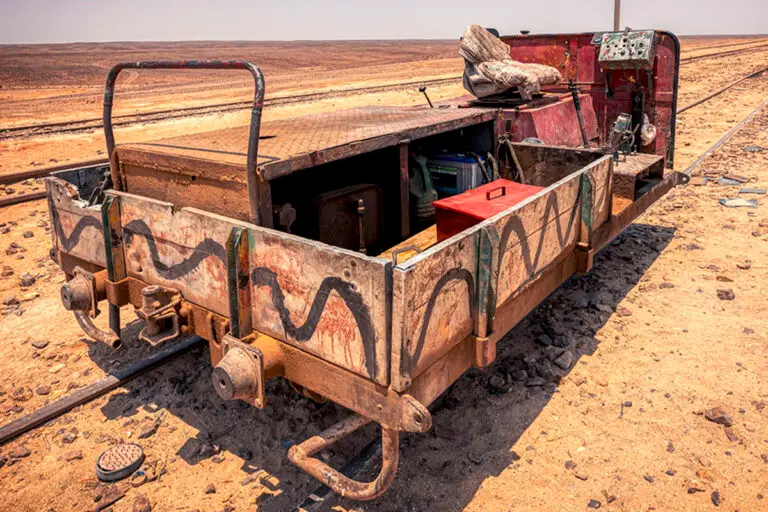 Photo albumQal’at Fassu’a: A Hajj Fort above the Desert in Photos
 360°360° panoramaExploring the Ruins of Qal’at Fassu’a in 360°
Nearby
Also in the far south
From guide to visit
Explore the southern Hajj forts with a private guide
Tell us when you’d like to go, and we’ll plan a private 4x4 day to the forts of the southern desert.