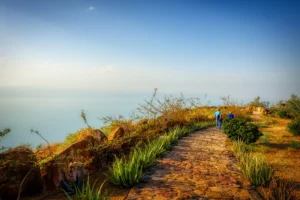
Carved masterfully into the hillside directly behind the Sanctuary of Zeus, the South Theatre of Jerash is a spectacular monument to Roman civic life and performing arts. As the premier entertainment venue of ancient Gerasa, this monumental auditorium once hosted thousands of citizens for dramatic plays, poetic competitions, and political assemblies. Today, it stands as one of the most acoustically perfect and structurally complete Roman theatres in the Middle East, treating modern travellers to an immersive experience where ancient artistry still resonates.
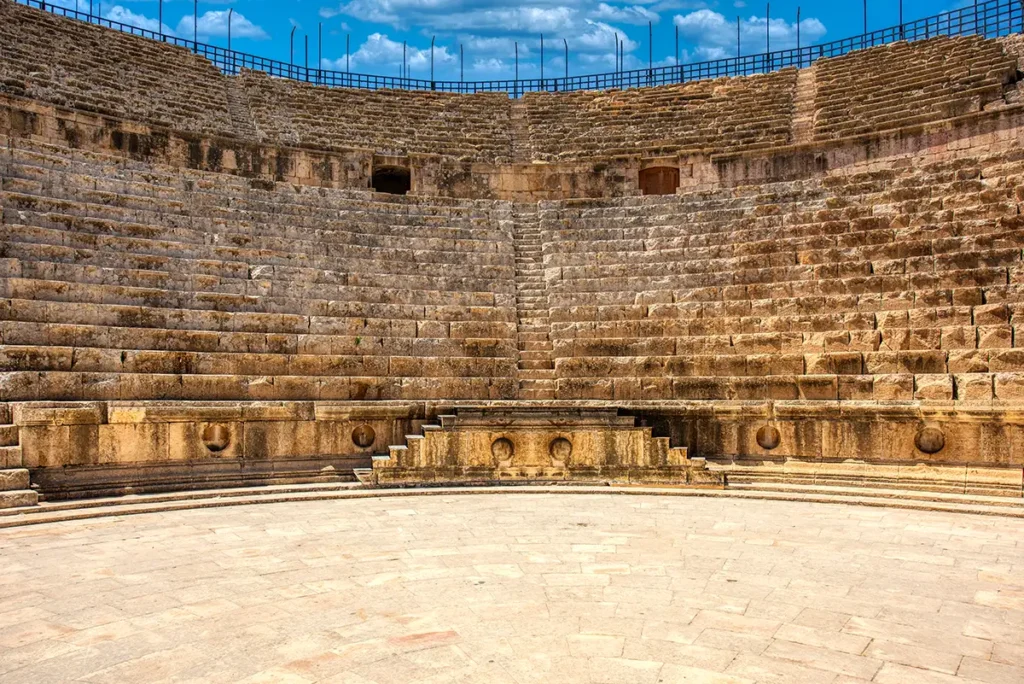
The South Theatre at a Glance
Location: Jerash Archaeological Park, Jordan (directly behind the Sanctuary of Zeus)
Built date: Completed between 90–92 AD (during the reign of Emperor Domitian)
Purpose: Dramatic performances, musical recitals, and civic assemblies
- Dimensions: Total Width: 76 meters (249.3 feet) across the semicircular seating structure, total Height: 16.28 meters (53.4 feet) measured straight up from the orchestra floor to the highest surviving seat
- Capacity: Originally accommodated roughly 3,000 to 5,000 spectators
- Key Feature: Flawless natural acoustics and a highly ornate, double-story stage wall (scenae frons)
- Nearby monuments: Sanctuary of Zeus, Oval Plaza, Cardo Maximus
- Current Status: Extensively restored; still acts as an active venue for cultural festivals and live musical performances.
Historical Context and Origin
The South Theatre was constructed during the late 1st century AD, specifically between 90 and 92 AD under the Flavian dynasty. This makes it significantly older than the neighbouring 2nd-century additions like Hadrian’s Arch, the Hippodrome, and the Sanctuary of Zeus.
At the time of its inauguration, Gerasa was experiencing an initial wave of massive urban prosperity. To cement its status as a sophisticated, Hellenized Roman city, the local elite and municipal treasury funded the theatre to foster a vibrant public life. The venue quickly became the social heart of the city.
Beyond hosting standard Greek and Roman comedies, tragedies, and mime performances, the theatre played an important administrative role. It served as the primary gathering place for the boule (the city council) and general citizen assemblies, where local laws were debated, elections held, and imperial decrees read aloud.
First Impressions
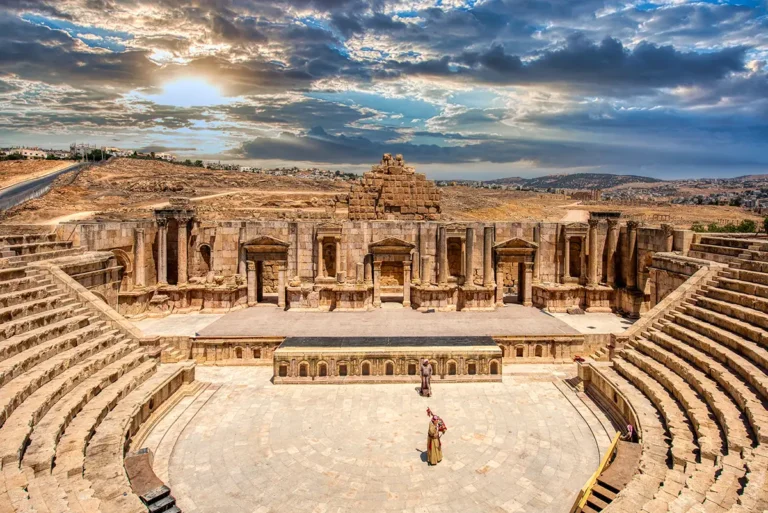
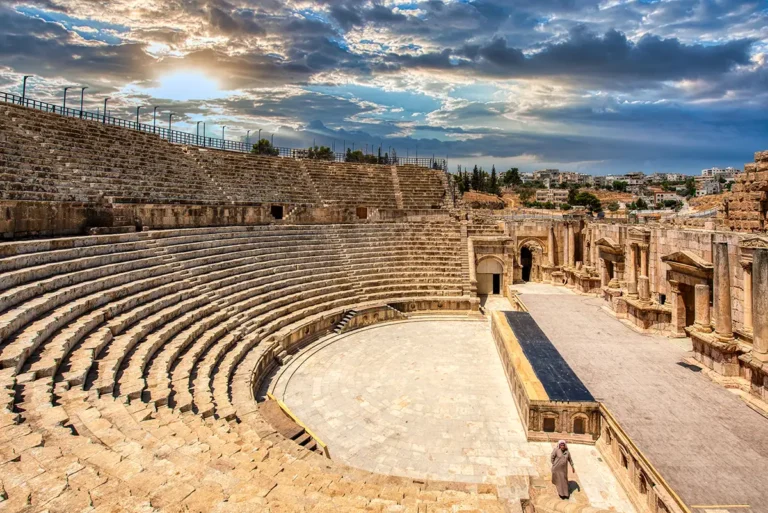
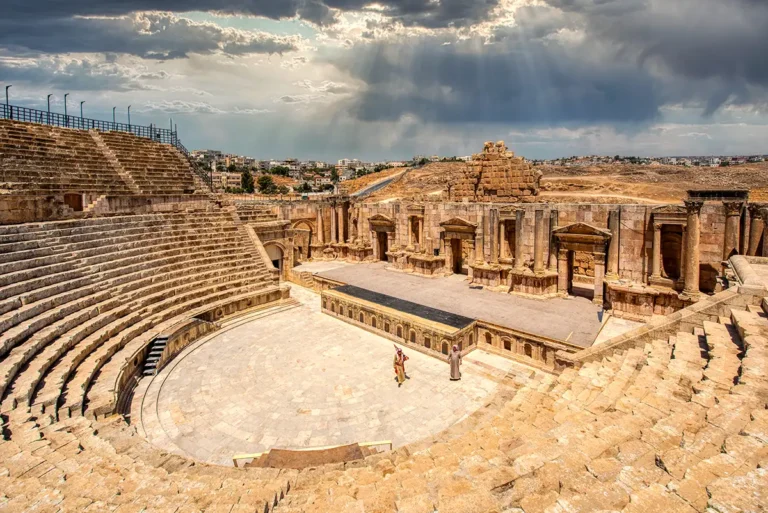
The South Theatre makes an immediate impression through its sheer scale. The curved seating rises in long, ordered tiers above the orchestra, while the tall stage façade forms a dramatic architectural wall at the far end. Built from the same warm limestone that defines much of Jerash, the monument seems both monumental and closely tied to the surrounding landscape.
From the lower level, the theatre feels enclosed and focused: every line directs attention toward the stage. Climb higher, however, and the setting opens up. The curved auditorium frames views toward the Sanctuary of Zeus and the southern monuments of the city, showing that this was not an isolated building but part of a carefully designed urban landscape.
The theatre’s continuing use adds another dimension. It still welcomes audiences during the Jerash Festival, allowing a modern visitor to experience the building not only as an archaeological monument, but as a space for music, performance and collective gathering.
Architectural Design and Features
The South Theatre is a masterclass in classic Roman theatrical engineering, perfectly blending structural durability with sensory optimisation.
The Cavea (Seating Sections)
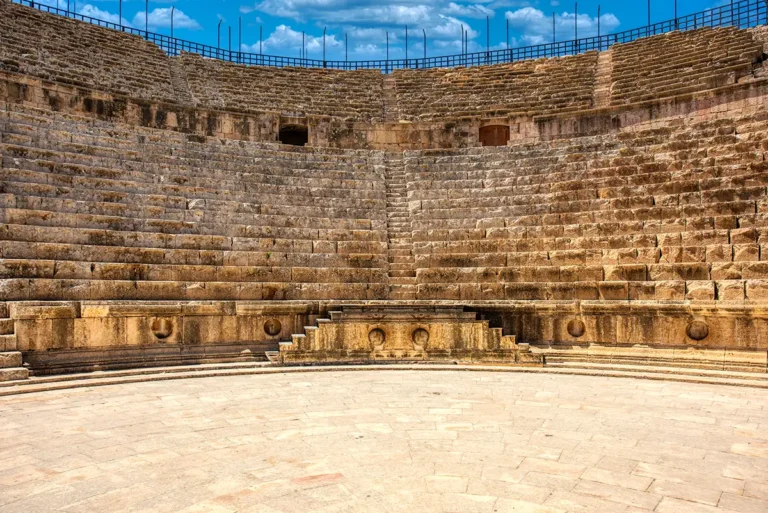
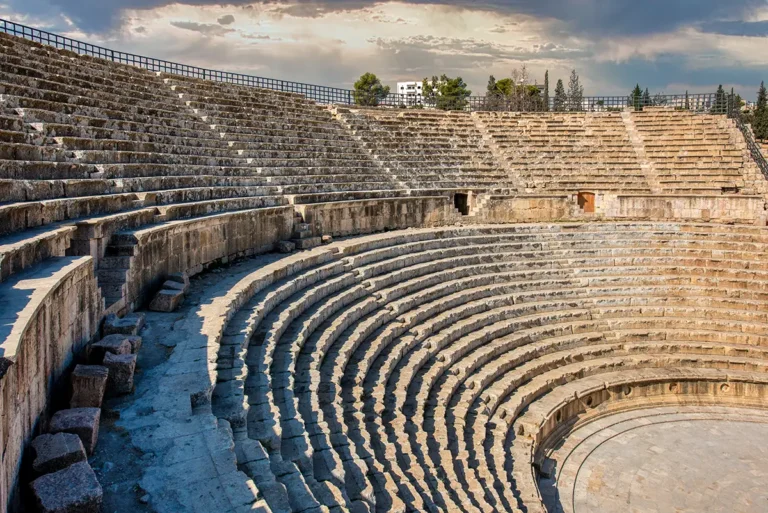
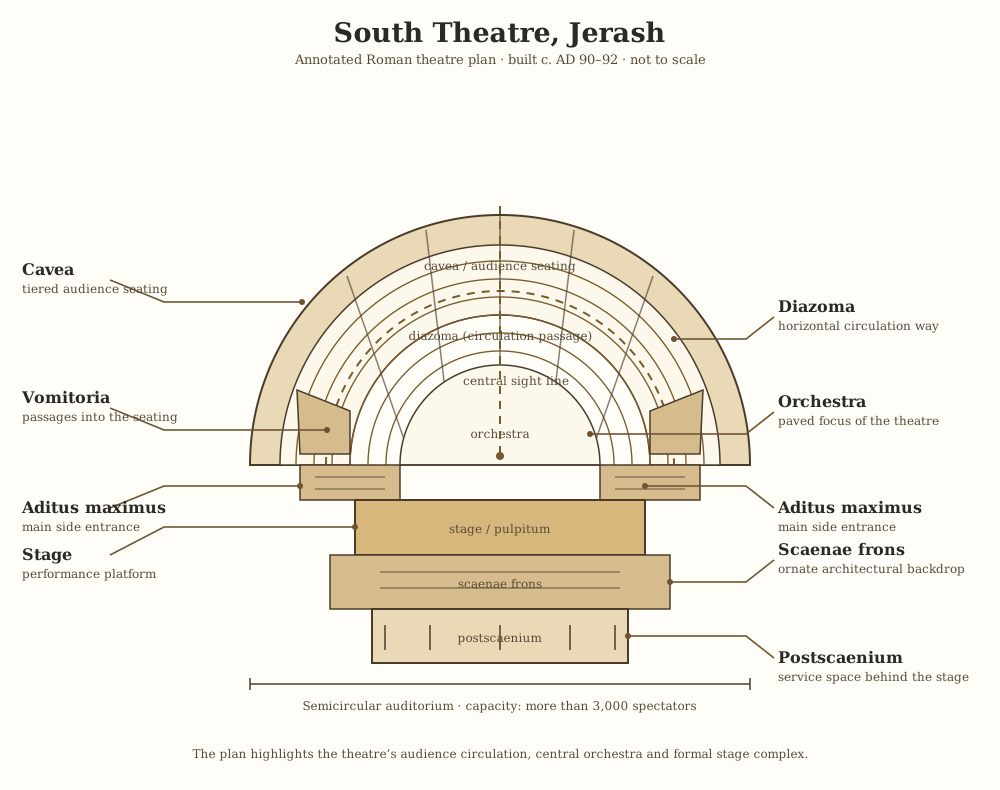
The auditorium features a semi-circular cavea built against the slope of the hill to maximise structural stability. The seating is divided into two major horizontal tiers separated by a wide walkway (diazoma):
- The Lower Tier (Ima Cavea): Consists of 15 rows of stone benches, heavily reserved for dignitaries, priests, and wealthy patrons.
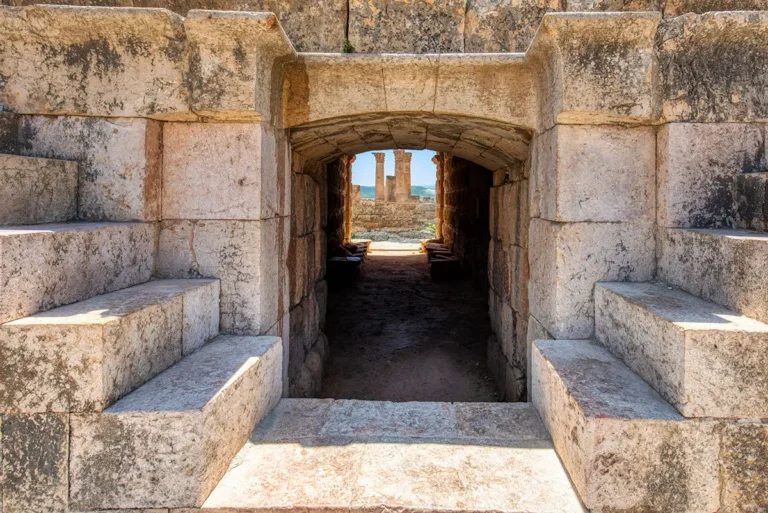
- The Upper Tier (Summa Cavea): Adds another 17 rows of seating for everyday citizens and visitors, accessed via internal vaulted tunnels (vomitoria).
The Scenae Frons and Orchestra
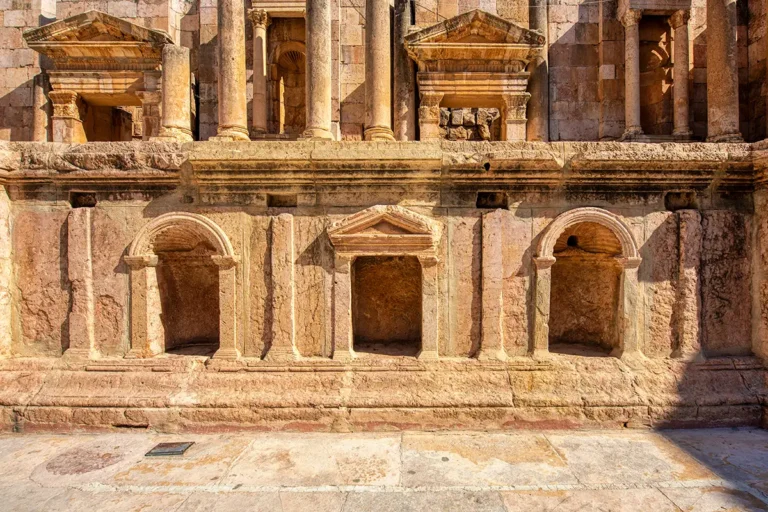
At the base of the seating area lies the semi-circular orchestra floor, paved with smooth limestone. Facing the audience is the pulpitum (stage) and the spectacular scenae frons—a monumental, two-story stone stage wall.
Reconstructed to its historic splendour, this backdrop features Corinthian columns, decorative niches for classical statues, and three ceremonial doorways through which actors entered the stage.
Flawless Acoustic Design
The defining feature of the South Theatre is its incredible natural acoustic engineering. The curved design of the seating bowl, the mathematically calculated angle of the tiers, and the solid stone backdrop of the stage wall work together to amplify sound without distortion. If a person stands directly on the acoustic sweet spot in the centre of the orchestra floor, even a soft whisper can be clearly heard by a spectator sitting on the very top row of the upper cavea.
Entrances and Vaulted Passages
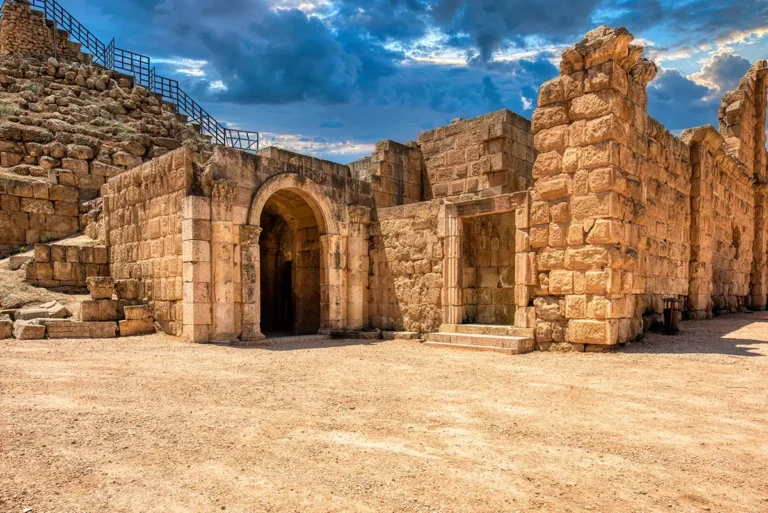
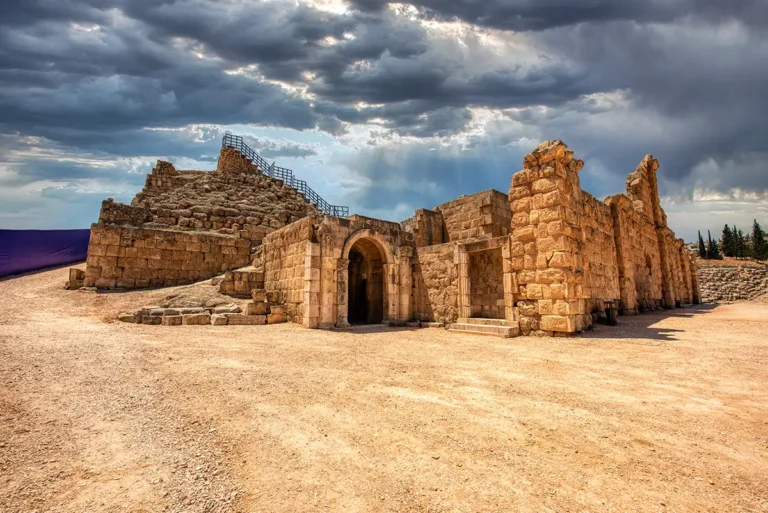
Roman theatres were designed for efficient movement as well as spectacle. The main side entrances leading into the orchestra are known as the aditus maximi. Other passages and stairways allowed spectators to enter the seating at different levels.
These routes helped manage the flow of large crowds. When exploring the theatre, take time to look beneath the seats and along the side passages. They show that the building was as carefully planned behind the scenes as it was impressive from the front.
Destruction, Rediscovery, and Restoration
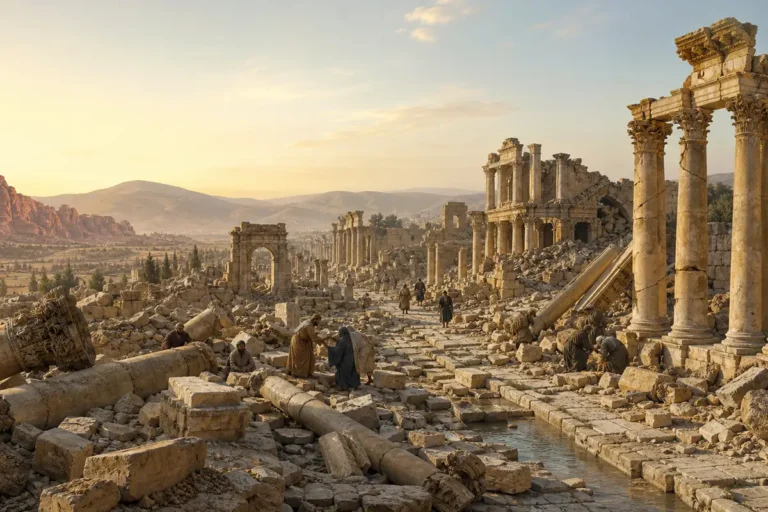
Like its architectural neighbours, the South Theatre was heavily impacted by the cataclysmic Galilee earthquake of 749 AD. The violent tremors brought down the upper seating tiers and caused the massive two-story scenae frons to collapse forward onto the stage floor, crushing the proscenium and sealing the lower structural elements beneath thousands of tons of heavy, sculpted limestone blocks.
The theatre was rediscovered alongside the rest of ancient Gerasa in the early 19th century. Recognising its immense architectural integrity, the Jordanian Department of Antiquities, alongside international engineering teams, launched a massive restoration project in the 20th century.
Using the method of anastylosis, restorers laboriously lifted the fallen columns, catalogued the broken blocks of the stage backdrop, and stabilised the seating grandstands. Today, it stands as one of the most complete Roman theatres in the world, so structurally sound that it serves as the centre stage for the annual Jerash Festival of Culture and Arts, hosting live concerts and traditional performances on the exact same stones used two millennia ago.
Visiting the South Theatre Today
The South Theatre offers one of the most interactive and lively experiences within the archaeological park.
Location: Situated directly past the South Gate checkpoint; follow the ascending path to your left that winds up the hillside right behind the Sanctuary of Zeus.
The Acoustic Test: Walk directly down to the centre of the orchestra floor, locate the circular stone marking the exact acoustic centre, and speak or clap your hands to hear your voice instantly echo back around the entire stone bowl. Local Jordanian bagpipe players frequently stand here to demonstrate the venue’s magnificent resonance.
Photographic Vantage: Climb to the top row of the upper cavea. From this towering vantage point, your camera can capture the full, dramatic semi-circle of the seating banks juxtaposed against the modern city of Jerash sprawling across the hillsides across the valley.
Highlights Not to Miss
The upper seating tiers: Climb carefully for broad views across the theatre and toward the Sanctuary of Zeus.
The orchestra: Stand at the centre of the paved semicircle to appreciate the building’s focused geometry and sound.
The restored stage façade: Look closely at the Corinthian columns, niches and doorways that recreate the architectural richness of the scaenae frons.
The vaulted passageways: These reveal how Roman architects managed circulation and supported the immense seating structure.
The relationship with the sanctuary: From the theatre, look toward the hill of the Temple of Zeus and imagine the southern quarter as a connected sacred and civic landscape.
Key Takeaway
The South Theatre is one of the places where ancient Jerash feels most immediate. Its great curve of seats still gathers the eye around the orchestra; its stage façade still provides a ceremonial focus; and its views still connect performance, religion and city life. Whether you explore it quietly in the afternoon or experience it filled with music during the Jerash Festival, the theatre remains a vivid reminder that Gerasa was not only a city of monuments, but a city of audiences, voices and shared public life.
Frequently Asked Questions
The South Theatre is Jerash’s largest Roman theatre, built for public performances, ceremonies and civic gatherings. It is one of the best-preserved monuments in the archaeological park.
It was built during the reign of Emperor Domitian, around AD 90–92.
The theatre could seat more than 3,000 spectators, making it much larger than Jerash’s North Theatre.
It hosted theatrical performances, music, speeches, civic celebrations and other public events. Its imposing scale also expressed Gerasa’s prosperity and Roman identity.
The theatre was designed so that voices projected clearly from the orchestra and stage toward the upper seating rows. Try speaking from the centre of the orchestra to experience its impressive sound quality.
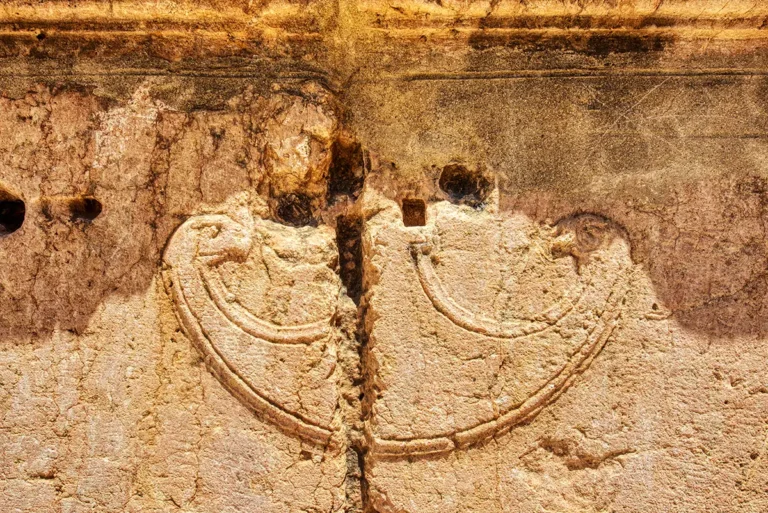
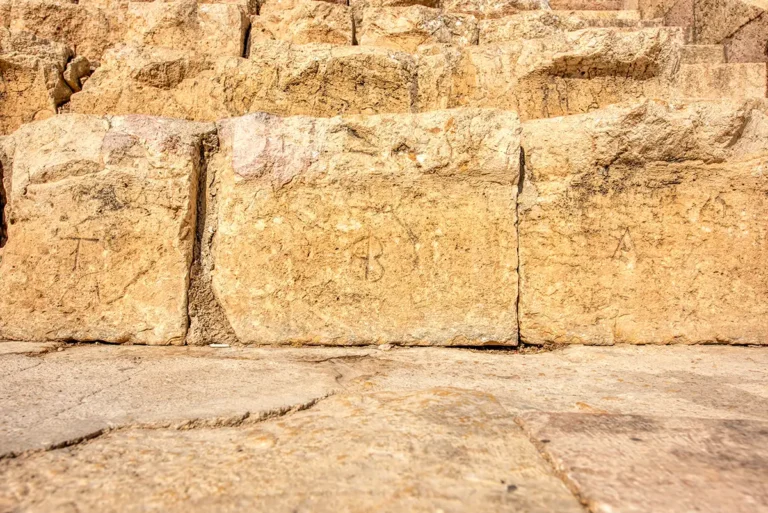
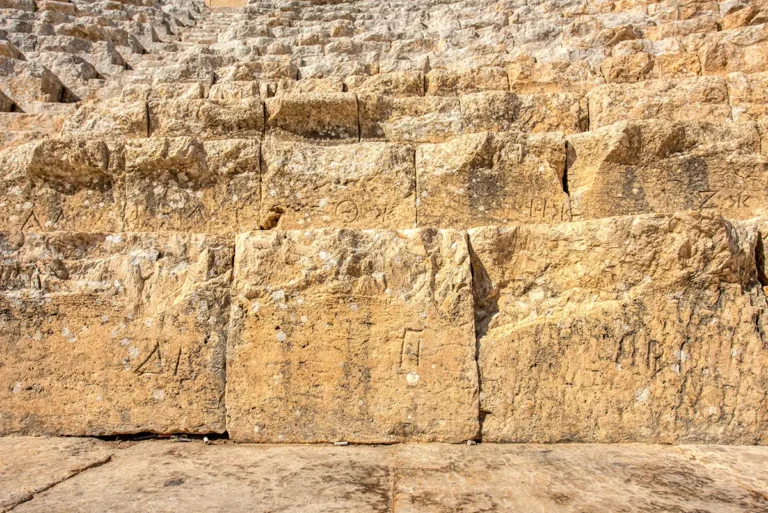
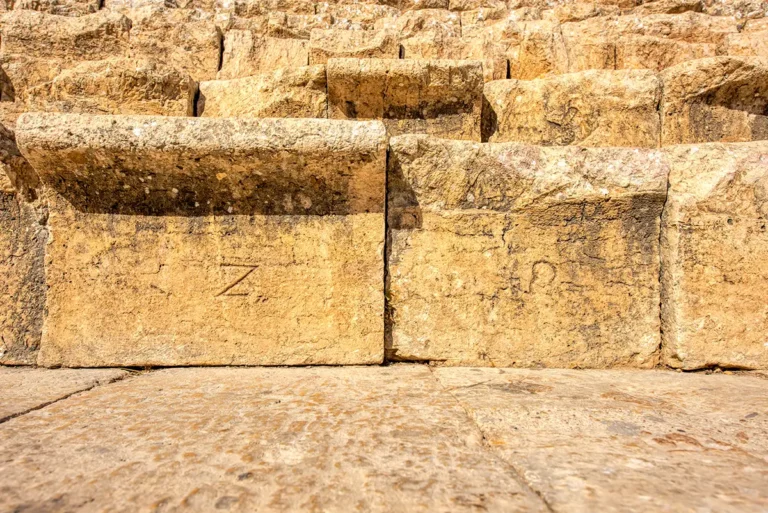
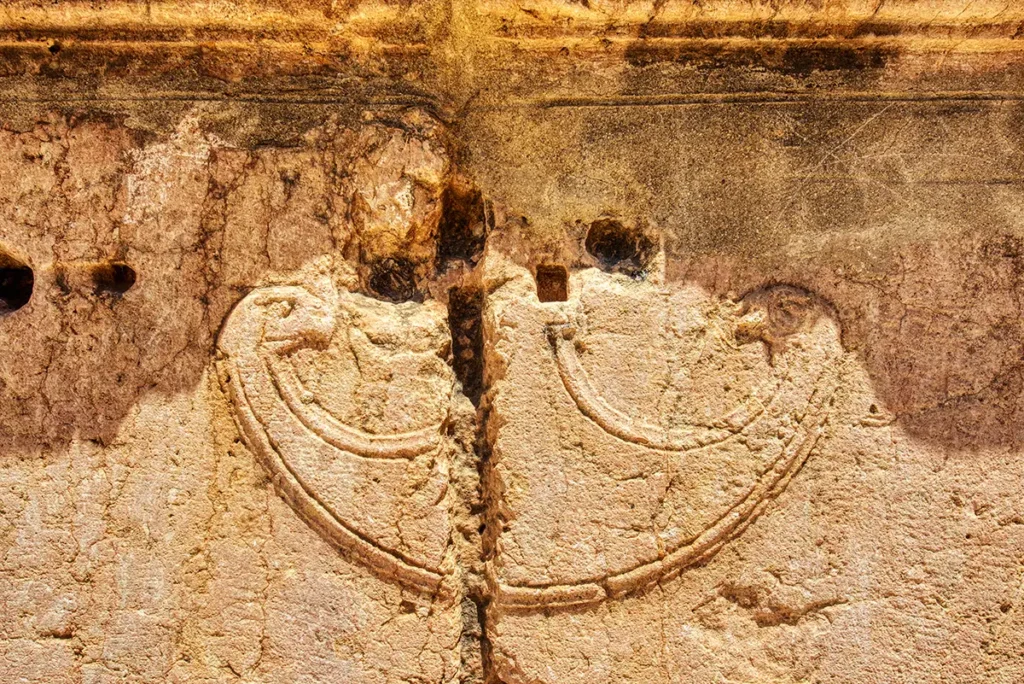
Some seats preserve Greek letters that may have marked reserved seating sections or identified groups associated with particular rows.
Look for the reconstructed lower level of the stage façade, the semicircular seating tiers, the vaulted side entrances, the orchestra and the high outer wall overlooking the city.
Yes. After restoration, the theatre continues to host selected cultural performances and events, continuing its original role as a public gathering place.
The South Theatre was the city’s main large performance venue. The North Theatre was smaller and also served civic functions, including meetings of the city council.
It stands on the southern side of the ancient city, close to the Oval Plaza, the Sanctuary of Zeus and the southern stretch of Cardo Maximus.
Key Moments in History
c. 90–92 CE — Construction of the South Theatre: The theatre was built during the reign of Emperor Domitian, at a time of expanding prosperity and monumental building in Gerasa. It was the city’s largest and oldest known theatre.
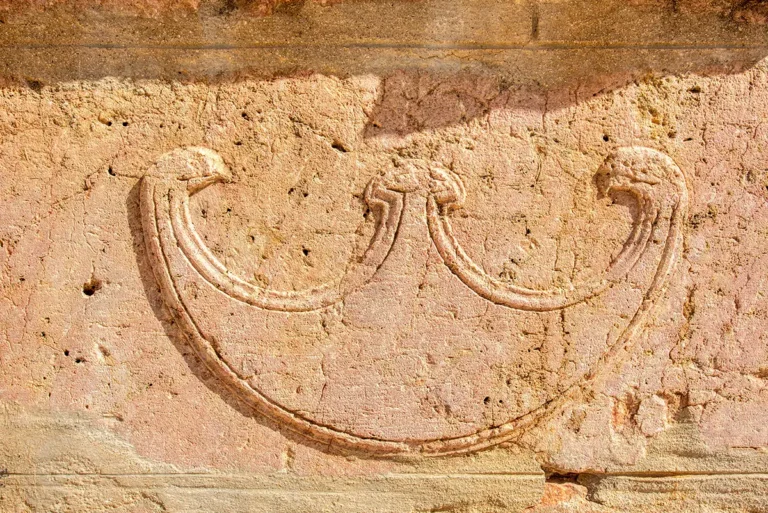
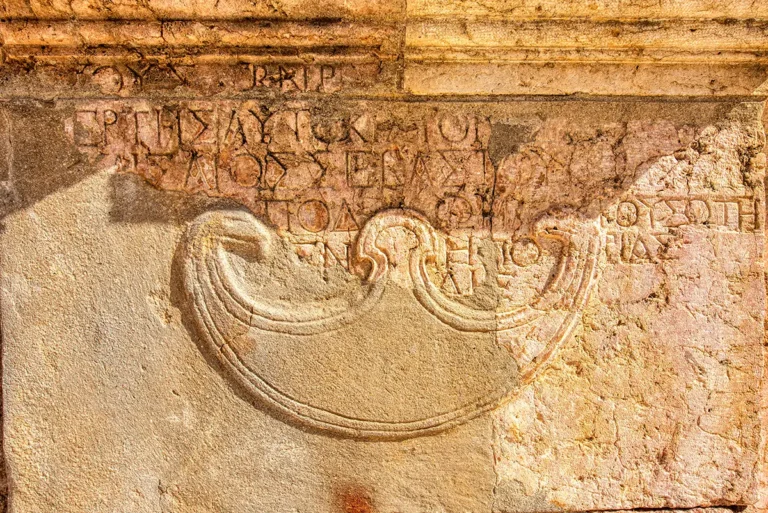
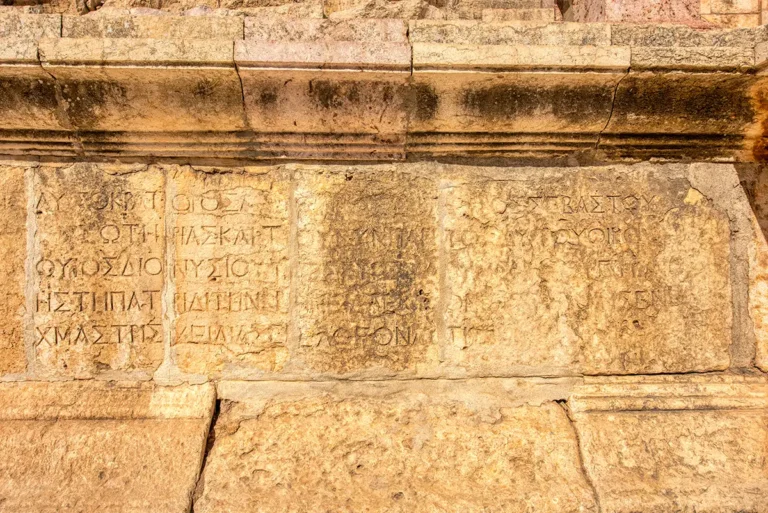
Late 1st century CE — Civic benefactors support the project: Inscriptions found in the theatre record donations by local benefactors, including a former legionary. Their contributions show how prominent citizens helped finance public buildings and gain honour within the city.
Key Moments in History
c. 90–92 CE — Construction of the South Theatre: The theatre was built during the reign of Emperor Domitian, at a time of expanding prosperity and monumental building in Gerasa. It was the city’s largest and oldest known theatre.
Late 1st century CE — Civic benefactors support the project: Inscriptions found in the theatre record donations by local benefactors, including a former legionary. Their contributions show how prominent citizens helped finance public buildings and gain honour within the city.
2nd century CE — A theatre within a monumental southern district: The South Theatre became part of a major civic and sacred landscape beside the Sanctuary of Zeus and near the Oval Plaza. When the great Temple of Zeus was dedicated in 162/163 CE, the theatre and temple together formed one of the most impressive zones of Roman Jerash.
Roman and late antique periods — A place for public life: The theatre served as a setting for performances, music, speeches, festivals and other large public gatherings. Its capacity of more than 3,000 spectators reflects the scale of Gerasa’s urban community and cultural ambitions.
Later centuries — Decline, damage and reuse: As the city’s public life changed, the theatre gradually fell out of regular use. Earthquakes, collapse and the reuse of building stone altered the monument, while sections of its once-elaborate stage façade were lost.
1925 — Modern archaeological clearance begins: Conservation work under George Horsfield cleared the orchestra and exposed the stage area, bringing the long-buried monument back into view.
1953–1956 — Major restoration for the Jerash Festival: Restoration focused especially on the stage façade and honoured seating areas, allowing the theatre to become a performance venue once again.
Today — An ancient theatre with a living role: The South Theatre remains one of the principal settings for the annual Jerash Festival of Culture and Arts. Modern concerts continue the building’s original purpose: gathering an audience for shared performance in the heart of the ancient city.