











Qasr Mshash
A caravan halt and its water works, hidden in the steppe
BuiltMostly 7th–8th c. AD
Qasr26 × 26 m
LocationOff Highway 40
Access4x4 track
Introduction
A desert settlement that lived on every drop of winter rain.
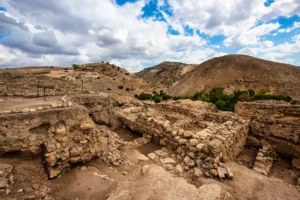
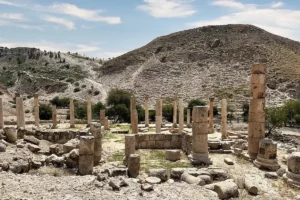
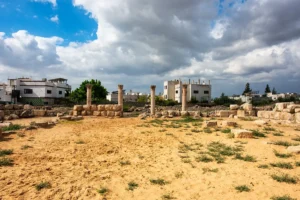
Qasr Mshash is the least visited of the desert castles near Amman, and the easiest to miss: its low ruins sit on the edge of Wadi Mshash and blend into the stony steppe. What survives is not a palace but a working settlement, spread over about 2 × 2 km, with a small square qasr, a bath, houses, reservoirs, cisterns and dams.
Most of what you see is Umayyad, of the 7th–8th centuries AD, built on top of a small Roman-period post. Archaeologists think the western part served caravans on the route from Amman to the Wadi Sirhan, and probably the Umayyad postal service too. Come for the quiet, the open landscape and a rare look at how people stored water in a land of under 100 mm of rain a year.
Best timeMar–Apr · Oct–Nov
Time needed20 min
TicketFree
From Amman60 km · 1 hr 30 min
Combine withQasr Al-Muwaqqar · 45 min
Google rating4.5 · Reviews
Highlights · Water in the steppe
A settlement built around water
A small qasr, a bath and the reservoirs that kept them going
There is no permanent water at Mshash. Everything depended on winter rain, caught in reservoirs and cisterns and held back by dams, and on groundwater. Look for the water works as much as the walls.
 01 / 05
01 · Architecture
The qasr
The qasr
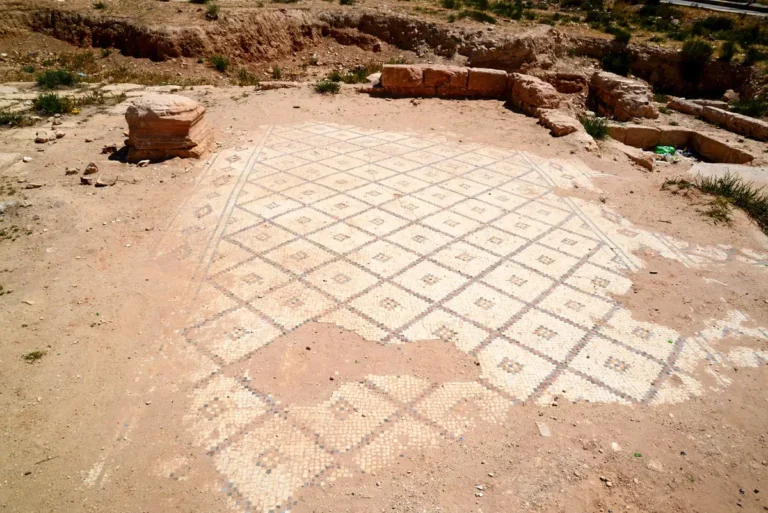
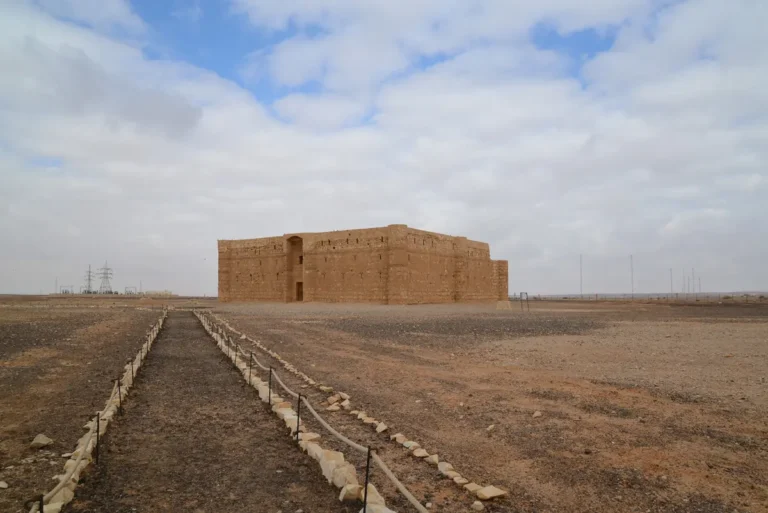
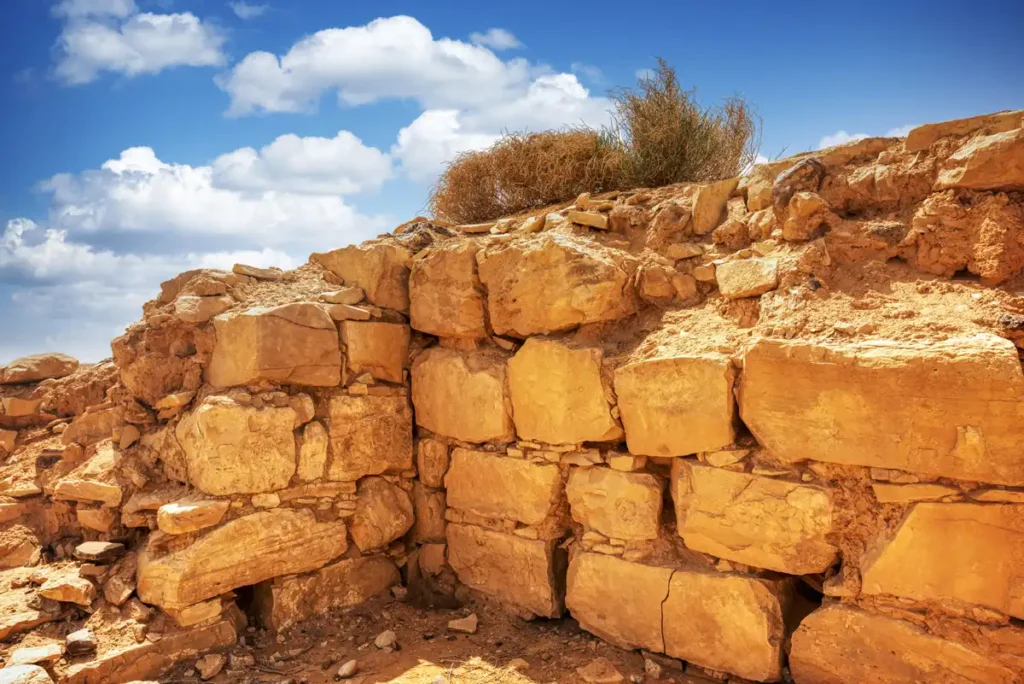
A square building of about 26 m a side, with 14 rooms around a courtyard and no towers. It began as a Roman-period post and was rebuilt in Umayyad times.
Look closely
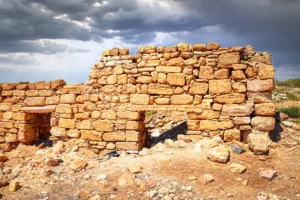
The roughly dressed limestone blocks of its walls.
1 of 5
Room by room
What to see
Five stops in the western part of the site: the qasr, the bath, the reservoir, the cisterns and the wadi. Pick a stop to see what to look for.
1 / 1001 · The square building
Walk round the qasr
The qasr is a square of about 26 m a side, built of roughly dressed limestone and plastered inside. Fourteen rooms surround a courtyard of about 13 × 13 m, and stone slabs paved the floor near the entrance on the east side. It had no towers and was probably a single storey.
Pottery shows that it began as a Roman-period post, perhaps a watch post of the 2nd–4th centuries AD, and was rebuilt or renovated in the Early Islamic period.
26 × 26 m14 roomsNo towersRoman origins
Look for
- The line of the outer walls
- The entrance on the east side
- Room walls around the courtyard
Dig deeperA graffito by the door
A one-line Early Islamic graffito, written in the style of a building inscription, is scratched into the south wall of the entrance. It names no builder and gives no date, so the qasr cannot be tied to a particular caliph.
No inscriptions or coins date the site. Radiocarbon dates from the mortar show that most buildings are Umayyad (AD 661–750).
 1 / 8
02 · Bath house
Find the bath
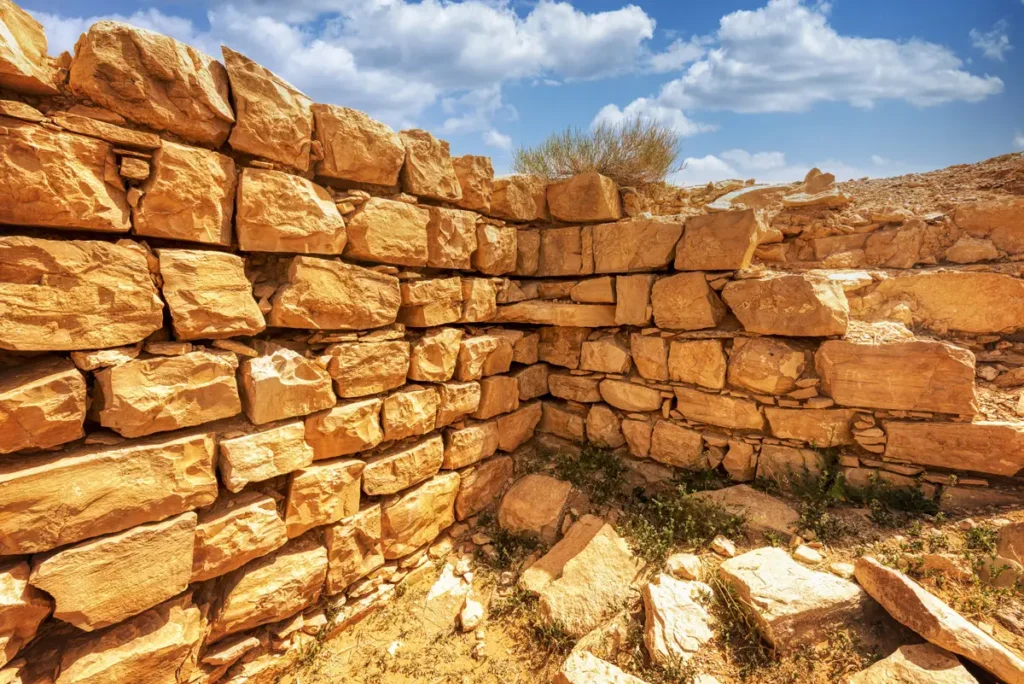
The bath stands at the centre of the western settlement, between the reservoir and a large courtyard building of about 40 × 40 m, which may have been a caravanserai. It was excavated in 1982–83, when it still had its hot room.
The finds were surprisingly fine: marble wall panels, some painted, small stucco window frames set with glass, a glass rosette and a lead water pipe.
Marble panelsGlass windowsExcavated 1982–83Caravanserai nearby
Look for
- The squared stones of the bath walls
- The low mounds of the courtyard building
- How close the bath is to the reservoir
Dig deeperLost since the dig
The hot room uncovered in 1983 has since been completely destroyed. Years of illegal digging have damaged much of Mshash: in 2014 a machine cut a pit at a corner of the qasr, and in 2015 a room was destroyed.
Please stay on the paths you find, and don’t move or take anything.
 1 / 8
03 · Storing the rain
Look into the reservoir
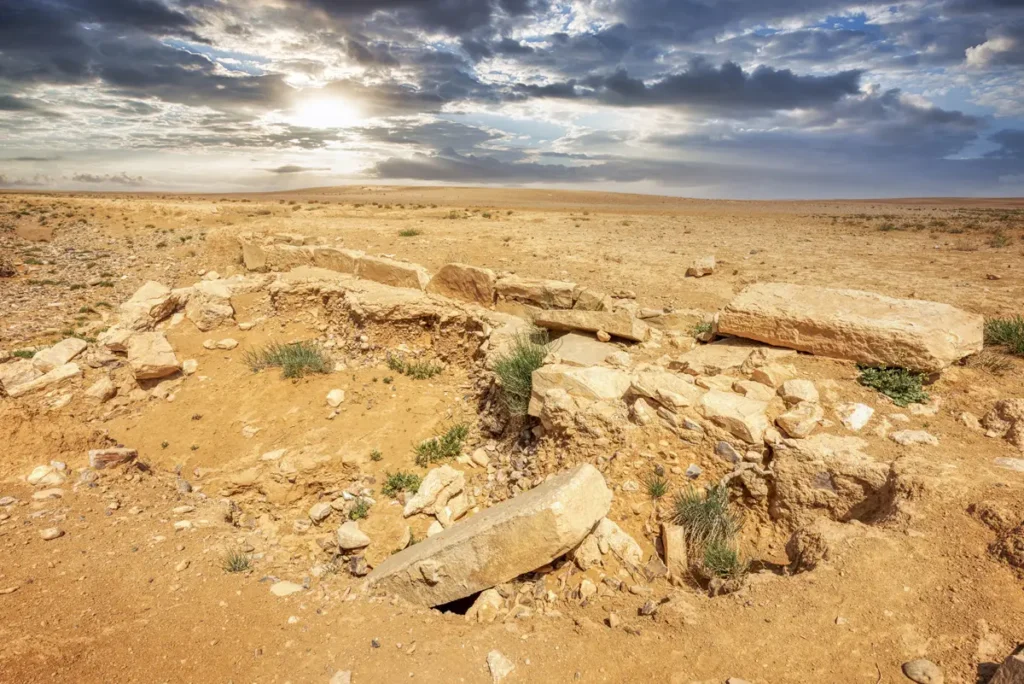
West of the bath is a rectangular reservoir of about 18 × 7 m, lined with plaster. Larger reservoirs nearby held roughly 1,000 and 2,000 cubic metres. They filled from the winter run-off and supplied the bath, the houses and travellers’ animals.
The ground slopes gently towards the wadi, and the builders used that slope to lead water into the tanks.
18 × 7 mPlasteredWinter run-offUp to 2,000 m³
Look for
- Plaster on the walls of the tank
- The slope of the ground towards it
- Small houses to the west
Dig deeperMapping Mshash
From 2011 to 2017 the German Archaeological Institute and the Department of Antiquities studied the site. They surveyed every site within 10 km, made a digital plan and 3D model, ran geophysics and took radiocarbon samples.
The survey also found 131 prehistoric sites around Mshash, including an Early Neolithic village of about 8800–8400 BC.
 1 / 2
04 · Under the ground
Spot the cisterns
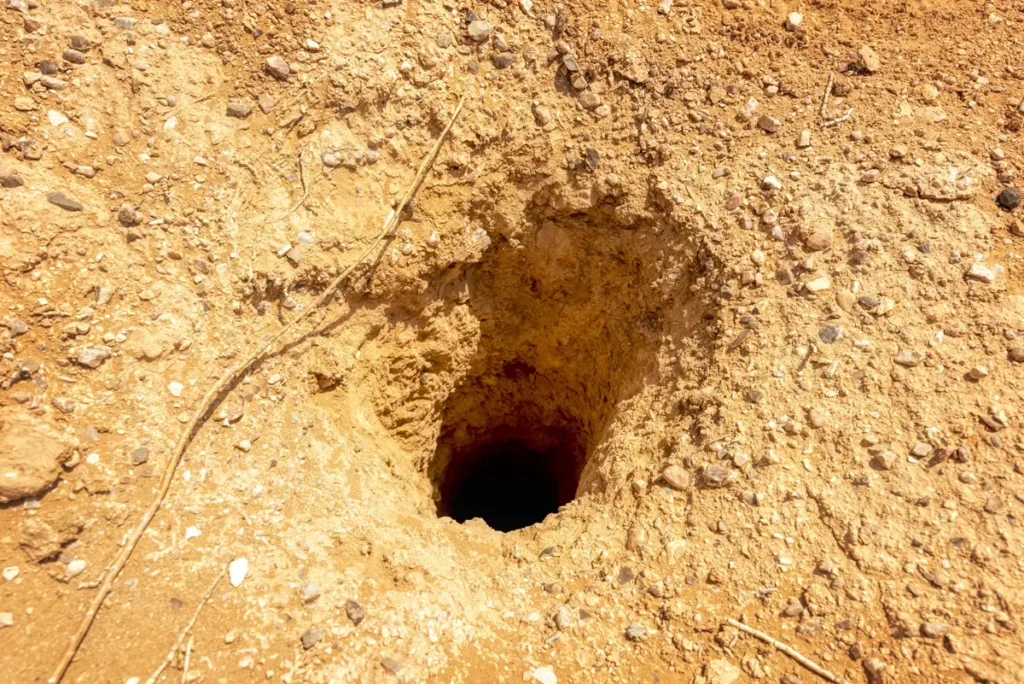
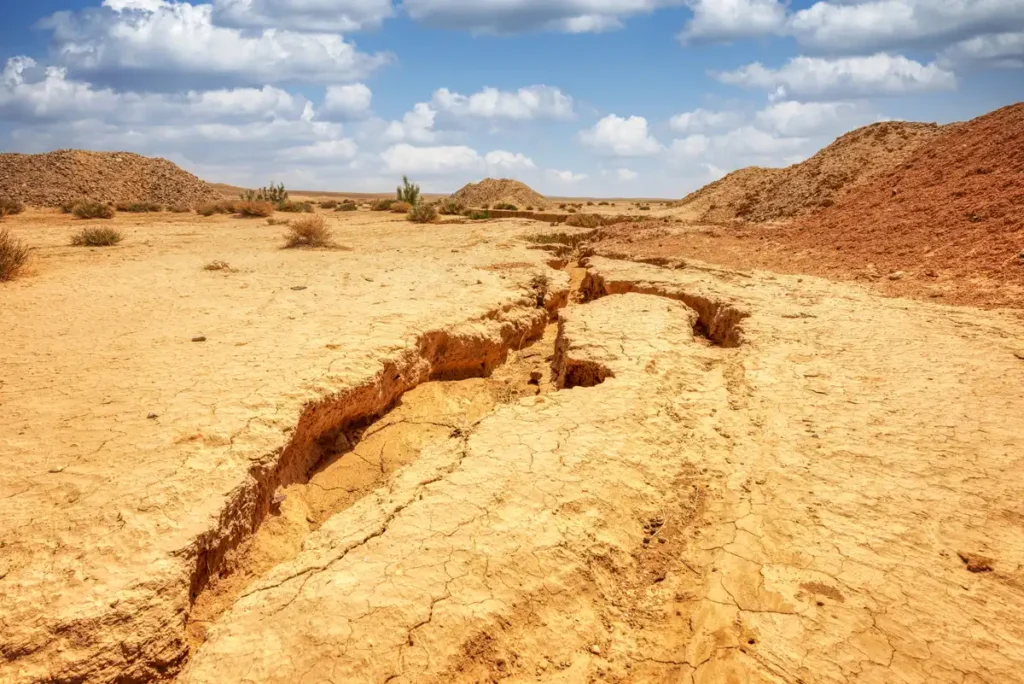
Cisterns were cut into the rock to store water out of the sun. Their narrow openings are easy to miss in the stony ground.
Watch your step: the openings are unfenced and can be deep.
Rock-cutUnderground storageUnfenced openings
Look for
- Round openings in the rock
- Channels leading towards them
 1 / 8
05 · Setting
Look out over Wadi Mshash
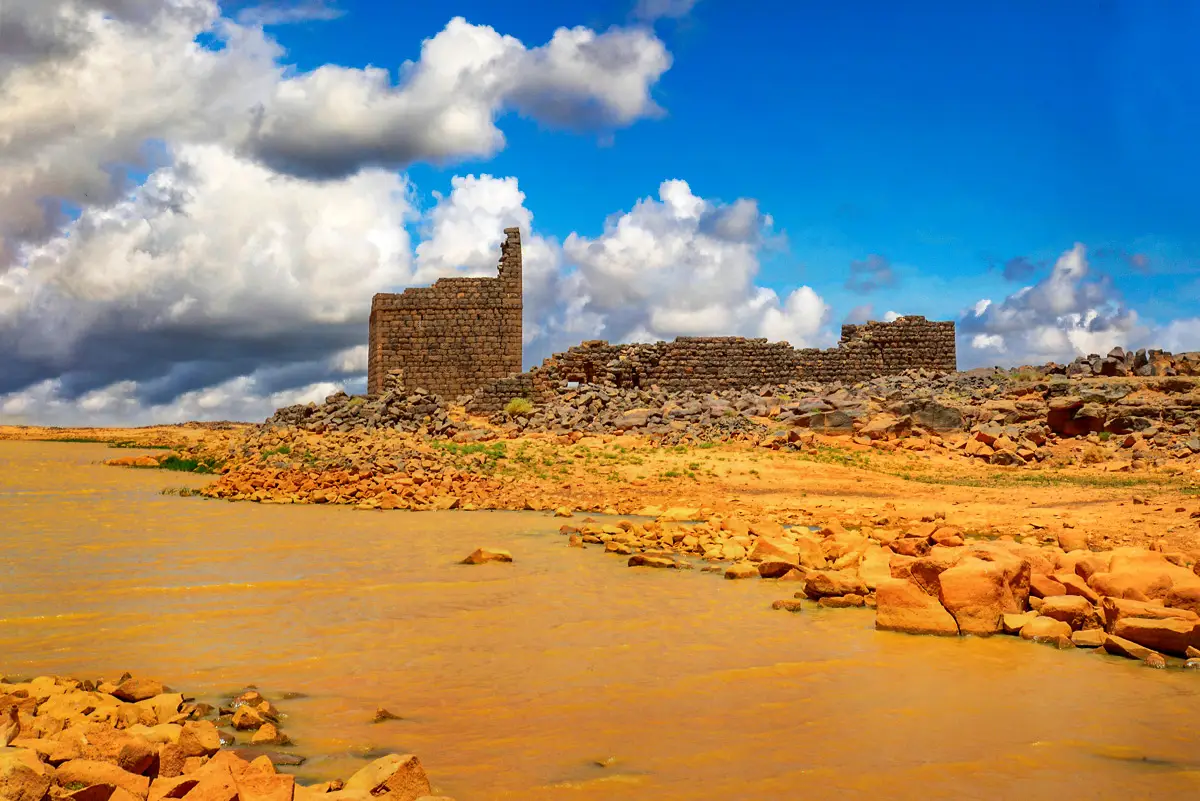
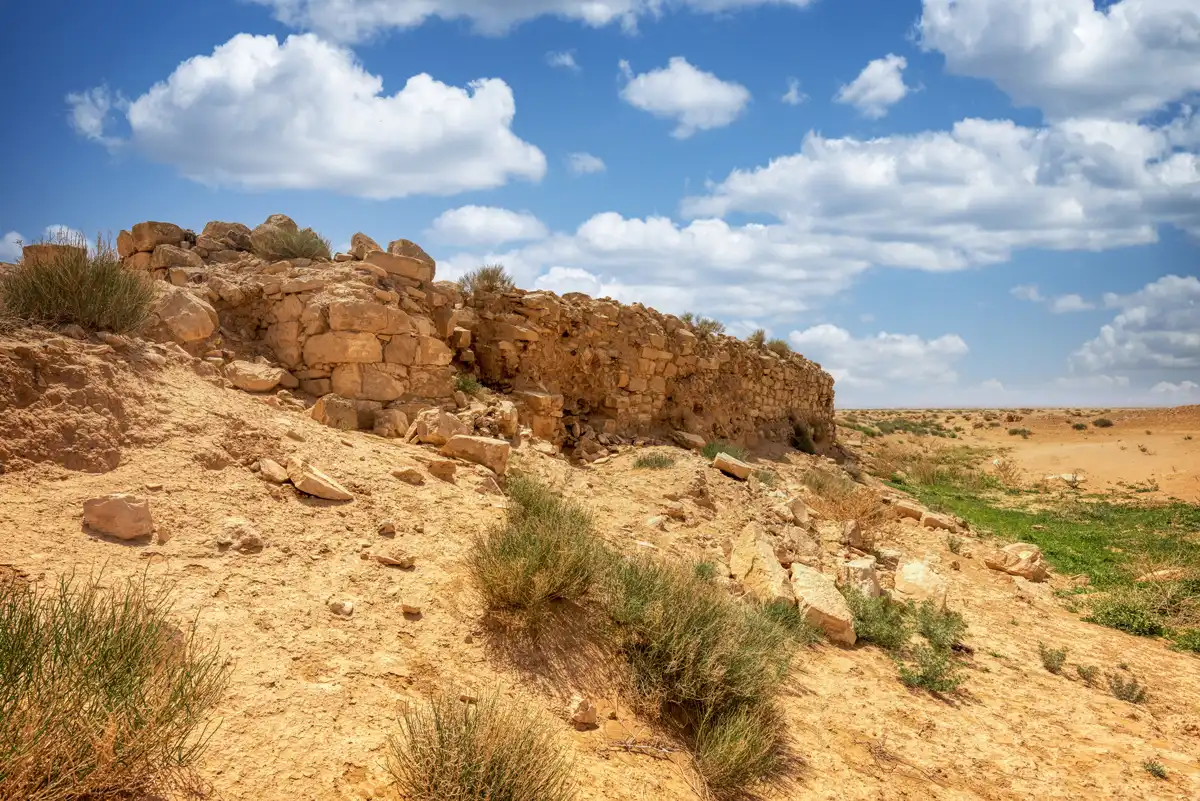
The settlement sits on the edge of Wadi Mshash. Walls across the wadi bed are probably dams, which held back the winter floods and suggest that the site was also a farming estate.
A second group of buildings, Mshash East, lies about 1.5 km away beyond a ridge, with a small square building, houses, cisterns and more dams.
Wadi MshashDamsMshash EastOpen steppe
Look for
- Stone lines across the wadi bed
- The ridge towards Mshash East
- Green patches where water collects
History & significance
A Roman post that became an Umayyad settlement
Mshash began as a small Roman-period post and grew into an Umayyad settlement in the 7th–8th centuries AD, probably a caravan halt and farming estate. Why it was abandoned in the 8th century is still an open question.
- 2nd–4th c.A small Roman-period post
- c. 700–750The Umayyad settlement at its height
- 1982–83Qasr entrance and bath excavated
- 2011–17German–Jordanian survey and study
 ProfileQasr Mshash: the full storyHistory, architecture, the water system and the timeline. About 3 min read.Read the profile →
Plan your visit
Everything you need to know before you go
Qasr Mshash lies off Highway 40 between Amman and Azraq, reached by an unmarked track across the steppe. You need a 4x4 and a driver who knows the way.
Good to know: the site is unstaffed and unsigned, with no facilities and no shade. It has been badly damaged by illegal digging, so watch your step around pits and open cisterns.
Opening hoursOpen accessUnstaffed site · visit in daylight
Entry ticketFreeNo ticket office
Time to visit20 minLonger if you walk to Mshash East
From Amman60 kmAbout 60 km east, the last part on a desert track
LocationWadi Mshash31.8131° N, 36.3157° EGet directions
Opening hours and prices checked October 2026. Spotted a change? Let us know
On site
What you’ll find at Qasr Mshash
Not on site: visitor centre, ticket office, toilets, designated parking, museum, guide, food & drinks, market / shop, hotels
Access: 4x4 needed
When to go
Spring and autumn are best. After winter rain the track can be muddy, and in summer there is no shade at all.
J
F
M
A
M
J
J
A
S
O
N
D
BestGood, cooler or warmVery hot
Tip: come in the morning or late afternoon, when low light picks out the lines of the walls in the flat ground.
Before you go
Services are limited out in the desert.
- Water and snacksNothing to buy on the way
- Sun hat and sunscreenVery little shade outside
- Comfortable shoesUneven, stony ground
- A 4x4 and a guideThe track is unmarked
- Toilet paperBring your own, just in case
Common questions
Quick answers before you set off.
Do I need a 4x4?
Yes. The site is reached by a rough track off Highway 40, and a driver who knows the way is essential.
Is there an entrance fee?
No. The site is unstaffed and free to visit.
Was Mshash a palace?
No. It was a working settlement with a small qasr, a bath, houses and water works, probably a caravan halt and farming estate. No ruler’s residence has been found.
Who built it?
Nobody knows. No dated inscription or coin has been found. The qasr began as a Roman-period post, and most of the buildings are Umayyad, of the 7th–8th centuries AD.
Can I combine it with other desert castles?
Yes. Qasr Al-Muwaqqar and Qasr Kharana are both close, and Qasr Amra is a little further east on Highway 40.
What should I wear?
Comfortable, closed shoes for uneven ground, and light clothing that covers your shoulders and knees, which is respectful in rural Jordan and protects you from the sun.
Combine with
Mshash lies between Amman and the castles of the Eastern Desert. Drive times are from Qasr Mshash and include the track.
Explore this site
More from Qasr Mshash
Panoramas, walk-throughs, photos and stories about this site.
ProfileQasr Mshash: history & architecture Photo albumQasr Mshash: An Umayyad Caravan Halt in Photos
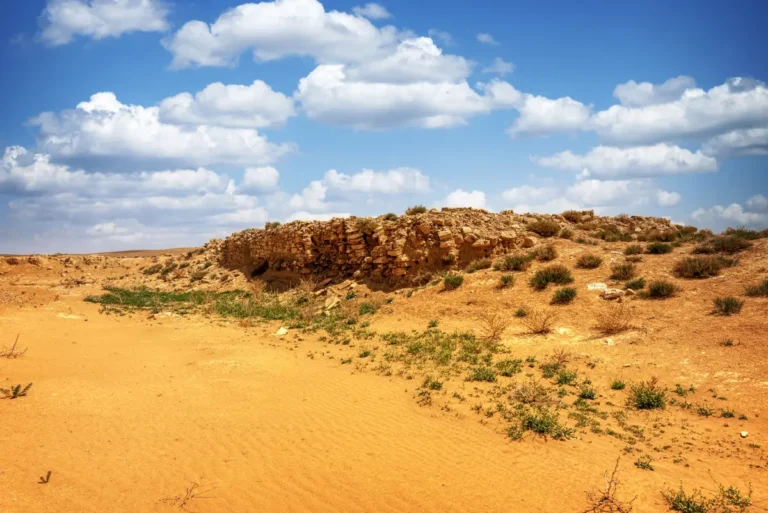 360°360° panoramaQasr Mshash: 360° Panorama
Nearby
Also in the Eastern Desert
From guide to visit
Explore the desert castles with a private guide
Mshash isn’t part of our tours. To see the desert castles nearby, including Qasr Kharana and Qasr Amra, join our Best of Desert Castles day tour from Amman.