
Beside the runways of Queen Alia Airport lies one of the oldest stopping places on the road from Damascus to Mecca. At Zizia — today al-Jiza — pilgrims found a fort and a vast reservoir of water, the largest of its kind in Jordan.
Where Is Qal’at Zizia?
Zizia lies at al-Jiza, the site of Queen Alia International Airport, about 30 km south of Amman. The Jiza station of the Hejaz Railway stands about 1 km from the airport, close to the fort.
Historical Context and Origin
The site has a long history. A Greek inscription records the repair of an earlier fort here in AD 580. In the early 13th century the geographer Yaqut described a village with a market and a reservoir, Birkat Zizia, and in the 14th century Ibn Battuta and Abu’l-Fida both listed Zizia as a halt on the Hajj road. In 1569 the Ottoman sultan ordered the governor of Damascus to repair the fort and its reservoir, so a fort was already standing by then. From the 17th century Zizia no longer appears regularly among the pilgrim stations.
Architectural Design
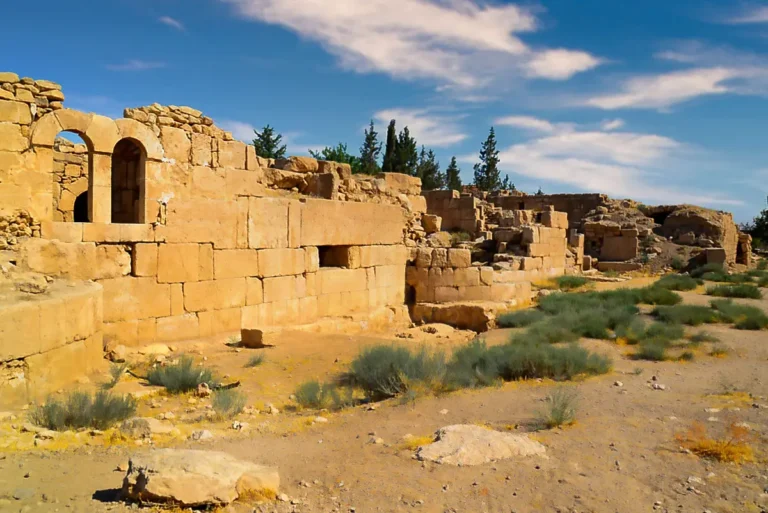
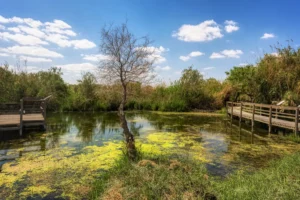
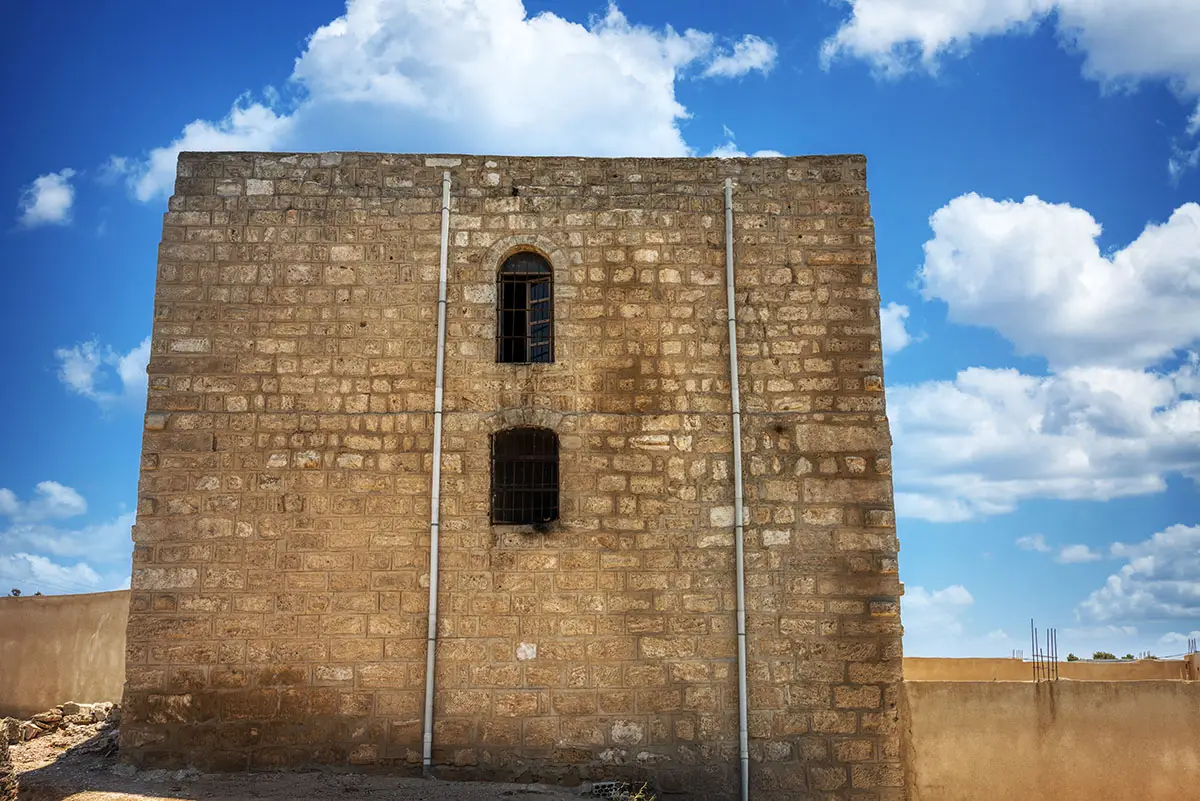
The most impressive structure is the reservoir: probably Roman, perhaps even Nabataean, in origin, it still holds about 68,000 m³ of water. A traveller around 1905 measured it at about 420 by 330 feet (128 × 100 m), with wide, shallow steps leading down to the water. The fort beside it was ruined in 1833 by the troops of Ibrahim Pasha and rebuilt later in the 19th century.
A Great Reservoir
Probably Roman in origin, still holding about 68,000 m³ — the largest of its age in Jordan.
A Long History
A Greek inscription records repairs to a fort here in AD 580.
Hajj Station
Listed as a halt on the pilgrim road by Ibn Battuta and Abu’l-Fida.
Bani Sakhr Seat
In 1881 the Bani Sakhr shaykh Sattam al-Fayez made the fort his base.
The Fort of the Bani Sakhr
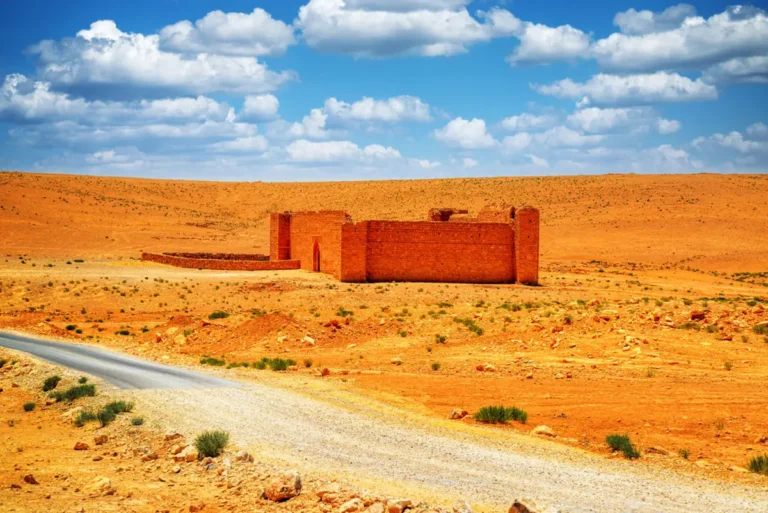
In 1881 Sattam al-Fayez, shaykh of the Bani Sakhr tribe, made Zizia his base and restored the fort. The traveller Gertrude Bell later wrote that it was furnished “with a splendour unknown in the desert”. In the 20th century the fort served the Arab Legion, and today it is a police station.
Destruction, Rediscovery, and Restoration
Unlike most Hajj forts, Zizia never fell out of use: from the Bani Sakhr it passed to the Arab Legion and then to the Desert Police. The archaeologist Andrew Petersen studied it in his survey of the Hajj route in Jordan.
Visiting Qal’at Zizia Today
The fort is not open to visitors: it serves today as a police station. It can only be seen from outside.
Further reading: AramcoWorld — Guardians of the Pilgrim Wells (2004).