













For pilgrims travelling from Damascus to Mecca, Qatrana was one of the great water stops of the desert. Sultan Suleiman the Magnificent built a fort here beside a huge reservoir, and today the restored fort is the most accessible of Jordan’s Hajj forts, right beside the Desert Highway.

Where Is Qal’at Qatrana?
The fort stands in the town of Qatrana, about 90 km south of Amman on the Desert Highway and a few kilometres north of the road to Karak. It is an easy stop on the way to Petra, Wadi Rum or Aqaba.
Historical Context and Origin
Qatrana was a station on the Syrian Hajj road long before the fort: a writer of 1520 describes a khan here, already partly ruined. The present fort was built under Sultan Suleiman the Magnificent in the mid-16th century; sources give both 1531 and 1559 for its construction. In the 18th century box machicolations were added to strengthen its defence. The Hajj caravans were still vulnerable: in 1757 a Bedouin raid on the returning caravan struck at Qatrana and other stations, and thousands of pilgrims died.
Architectural Design
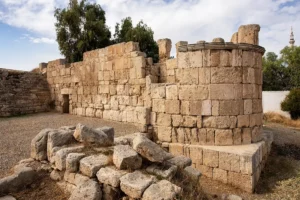
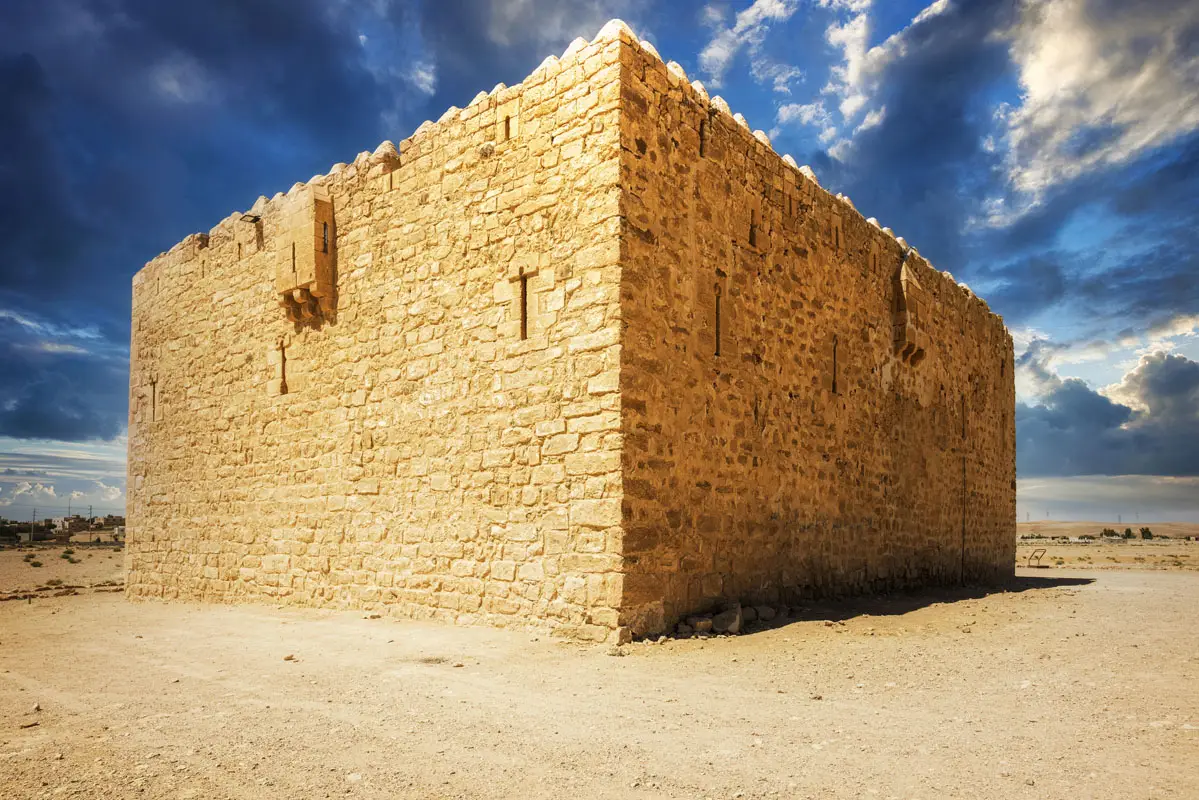
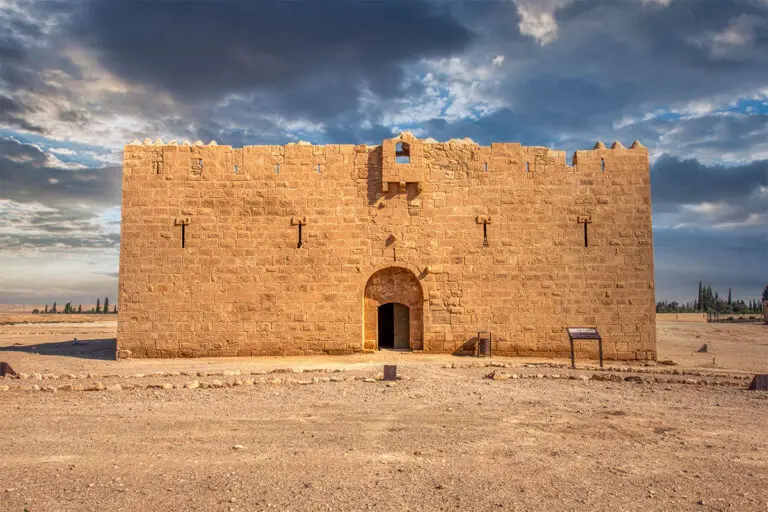
The fort is a compact rectangle of about 22 × 17 m and about 10 m high, built of limestone and basalt and plastered inside and out. Its gate, in the middle of the south wall, leads through a vaulted vestibule into a narrow courtyard. Eight rooms surround the courtyard on the ground floor and seven on the first floor, with a stair to the roof. Crenellations crown all four walls, the walls are pierced by arrow slits, and stone box machicolations project over the gate and walls.
The Fort
A two-storey fort of limestone and basalt, about 22 × 17 m.
The Great Reservoir
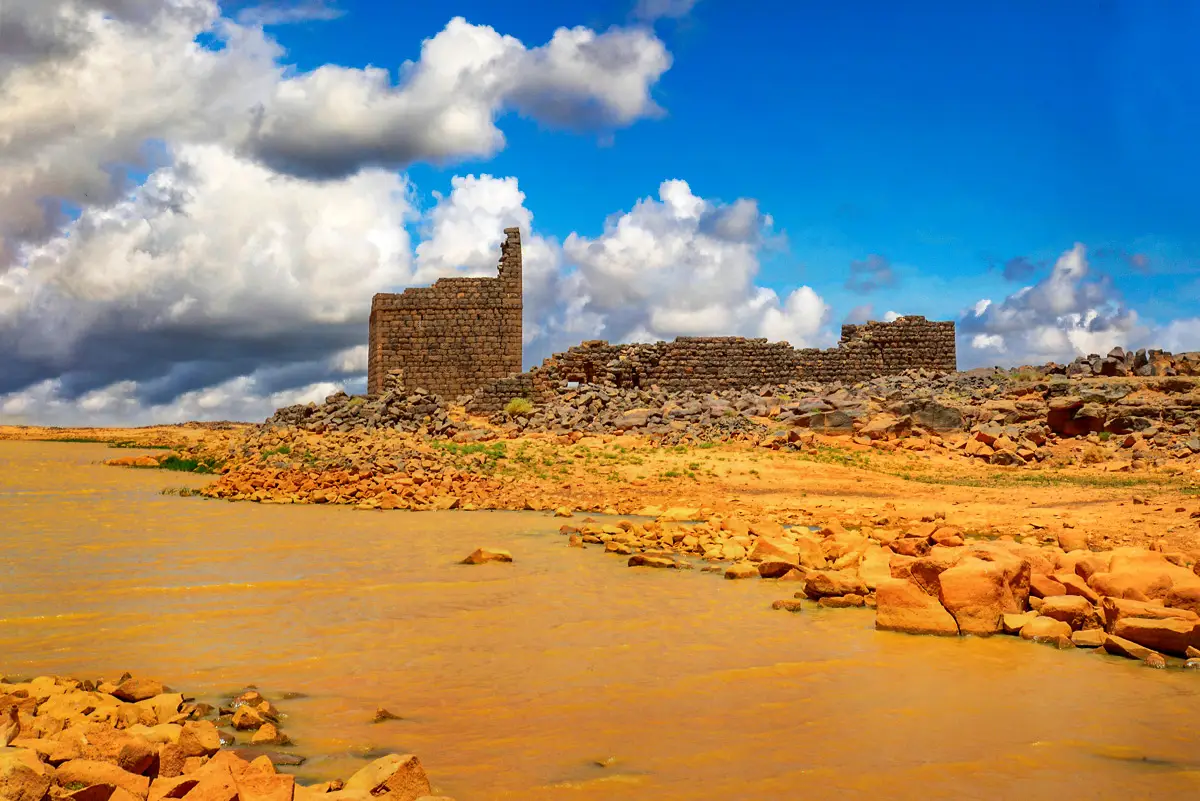
A pool about 70 m square that watered the Hajj caravan.
Box Machicolations
Projecting stone boxes added in the 18th century to defend the walls.
Hejaz Railway
A historic station with old wagons nearby.
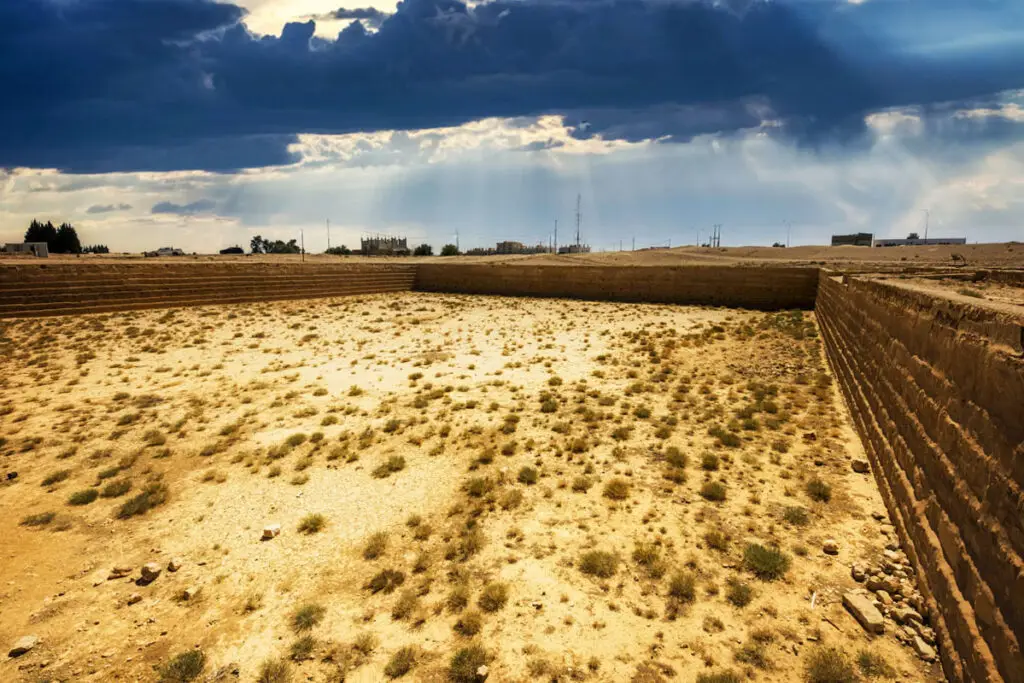
The Great Reservoir
Beside the fort lies a reservoir about 70 m square and over 5 m deep, fed by two conduits from an earth dam across the wadis, with a settling basin to clear the water. The water system may be older than the fort. A well in the courtyard drew on the same supply. In the early 20th century the Hejaz Railway was built past Qatrana, and its station still stands nearby.
Destruction, Rediscovery, and Restoration
Travellers from Evliya Çelebi to Charles Doughty described Qatrana. In the 20th century the fort was abandoned, and rumours of hidden gold led to damage. The Department of Antiquities restored it, and in 2025 the government launched a project to develop the site with a visitor centre.
Visiting Qal’at Qatrana Today
A new visitor centre with a ticket office and information stands now welcomes visitors, and the fort can be visited without restrictions. Entry is currently free for everyone. Allow about 30 minutes for the fort and the reservoir. See our Qal’at Qatrana travel guide for practical details.
Further reading: Discover Islamic Art — Qatrana Fortress (M. Najjar); Petersen, The Medieval and Ottoman Hajj Route in Jordan (2012).