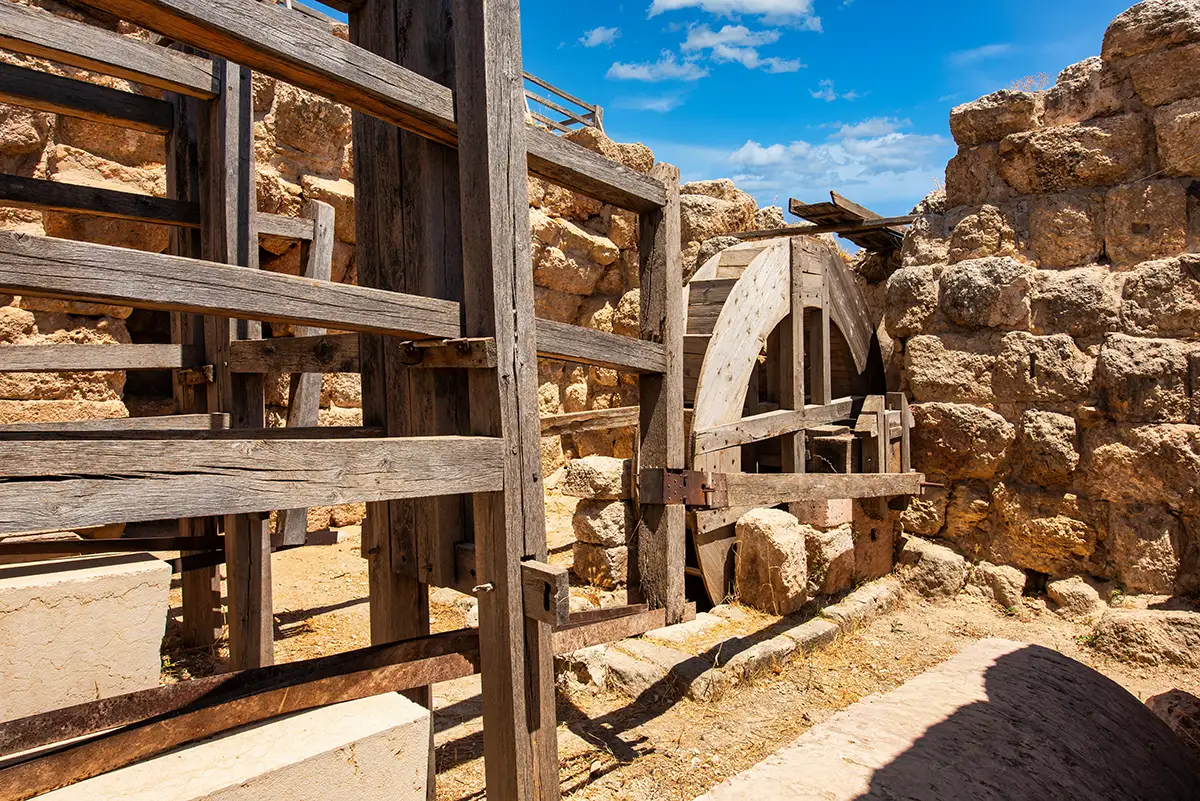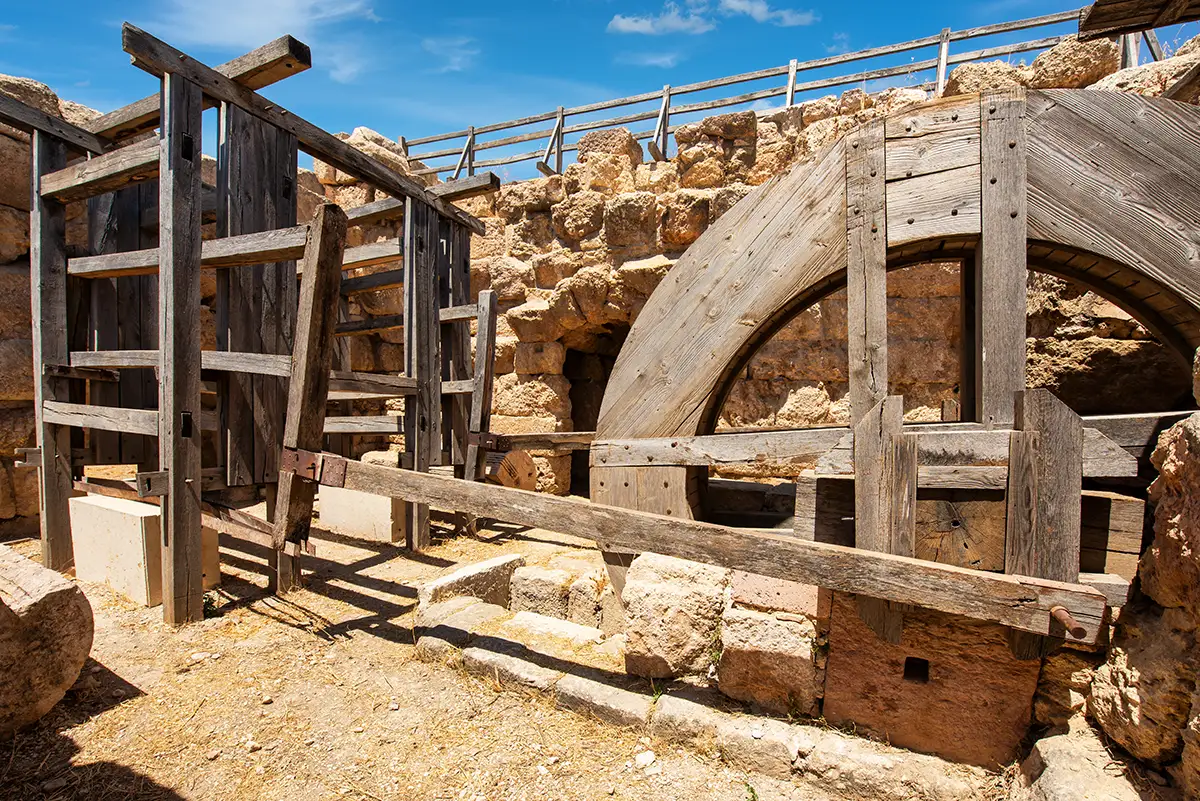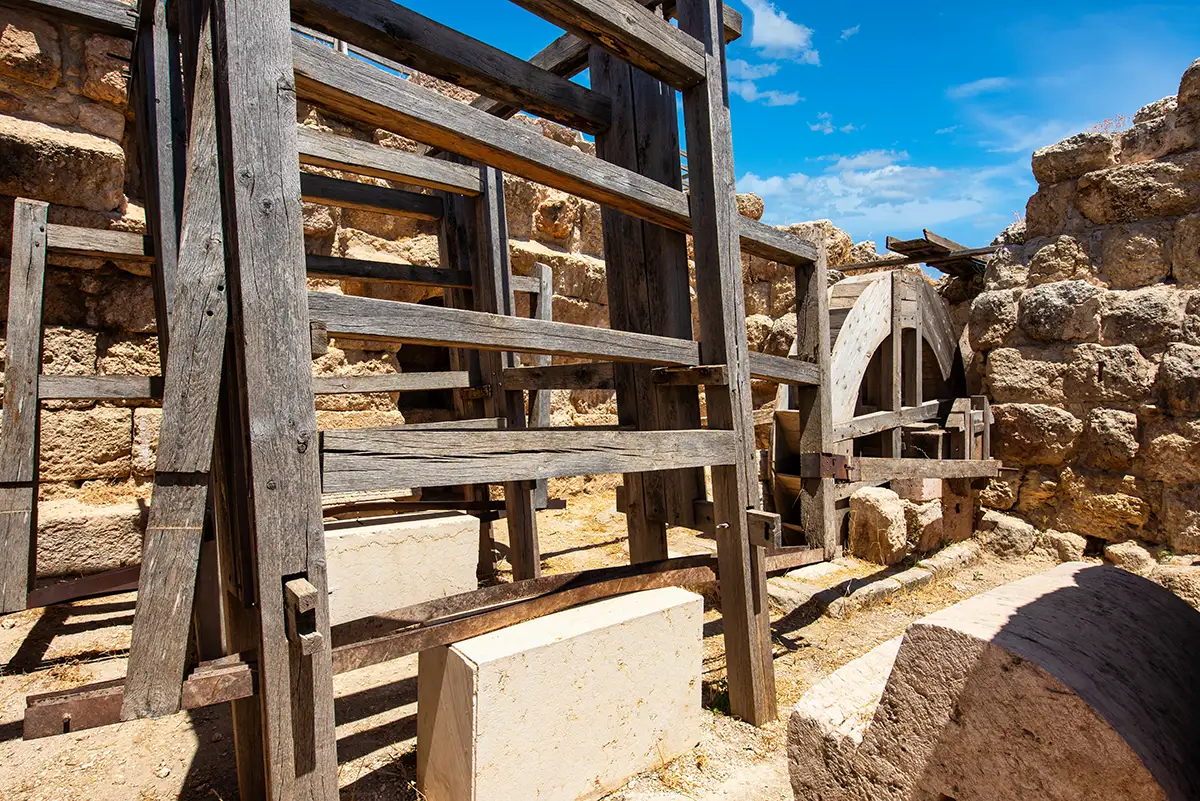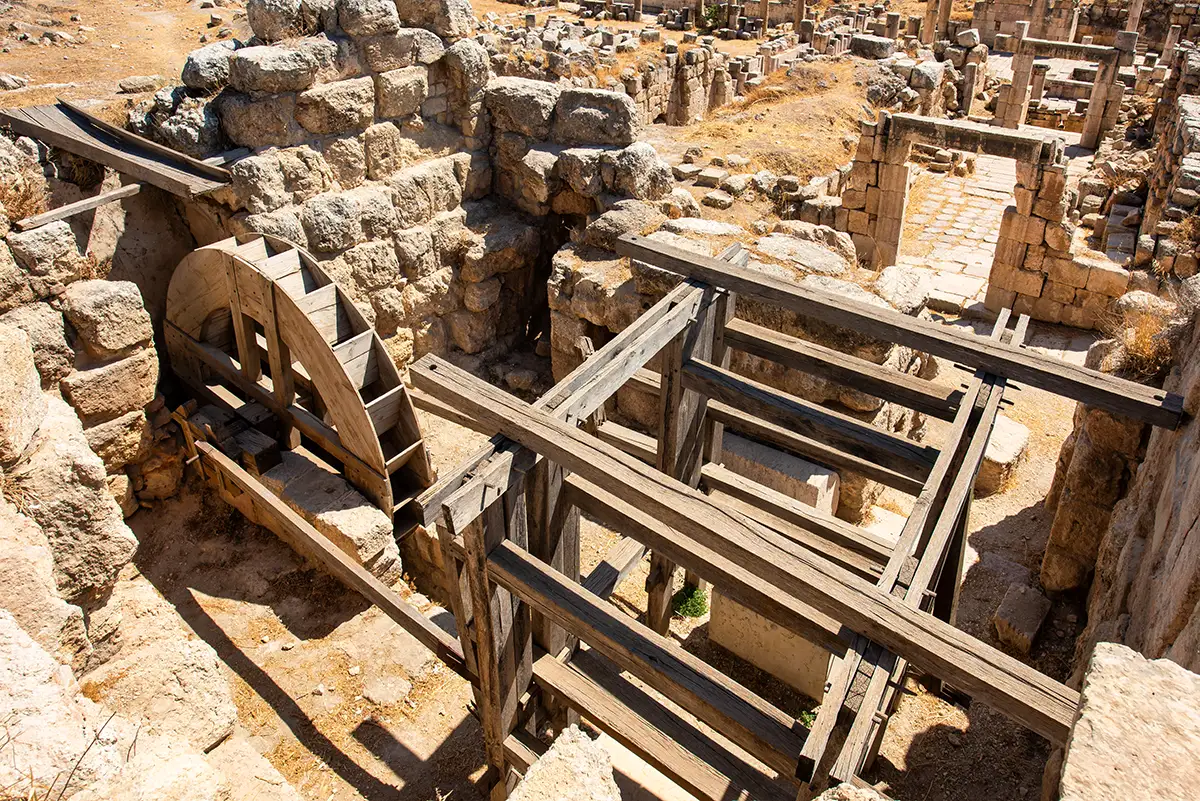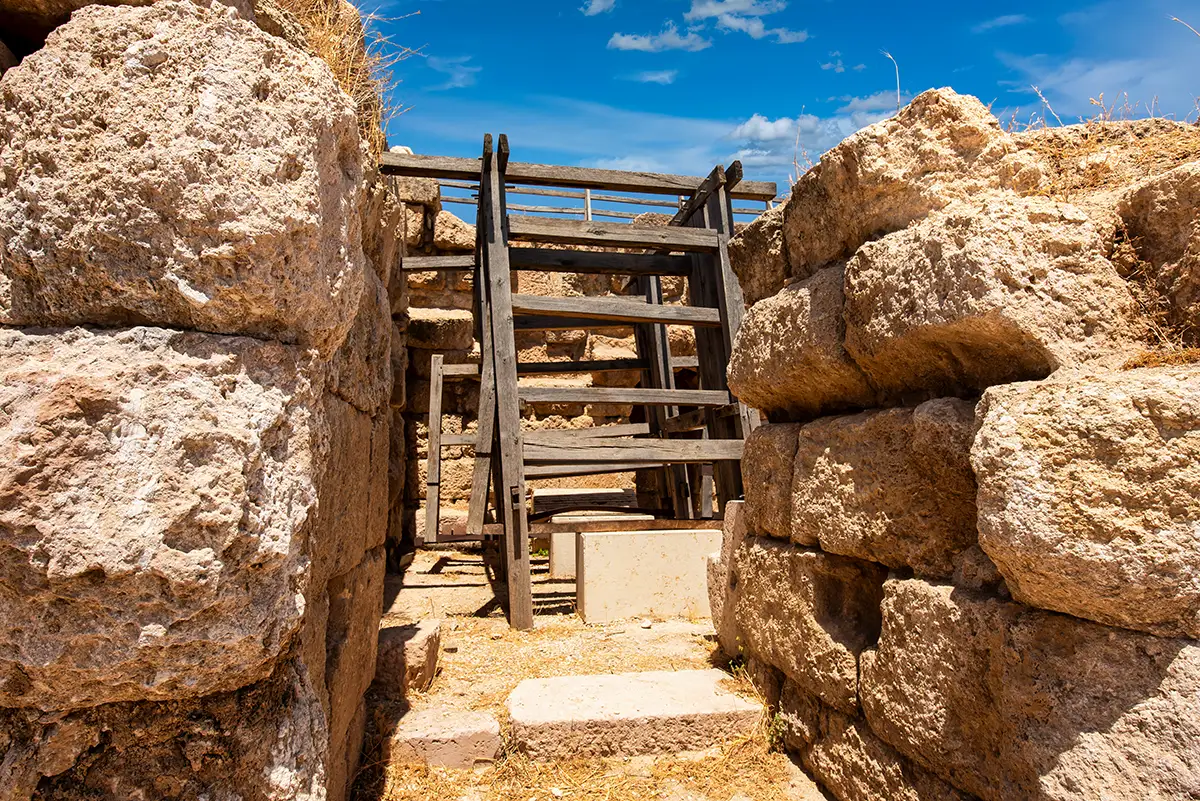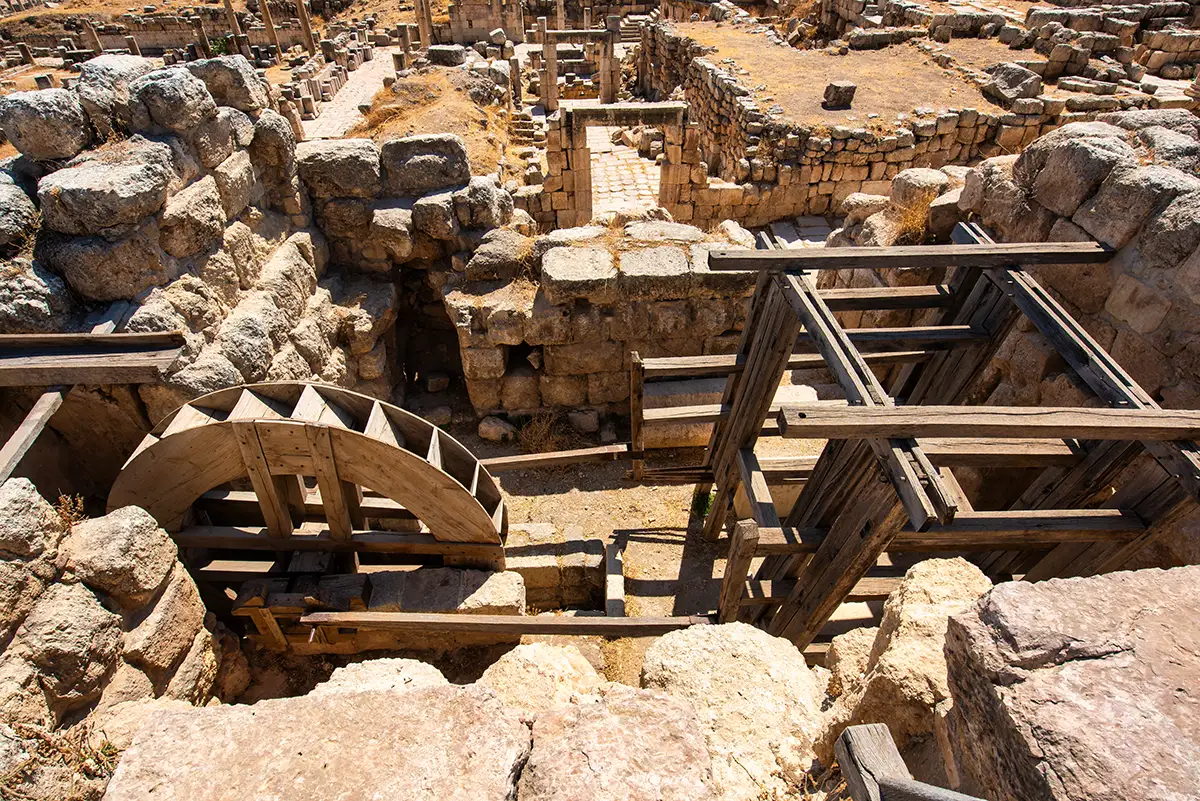


Tucked into the Sanctuary of Artemis is one of Jerash’s most surprising discoveries: a 6th-century machine that used flowing water to saw stone. Around AD 550 a water wheel here drove two four-bladed saws, cutting limestone blocks and column drums — rare physical evidence of mechanised work in late antiquity.
Where Is the Hydraulic Stone Saw Machine?
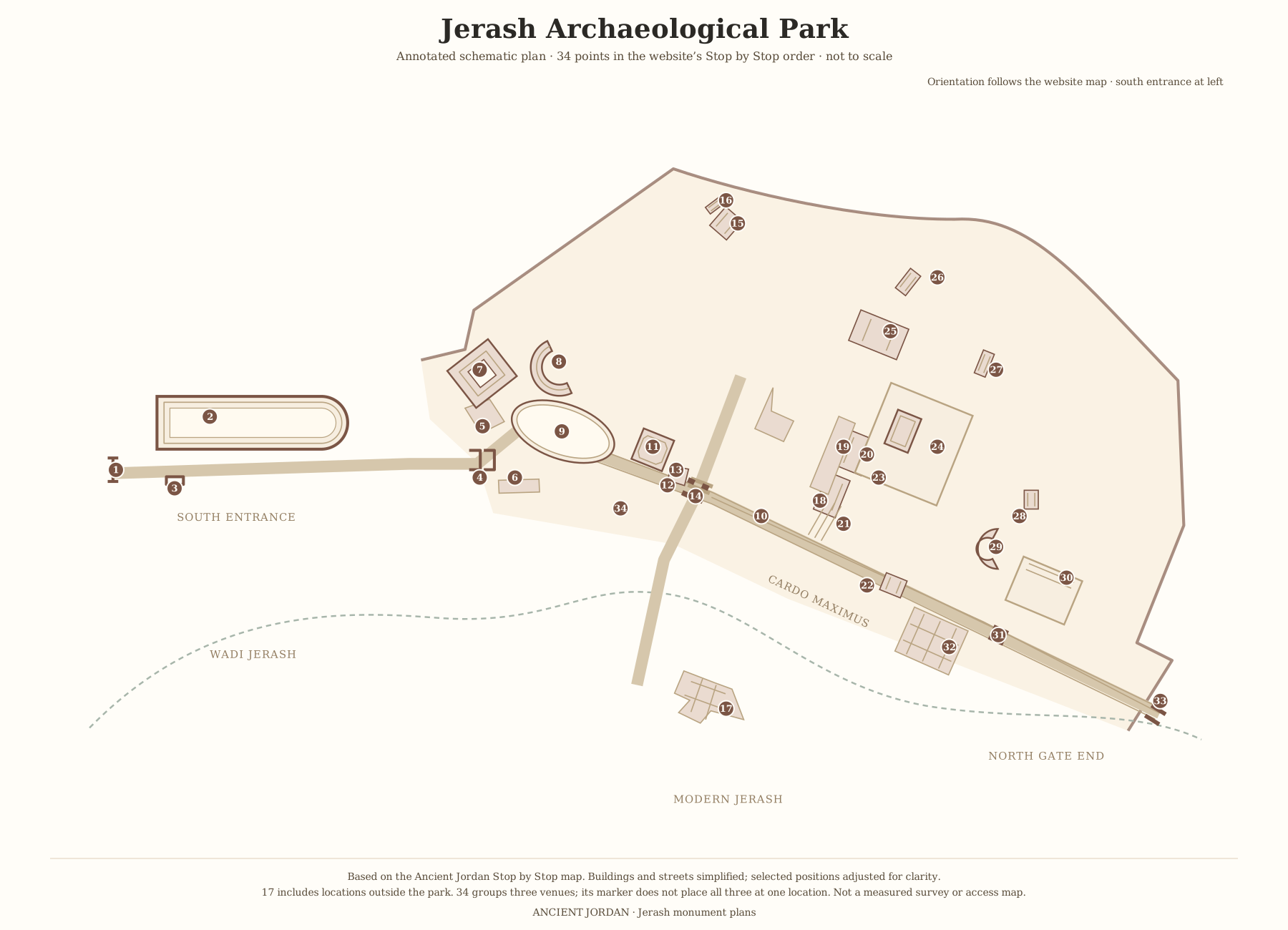
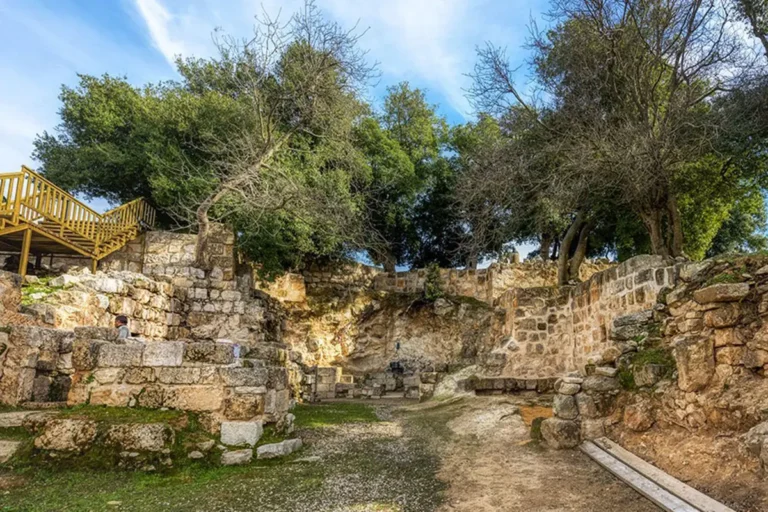
The machine was installed in a room of the Sanctuary of Artemis, Jerash’s great sacred complex west of the Cardo Maximus. The sanctuary’s water channels and reservoirs could supply the workshop below.
By then the cult of Artemis had ended, and the old precinct had become a place of workshops and stone-cutters.
Historical Context and Origin
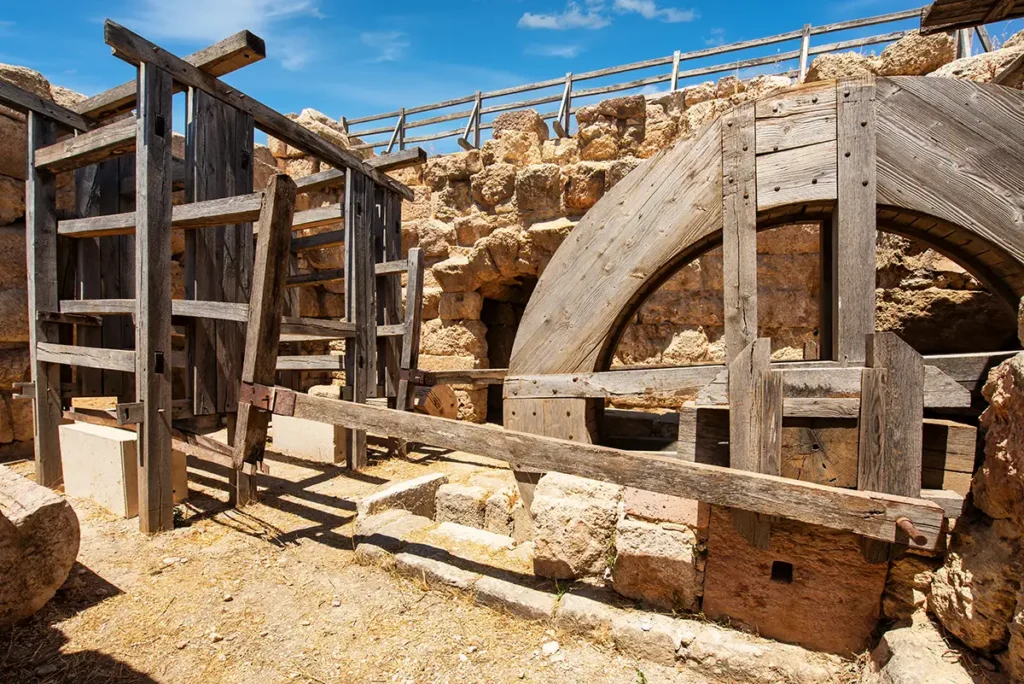
Around AD 550 a sawmill was installed here: a water wheel driving two saws that sliced limestone blocks and column drums, leaving their marks on the stone. In the late Byzantine period the wooden machinery decayed, but the stone water channels survived.
Excavators found the channels, reservoirs and saw-marked drums in the 1920s and 1930s. In the 2000s engineers worked out how the wheel, crank and saws operated, and today a full-size replica shows the machine in action.
Architectural Design
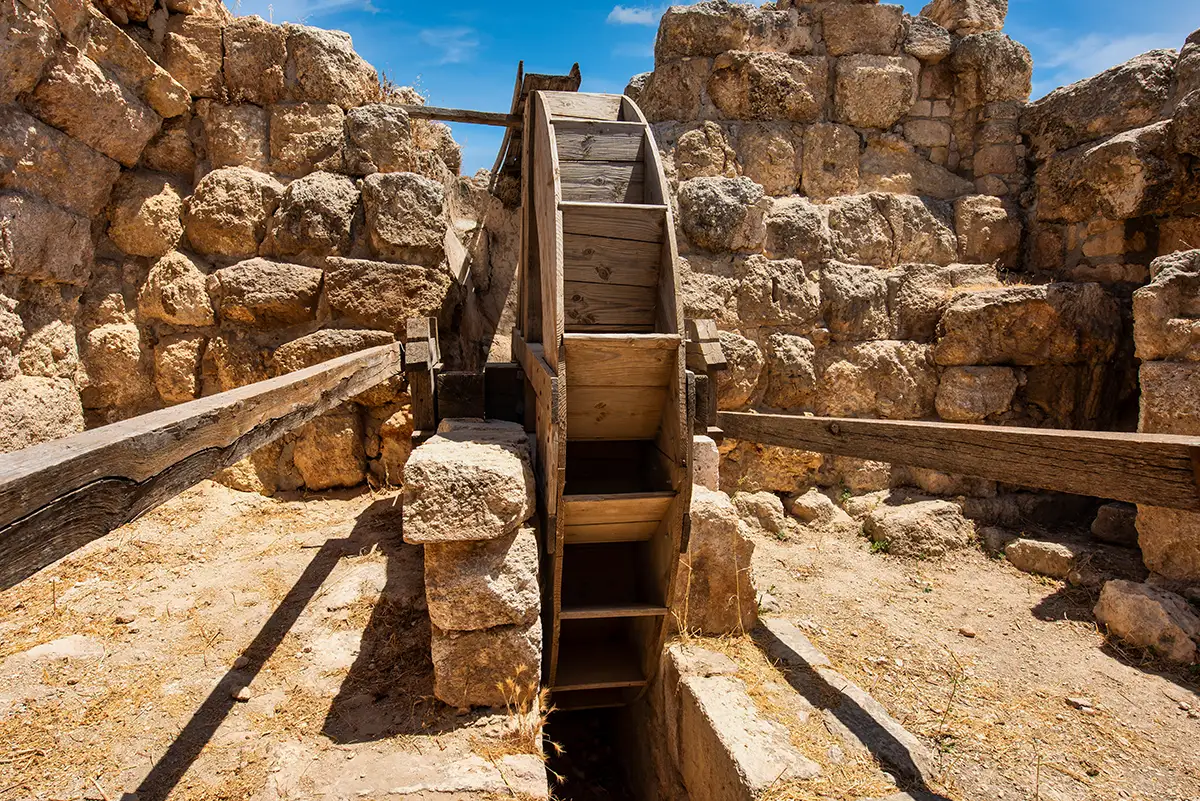
The workshop, about 8.65 by 6.65 metres, was built around the flow of water. Water arrived through two channels into a large cistern, overflowed into a smaller reservoir and dropped about four metres down a vertical channel to turn a bucket wheel in a mill race. A crank and connecting rod converted the wheel’s rotation into the back-and-forth stroke of two saw frames, each with four blades.
The Water Supply
Two channels fed a cistern and a smaller reservoir; the water then fell about 4 m to drive the wheel.
Wheel and Crank
A crank and connecting rod turned the wheel’s rotation into the back-and-forth movement of the saws.
Two Saw Frames
Two frames, each with four parallel blades, cut several slabs at once.
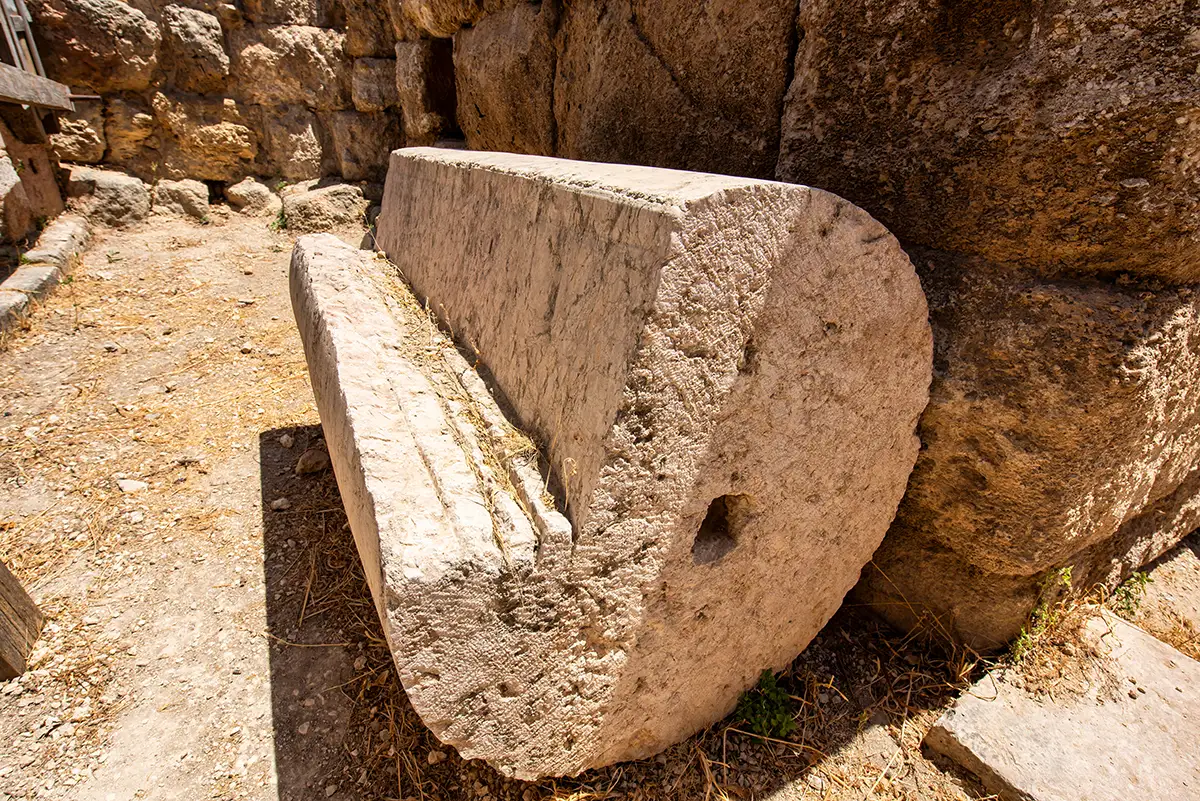
Saw-Marked Drums
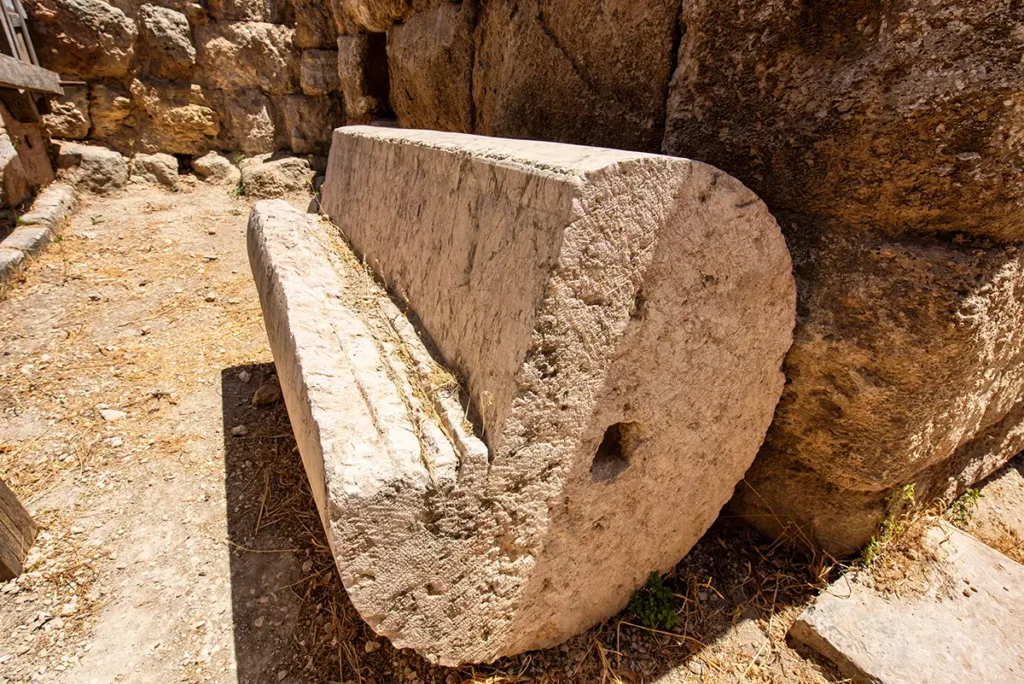
Limestone column drums with even, parallel grooves are the direct evidence of the machine at work.
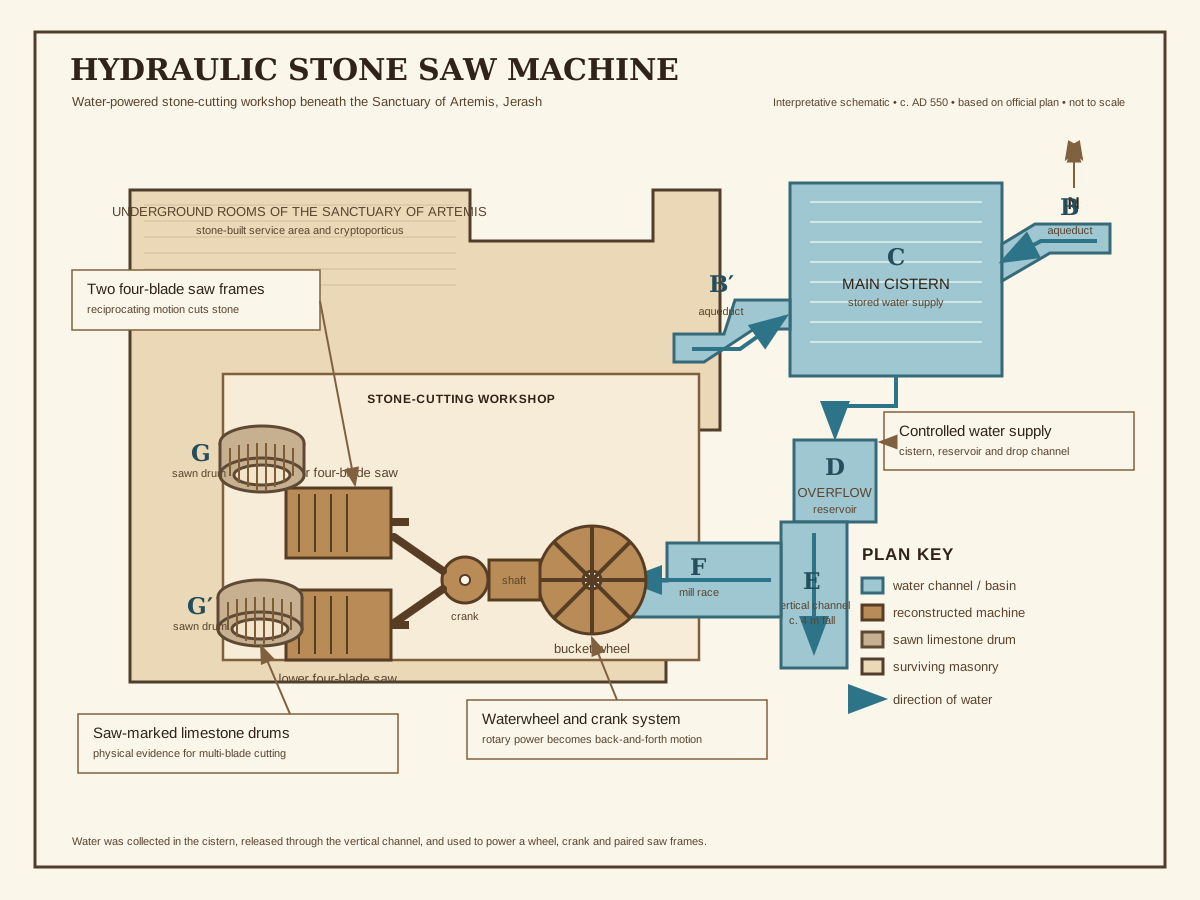
jerash-hydraulic-stone-saw-machine-schematic
Tap the drawing to open it full size.
Open drawingDiscovery and Reconstruction
The wooden wheel, frames and blades did not survive, so the masonry and the saw marks are the main evidence. Based on them, a working replica was made in France and assembled at Jerash. The site board calls it the earliest machine of its kind found to date; at the very least it is among the clearest evidence for water-powered stone sawing in the ancient world.
Visiting the Hydraulic Stone Saw Machine Today
Trace the path of the water — from the channels and cistern down to the mill race — and then look at the replica to see how the wheel drove the saws. Finish with the column drums: their parallel grooves are the machine’s own signature.
The workshop is open to the sky, with little shade. It is a short stop within a visit to the Sanctuary of Artemis, and a good reminder of the engineering behind the city’s monuments.