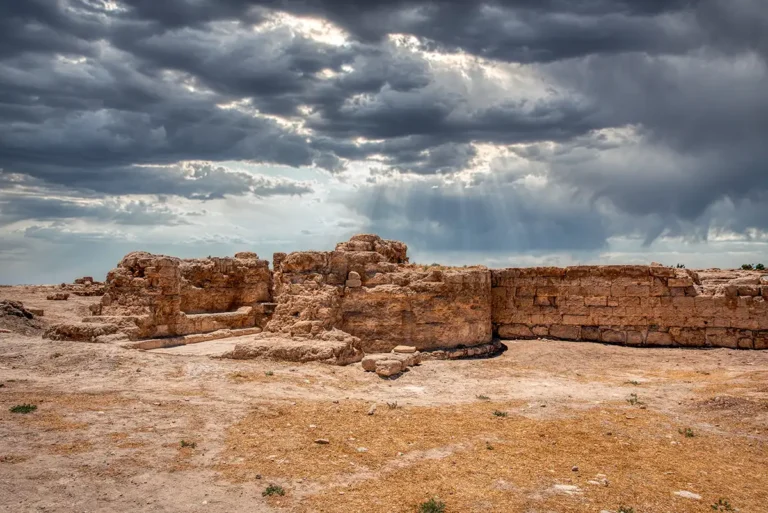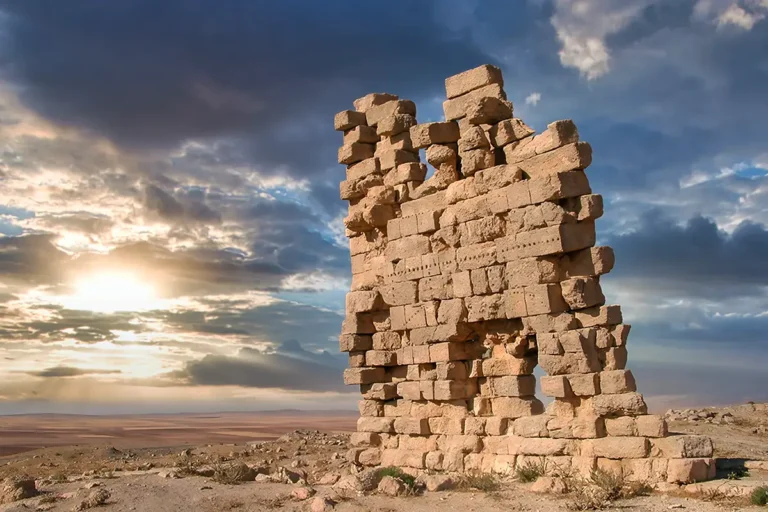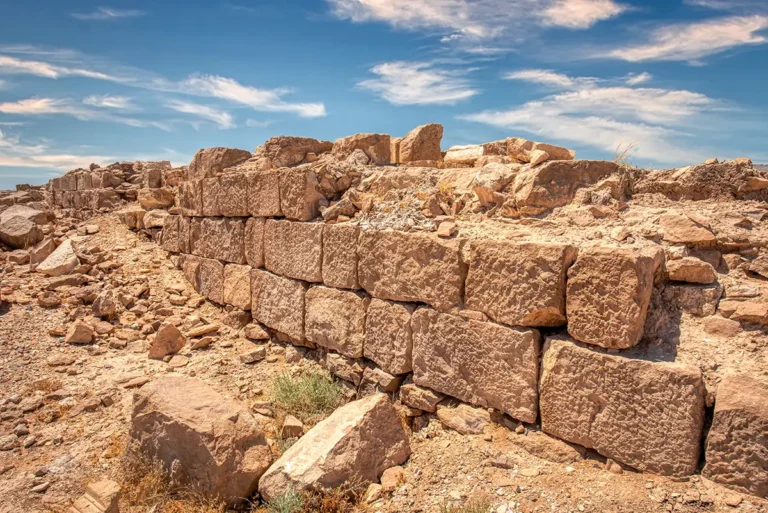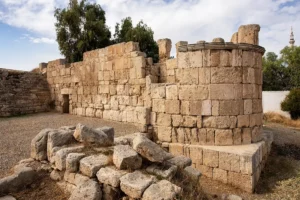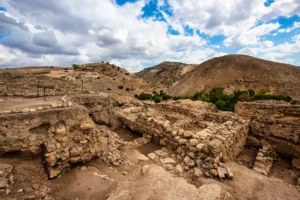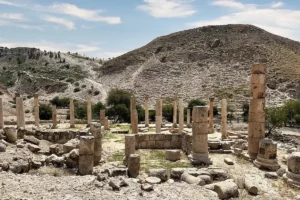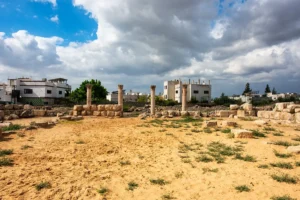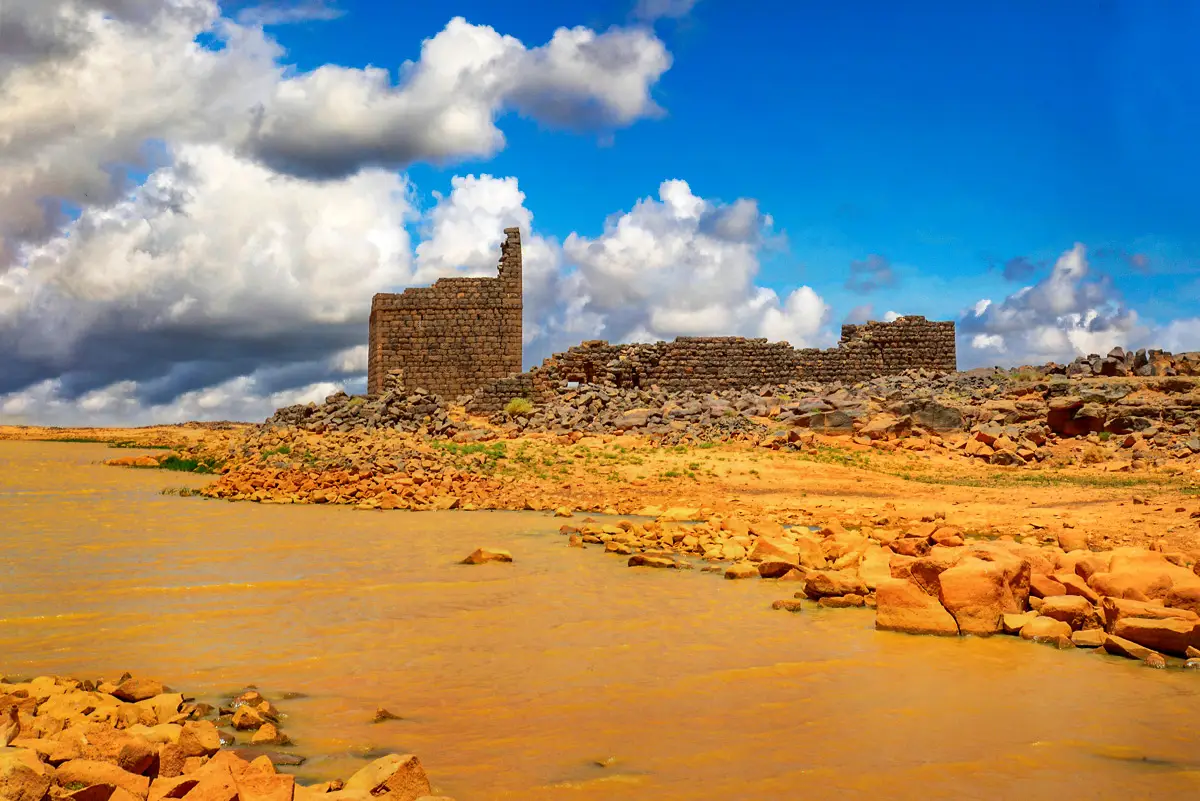












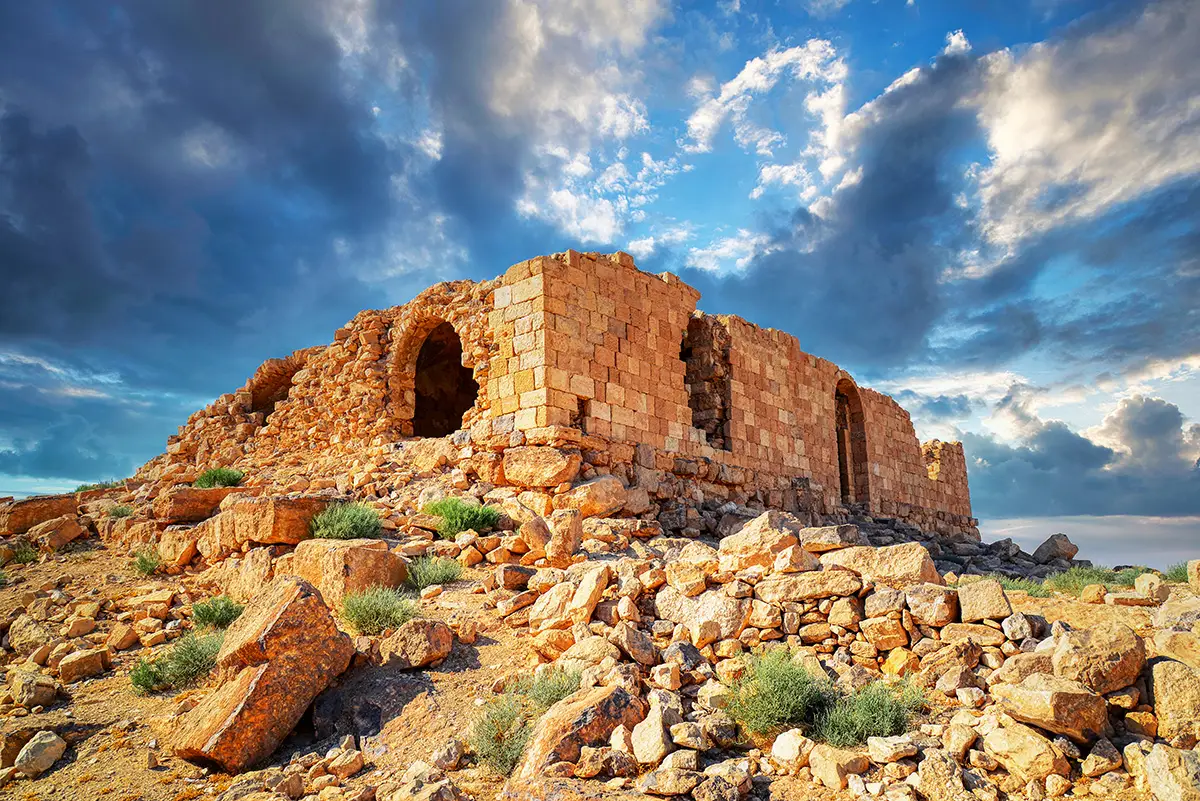

Mhay is a farming village on the southern Karak plateau, and like many villages here it stands on top of a much older settlement. Its qasr — “castle” — is a stone building among the houses, and the fields around the village have given up dozens of Greek tombstones of the Byzantine period.
Where Is Qasr Mhay?
Mhay (also written Muhay or Mhiyy) is in Karak Governorate, about 26 km south-east of Karak, on the road from the Desert Highway towards Dhat Ras. The qasr stands within the village; the Byzantine cemeteries lie to the north-west and south-west.
Historical Context and Origin
The village occupies the site of a large ancient settlement in Moab. An archaeological catalogue records a Nabataean temple and a Byzantine church at Mhay, although their identification with the surviving buildings remains unclear. The best-documented period is the Byzantine: the two cemeteries show a Christian community living here in the 6th century AD.
Architectural Design
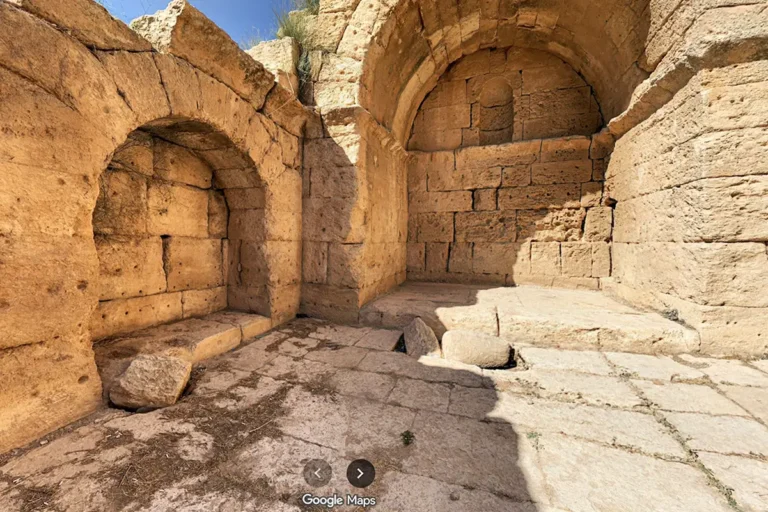
The qasr is a stone building of several rooms, with an inner courtyard and a staircase; photographs from 1993 show a wooden ceiling and a carved relief of an antelope. It was photographed by Edith Dunn for her study of traditional village architecture in Jordan. Neither its original function nor its date of construction has been established.
An Ancient Mound
The village of Mhay is built over a large ancient settlement in the land of Moab.
Greek Tombstones
At least 68 Greek-inscribed tombstones come from two Byzantine cemeteries.
Porphyria’s Stele
One stele, for Porphyria daughter of Sozomenos, is dated AD 577/578.
The Historic Qasr
A stone building with a courtyard and stair, recorded in 1993 as historic village architecture.
The Greek Tombstones of Mhay
In the 1950s R. Canova published at least 68 Greek-inscribed tombstones from the two cemeteries of Mhay. One stele commemorates Porphyria, daughter of Sozomenos, and is dated AD 577/578. The inscriptions were re-examined in 2020 by J. Aliquot and Y. al-Shdaifat.
Destruction, Rediscovery, and Restoration
The Byzantine cemetery and the ruins were photographed in 1988, and the qasr in 1993, for the archives of the American Center of Research in Amman. No excavation of the site has been published.
Visiting Qasr Mhay Today
The qasr stands in a living village; please respect the privacy of the residents. Thirty minutes is enough, and Mhay is easily combined with Dhat Ras on the same road.
Further reading: ACOR archive — Qasr Mhay (Edith Dunn, 1993); el-Khouri, “Krise und Kult / Crisis and Cult”.