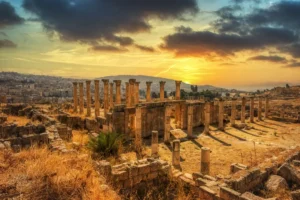
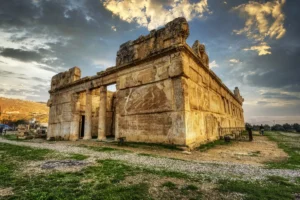
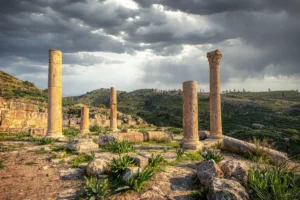
Jerash is best experienced as more than a collection of famous Roman ruins. Before and during your walk through the ancient city, three interpretive stops help turn scattered stones into a coherent story: the Jerash Visitor Centre, the Sanctuary of Zeus Exhibition, and the Jerash Archaeological Museum.
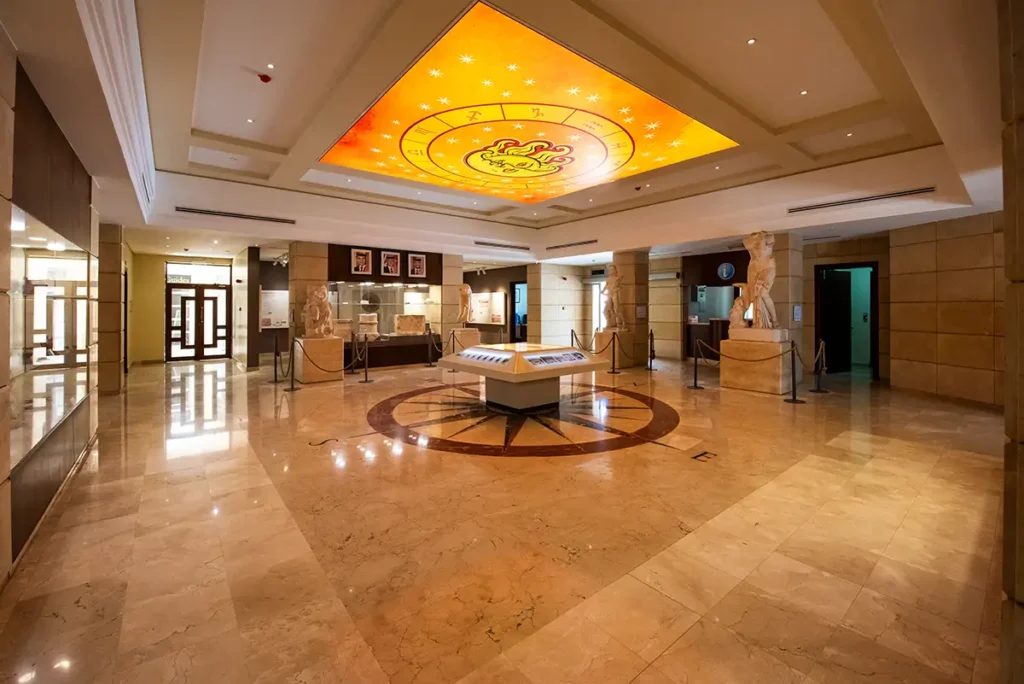
Together, they explain the city at three different scales. The Visitor Centre introduces the whole archaeological park and its long history. The Sanctuary of Zeus Exhibition focuses on one of Gerasa’s oldest and most important sacred landscapes. The Archaeological Museum brings the city’s everyday life into view through objects—coins, pottery, jewellery, inscriptions, sculpture and mosaics—from the Neolithic period to the Islamic centuries.
At a Glance
Jerash Visitor Centre: The best place to begin; provides maps, orientation, guides and a short introduction to the site.
Sanctuary of Zeus Exhibition: A small interpretive display within the vaulted substructure of the Sanctuary of Zeus, explaining the temple precinct and its archaeological discoveries.
Jerash Archaeological Museum: The main museum for objects from Jerash and its surrounding region, arranged broadly in chronological order.
Best approach: Start at the Visitor Centre, explore the ruins, pause at the Sanctuary of Zeus Exhibition when visiting the Oval Plaza and Temple of Zeus, then allow time for the museum before leaving.
First Impressions
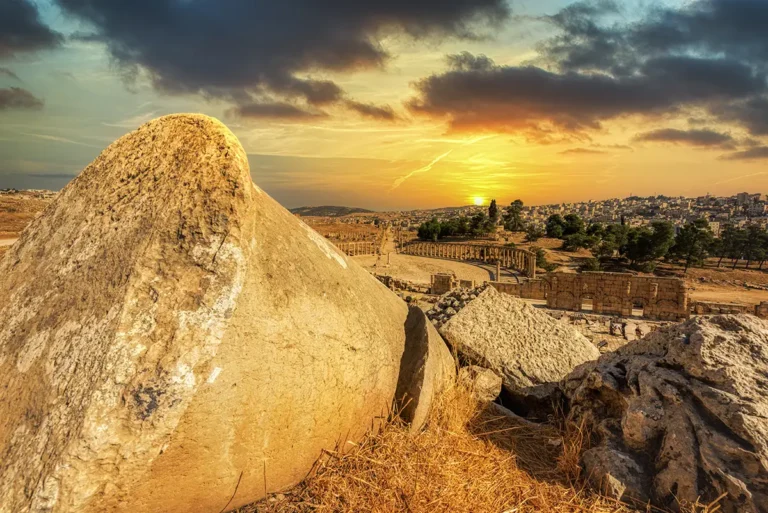
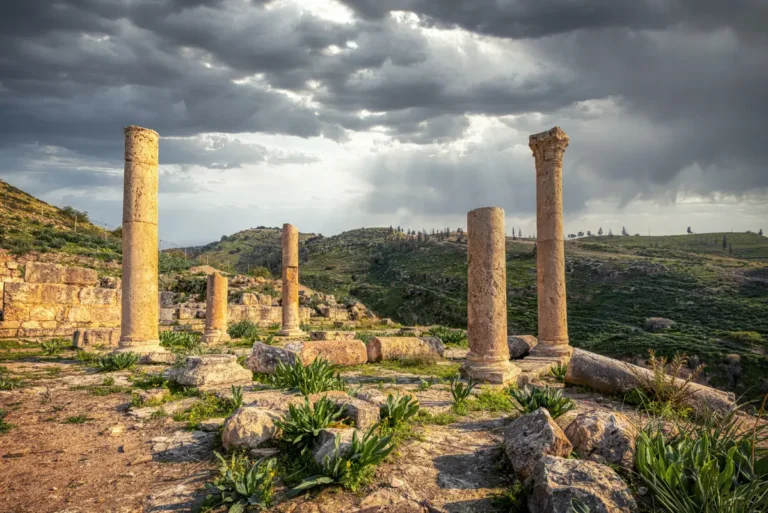
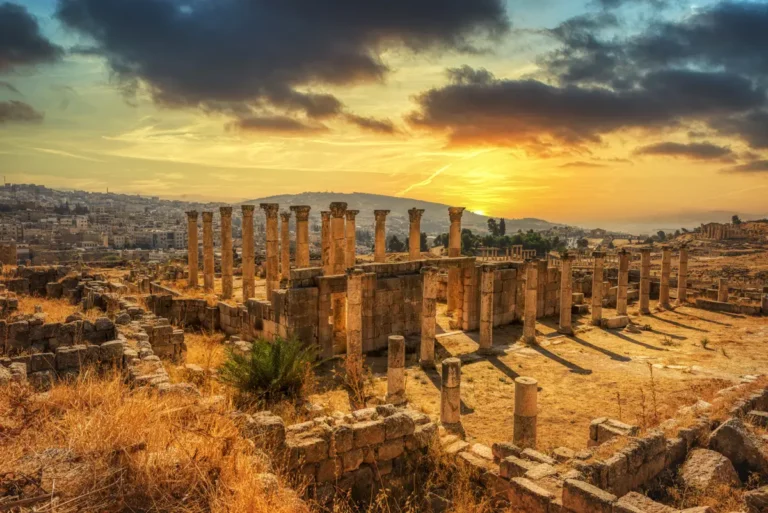
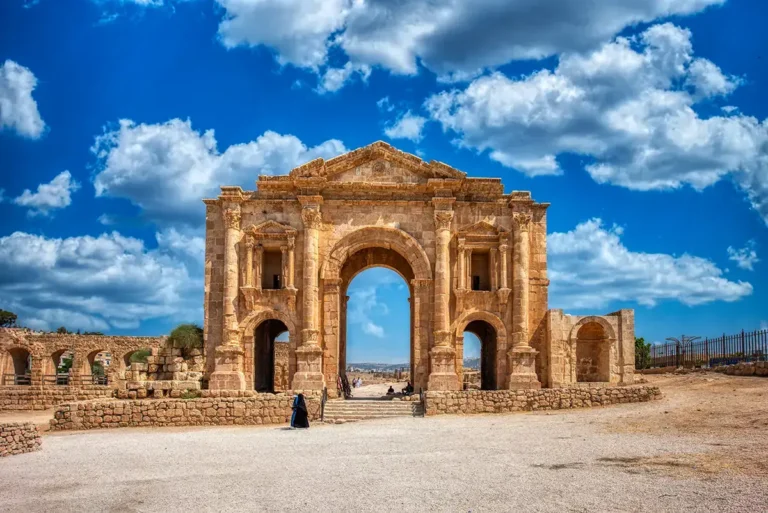
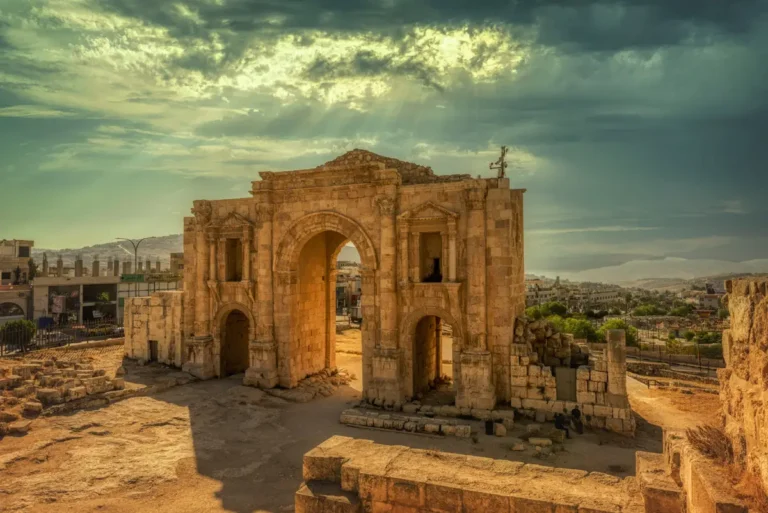
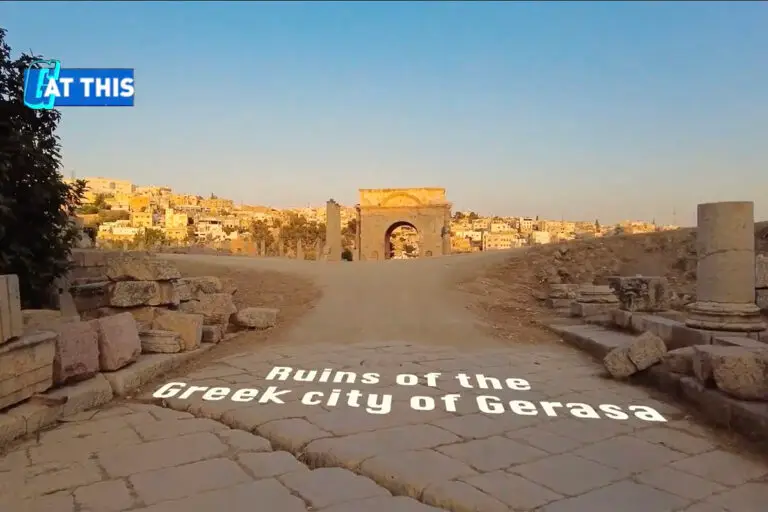
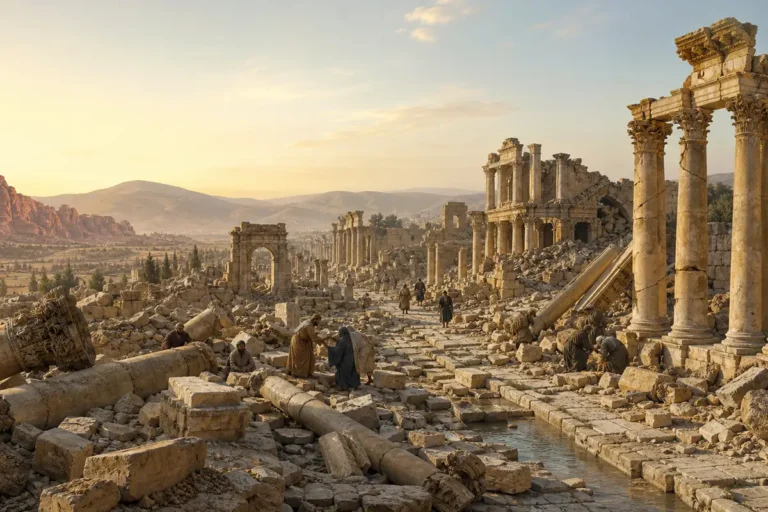
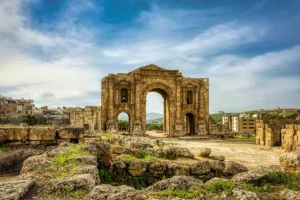
Jerash can feel overwhelming on a first visit. The monumental scale is immediate: Hadrian’s Arch, the Hippodrome, the Oval Plaza, theatres, temples and the long Cardo Maximus all compete for attention. The three interpretation spaces provide useful pauses between those grand views.
They also reveal a different Jerash. Instead of looking only at columns and façades, visitors can follow the city’s development from early settlement to Roman prosperity, Byzantine transformation and Islamic occupation. The museums and exhibitions make it easier to understand that Gerasa was not frozen in one Roman moment; it was a living city that changed for centuries.
Jerash Visitor Centre
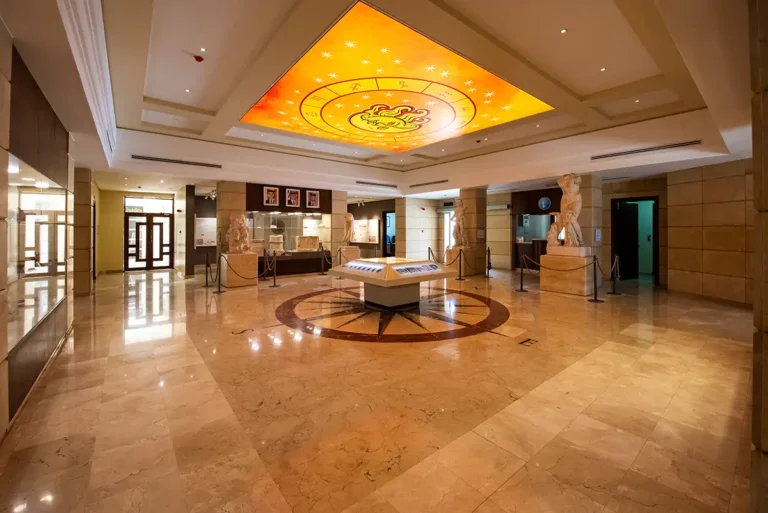
The Visitor Centre is the natural starting point for a visit to the archaeological park. It was established in the early 1970s and rehabilitated in 2015. Its role is practical as well as interpretive: visitors can obtain site maps, route information, brochures and hire a local guide.
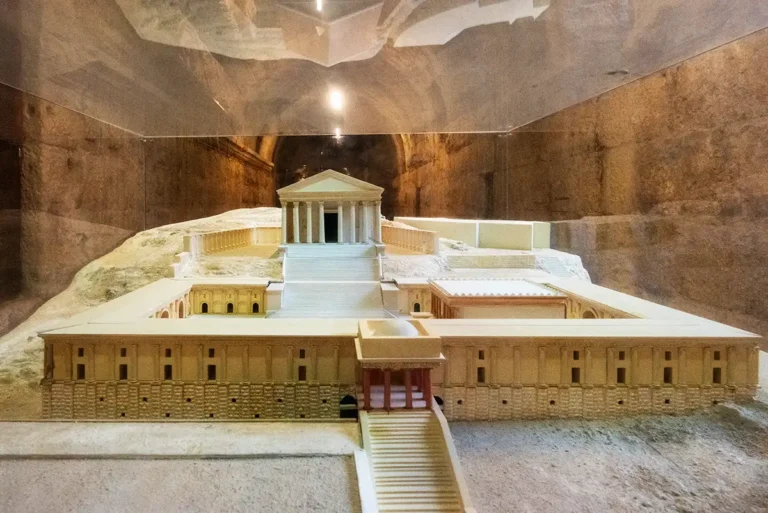
Inside, the centre introduces the historical sequence of Jerash and the civilisations that shaped it. Information boards set the ruins in context, while a short film provides an accessible overview of the principal monuments. A scale model and map of the archaeological site are particularly useful for understanding how the sanctuaries, streets, theatres, baths and gates fit together before you begin walking.
What to Do at the Visitor Centre
Pick up a map and identify the monuments you most want to see.
Study the model of the ancient city before entering the park.
Watch the introductory film if you are visiting for the first time.
Ask about licensed local guides, walking routes and current visitor information.
Use it to plan a realistic route—Jerash is extensive, and the main monuments are spread across a large area.
The centre is especially helpful for visitors who have limited time. A quick orientation makes it much easier to understand why the Oval Plaza links the Cardo to the Sanctuary of Zeus, why the Temple of Artemis occupies the western hill and how the city expanded beyond its Roman core.
Sanctuary of Zeus Exhibition
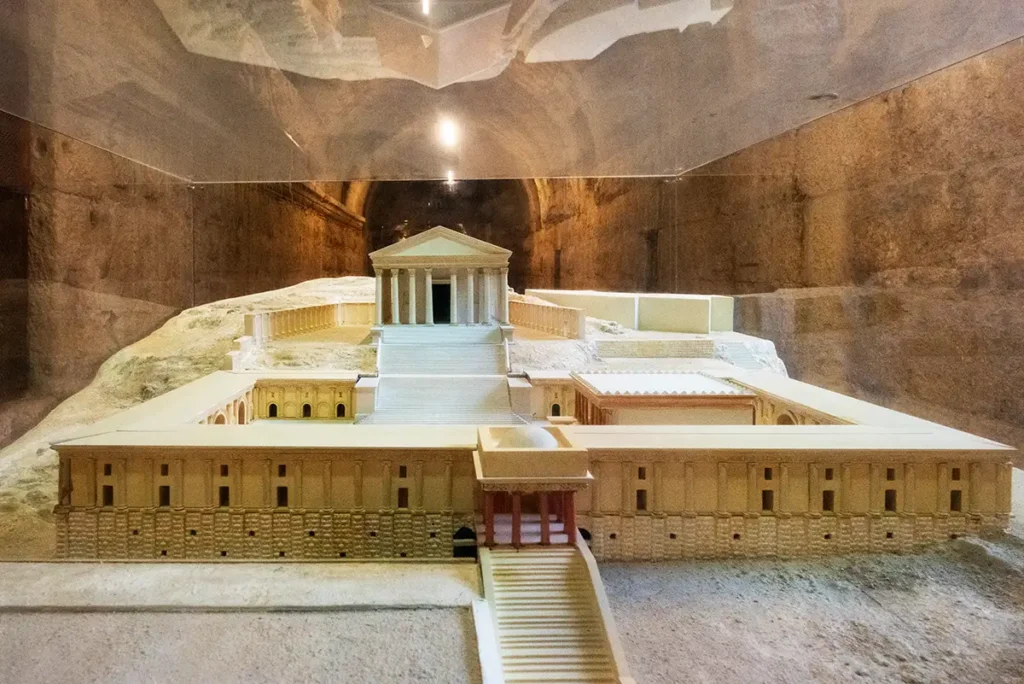
The Sanctuary of Zeus is one of the most dramatic places in Jerash. Rising above the Oval Plaza on the city’s southwestern side, the sanctuary developed over several phases and occupied two terraced levels connected by stairways. The monumental complex culminated in the Temple of Zeus, while the lower terrace and its vaulted corridors formed part of the route into the sacred precinct.
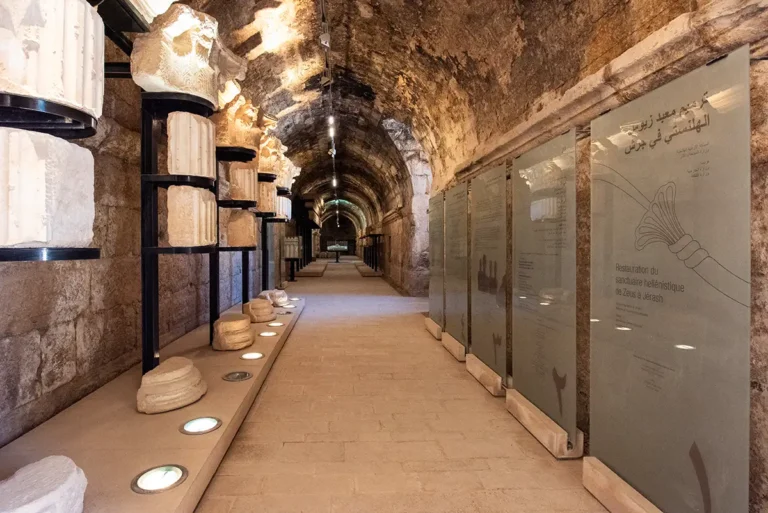
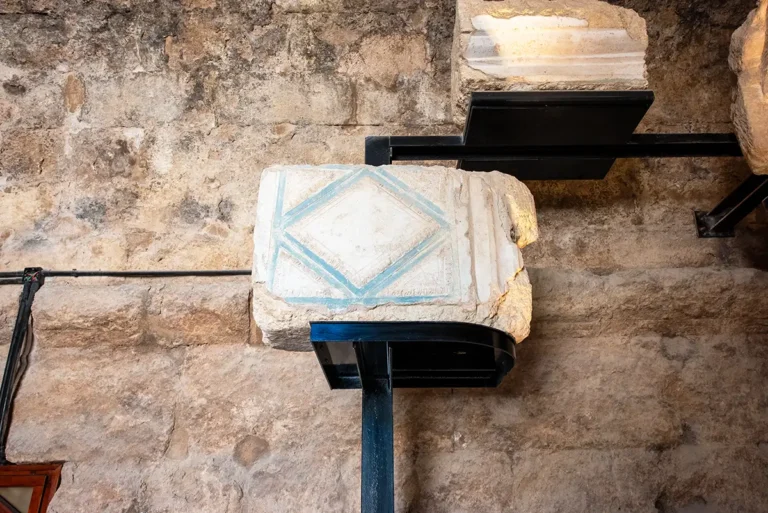
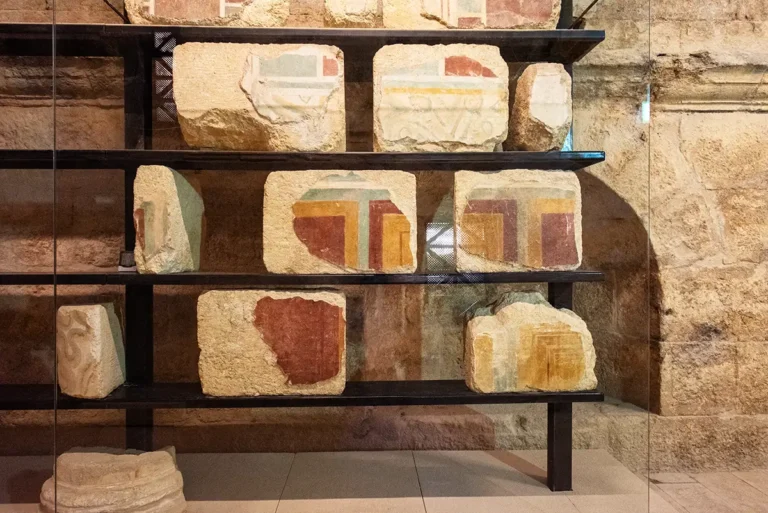
Within this setting, the Sanctuary of Zeus Exhibition gives visitors a closer look at the archaeology behind the monument. The display is associated with the vaults beneath the temple precinct and helps interpret the sanctuary’s earlier phases, including the Hellenistic foundations beneath the better-known Roman remains. The exhibition was created to present discoveries from excavations at the sanctuary, with support from the Louvre.
Why the Exhibition Matters
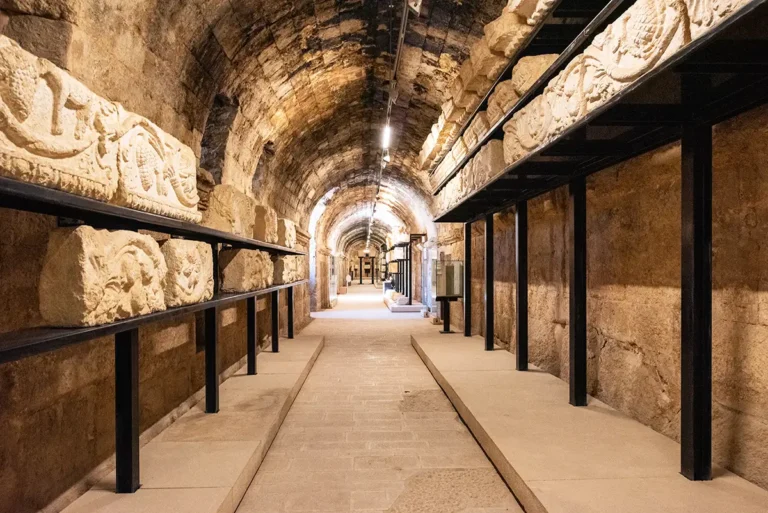
The exhibition is small, but its setting is exceptional. Rather than presenting objects in a detached gallery, it places them within the temple’s own massive stone substructure. This helps visitors appreciate that the Sanctuary of Zeus was not simply a temple standing on a hill. It was an engineered architectural complex of terraces, retaining walls, vaulted passages, courtyards and ceremonial routes.
The vaulted cryptoporticus itself is part of the story. It supported the sanctuary above while creating covered circulation and service spaces below. Walking through it gives a strong sense of the practical construction hidden beneath Jerash’s monumental architecture.
What to Look For at the Sanctuary of Zeus
The massive stone-built lower terrace and vaulted corridors.
Architectural fragments and displays that reveal earlier phases of the sacred precinct.
The contrast between the visible temple ruins above and the structural support system below.
The views from the sanctuary across the Oval Plaza, the Cardo and the South Theatre.
The exhibition is best visited as part of the Sanctuary of Zeus experience, not as a separate destination. Pause there before or after climbing to the upper terrace; the interpretive material gives greater meaning to the stonework around you.
Jerash Archaeological Museum
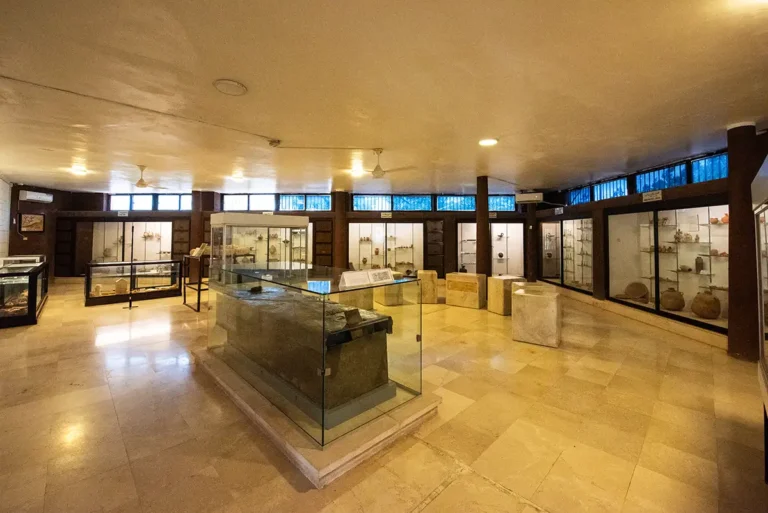
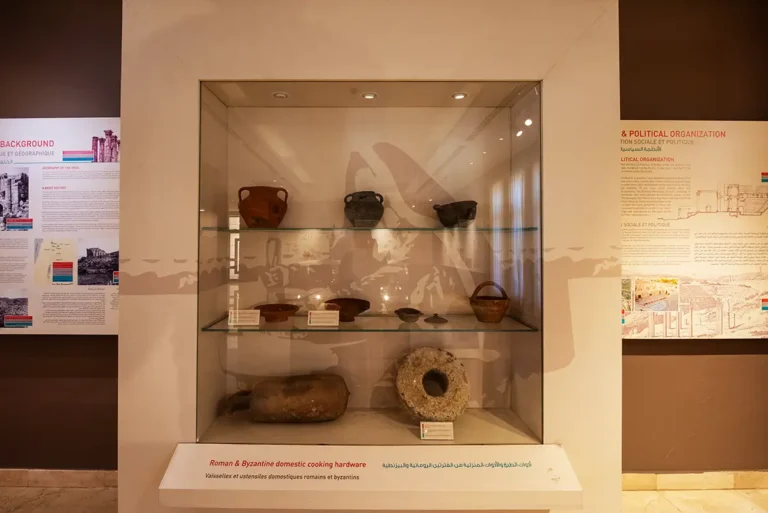
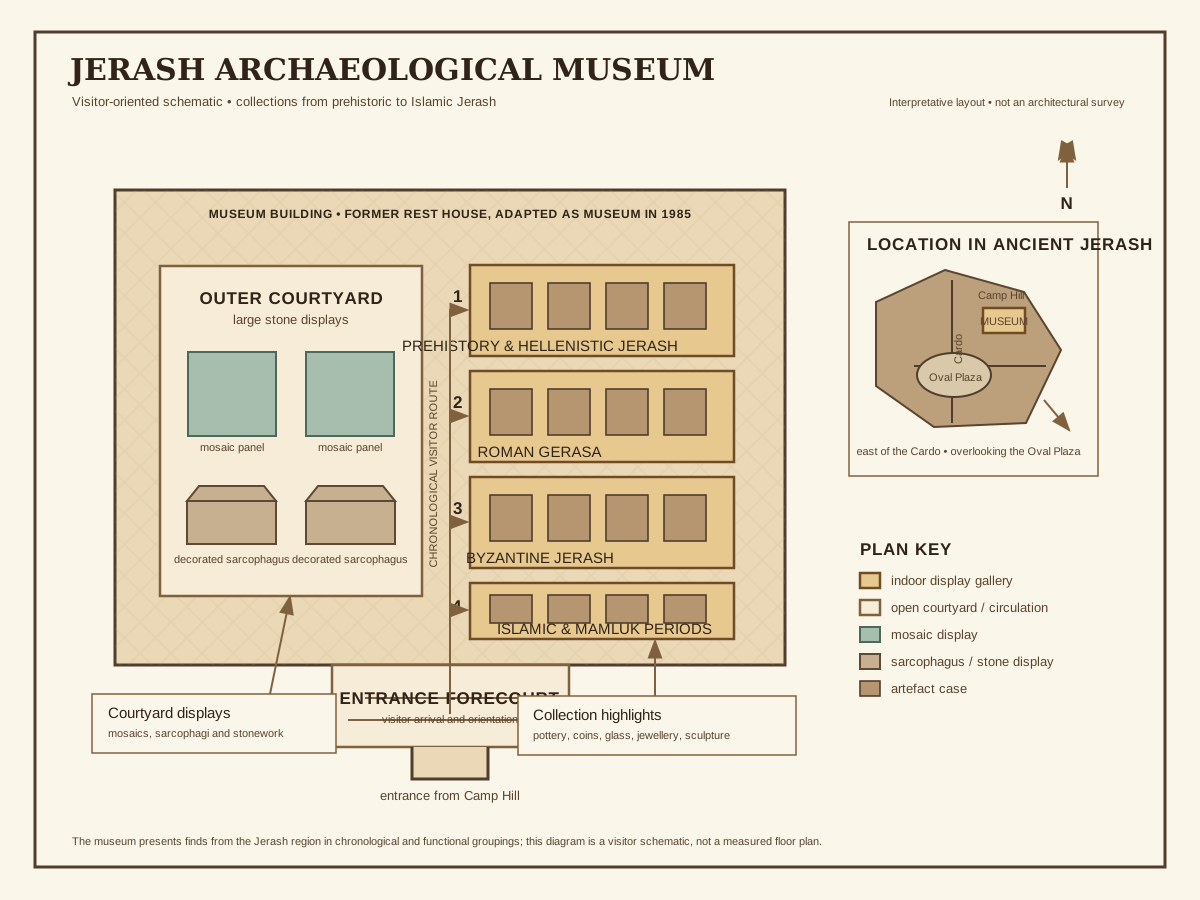
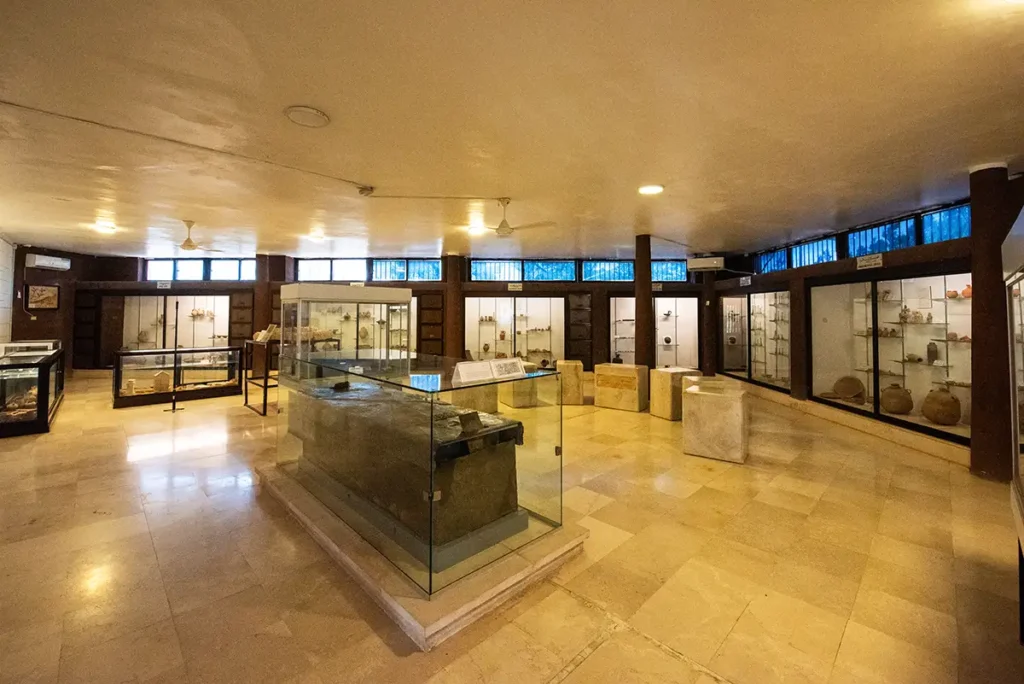
The Jerash Archaeological Museum is the principal collection of finds from the ancient city and the wider Jerash region. It began in 1923 in a vault within the Sanctuary of Artemis, before moving in 1985 to the renovated former rest house. Today, it is dedicated to material from the Jerash area and presents objects from the Neolithic period through the Mamluk era.
The museum is located on Camp Hill, east of the Cardo and overlooking the Oval Plaza. Its elevated setting offers another perspective on the ancient city: from here, it is easier to understand the terrain that shaped Gerasa’s streets, sanctuaries and public spaces.
What You Will Find in the Museum
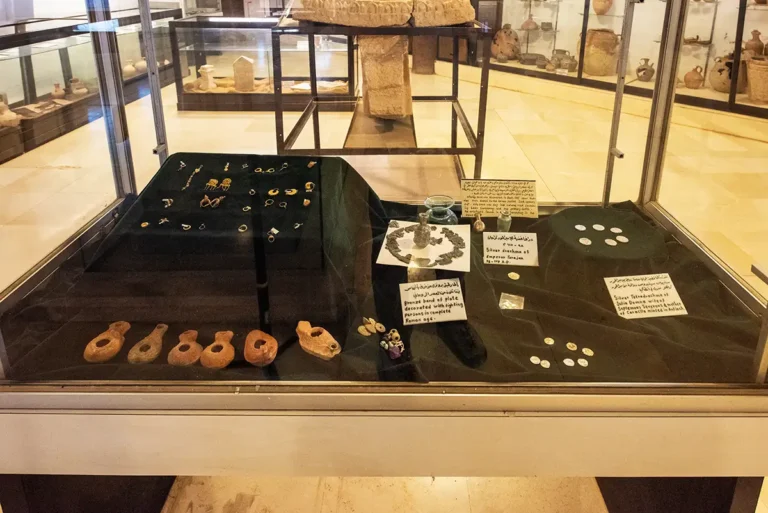
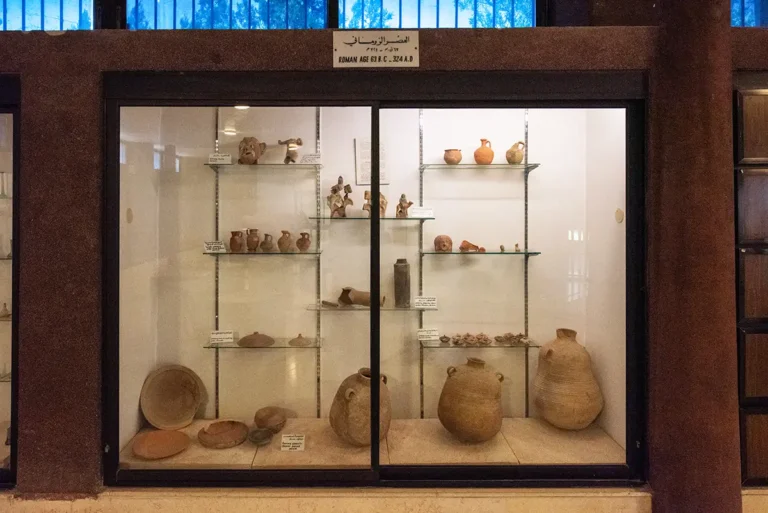
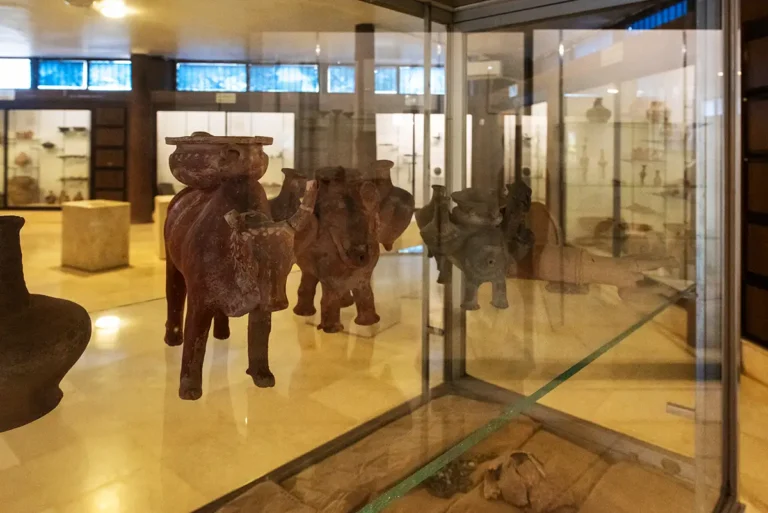
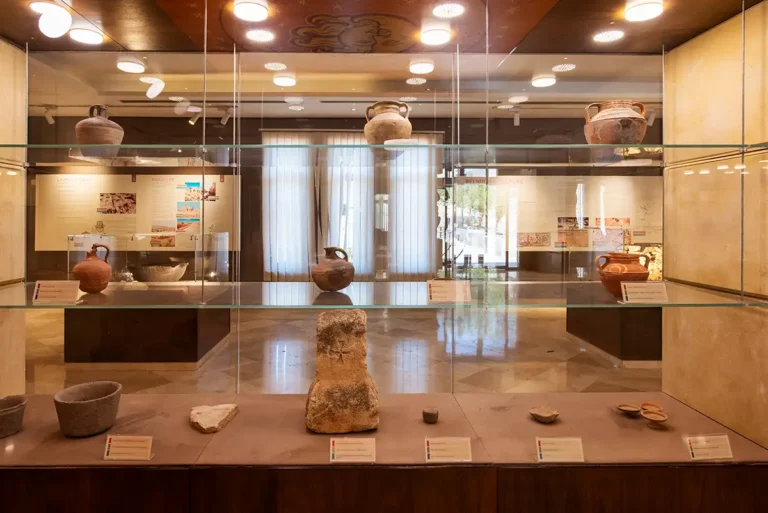
The displays are arranged broadly by period, with typological and functional groupings that help explain how objects were used. The collection includes:
Pottery from domestic, commercial and religious contexts.
Coins that trace Jerash’s changing political and economic connections.
Jewellery and small personal objects.
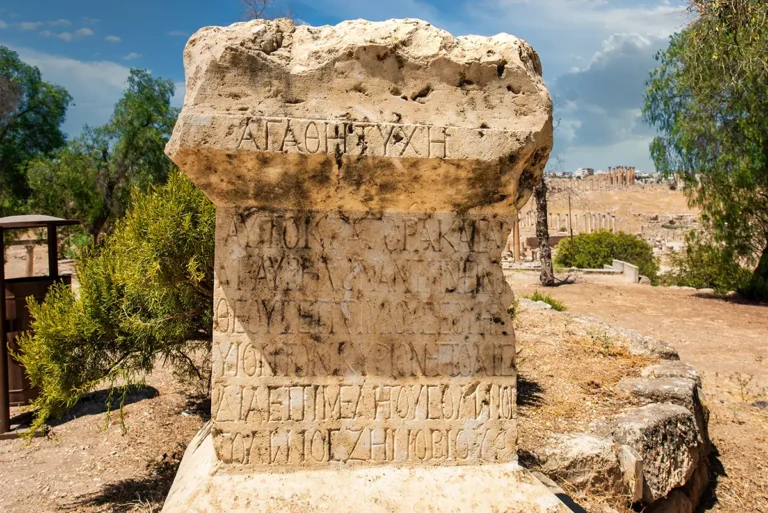
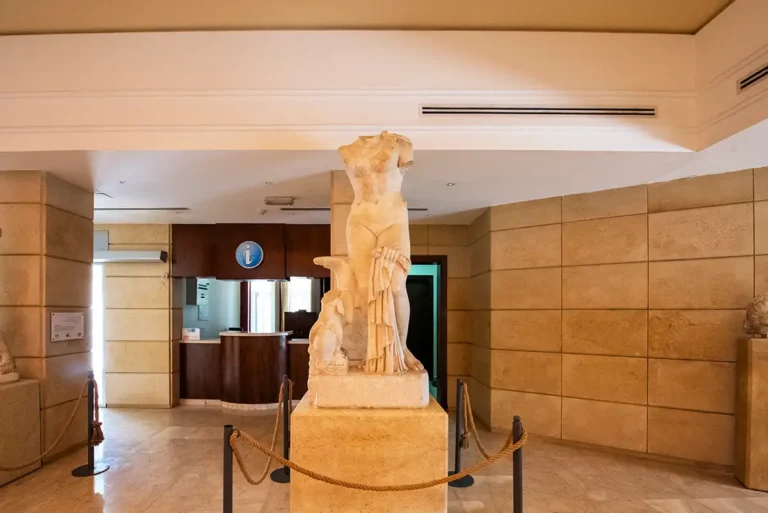
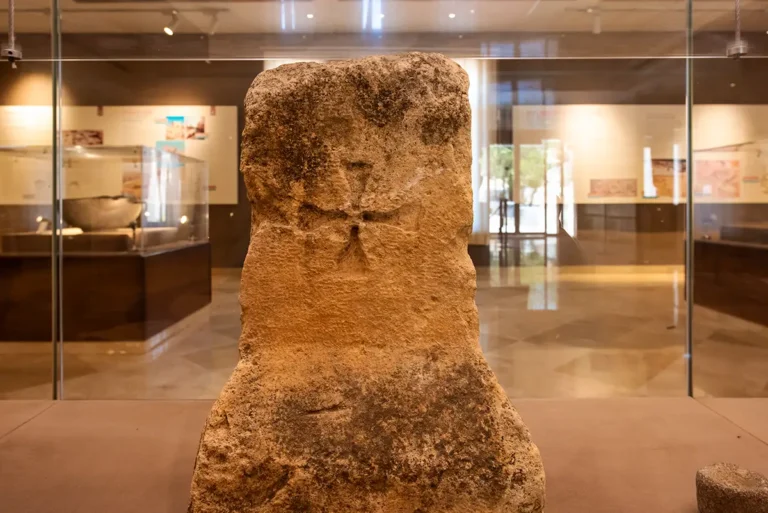
Statues, architectural fragments and inscriptions.
Glassware and metal objects.
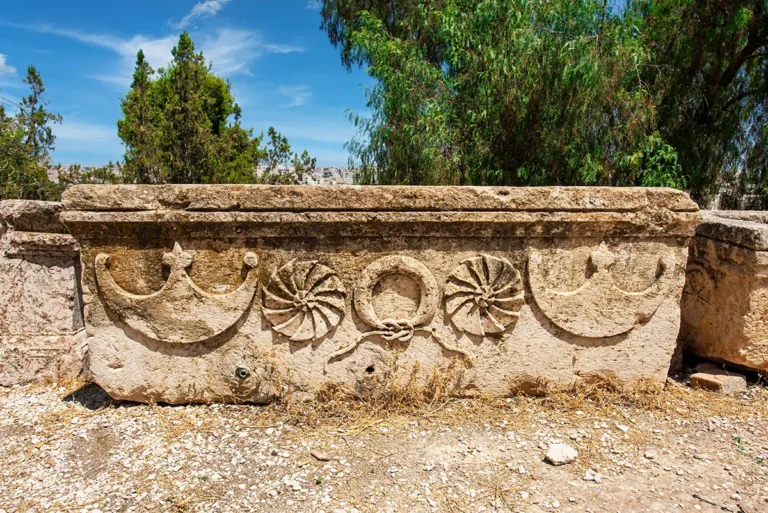
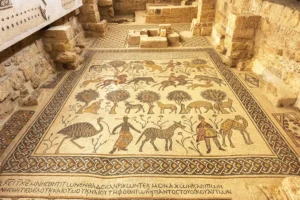
Mosaic panels and decorated stonework.
Sarcophagi and larger artefacts displayed in the outer courtyard.
The museum is valuable because it restores the human scale often missing from the ruins. A column or temple wall conveys grandeur; a lamp, coin, earring, vessel or inscription suggests the people who lived, traded, worshipped and worked in the city.
Official museum information notes that the collection ranges from the Palaeolithic and Neolithic periods to the Late Islamic period, including pottery, jewellery, coins, statues and mosaics.
How to Visit All Three
A simple and rewarding sequence is:
Begin at the Visitor Centre.
Use the maps, model and introductory material to understand the scale of the site.Enter the archaeological park and follow the southern route.
Visit Hadrian’s Arch, the Hippodrome and the South Gate before continuing toward the Oval Plaza.Explore the Sanctuary of Zeus.
From the Oval Plaza, climb toward the sanctuary and take time to visit the exhibition in the vaulted substructure.Continue through the city.
Follow the Cardo Maximus toward the Nymphaeum, Cathedral, Artemis precinct and northern monuments.Finish at the Archaeological Museum.
Allow at least 30–45 minutes. It is an ideal final stop because it gives archaeological context to the buildings you have just explored.
If time is limited, prioritise the Visitor Centre for orientation and the Archaeological Museum for original artefacts. The Sanctuary of Zeus Exhibition is the essential addition for visitors particularly interested in the early history, architecture and archaeology of the Zeus precinct.
Practical Tips
Start early: Jerash is large and largely exposed to the sun.
Do not rush the museum: It is easy to focus on the monumental ruins and miss the objects that explain daily life.
Use the Visitor Centre map: It will help you connect the exhibition and museum to the monuments around them.
Wear suitable footwear: The archaeological park includes uneven paving, steps and slopes.
Check opening hours before travelling: Hours vary by season and may differ between the archaeological site and museum.
Why These Three Stops Matter
The Visitor Centre, Sanctuary of Zeus Exhibition and Archaeological Museum offer three complementary ways to encounter Jerash: the city as a whole, one sacred complex in depth and the objects left by generations of its inhabitants.
Together, they turn a walk among ruins into a fuller understanding of Gerasa—its planning, religion, craftsmanship, trade, technology and long afterlife beyond the Roman period.
Frequently Asked Questions
Yes. Even a brief stop makes the archaeological park much easier to understand, especially for first-time visitors. The site model, maps, film and historical displays provide useful context.
No. The Sanctuary of Zeus Exhibition is a focused display within the temple precinct, while the Archaeological Museum is the main collection of artefacts from Jerash and its surrounding region.
The museum is on Camp Hill, east of the Cardo and overlooking the Oval Plaza.
Its collections span the history of the Jerash region from prehistoric periods through the Roman, Byzantine, Islamic and Mamluk eras.
The exhibition is part of the Sanctuary of Zeus experience and is best visited while exploring the temple complex and its vaulted lower terrace.
Allow 15–30 minutes for the Visitor Centre, 15–20 minutes for the Sanctuary of Zeus Exhibition and at least 30–45 minutes for the Archaeological Museum, in addition to time for the ruins themselves.
Key Moments in History
1923 — Jerash Archaeological Museum established: The museum began in a vault within the courtyard of the Sanctuary of Artemis, displaying finds from the archaeological site.
Early 1970s — Visitor Centre established: A purpose-built Visitor Centre was created to provide orientation, visitor services and interpretive material for the growing archaeological park.
Key Moments in History
1923 — Jerash Archaeological Museum established: The museum began in a vault within the courtyard of the Sanctuary of Artemis, displaying finds from the archaeological site.
Early 1970s — Visitor Centre established: A purpose-built Visitor Centre was created to provide orientation, visitor services and interpretive material for the growing archaeological park.
1985 — Museum moved to its present building: The Jerash Archaeological Museum relocated to the renovated former rest house on Camp Hill, where it could accommodate a broader collection.
Late 20th century — Sanctuary of Zeus Exhibition created: Archaeological work at the Zeus precinct led to a dedicated exhibition in the vaults below the temple, presenting discoveries and the sanctuary’s earlier history.
2015 — Visitor Centre rehabilitated: The centre was renewed to improve visitor information, interpretation and access to maps, guides, displays and audiovisual material.
Today — Three complementary interpretation spaces: The Visitor Centre, Sanctuary of Zeus Exhibition and Archaeological Museum together help visitors understand Jerash from city-wide planning to sacred architecture and everyday artefacts.