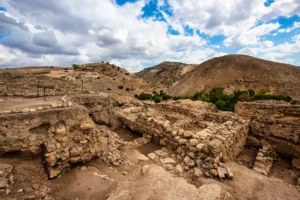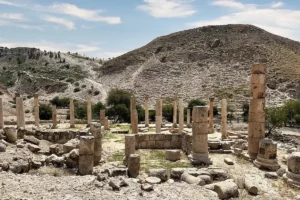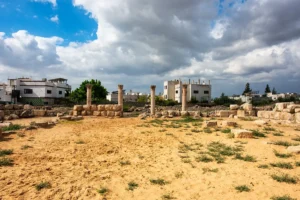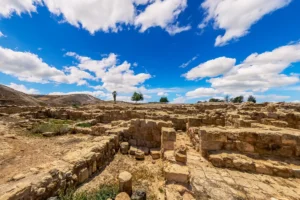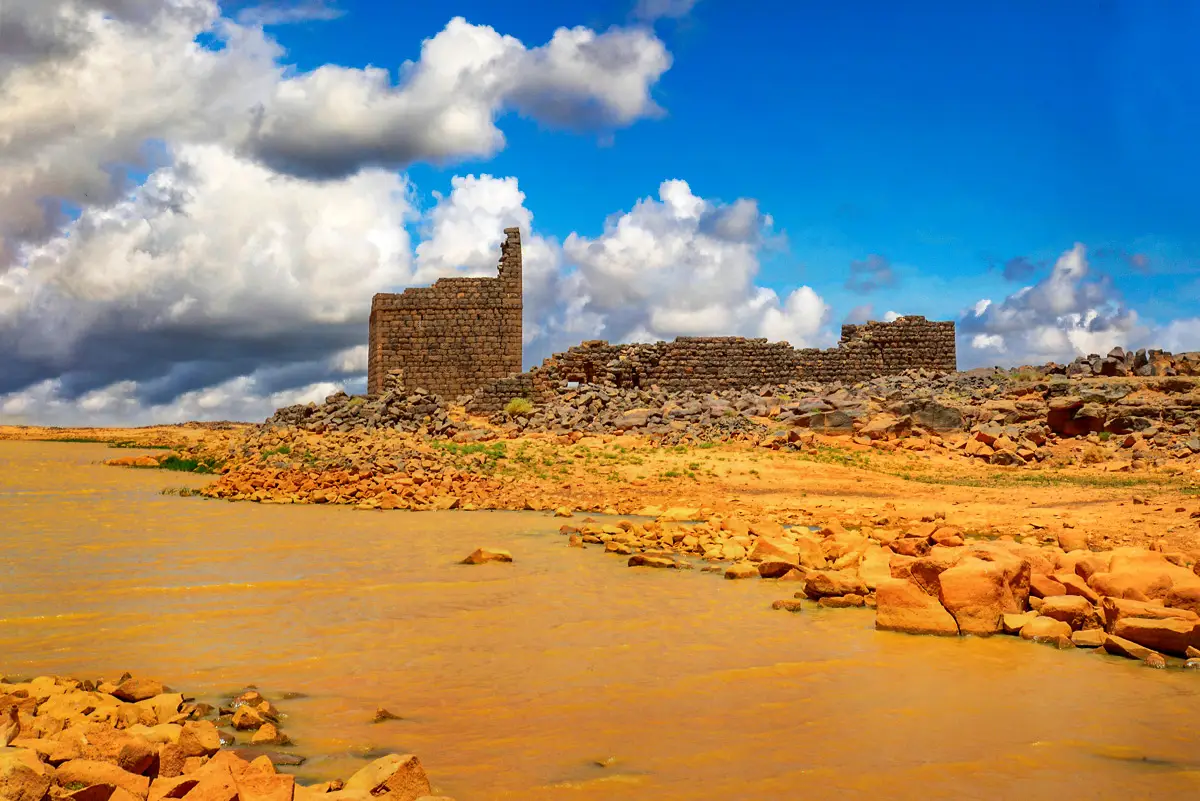












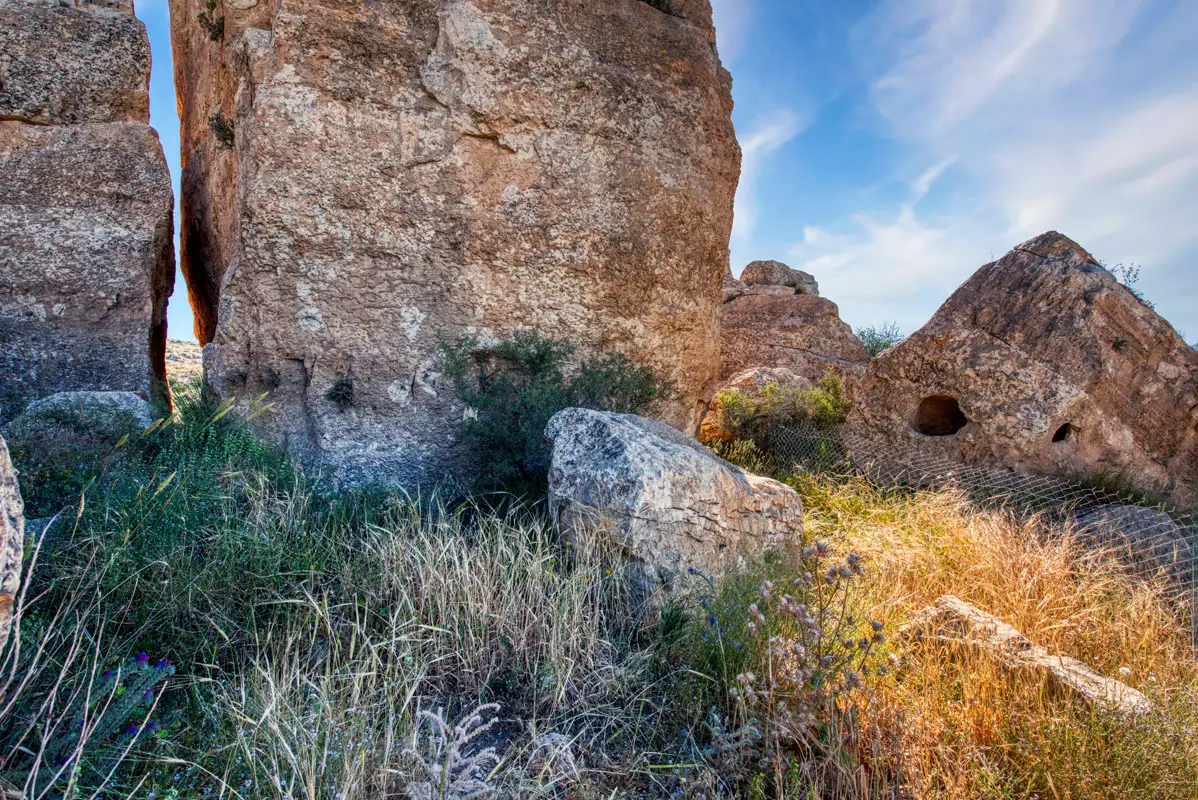
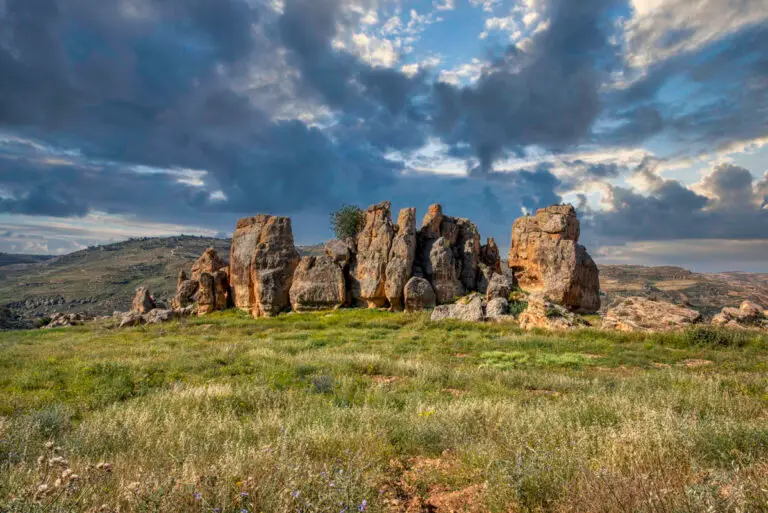


On a large hill above Wadi Hisban, just north-west of Tell Hisban, stand the weathered remains of an Early Bronze Age landscape of the dead: dolmens, a cairn, stone circles and standing stones. In the 19th century explorers counted dozens of monuments here; fewer survive today, but the hill still has an extraordinary atmosphere.
Where Are the Hesban Rocks?
The site lies on the large hill sometimes called al-Kurmiyeh, about half a kilometre north-west of Tell Hisban and overlooking Wadi Hisban, between Amman and Madaba. Tell Hisban itself is usually identified with biblical Heshbon, although this is debated for the earliest periods.
Historical Context and Origin
Dolmens — tables of large stone slabs — were burial monuments. Those excavated in Jordan date to the Early Bronze Age I, roughly 3700–3000 BC, and are concentrated along the eastern side of the Jordan Valley, with large fields at Damiya and al-Murayghat near Madaba. The hill above Wadi Hisban belongs to this tradition, and Early Bronze Age pottery has been found here.
Architectural Design
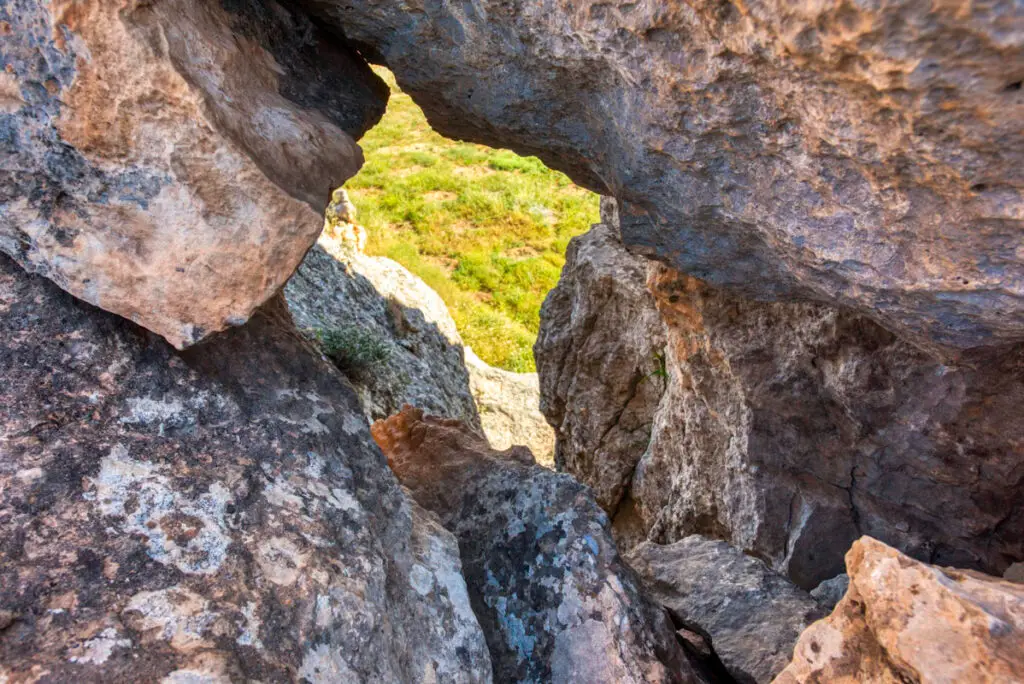
The monuments were built of unworked stone. The dolmens stand on the lower north and west slopes; on the hilltop a large cairn is surrounded by circles of smaller stones, and small standing stones, cup-shaped hollows and two rock-cut chambers have also been recorded.
Dolmens
Burial monuments of stone slabs, most now collapsed, on the lower north and west slopes.
The Cairn
A large heap of stones on the hilltop, with circles of smaller stones around it.
Standing Stones
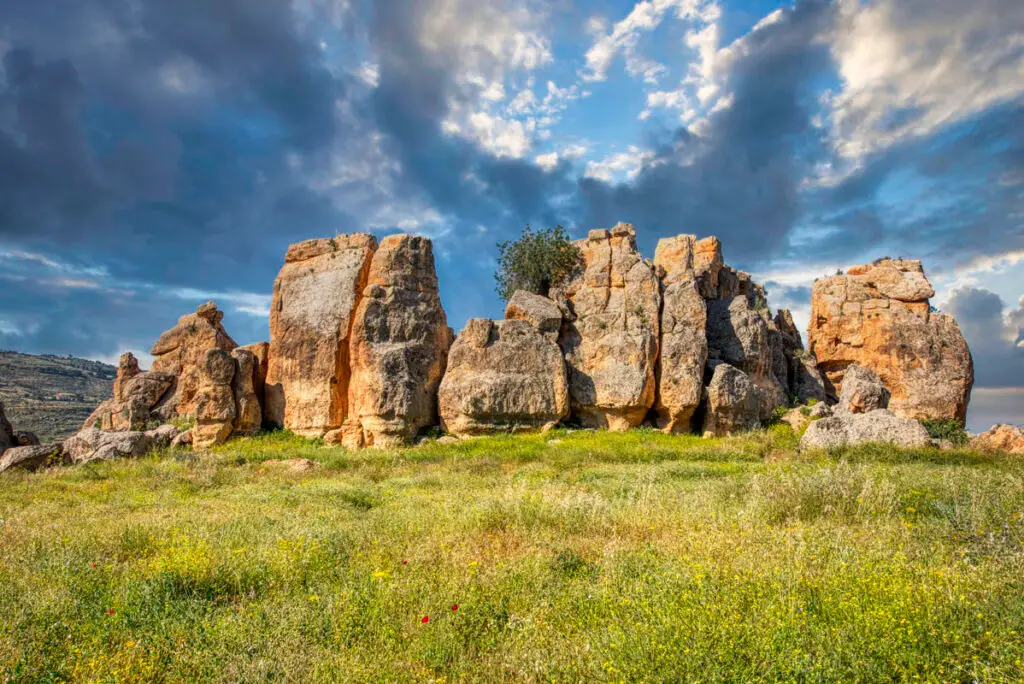
Small upright stones and weathered rock formations across the hill.
Rock-Cut Chambers
Chambers cut into the rock on the hillside.
Rediscovery
In the 1880s the explorer Claude Conder counted 26 stone monuments on this hill, among some 50 dolmens in Wadi Hisban. When the Heshbon survey recorded the site in 1973 as Site 10, it found 10 dolmens, most of them collapsed, together with caves and wine presses. Many monuments have since disappeared, largely because of olive planting.
Visiting the Hesban Rocks Today
Walk the north and west slopes to find the dolmens and standing stones, and climb to the top for the cairn and the views over Wadi Hisban. Combine the visit with Tell Hisban next door.
Further reading: Tall Hisban — Madaba Plains Project.