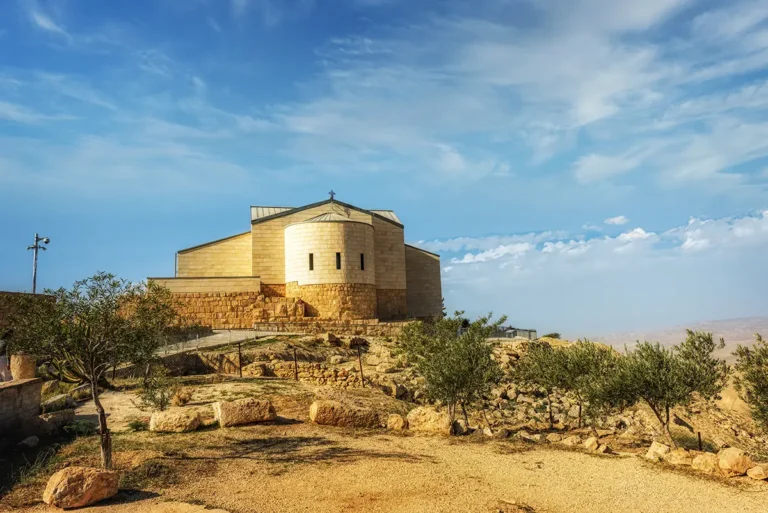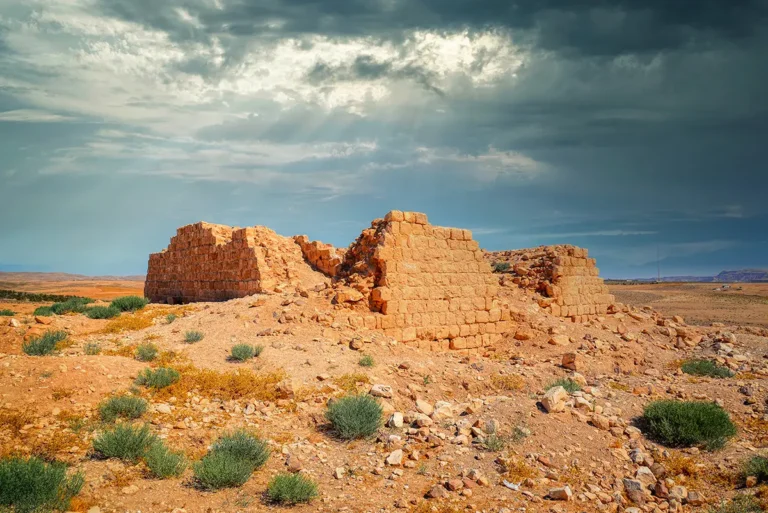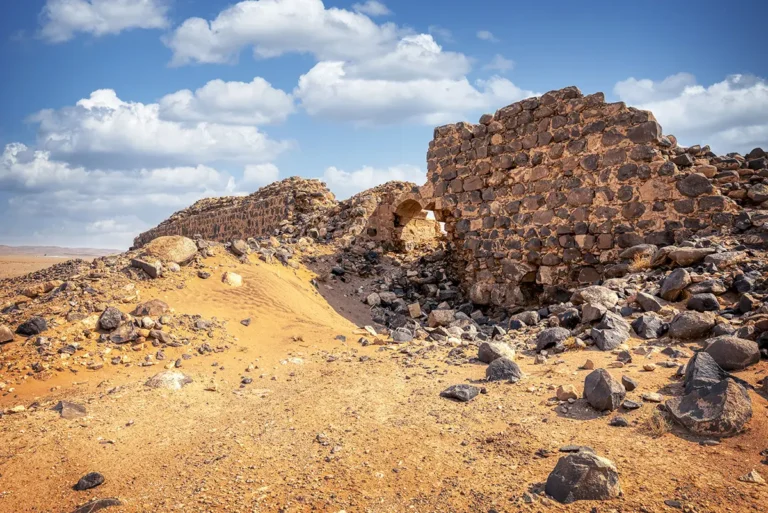












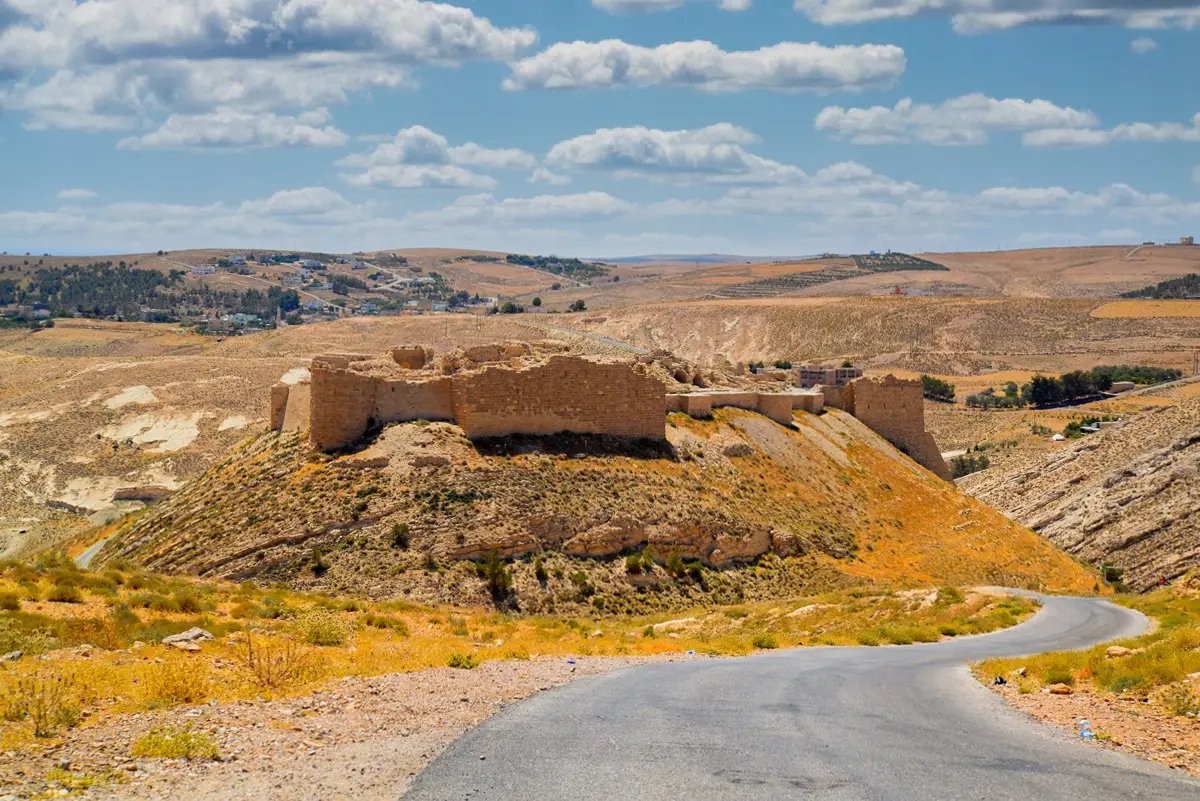


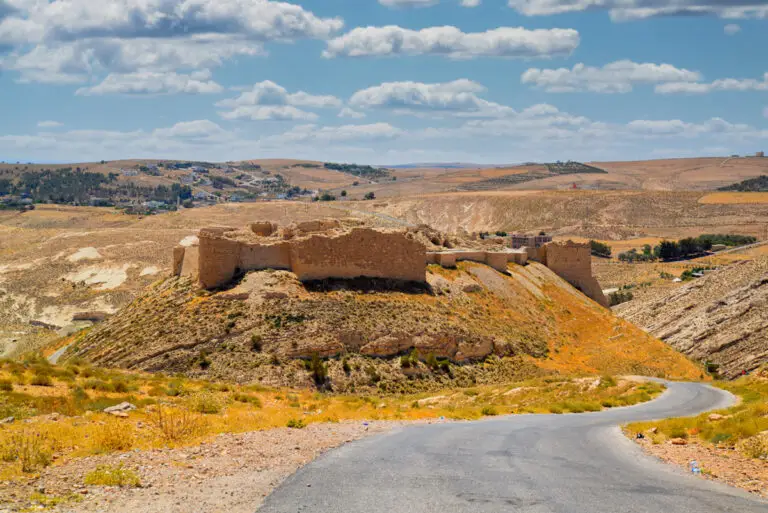

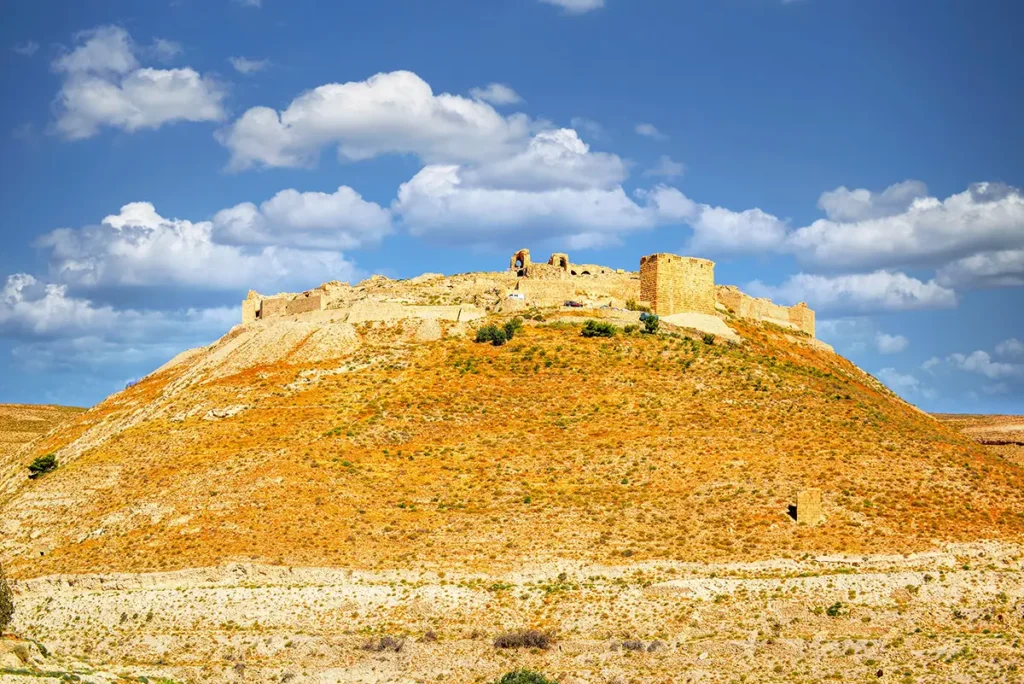
Rising alone on a rounded hill above the plateau of al-Sharat, Shobak Castle was the first great Crusader stronghold south of the Dead Sea. The Crusaders called it Montréal, the “Royal Mount”. It withstood Saladin for eighteen months, and the Ayyubids and Mamluks who held it after him rebuilt much of what stands today.
Where Is Shobak Castle?
The castle stands on a hill beside the town of Shobak, about 30 km north of Petra and about two and a half to three hours’ drive from Amman. The village of al-Jaya lies at the foot of the hill, and the spring of ‘Ain al-Raghaya flows below it.
Historical Context and Origin
King Baldwin I of Jerusalem founded the castle in 1115, as Mons Regalis, to control the routes between Syria, Egypt and Arabia; a Frankish chronicler says he built it in 18 days. The next year he went on to Aqaba. From 1142 Montréal belonged to the Lordship of Oultrejordain, whose centre moved to Karak, and it later passed to Raynald of Châtillon. After the Battle of Hattin, Saladin’s forces besieged it from 1187, and the garrison surrendered in May 1189, after almost 18 months. Saladin gave the castle to his brother al-Adil.
Architectural Design
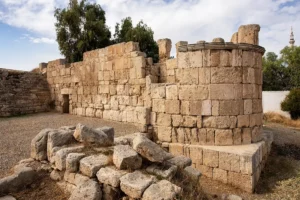
Walls and towers follow the edge of the hilltop, with the main approach by a ramp on the north. Little survives above ground of the first castle except its two churches, among them St Mary’s, the most important Crusader church in Jordan. Most of the walls belong to later rebuilds. The Ayyubid prince al-Mu’azzam ‘Isa largely rebuilt the castle after an earthquake in 1212, adding a reception hall. The great northern towers, ramparts and passageway of large drafted stones are Mamluk work of 1297–98.
Mamluk Inscription
Sultan Lajin’s building inscription runs round the northern tower.
Water Tunnel
More than 300 steps descend to a spring (closed to the public).
Crusader Churches
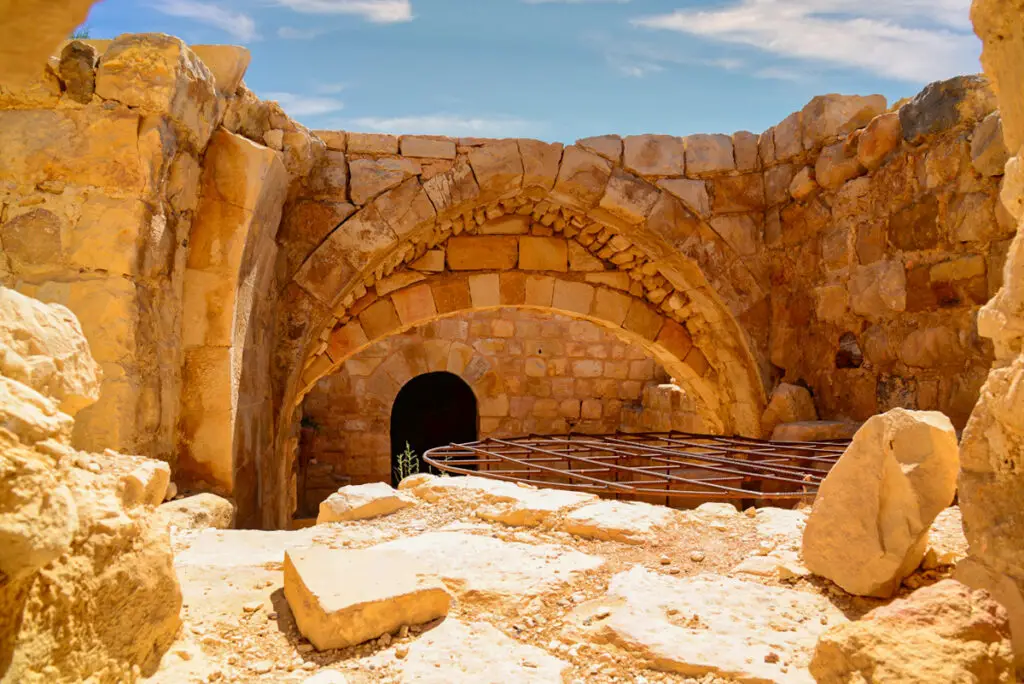
The church of St Mary and a smaller castle chapel.
Ayyubid Hall
A reception hall of the Ayyubid princes.
The building inscription of Sultan Lajin (summary)
A monumental band on the semicircular tower guarding the northern ramp records the rebuilding of the castle by the Mamluk sultan al-Malik al-Mansur Husam al-Din Lajin. The same text is repeated on a nearby Mamluk public building, where it also names the emir ‘Ala’ al-Din Qibris as supervisor of the works.
The Mamluk Rebuilding
The Mamluk sultan Baybars took Shobak in 1261. In 1293 Sultan al-Ashraf Khalil ordered the castle demolished, but in 1297–98 Sultan Lajin rebuilt it, and his inscription still runs round the semicircular tower that guards the northern ramp. Shobak became a prosperous agricultural town, and excavations have found a Mamluk soap factory and dyeing works. A steep tunnel with more than 300 steps leads down through the rock to the spring at the foot of the hill; its date is still debated, and it is currently closed to the public.
Destruction, Rediscovery, and Restoration
The Ottomans kept a garrison here from 1516. In 1840 the defences were blown up as Ibrahim Pasha’s Egyptian army withdrew, and families lived in the ruins until the 1950s. The University of Florence has studied the castle for more than twenty years, and in 2022 it found the first Armenian inscriptions known in Jordan. Since 2024 an Italian-funded project has consolidated St Mary’s church and the soap factory. Shobak has been on Jordan’s UNESCO Tentative List since 2001.
Visiting Shobak Castle Today
The castle is open from 8:00 to 17:00, with a visitor centre and ticket office at the entrance. Admission is 3 JOD for foreign visitors and 0.25 JOD for residents, and it is covered by the Jordan Pass. The water tunnel is closed to the public. Allow about an hour. See our Shobak Castle travel guide for practical details.
Further reading: University of Florence — Shobak Castle; Vannini et al., ADAJ 55 (2011); UNESCO Tentative List — Jordan.