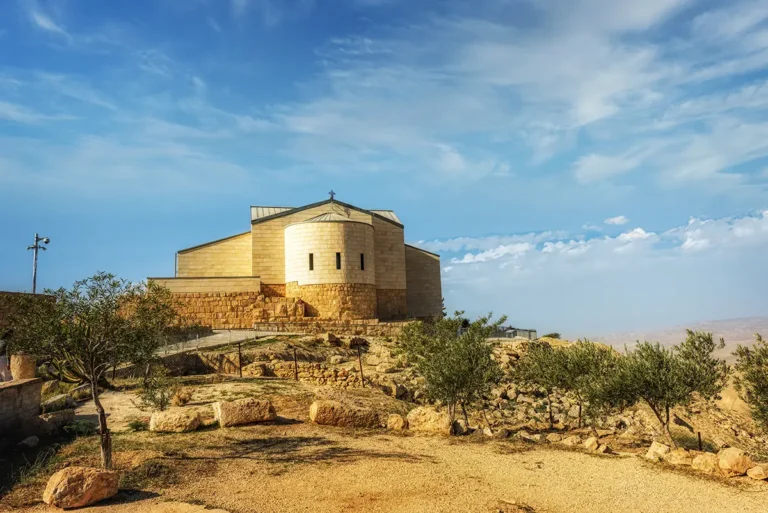


In a green valley fed by springs, beside the old road from Petra to Damascus, stand the ruins of a Nabataean village and its sanctuary. At Khirbet edh-Dharih travellers and pilgrims found water, lodgings and a temple whose façade was crowned with the signs of the zodiac.
Where Is Khirbet edh-Dharih?
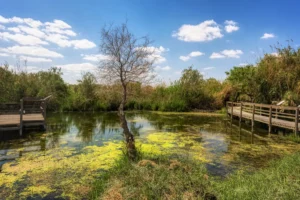
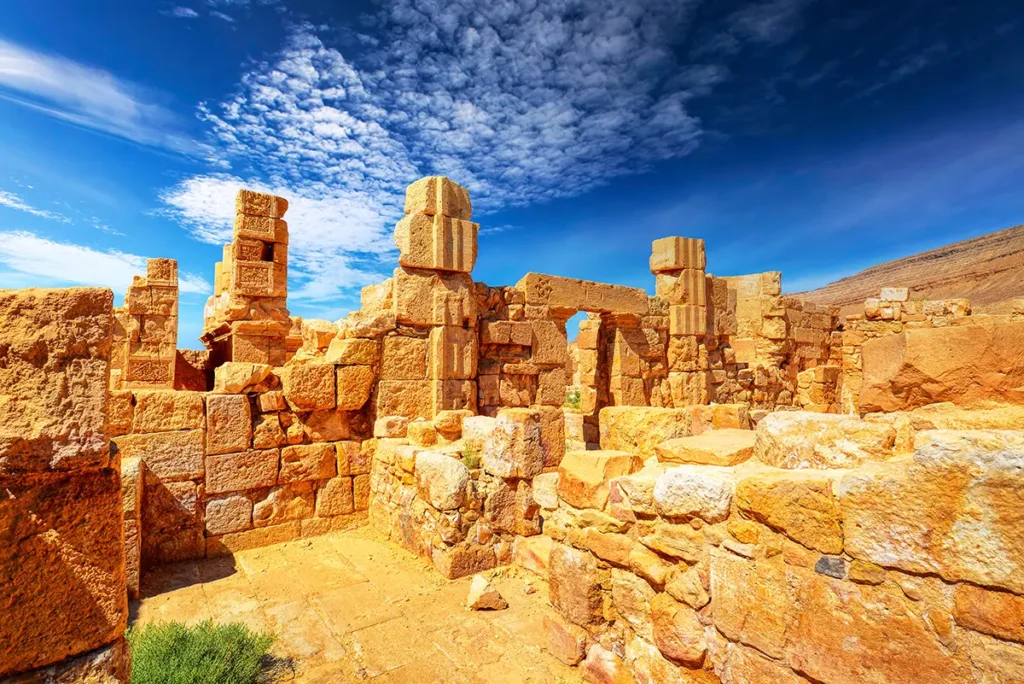
The site lies in Wadi al-La’aban beside the King’s Highway, north-east of Tafila, about 7 km south of the hilltop temple of Khirbet et-Tannur. It was the third caravan stop north of Petra on the road to Damascus.
Historical Context and Origin
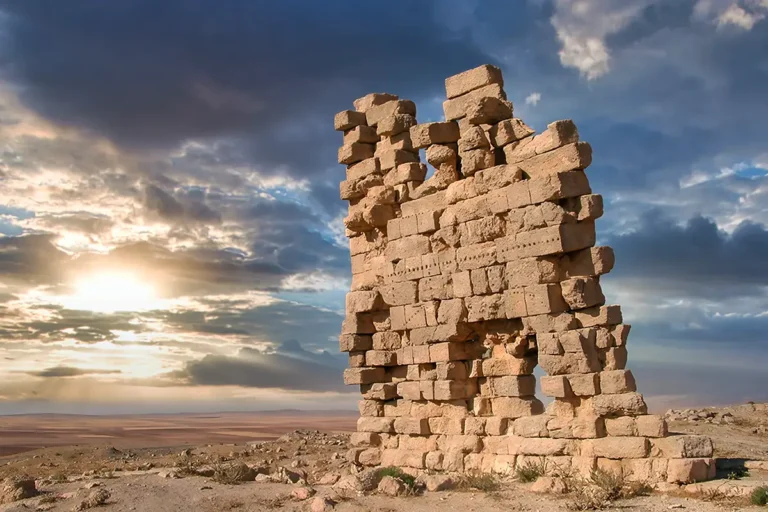
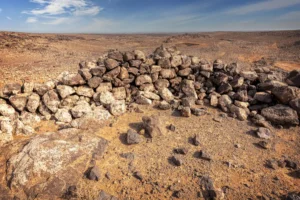
People lived in the valley from the Neolithic and the Edomite Iron Age. A Nabataean village with a small sanctuary grew up in the late 1st century BC. Around AD 100, and faster after the Roman annexation of AD 106, it was rebuilt on a grand scale with a decorated temple, a caravanserai and baths, and it flourished through the 2nd and early 3rd centuries. The deity worshipped here is not known. The village was abandoned around AD 363, probably after that year’s great earthquake. In the 6th century Christians resettled it and turned the temple into a church; around AD 700 it became a Muslim estate, until an 8th-century earthquake.
Architectural Design
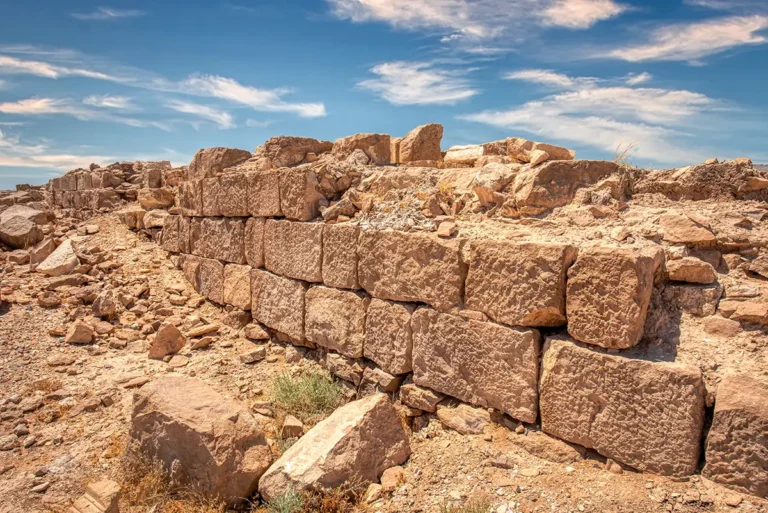
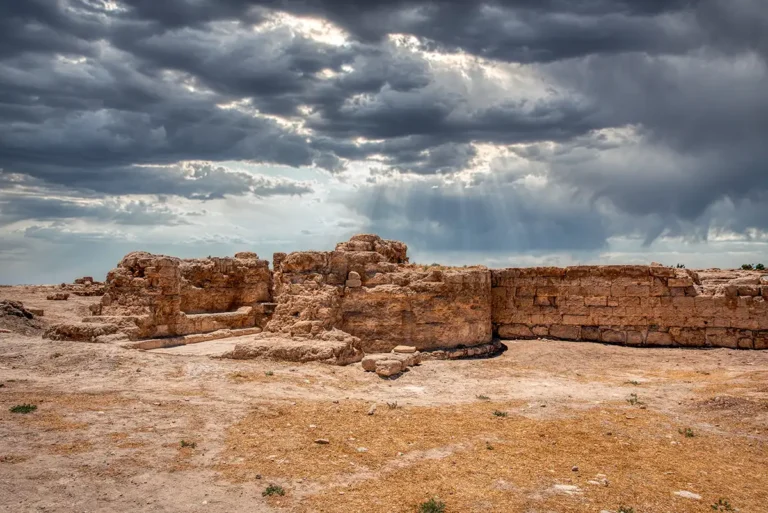
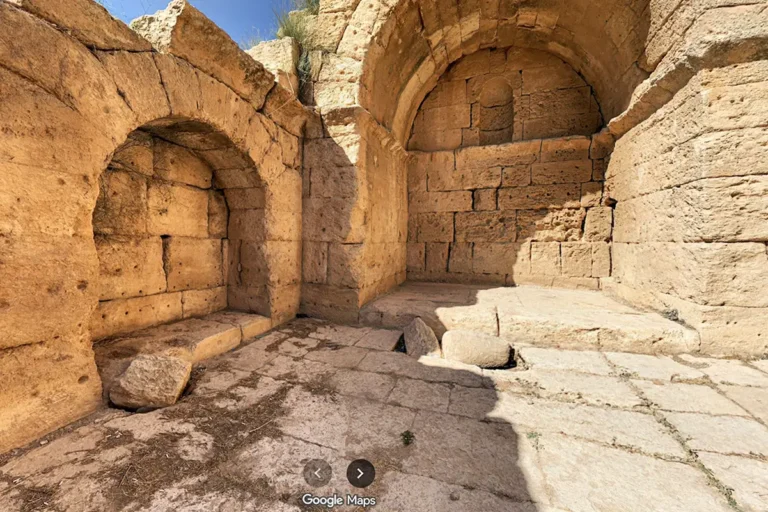
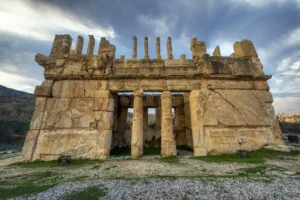
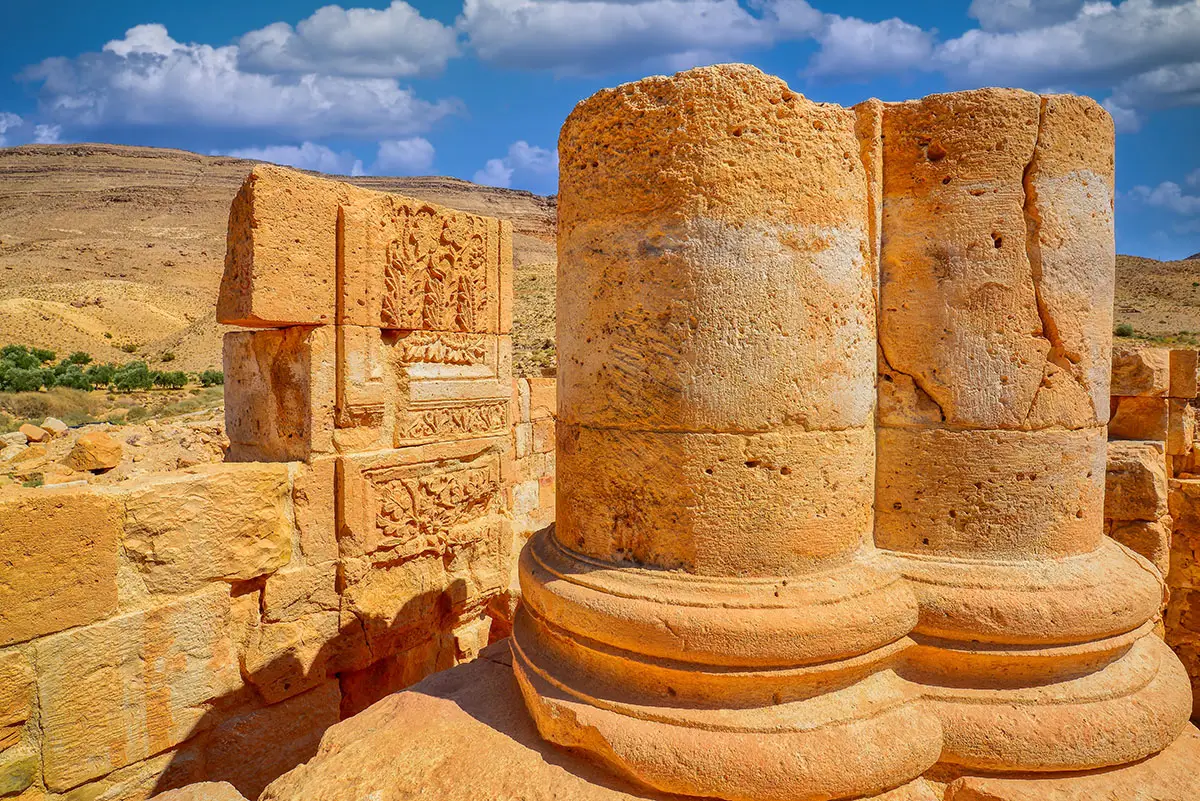
The sanctuary, about 110 × 45 m, is laid out in successive courtyards leading to the temple, which stood about 15 m high. Its outer form was classical, but its decoration was local: inside, a raised platform about 6.8 m square was surrounded by columns with lion-headed capitals. Around the sanctuary lay a caravanserai of about 30 × 20 m with shops and stables, a heated bath, about 20 houses with olive presses, and two cemeteries.
Zodiac Frieze
Signs of the zodiac with winged Victories once crowned the temple.
The Temple
A temple with a raised platform and lion-headed capitals.
Caravanserai and Bath
Lodgings and a heated bath for visitors to the sanctuary.
Olive Presses
Houses with oil presses in the Nabataean village.
The Zodiac Frieze
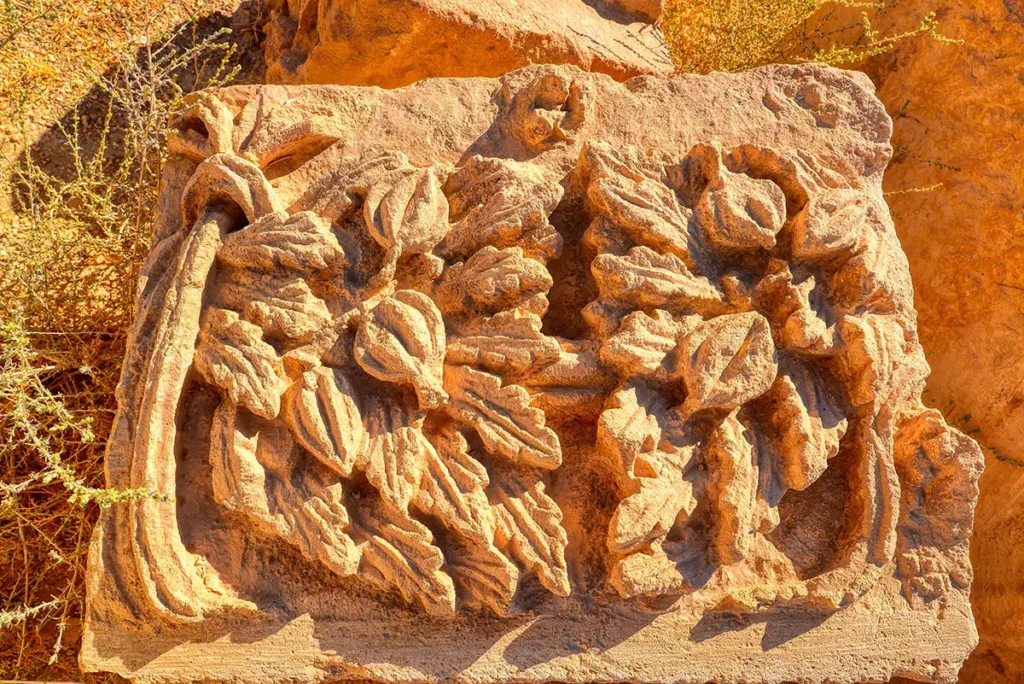
The temple façade carried a frieze of the signs of the zodiac, each crowned by a winged Victory. Taurus, Gemini, Cancer, Libra and part of Sagittarius survive and are now in The Jordan Museum in Amman. The same sculptors worked at nearby Khirbet et-Tannur in the early 2nd century, and pilgrims to that hilltop sanctuary probably stayed at Dharih.
Destruction, Rediscovery, and Restoration
The travellers Irby and Mangles recorded the ruins in 1818. A French–Jordanian mission directed by François Villeneuve and Zeidoun al-Muheisen excavated the site in 15 seasons from 1984 to 2013, and parts of the temple were reassembled from their original blocks.
Visiting Khirbet edh-Dharih Today
The site is fenced, with a gate, but there is no guard or ticket office, and entry is free. Allow 30–40 minutes to explore, and combine it with Khirbet et-Tannur. See our Khirbet edh-Dharih travel guide for directions.
Further reading: ArScAn — Khirbet adh-Dharih, the Nabataean village and sanctuary; Oxford — A Gem of a Small Nabataean Temple (Khirbet et-Tannur booklet).