


Qasr El-Al
A hilltop tower above a cliff, used from the Iron Age to Byzantine times
FoundedIron Age
TowerAbout 16 × 20 m
Location6 km N of Qasr Bshir
Access4x4 track
Introduction
A watch post looking out towards its neighbours.
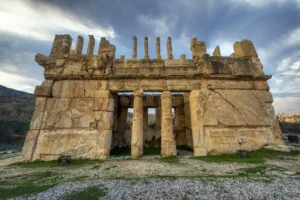
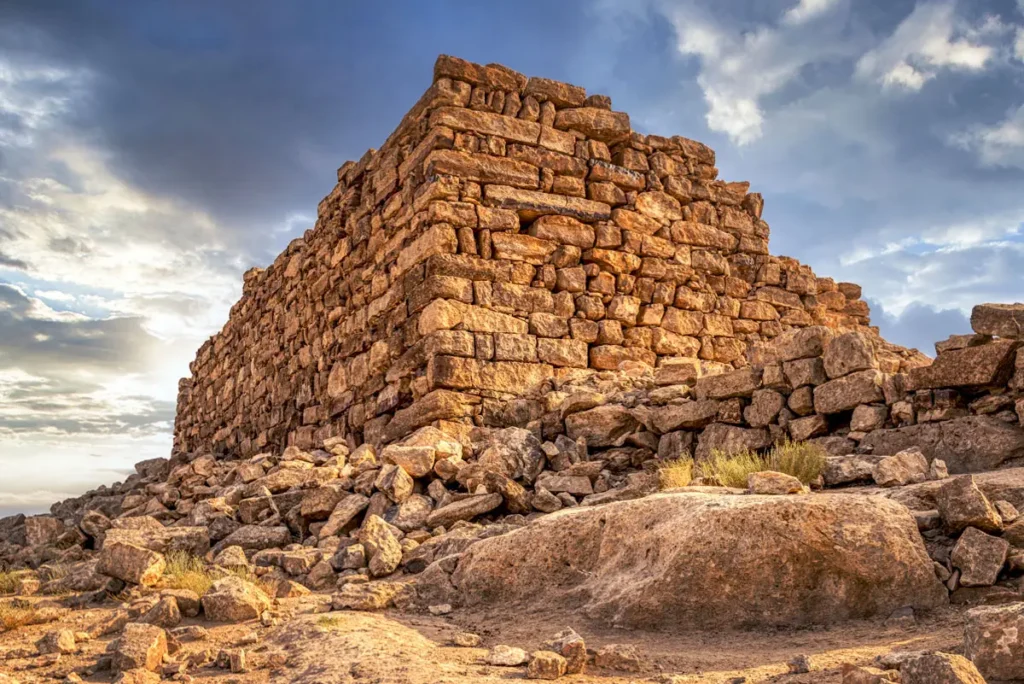
Qasr El-Al crowns a hilltop above a steep north-facing cliff, about 6 km north of Qasr Bshir. A massive tower of about 16 × 20 m, built of very large blocks, still stands 4–6 m high, inside a walled enclosure of about 60 × 68 m.
Surface pottery shows that people used the site from the Iron Age, which Nelson Glueck counted among a line of Moabite forts, through the Nabataean and early Roman period to the 4th century AD. It has never been excavated. The tower’s position offered views towards neighbouring forts, including Qasr Bshir, Qasr Abu El-Kharaq and Qasr eth-Thuraiya.
Best timeMar–May · Oct–Nov
Time needed20–30 min
TicketFree
From Amman95 km1 hr 45 min
Combine withQasr Bshir · 25 min
Google rating4.3 · Reviews
Highlights · An ancient watch post
A megalithic tower on the cliff edge
Huge blocks, an enclosure and cisterns in the rock
El-Al is older than the Roman forts around it. Look for the size of the stones, the enclosure wall and the caves below.
 01 / 04
01 · Architecture
The tower
The tower
A rectangular tower of about 16 × 20 m in very large blocks, still standing 4–6 m high in places.
Look closely
The size of the corner stones.
1 of 4
Room by room
What to see
Three stops: the tower, the enclosure, and the caves and views. Pick a stop to see what to look for.
1 / 601 · The core
Stand by the tower
The tower measures about 16 × 20 m and is built of very large, roughly shaped blocks, in the same “megalithic” style as Qasr Abu El-Kharaq. It still stands 4–6 m high in places.
A Nabataean inscription was recorded on the tower’s north wall. It has been published only briefly, and it does not tell us when the tower was built.
16 × 20 mHuge blocksUp to 6 m high
Look for
- The corner stones
- The north wall
- Courses of stones without mortar
Dig deeperNever excavated
Everything known about El-Al comes from surface finds. Glueck in 1936 and Parker in 1976 and the 1980s collected pottery: Iron Age, Nabataean and early Roman (the largest group), and some early Byzantine pieces of the 4th century AD.
Parker thought the Roman army used the site very little.
 1 / 5
02 · Around the tower
Walk the enclosure
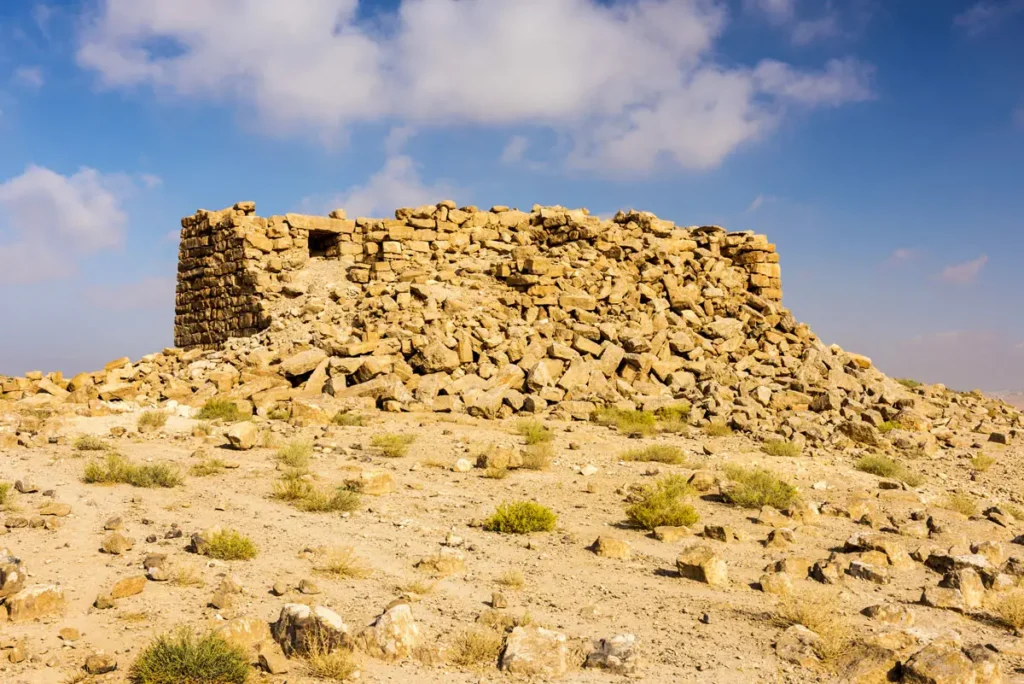
The tower stands inside a rectangular enclosure of about 60 × 68 m with walls averaging 1.5 m thick. Traces of rooms run along the inside of the wall.
During his visit in July 1900, the Czech explorer Alois Musil recorded Bedouin burials among the tower ruins and in an adjoining building.
60 × 68 mWalls 1.5 m thickRooms along the wall
Look for
- The line of the enclosure wall
- Large flat stones of fallen roofs
- Fallen blocks from the tower
 1 / 5
03 · Below and beyond
Look out from the edge
Many cisterns and shallow caves are cut into the rock south-east of and below the site. Their date is unknown.
The hill ends in a steep cliff to the north, so the view is wide. The tower’s position offered views towards neighbouring forts: Qasr Bshir, Qasr Abu El-Kharaq and Qasr eth-Thuraiya.
Rock-cut cisternsCavesCliffWide views
Look for
- Openings in the rock face
- The plain towards Qasr Bshir
- The drop of the cliff
History & significance
An Iron Age fort, reused for centuries
El-Al was founded in the Iron Age and used again by the Nabataeans and early Romans, with some use in the 4th century AD. It has never been excavated.
- Iron AgeThe fort is founded
- 1st c. BC–2nd c. ADNabataean and early Roman use
- 4th c.Some early Byzantine use
- 1897Brünnow and Domaszewski photograph it
 ProfileQasr El-Al: the full storyHistory, the tower, research and the timeline. About 2 min read.Read the profile →
Plan your visit
Everything you need to know before you go
Qasr El-Al is off the Desert Highway near Qatrana, about 6 km north of Qasr Bshir. It is hard to find, with no signs, and can only be reached by 4x4.
Good to know: the site is unstaffed and unsigned, with no facilities and no shade. Keep away from the cliff edge, and watch for open cisterns.
Opening hoursOpen accessUnstaffed site · visit in daylight
Entry ticketFreeNo ticket office
Time to visit20–30 minCombine with Qasr Bshir
From Amman95 kmAbout 1 hr 45 via the Desert Highway, the last part on a track
LocationNear Qatrana31.3900° N, 35.9696° EGet directions
Opening hours and prices checked October 2026. Spotted a change? Let us know
Facilities by location
At the monument
- Viewpoint
Near the entrance
No designated parking
Access: 4x4 needed.
When to go
Spring and autumn are best. After rain the tracks can be impassable, and in summer there is no shade.
J
F
M
A
M
J
J
A
S
O
N
D
BestGood, cooler or warmVery hot
Tip: bring binoculars to scan the plain towards the neighbouring forts.
Before you go
Services are limited out in the desert.
- Water and snacksShops in Qatrana
- Sun hat and sunscreenVery little shade outside
- Comfortable shoesUneven, stony ground
- A 4x4 and a guideNo signs, hard to find
- Toilet paperBring your own, just in case
Common questions
Quick answers before you set off.
Do I need a 4x4?
Yes. The site can only be reached by 4x4 on desert tracks, and it is hard to find without a guide.
Is there an entrance fee?
No. The site is unstaffed and free to visit.
Was it a Roman fort?
Not originally. It was founded in the Iron Age and used again by the Nabataeans and early Romans. There is little evidence of Roman army use.
Can I combine it with Qasr Bshir?
Yes. Qasr Bshir is about 6 km to the south and Qasr Abu El-Kharaq about 4 km to the south-west.
What should I wear?
Comfortable, closed shoes for uneven ground, and light clothing that covers your shoulders and knees, which is respectful in rural Jordan and protects you from the sun.
Combine with
El-Al is one of a group of forts and towers around Qasr Bshir. Drive times are from Qasr El-Al and include the tracks.
Explore this site
More from Qasr El-Al
Panoramas, walk-throughs, photos and stories about this site.
ProfileQasr El-Al: history & architecture Photo albumQasr El-Al: An Iron Age Hilltop Fort in Photos
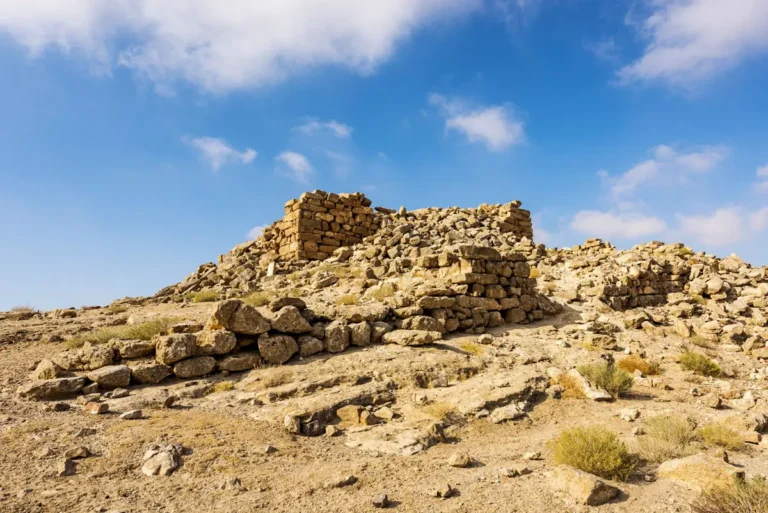 360°360° panoramaQasr El-Al: 360° Panorama
Nearby
Also near Qatrana
From guide to visit
Explore the Roman forts with a private guide
El-Al isn’t part of our tours: it is hard to reach and takes a lot of time. To see Qasr Bshir, the best-preserved Roman fort in the area, join our Expedition to Qasr Bshir, Lejjun, Umm ar-Rasas & Karak.