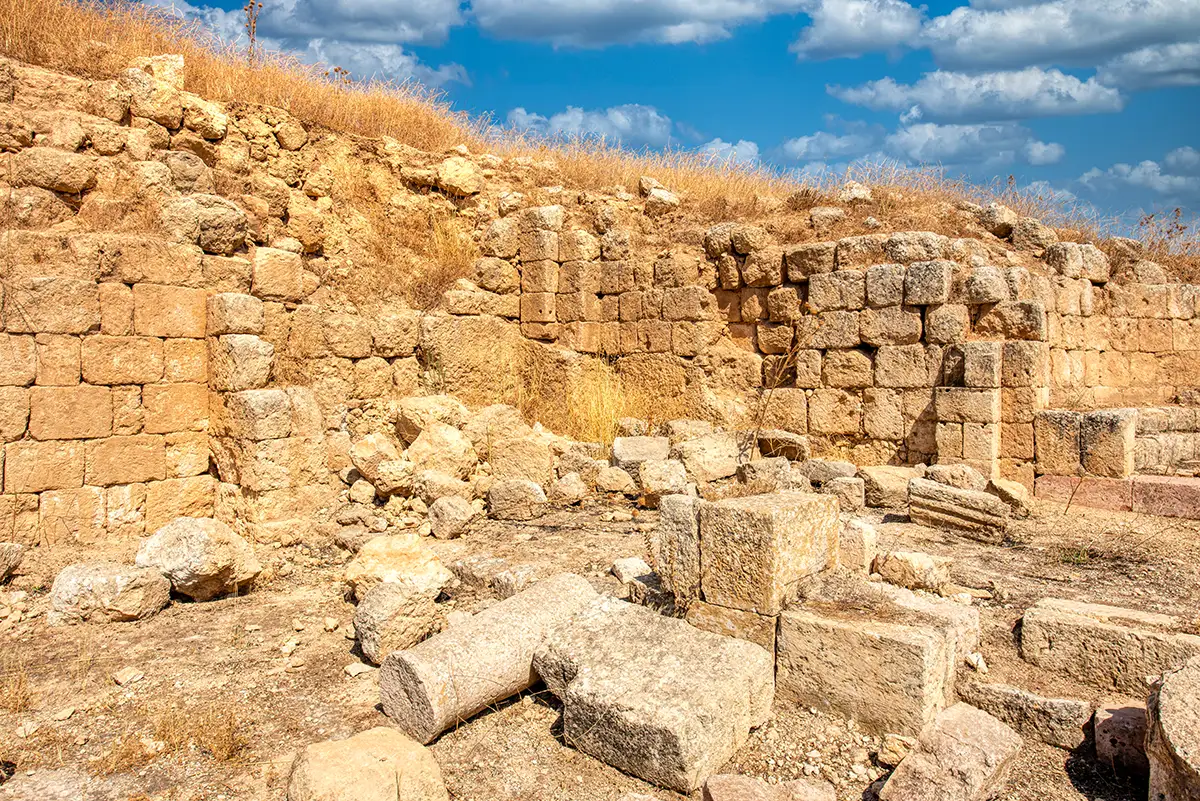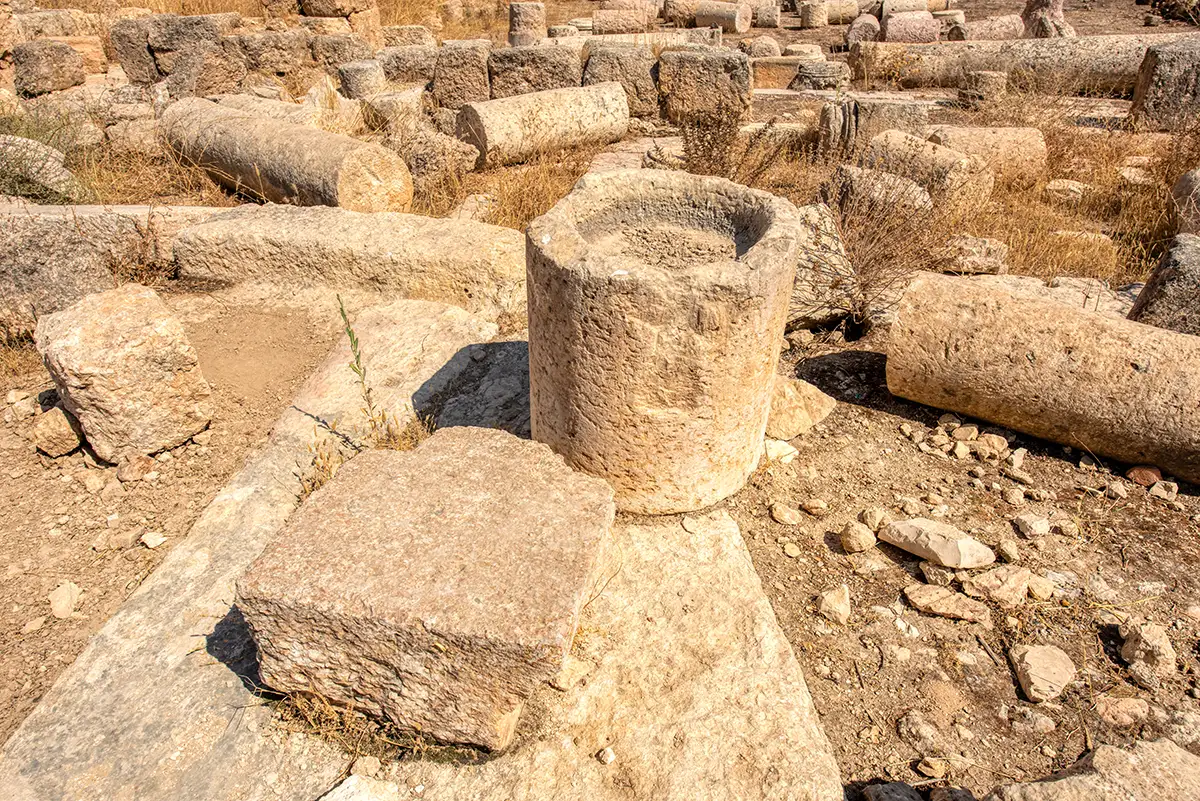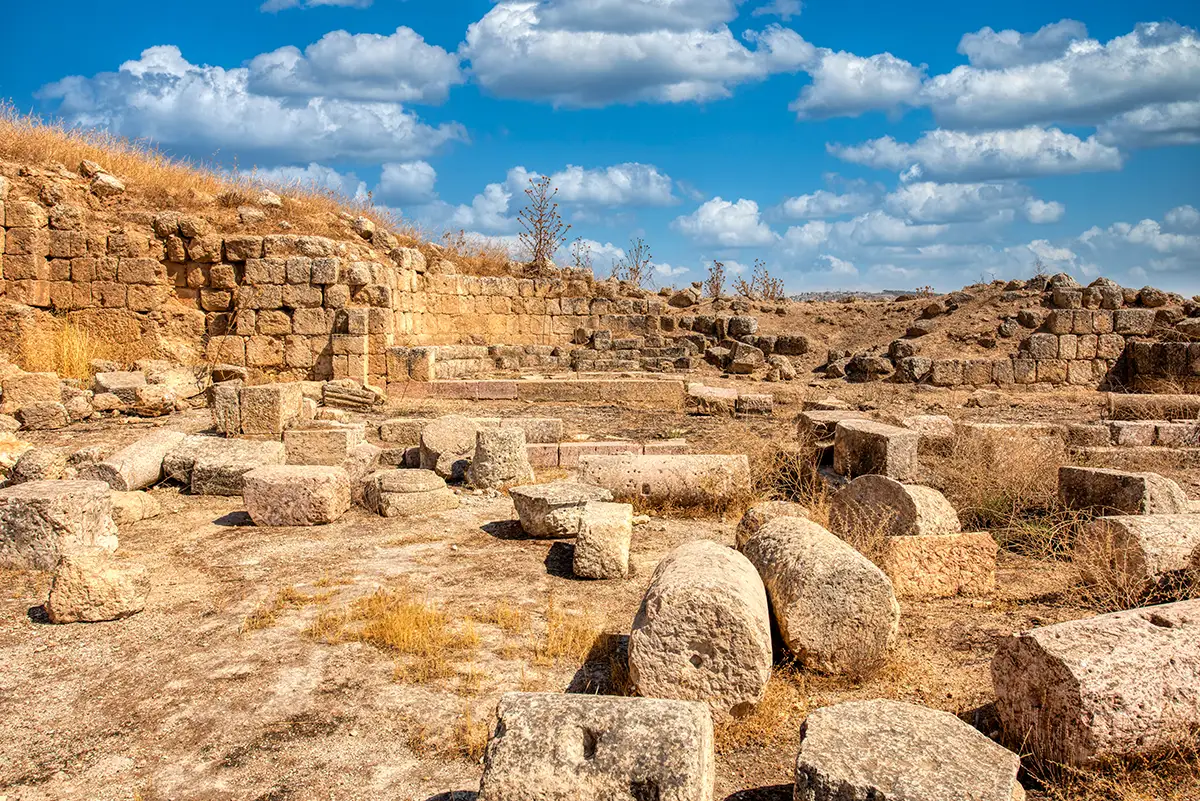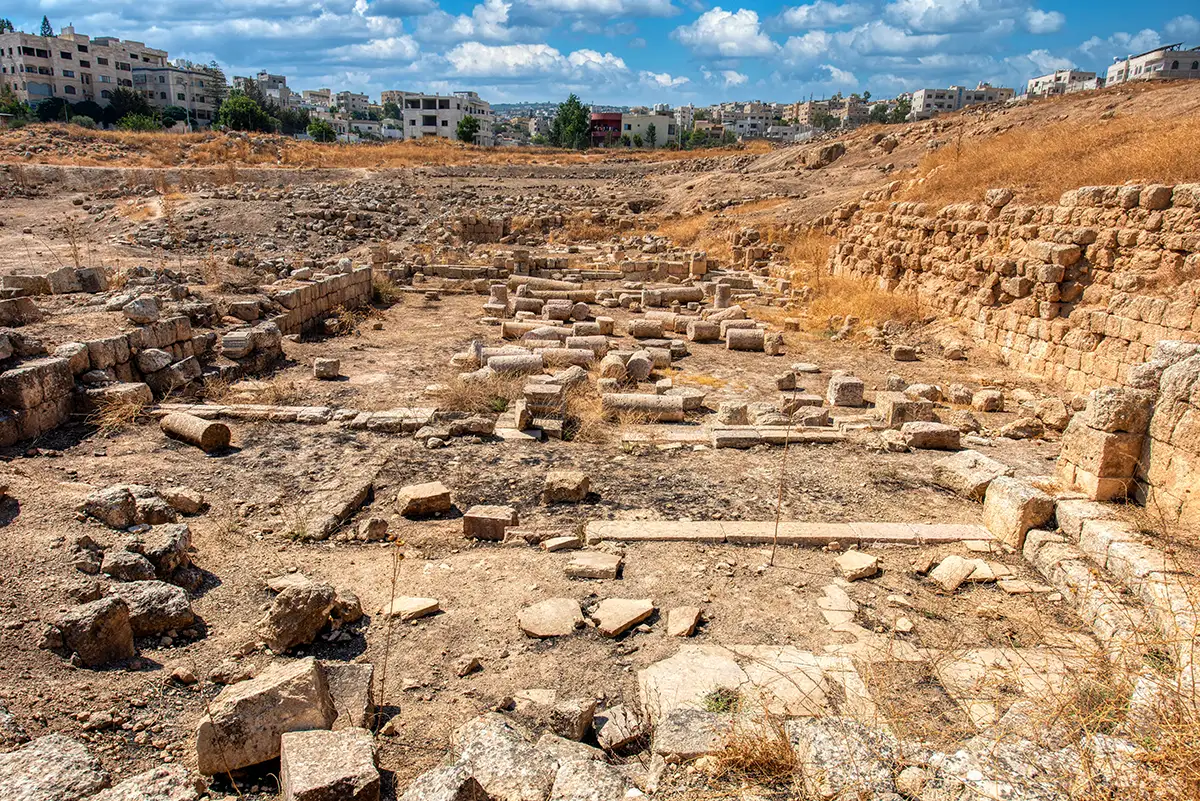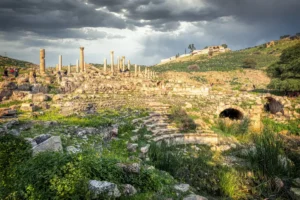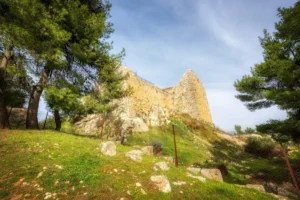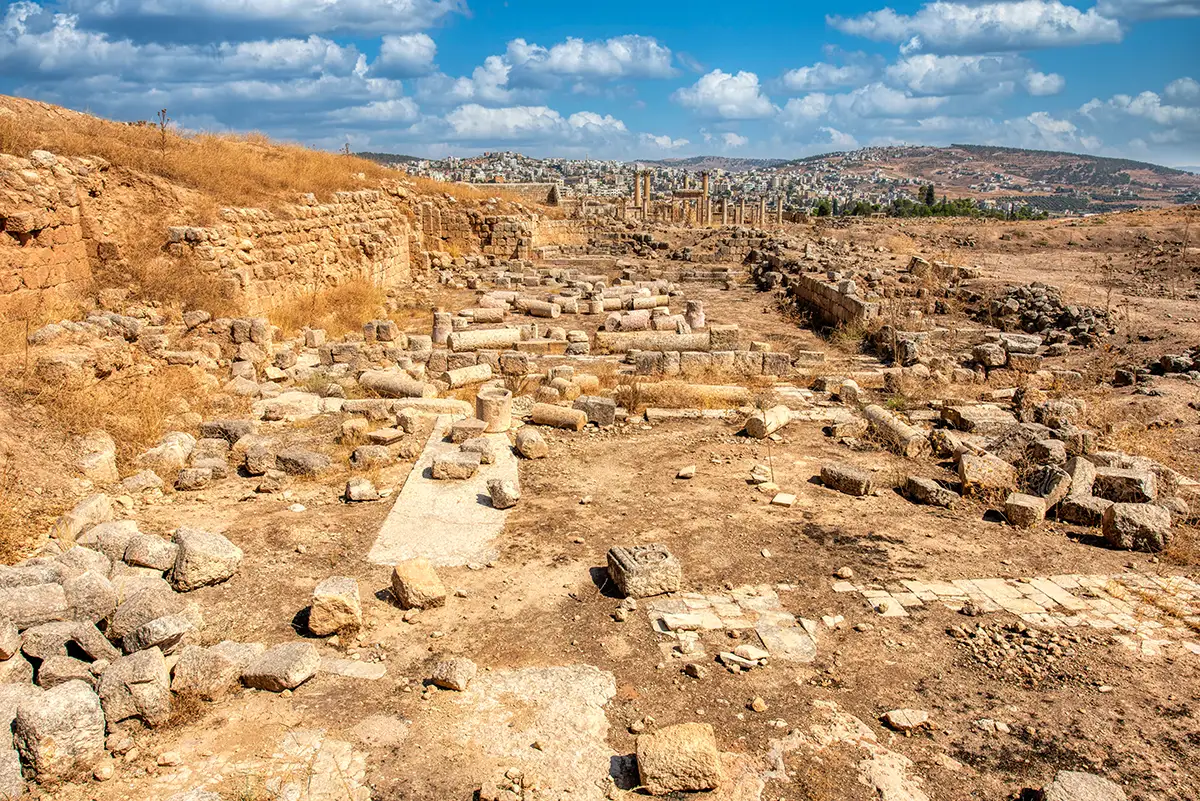
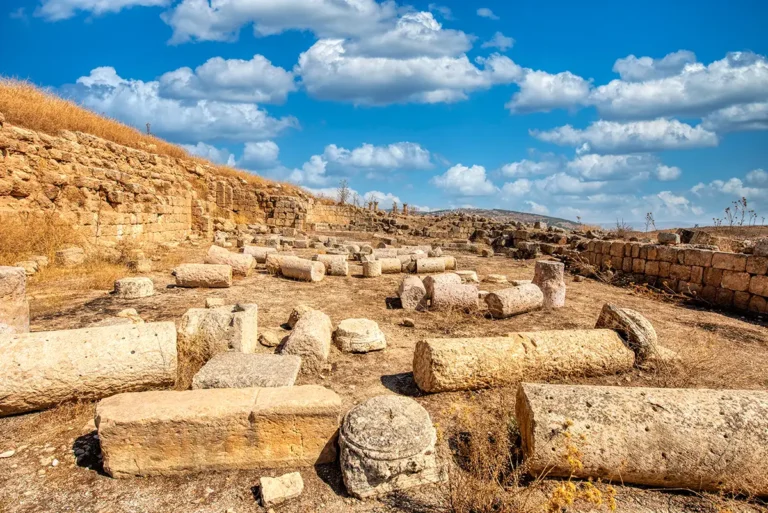
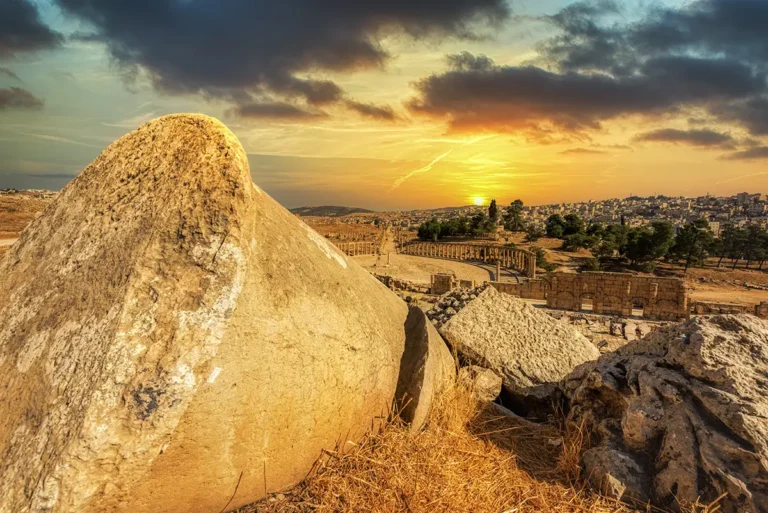
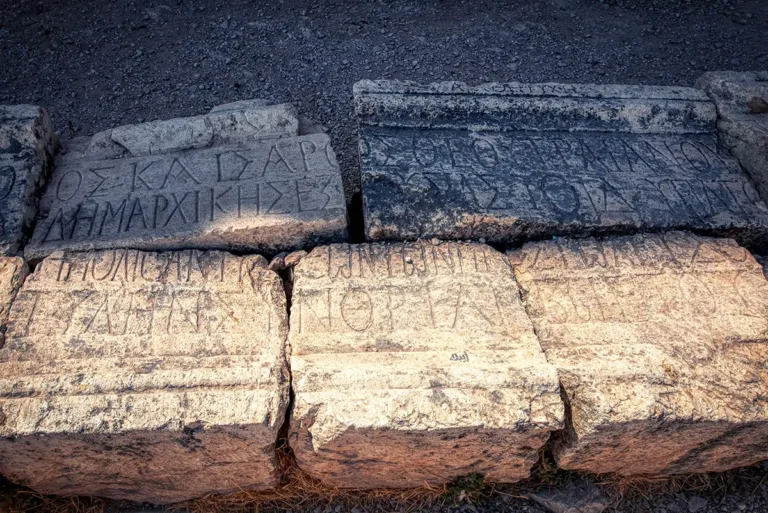
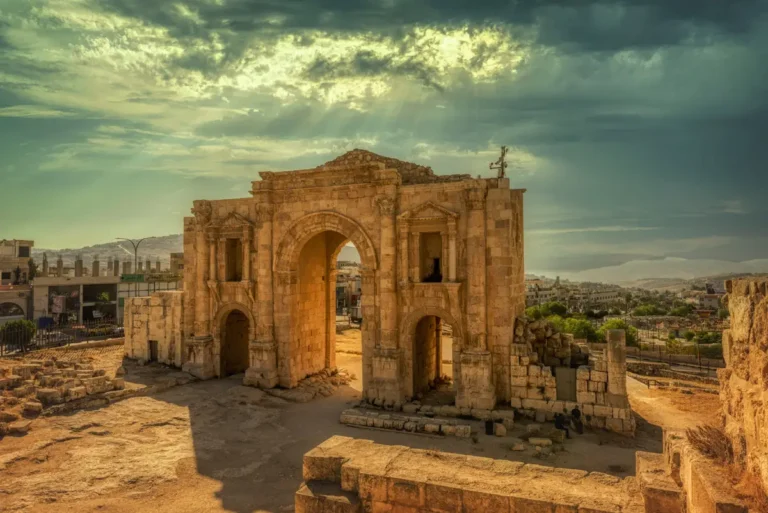

The Church of Bishop Genesius is one of the quieter ruins of Jerash, but one of the most telling. Its mosaic inscription dates it to AD 611 — the latest securely dated church in ancient Gerasa — and shows a Christian city still building and decorating churches only a few years before the Persian invasion of the region.
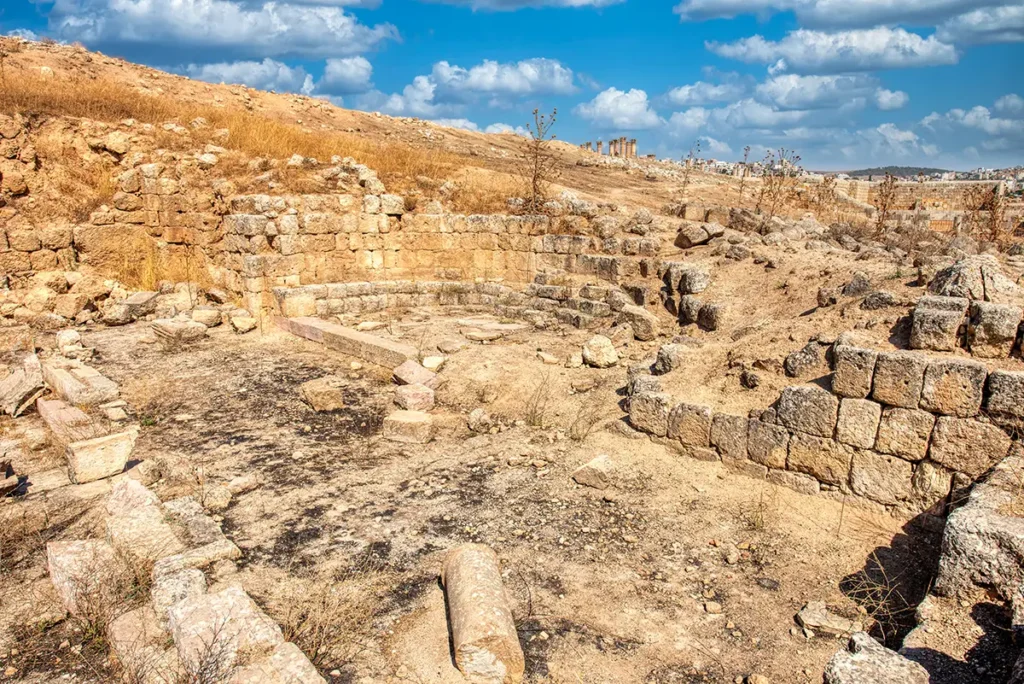
Where Is the Church of Bishop Genesius?
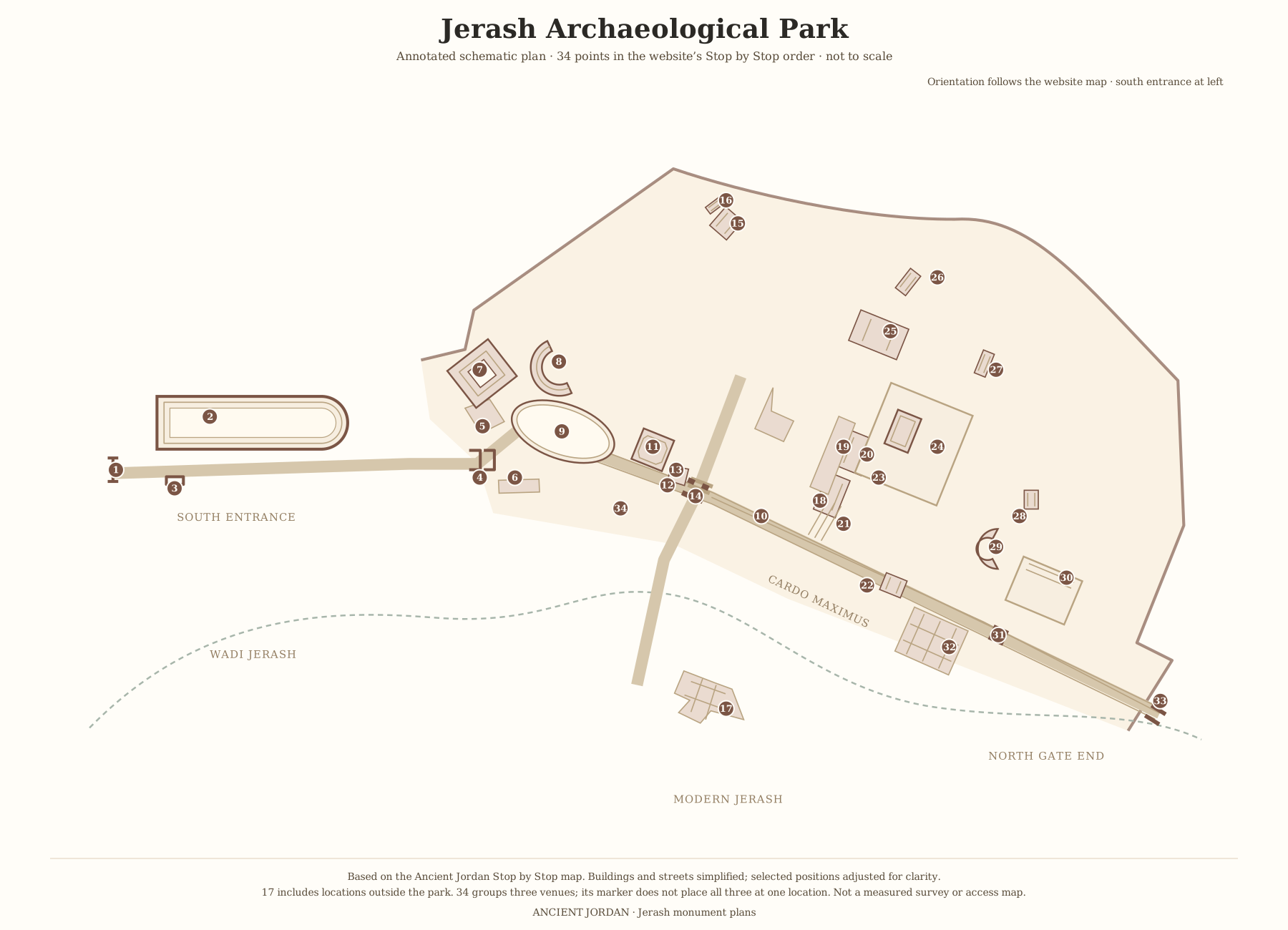
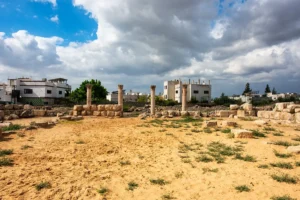
The church stands in the western Christian quarter of Jerash, about 50 metres west of the Three Churches Complex and close to the Synagogue-Church and the Church of Saints Peter and Paul.
It belongs to a neighbourhood shaped by churches, clergy and their congregations, rather than to the monumental Roman centre.
Historical Context and Origin
An older mosaic floor shows that a building stood here in the late 5th or early 6th century. In AD 610/611 a new church was built, and its mosaic inscription names Bishop Genesius — which is why it carries his name today. It was not dedicated to a saint called Genesius.
Only a few years later, from AD 614, the Persian invasion brought war to the region, and in AD 635 Jerash came under Muslim rule. Christians remained in the city, but what happened to this church afterwards is not known.
Architectural Design
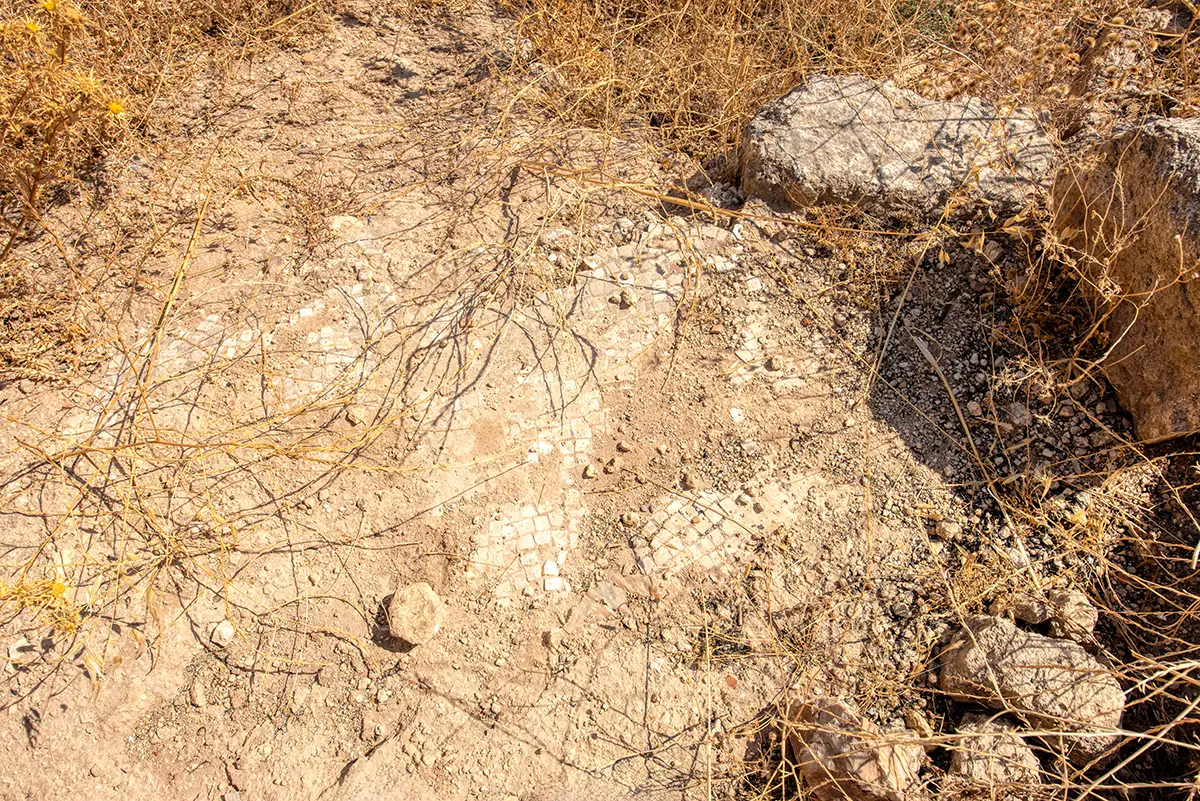
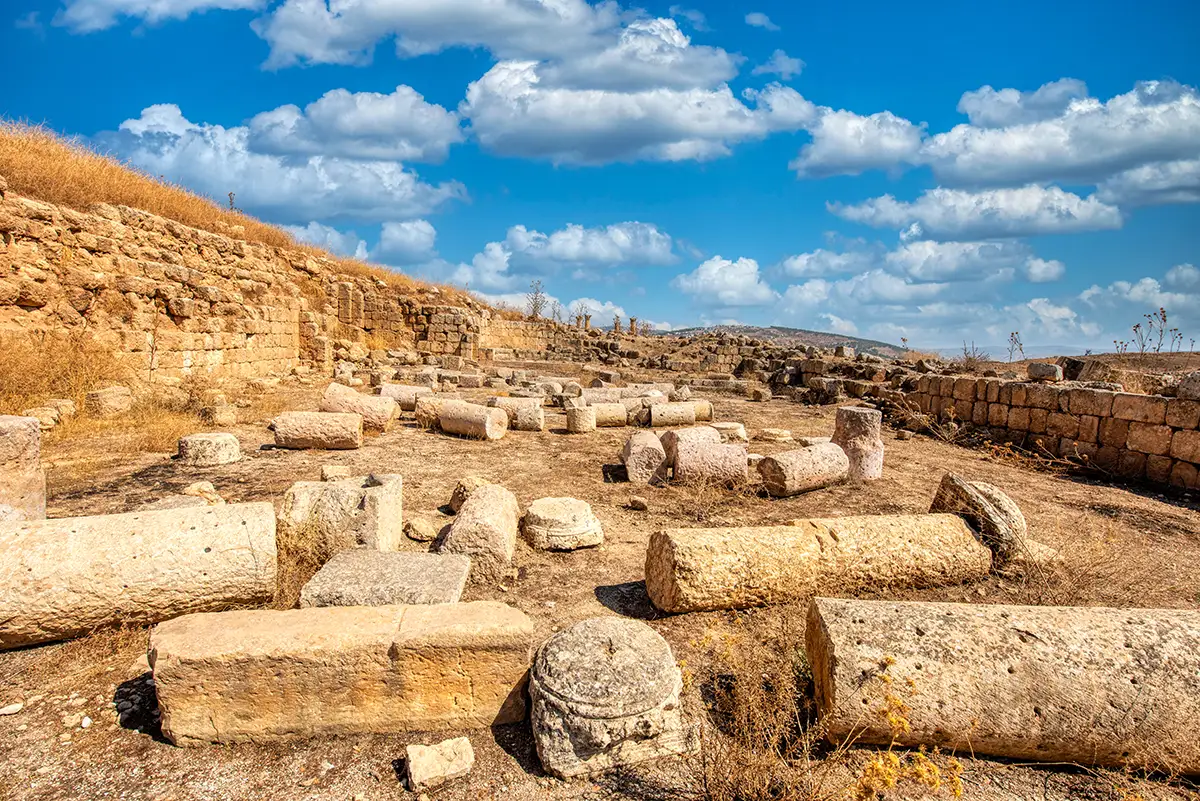
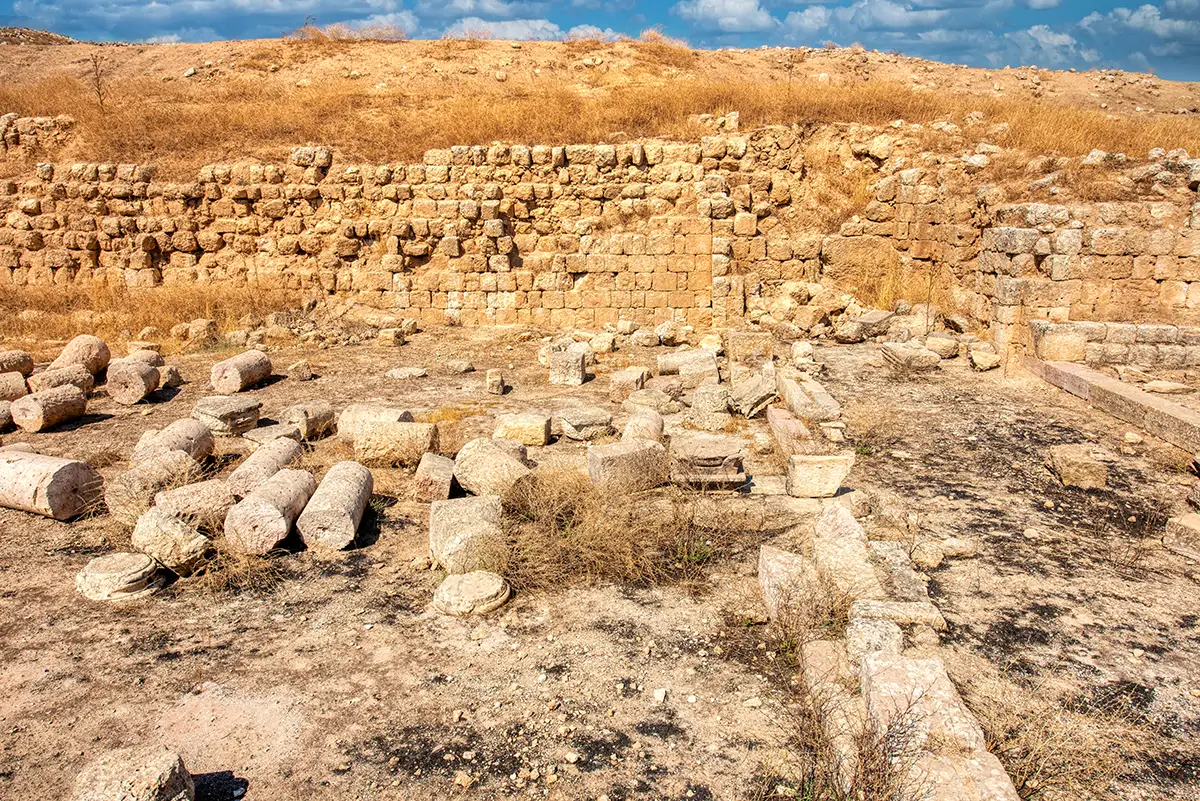
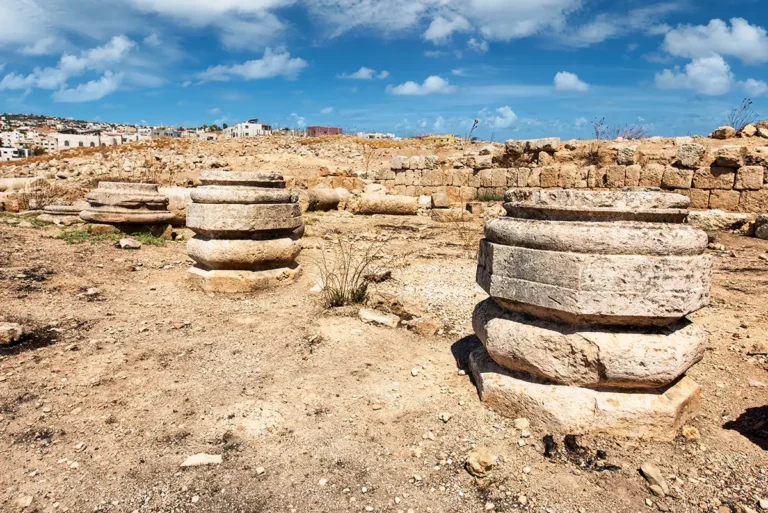
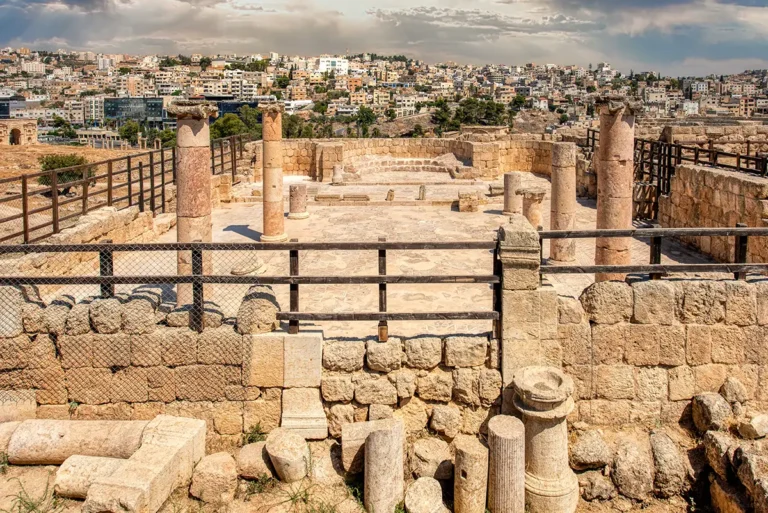
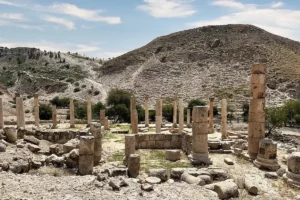
The church is a basilica about 26.5 metres long and 18 metres wide, including its western narthex and a room on the south-west. Colonnades divided the nave from two aisles, leading to a single eastern apse. The floors were its glory: stone inlay in the nave, geometric mosaics in the aisles with birds and a floral border, and mosaic in the south-west room as well.
The Dated Floor
The mosaic inscription naming Bishop Genesius dates the church to AD 611 — later than any other dated church in Gerasa.
Stone-Inlay Nave
The nave was paved in opus sectile, a floor of shaped pieces of stone.
Birds and Flowers
Geometric mosaics in the aisles included birds in the north aisle and a floral border in the south.
Two Floors
Beneath the church’s mosaic lies an older floor of the late 5th or early 6th century.
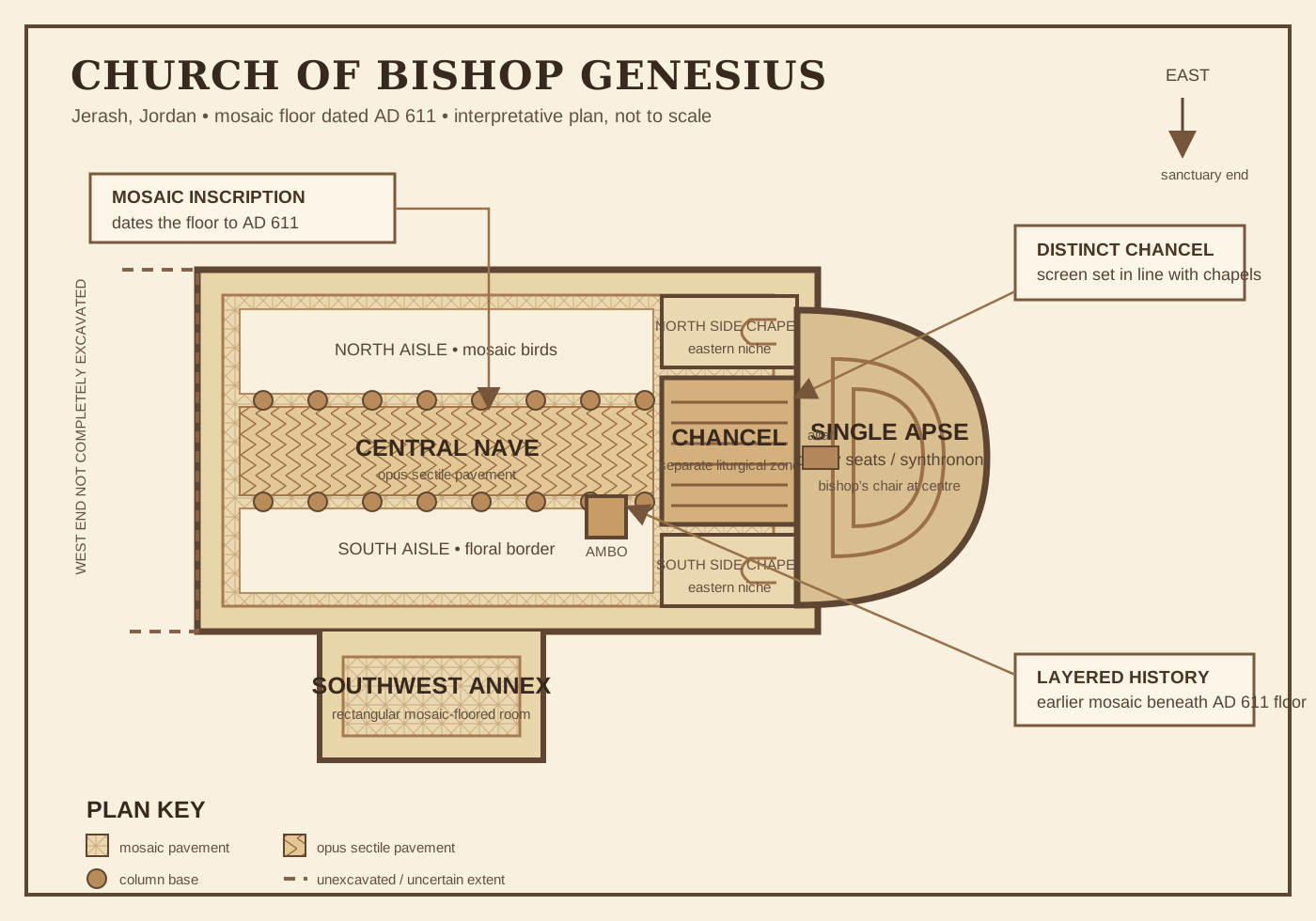
jerash-church-of-bishop-genesius-schematic
Tap the drawing to open it full size.
Open drawingThe Mosaic Inscription of the Church of Bishop Genesius
The mosaic inscription records that the church’s pavement was completed during the episcopate of Bishop Genesius, in AD 611 (sometimes given as AD 610/611 or AD 611–614 in modern discussion). It is the latest securely dated church inscription known from ancient Gerasa.
A historical description adds one intriguing detail: the date formula used the name of a month in Latin form, an unusual feature in a Greek mosaic inscription at Jerash. This may reflect the persistence of Roman administrative habits within an otherwise Greek-speaking Byzantine Christian setting.
Meaning and Importance
The inscription is the reason the building is known as the Church of Bishop Genesius. It does not establish a dedication to a saint named Genesius; rather, it identifies the bishop active when the mosaic floor was made.
Its importance is chronological. The AD 611 date demonstrates that Jerash still possessed active bishops, patrons, mosaic workers and church-building capacity in the early seventh century, shortly before the Persian invasion of the region.
Destruction and Rediscovery
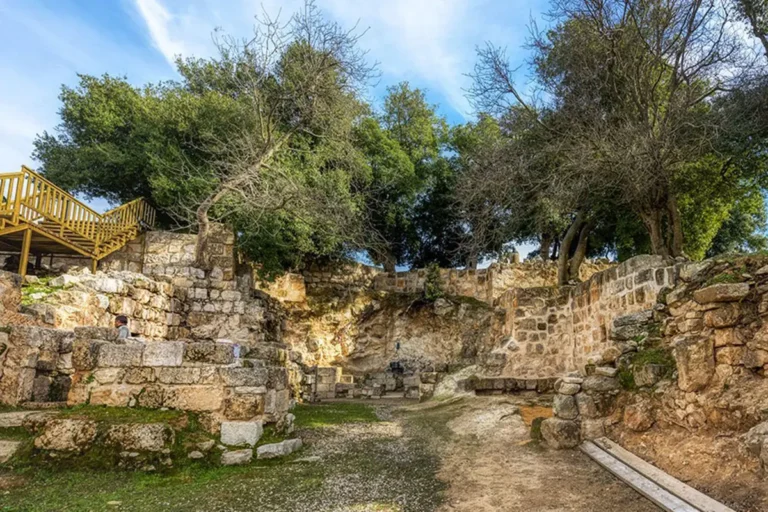
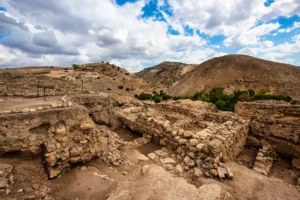
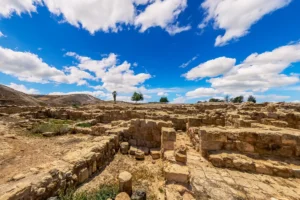
The earthquake of AD 749 devastated the city. In modern times the church was partly excavated, revealing its plan, its two layers of mosaic floor and the dated inscription; it has never been fully excavated.
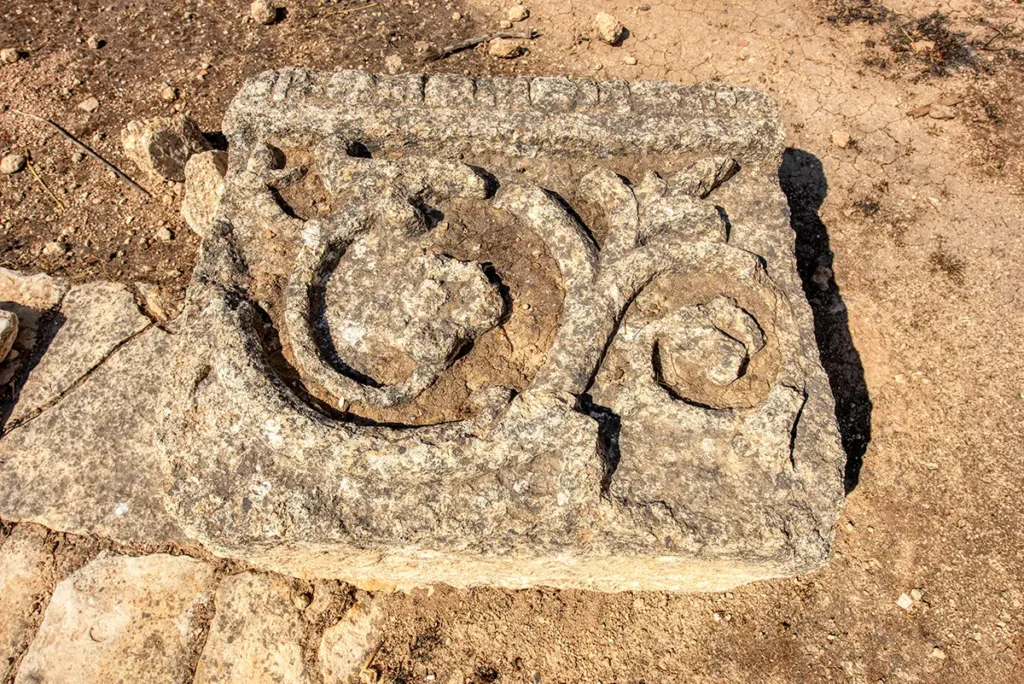
Visiting the Church of Bishop Genesius Today
Trace the nave and aisles to the apse, and look at the floors: the stone inlay of the nave, the geometric aisles and any traces of the older pavement beneath. It takes about 15 minutes.
Visit it together with the Three Churches Complex and the Synagogue-Church to see several generations of church building in one small area.