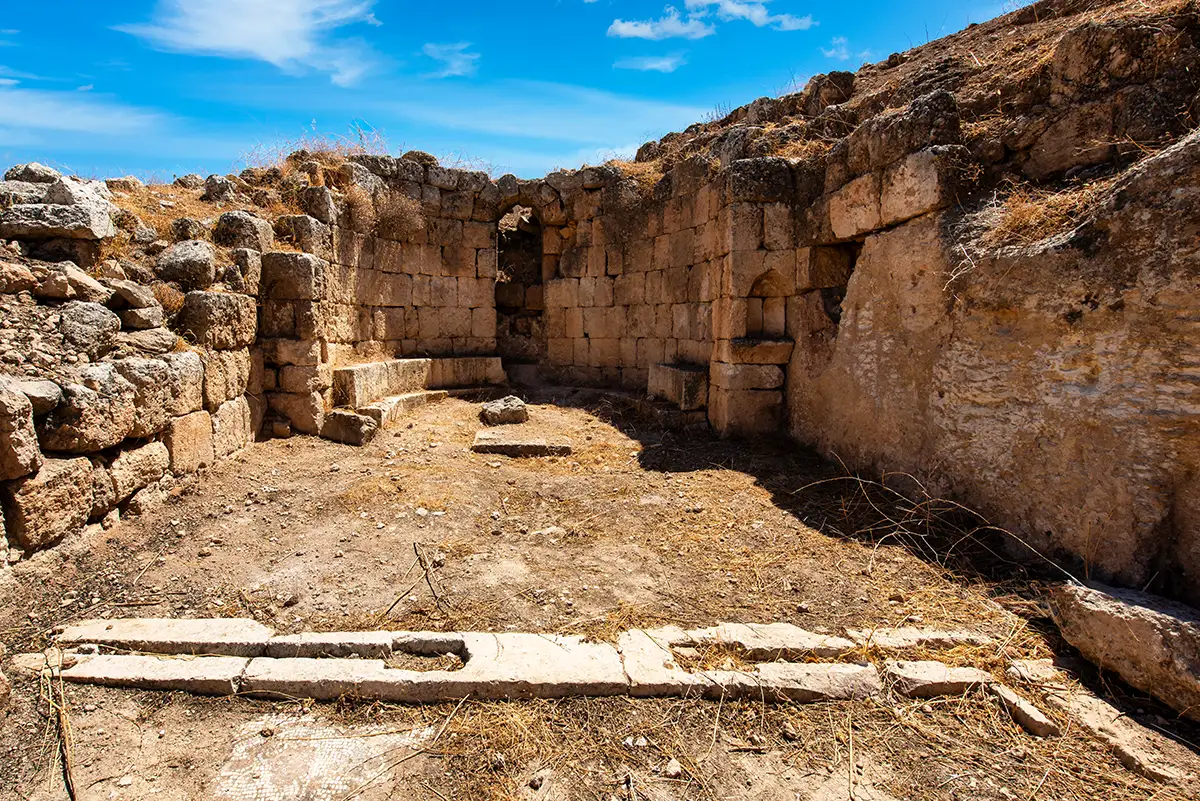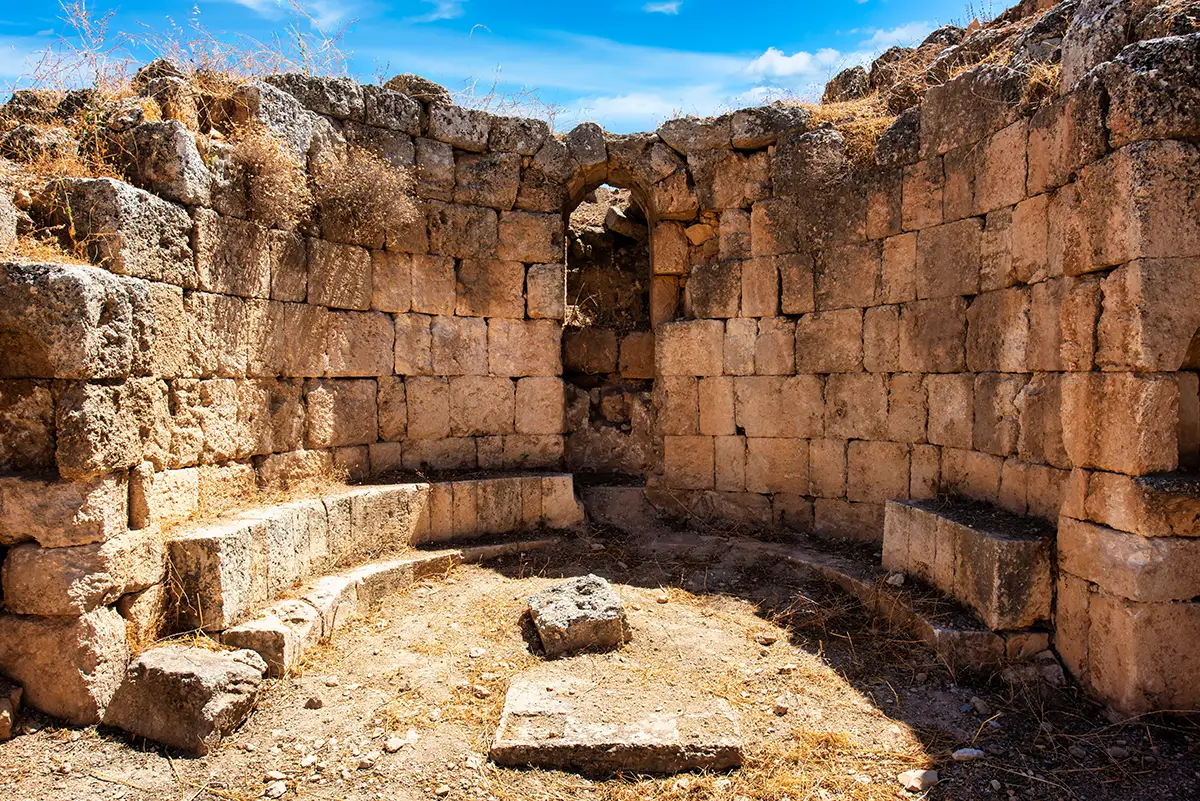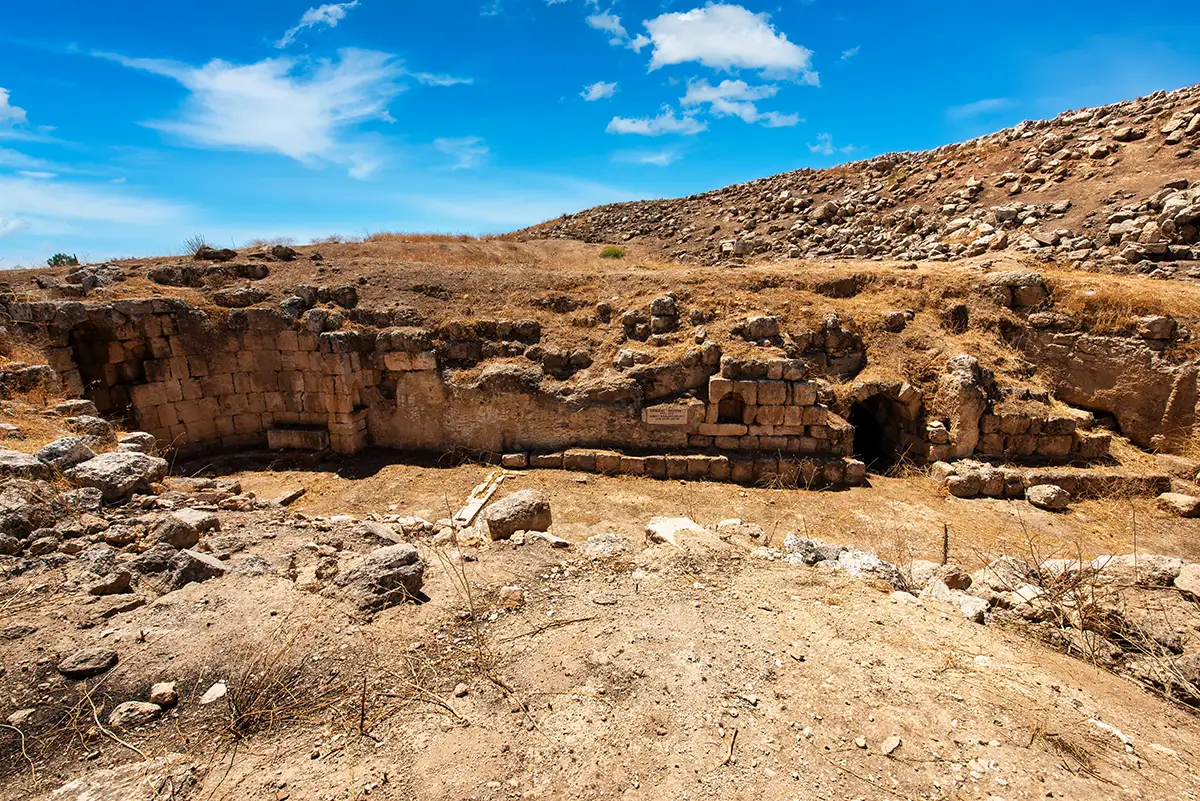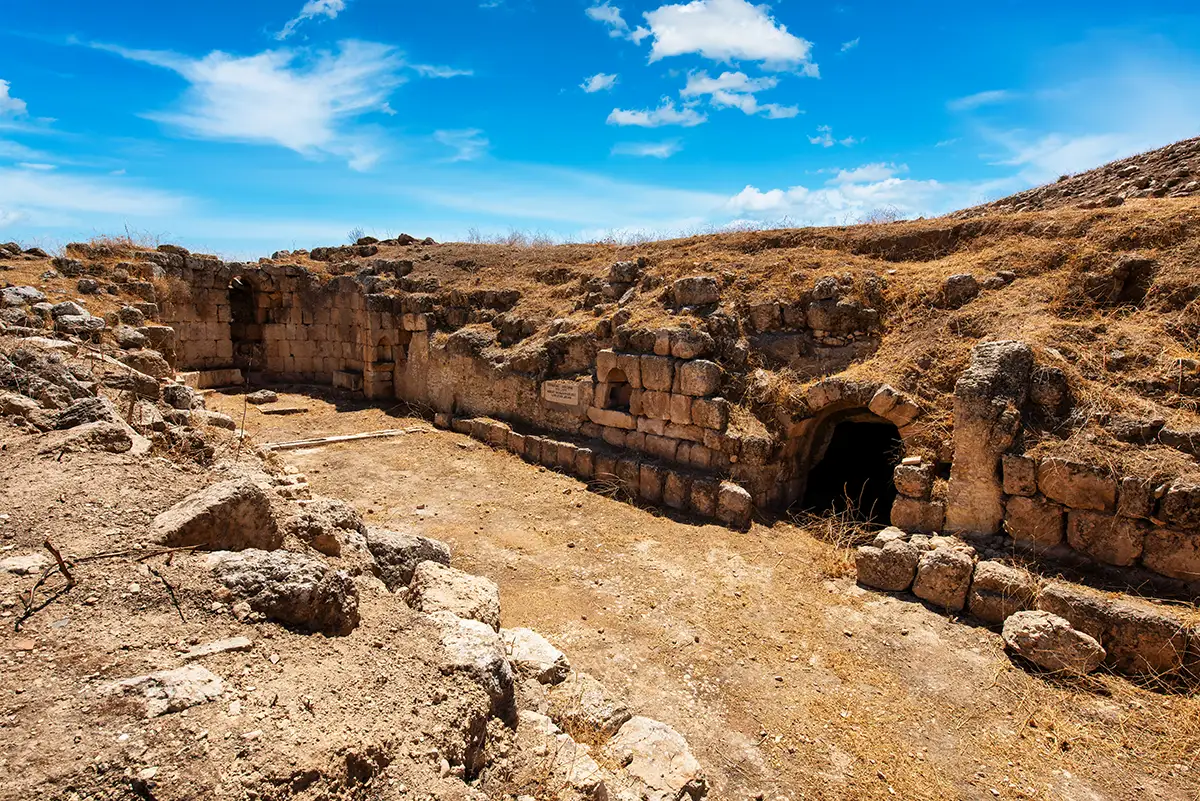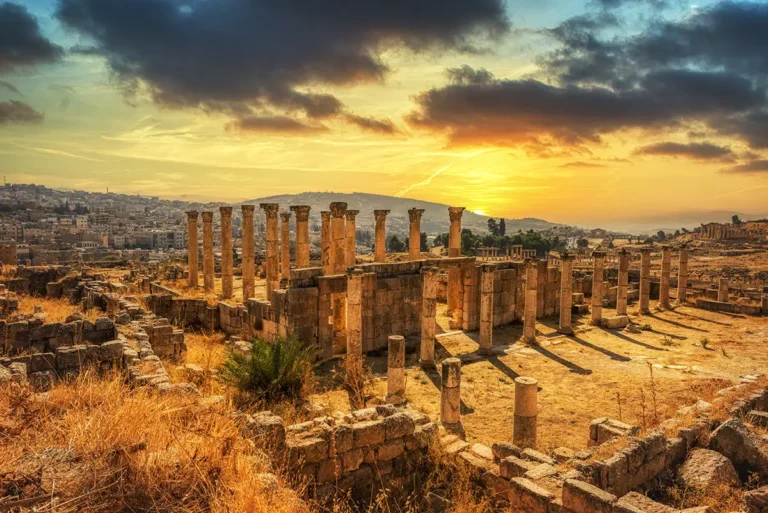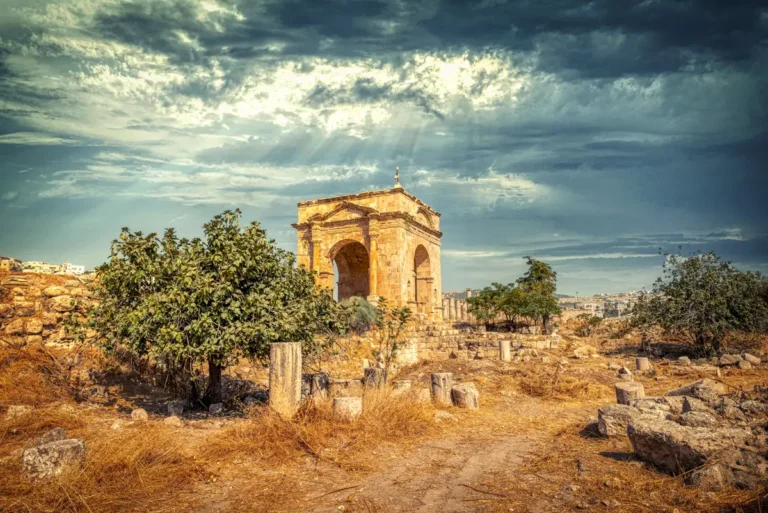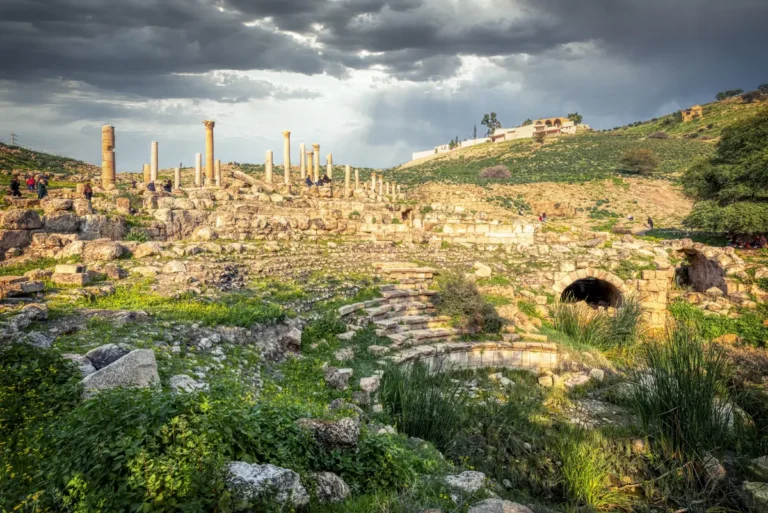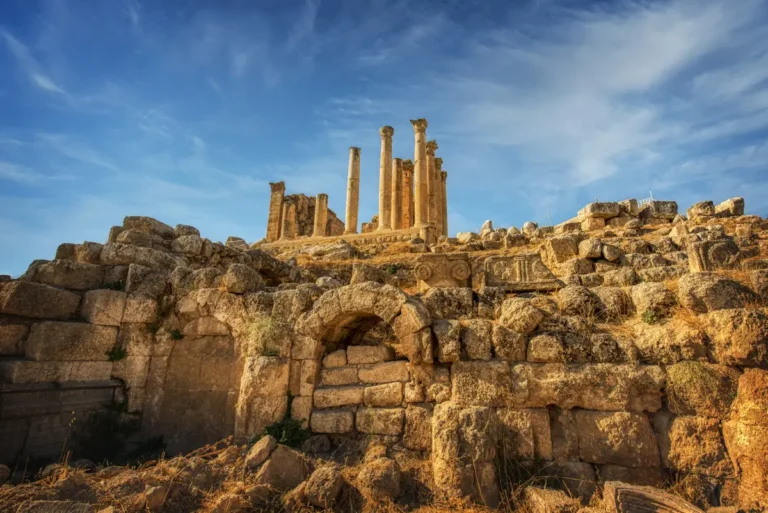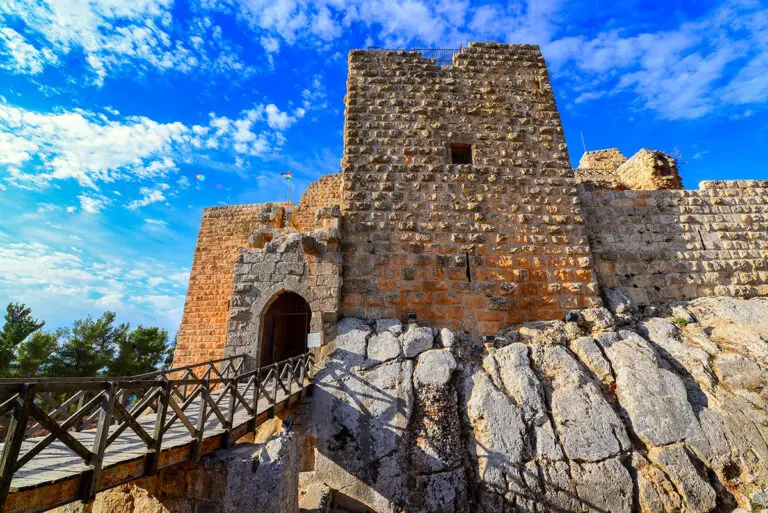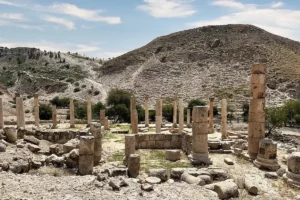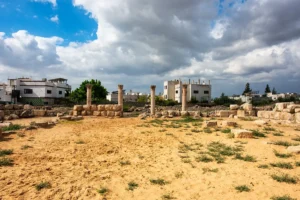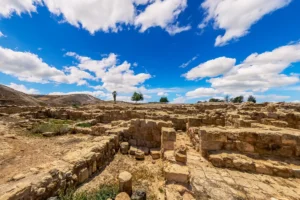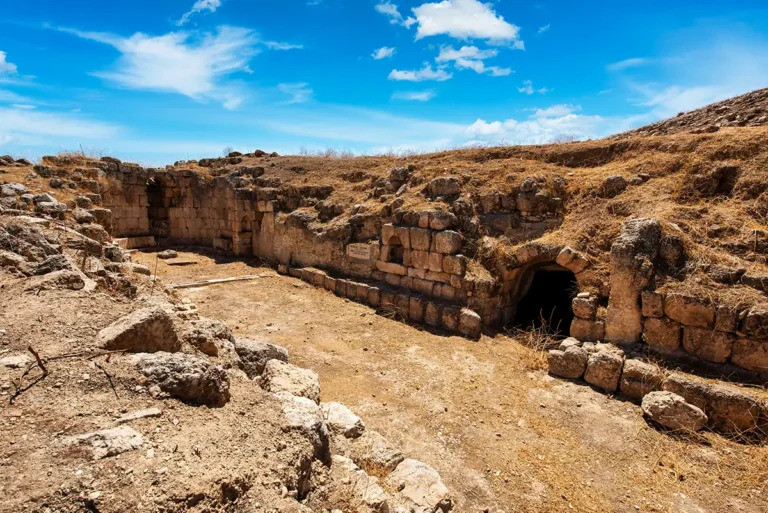
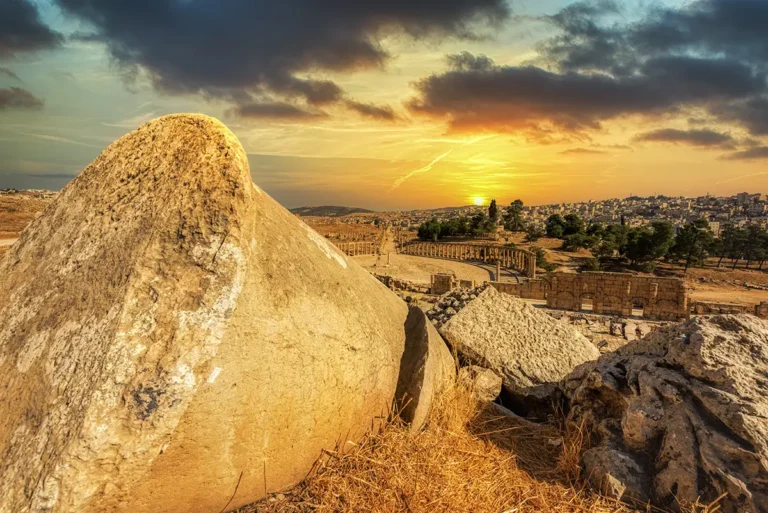
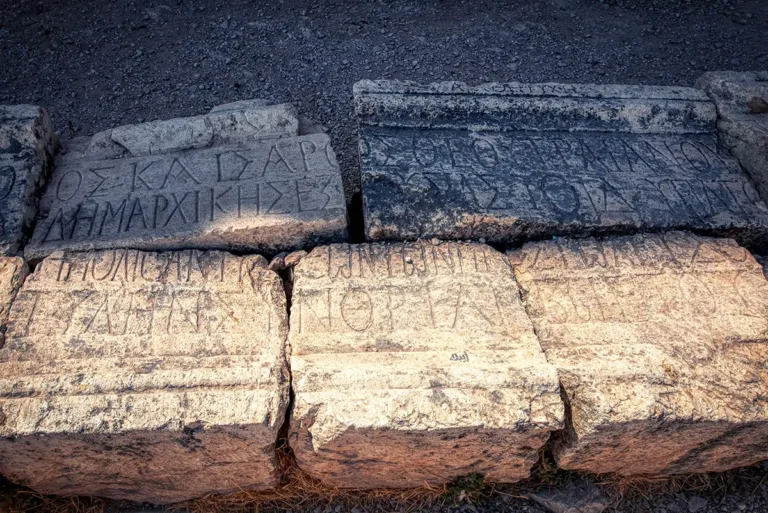
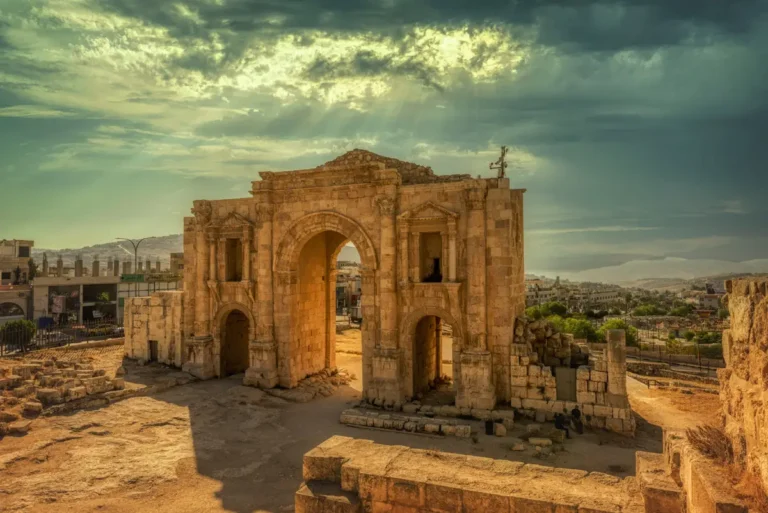

On the quiet south-western hill of Jerash, near the old city wall, stands one of its most evocative small monuments. The Mortuary Church, or Funeral Chapel, is a single hall with an apse — and an arch in its south wall that opens into a burial cave, joining a place of worship with a place of burial and remembrance.
Where Is the Mortuary Church?
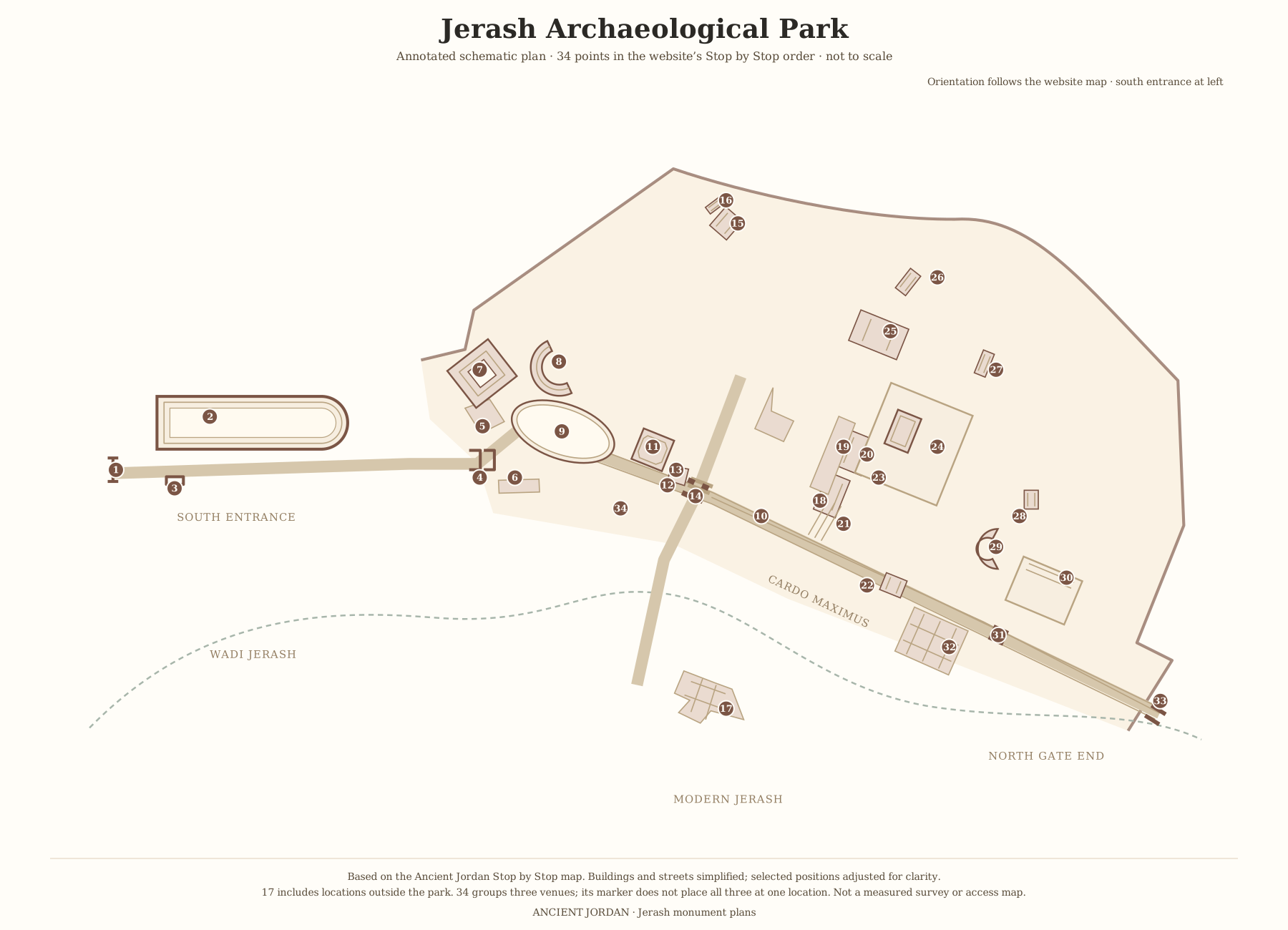
The chapel stands on the south-western hill of the ancient city, close to the city wall and about 15 metres south-south-west of the Church of Saints Peter and Paul. It lies on higher ground west of the Sanctuary of Zeus.
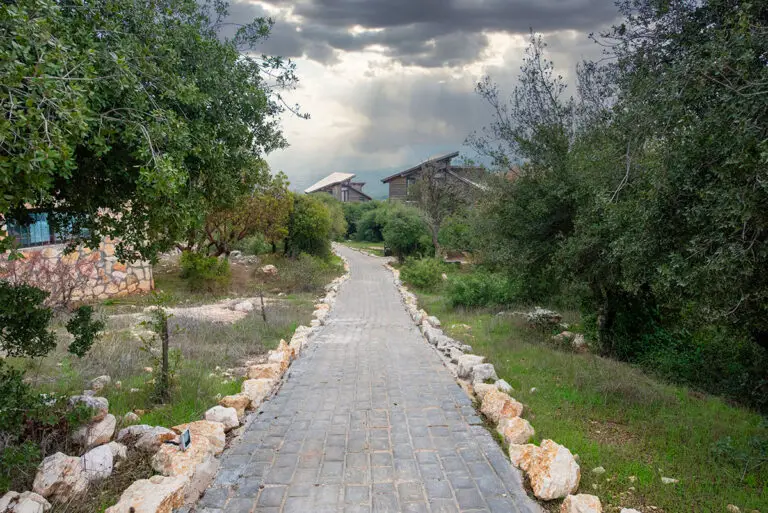
This part of Gerasa lay near a burial area, which explains the chapel’s link with a rock-cut tomb. From the hill there are wide views over the southern part of the ancient city.
Historical Context and Origin
The chapel was built in the later 6th century AD, when Christian Gerasa was filled with churches, chapels and funerary monuments. Its original dedication is unknown; the name “Mortuary Church” is a modern one, describing its connection with the burial cave. It probably served a local community or family rather than a large congregation.
In the 7th and 8th centuries time and iconoclasm damaged its mosaics. When and how the chapel went out of use is not known.
Architectural Design
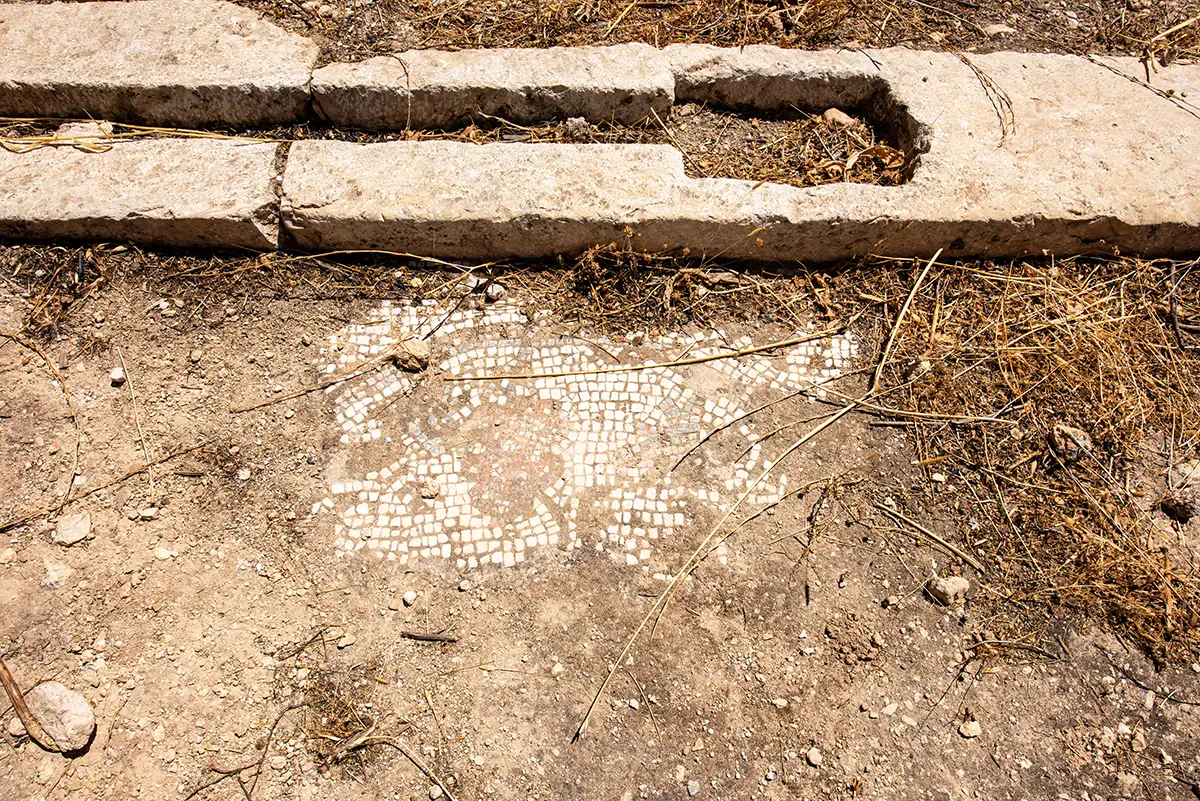
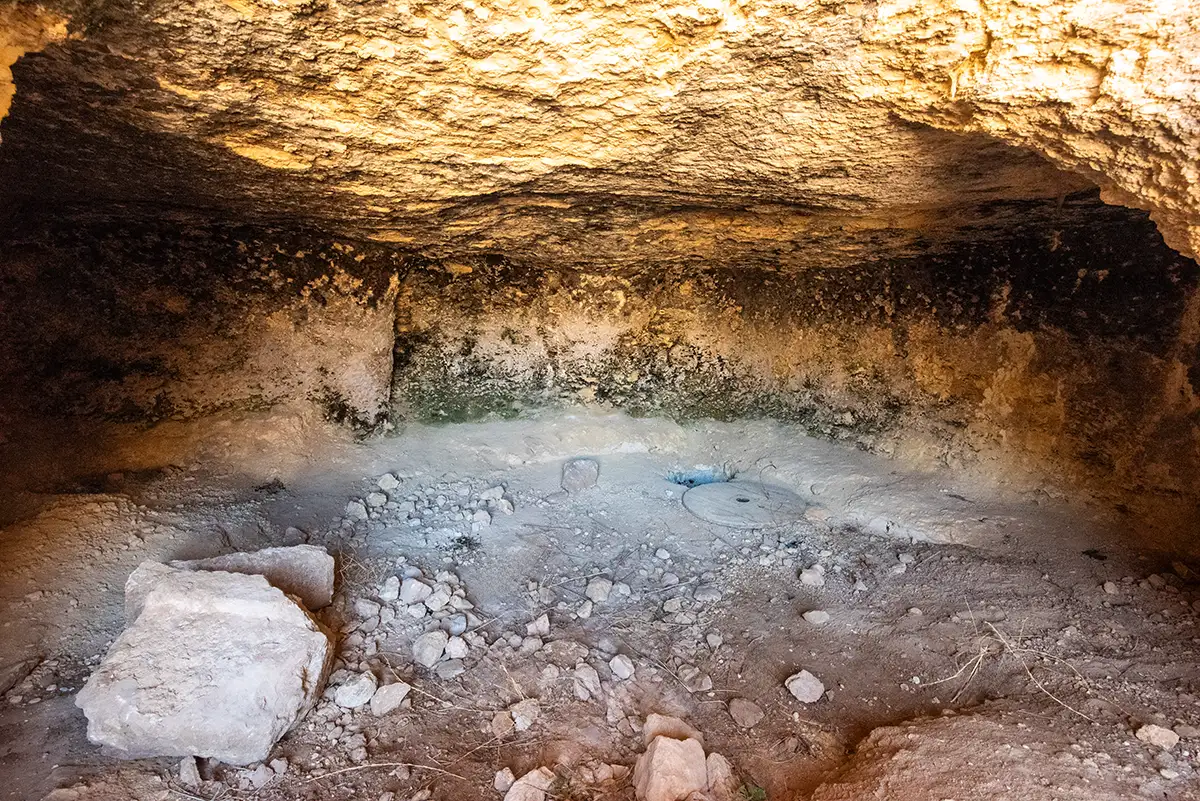
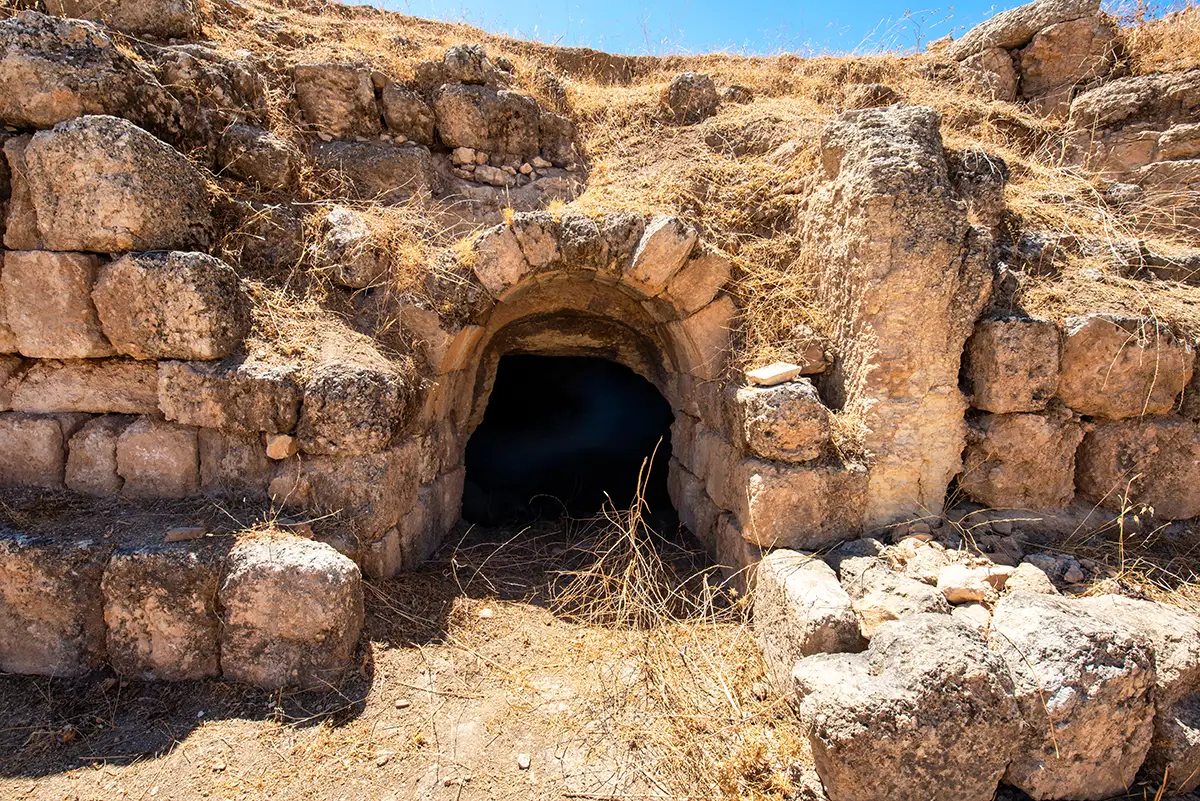
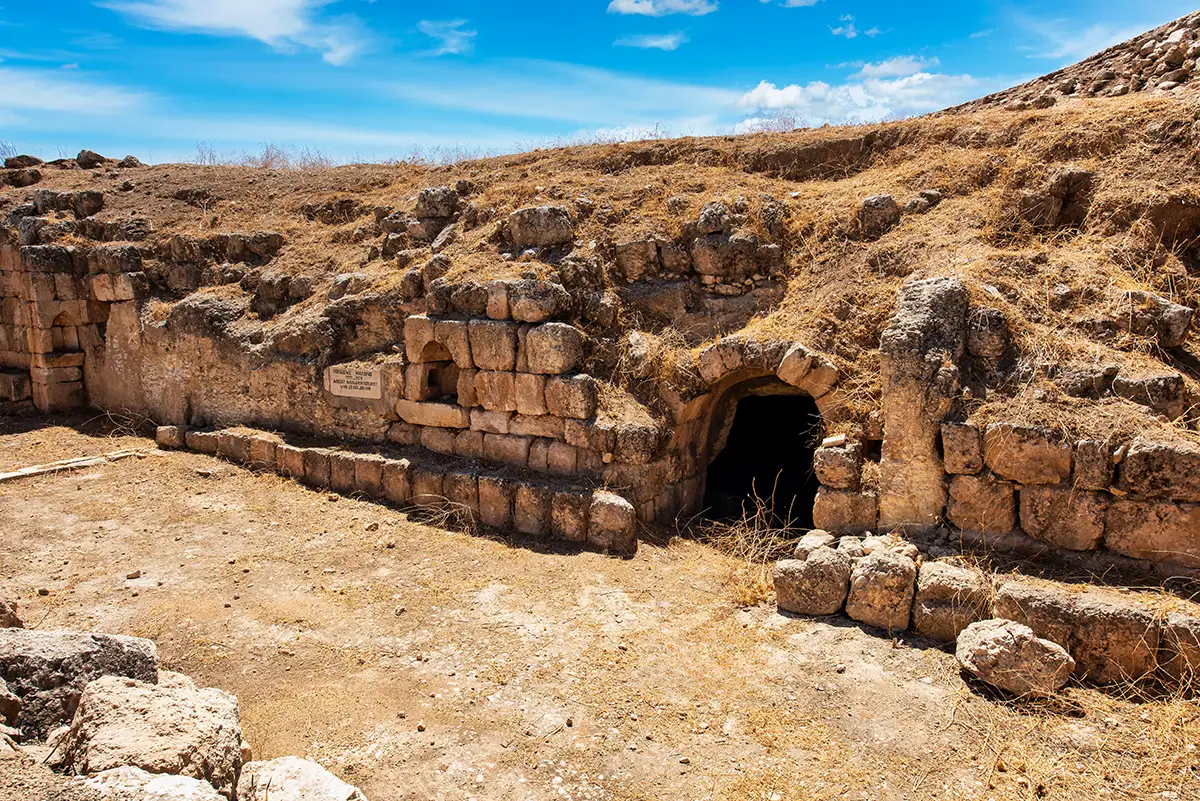
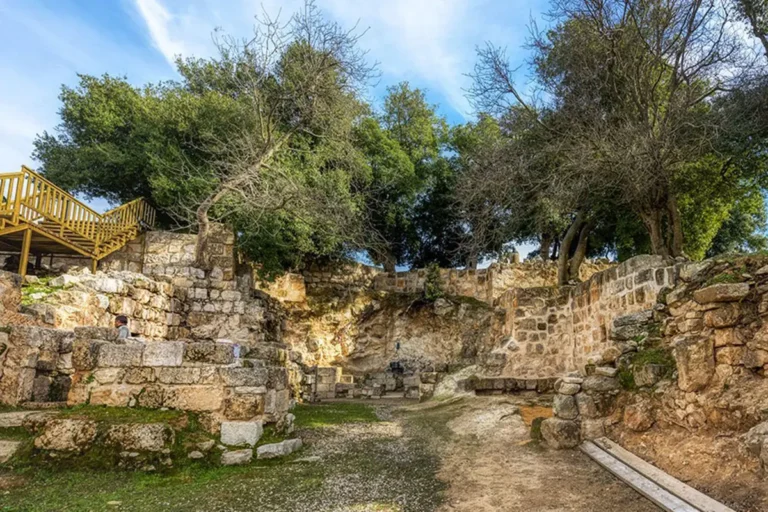
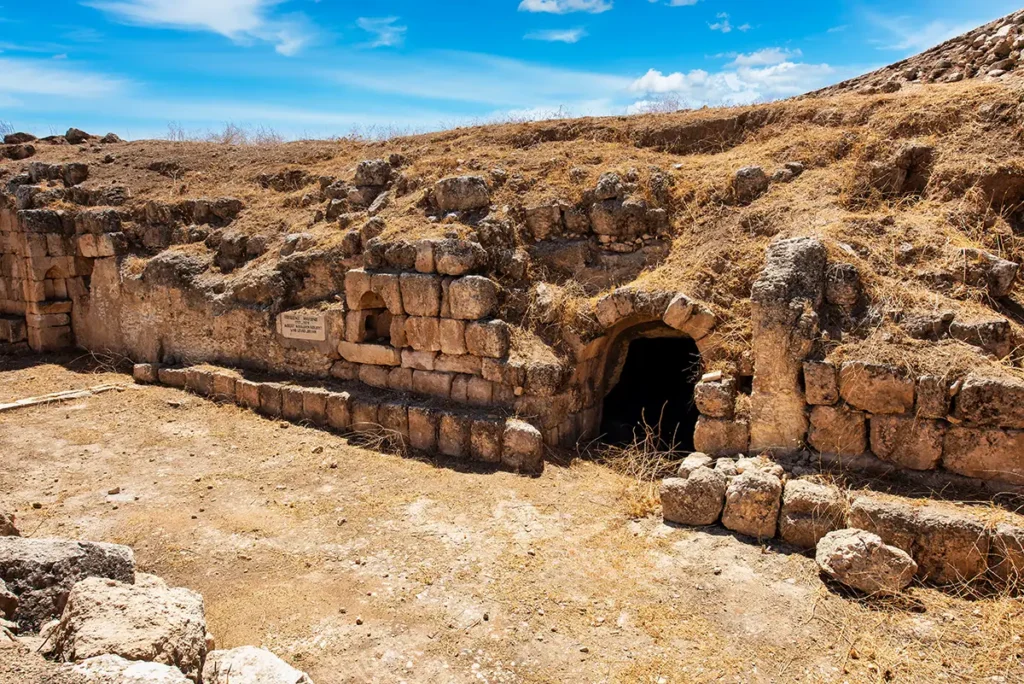
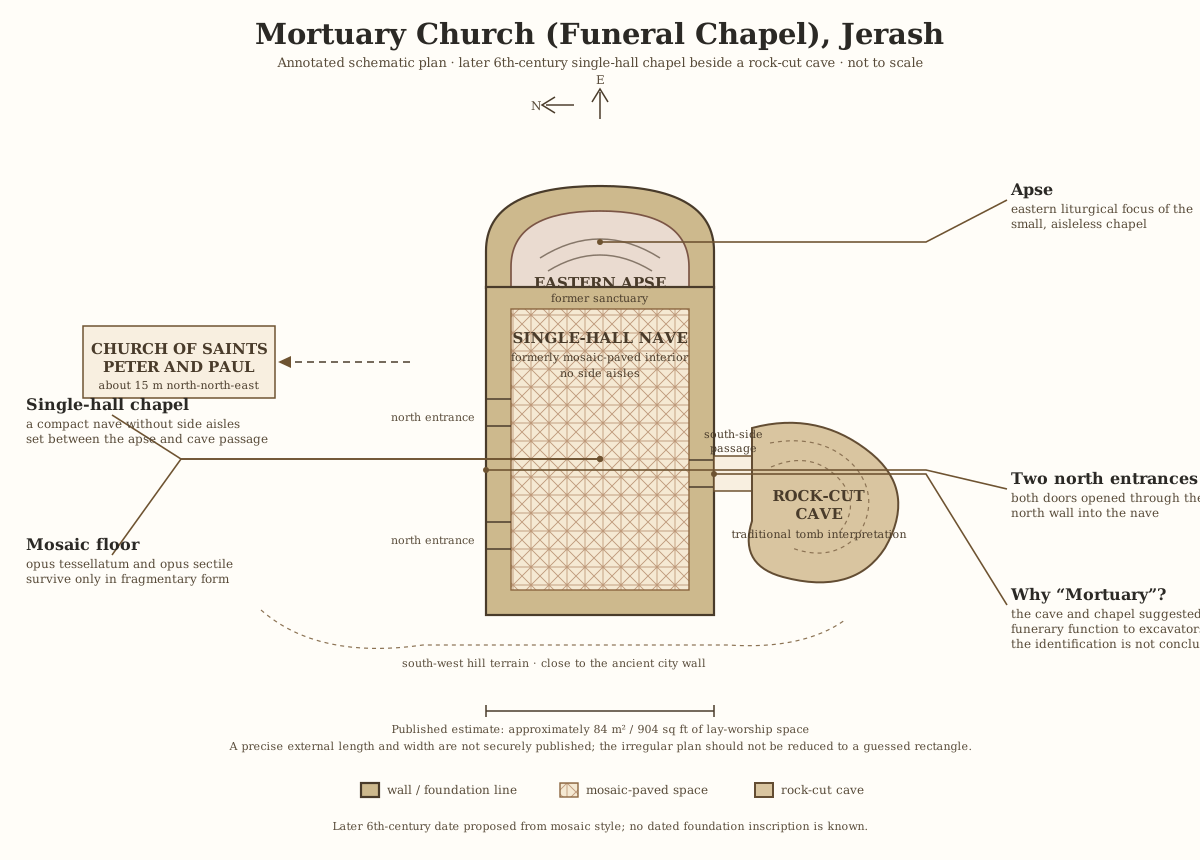
The chapel is a single rectangular hall of about 84 square metres, without side aisles, ending in an eastern apse where the altar stood. On its south side an arch opens into the cave, so the living could gather for prayer and commemoration right beside the dead. The floor was paved with mosaics, a sign that this was a carefully furnished sacred building.
The Single Hall
A compact rectangular hall without aisles, ending in an eastern apse where the altar stood.
The Burial Cave
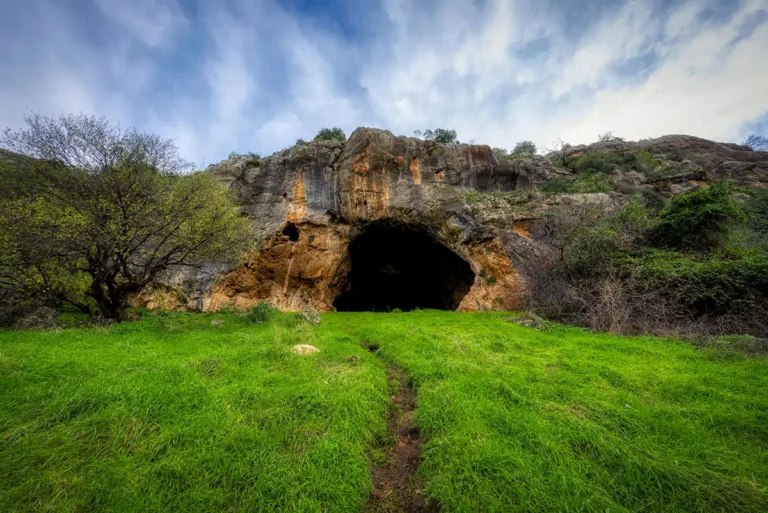
An arch in the south wall opens into a rock-cut cave, probably a burial place — the reason for the chapel’s name.
Mosaic Remains
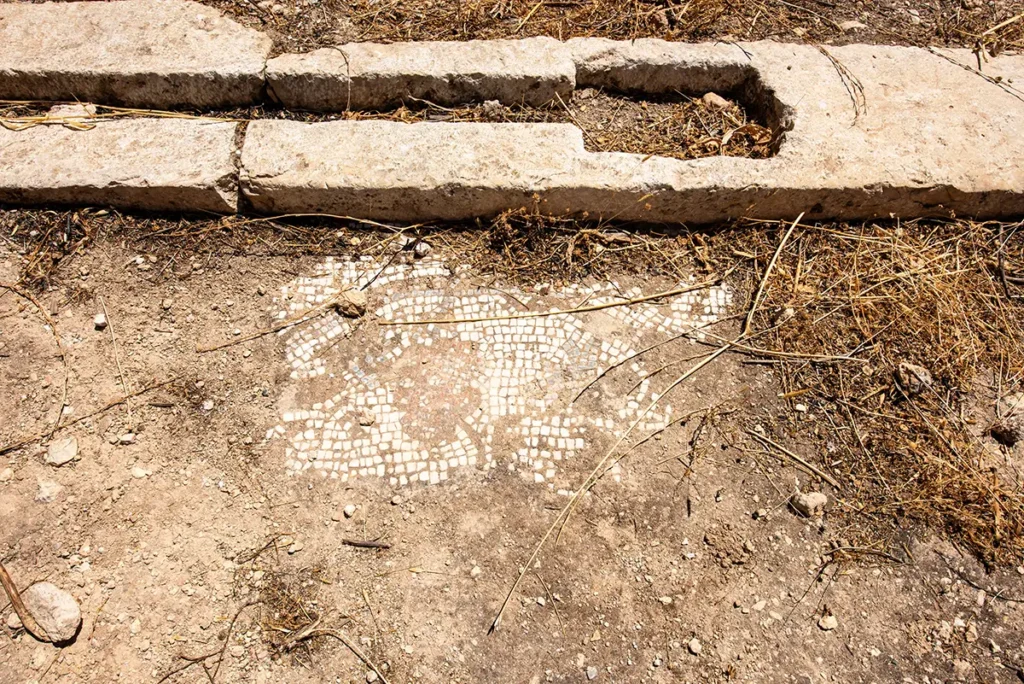
The floor was paved with mosaics, now fragmentary after centuries of damage and iconoclasm.
Harding’s Memorial
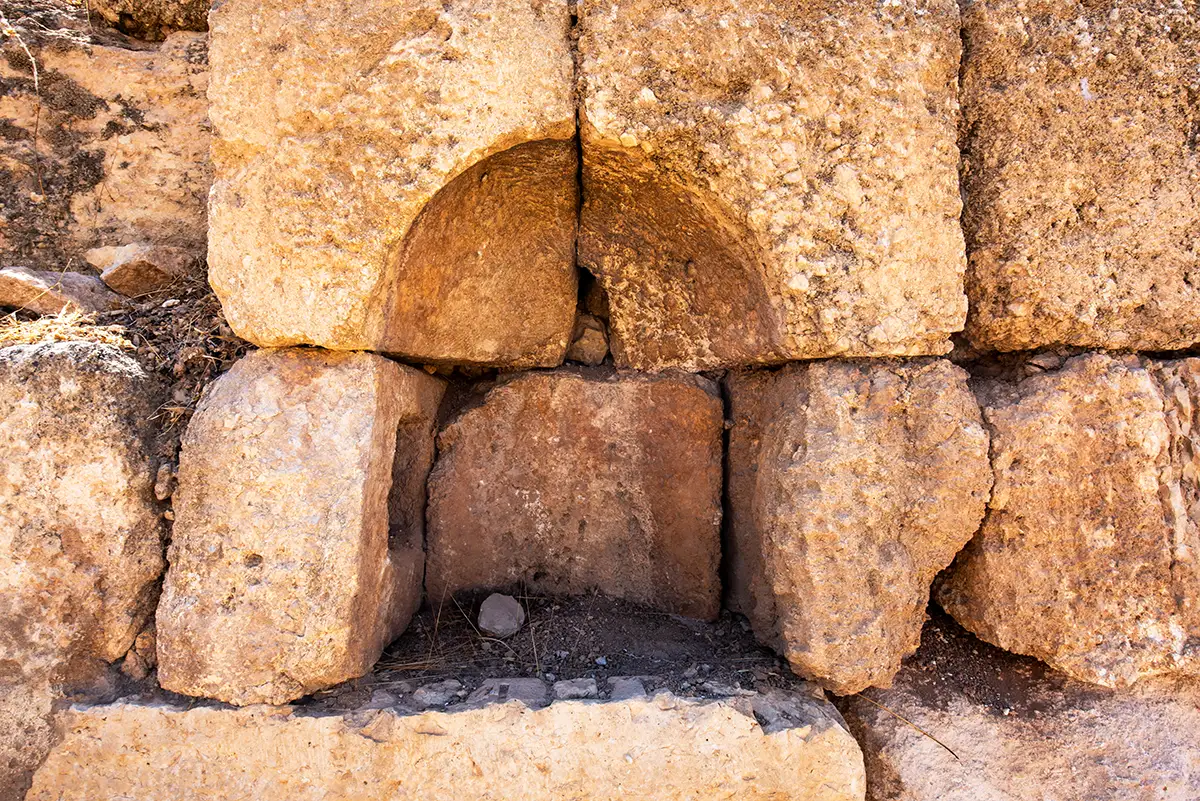
A plaque on the south wall marks where the ashes of Gerald Lankester Harding were placed in 1979.
Rediscovery and a Modern Memorial
The chapel was excavated in the late 1920s and early 1930s by the Yale–British School expedition, which recorded its link with the cave. In 1979 the ashes of Gerald Lankester Harding — the archaeologist who long directed Jordan’s Department of Antiquities — were placed here, as he had wished, and a plaque on the south wall commemorates him.
Visiting the Mortuary Church Today
Look for the apse, the compact hall, the arch in the south wall and the faint mosaic remains, then find Harding’s plaque. Visit it together with the Church of Saints Peter and Paul to compare a small funerary chapel with a richly decorated basilica.
The hill has little shade, and the remains are subtle — morning or late-afternoon light makes the foundations easier to read.