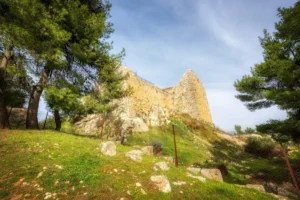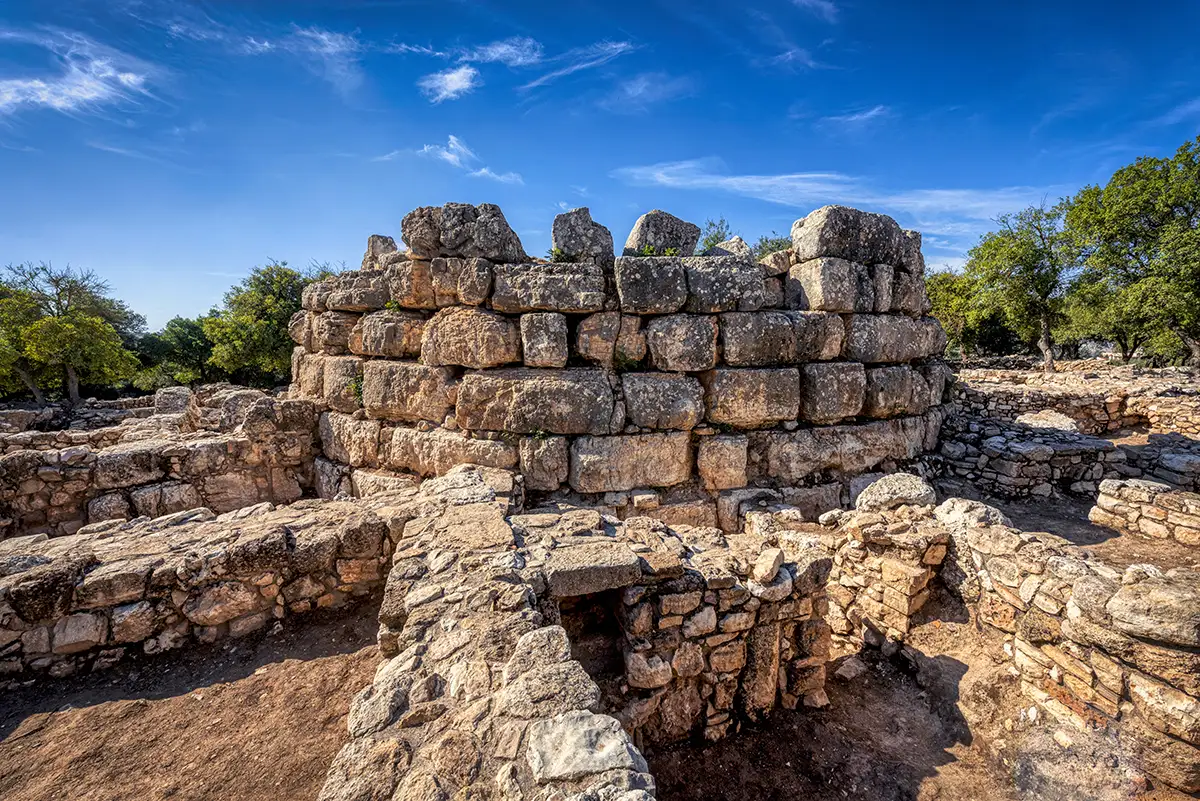

On a wooded hill near Fuheis rises a massive round tower of white limestone. Built in the Iron Age, like other towers around Amman, it was reused centuries later as a church — giving the site its name, al-Deir, “the monastery” — and the hilltop around it became a village of the Ayyubid and Mamluk periods, with cisterns, a rock-cut press and stone-walled rooms.
Where Is Khirbet Al-Deir?
The site occupies a high hill about 3 km from the town of Fuheis, in Balqa Governorate, a short drive west of Amman. The hilltop is surrounded by oak woodland, orchards and villas.
Historical Context and Origin
The round tower dates to the Iron Age; it belongs to the family of round stone towers found around Amman, often linked with the Ammonites. Much later, the tower was used as a church: according to local tradition, the name comes from a hermit monk who lived in it. Pottery and coins — including coins of the Ayyubid ruler al-Salih Imad al-Din and of the Mamluk sultan Inal — show that the main settlement on the hill belongs to the Ayyubid and Mamluk periods. Tradition also links the site with the Mamluk pigeon post.
Architectural Design
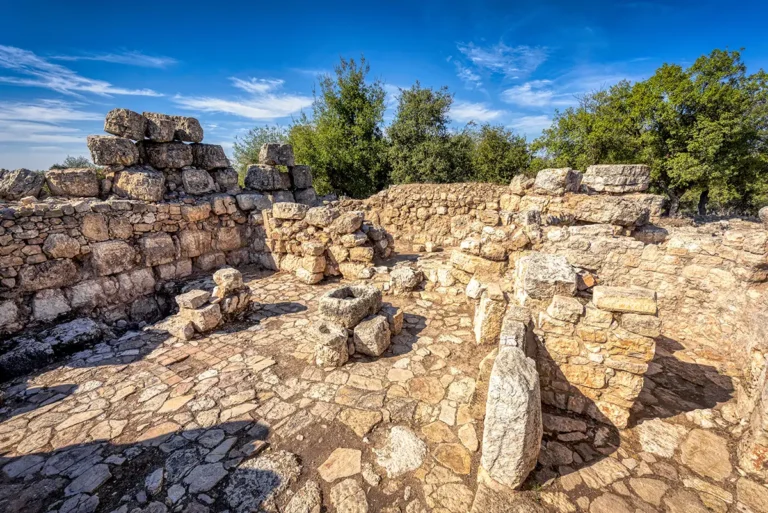
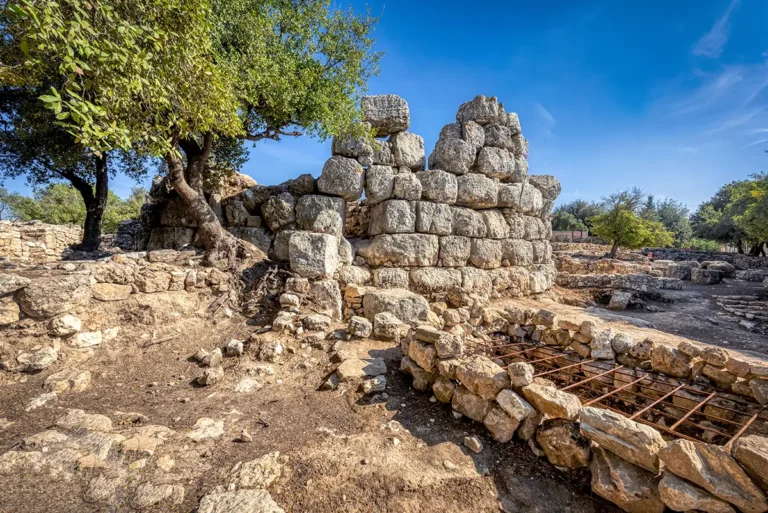
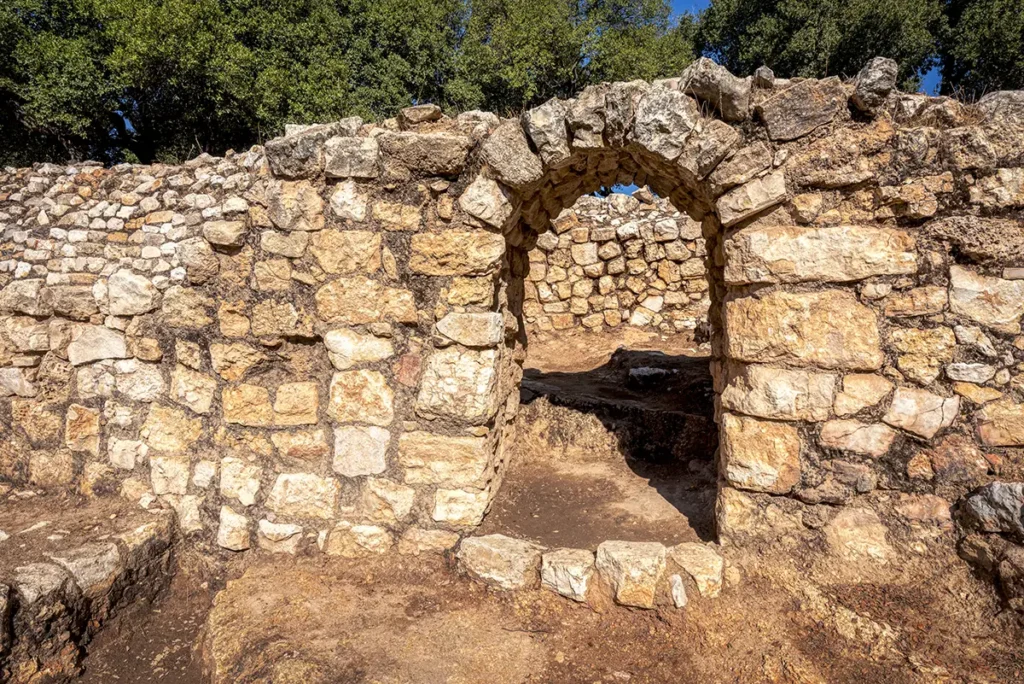
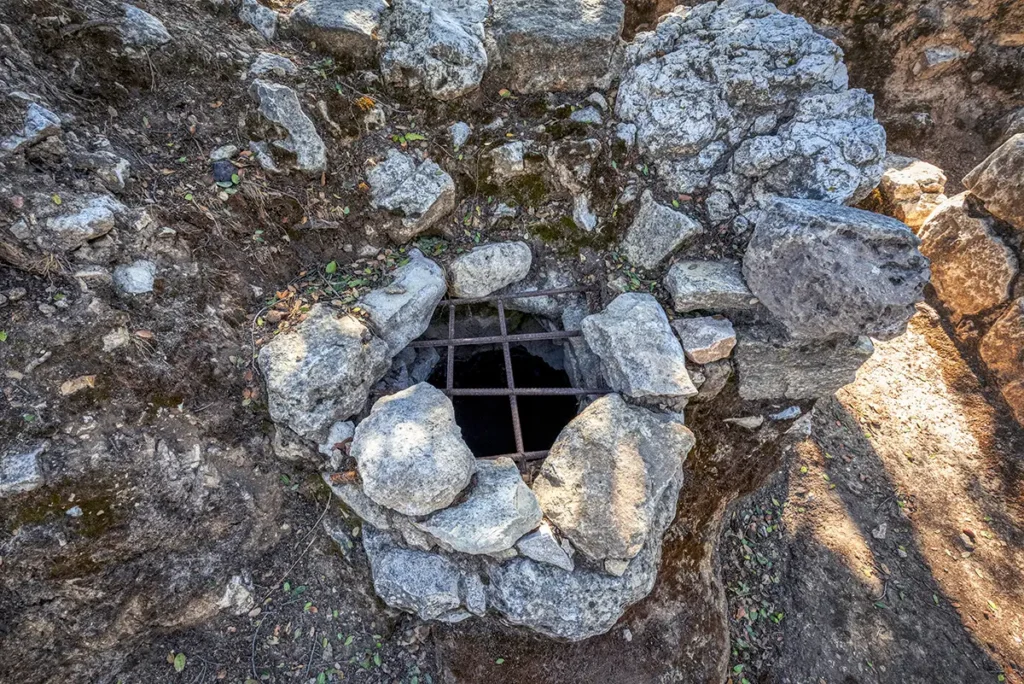
The tower is about 18 metres across, with walls more than 2 metres thick, and still stands about 5 metres high. Around it are three vaults, connected rooms, more than 20 wells and cisterns, rock-cut channels and a press cut into the rock, probably for wine. Iron slag points to metalworking on the hill.
The Round Tower
About 18 m across, with walls over 2 m thick, built of large white limestone blocks.
A Church in the Tower
Crosses carved on its stones and a bronze censer in a grave show its later use as a church.
Water Everywhere
More than 20 wells and cisterns and rock-cut channels collected rainwater.
A Rock-Cut Press
A press cut into the bedrock, probably for wine.
The Church in the Tower
Crosses are carved on stones of the tower, and a grave inside it held a bronze censer. A bronze lamp-hanger from the site is displayed in the museum at Salt. The excavator dates this church use to the Ayyubid–Mamluk period — a reminder that Christian communities lived in this region long after the Byzantine era.
Excavation and Restoration
The Department of Antiquities’ office in Salt, under Saad al-Hadidi, began systematic excavation in 2002 and carried out six seasons by 2008. Restoration work followed in 2007, and the Balqa Antiquities Directorate still looks after the site.
Visiting Khirbet Al-Deir Today
Walk around the tower to see its huge blocks, then explore the rooms, cisterns and the arched doorway among the trees. It is a quiet, green place close to Amman, at its best in the late afternoon.
Further reading: Fuheis Municipality: heritage sites.