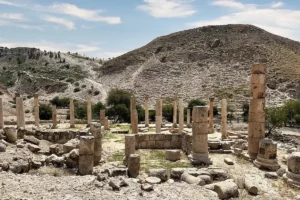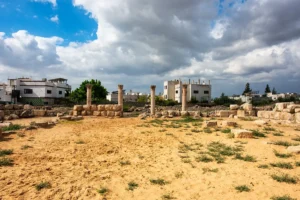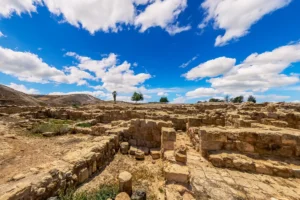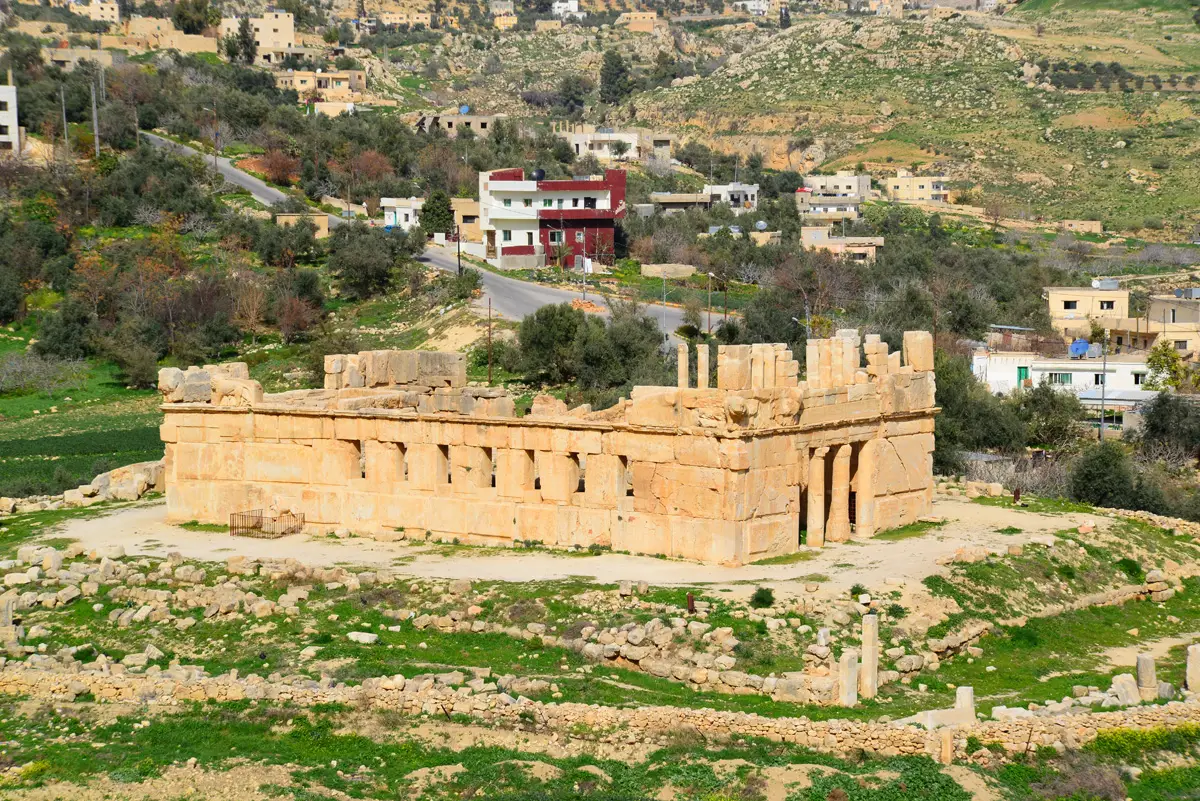


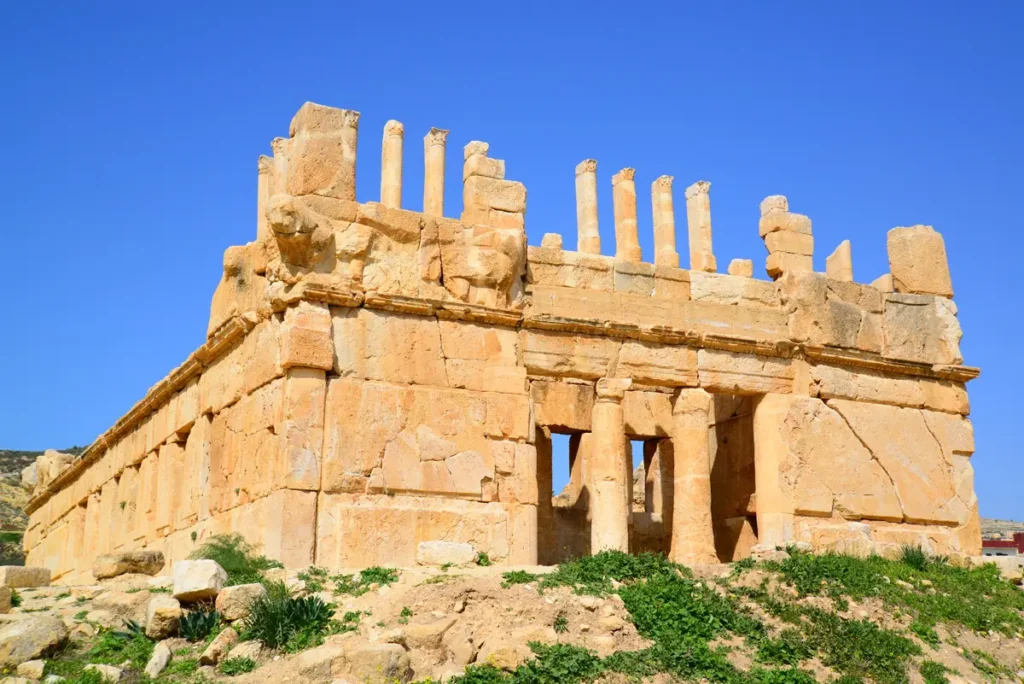
In a quiet green valley west of Amman stands one of the most remarkable Hellenistic buildings in the Middle East. Qasr al-Abd, “the castle of the servant”, was built of giant limestone blocks by Hyrcanus of the Tobiad family in the early 2nd century BC, and lions, eagles and big cats still prowl its walls.
Where Is Qasr Al-Abd?
The building stands in the valley of Wadi as-Sir, about 500 m south of the village of Iraq al-Amir and about 17 km west of Amman. In the cliffs north of the village lie the caves of Iraq al-Amir, “the caves of the prince”, and the village is also home to a women’s handicraft cooperative.
Historical Context and Origin
The Tobiads were a Jewish aristocratic family with their power base in the region of Ammon. According to the historian Josephus, Hyrcanus, the youngest son of the tax-farmer Joseph son of Tobias, quarrelled with his brothers and settled beyond the Jordan. There he built a “strong castle” of white stone, carved with huge animals and surrounded by water, and called the place Tyros. He ruled the area for seven years under the Seleucid king Seleucus IV (187–175 BC), and died around 175 BC or a few years later, when his estate was seized by Antiochus IV.
Architectural Design
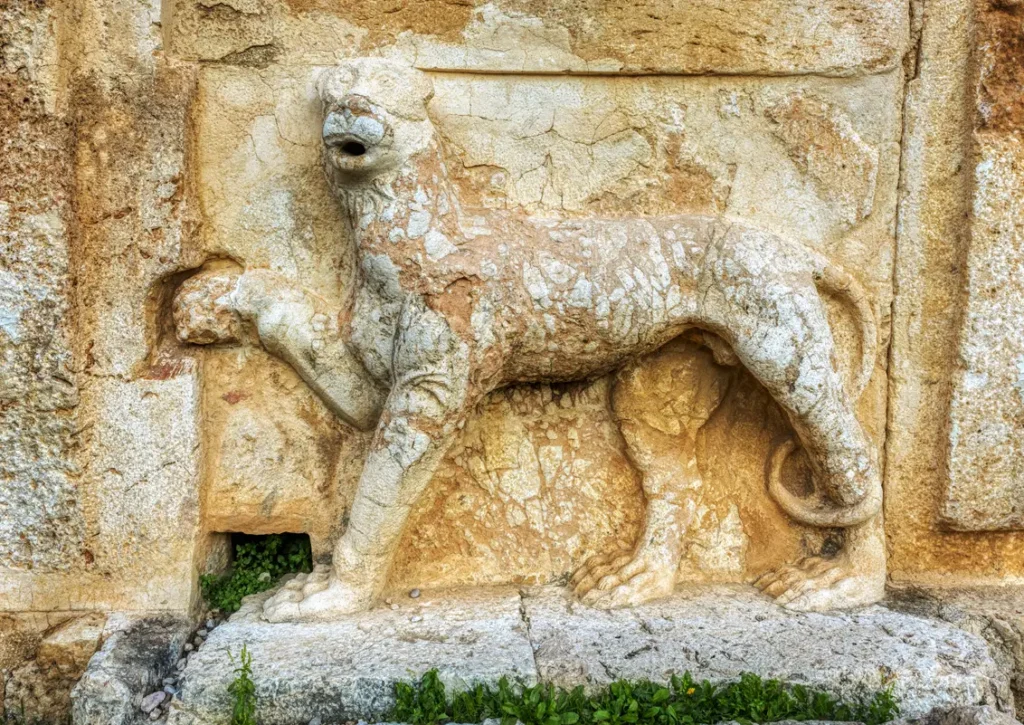
The building measures about 37 × 18.5 m and stood two storeys high, on a platform in an artificial lake held by a dam. Its blocks are among the largest used in the region, up to about 7 × 3 m, but thin, which made the walls vulnerable to earthquakes. Columned porches opened on the north and south. A frieze of lions and lionesses, one with a cub, ran along the upper storey with eagles at the corners, and two big-cat fountains decorated the east and west walls. Unfinished carving shows the building was never completed.
Giant Blocks
Limestone blocks up to about 7 × 3 m.
Lion Frieze
Striding lions and lionesses along the upper storey.
Feline Fountains
Two big-cat fountains on the east and west walls.
Tobiah Caves
Rock-cut caves with the name Tobiah carved in Aramaic.
The Tobiah inscription (summary)
The name Tobiah is carved in Aramaic letters beside the entrances of two of the caves north of the village. It is usually linked to the Tobiad family, but its date is debated: proposals range from the 5th to the 2nd century BC, and a study of the letter forms favours the 4th century BC.
Palace, Temple or Tomb?
The purpose of the building is still debated. Josephus describes a fortress, early scholars saw a temple, the French excavators a palace or country house, and some recent scholars a family mausoleum. “Palace” is the most common label.
Destruction, Rediscovery, and Restoration
The building was reused in the Byzantine period, and coins show a destruction layer of the 4th century, often linked to the earthquake of 363, with occupation continuing to the late 5th century. When the great walls finally fell is not known. The travellers Irby and Mangles described the ruins in 1817–18, Howard Crosby Butler surveyed them in 1904 and Paul Lapp excavated in 1961–62. From 1976 the French Institute, led by Ernest Will and the architect François Larché, studied every block and rebuilt much of the building by 1986.
Visiting Qasr Al-Abd Today
The interior of the palace is open. Admission is 1 JOD for foreign visitors and free for residents, and the site is included in the Jordan Pass. Allow 20–30 minutes for the palace. The caves are free to enter, with no guard, and take about 40 minutes to explore. See our Qasr Al-Abd travel guide for practical details.
Further reading: Biblical Archaeology Society — Was Qasr al-Abd modelled on the Mausoleum?; Creighton University — Iraq al-Amir virtual tour.