













In ar-Rajib, on the south-eastern edge of Amman, a rock-cut tomb is venerated as the Cave of the Seven Sleepers — the Ahl al-Kahf of the Qur’an. Inside are seven stone sarcophagi; above it stand the remains of a church that became one of the early mosques of the region; and around it lies a large Byzantine cemetery.
Where Is the Cave of the Seven Sleepers?
The cave is in the village of ar-Rajib, near Abu Alanda on the road to Sahab, on the south-eastern edge of Amman. It lies within a large Byzantine cemetery, next to a modern mosque complex.
The Legend of the Sleepers
The Qur’an, in Sura al-Kahf (“The Cave”), tells of young believers who took refuge in a cave and slept for centuries, with their dog at the entrance; it leaves their number to God. A Christian version places them at Ephesus, hiding from the persecution of Emperor Decius and waking under Theodosius II. Many places have been claimed as the cave — Ephesus, Tarsus and others — and the medieval historians al-Tabari and al-Waqidi placed it here in Jordan.
Historical Context and Origin
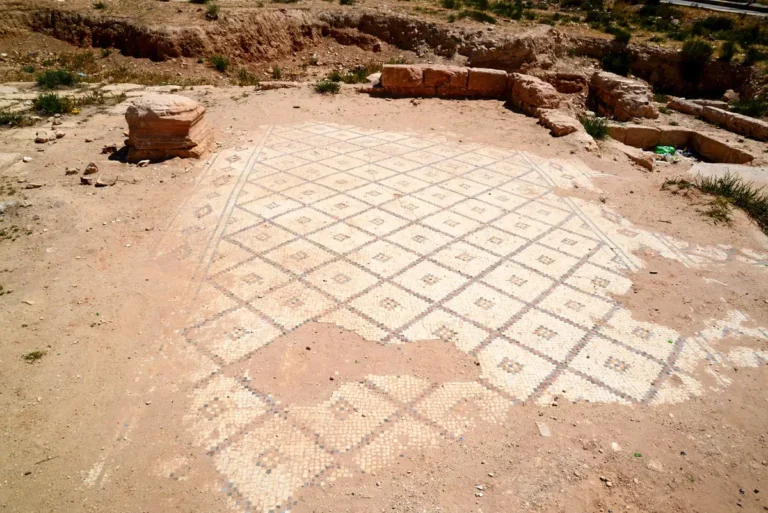
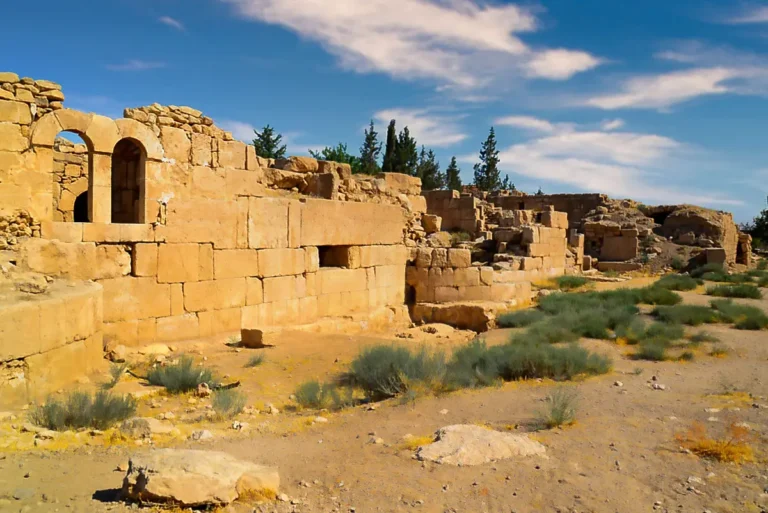
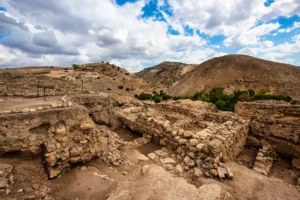
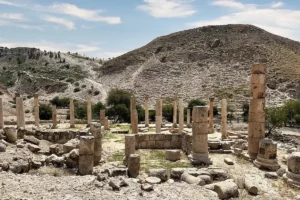
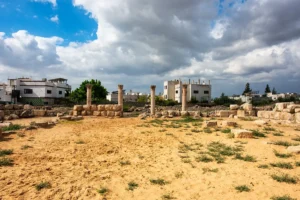
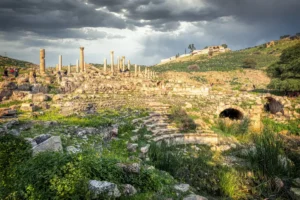
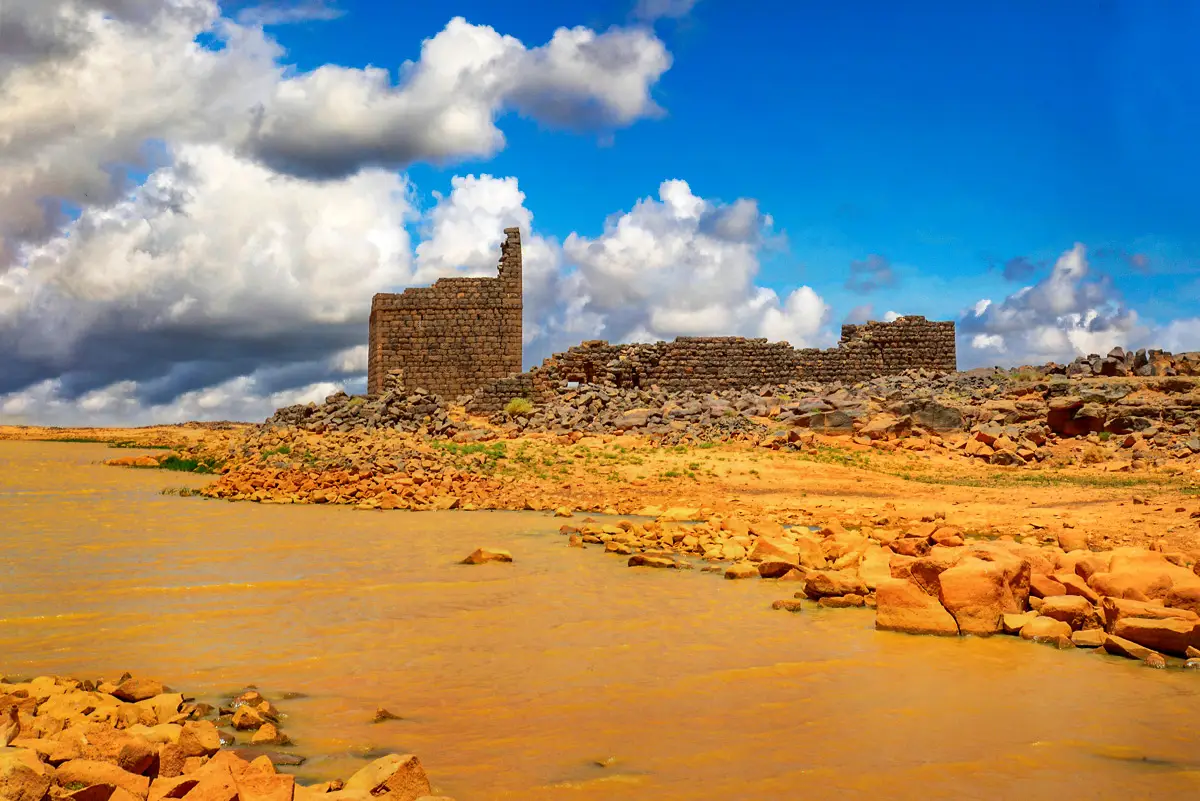
The area was a burial ground long before: Roman family tombs, cut into the rock to the east of the cave, were used in the 1st–3rd centuries AD, and a large Byzantine cemetery surrounds it. A Byzantine church stood above the cave; in the Umayyad period it was converted into a mosque, and it was later renovated — an inscription names a son of the Tulunid ruler Ahmad ibn Tulun as builder of the second mosque.
Architectural Design
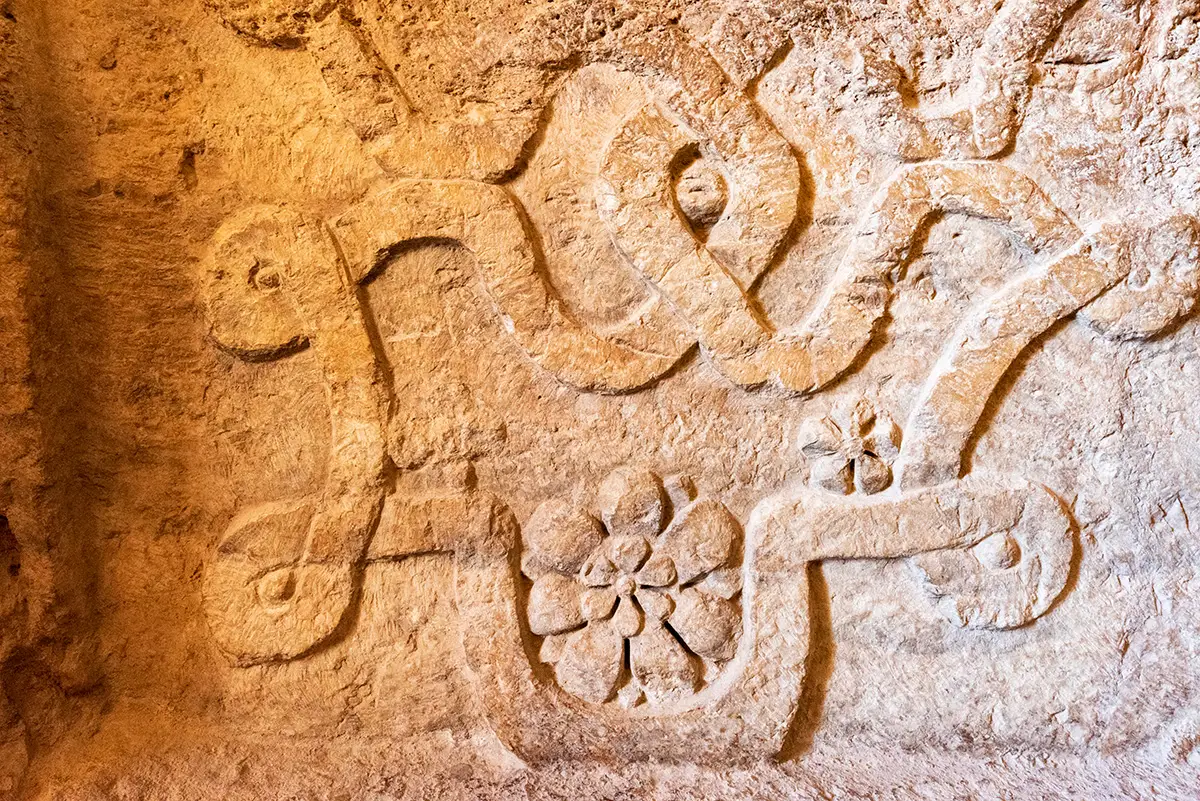
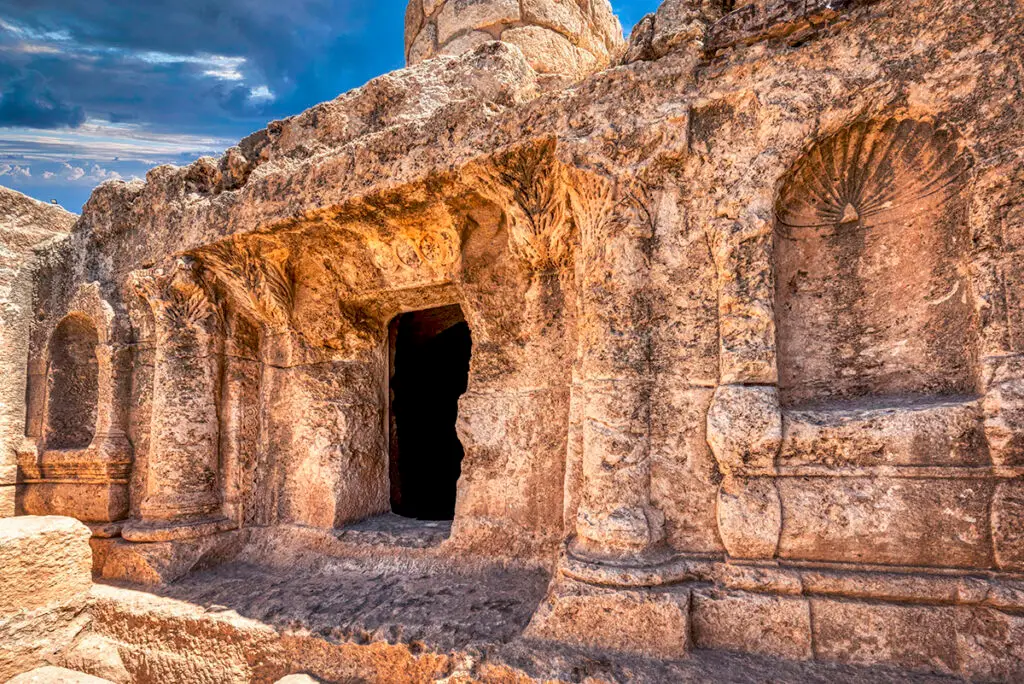
The entrance façade has two pilasters and decorated niches. Inside, a central hall opens onto vaulted chambers with stone graves in niches on the east and west sides — seven sarcophagi in all, one marked with an octagon. The plastered walls carry Greek and Arabic writing and drawings, and a mihrab with Kufic Qur’anic verses is set into the wall.
The Carved Façade
The entrance is framed by pilasters and decorated niches.
Seven Sarcophagi
Stone graves in niches of the inner chambers; through a small window, bones can be seen.
The Mosque Above
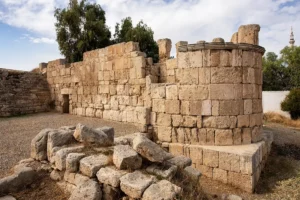
A Byzantine church turned into a mosque in the Umayyad period and later rebuilt.
The Cemetery
Byzantine tombs around the cave, and Roman rock-cut family tombs to the east.

Excavation and the Modern Site
The Department of Antiquities, under Rafiq Wafa al-Dajani, excavated the cave in the early 1960s. Finds included coins from Byzantine to Ottoman times, a bowl, a necklace, rings and a copper comb, as well as human bones and a canine skull, now displayed at the site. In 2006 King Abdullah II opened a new mosque and visitor complex beside the cave.
Visiting the Cave Today
Visit respectfully, as this is a place of pilgrimage: modest dress is expected. Look at the carved façade, then go inside to see the sarcophagi and, through the small window, the bones. Combine the visit with the mosque and the tombs of the surrounding cemetery.