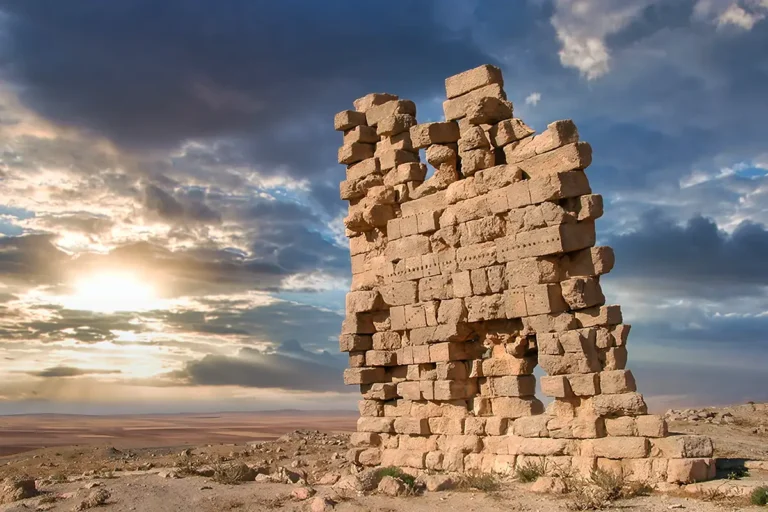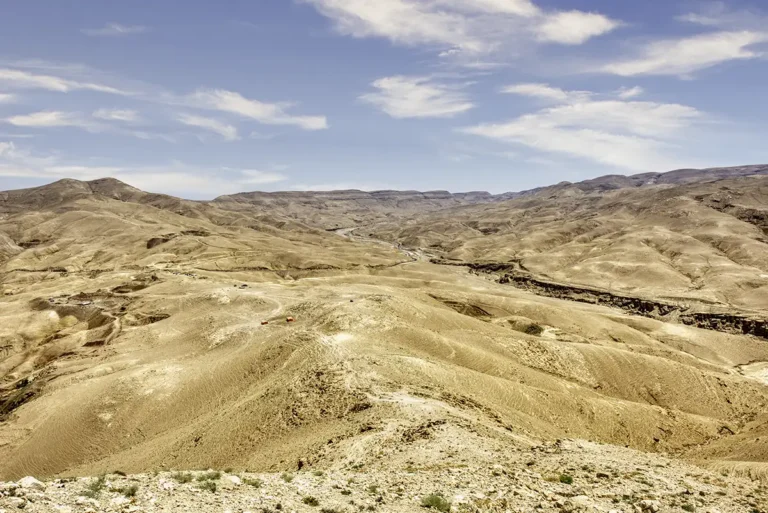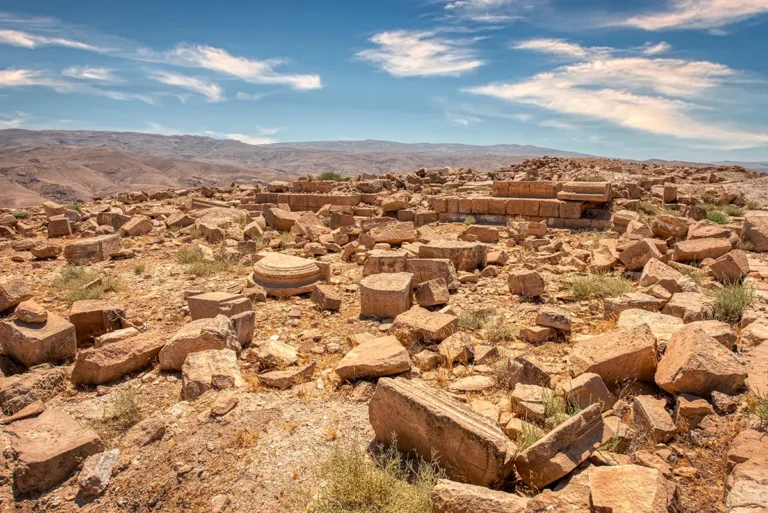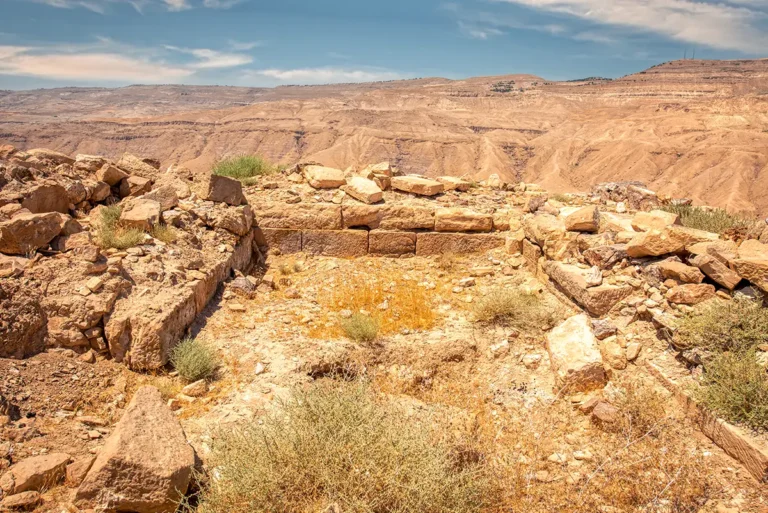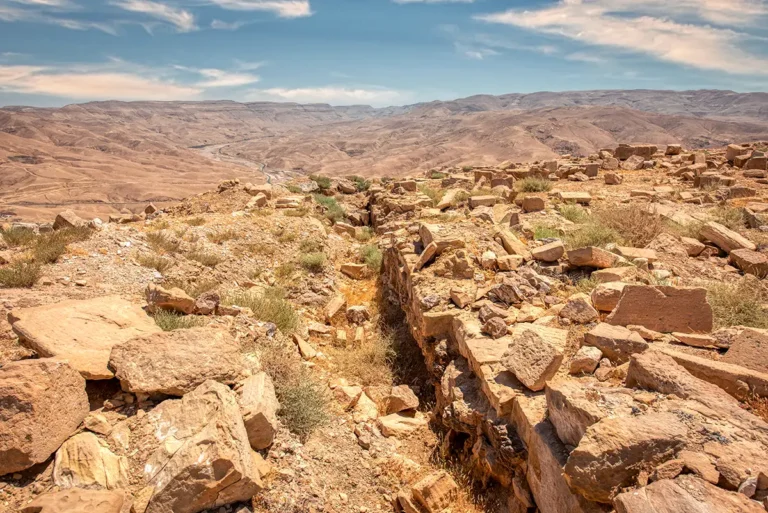
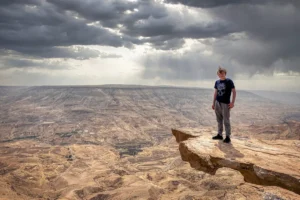

High above the Wadi al-Hasa in southern Jordan, Khirbet et-Tannur is one of the Nabataean Kingdom’s most evocative sacred places. It is not a city like Petra, nor a castle commanding a road; it is a remote temple complex built for worship, pilgrimage, offerings, and ritual feasting.
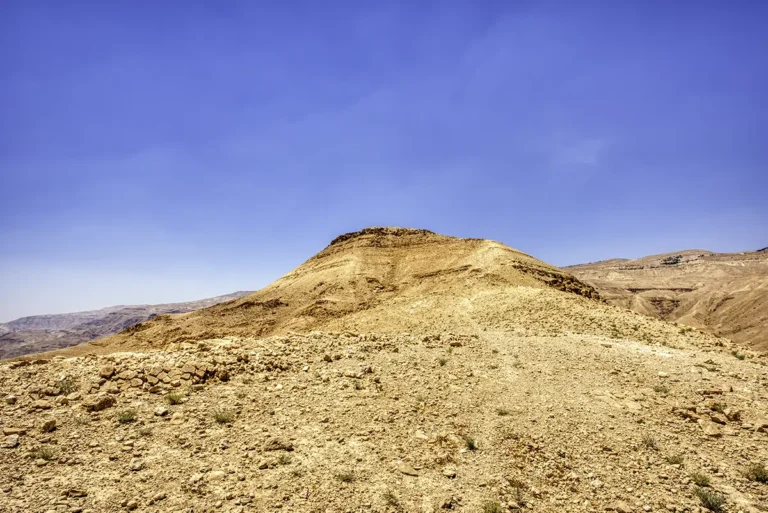
Set on an isolated peak near the King’s Highway, the sanctuary was associated with the Nabataean settlement of Khirbet edh-Dharih, about 7 km to the south. Its lack of a permanent water supply suggests that this was never an ordinary place of residence. Instead, visitors made the ascent for ceremonies in a landscape where the journey itself formed part of the experience.
Historical overview
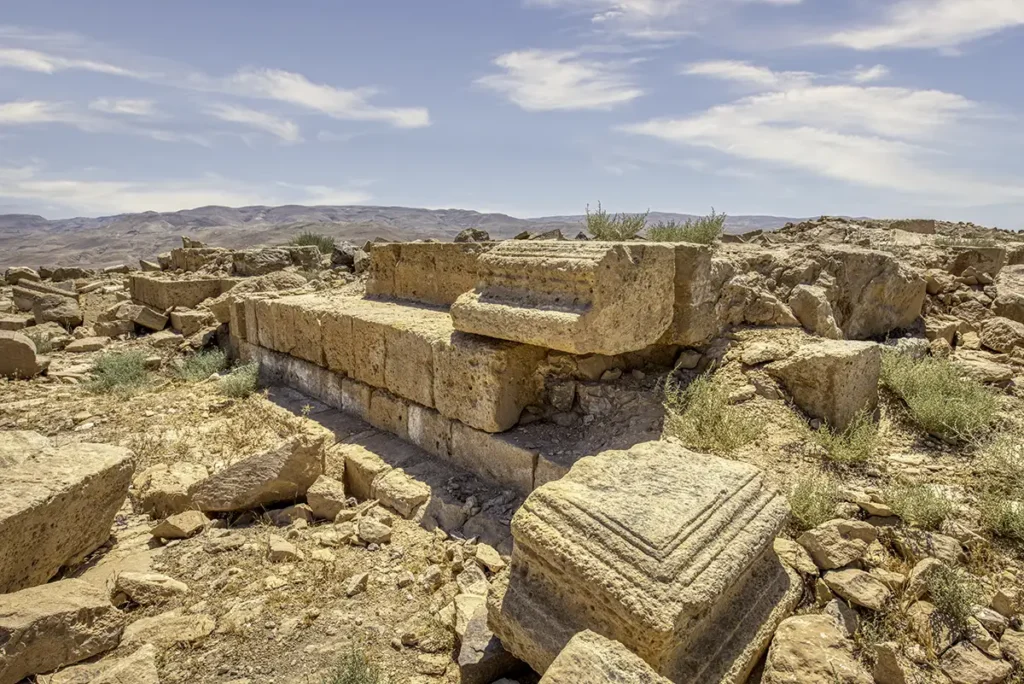
Khirbet et-Tannur was in use from the second century BC until late antiquity. Its earliest sanctuary appears to have been modest: a rubble platform with an altar and an enclosed court. During the first and second centuries AD, when the Nabataean kingdom was at its height, the complex was transformed into a more elaborate temple precinct, richly decorated with sculpture and architectural ornament.
This was a period in which Nabataean culture combined local traditions with influences from the wider Hellenistic and Roman world. The temple’s architecture and imagery reflect that exchange, while its ritual practices retained a distinctly local character.
The sanctuary suffered damage from earthquakes and was repaired more than once. Worship continued into the third and fourth centuries AD, but the complex was eventually destroyed in the earthquake of AD 363. Its ruins preserve a rare record of a Nabataean pilgrimage sanctuary rather than a settlement that was repeatedly rebuilt and reused.
Architectural features
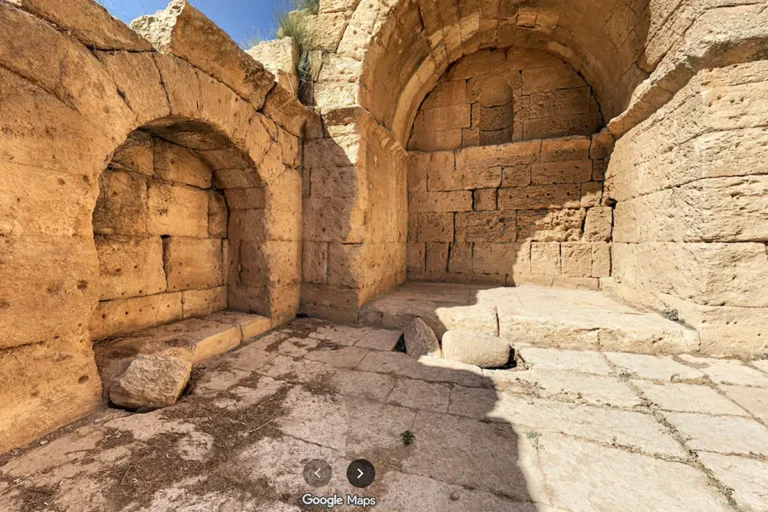
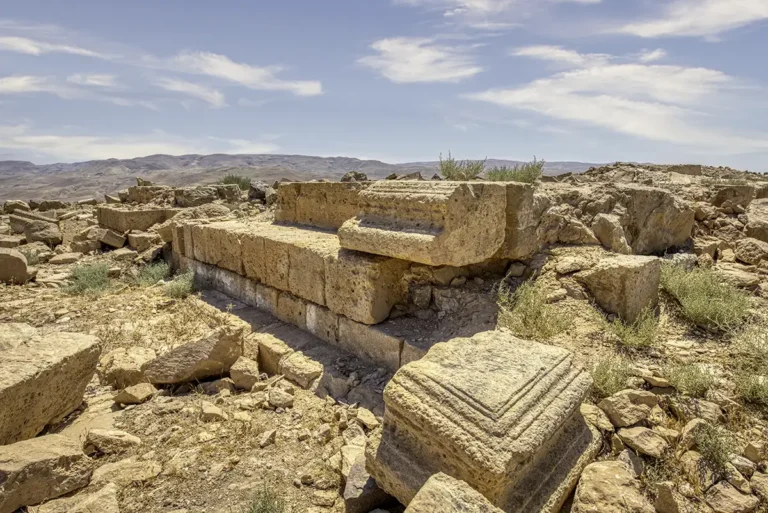
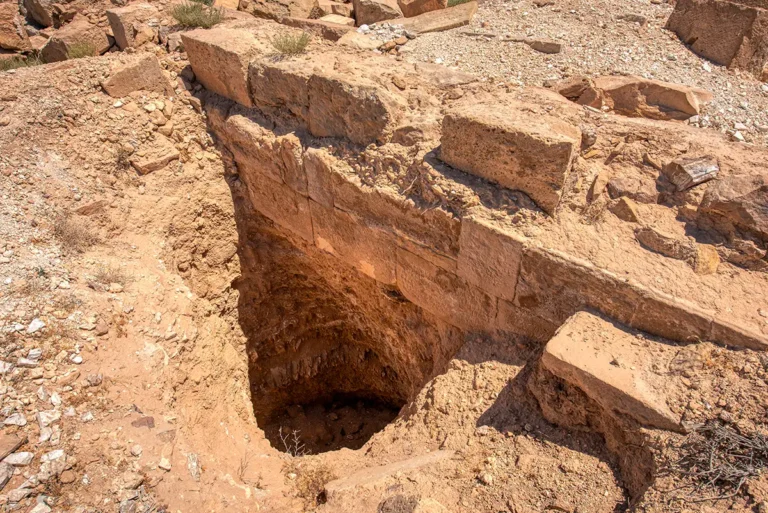
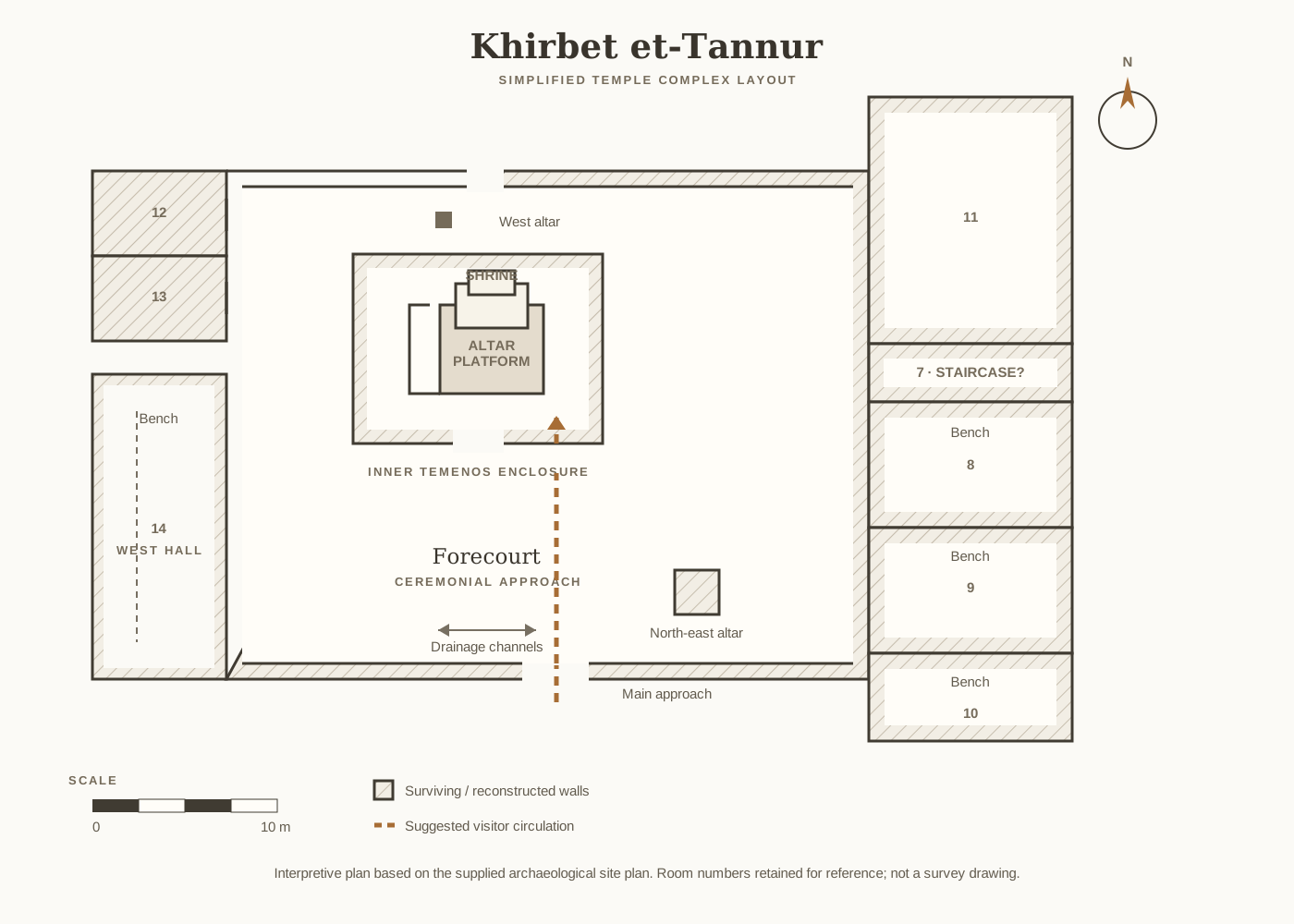
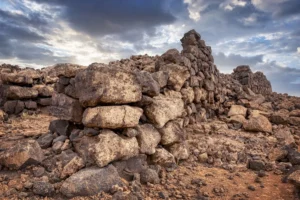
The remains at Khirbet et-Tannur once formed a carefully composed sacred complex. A forecourt led toward a rectangular temple at the rear, with rooms arranged along the north and south sides. Altars, ceremonial spaces, and areas connected with ritual dining created a setting designed for both public observance and more formal cult activity.
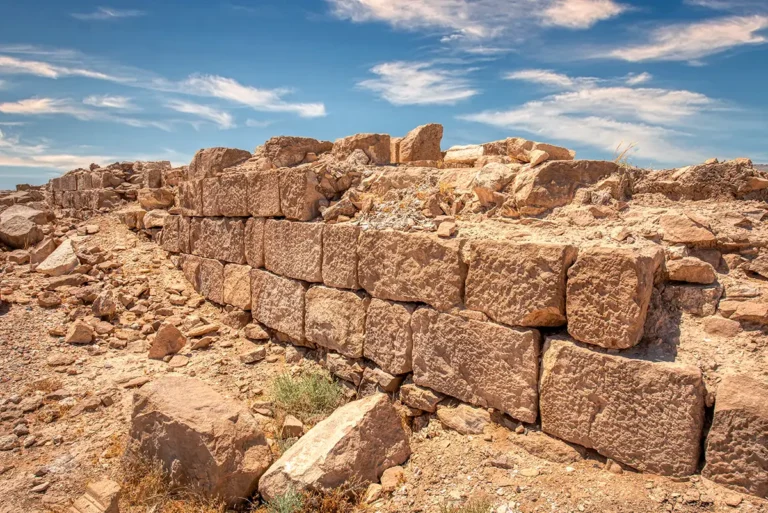
The sanctuary developed over several phases. The earlier altar remained important even as the complex expanded around it, showing how established sacred places could be renewed rather than abandoned. In its main building phase, likely in the first half of the second century AD, the temple gained more refined masonry, sculptural decoration, and a formal architectural programme related to that at nearby Khirbet edh-Dharih.
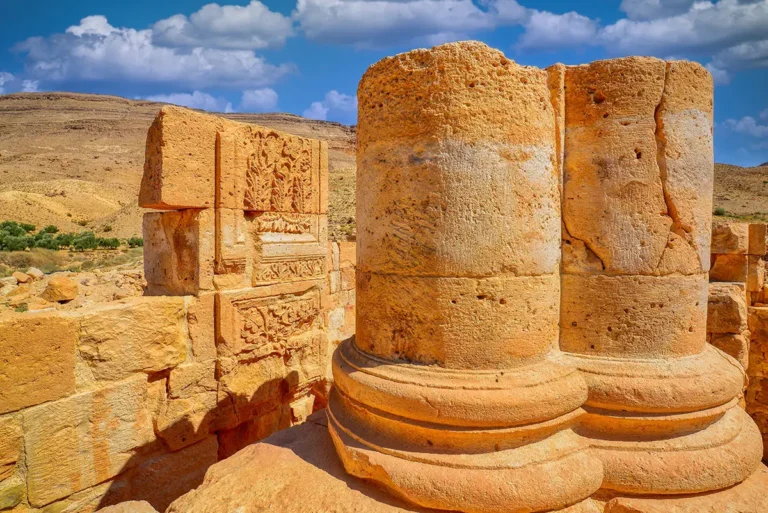
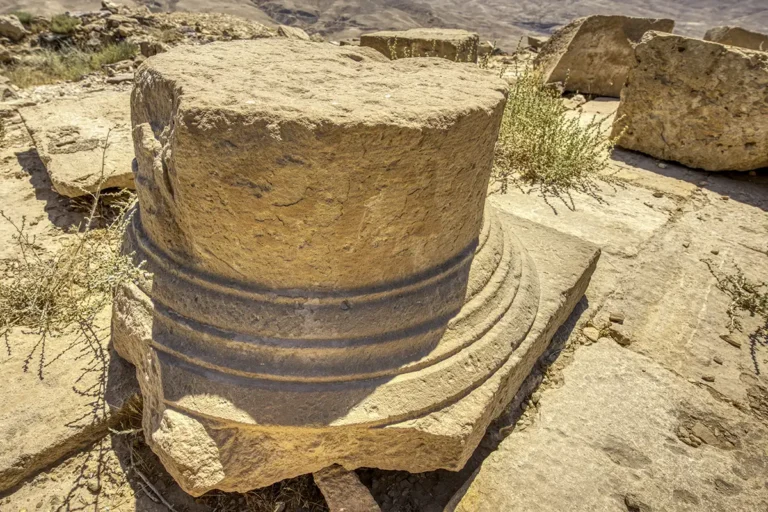
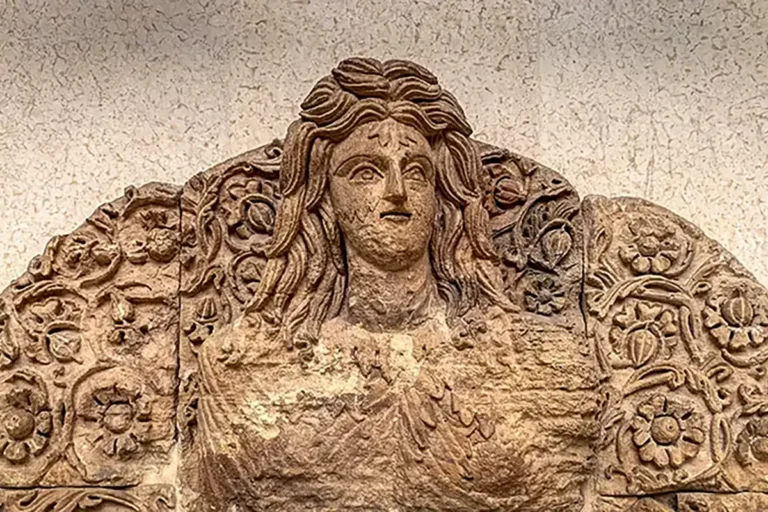
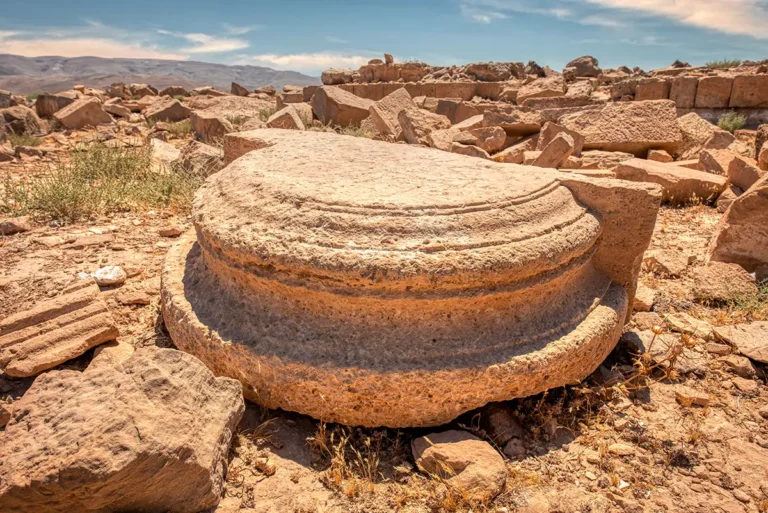
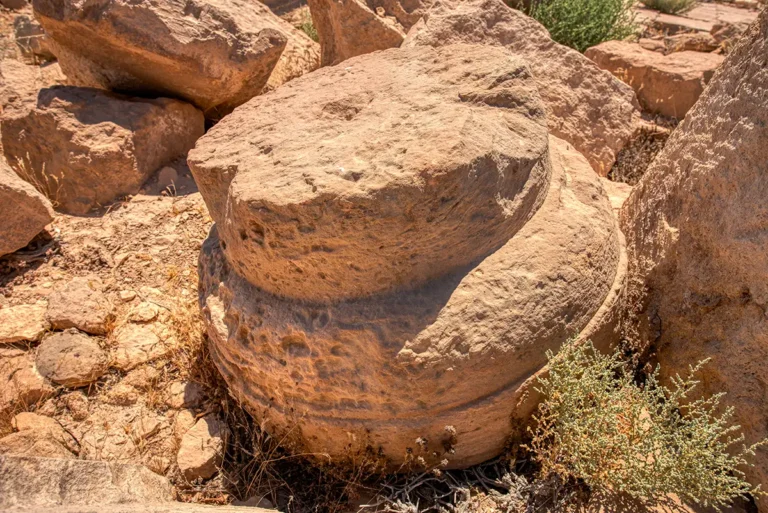
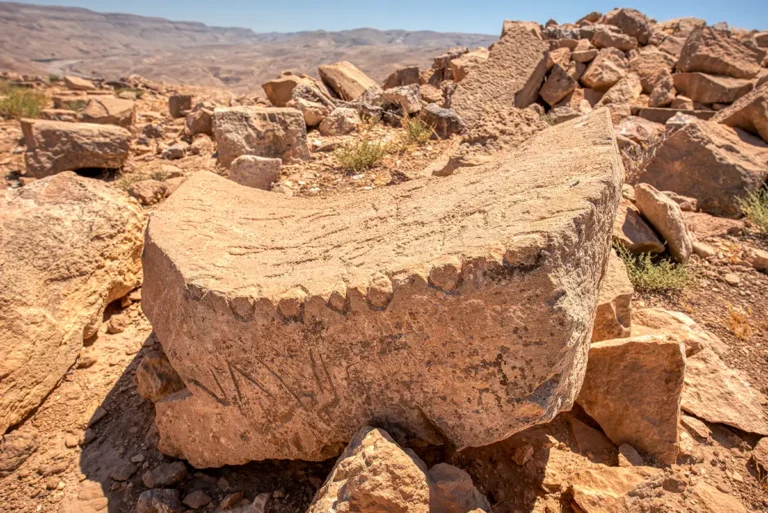
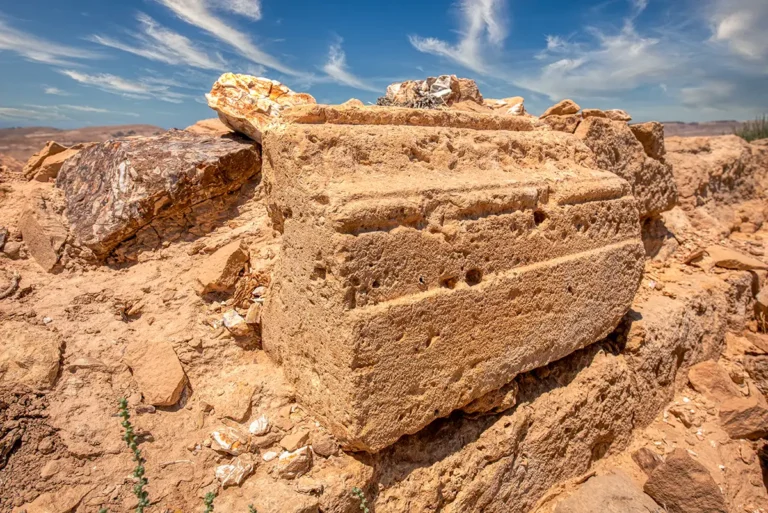
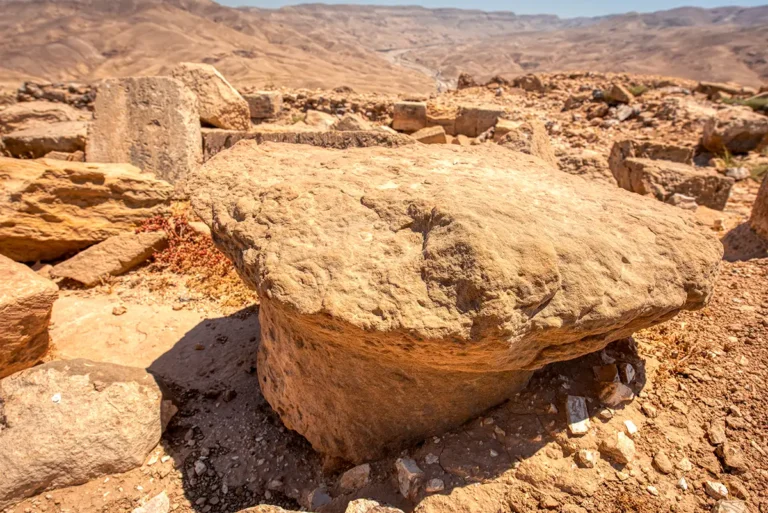
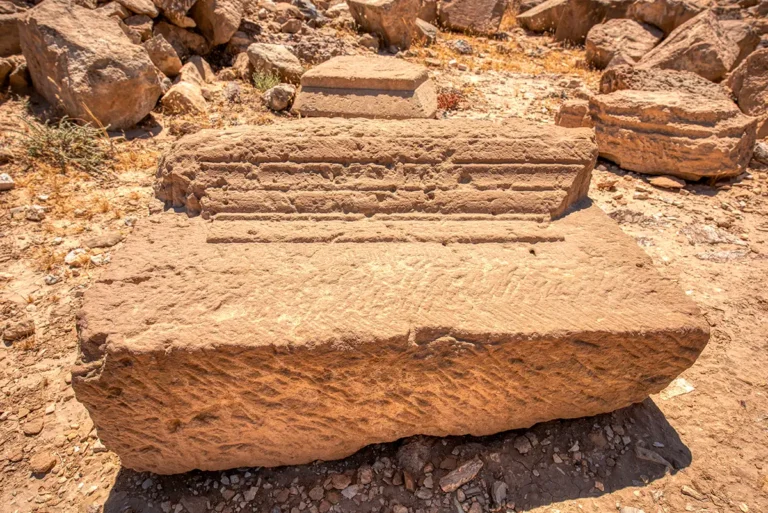
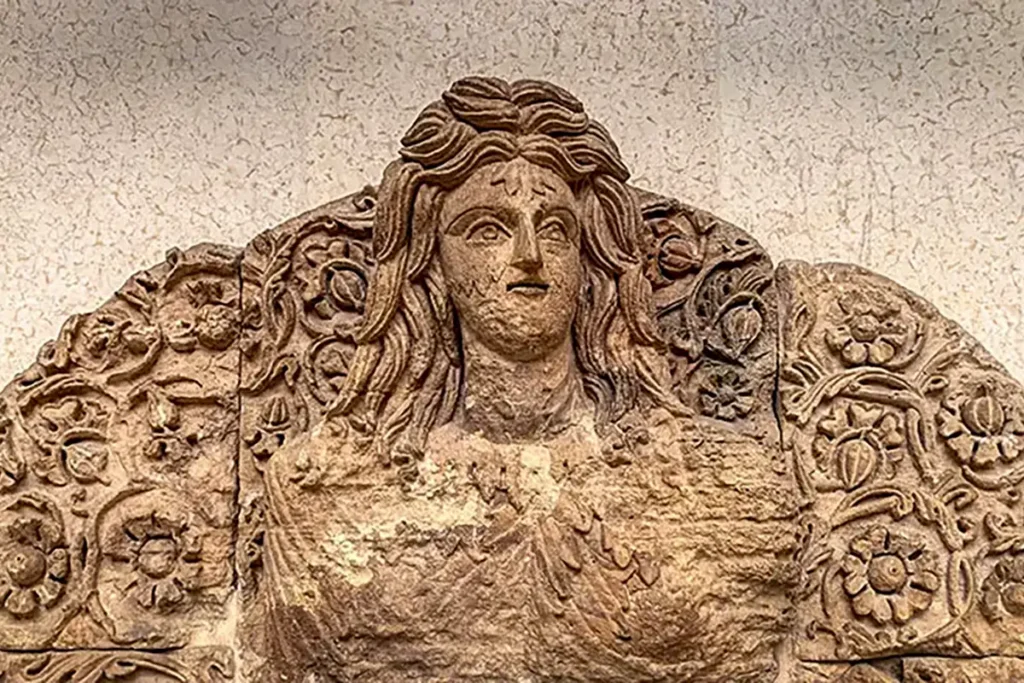
Although much of the ornament is no longer in situ, the surviving fragments reveal a building of striking visual richness: capitals, carved panels, altars, divine figures, eagles, snakes, and other symbolic motifs. The contrast between the remote hilltop setting and the sophistication of the decoration is one of the site’s most memorable qualities.
RELIGIOUS SIGNIFICANCE
Khirbet et-Tannur offers an unusually vivid glimpse into Nabataean religious practice. The sanctuary seems to have centred on a male storm deity and a fertility goddess, understood through imagery drawn from several cultural traditions. Scholars connect the male god with the visual language of Hadad, Zeus, Serapis, and Jupiter, while the female figure shares associations with vegetation, abundance, Isis, and Tyche.
Rather than treating these images as simple copies of Greek or Roman gods, it is better to see them as part of a Nabataean religious world that absorbed and reworked ideas from neighbouring cultures. A well-known representation of Tyche with a zodiac ring, together with carvings of deities and celestial imagery, suggests a sanctuary in which agricultural prosperity, divine protection, and the cycle of the year were closely intertwined.
Offerings tell an equally important story. Excavated remains include burnt sheep and goat bones, grains, cakes or bread-like offerings, incense-related objects, lamps, vessels, and altars. Together, they point to sacrifice, shared ritual meals, and seasonal observances. One interpretation proposes that a major spring festival marked the Nabataean New Year in March or April.
ARCHAEOLOGICAL DISCOVERIES
The site was excavated in 1937 by Nelson Glueck and a team working for the American School of Oriental Research in Jerusalem and the Department of Antiquities of Transjordan. His work produced a remarkable archive: field notes, photographs, plans, registration records, sculptures, pottery, lamps, glass, metal objects, inscriptions, animal bones, and botanical remains.
For decades, many of these finds and records remained insufficiently studied. A later international research project, directed by Judith McKenzie, spent more than ten years re-examining the evidence and publishing it in a comprehensive two-volume final report.
Among the most important discoveries are the sanctuary’s sculptural programme, four dedicatory Nabataean inscriptions, more than a dozen altars, ritual vessels, coins, lamps, and traces of animal and plant offerings. The carbonised remains are especially valuable: they preserve evidence of what worshippers brought to the sanctuary, helping archaeologists reconstruct ceremonies that would otherwise have left almost no trace.
Visiting Khirbet et-Tannur
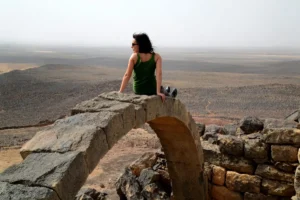
Khirbet et-Tannur rewards visitors who enjoy archaeology in a rugged landscape. It lies near the King’s Highway, roughly 70 km north of Petra, on a promontory between Wadi al-Hasa and Wadi al-Laban. The setting is exposed, so the most comfortable times to visit are generally early morning or late afternoon, particularly outside the heat of summer.
Because this is a remote archaeological site rather than a fully serviced attraction, plan conservatively:
Confirm current access and road conditions before setting out.
Use a local driver or guide familiar with the area if you are not sure about the approach roads.
Carry sufficient water, sun protection, sturdy shoes, and an offline map.
Allow time to walk slowly and read the landscape as well as the ruins.
Do not climb on masonry, remove stones or fragments, or touch vulnerable carved surfaces.
There is no ticket office, facilities, shade, or reliable mobile coverage at the site. Treat it as a heritage excursion, not a casual roadside stop.
Beyond the ruins
Combine Khirbet et-Tannur with Khirbet edh-Dharih, the nearby Nabataean settlement and temple complex with which it was closely connected. Together, the two sites offer a richer understanding of how a village, a spring, a road, and a hilltop sanctuary could form one sacred landscape.
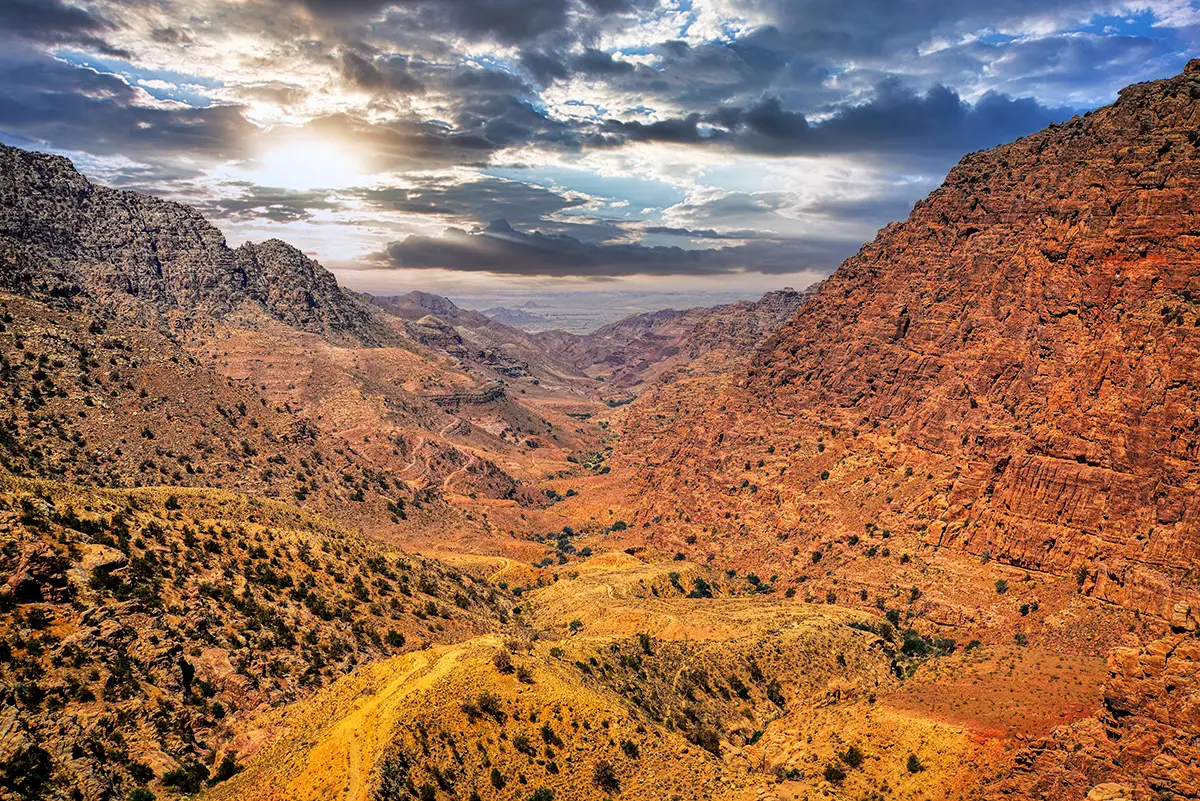
The wider region invites a slower route through southern Jordan. Continue along the King’s Highway toward the dramatic valleys of Wadi al-Hasa, the Crusader stronghold of Shobak, and Petra’s monumental Nabataean landscape. For visitors with more time, Dana Biosphere Reserve adds hiking, changing geology, and a powerful contrast to the built heritage of the highlands. Sela, on the other hand, with its dramatic cliffs, intricate carvings, and enigmatic ruins, is another, earlier Nabataean site of immense historical and cultural significance, waiting to be explored and understood.
Khirbet et-Tannur is best appreciated as a place of scale and silence: a sanctuary above the valleys, where the remains of altars, offerings, and sacred images still suggest the journeys once made to reach it.
Key Moments in History
2nd century BC — The earliest sanctuary is established at Khirbet et-Tannur, centred on an altar and enclosed court.
1st century AD — The temple complex expands, reflecting the growing prosperity and influence of the Nabataean Kingdom.
AD 106 — Rome annexes the Nabataean Kingdom, creating the province of Arabia; worship at Khirbet et-Tannur continues under Roman rule.
Key Moments in History
2nd century BC — The earliest sanctuary is established at Khirbet et-Tannur, centred on an altar and enclosed court.
1st century AD — The temple complex expands, reflecting the growing prosperity and influence of the Nabataean Kingdom.
AD 106 — Rome annexes the Nabataean Kingdom, creating the province of Arabia; worship at Khirbet et-Tannur continues under Roman rule.
Early 2nd century AD — The sanctuary undergoes its principal architectural phase, gaining refined masonry, sculpture, altars, and a more formal temple layout.
Late 2nd–3rd centuries AD — Earthquake damage leads to repairs, while ritual activity continues at the sanctuary.
AD 363 — A major earthquake destroys the temple complex, bringing its main period of use to an end.
5th–6th centuries AD — The site is occasionally revisited, but it is no longer an active Nabataean pilgrimage sanctuary.
1937 — Nelson Glueck excavates Khirbet et-Tannur, uncovering its architecture, sculptures, inscriptions, offerings, and ritual objects.
2013 — A major two-volume final report publishes the results of renewed research into Glueck’s excavation records and finds.