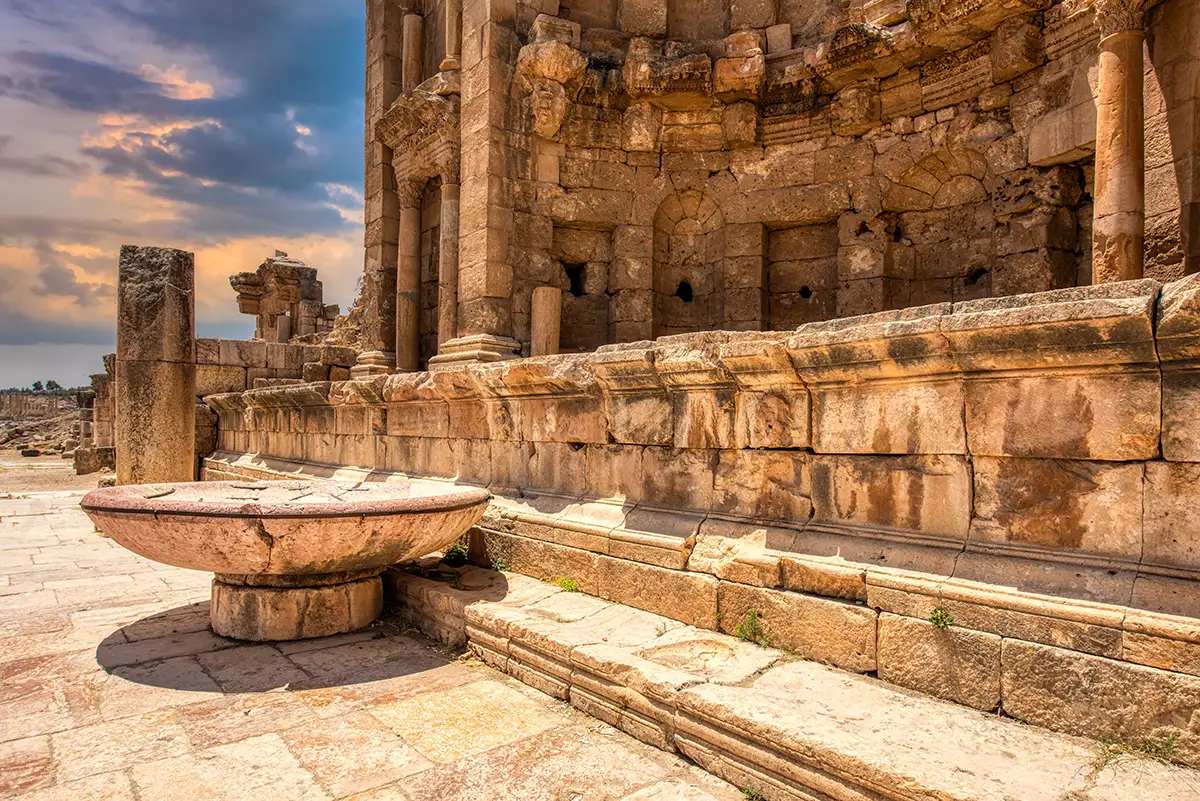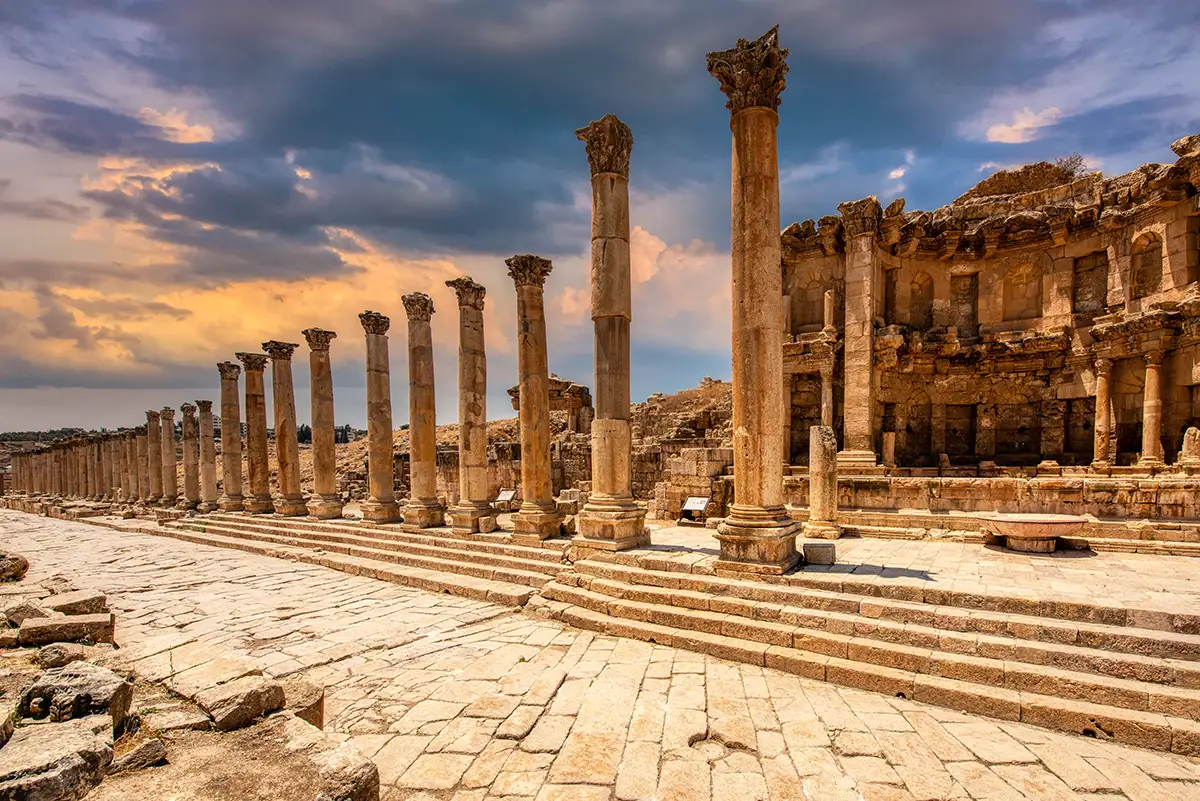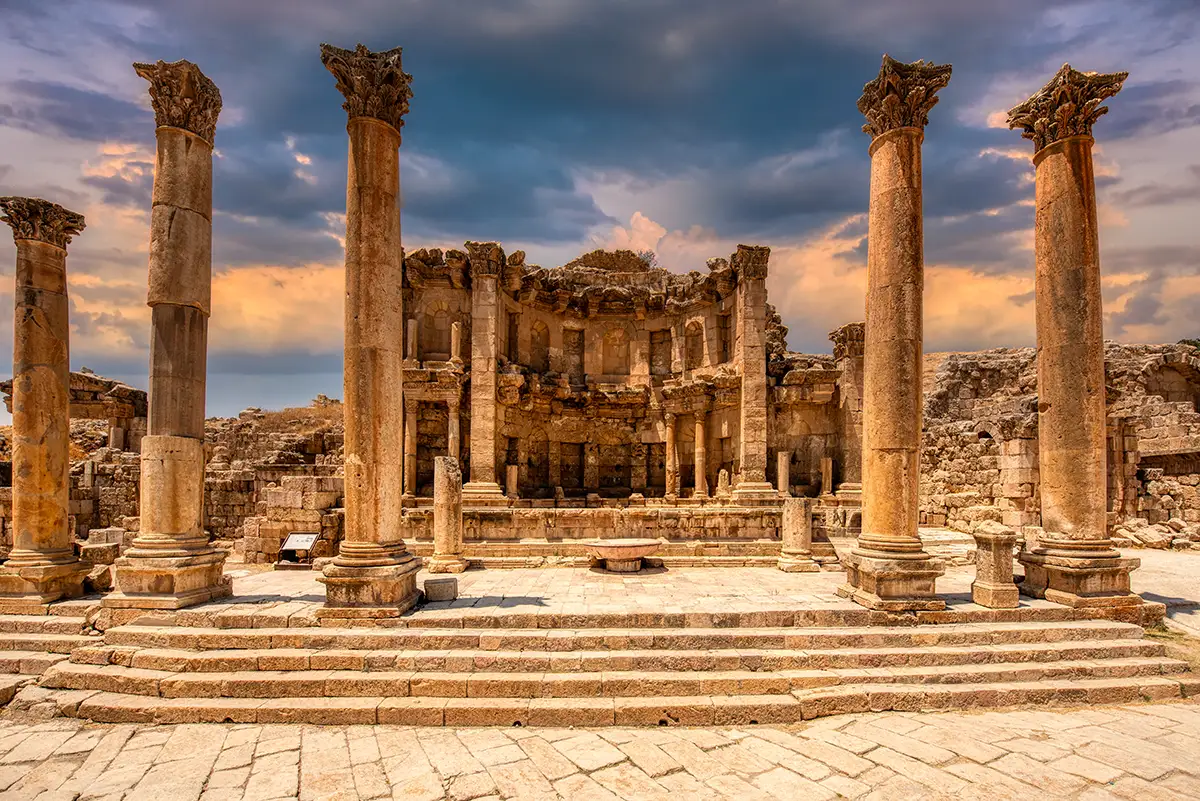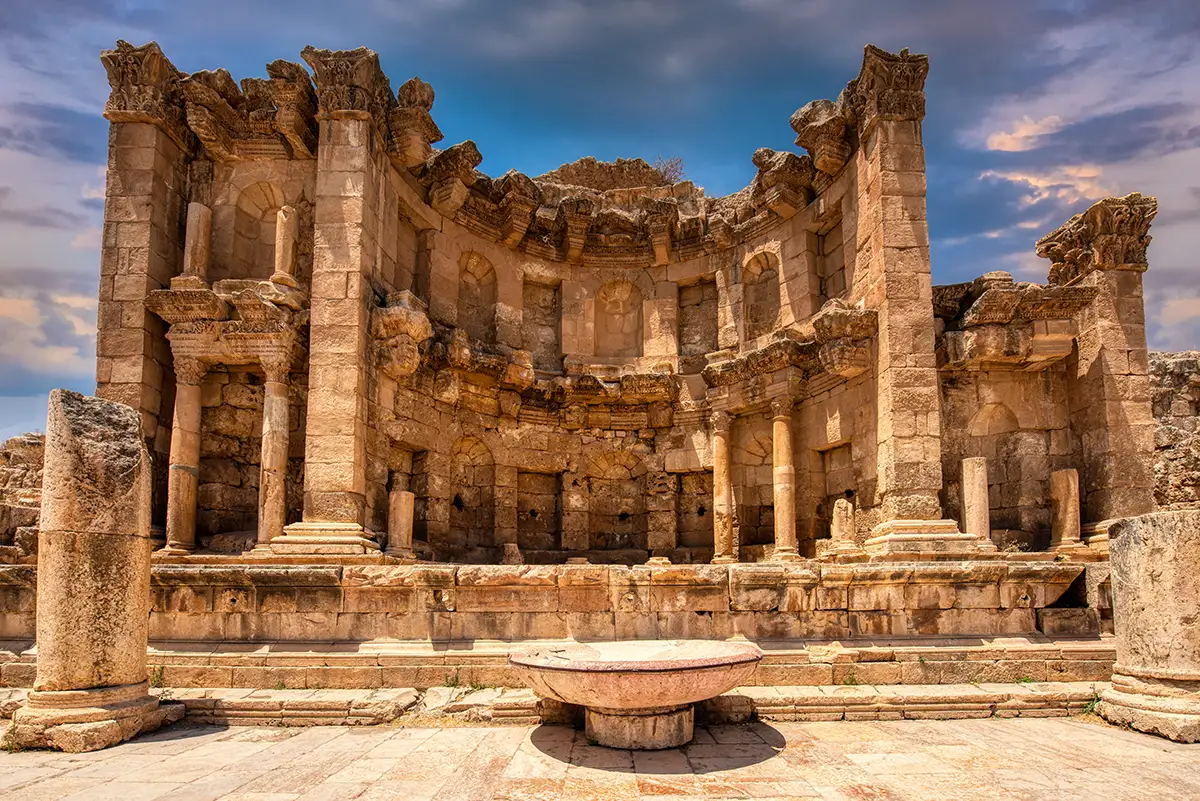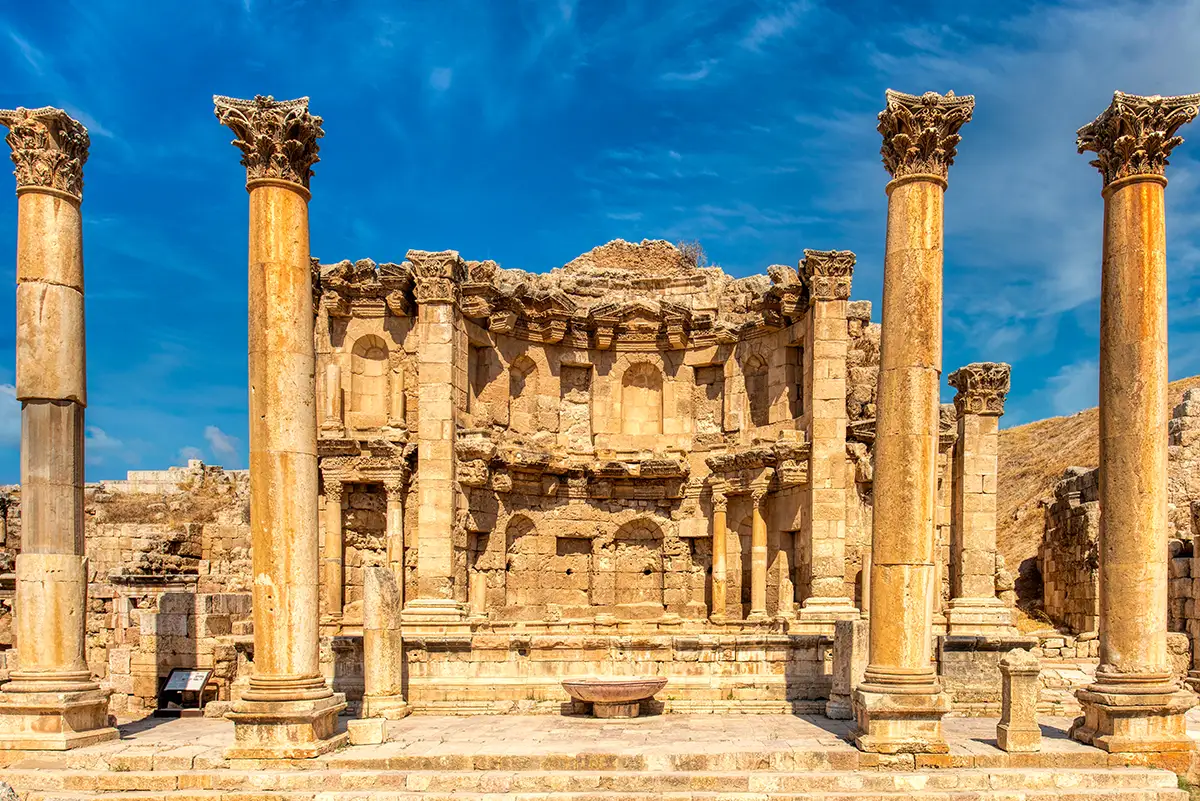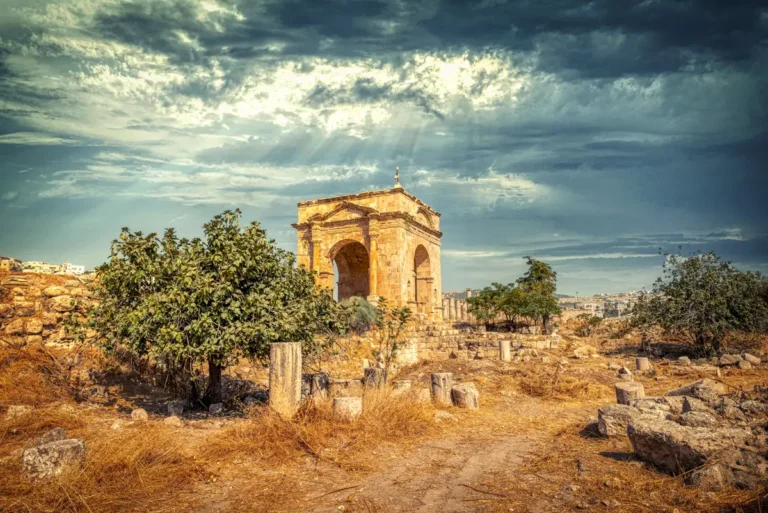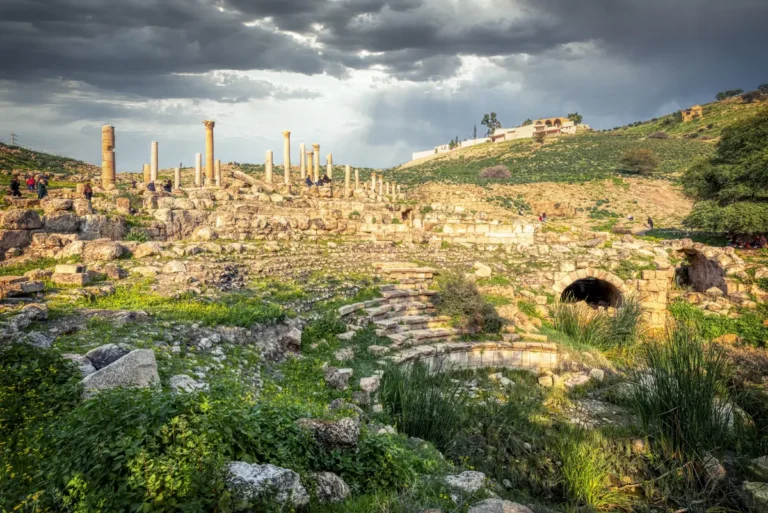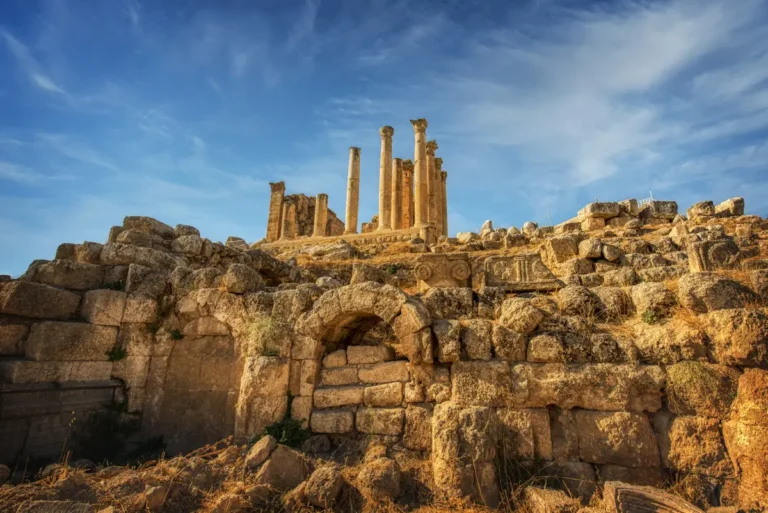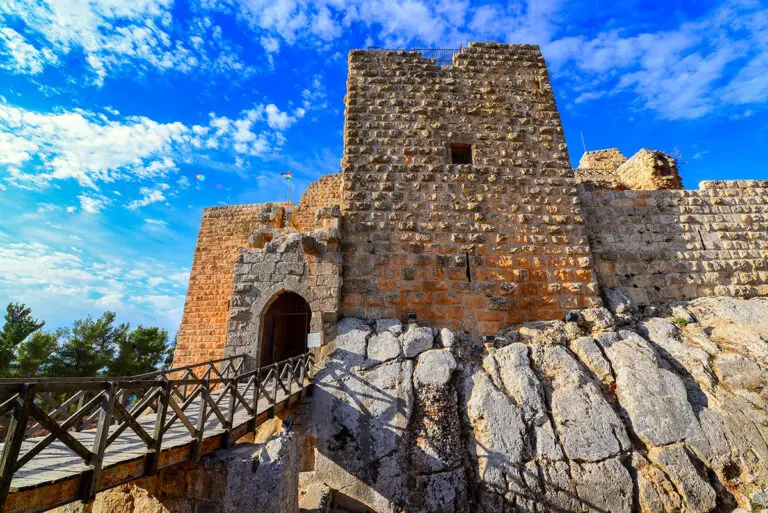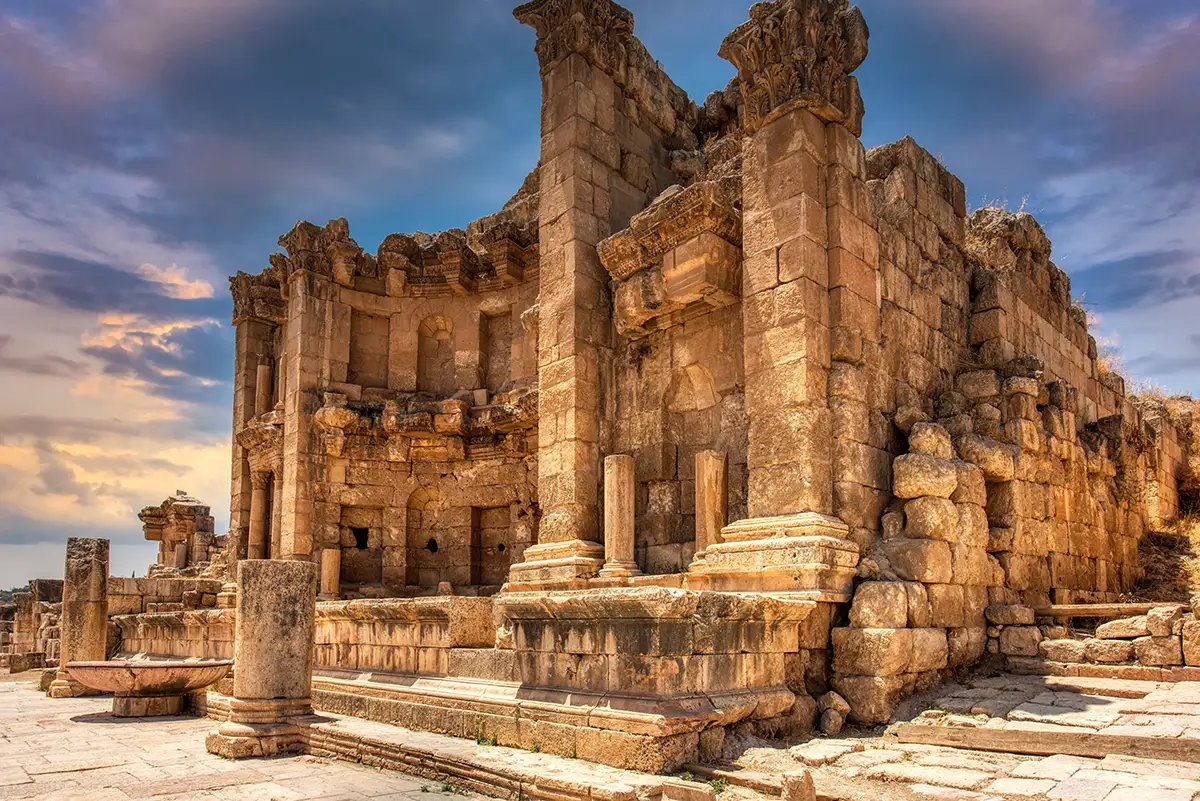
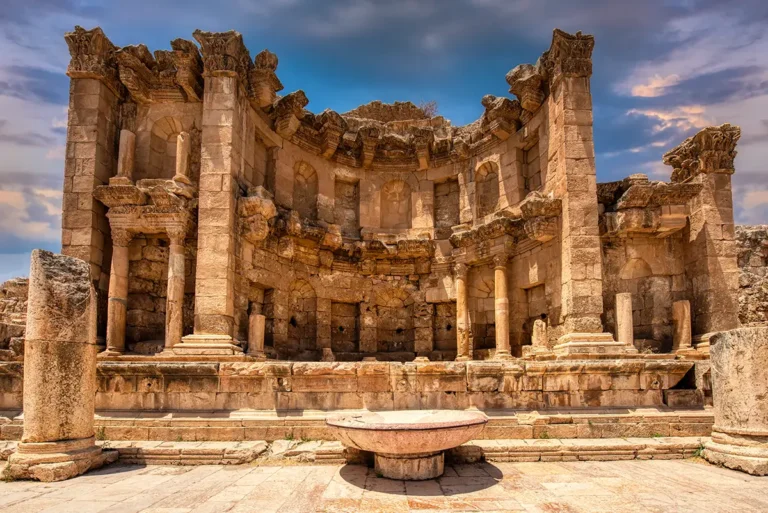

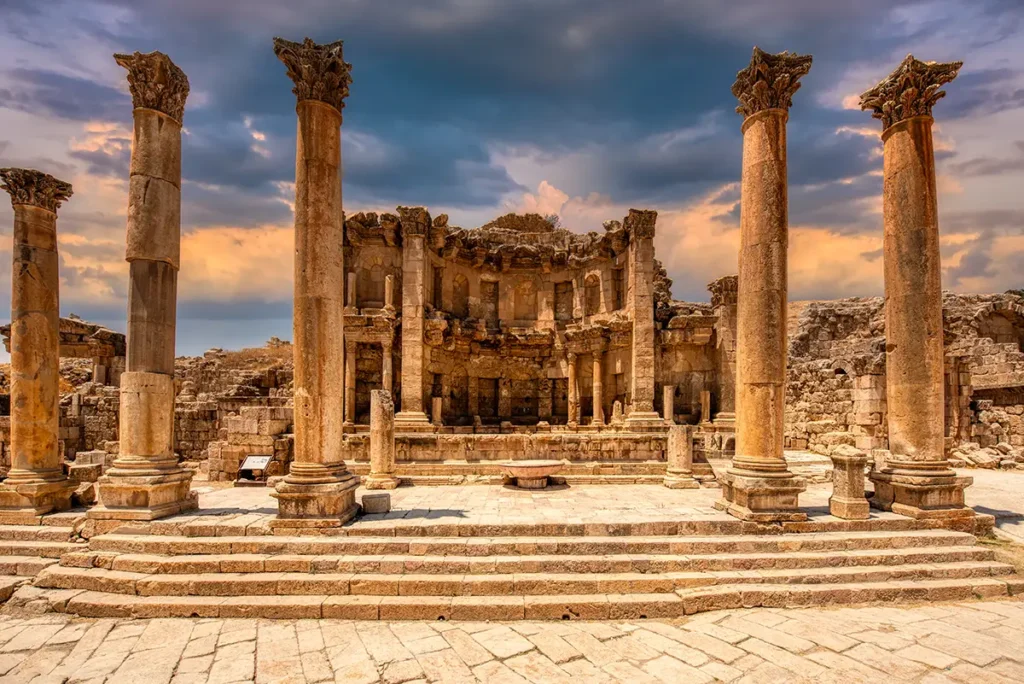
Beside the Cardo Maximus stands the most richly decorated monument on Jerash’s main street: the Nymphaeum, the city’s great public fountain. Dedicated in AD 190/191 to the nymphs, the spirits of springs and water, it supplied running water to the heart of Gerasa while displaying a two-storey façade of columns, niches, marble and painted stucco.
Where Is the Nymphaeum?
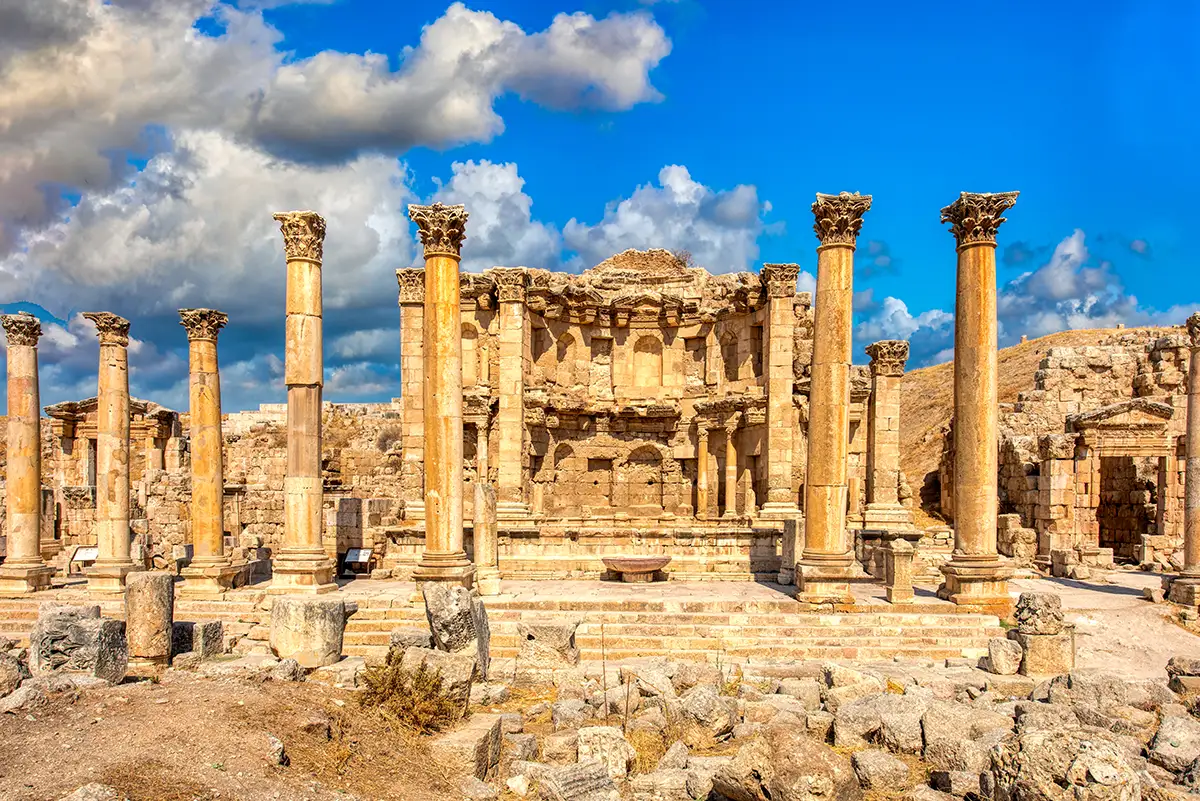
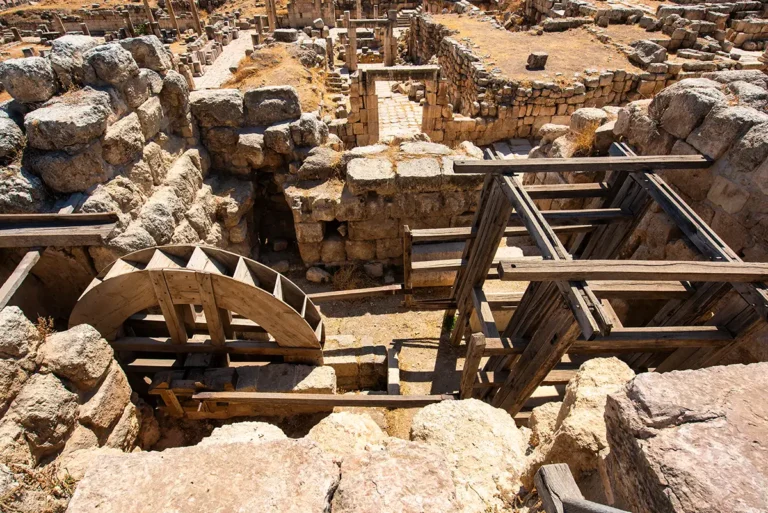
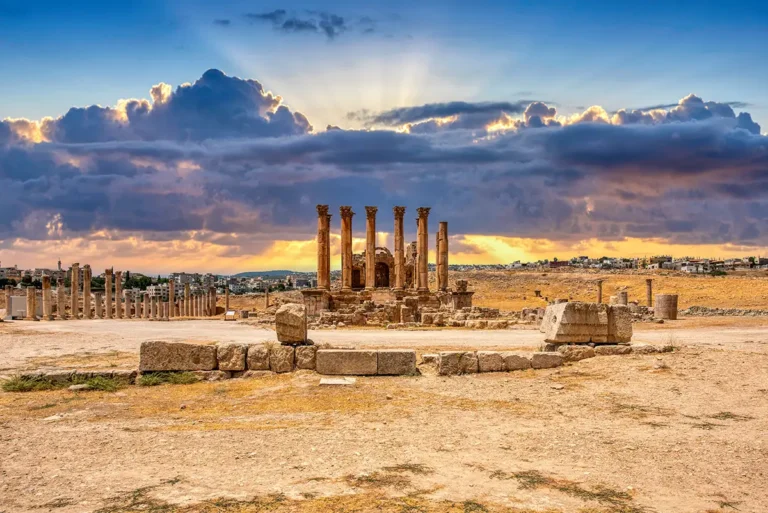
The Nymphaeum stands on the west side of the Cardo Maximus, just north of the Cathedral and before the monumental gateway of the Sanctuary of Artemis.
Its place on the busiest street of the city was deliberate: everyone walking the Cardo passed it, and could see, hear and use its water.
Historical Context and Origin
Around AD 125 Gerasa expanded its water-supply network, and by the late 2nd century new baths, fountains and a growing population needed still more water. The Nymphaeum opened in AD 190/191 as the city’s grandest fountain, part of this expanding system and a statement of the city’s prosperity.
In the 7th and 8th centuries the waterworks fell out of repair, and the marble, stucco and statues were lost.
Architectural Design
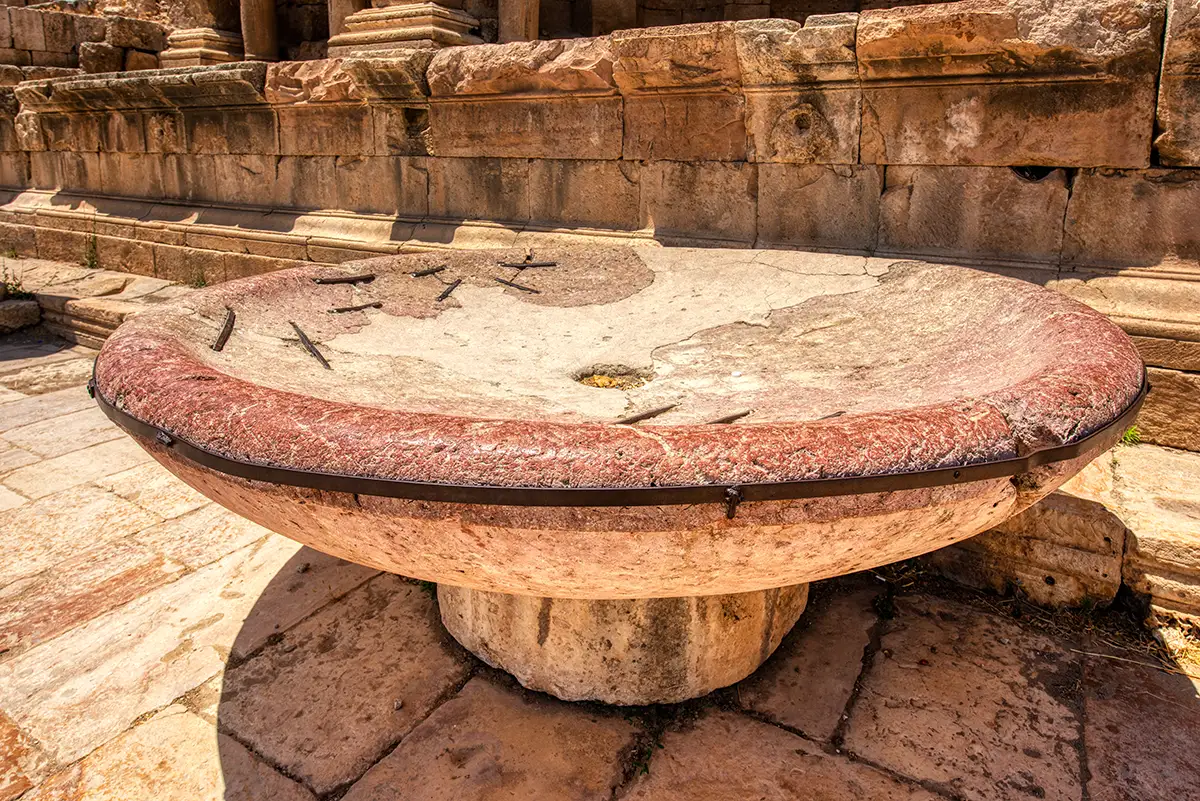
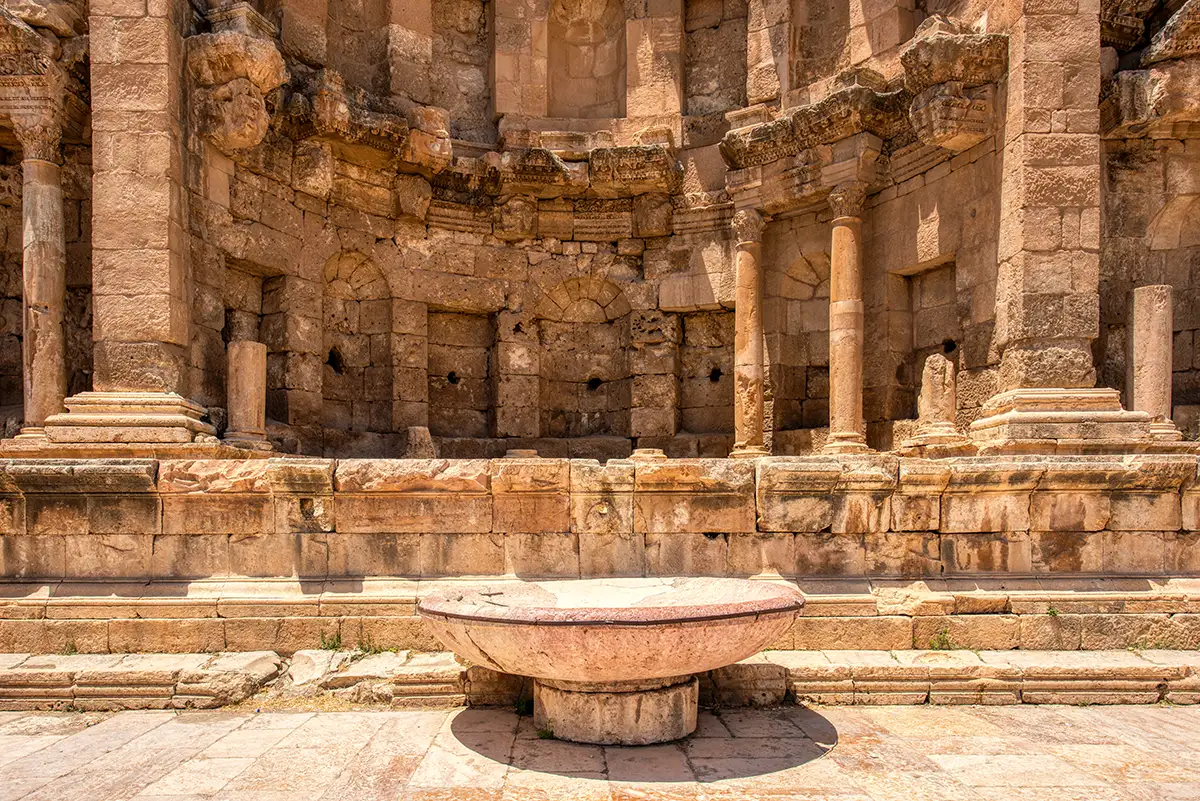
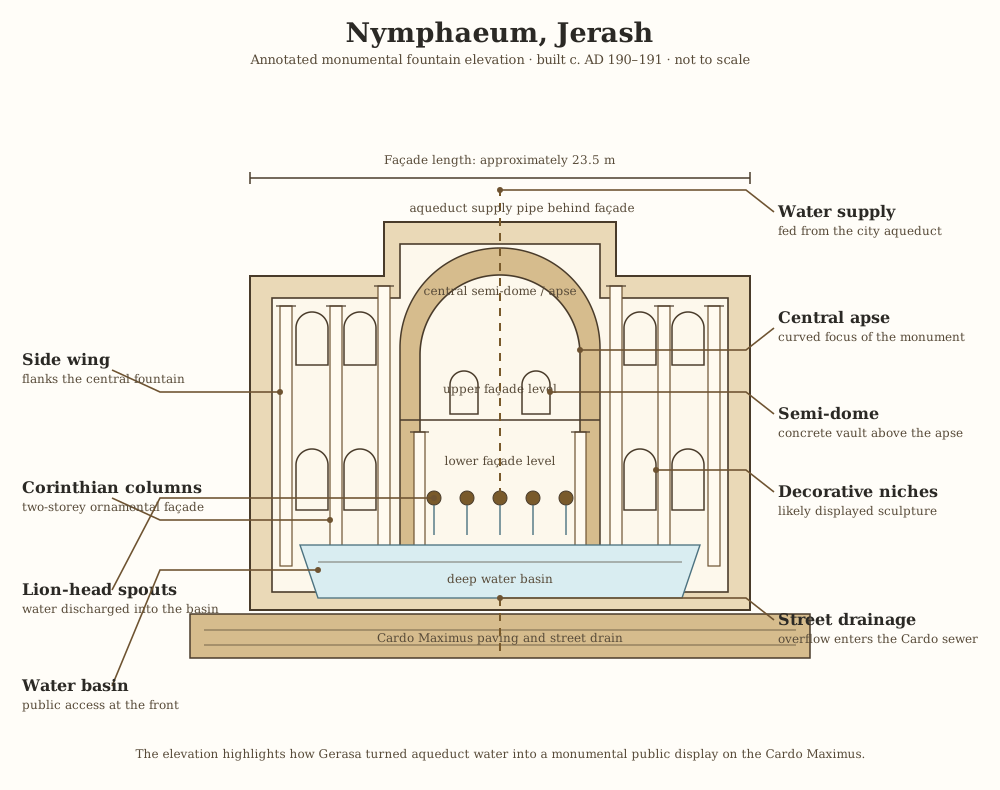
The Nymphaeum is about 22 metres wide and 12 metres high. Its centre is a great semicircular apse, originally roofed by a semi-dome, flanked by two wings. Corinthian columns and niches, perhaps once holding statues, decorated two storeys: the lower faced with marble, the upper with painted stucco. Water poured from lion-head spouts into a deep basin across the front, and the overflow ran away into the drains under the Cardo.
The Central Apse
A great semicircular recess, once roofed by a semi-dome, forms the focus of the fountain.
Two-Storey Façade
Niches and Corinthian columns on two levels — marble below, painted stucco above.
Lion-Head Spouts
Water poured from carved lion heads into the basin below.
The Basin and Drains
A deep basin ran across the front; overflow drained away into the channels under the Cardo.
Destruction, Rediscovery, and Restoration
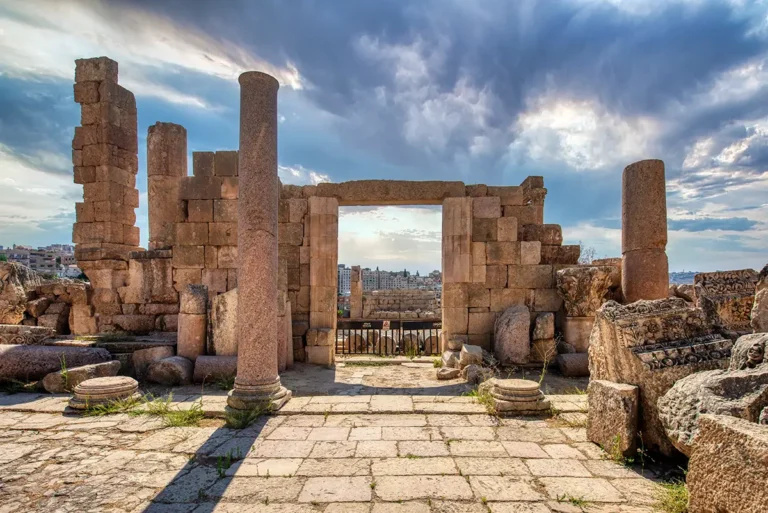
The earthquake of AD 749 probably brought down the upper part of the façade. Modern excavation uncovered the apse, the basin and the channels linking the fountain to the drains of the Cardo.
Visiting the Nymphaeum Today
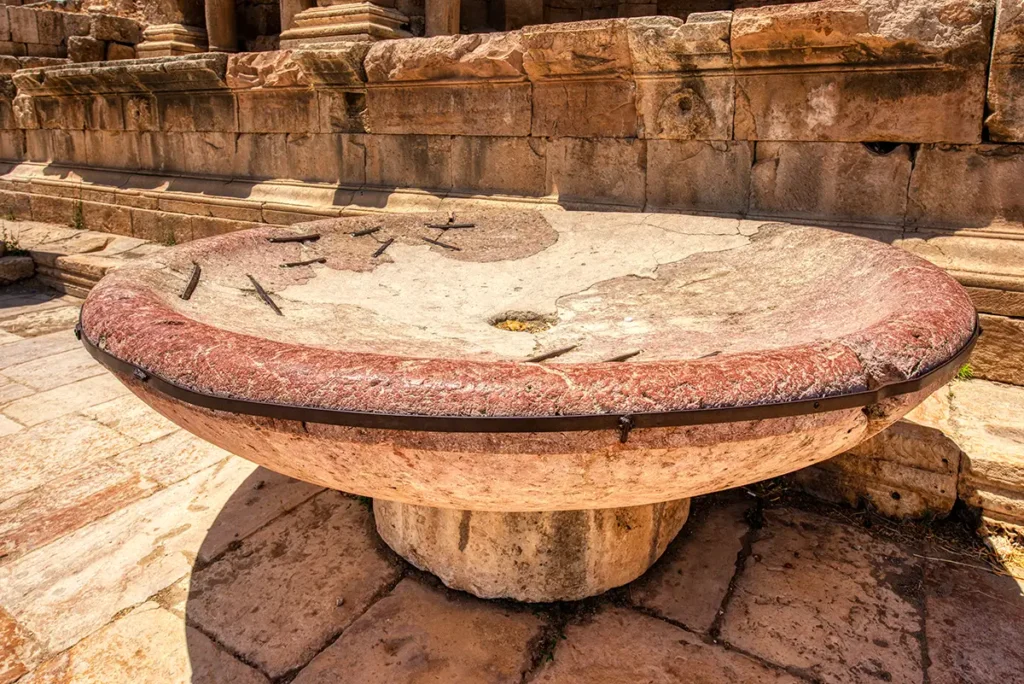
Stand across the Cardo to take in the whole façade, then come closer to look at the niches, the carved details and the lion heads above the basin. Imagine the fountain in use: water falling into the basin, marble and painted plaster glowing in the sun.
It takes only a few minutes and leads naturally on to the gateway of the Sanctuary of Artemis next door.